


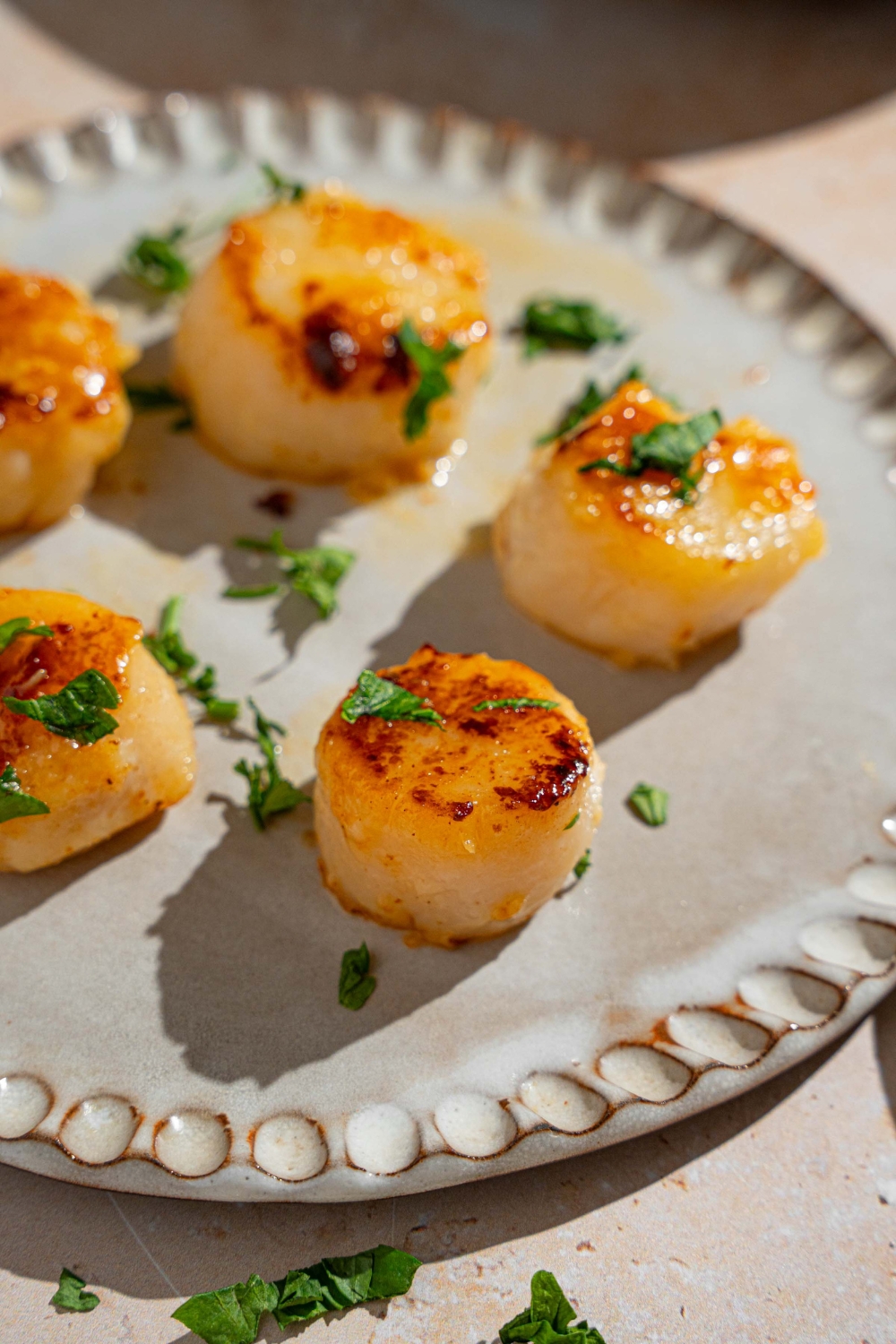
These frozen scallops are lightly dusted in flour and pan seared in a mix of olive oil and butter to develop a crisp, caramelized crust on the outside while staying soft and delicate inside. They’re ready in under 15 minutes, making them one of the easiest yet most impressive scallop recipes you can make. Whether you serve them over pasta, creamy risotto, a fresh salad, or alone, these pan seared scallops transform simple frozen seafood into a gourmet meal. I’ve cooked just about every kind of frozen protein—frozen salmon, frozen chicken thighs, and frozen Swedish meatballs—like those recipes, this method delivers restaurant-quality results every single time.
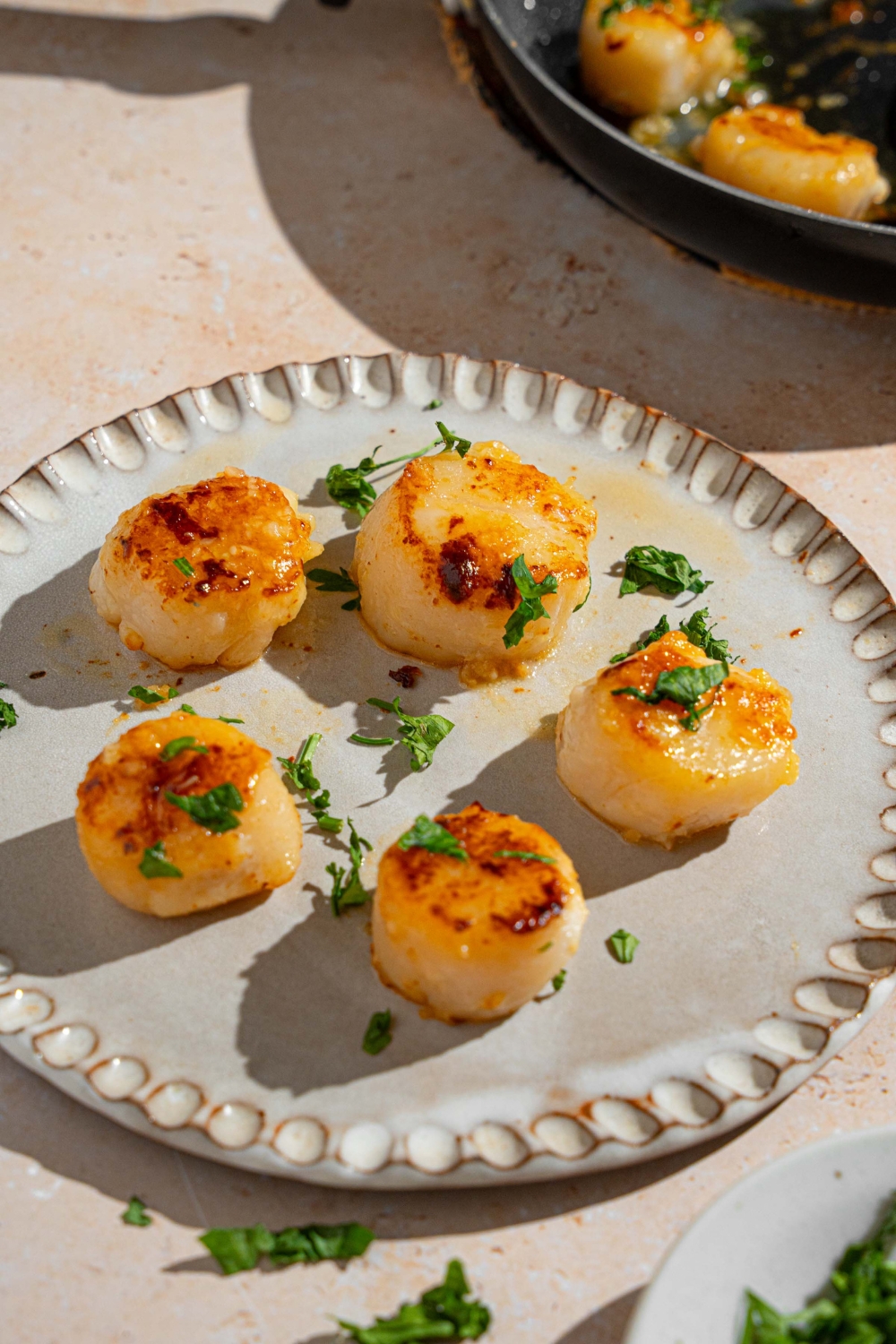
Table of Contents
Why I Love This Frozen Scallops Recipe
I love this recipe because it proves that you can achieve perfectly seared, tender scallops using frozen scallops, no fine-dining kitchen required. I first developed this recipe when I wanted to recreate the kind of scallops I’d order at a seafood restaurant — crisp on the outside, buttery and tender inside — but using frozen ones from my freezer for convenience. After testing different thawing methods and cooking techniques, I nailed the perfect formula for golden, pan seared scallops every time.
My foolproof technique involves thoroughly thawing and drying the scallops, then cooking them in a hot pan to develop that golden-brown crust we all love. The scallops cook quickly in butter and olive oil, absorbing just enough richness to complement their natural sweetness. A touch of garlic and lemon brings everything together for that bright, restaurant-style finish.
This dish is proof that frozen seafood can taste every bit as fresh and luxurious as what you’d get dining out. It’s quick enough for a weeknight dinner but elegant enough to serve at a dinner party. Once you master this method, you’ll never hesitate to grab a bag of frozen scallops again.
Don't just take my word for it, here's what one of our readers who made it had to say about it:
My frozen scallops turned out light, buttery, and FULL of flavor. My husband couldn't get enough of them! -Lindsay M.
Ingredients You’ll Need
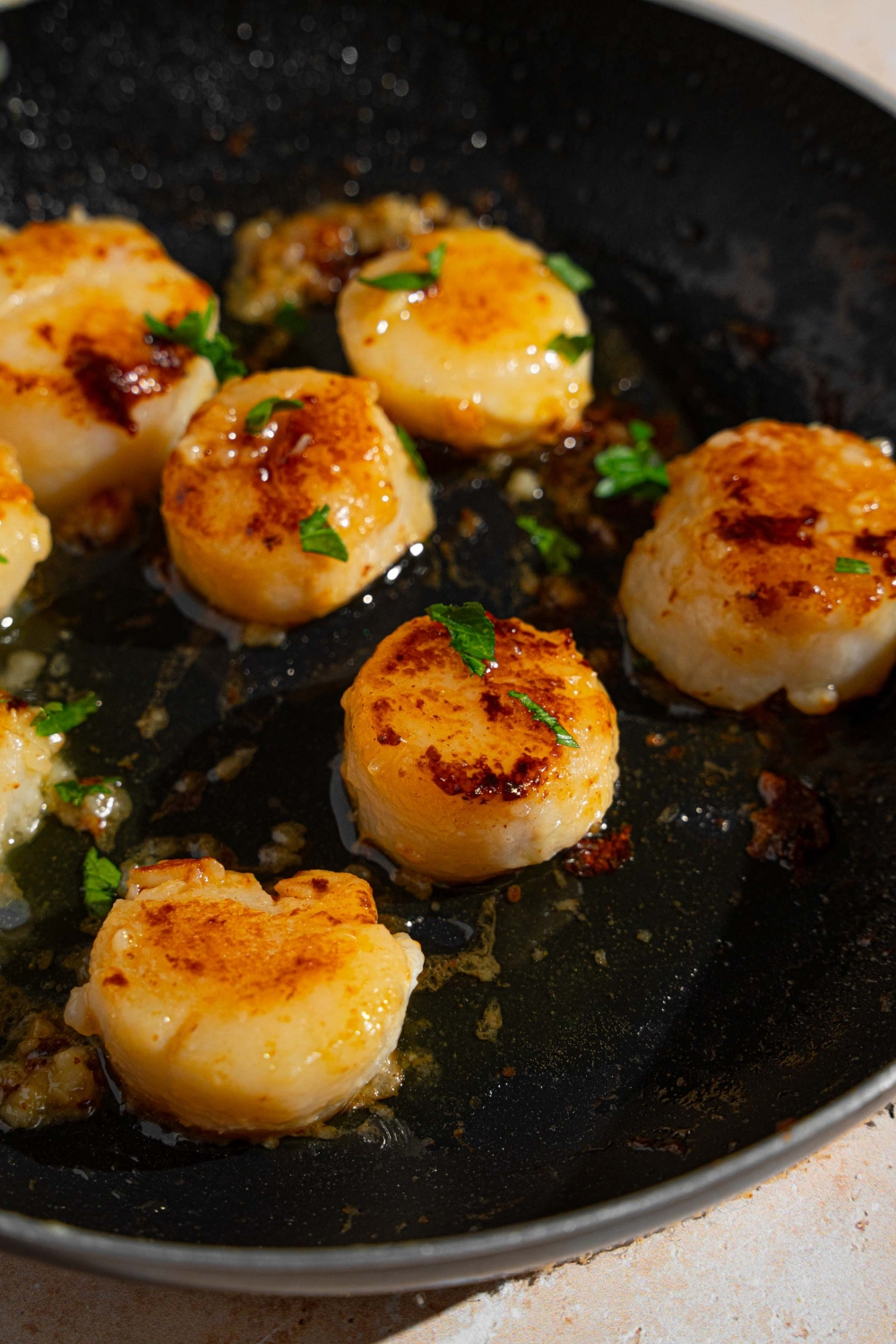
- 1 lb frozen scallops (thawed completely)
- 1–2 teaspoon all-purpose flour
- ¼ teaspoon salt
- 1 tablespoon olive oil
- 2 teaspoon minced garlic
- 2 tablespoon unsalted butter
How To Cook Frozen Scallops
Step 1: Thaw the Scallops
If frozen, thaw scallops overnight in the refrigerator or place them (sealed) under cold running water until thawed.
Step 2: Dry Thoroughly
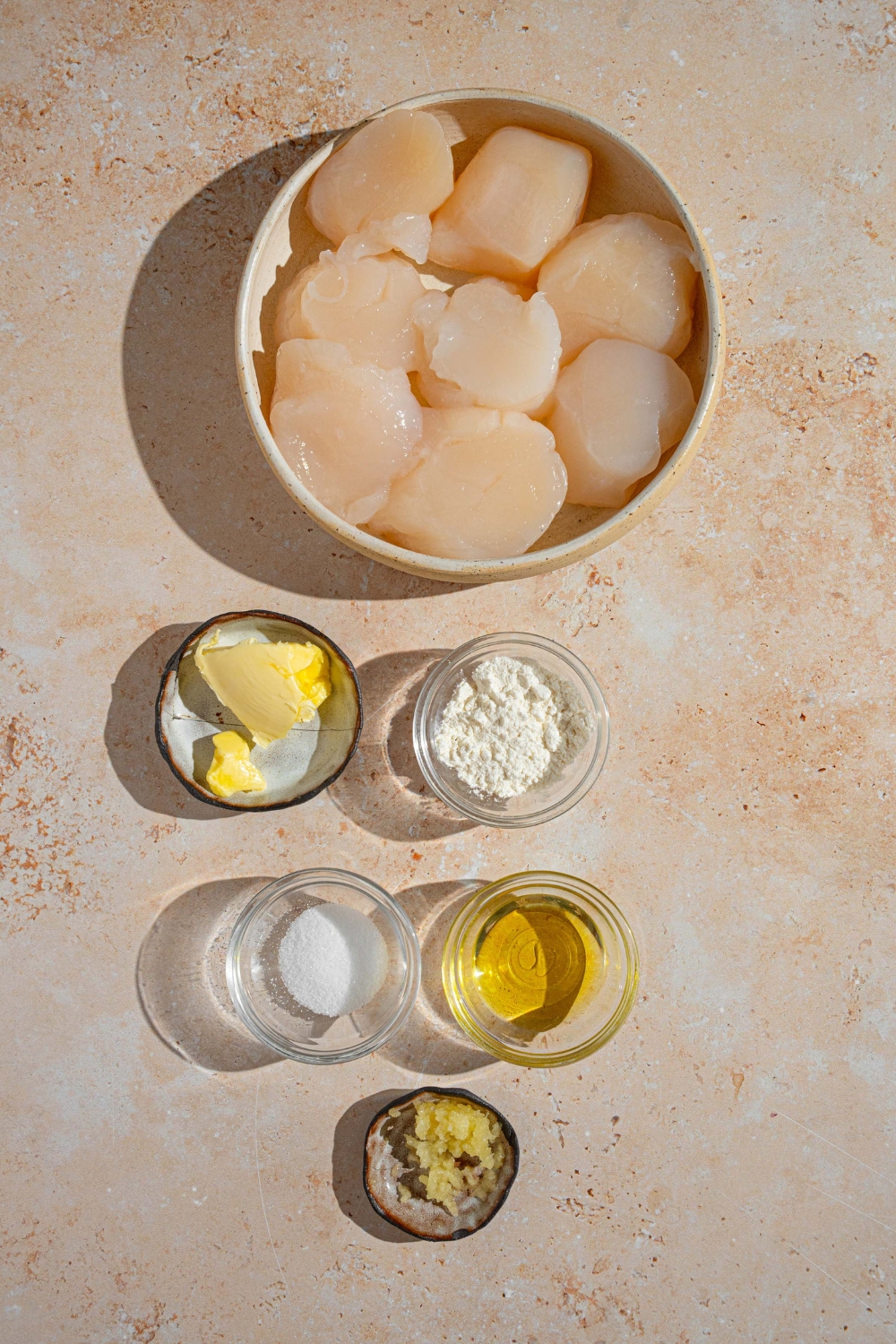
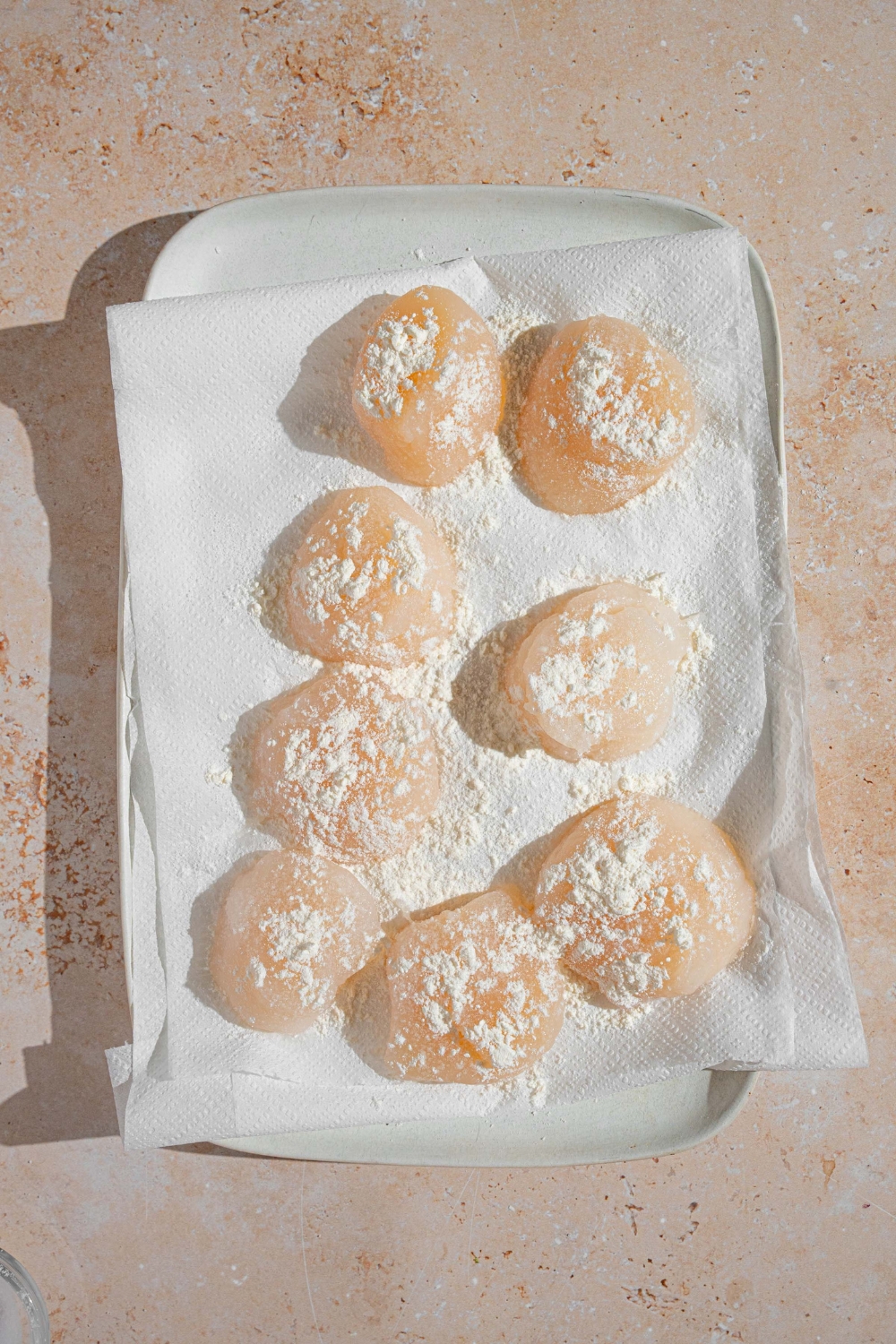
Arrange the scallops on a towel-lined baking sheet. Pat dry with another towel and let them rest at room temperature for a few minutes to remove the excess moisture.
Step 3: Season & Dust
Lightly dust the scallops with flour and sprinkle with salt. This helps create a delicate, crisp crust when seared.
Step 4: Sear the Scallops
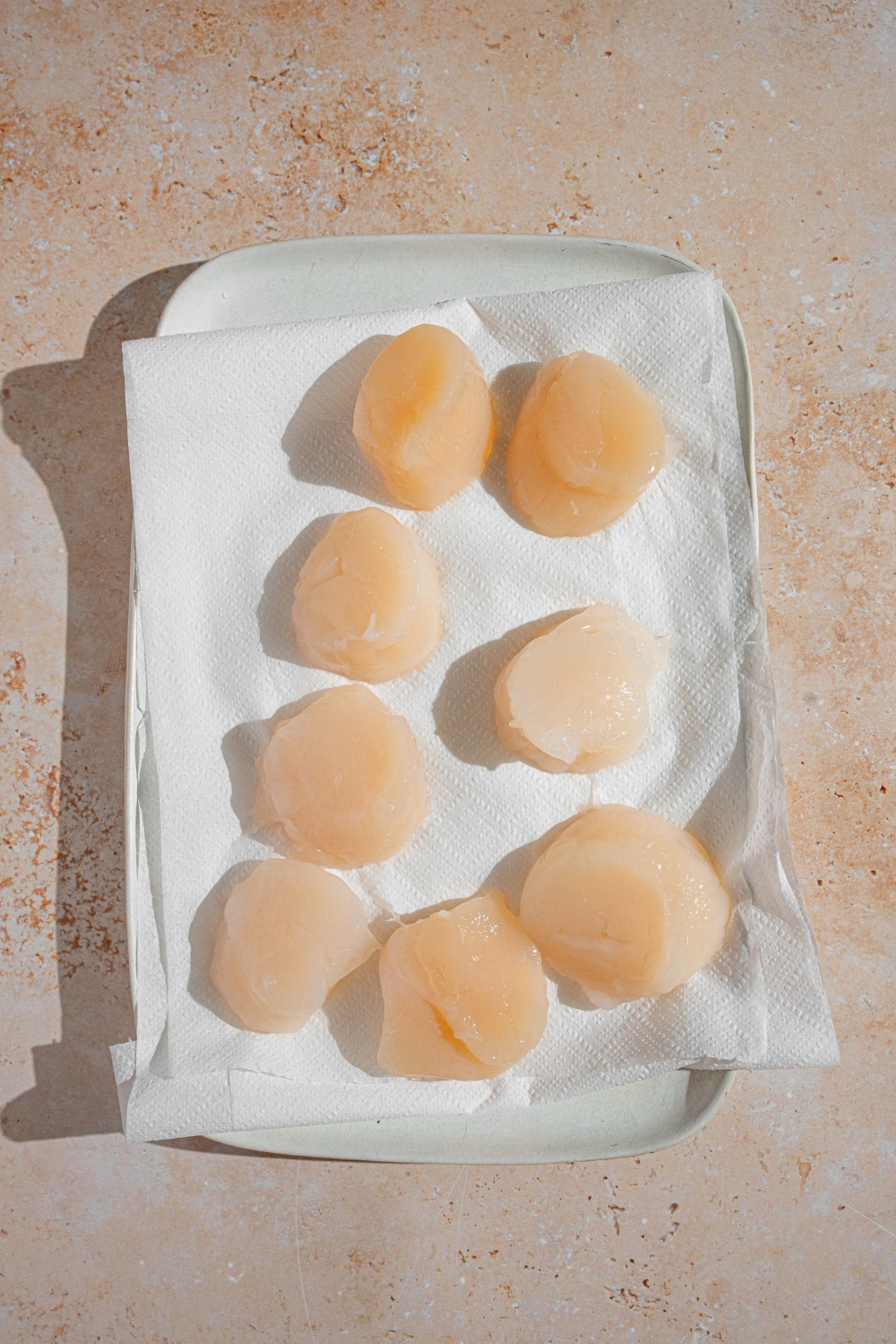
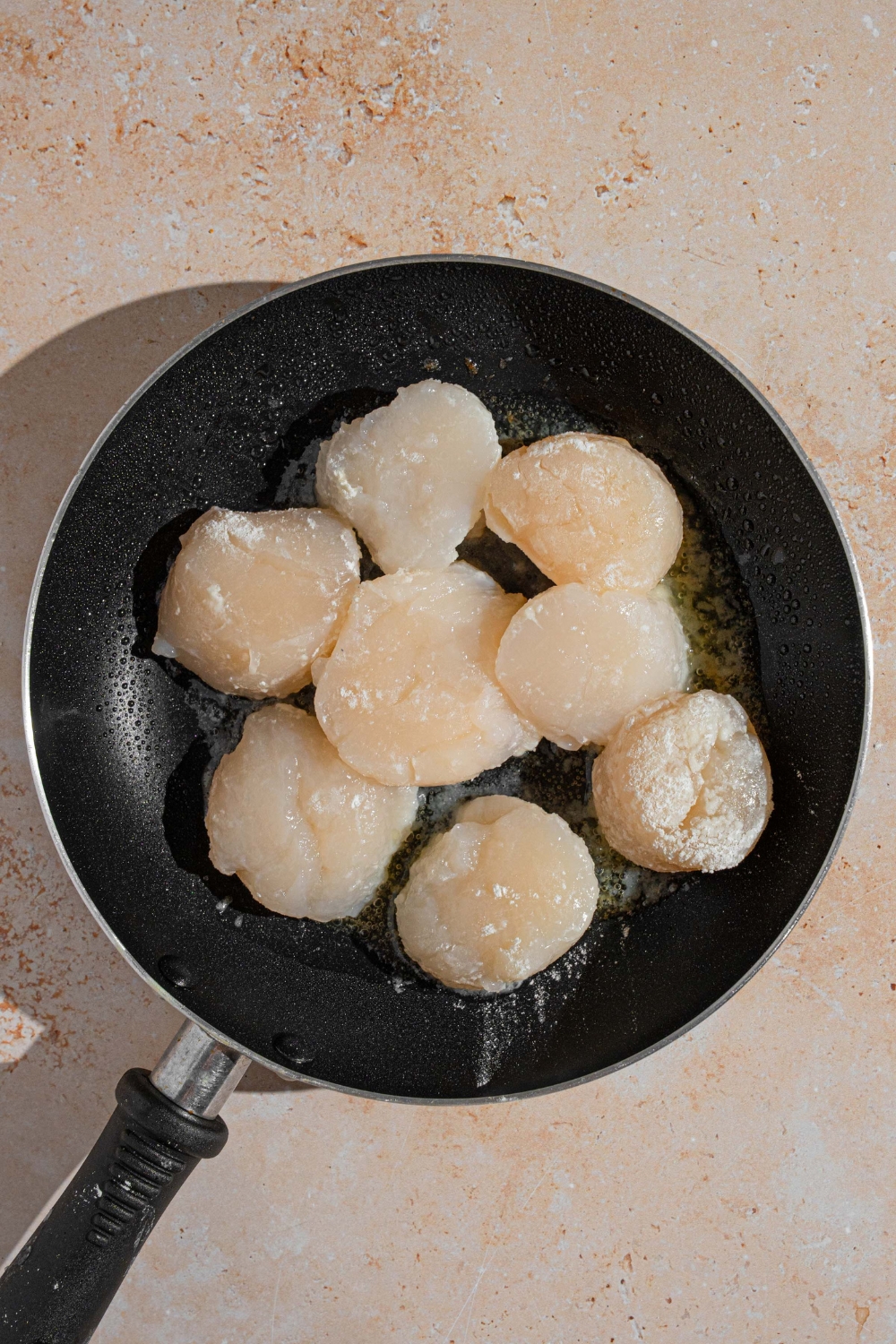
Heat olive oil in a skillet over medium-high heat. When shimmering hot, place scallops in a single layer, leaving space between each one. Sear for 2 minutes without moving them. If they stick, give them a few more seconds before flipping.
Step 5: Add Butter & Garlic
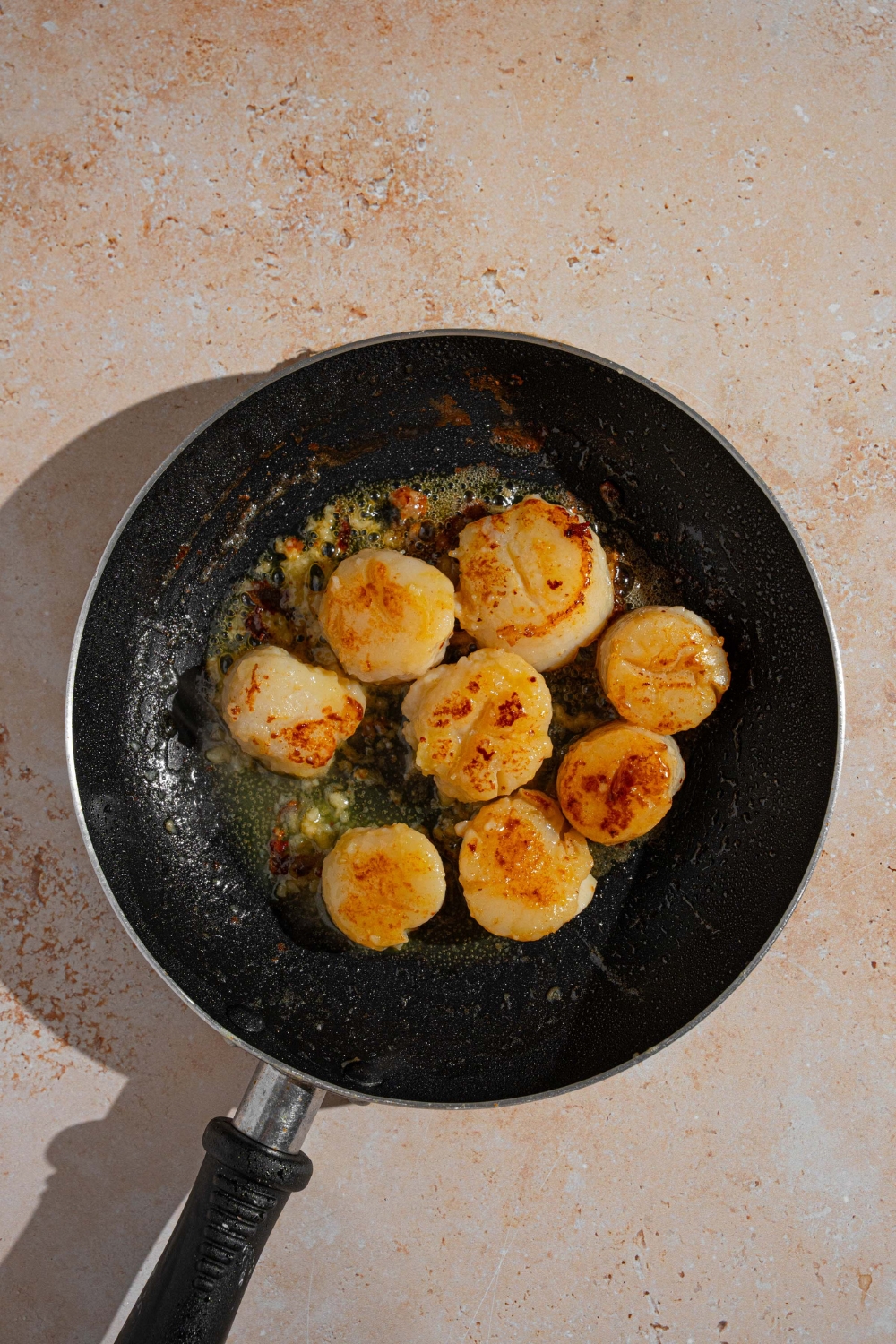
Flip the scallops to cook on the other side. Add butter and minced garlic to the pan. Spoon the melted butter over scallops as they cook another 1–2 minutes, until golden brown and just opaque in the center.
Step 6: Serve
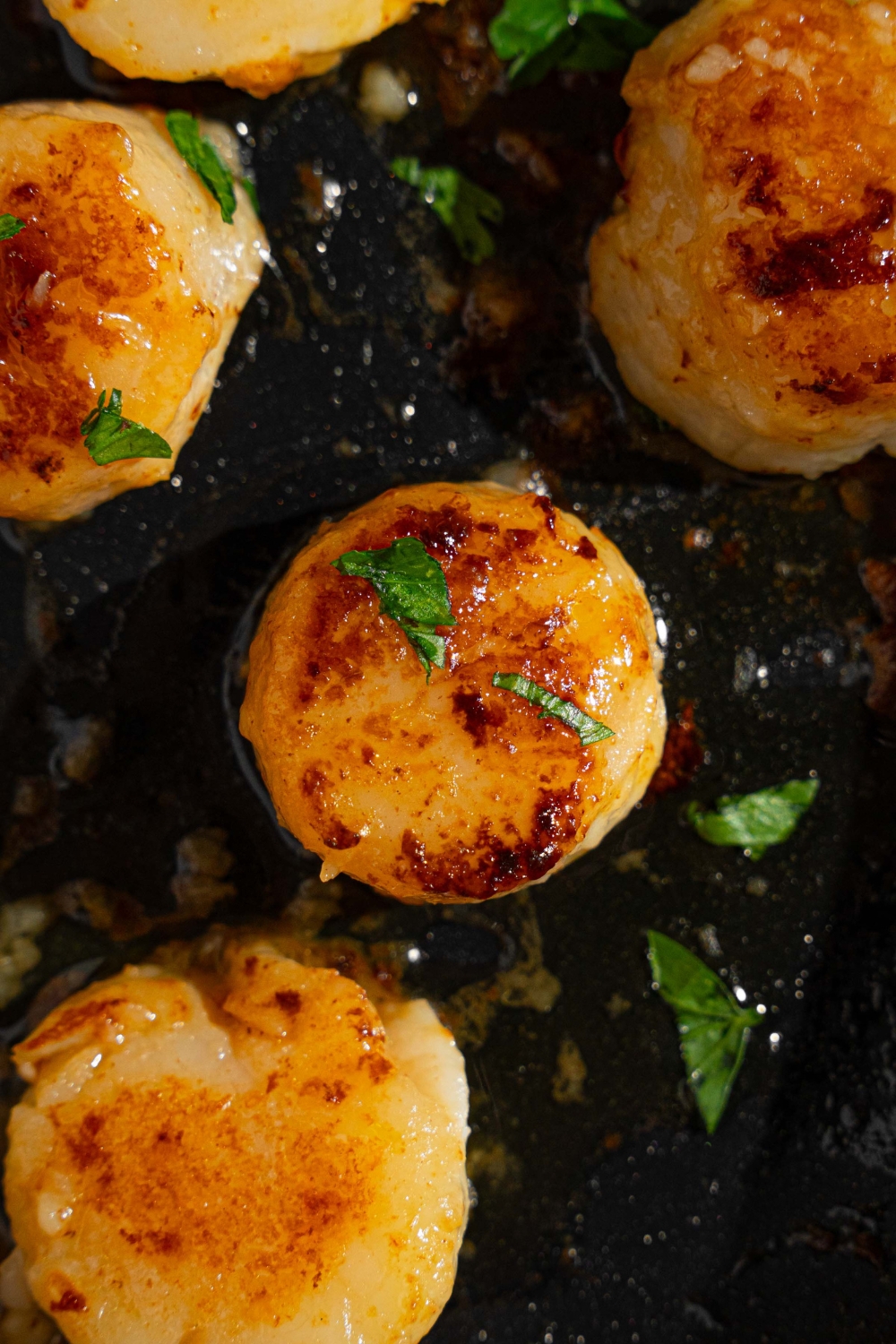
Transfer the pan seared scallops to a plate immediately and drizzle with the garlic butter from the pan. Serve hot with lemon wedges, rice, or vegetables.
Expert Tips To Make The Best Pan-Seared Scallops
- Thaw frozen scallops the right way: If you’re starting with frozen scallops, thaw them slowly in the refrigerator overnight or place them in a sealed bag and submerge in cold water for 20–30 minutes. Avoid microwaving or soaking them in warm water—it can partially cook the scallops and ruin their texture. Once thawed, pat them dry completely before cooking.
- Dry scallops thoroughly before searing: Moisture is the enemy of a good sear. Pat the scallops dry several times with paper towels and let them sit uncovered for about 5 minutes to draw out excess water. This simple step is what gives you that golden, restaurant-quality crust. Skipping it leads to steaming instead of searing.
- Use a hot pan and the right fat: The secret to evenly pan seared scallops is high heat and the right fat. Start with olive oil for its higher smoke point, then add butter after the initial sear for flavor and caramelization. The butter adds richness without burning, and the combination gives your scallops that signature golden color and nutty aroma.
- Don’t overcrowd the skillet: Scallops need space to brown evenly. Overcrowding traps steam, which prevents that crisp, golden crust from forming and makes the scallops rubbery. Cook in batches if needed—quality over quantity.
- Resist the urge to move them: Once the scallops hit the pan, let them sear undisturbed for 2 minutes. Moving them too soon tears the developing crust and leaves them pale. When they release naturally from the pan, that’s your cue—they’re ready to flip. Patience!
- Get the timing right for perfect texture: Perfect scallops should be golden-brown on the outside and just opaque in the center. Overcooking makes them tough and chewy. Remove them from the heat as soon as they reach 115–120°F internally—they’ll continue cooking slightly off the heat for that silky, tender bite.
- Make a quick pan sauce for extra flavor: After removing the scallops, don’t waste those flavorful browned bits in the pan. Splash in white wine, lemon juice, or chicken broth to deglaze, scraping up the fond with a wooden spoon. Let it simmer for 1–2 minutes, then whisk in a tablespoon of butter or cream for a rich, glossy sauce to drizzle over your scallops.
- Serve immediately for the best texture: Scallops are at their peak right off the skillet—juicy, tender, and buttery. If they sit too long, they lose their delicate texture and warmth. Plate them right away and serve with sides like garlic butter pasta, lemon risotto, or roasted asparagus for a full restaurant-quality meal.
Flavor Variations
- Lemon Garlic Scallops: For a classic, restaurant-style finish, add 1 tablespoon of fresh lemon juice and a pinch of lemon zest to the butter just before removing the scallops from the pan. The citrus brightens the buttery sauce and enhances the scallops’ natural sweetness. Serve with a sprinkle of parsley for a clean, elegant finish.
- Herb Butter Scallops: Try stirring 1 tablespoon of chopped parsley, thyme, or chives into the melted butter. The herbs infuse the sauce with freshness and pair beautifully with the scallops’ golden, savory crust. For even more depth, add a touch of minced garlic or a squeeze of lemon juice.
- Spicy Scallops: If you like a spicy finish, mix ¼ teaspoon red pepper flakes into the garlic butter while it’s simmering. The subtle spice adds warmth without overpowering the scallops’ delicate flavor. For an extra kick, you can finish the dish with a drizzle of chili oil or a dash of smoked paprika.
- Creamy Scallops: After searing the scallops, deglaze the pan with ¼ cup of cream, white wine, or half-and-half, scraping up the flavorful browned bits. Simmer for 1–2 minutes until thickened, then swirl in a tablespoon of butter for a silky, rich sauce. This quick creamy scallop sauce is perfect served over pasta, risotto, or mashed potatoes.
- Bacon-Wrapped Scallops: For a smoky, indulgent upgrade, wrap each scallop in half a slice of bacon before searing. Secure with a toothpick and cook seam-side down first to crisp the bacon, then finish in the oven for 5 minutes at 400°F (200°C) until the scallops are perfectly cooked through. The crispy bacon adds saltiness and crunch that complements the scallops’ sweetness perfectly.
- Garlic Parmesan Scallops: Add 2 tablespoons of grated Parmesan cheese to the pan sauce along with the garlic and butter. The cheese melts into the sauce, giving it a nutty, rich finish that’s incredible over roasted asparagus or linguine.
Frozen Scallops FAQs
Can I cook scallops straight from frozen?
It’s best to thaw scallops before cooking. Cooking scallops straight from frozen releases too much water, which prevents that golden sear and can make the texture rubbery. Thawed scallops cook evenly and develop the crisp, caramelized crust that defines perfect pan seared scallops.
How do I thaw frozen scallops quickly?
For the best results, place the scallops in a sealed plastic bag and submerge them in cold running water for about 10–15 minutes, or until thawed. Pat them dry thoroughly before cooking. Avoid using hot water or the microwave—both methods can partially cook the scallops and ruin their delicate texture. If you have time, thawing overnight in the refrigerator is ideal.
How can I tell when scallops are done cooking?
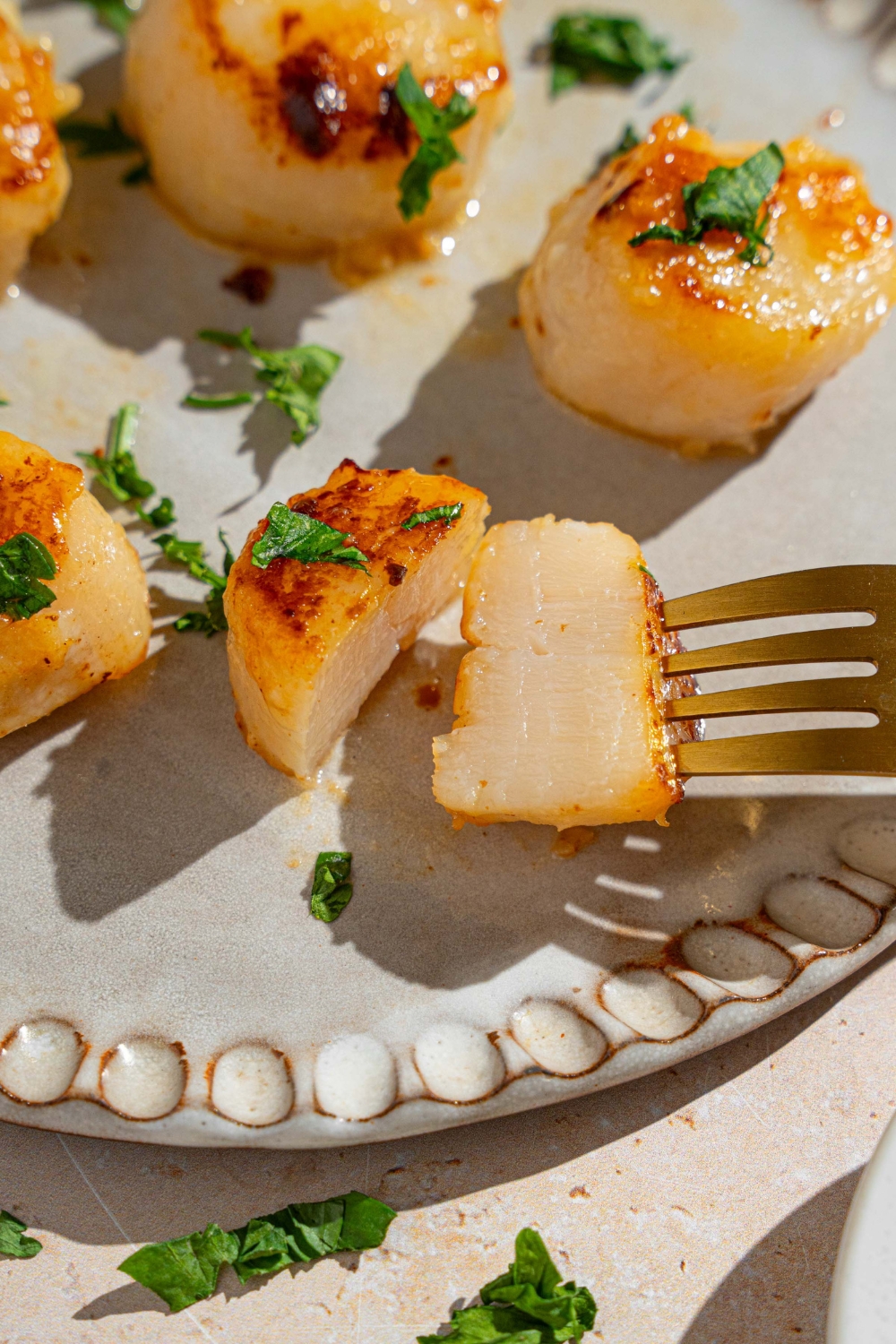
Scallops are done when they’re opaque and springy to the touch, with a golden-brown crust on the outside and a tender, slightly translucent center. The internal temperature should read 115–120°F (46–49°C). Remember, scallops continue cooking for a minute or two after being removed from the heat, so pull them just before they’re fully opaque for the best texture.
Why are my scallops rubbery?
Rubbery scallops are a sign of overcooking or improper searing. Scallops only need 1 ½ to 2 minutes per side in a hot pan. Overcrowding the pan or not drying them properly causes them to steam instead of sear, which toughens their texture. Always pat scallops dry and cook in batches if needed for that perfect golden crust.
Can I use frozen bay scallops instead of sea scallops?
Yes, you can, but note that bay scallops are much smaller than sea scallops and cook significantly faster—usually about 1 minute per side. Bay scallops are sweeter and more delicate, making them great for pasta dishes or stir-fries, while sea scallops are meatier and ideal for pan searing and serving as a main course.
What’s the best oil for searing scallops?
Use oils with a high smoke point, like olive oil, avocado oil, or grapeseed oil, to prevent burning. You can add butter after the initial sear for flavor and caramelization. The combination of oil and butter gives you that perfect restaurant-style finish without any bitterness.
What should I serve with scallops?
Scallops pair well with a seafood side like seafood rice and comfort food sides like lemon risotto, parmesan noodles, or cheesy mashed potatoes. For a lighter meal, serve pan seared scallops over a fresh salad.
How do I store leftovers?
Let your pan seared scallops cool for about 15–20 minutes after cooking. Storing them while hot traps steam and moisture, which can make the texture rubbery. Transfer cooled scallops to an airtight container and store them in the refrigerator for up to 2 days. If possible, place them on a paper towel inside the container to absorb any excess moisture and preserve that tender texture. I don't recommend re-freezing the cooked scallops.
Can I reheat cooked scallops?
Yes, but reheat them slowly. Scallops can easily overcook and turn rubbery when reheated. Warm them in a skillet over low heat with a bit of butter or in the oven at 275°F (135°C) for about 5 minutes, just until warmed through. Avoid microwaving, as it dries them out quickly.
My Final Thoughts
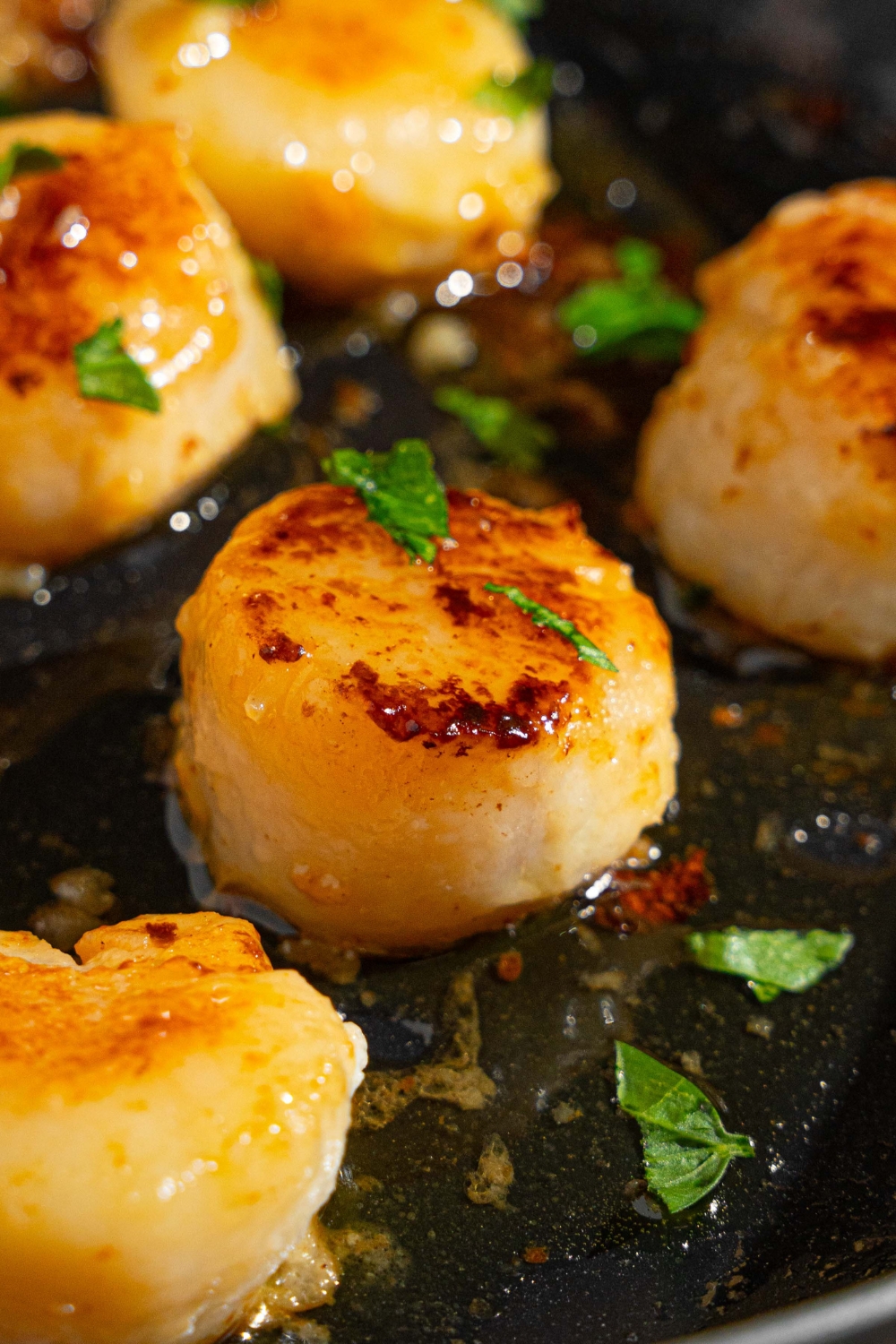
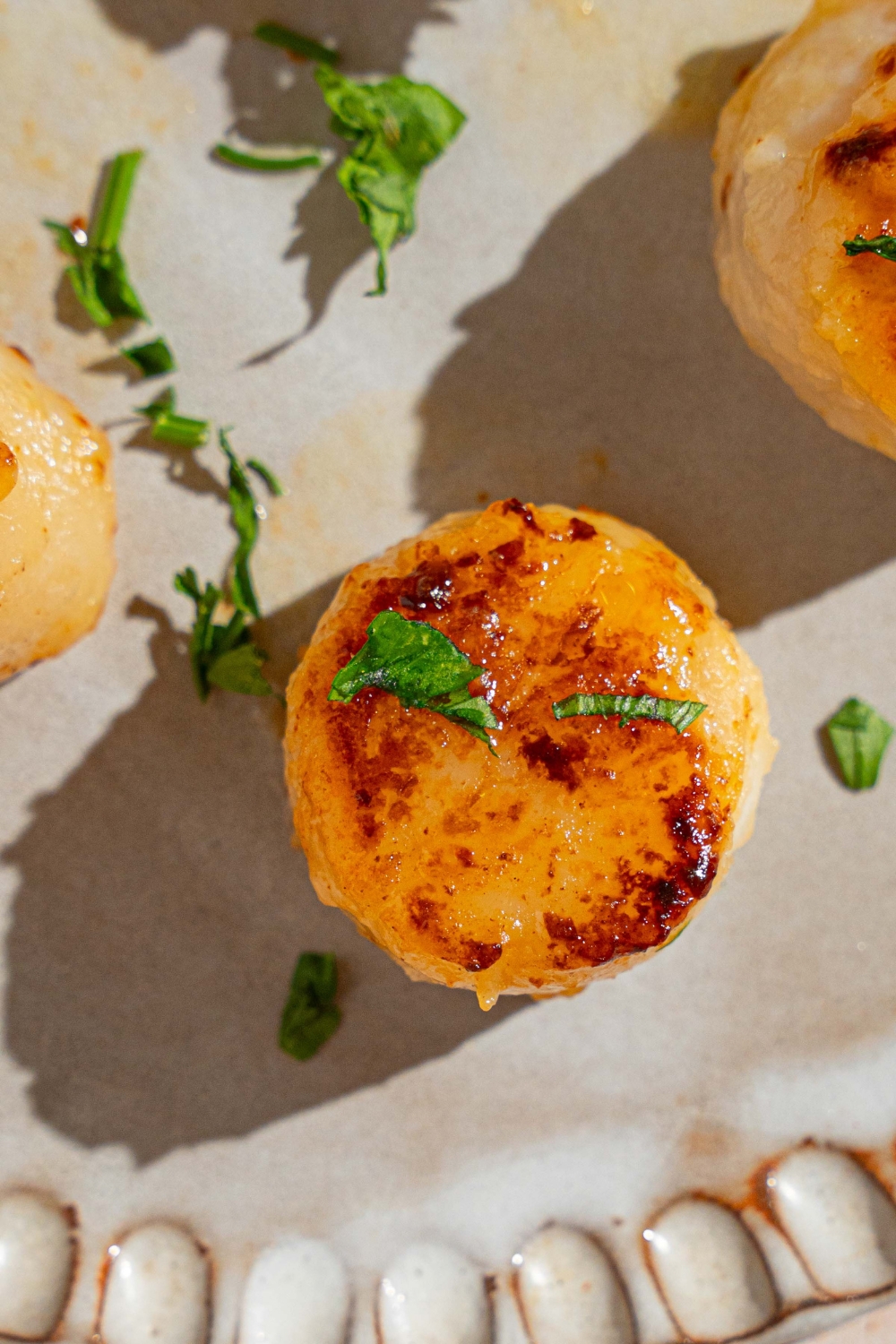
These pan-seared frozen scallops are buttery, flavorful, and caramelized—just like a high-end seafood restaurant, but made right at home. With a simple garlic butter finish and just a few pantry ingredients, you’ll have an elegant dinner ready in 15 minutes or less. Give it a try, and leave a comment and review below so I know how it turned out for you.
More Frozen Recipes To Try Next
- Frozen chicken breasts
- Frozen Italian meatballs
- Frozen roast
- Frozen brussel sprouts
- Frozen broccoli
- Pan seared frozen chicken breast
Frozen Scallops (Pan-Seared Scallops Recipe)
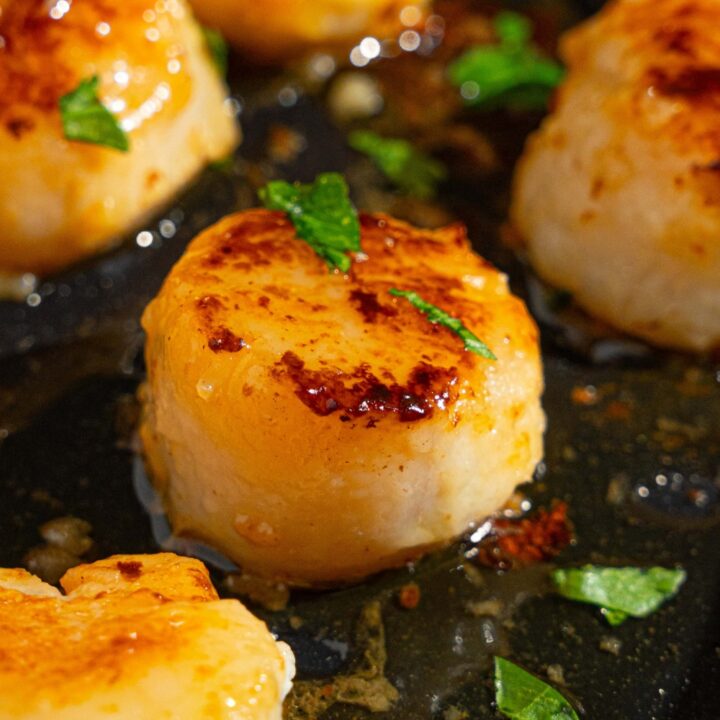
These frozen scallops are lightly dusted in flour and pan seared in a mix of olive oil and butter to develop a crisp, caramelized crust on the outside while staying soft and delicate inside. They’re ready in under 15 minutes, making them one of the easiest yet most impressive scallop recipes you can make. Whether you serve them over pasta, creamy risotto, a fresh salad, or alone, these pan seared scallops transform simple frozen seafood into a gourmet meal. I’ve cooked just about every kind of frozen protein—frozen salmon, frozen chicken thighs, and frozen Swedish meatballs—like those recipes, this method delivers restaurant-quality results every single time.
Ingredients
- 1 pound frozen scallops
- 1-2 teaspoons all-purpose flour
- ¼ teaspoon salt
- 1 tablespoon olive oil
- 2 teaspoons minced garlic
- 2 tablespoons butter, unsalted
Instructions
1. If using frozen scallops, thaw them overnight in the fridge or place them in a sealed bag under cold running water until fully thawed.
2. Arrange the scallops on a towel-lined baking sheet, leaving space between each one. Pat dry with another towel and let them sit at room temperature for a few minutes to absorb excess moisture.
3. Lightly dust the scallops with flour and a sprinkle of salt.
4. Heat a skillet over medium-high heat and add a tablespoon of olive oil. Once the oil is hot, place the scallops in a single layer, leaving at least an inch of space between them to avoid overcrowding.
5. Sear the scallops for about 2 minutes without moving them. If they stick, wait a little longer before flipping.
6. Flip each scallop, then add butter and minced garlic to the pan. As the scallops finish cooking, spoon the melted butter and garlic over them for another 1–2 minutes, until golden brown and cooked through.
Nutrition Information:
Yield:
2Serving Size:
1Amount Per Serving: Calories: 427Total Fat: 20gSaturated Fat: 9gTrans Fat: 0gUnsaturated Fat: 10gCholesterol: 124mgSodium: 1779mgCarbohydrates: 15gFiber: 0gSugar: 0gProtein: 47g
Lindsay M.
My frozen scallops turned out light, buttery, and FULL of flavor. My husband couldn't get enough of them!