


These spicy potato noodles are chewy, silky, and coated in chili crisp for a bold, fiery kick that's completely addictive. Made from just steamed russet potatoes and potato starch, they're naturally gluten free, surprisingly simple to pull together, and unlike any noodle you've had before. If you've been seeing chewy potato noodles all over your social media feed, this is the recipe to make.
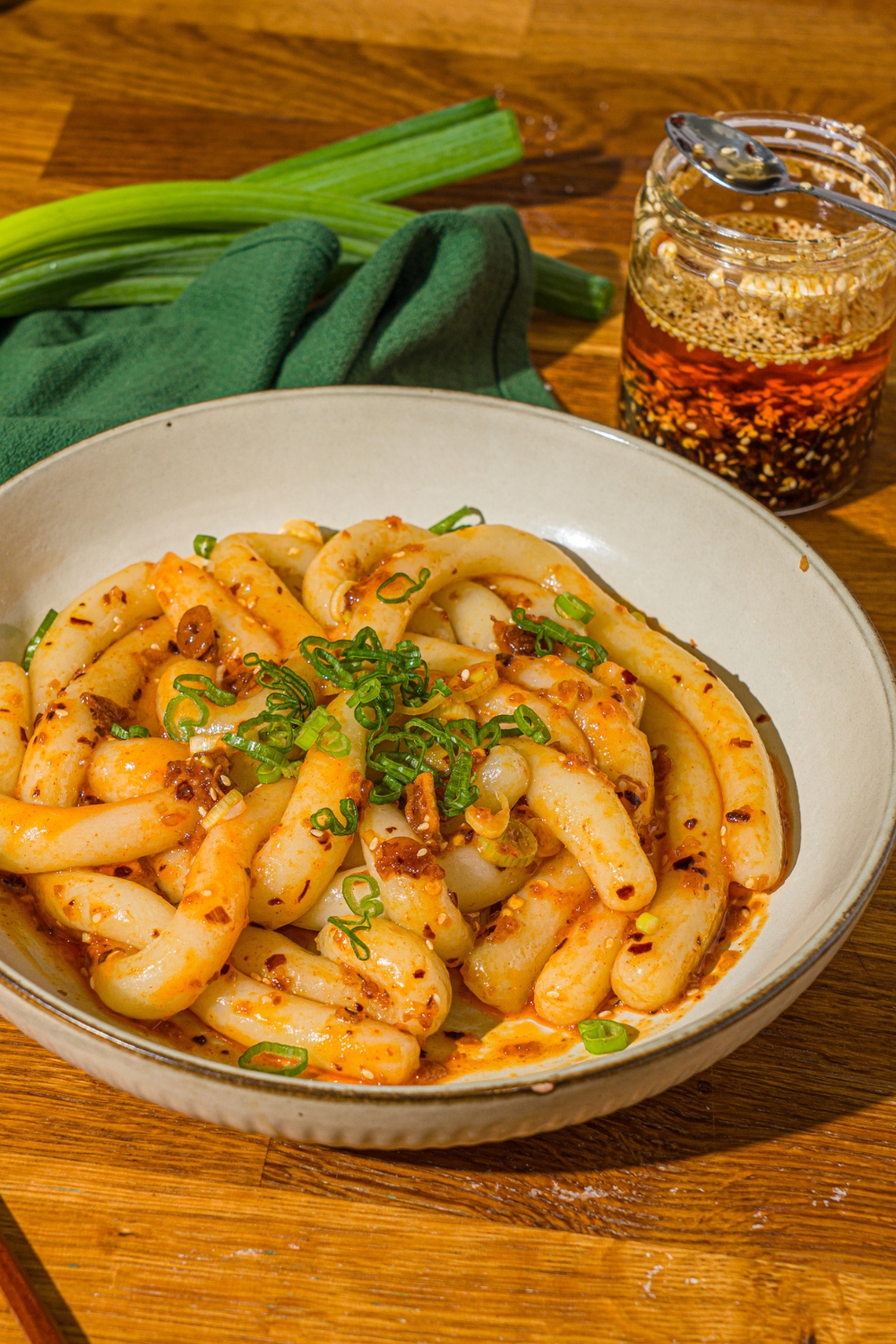
Table of Contents
Why You Need To Try These Viral Potato Noodles
I came across a video of potato noodles on Instagram and couldn't believe what I was watching. Noodles made from just potatoes and potato starch that come out chewy, glossy, and silky smooth. I searched for more recipes, found a bunch that people were going crazy over, and went straight to my kitchen to figure it out myself. I like spice so I took the base recipe for the noodles and added my homemade chili crisp and that decision made all the difference.
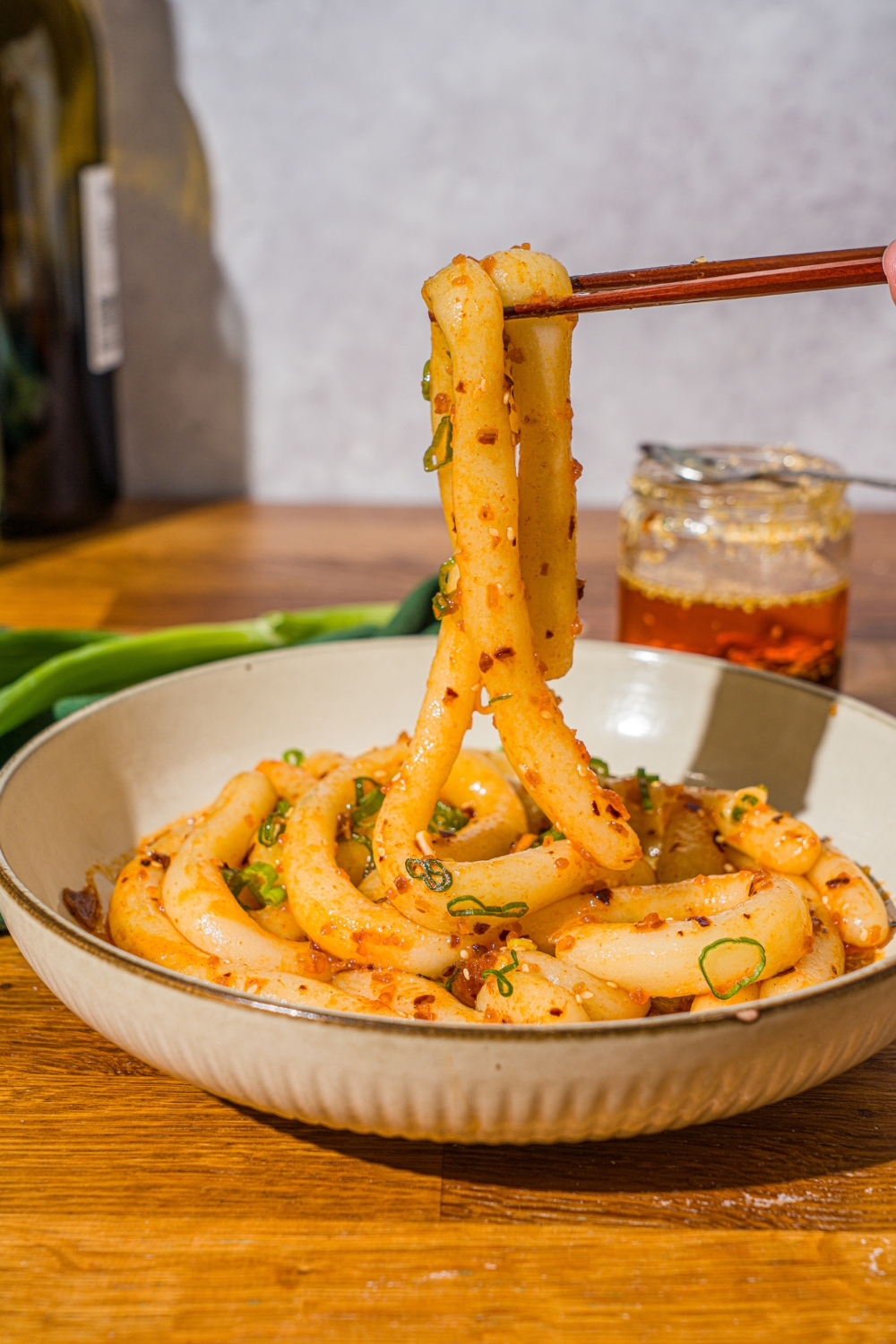
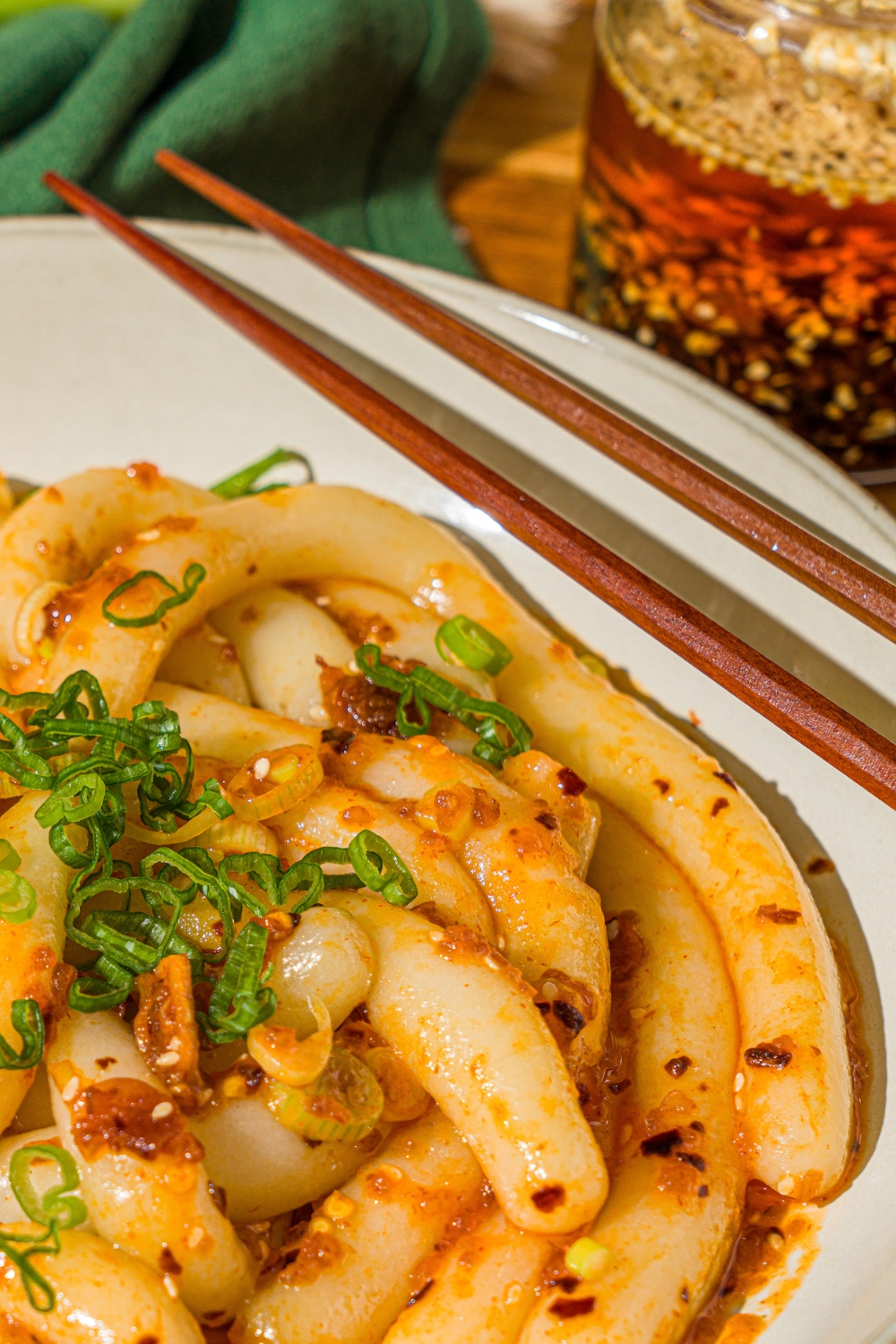
The texture is what's so good. These noodles have a chew that's deeply satisfying in a way that regular pasta simply doesn't deliver. Dense but not heavy, springy but not rubbery, and they hold onto the chili crisp sauce in the most incredible way. Every bite is spicy, savory, and coated in that glossy garlicky sauce that makes you reach for another forkful before you've finished the one you're on.
The fact that they're made from just two ingredients makes them even more impressive. You only need a steamer and about 30 minutes too. If you love bold satisfying noodle dishes like my creamy buldak ramen or spicy garlic noodles this one belongs in your rotation immediately.
Ingredients
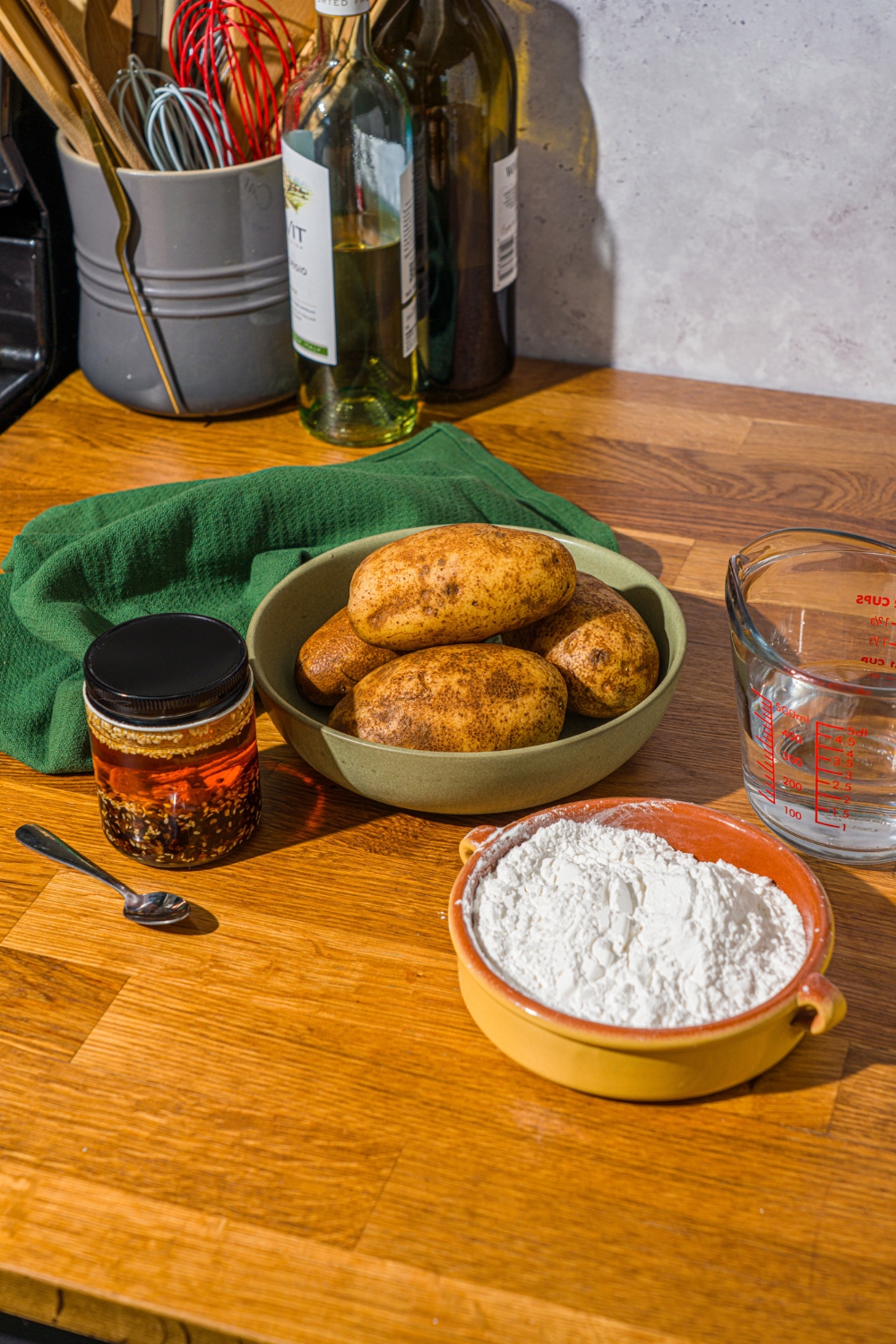
- 4 medium russet potatoes, diced
- 1½–2 cups potato starch
- 2 tablespoons green onion, chopped
- 2 tablespoons chili crisp
- Water, as needed
How to Make Spicy Potato Noodles
Step 1: Steam the Potatoes
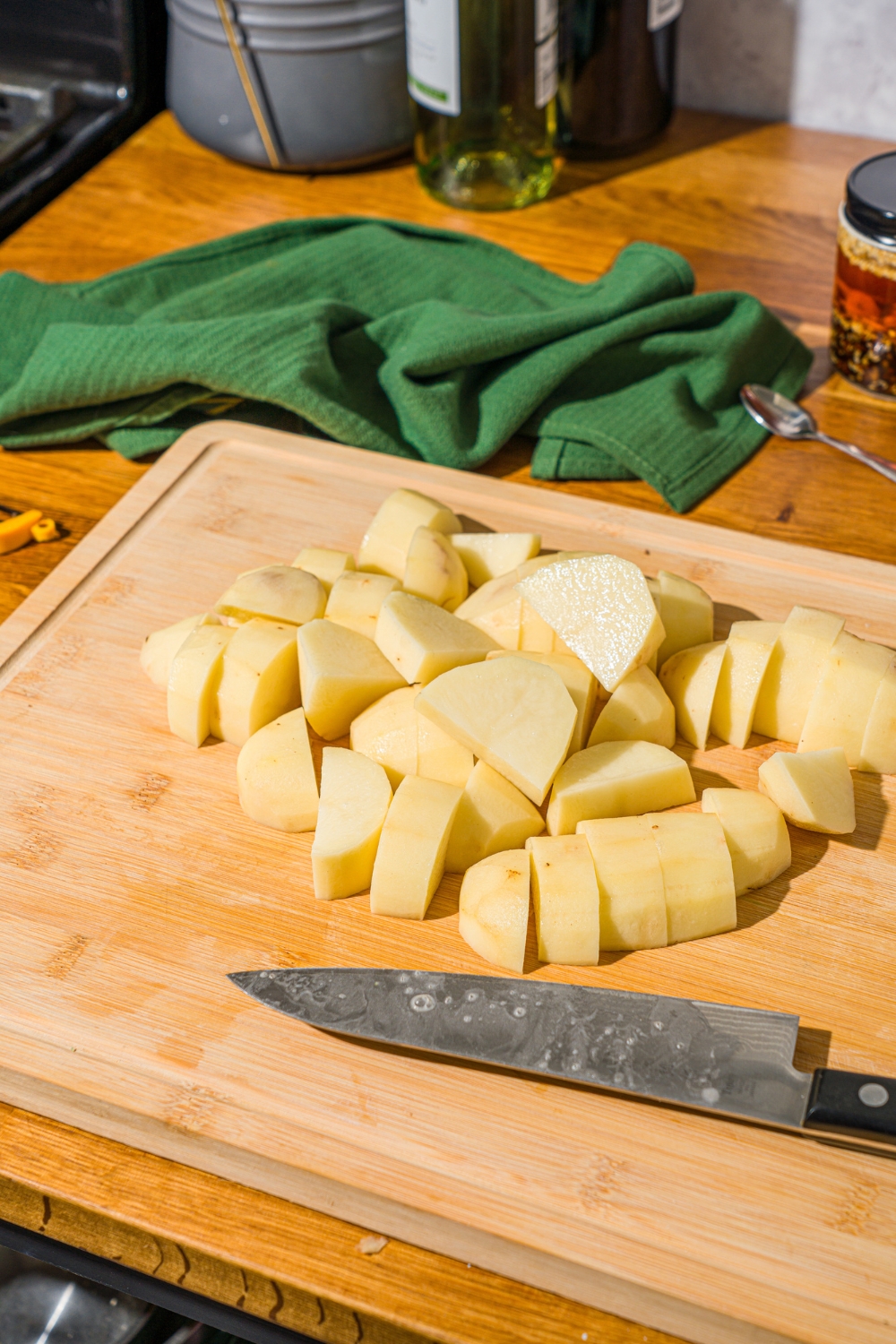
Dice the russet potatoes and steam until completely soft all the way through. A fork or skewer should slide in with zero resistance. This usually takes 20-25 minutes depending on the size of your potatoes. Don't boil them; steaming keeps the potatoes drier and less waterlogged, which is essential for a workable dough. Too much moisture and the dough becomes impossible to roll.
Step 2: Make the Dough
While the potatoes are still warm, mash them until they're completely smooth with no lumps. The smoother the mash, the smoother and more consistent your noodles will be. Start with 1½ cups of potato starch and work it into the mashed potatoes, adding a small splash of water if needed to bring it together.
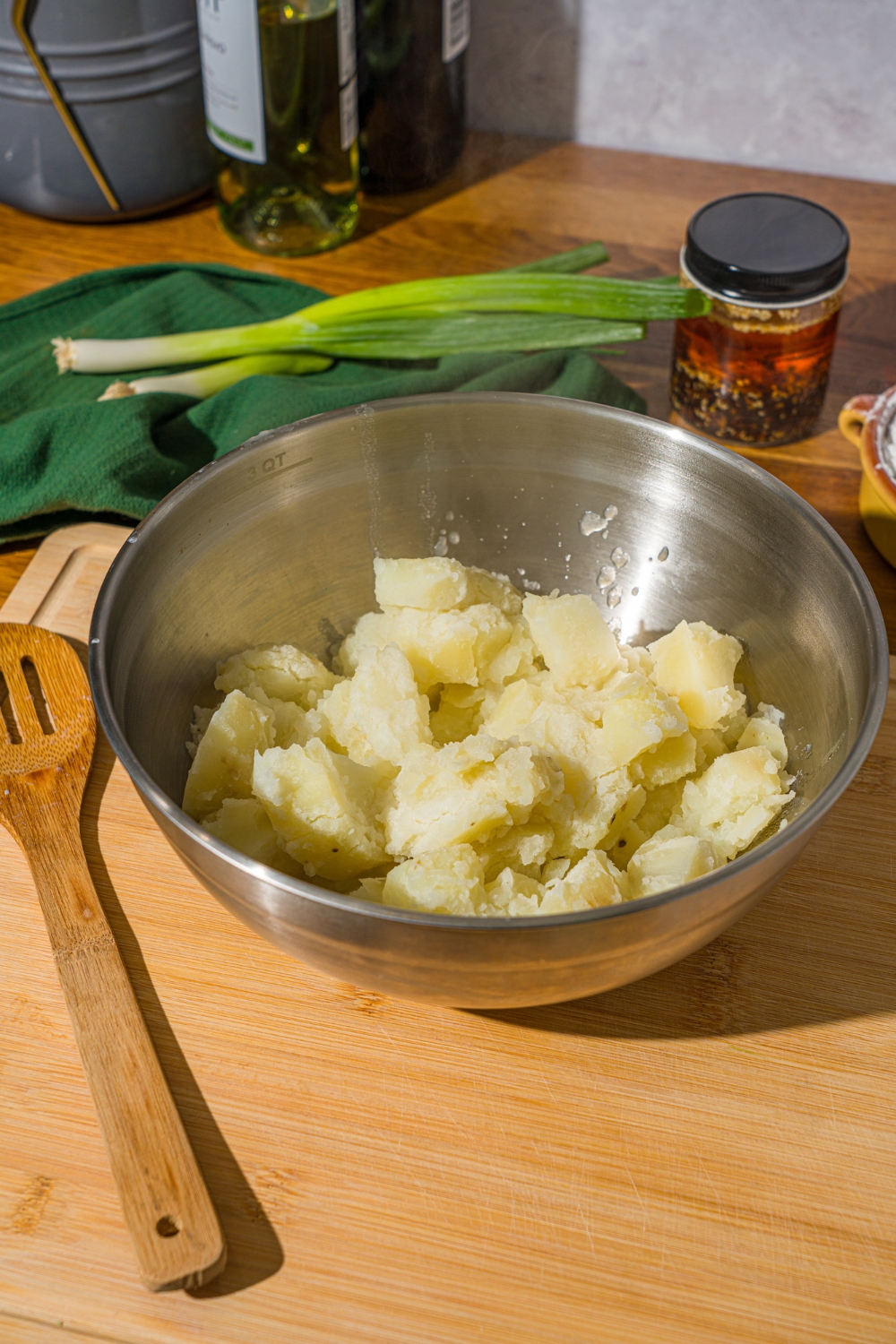
The dough should be smooth, pliable, and slightly tacky but not sticky. If it's too sticky, add more starch a tablespoon at a time. If it's too dry and cracking, add water a teaspoon at a time. Getting the dough right is the most important step so make sure to take your time here.
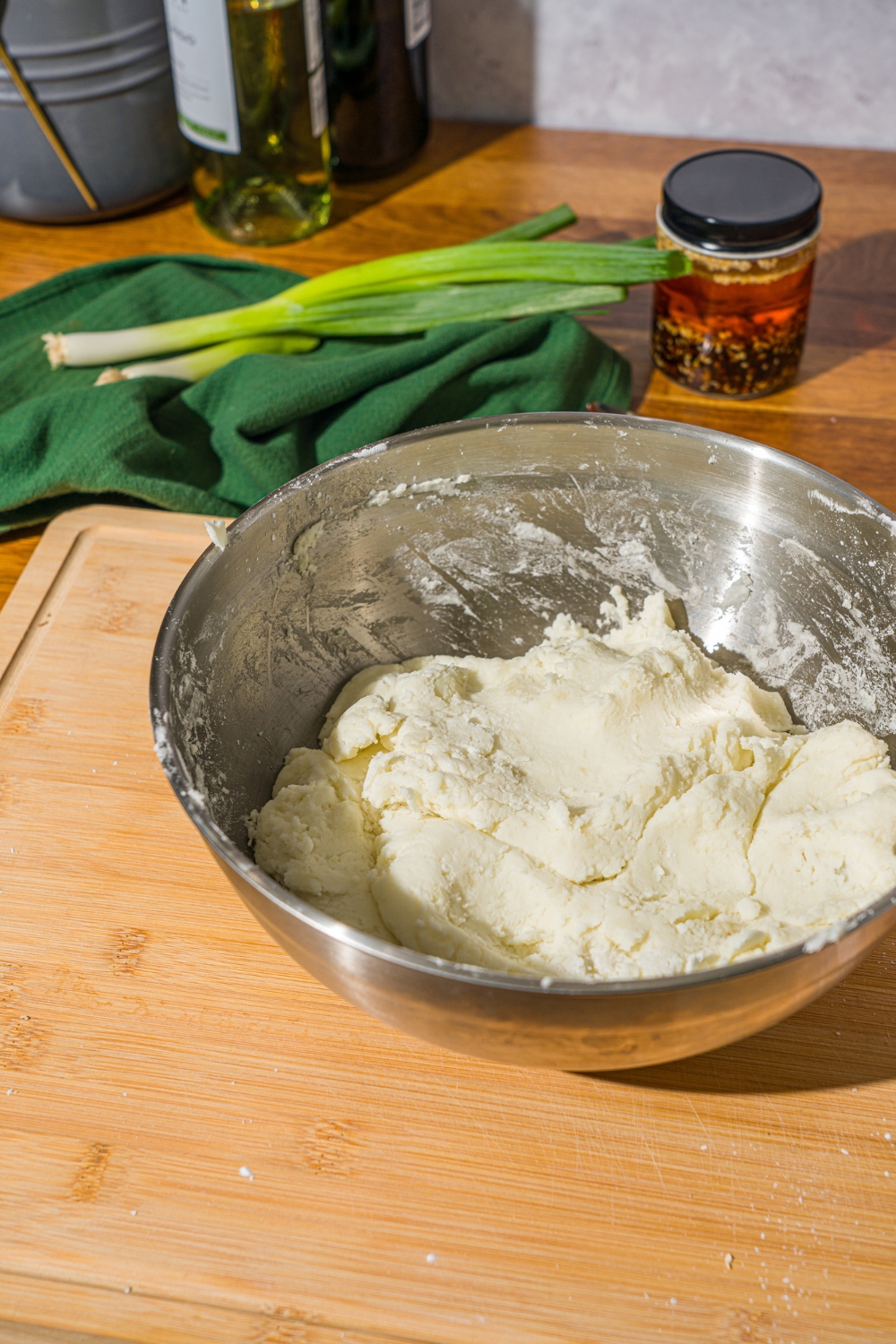
Step 3: Roll the Noodles
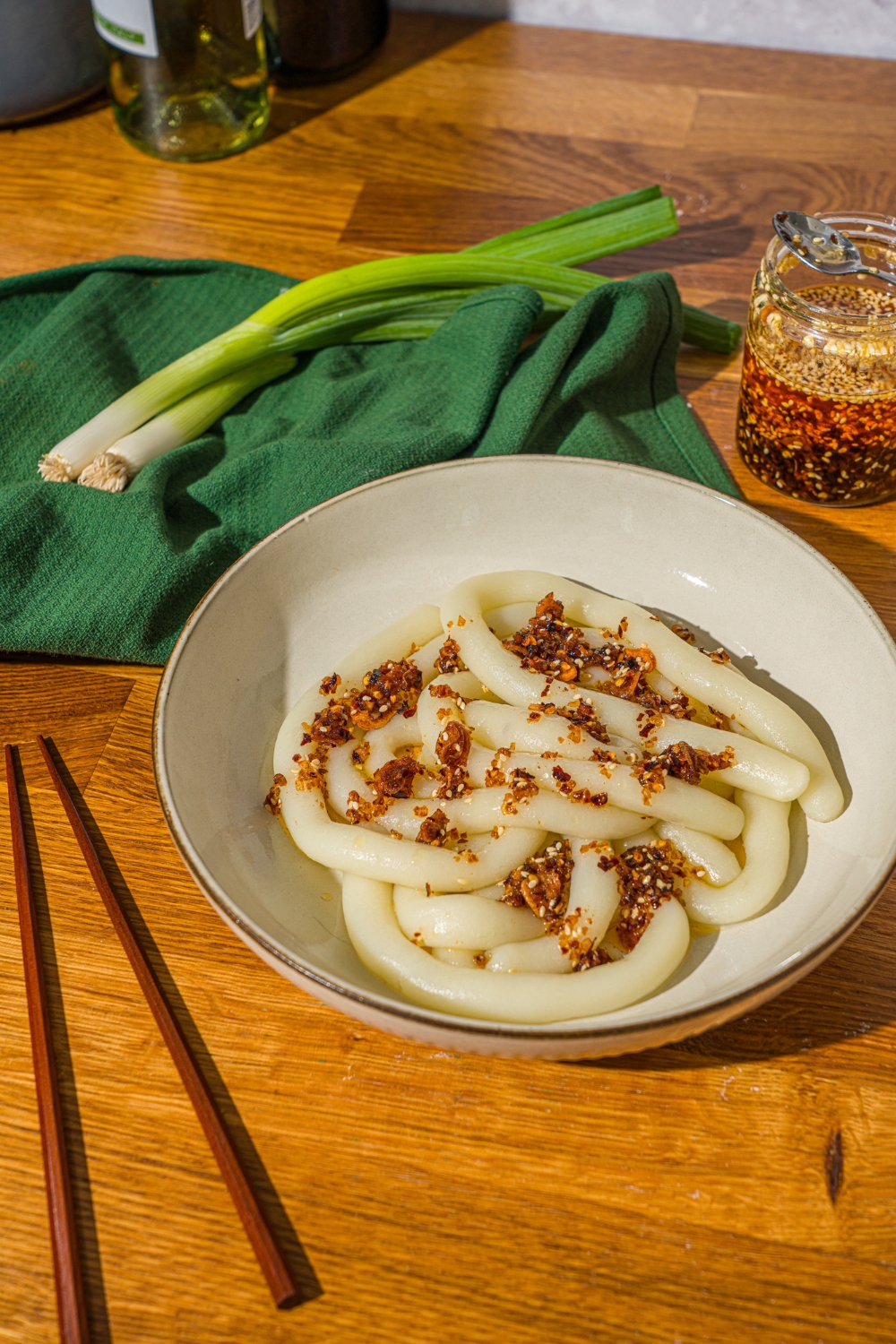
Dust your work surface lightly with potato starch. Take a portion of the dough and roll it out into thick, rope-like noodles. Think somewhere between udon and a thick spaghetti in diameter. Keep them uniform in thickness so they cook evenly. Don't roll them too thin or they'll fall apart in the water. Thick and chewy is the goal.
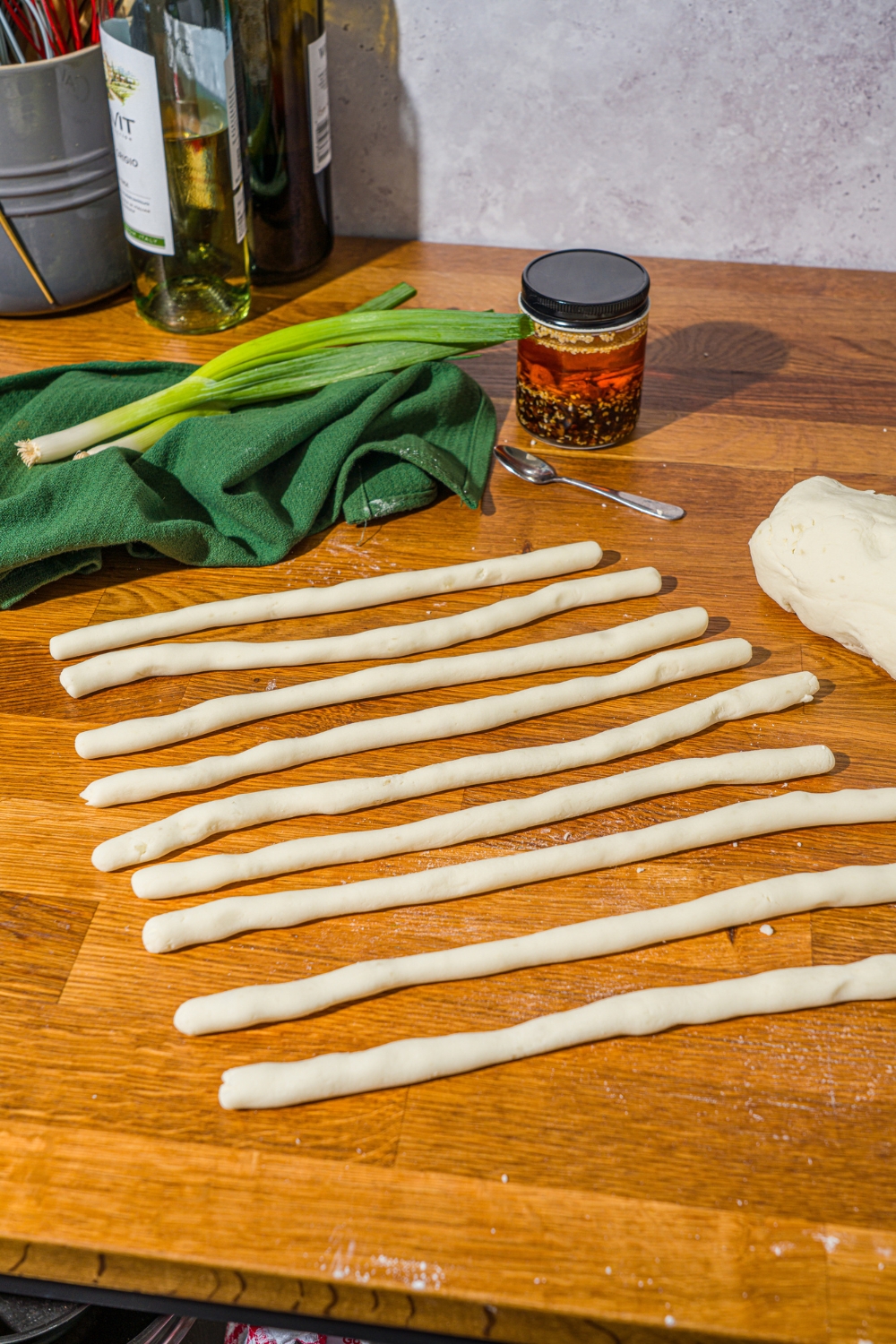
Step 4: Cook the Noodles
Bring a large pot of water to a boil, then lower the heat slightly to a strong simmer. Carefully drop the noodles in and don't crowd the pot, work in batches if needed. Watch closely: once the noodles float to the surface, they're done. This usually takes 2-4 minutes. Remove them immediately with a slotted spoon or spider. I've found overcooking makes them fall apart.
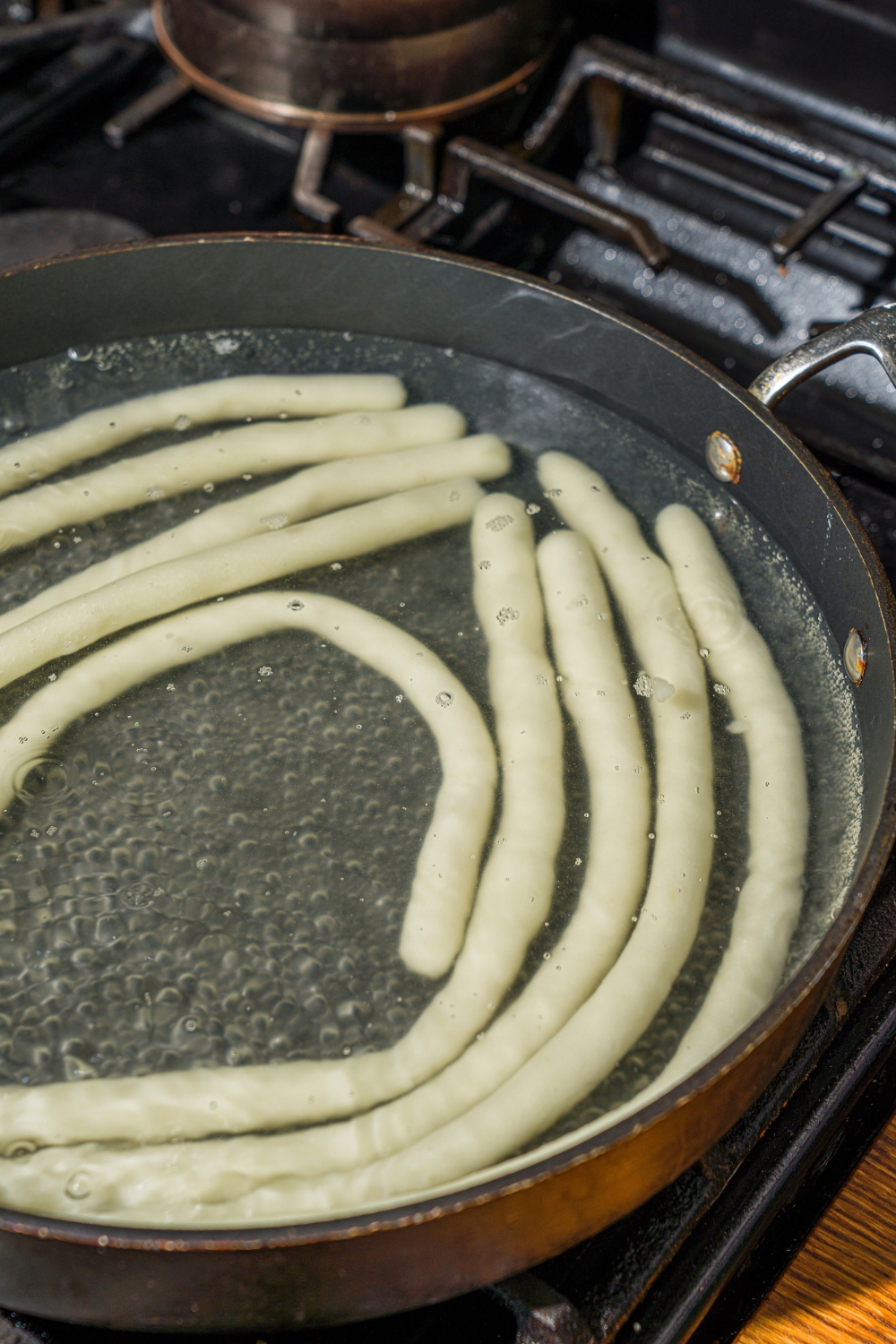
Step 5: Dress and Serve
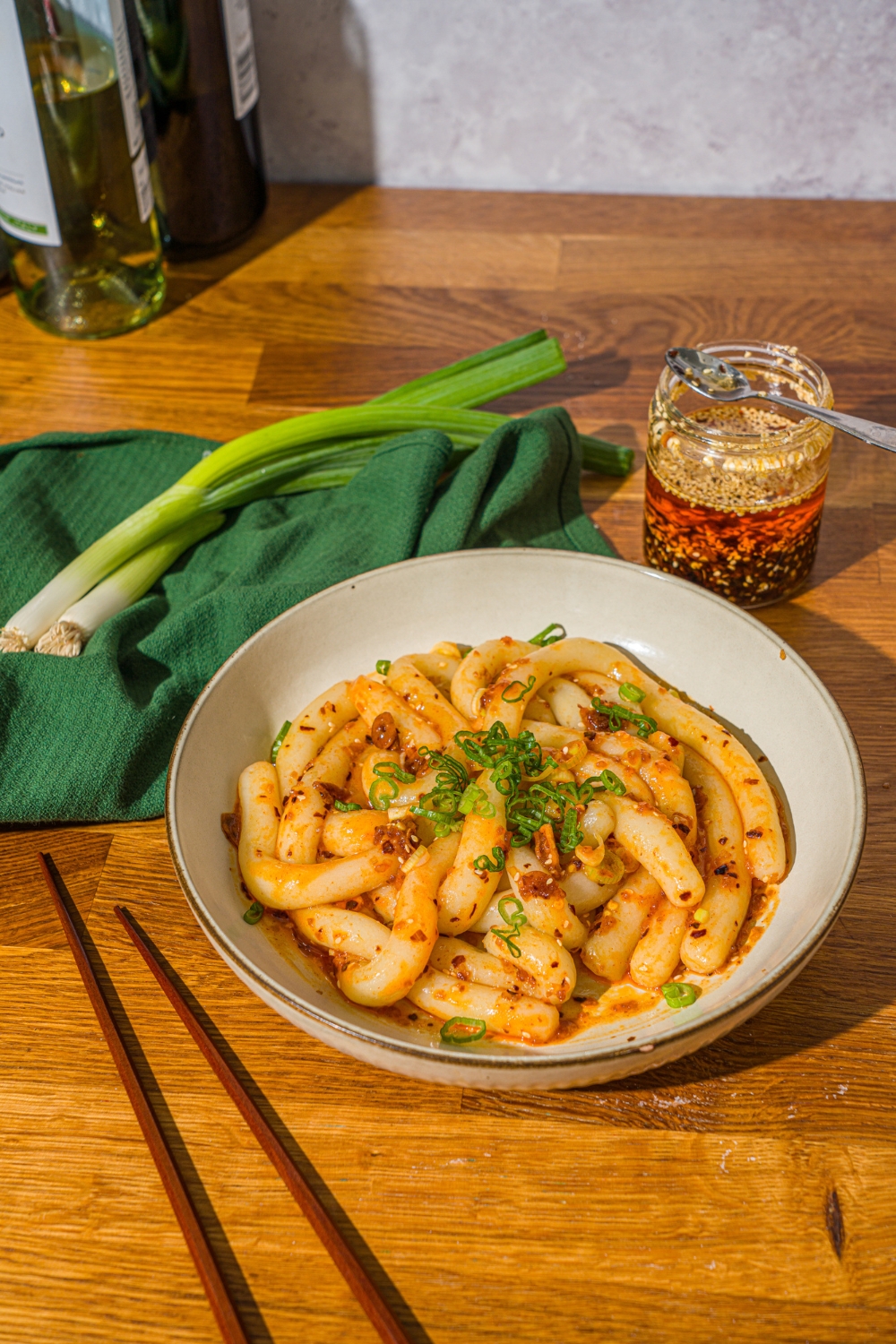
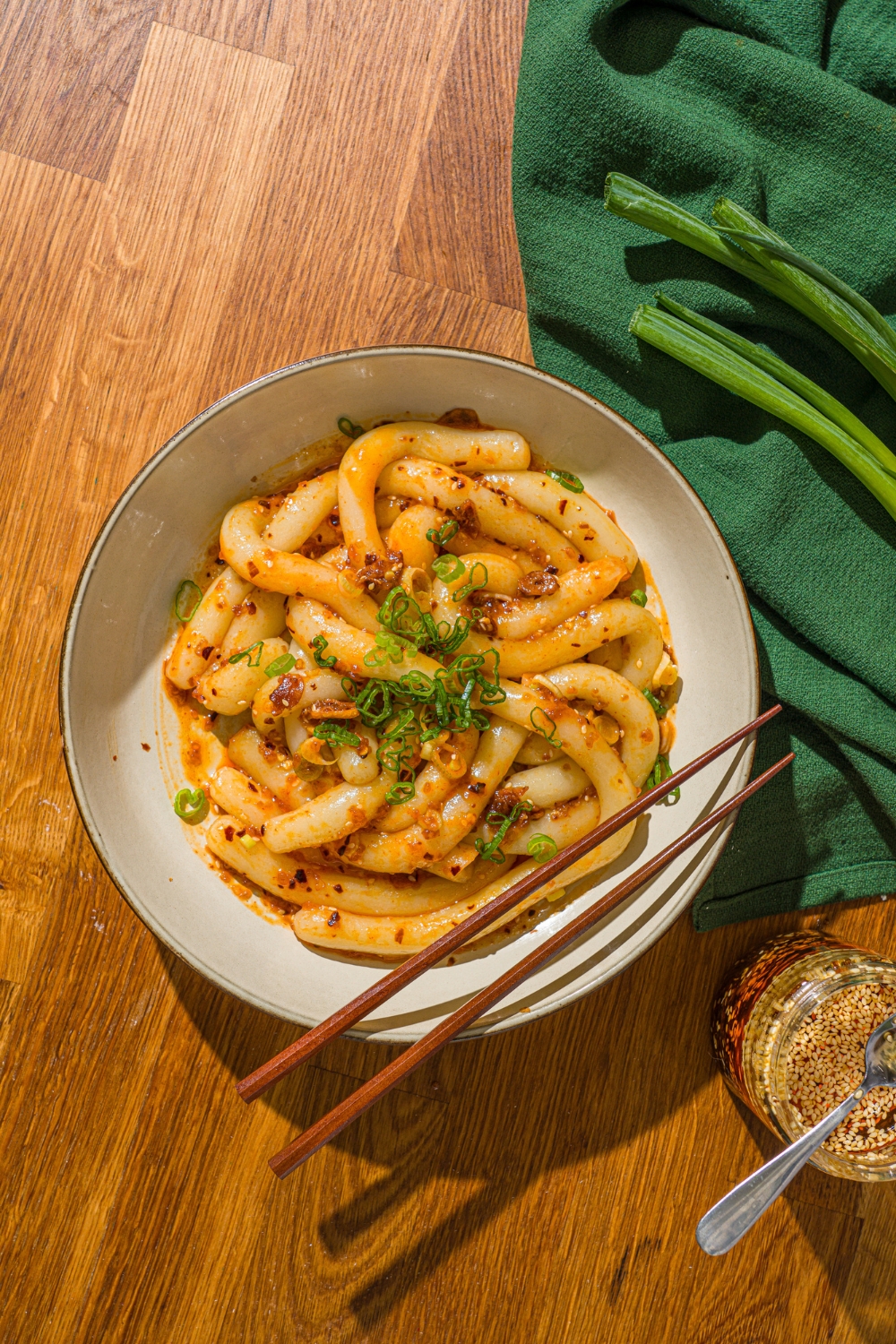
Transfer the cooked noodles to a bowl and immediately drizzle the chili crisp over the top. Toss well until every noodle is evenly coated in that glossy, spicy sauce. Top with the sliced green onion and serve right away. These noodles are at their best hot and fresh, so don't let them sit.
Tips for the Best Potato Noodles
Steam, don't boil. This is the most critical tip in the whole recipe. Boiling potatoes introduces too much water into the flesh, which makes the dough wet, sticky, and impossible to work with. Steaming keeps the potato dry and starchy and that's exactly what you need for a dough that holds together.
Mash completely smooth before adding starch. Any lumps in the mashed potato become lumps in the noodles, which causes them to break apart during cooking. Take the extra few minutes to get the mash perfectly smooth. A potato ricer is the best tool for this, but thorough hand mashing works too.
Add potato starch gradually. Every batch of potatoes has slightly different moisture levels depending on the size and freshness of the potatoes. Start with 1½ cups and add more as needed rather than dumping in the full 2 cups at once. The dough is ready when it's smooth, pliable, and pulls away from the bowl cleanly.
Keep the noodles thick. Thin potato noodles fall apart in the water. Thick, rope-like noodles hold their structure, give you that signature chew, and coat in the chili crisp much more satisfyingly. Aim for a diameter closer to udon than spaghetti.
Cook just until they float. The moment the noodles rise to the surface, they're done. Leaving them longer makes them soft and prone to breaking. Remove them immediately and dress right away.
Use a good chili crisp. The chili crisp is the only sauce on these noodles, so its quality matters. My chili crunch recipe is the perfect match for this recipe; it has shaved garlic, sesame, and a deep, layered heat that coats the noodles just right. Lao Gan Ma or any quality store-bought chili crisp works great too.
Potato Noodle Variations
Add a soy sauce drizzle. A tablespoon of soy sauce or tamari stirred in alongside the chili crisp adds a savory umami depth that makes it more complex and satisfying. This is the first thing I add when I want more flavor without more heat.
Add sesame oil. A small drizzle of toasted sesame oil over the finished noodles adds a nutty aromatic finish that pairs great with the chili crisp. Start with half a teaspoon and add more to taste. A little goes a long way.
Add a soft boiled egg. Slice a jammy 6 minute egg over the top for richness and protein. This is the variation I make most when I want to turn this into a more complete meal rather than just a side dish.
Make it milder. Use just one tablespoon of chili crisp and stir in a spoonful of peanut butter for a creamy nutty sauce that still has warmth but is significantly more balanced. A great option if you're serving this to someone who doesn't love spice. You could also use my Vietnamese peanut sauce for another option.
Add vegetables. Blanched bok choy, sautéed mushrooms, or thinly sliced cucumber stirred in alongside the noodles makes this a fuller more complete bowl. Mushrooms in particular absorb the chili crisp sauc and add a meaty texture that works really well with the chewy noodles.
Use sweet potato. Swap the russet potatoes for sweet potatoes for a slightly sweeter more colorful noodle with the same satisfying chew and an orange color that makes the bowl look stunning. The sweetness balances the heat of the chili crisp in a really unexpected and delicious way.
How to Store Spicy Potato Noodles
I've found that potato noodles are best eaten immediately. Once cooked and dressed they firm up and stick together as they cool and no storage method fully fixes that. Here's how to handle them if you need to make them ahead:
Uncooked noodles: The best make-ahead option. Store the rolled uncooked noodles on a parchment-lined tray dusted with potato starch in the refrigerator for up to 1 day. Cook them fresh when you're ready to eat and dress immediately.
Cooked undressed noodles: Toss in a small amount of neutral oil to prevent sticking and refrigerate for up to 1 day. Reheat in boiling water for 30-60 seconds before dressing and serving. They won't be quite as silky as freshly cooked but they're close enough.
Already dressed noodles: Not recommended for storing. The chili crisp soaks into the noodles as they sit and the texture changes significantly. Make only what you plan to eat in one sitting.
Frequently Asked Questions
What are potato noodles made of?
Potato noodles are made from just two ingredients: steamed russet potatoes and potato starch. The steamed potatoes are mashed completely smooth, potato starch is worked in until a smooth pliable dough forms, and the dough is rolled and cut into thick noodles before being cooked in boiling water. No flour, no eggs, no gluten. Just potatoes and starch.
What do potato noodles taste like?
On their own potato noodles have a mild neutral flavor similar to plain pasta or udon. The potato flavor is subtle and understated. The real star is the texture: thick, chewy, slightly springy, and satisfying in a way that's completely unique. The chili crisp is what gives them their bold spicy savory flavor and transforms a simple neutral noodle into something genuinely addictive.
Are potato noodles gluten free?
Yes. Both russet potatoes and potato starch are naturally gluten free making this recipe completely safe for anyone avoiding gluten. If gluten is a concern make sure your chili crisp is also certified gluten free since some brands contain soy sauce made with wheat.
Are potato noodles the same as glass noodles?
No they are different. Glass noodles, also called cellophane noodles, are made from mung bean starch and have a translucent appearance with a thinner more delicate texture. Potato noodles are thicker, chewier, and more substantial. Both are gluten free but the texture and eating experience are quite different. Potato noodles are closer in texture to a thick udon than to glass noodles.
Why did my noodles fall apart in the water?
The two most common causes are dough that is too wet and noodles that are rolled too thin. Steaming the potatoes rather than boiling them is essential since boiling adds moisture that makes the dough impossible to work with. Mash them completely dry before adding starch and roll the noodles to a thick rope-like diameter before cooking.
Why is my dough too sticky to roll?
Too much moisture in the mashed potato is almost always the culprit. Add potato starch a tablespoon at a time and work it in thoroughly between each addition until the dough is smooth and pulls away from your hands cleanly. Dusting your work surface and hands generously with potato starch helps significantly and patience is the most important ingredient at this stage.
Can I use a different starch?
Potato starch is what gives these noodles their distinctive chew and springiness so it is strongly recommended for the best result. Cornstarch works as a substitute but produces a slightly less springy noodle. Tapioca starch comes closest to potato starch in terms of texture and is the best alternative if potato starch is not available.
Can I freeze the uncooked noodles?
Yes and freezing is a great way to have potato noodles ready without making the dough from scratch every time. Freeze in a single layer on a parchment-lined tray until solid then transfer to a freezer bag for up to 1 month. Cook straight from frozen and add an extra minute or two to the cooking time. They are done when they float to the surface.
More Viral Potato Recipes to Try Next
Spicy Potato Noodles

These spicy potato noodles are chewy, silky, and coated in chili crisp for a bold, fiery kick that's completely addictive. Made from just steamed russet potatoes and potato starch, they're naturally gluten free, surprisingly simple to pull together, and unlike any noodle you've had before. If you've been seeing chewy potato noodles all over your social media feed, this is the recipe to make.
Ingredients
- 4 medium russet potatoes, diced
- 1½–2 cups potato starch
- 2 tablespoons green onion, chopped
- 2 tablespoons chili crisp
- Water, as needed
Instructions
- Steam the diced potatoes until completely soft, about 20–25 minutes. Do not boil.
- Mash the warm potatoes until completely smooth. Add potato starch gradually, mixing until a smooth, pliable dough forms. Add small amounts of water if needed.
- Roll portions of dough into thick, rope-like noodles on a starch-dusted surface.
- Bring a pot of water to a boil, then reduce to a strong simmer. Cook noodles in batches until they float to the surface, about 2–4 minutes. Remove immediately.
- Transfer to a bowl, drizzle with chili crisp, and toss to coat. Top with green onion and serve immediately.
Notes
- Steam, don't boil. Boiling adds too much water to the dough.
- Mash completely smooth before adding starch for the best noodle texture.
- Keep noodles thick. Thin noodles break apart during cooking.
- Remove noodles the moment they float, overcooking makes them fall apart.
- Best eaten immediately; store uncooked noodles in the fridge for up to 1 day.
- Homemade chili crunch is the ideal sauce for this recipe.
Nutrition Information:
Yield:
2Serving Size:
1Amount Per Serving: Calories: 361Total Fat: 2gSaturated Fat: 0gUnsaturated Fat: 1gCholesterol: 3mgSodium: 109mgCarbohydrates: 77gFiber: 8gSugar: 4gProtein: 10g
Leave a Reply