


This white wine garlic butter sauce is bright, buttery, garlicky, and just spicy enough to keep every bite interesting. You make it in one saucepan in about 5 minutes, toss it with pasta, and finish with parsley and freshly grated Parmesan. That's it. It tastes like something you'd order at a cozy Italian spot, but it's simple enough for a quick weeknight dinner.
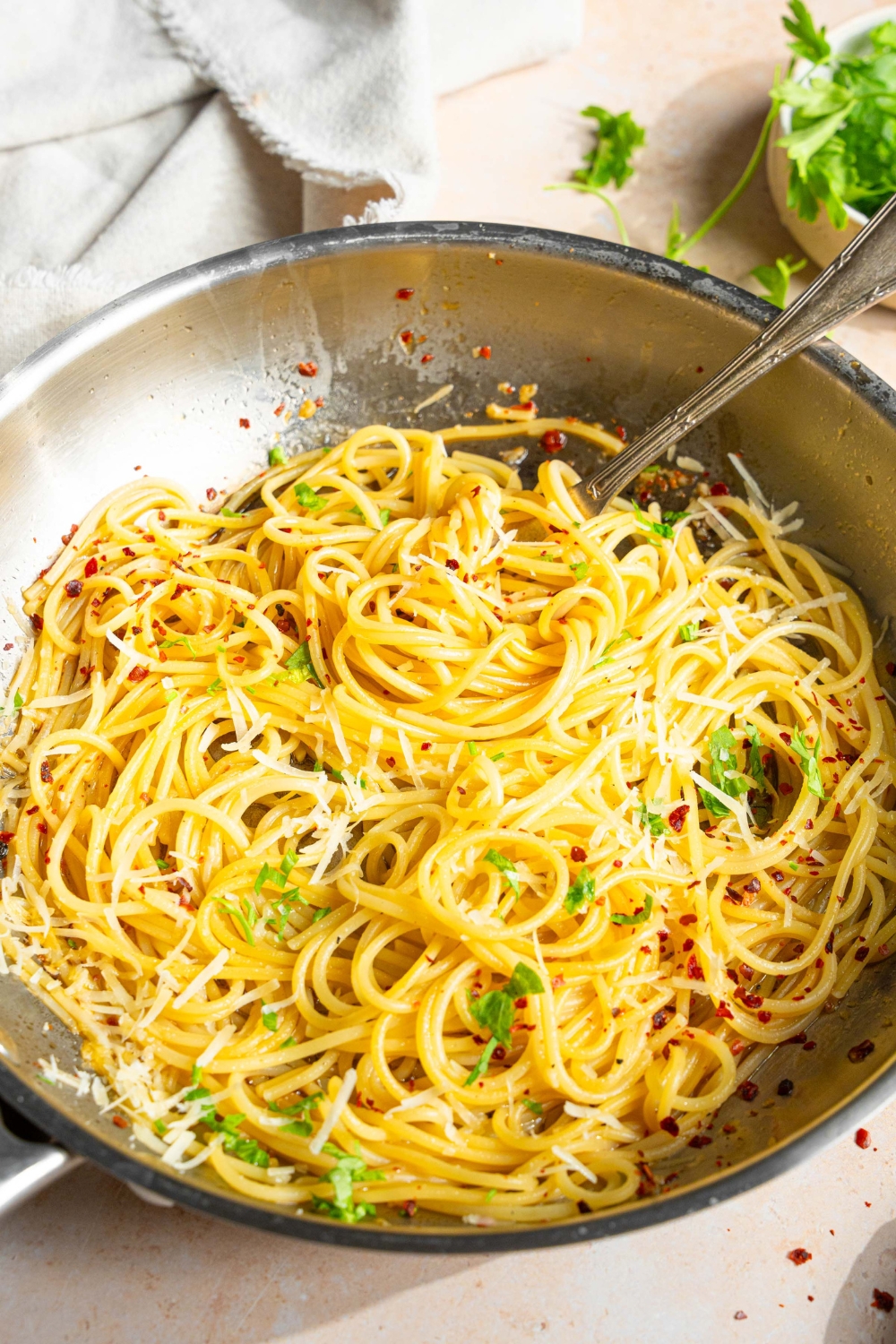
Table of Contents
Why You'll Love This White Wine Garlic Butter Sauce
This white wine garlic butter sauce is the kind of simple pasta sauce that tastes way fancier than the effort it takes. Butter makes it silky, olive oil keeps it from feeling heavy, and the white wine adds that bright, restaurant-style bite that makes everything taste more alive, without needing a drop of cream. The garlic brings the punch, the red pepper flakes add a little warmth, and the parsley at the end keeps the whole thing tasting fresh and clean instead of rich and one-note.
It’s also fast, which is why it’s been a weeknight staple for me. While your pasta cooks, the sauce is basically done. You’re not simmering for an hour or babysitting a complicated reduction, you’re building flavor in minutes with ingredients you probably already have. It’s perfect when you want an easy white wine sauce for pasta that still feels like you did something impressive.
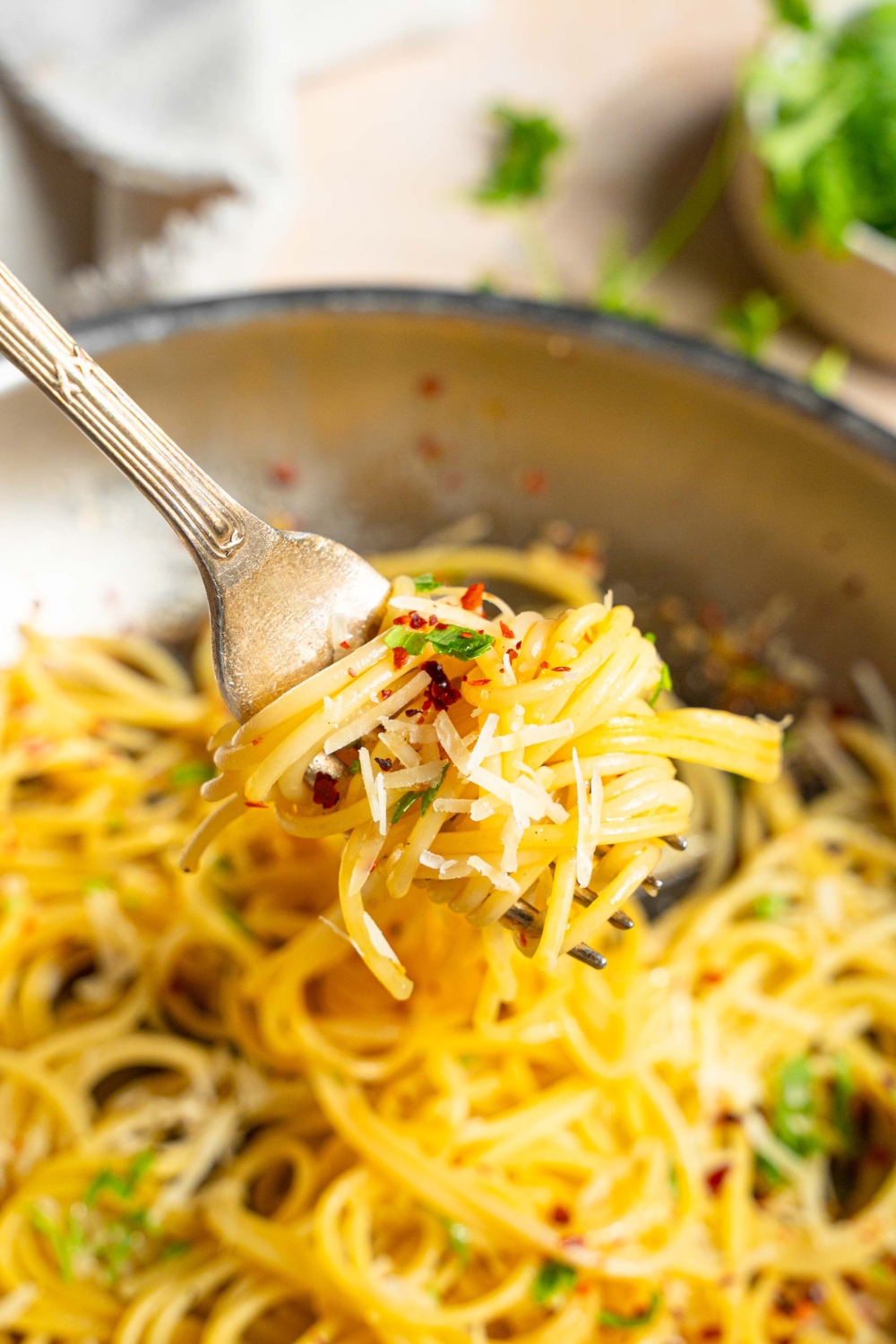
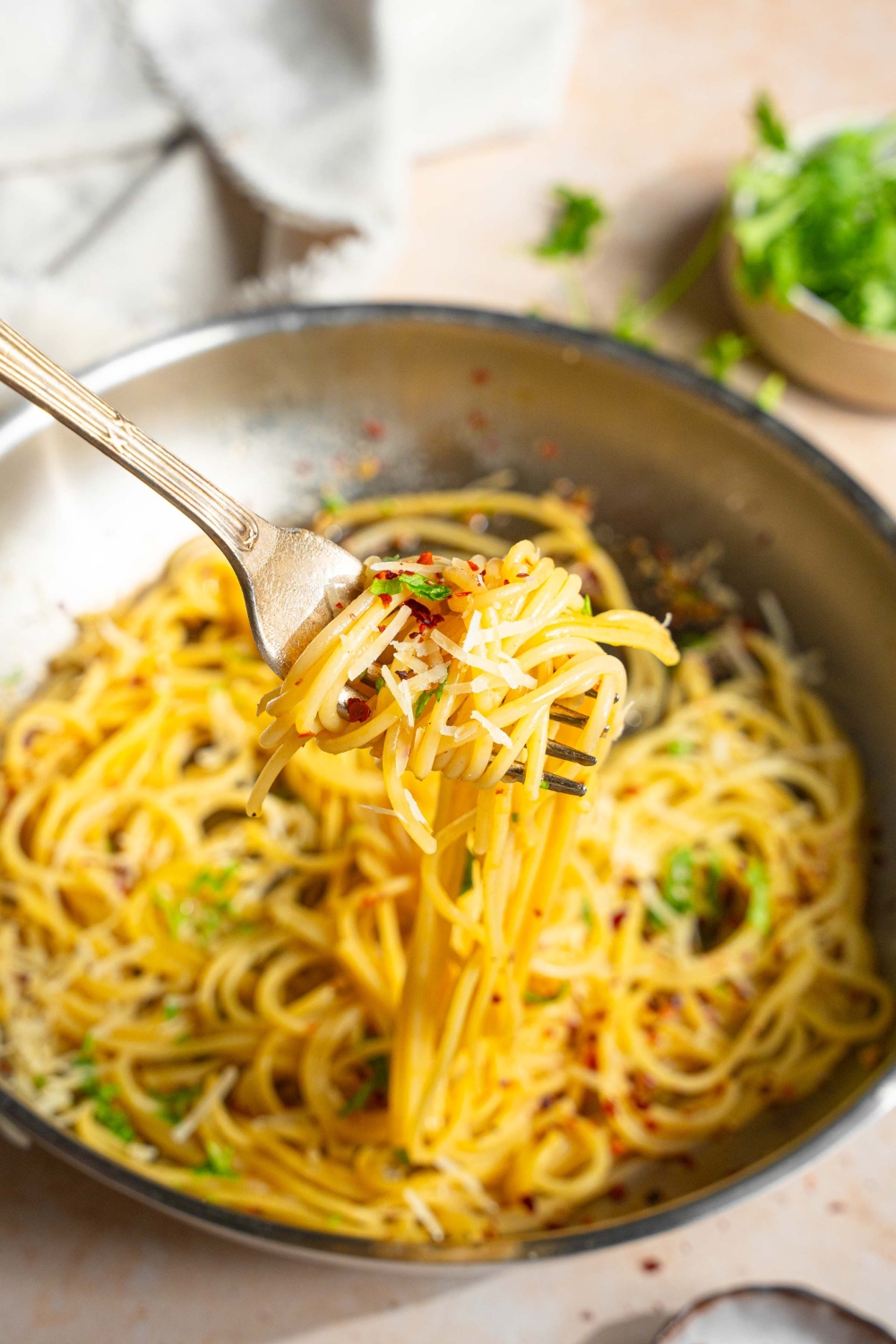
The best part is how well it clings to pasta. A splash of starchy pasta water turns this into a glossy, emulsified garlic butter pasta sauce that coats every noodle instead of pooling at the bottom of the bowl. You get that silky finish like a classic Italian-style pasta, but with a quick pantry-friendly method that’s hard to mess up.
And it’s super flexible. You can keep it mild or crank up the heat, add more wine for a lighter, brighter sauce, or finish with Parmesan for a richer bite. It also works on way more than pasta. Spoon it over shrimp, chicken, scallops, roasted veggies, or even use it as a quick dip with crusty bread when you’ve got extra sauce in the pan.
Ingredients You'll Need
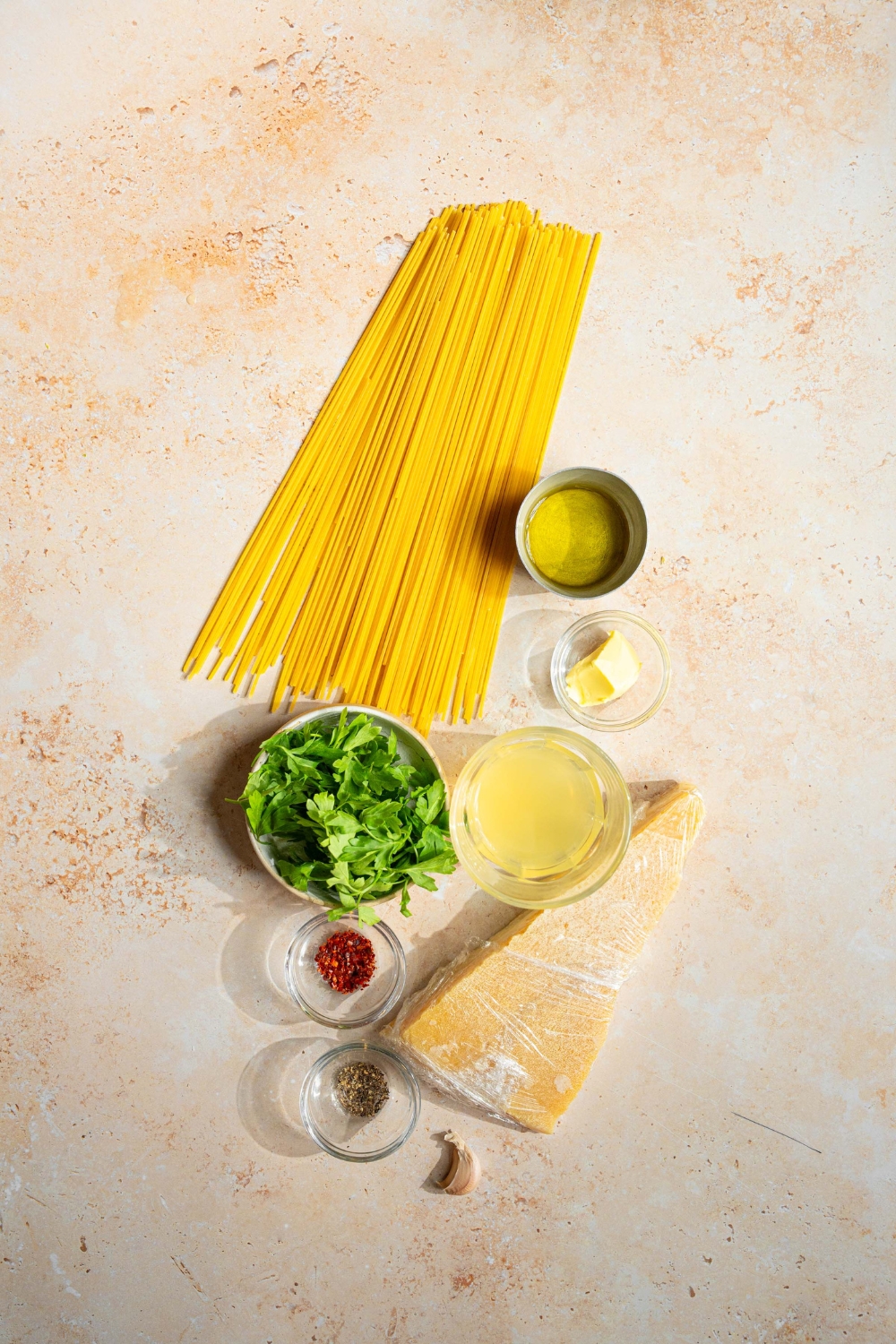
- 2 teaspoons minced garlic
- ¼ cup extra virgin olive oil
- 5 tablespoons butter
- ½ teaspoon crushed red pepper flakes
- 1 teaspoon salt
- ½ teaspoon freshly ground black pepper
- ½ cup white wine
- 1 pound of pasta
- ½ cup chopped parsley, for garnish
- ½ cup freshly grated Parmesan
Ingredient Notes That Make This Sauce Better
- Garlic: Minced garlic cooks fast. You want it fragrant and lightly golden, not browned, because browned garlic can taste bitter.
- Extra virgin olive oil: Adds flavor and helps keep the sauce smooth and glossy. If your extra virgin olive oil is very peppery, it can add a nice bite.
- Butter: Butter gives the sauce that silky, clingy feel. Using both butter and olive oil is the best combo for flavor and texture.
- White wine: Use a dry white wine you would actually drink. Pinot Grigio, Sauvignon Blanc, or Chardonnay all work. Avoid sweet wines, because they can throw off the balance.
- Parsley: Fresh parsley is not just a garnish here. It cuts richness and makes the sauce taste bright. So I highly recommend adding it.
- Parmesan: Freshly grated parm melts better and tastes sharper. Pre-grated can be a little dusty and does not melt as cleanly.
How to Make White Wine Garlic Butter Sauce
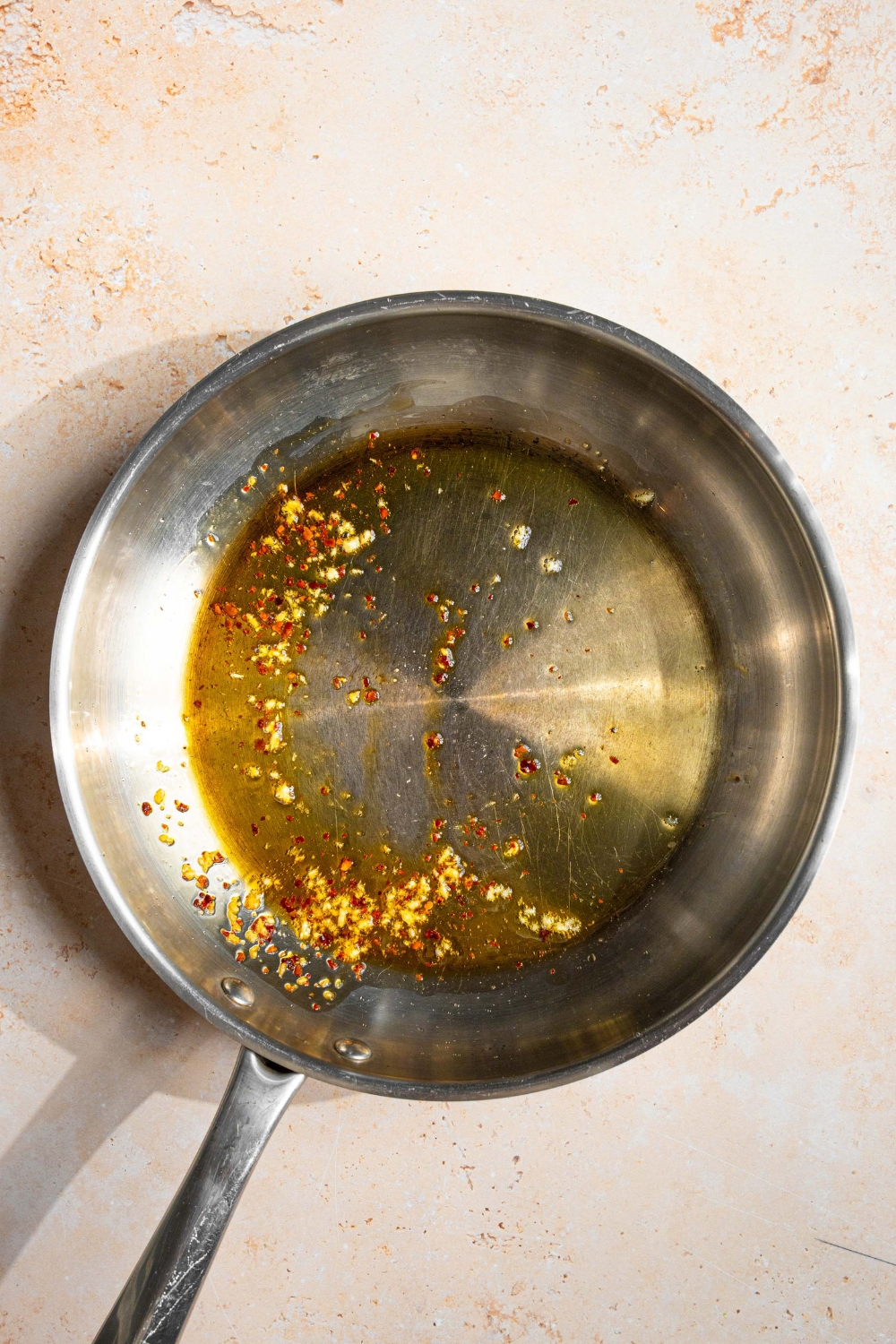
Step 1: Sauté garlic and red pepper
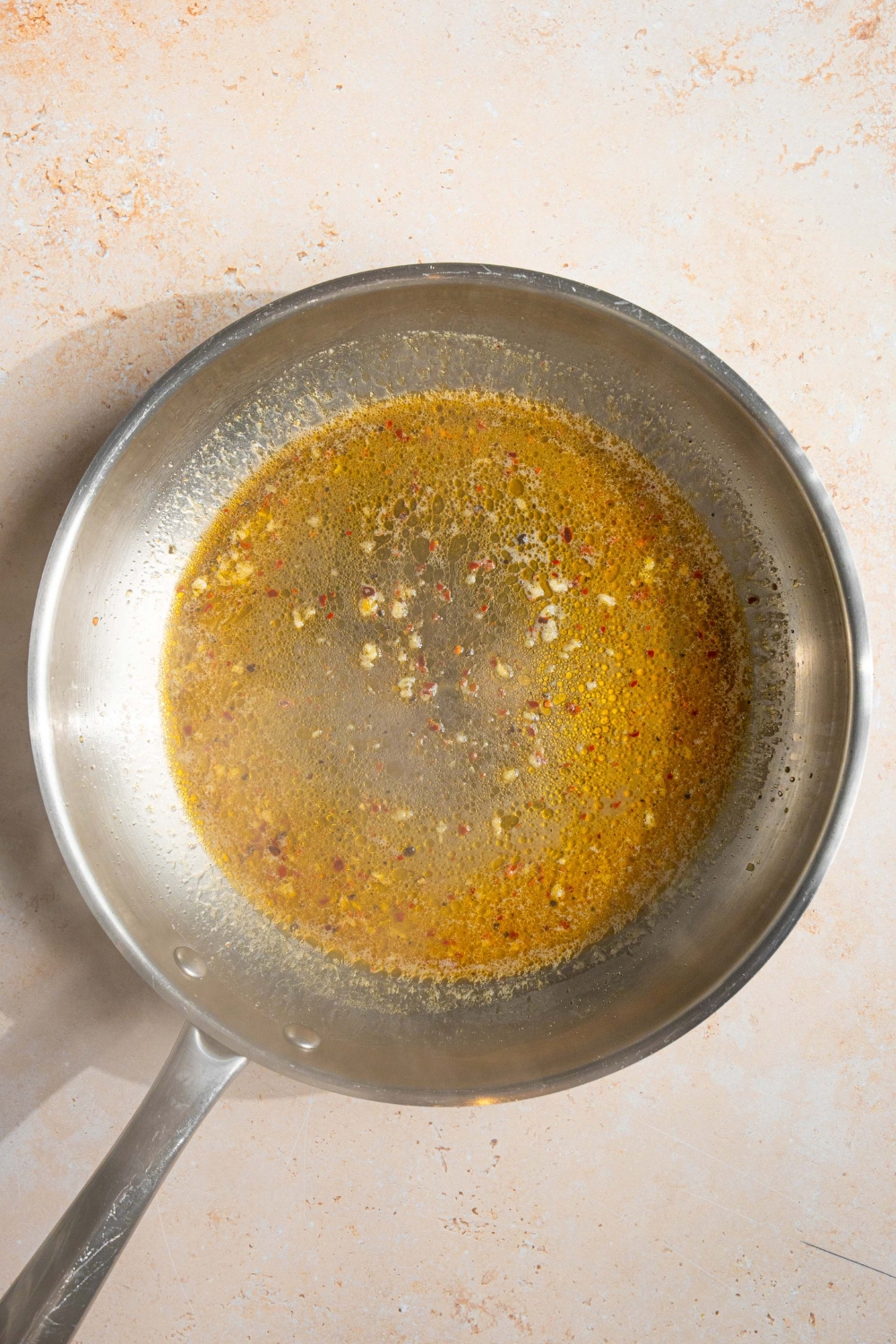
Heat olive oil in a large saucepan over medium heat. Add garlic and red pepper flakes. Sauté for about 1 minute until fragrant and lightly golden.
Step 2: Add wine, butter, and seasoning
Stir in salt, black pepper, white wine, and butter. Cook about 2 minutes, stirring gently, until butter is fully melted and the sauce is well combined. Remove from heat.
Step 3: Cook pasta
Bring a large pot of water to a boil and cook pasta until al dente. Drain well. Tip: Reserve about 1 cup of pasta water before draining. It's the best way to help the sauce cling and turn silky.
Step 4: Toss and finish
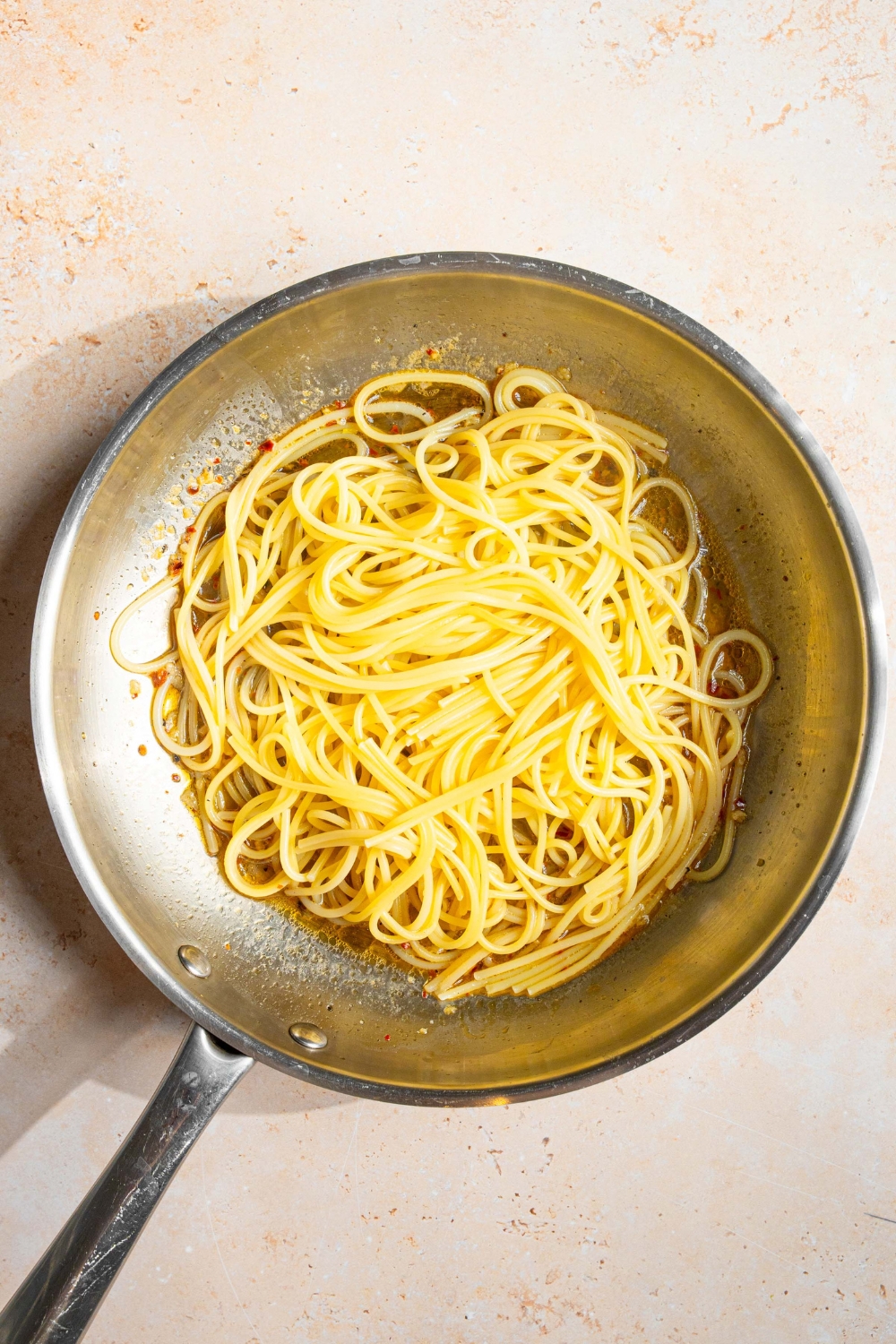
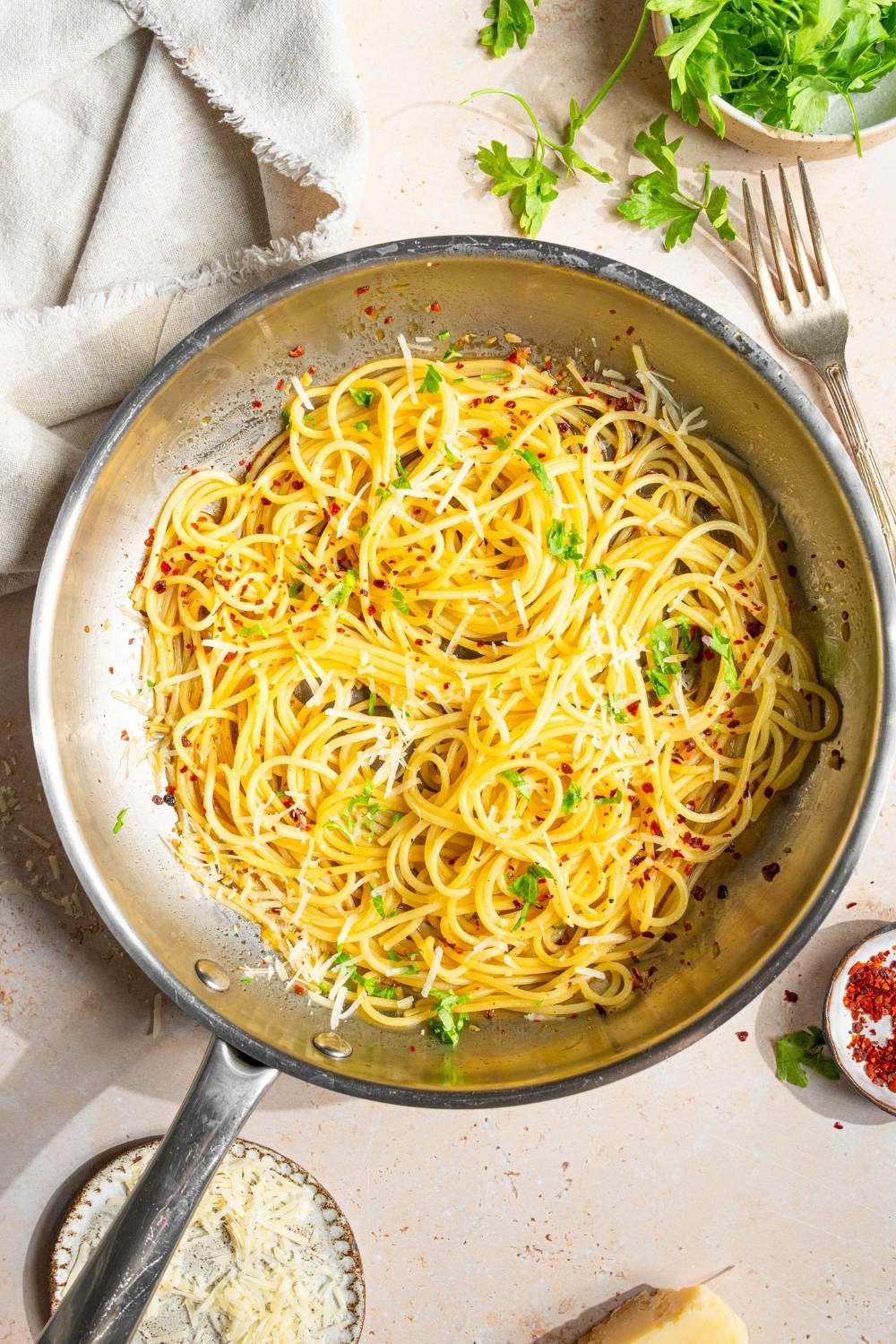
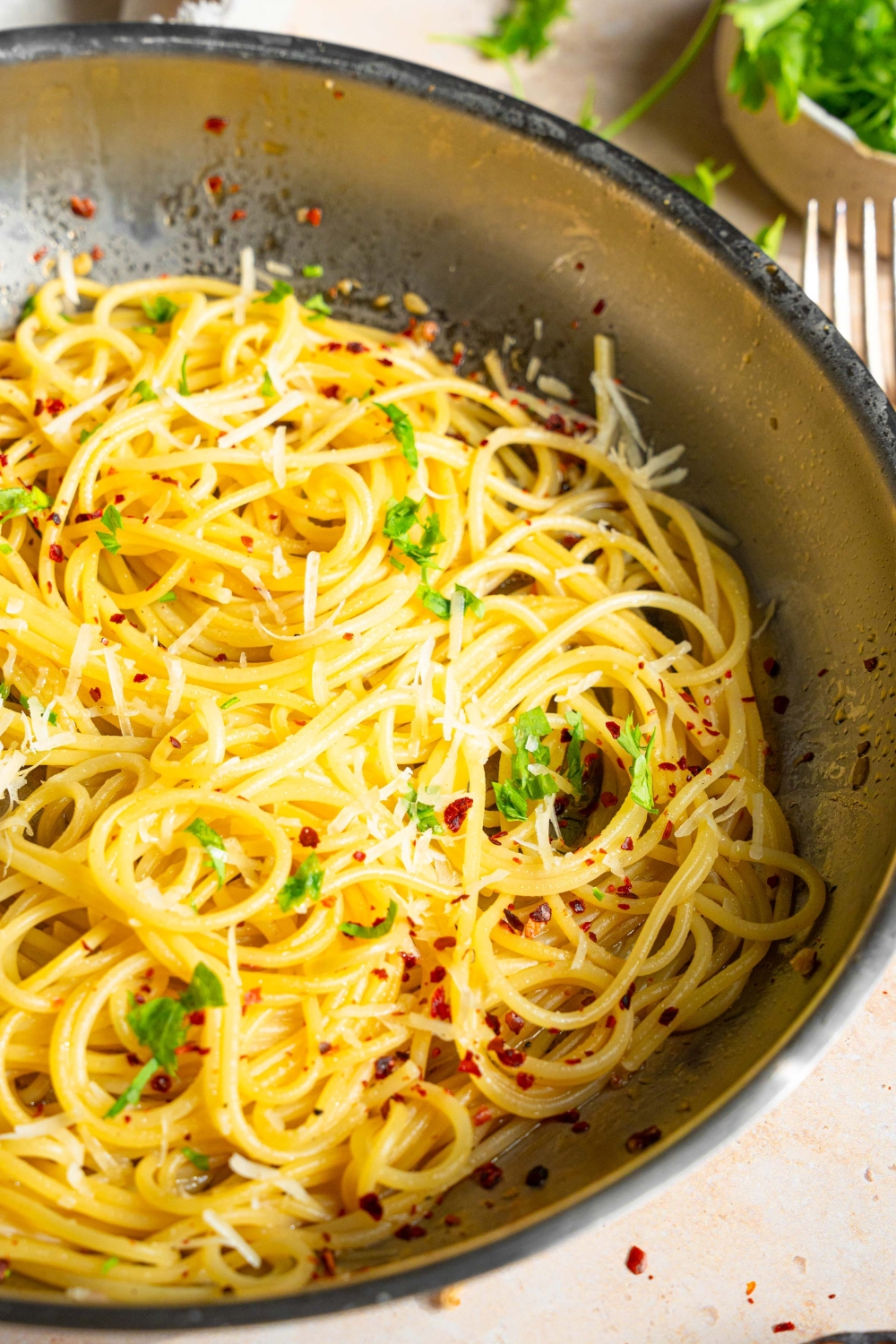
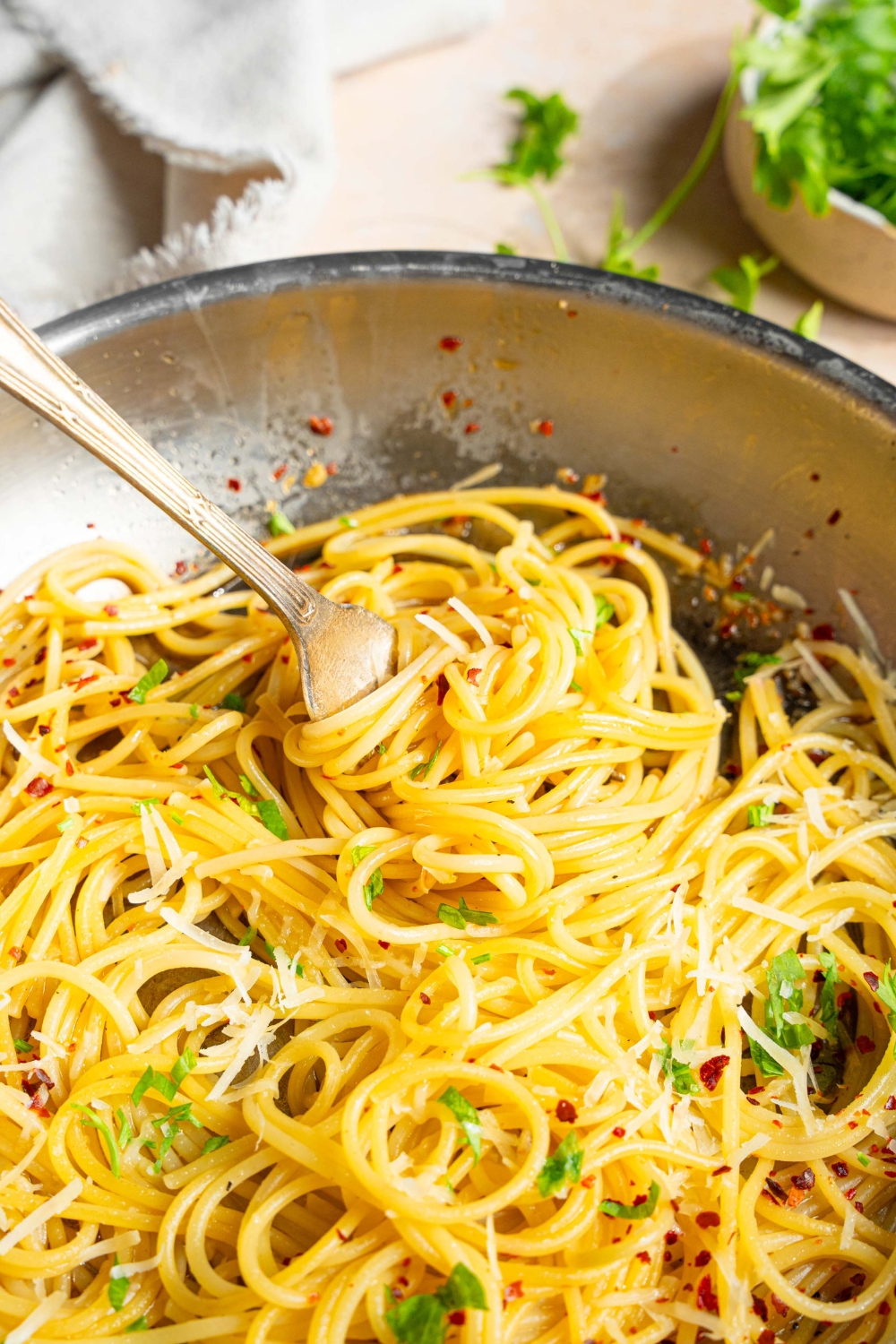
Toss cooked pasta with the sauce. Add a splash of pasta water if needed to loosen and emulsify. Finish with chopped parsley and freshly grated Parmesan on top and serve warm.
Pro Tips To Make The Best White Wine Sauce
- Keep the garlic golden, not brown. Garlic goes from perfect to bitter fast, so keep the heat at medium (or even medium-low if your pan runs hot) and stir constantly for about 30 to 60 seconds. The second it smells fragrant, you’re ready for the next step. If it starts browning, the whole sauce can taste harsh.
- Use the right wine (and don’t use “cooking wine”). Dry white wine gives you the best flavor. Think Pinot Grigio, Sauvignon Blanc, or an unoaked Chardonnay. Sweet wine can make the sauce taste off, and “cooking wine” is usually salty and flat. If you wouldn’t drink it, don’t cook with it.
- Let the wine simmer long enough to mellow. When you add the wine, let it bubble for a minute or two so the sharp alcohol bite cooks off and the flavor concentrates. You’re not reducing it into syrup; you’re just giving it time to soften and blend into the butter.
- Pasta water is the difference between oily and glossy. This sauce gets “restaurant silky” when you add a splash of starchy pasta water. Start with 2 to 4 tablespoons, then toss and watch it turn glossy. The starch helps the butter and oil emulsify, so the sauce clings to pasta instead of sliding off and pooling at the bottom.
- Toss the pasta in the pan, don’t pour sauce on top. Once your sauce is ready, add drained pasta directly into the saucepan and toss for 30 to 60 seconds. This finishes the pasta in the sauce, thickens it slightly, and gives you a better coating on every noodle.
- Salt your pasta water like you mean it. Your pasta should taste good before it ever hits the sauce. Aim for about 1 tablespoon kosher salt per gallon of water, or enough that it tastes pleasantly salty. This is how you get flavorful pasta without needing to over-salt the sauce.
- Add Parmesan the right way. If you’re finishing with Parmesan, take the pan off the heat first and let it cool for about 30 seconds, then add the cheese and toss. Super high heat can make Parmesan clump or turn stringy instead of melting smoothly.
- Balance the sauce based on your wine. Wines vary. If your sauce tastes a little sharp, whisk in an extra tablespoon of butter to round it out. If it tastes heavy, add a small squeeze of lemon or an extra spoonful of pasta water to brighten it up without overpowering the wine flavor.
- Control the heat level. Red pepper flakes bloom in hot fat, so you’ll feel their heat more as the sauce sits. If you want it mild, start with a small pinch. If you want it spicy, add more at the end and taste as you go.
- Don’t let it sit too long before serving. Garlic butter sauces are best fresh. If it sits, it can separate as it cools. If that happens, just warm it gently and splash in a little pasta water while tossing to bring it back to glossy and smooth.
What to Serve With White Wine Garlic Butter Pasta
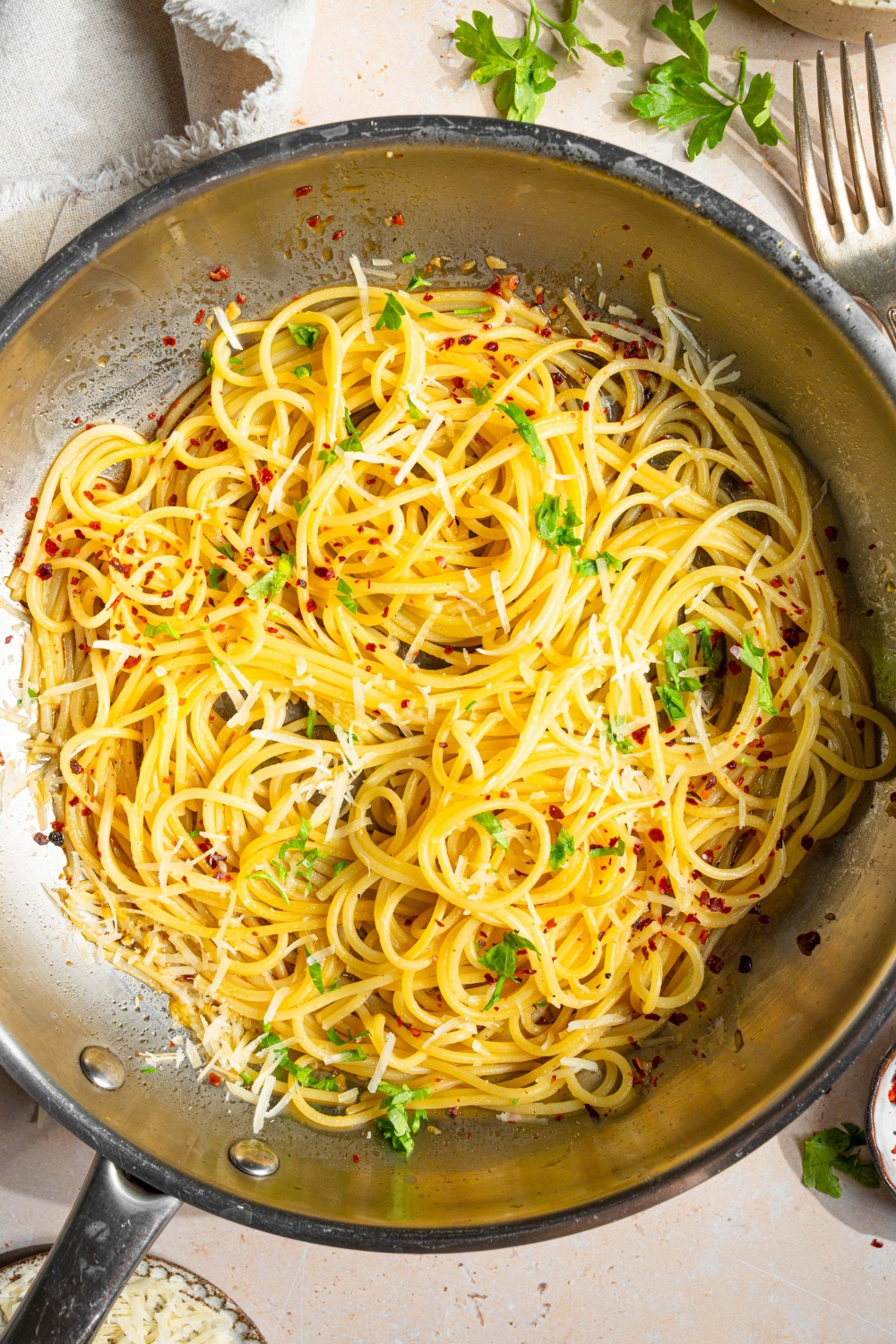
This white wine garlic butter sauce is perfect for pasta night, but it’s also one of those sauces that instantly upgrades whatever you’ve got in the fridge. Here are my favorite ways to serve it.
- Seafood pairings: Spoon it over shrimp or scallops, or toss the seafood right in the pan for the last minute so it gets coated in that garlicky, wine-butter goodness. It’s especially good with a squeeze of lemon on top.
- Chicken dinners: Drizzle it over crispy chicken cutlets, grilled chicken, or even rotisserie chicken when you want an easy win. It turns “plain chicken” into something that tastes like it came from a restaurant.
- Vegetable sides: This sauce is unreal on roasted asparagus, brussel sprouts, broccoli, or green beans. It’s also perfect for sautéed spinach or kale, just toss the greens in the pan after the sauce is done and let them wilt for 1 to 2 minutes.
- Fish night: It’s great over fish like salmon, cod, or halibut. The wine and garlic keep it bright, and the butter gives you that silky finish that makes fish feel special without needing a heavy sauce.
- Easy full meal idea: Serve your pasta with a simple salad and crusty bread to soak up the extra sauce, and you’ve got a complete dinner that feels fancy but takes almost no effort.
Storage and Reheating Tips
- Refrigerator: Store leftover white wine garlic butter pasta (or sauce) in an airtight container in the fridge for up to 3 days. The butter will firm up as it chills, so don’t worry if it looks dry or clumpy; it comes back together when reheated properly.
- Reheating (so it stays silky): Stovetop is best. Add the pasta to a pan over low heat and splash in 1 to 2 tablespoons of water, broth, or leftover pasta water. Toss and stir as it warms so the butter re-melts and the sauce turns glossy again. If it still looks dry, add another small splash of liquid and keep tossing until it’s silky. Microwave works too, just do it gently. Heat in 20 to 30 second bursts, stirring between each round, and add a small splash of water or broth so it doesn’t dry out.
- Freezing: Freezing isn’t recommended. Butter-based sauces can separate after freezing and thawing, and the texture won’t be the same. If you want to prep ahead, you’re better off making the sauce fresh or storing leftovers in the fridge and reheating slowly with a splash of liquid.
White Wine Sauce FAQs
What kind of white wine is best for pasta sauce?
A dry white wine is your best bet. Pinot Grigio and Sauvignon Blanc keep the sauce bright and crisp, and an unoaked Chardonnay gives you a slightly rounder flavor. Skip sweet wines; they can throw off the balance and make the sauce taste oddly sugary.
Can I make white wine sauce without wine?
Yes. Swap the wine for chicken broth (or veggie broth) and add a squeeze of lemon for brightness. It won’t taste exactly the same, but you’ll still get a really good garlic butter sauce with that light, fresh finish.
How do I keep garlic from burning?
Keep the heat at medium (or medium-low if your stove runs hot), stir constantly, and only cook the garlic for about 30 to 60 seconds until it smells fragrant. The moment it starts turning golden, you’re ready to add the next ingredients.
Why is my sauce oily instead of creamy?
It needs to emulsify. This happens when you toss the sauce with hot pasta and add a splash of starchy pasta water while stirring. The starch helps the butter and oil bind together, turning it glossy and silky instead of greasy.
Can I add protein to this pasta?
Absolutely. Shrimp, chicken, and scallops are perfect with this sauce. You can also do salmon, sliced sausage, or even chickpeas or tofu for a vegetarian option. Just cook your protein separately, then toss it in at the end so it stays juicy and gets coated in the sauce.
More Sauce Recipes to Try Next
White Wine Sauce for Pasta (White Wine Garlic Butter Sauce)

This white wine garlic butter sauce is bright, buttery, garlicky, and just spicy enough to keep every bite interesting. You make it in one saucepan in about 5 minutes, toss it with pasta, and finish with parsley and freshly grated Parmesan. That's it. It tastes like something you'd order at a cozy Italian spot, but it's simple enough for a quick weeknight dinner.
Ingredients
- 2 teaspoon minced garlic
- ¼ cup extra virgin olive oil
- 5 tablespoon butter
- ½ teaspoon crushed red pepper flakes
- 1 teaspoon salt
- ½ teaspoon freshly ground black pepper
- ½ cup white wine
- 1 lb pasta
- ½ cup parsley, for garnish
- ½ cup freshly grated Parmesan
Instructions
1. Heat the olive oil in a large saucepan over medium heat. Add the garlic and red pepper flakes, and sauté for about 1 minute, until fragrant and lightly golden.
2. Stir in the salt, black pepper, white wine, and butter. Cook for about 2 minutes, stirring gently, until the butter is melted and the sauce is well combined. Remove from the heat.
3. If serving with pasta, bring a large pot of water to a boil and cook the noodles until al dente. Drain well.
4. Toss the sauce with the cooked pasta, or serve it over chicken, scallops, or shrimp as desired.
5. Finish with a garnish of fresh parsley and freshly grated Parmesan before serving.
Nutrition Information:
Yield:
4Serving Size:
1Amount Per Serving: Calories: 618Total Fat: 40gSaturated Fat: 16gUnsaturated Fat: 24gCholesterol: 65mgSodium: 1236mgCarbohydrates: 45gFiber: 4gSugar: 1gProtein: 17g
Leave a Reply