


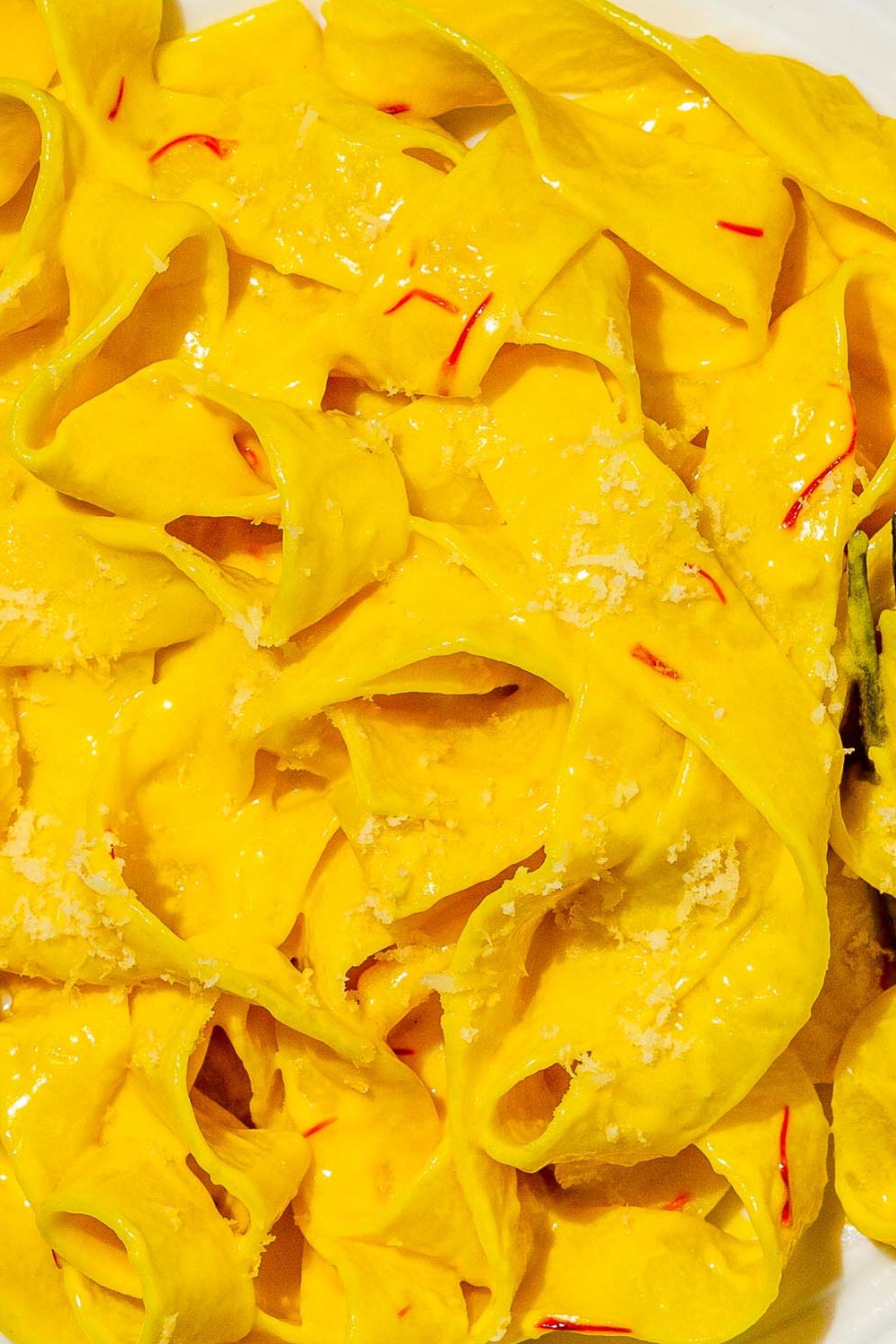
This saffron cream sauce recipe uses real saffron threads, steeped in hot water to unlock their color, aroma, and flavor. The saffron base blends with garlic, white wine, butter, cream, Parmesan, and a touch of lemon to create a creamy, ultra-flavorful restaurant-quality sauce that clings perfectly to any pasta. It’s elegant enough for date night but simple enough for a weeknight dinner. And if you’ve tried any of my other pasta sauces—like my Alfredo Sauce or Cajun Cream Sauce—then you already know I specialize in easy yet delicious sauces that turn plain pasta into something unforgettable.
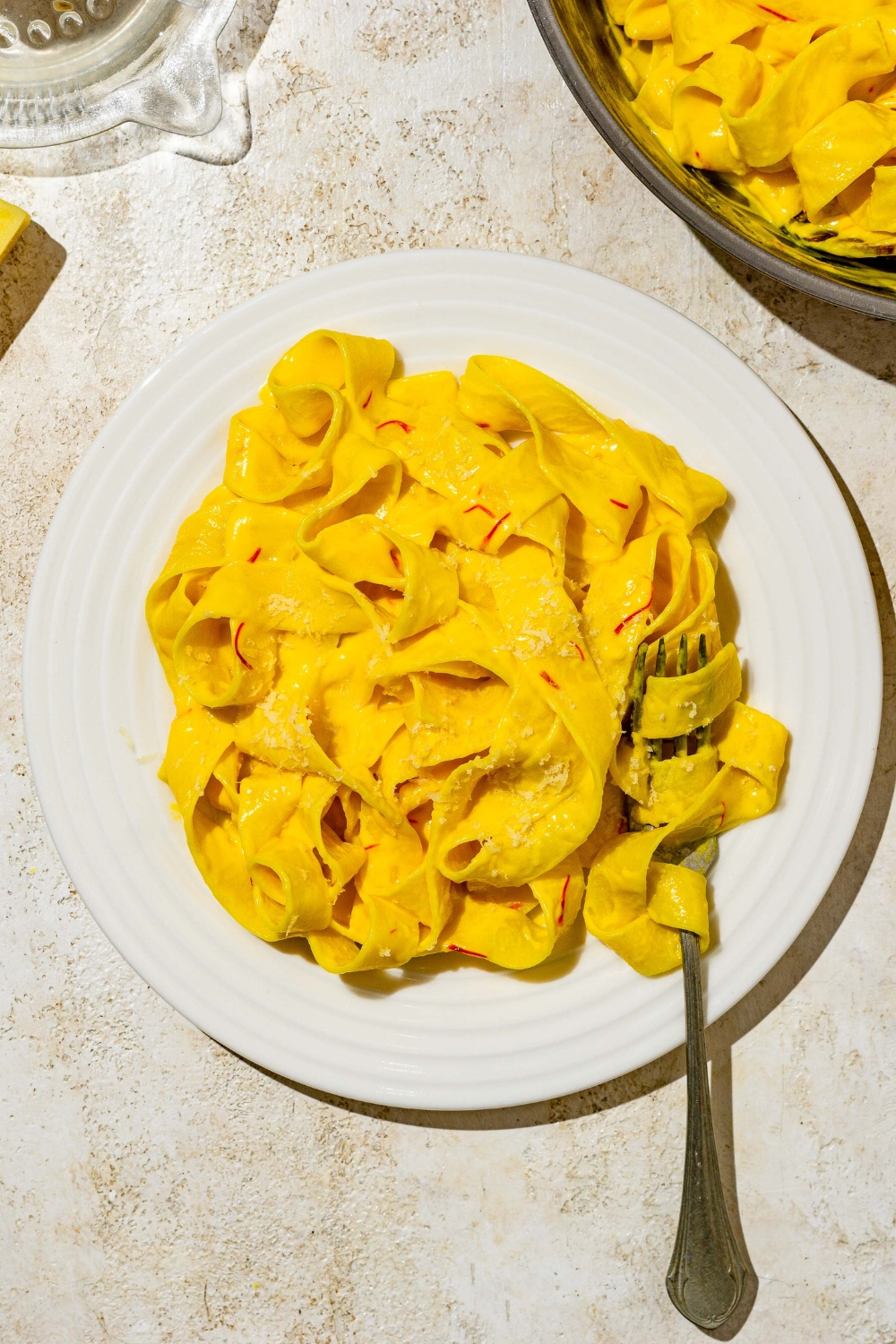
Table of Contents
Why I Love This Creamy Saffron Sauce Recipe
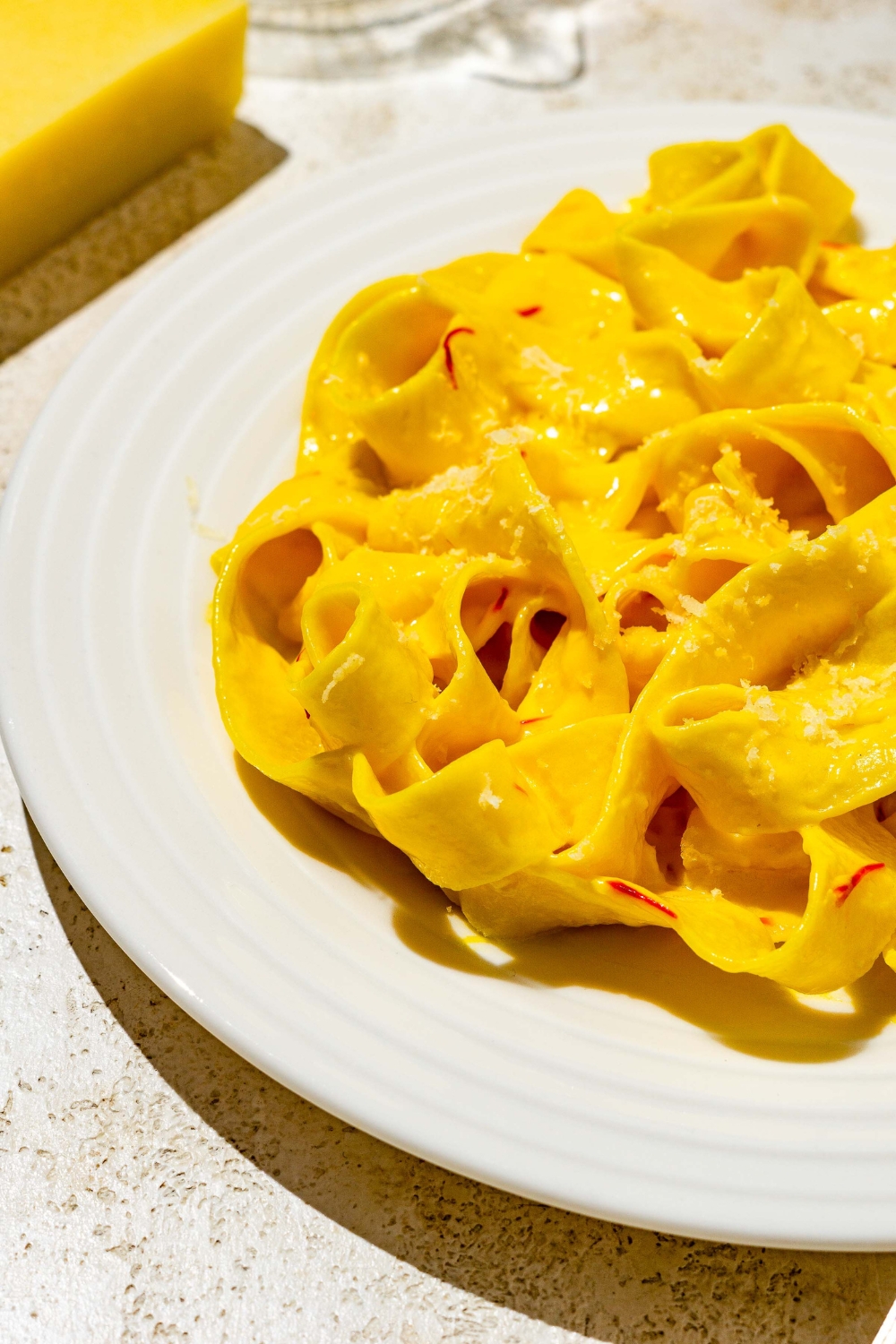
Saffron is one of those ingredients that instantly elevates a dish with almost no effort. The moment the threads bloom in hot water, they release that warm, floral, slightly earthy aroma that gives a traditional cream sauce a signature flavor. When you combine that saffron infusion with butter, wine, garlic, and cream, you get a sauce that tastes like something you’d order at a high-end Italian or Spanish restaurant.
The first time I ever tasted saffron pasta was on vacation, and I knew I had to recreate something similar at home. I experimented with a few different techniques before landing on this version, and now it’s one of my favorite pasta sauces I’ve ever made. It has the richness of a cream sauce, the brightness of lemon, and the complexity that only saffron can bring. Tossed with pasta, it becomes a dish that looks impressive, tastes incredible, and yet comes together easily enough for any weeknight. It’s a guaranteed “wow” recipe every time I make it.
Ingredients You’ll Need
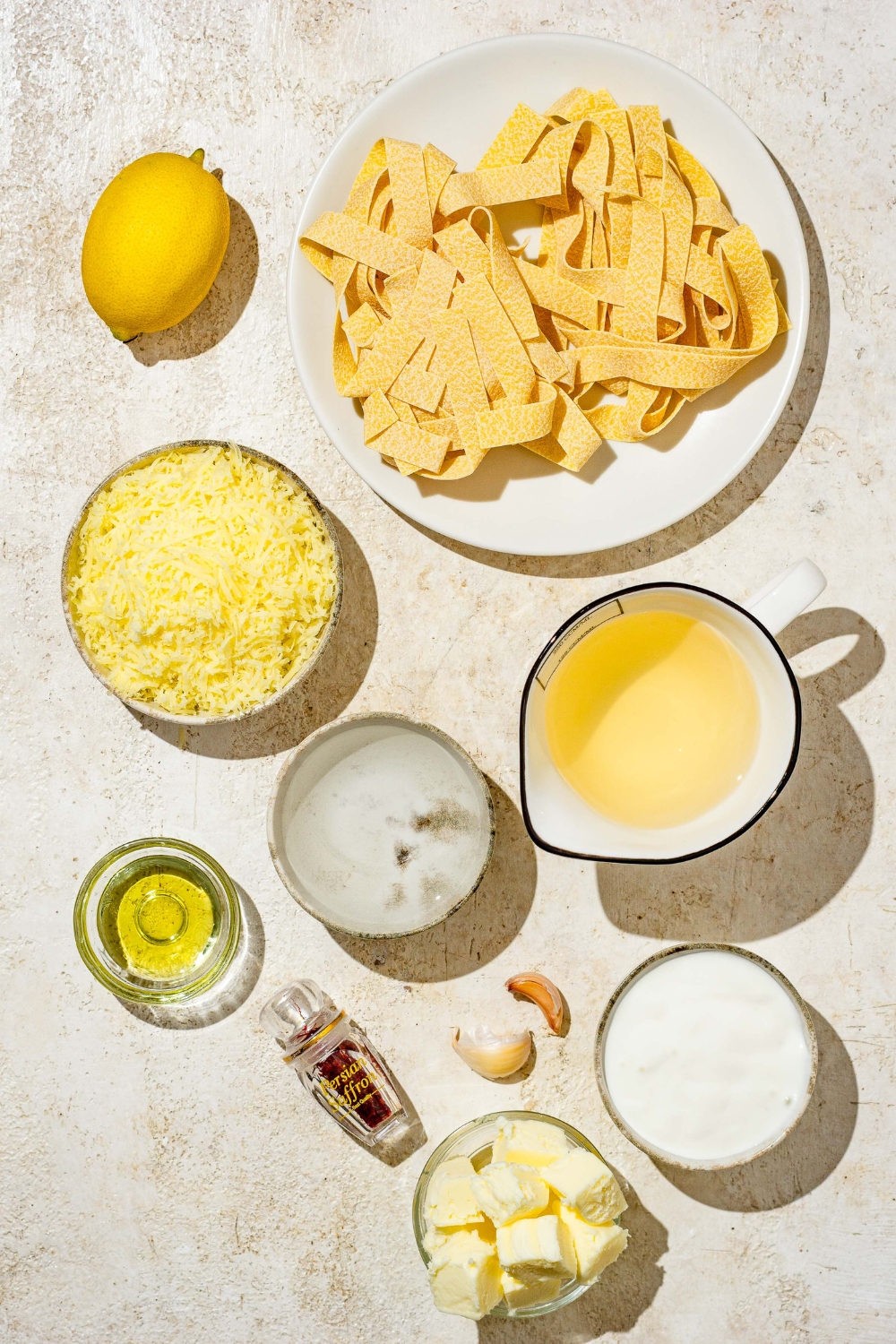
- 1 teaspoon saffron threads
- ¼ cup boiling water
- ½ tablespoon olive oil
- 2 garlic cloves, minced
- ½ cup white wine
- 40g butter, cubed
- ⅔ cup heavy cream
- 35g Parmesan cheese, grated
- 1 teaspoon lemon juice
- Pasta of your choice (fettuccine, linguine, or spaghetti works great)
How To Make Saffron Sauce
Step 1: Bloom the Saffron
Place the saffron threads in a small ramekin and pour ¼ cup boiling water over them. Let it steep while you prepare everything else.
Step 2: Cook the Pasta
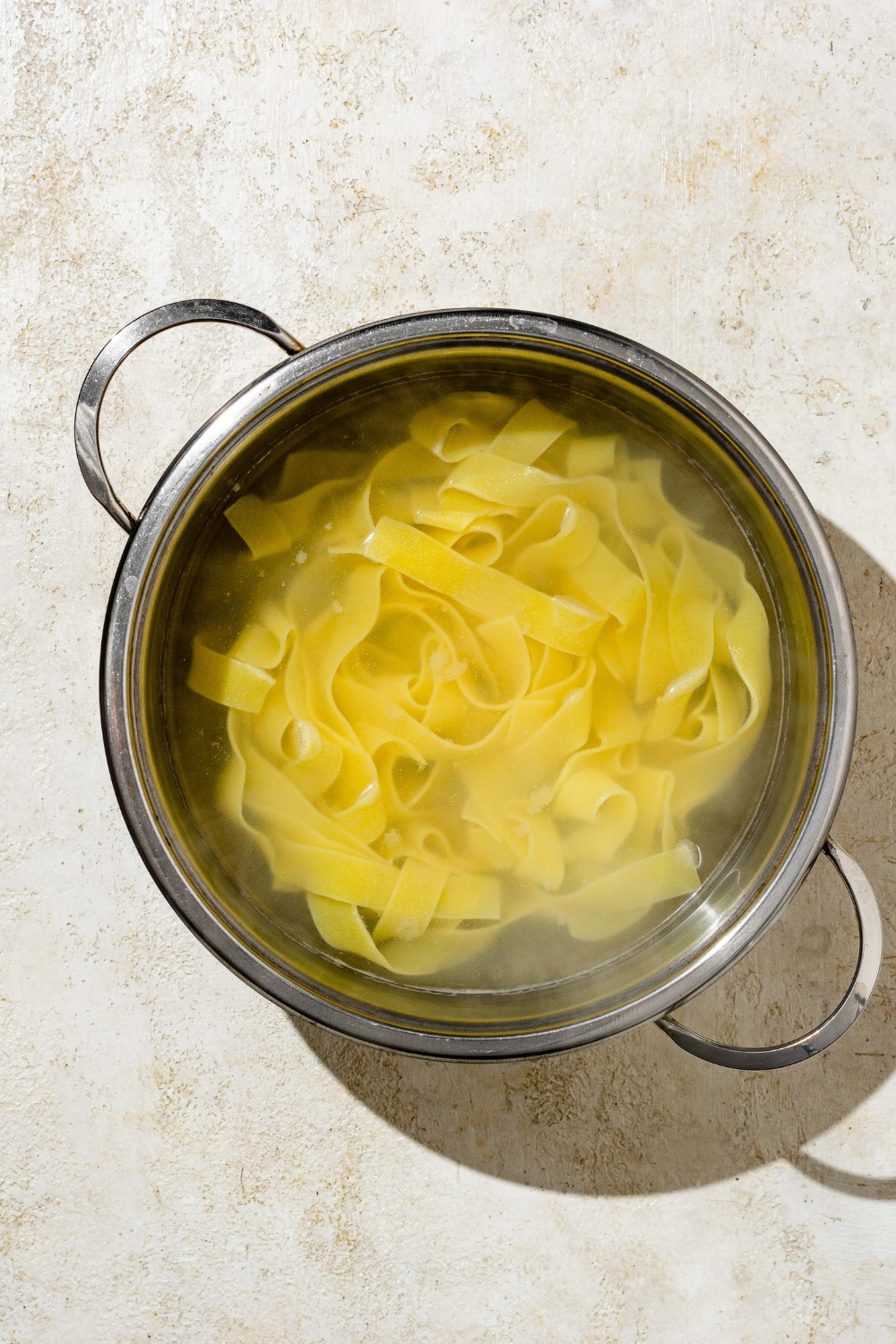
Boil the pasta of your choice in salted water and cook until al dente. Reserve 1 cup of pasta water for later before draining.
Step 3: Sauté the Garlic
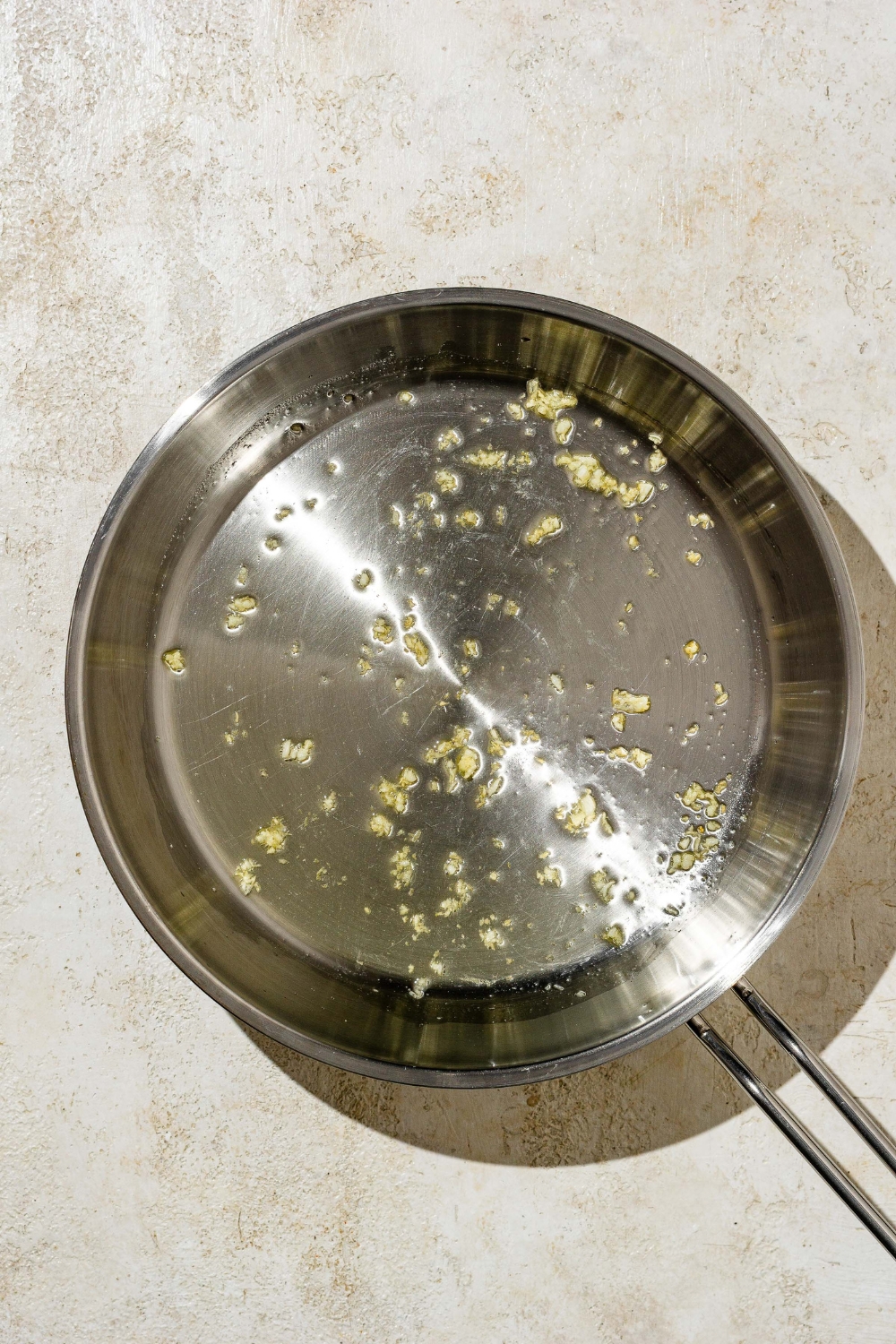
Heat olive oil in a large skillet over medium heat. Add the garlic to the hot oil and cook gently for 1–2 minutes until fragrant—do not brown.
Step 4: Deglaze with White Wine
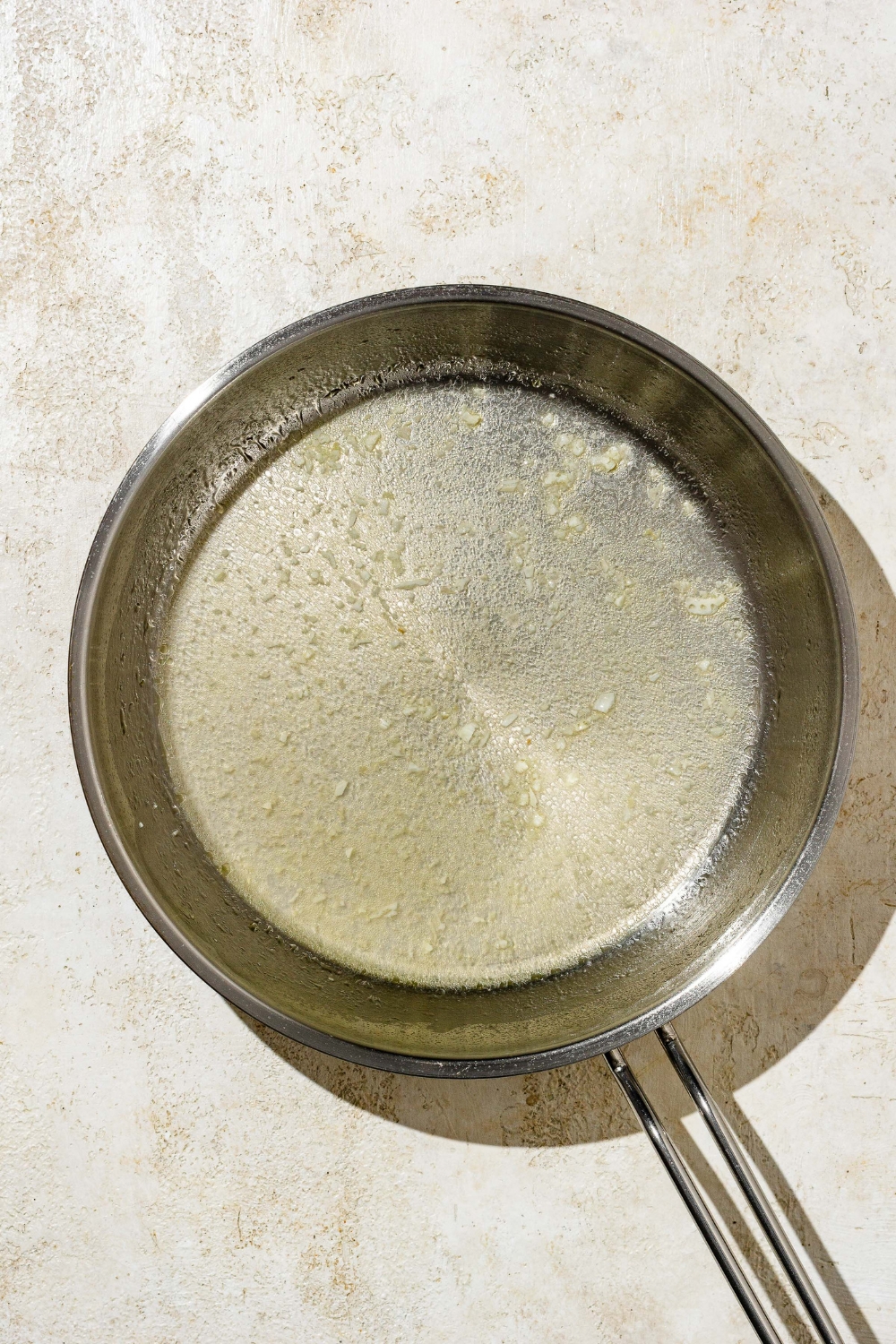
Lower the heat slightly to medium-low. Pour the white wine into the pan and simmer for 1–2 minutes, until it has reduced by half.
Step 5: Emulsify with Butter
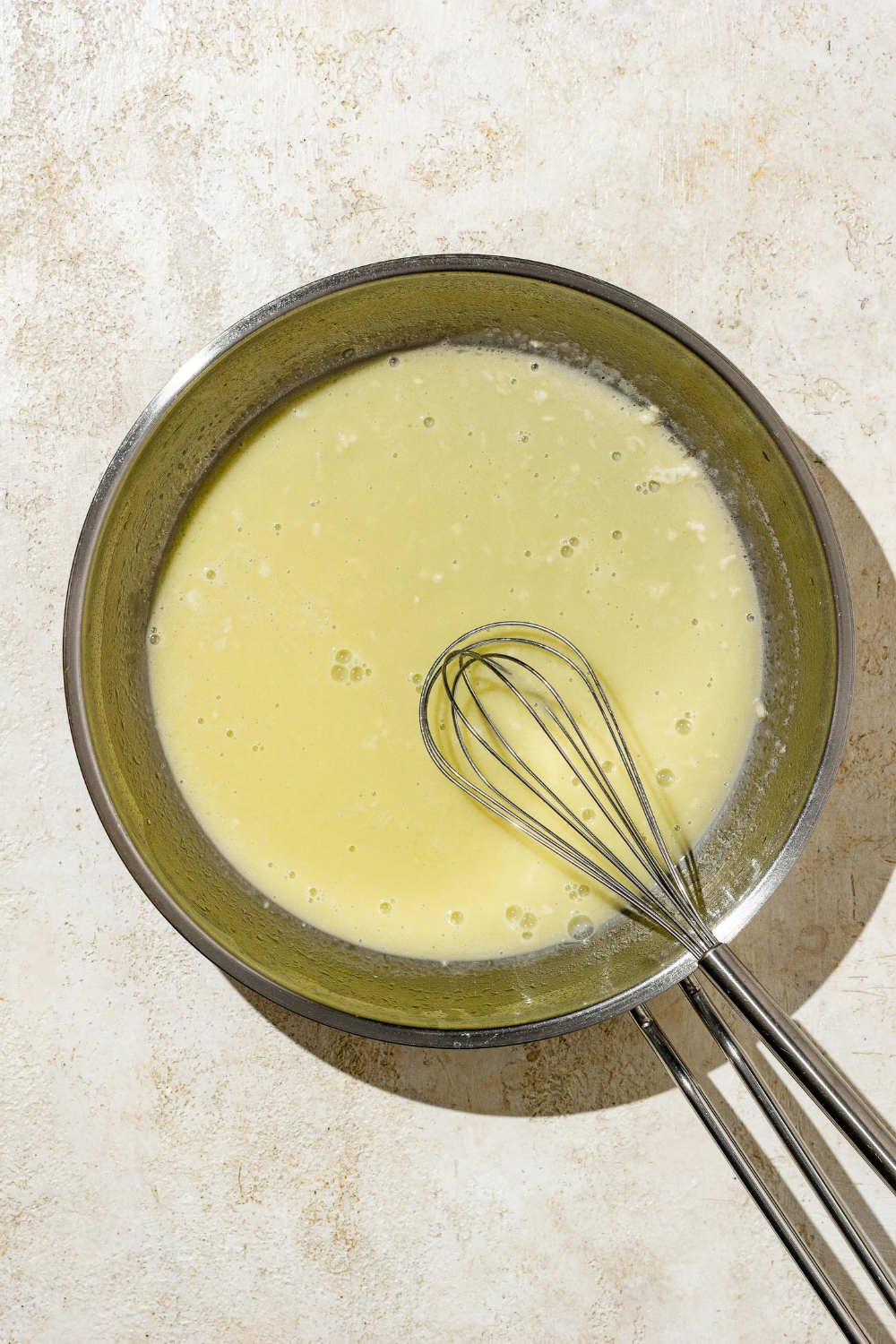
Add the butter in three additions, whisking constantly as you add them so it melts into a smooth, glossy sauce.
Step 6: Add Saffron
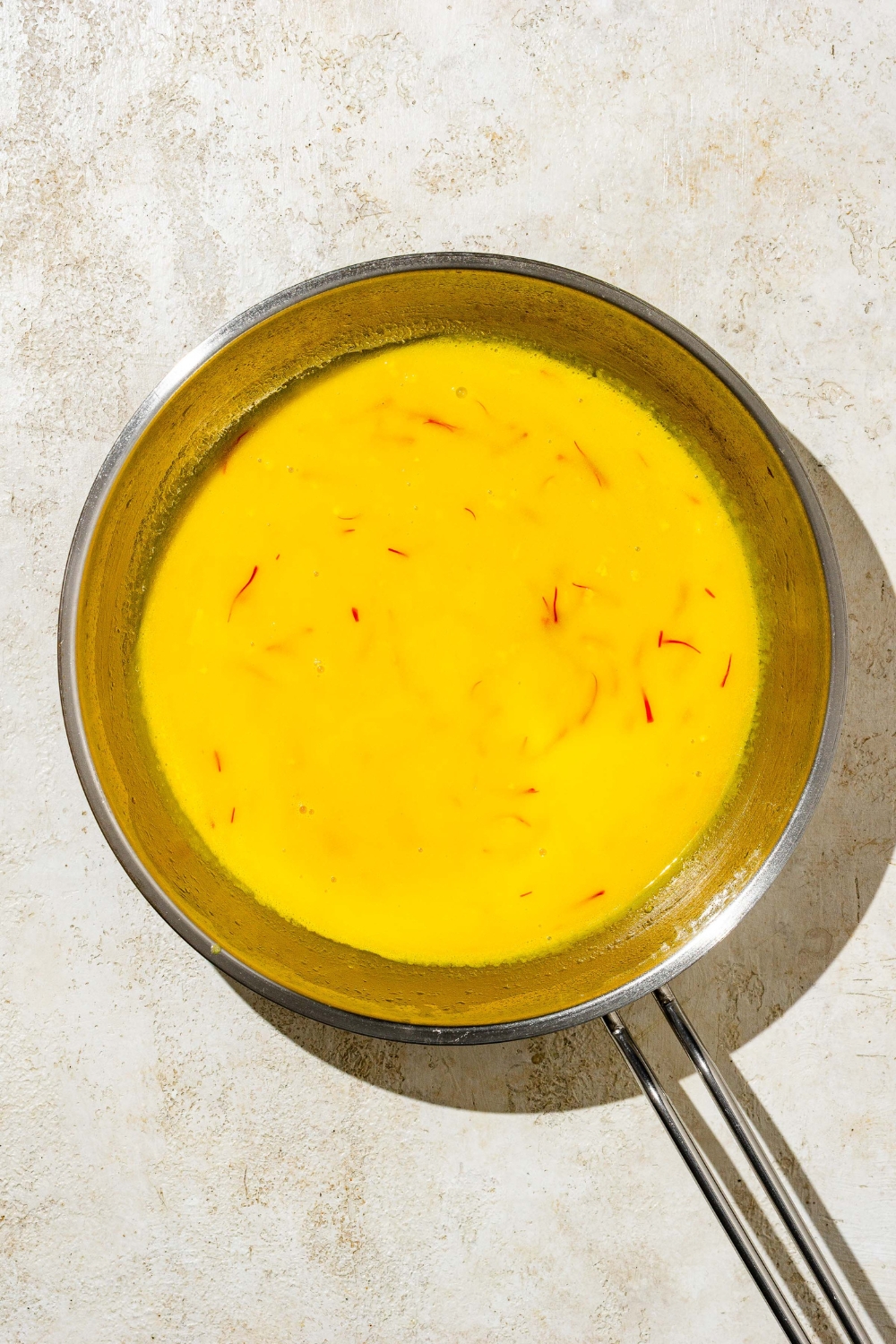
Pour in the saffron threads along with the steeping liquid. Simmer for 2 minutes to infuse the sauce with color and flavor from the saffron.
Step 7: Add Cream & Parmesan
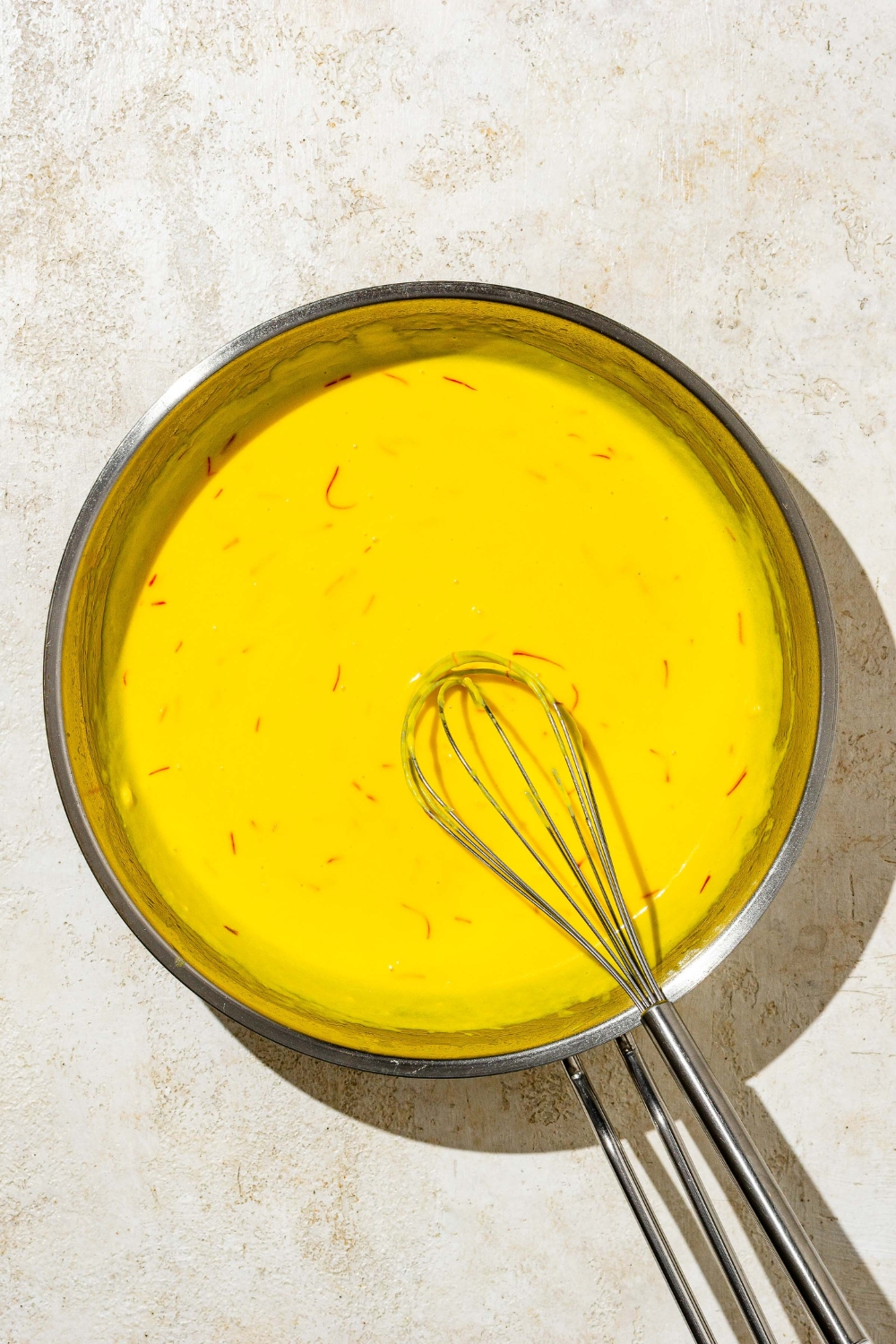
Add the cream to the saffron mixture and bring it to a gentle simmer. Add the Parmesan in 2–3 additions, whisking to fully melt it before adding the next handful. Stir in the lemon juice for brightness, then let the sauce bubble gently until slightly thickened.
Step 8: Toss with Pasta
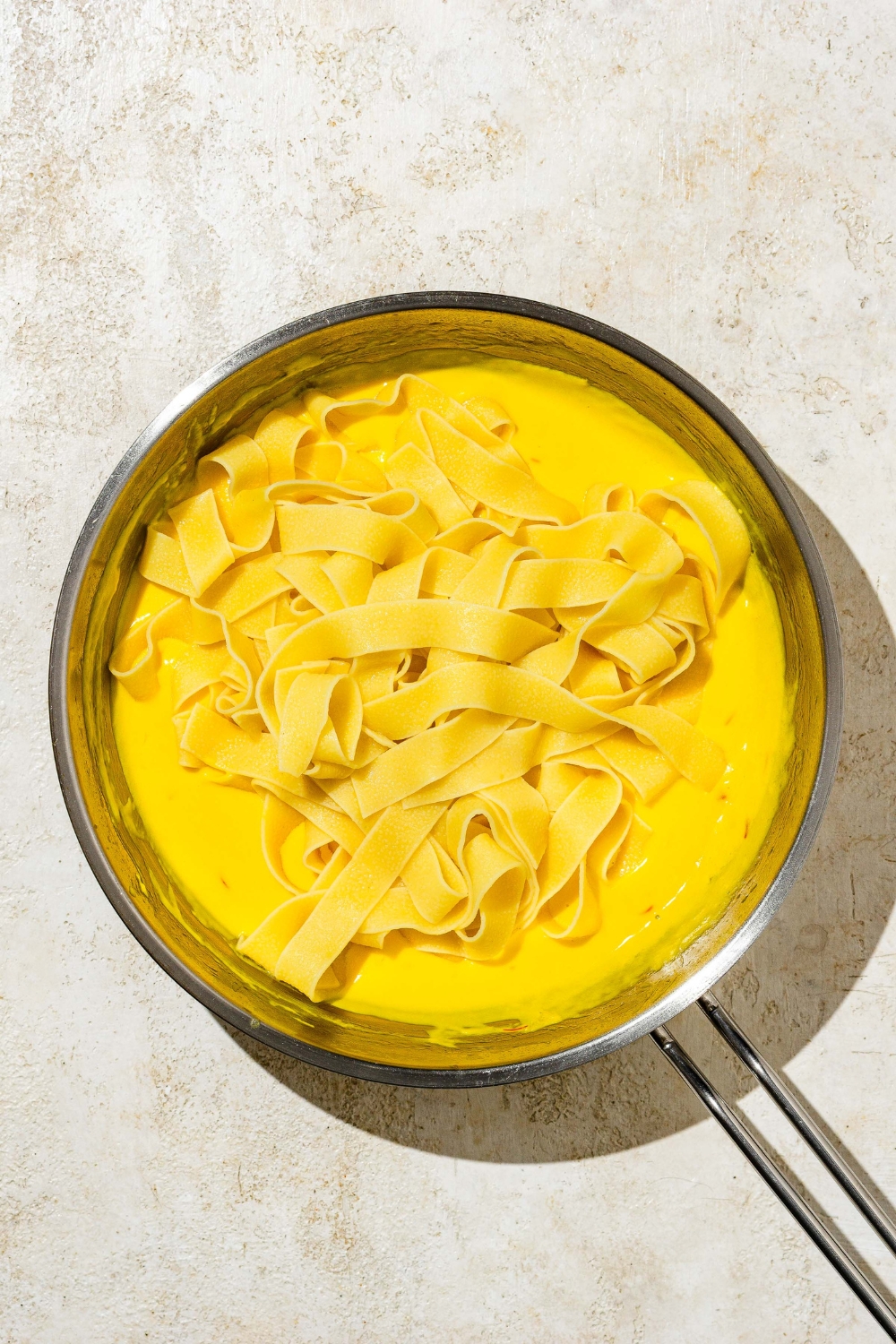
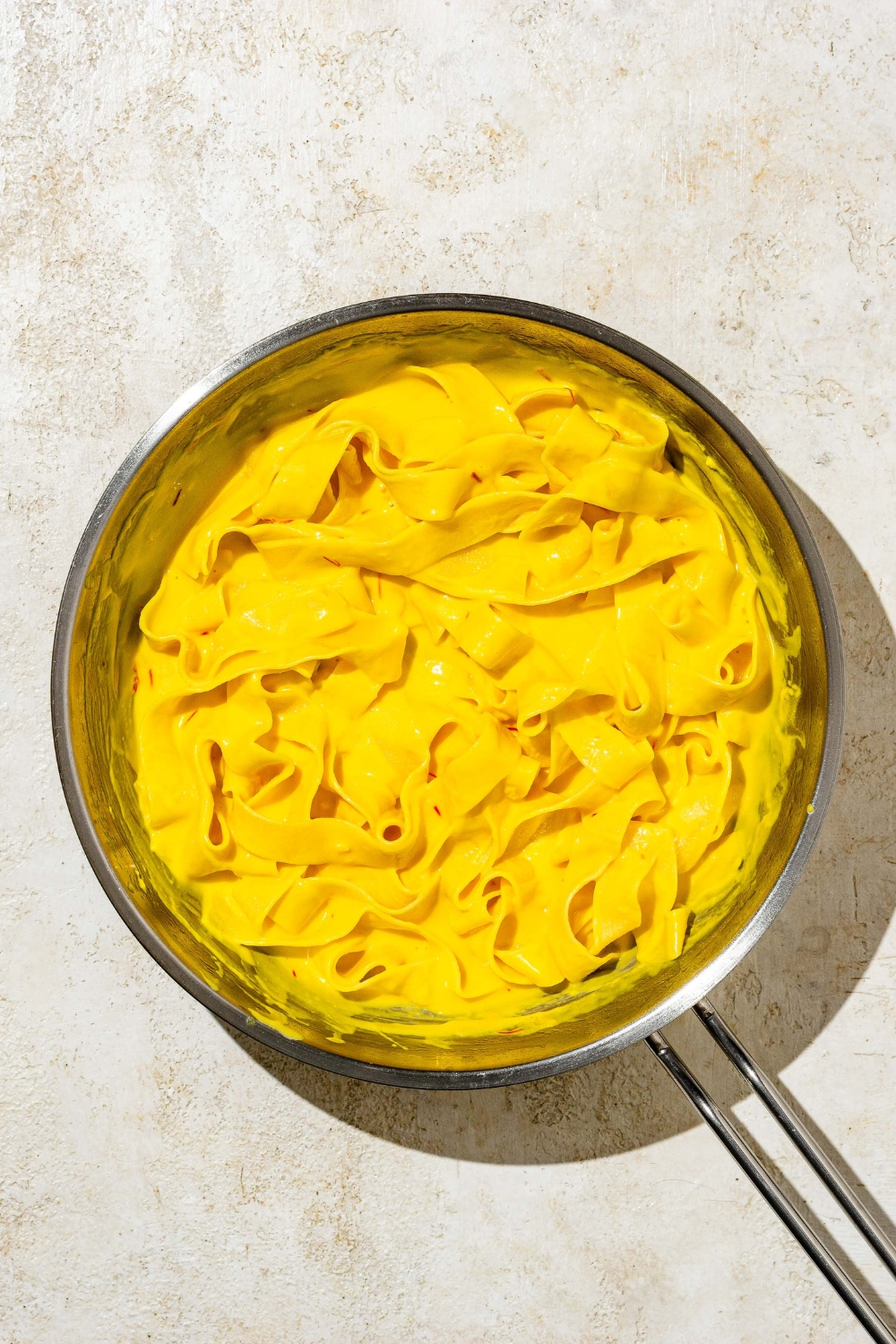
Add the cooked pasta directly into the sauce. Toss well to coat, then simmer for 1–2 minutes. If the sauce gets too thick, loosen it with a splash of reserved pasta water.
Step 9: Serve
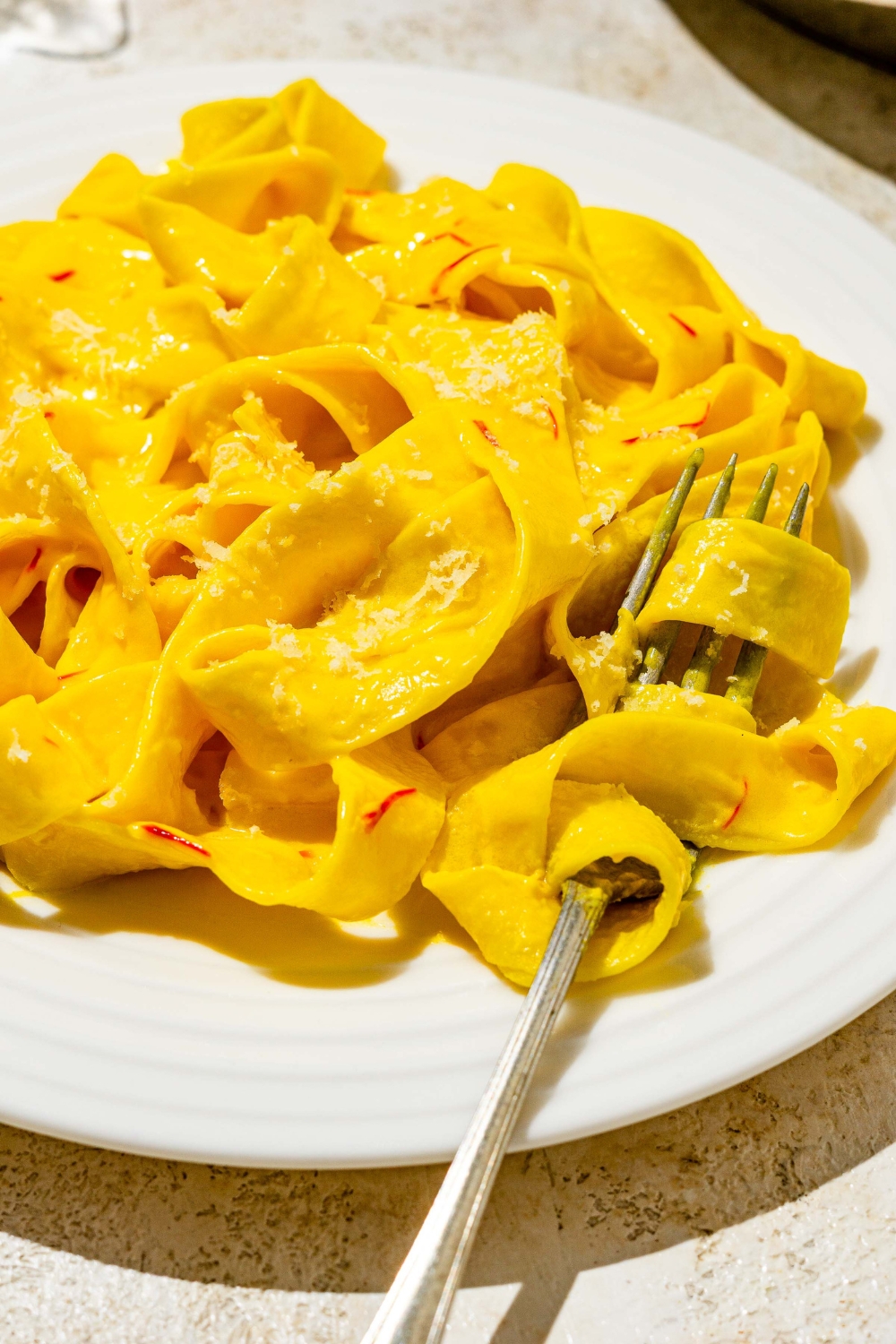
Serve the saffron pasta immediately with extra Parmesan and a sprinkle of lemon zest on top for more flavor. Enjoy!
Expert Tips for The Best Saffron Sauce
- Bloom the saffron properly for maximum flavor and color. Don’t skip this step—steeping saffron threads in hot water activates the compounds that give saffron its signature aroma and deep golden hue. Adding saffron dry to the pan won’t release nearly the same flavor. Let it bloom at least 5 minutes, longer if you can.
- Choose a good-quality dry white wine. Wine adds acidity and brightness that balance the richness of the cream. A crisp Sauvignon Blanc, Pinot Grigio, or dry white table wine works beautifully. Avoid sweet or oaky wines—the sweetness can compete with the saffron, and oakiness can muddy the delicate flavor.
- Add cold butter gradually to emulsify the sauce. Whisking in the butter one piece at a time helps create a silky, restaurant-style emulsified sauce. Dumping it all in at once can cause the butter to separate instead of blending into a glossy base.
- Keep the heat low to protect the cream. Once the cream and Parmesan enter the pan, the sauce should never boil. High heat can cause the dairy to break or turn grainy. A gentle simmer is perfect for letting the sauce thicken while staying smooth.
- Add Parmesan in small batches. Adding cheese gradually prevents clumping and ensures it melts evenly. Grate the cheese fresh if possible—pre-shredded cheese contains anti-caking agents that make sauces gritty.
- Season lightly and taste as you go. Between the wine, butter, pasta water, and Parmesan, there’s already plenty of salt present. Always taste the sauce before adding extra salt—most of the time, you’ll need less than you think.
- Don’t skip the lemon juice. Lemon brightens the entire dish and balances the richness of the cream. Even a small splash cuts through the heaviness and helps the saffron flavor pop. Lemon zest on top is an optional but excellent finishing touch.
- Use pasta water to adjust the texture. If the sauce thickens too quickly or tightens up after adding the pasta, loosen it with a splash of starchy pasta water. It brings the sauce back to a glossy, clingy consistency that coats the noodles like a dream.
- Let the sauce cling to the pasta for the last minute of cooking. Simmering the pasta directly in the sauce helps it absorb flavor and ensures the sauce thickens around it. This final minute is where the magic happens, so don't rush this step.
- Serve immediately for the best texture. Cream sauces thicken as they cool. Plate and serve right away for the silkiest results—or add an extra spoonful of pasta water to revive it if needed.
Serving Suggestions
- Saffron Shrimp Pasta: This sauce pairs really well with seafood. Add sautéed shrimp (or even scallops) directly into the skillet before tossing with the pasta. The sweetness of the shrimp complements the floral saffron perfectly and gives the dish a restaurant-quality upgrade.
- Creamy Saffron Chicken Pasta: For a heartier protein option, stir in sliced cooked chicken breast or shredded rotisserie chicken. The silky saffron sauce coats the chicken, turning this into a filling, elegant main course.
- Vegetarian Add-Ins: The sauce’s richness plays well with veggies. Fold in sauteed peas, roasted broccoli, baby spinach, blistered cherry tomatoes, or roasted mushrooms.
- Extra Creamy Version: If you want the sauce to taste even more indulgent, whisk in 1 tablespoon of mascarpone or cream cheese right before adding the pasta. This makes the sauce extra velvety and gives it a gorgeous glossy finish.
- Lemony Flavor: Finish the dish with fresh lemon zest and an extra squeeze of lemon for a brighter, slightly lighter version. This works especially well with seafood add-ins.
- Crusty Bread for Dipping: Serve the saffron pasta with bread to dip into the sauce. It's delicious with sourdough, this Longhorn Steakhouse bread, or baguette garlic bread.
Saffron Cream Sauce FAQs
Can I substitute saffron?
Not really—there’s no true substitute for saffron’s floral, earthy, slightly sweet flavor. Turmeric can mimic the golden color, but it won’t come close in taste and has a bolder, more peppery profile. If you want something mildly similar in aroma, a tiny pinch of smoked paprika or a splash of white wine vinegar can add depth, but the flavor won’t be the same. Saffron is unique, and its flavor is what makes this dish special.
Is saffron expensive?
Yes—saffron is one of the most expensive spices in the world because each thread must be hand-harvested from crocus flowers. But the good news is that you need very little for this recipe. Even ½–1 teaspoon of saffron threads is enough to flavor and color the entire sauce. A small jar lasts a long time and elevates countless dishes.
Can I use milk instead of cream?
Cream gives this sauce its signature richness and stability. Using milk alone will make the sauce thinner and more prone to curdling. If you want something lighter, a 50/50 blend of whole milk + half-and-half can work, but you’ll need to simmer gently and rely on a little more pasta water to create the proper texture. Avoid low-fat milk—it breaks more easily and won’t thicken well.
What pasta shape works best with saffron cream sauce?
Long pasta shapes like fettuccine, linguine, tagliatelle, or pappardelle are ideal because the silky sauce clings beautifully to wide ribbons. That said, short shapes like rigatoni, penne, or orecchiette work if you prefer a heartier bite; their ridges catch pockets of sauce. Fresh pasta also takes this dish to the next level.
How do I store leftover saffron cream sauce?
Leftover saffron cream sauce can be stored in an airtight container in the refrigerator for up to 3 days. Cream sauces thicken as they cool, so the texture won’t be as silky straight from the fridge—but it reheats well with the right technique. When reheating, warm it low and slow in a skillet and add a splash of cream, milk, or reserved pasta water to loosen it back into a smooth, glossy consistency. Avoid microwaving on high heat or boiling the sauce, as that can cause separation. If reheating a fully combined pasta dish, add a little cream or pasta water to the skillet as you warm it to revive the sauce.
Can I make this sauce ahead of time?
Saffron cream sauce tastes best fresh, since cream-based sauces thicken as they cool. However, you can make the sauce ahead of time, and then reheat it gently over low heat with a splash of cream, milk, or pasta water to loosen the sauce back to its glossy, silky consistency. Avoid boiling when reheating—high heat can cause the sauce to separate.
Why did my saffron sauce separate?
Saffron cream sauce typically separates when it’s exposed to too much heat. Cream and Parmesan are delicate ingredients—if the sauce is boiled rapidly or reheated at high temperatures, the fat can break away from the liquid, creating a grainy or oily texture. Adding the cheese too quickly or using pre-shredded Parmesan (which contains anti-caking agents) can also cause curdling. To prevent this, keep the heat at a gentle simmer, add butter and Parmesan gradually, and whisk consistently. If your sauce starts to break, you can often save it by lowering the heat and whisking in a splash of warm cream or pasta water to help re-emulsify it.
Can I use pre-grated Parmesan?
You can, but freshly grated Parmesan melts smoother and gives the sauce a more luxurious texture. Pre-shredded cheeses often contain anti-caking agents that can make the sauce grainy.
How do I prevent the sauce from curdling?
Keep the sauce at a gentle simmer—never a rapid boil—once the cream and Parmesan are added. High heat is the biggest culprit for curdling. Adding cheese gradually and whisking constantly also helps ensure a smooth, stable sauce.
My Final Thoughts
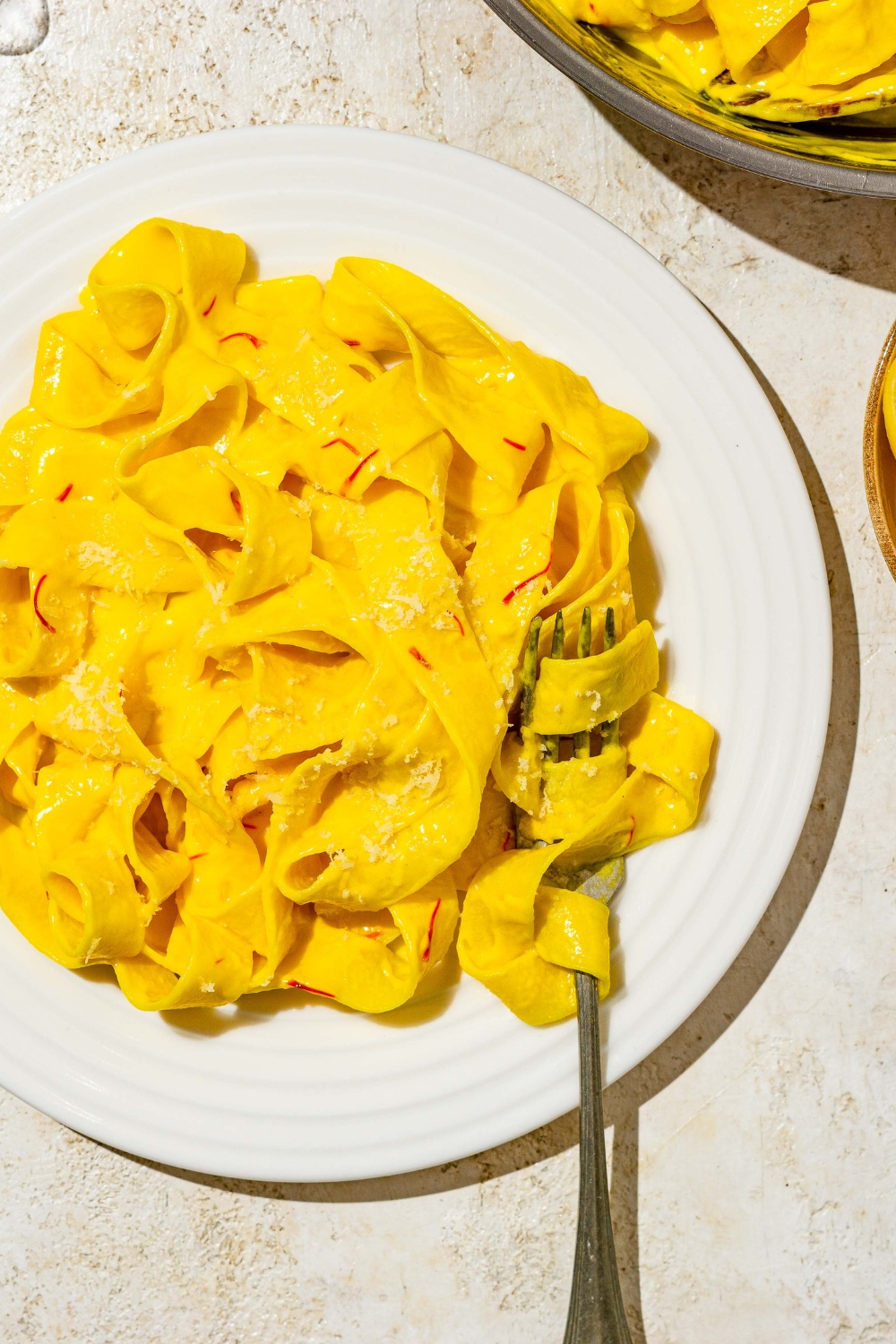
This saffron cream sauce is elegant, luscious, and surprisingly easy to make—perfect for elevating pasta night or serving to guests for a dinner party. With fragrant saffron, creamy Parmesan, butter, and white wine, it tastes like something you’d order at a high-end restaurant but comes together in under 20 minutes! Give it a try and let me know if you liked it by leaving a comment and review (hopefully 5 stars) below.
Sauce Recipes To Try Next
- White wine sauce
- Creamy tomato pasta sauce
- Cajun Alfredo Sauce
- Cream sauce base
- Cajun Garlic Butter Sauce
- Oyster Sauce
- Adobo Sauce
- Seafood Boil Sauce
Saffron Cream Sauce (Easy Saffron Pasta Sauce Recipe)

This saffron cream sauce recipe uses real saffron threads, steeped in hot water to unlock their color, aroma, and flavor. The saffron base blends with garlic, white wine, butter, cream, Parmesan, and a touch of lemon to create a creamy, ultra-flavorful restaurant-quality sauce that clings perfectly to any pasta. It’s elegant enough for date night but simple enough for a weeknight dinner. And if you’ve tried any of my other pasta sauces—like my Alfredo Sauce or Cajun Cream Sauce—then you already know I specialize in easy yet delicious sauces that turn plain pasta into something unforgettable.
Ingredients
- 1 teaspoon saffron
- ¼ cup boiling water
- ½ tablespoon olive oil
- 2 garlic cloves, minced
- ½ cup white wine
- 40g butter, cubed
- ⅔ cup cream
- 35g parmesan, grated
- 1 teaspoon lemon juice
- Pasta of your choice
Instructions
1. Place the saffron in a small cup or ramekin and pour boiling water over it. Let it steep while you cook the pasta and start the sauce.
2. Cook the pasta in a large pot of salted water until al dente. Before draining, reserve a cup of the pasta water and set aside.
3. In a large skillet, heat olive oil over medium heat. Add the garlic and gently fry for 1–2 minutes, being careful not to brown it. Lower the heat slightly, pour in the wine, and let it simmer for 1–2 minutes until reduced by half.
4. Add the butter in three separate additions, whisking well between each one to create a smooth, emulsified sauce. Pour in the saffron along with its steeping liquid and simmer for about 2 minutes.
5. Stir in the cream and bring to a gentle simmer. Gradually add the grated Parmesan in two or three additions, letting it melt into the sauce before adding more. Stir in the lemon juice, then let the sauce bubble gently for a few minutes until slightly thickened.
6. Add the cooked pasta directly to the skillet and toss to coat in the sauce. Let it simmer gently for another minute or two until the sauce clings to the pasta. If it gets too thick, loosen with a splash of the reserved pasta water.
7. Serve immediately, topped with extra Parmesan and a little lemon zest if desired.
Nutrition Information:
Yield:
4Serving Size:
1Amount Per Serving: Calories: 288Total Fat: 25gSaturated Fat: 16gUnsaturated Fat: 9gCholesterol: 75mgSodium: 249mgCarbohydrates: 5gFiber: 0gSugar: 1gProtein: 4g
Maria L.
I have been making this once a week since first trying it, delicious in every way and I find it very simple to throw together.