


If you’ve made my Apple Butter or love the cozy flavor of my Applesauce Cake, this apple jelly will be right up your alley. It’s smooth, jewel-toned, and made with just apples, sugar, and lemon juice—no added pectin. The natural pectin in the apples gives the jelly its glossy set, while the lemon brightens up the sweetness. Whether you spread it on toast, swirl it into yogurt, or use it as a glaze for baked goods, this easy apple jelly is as versatile as it is delicious.
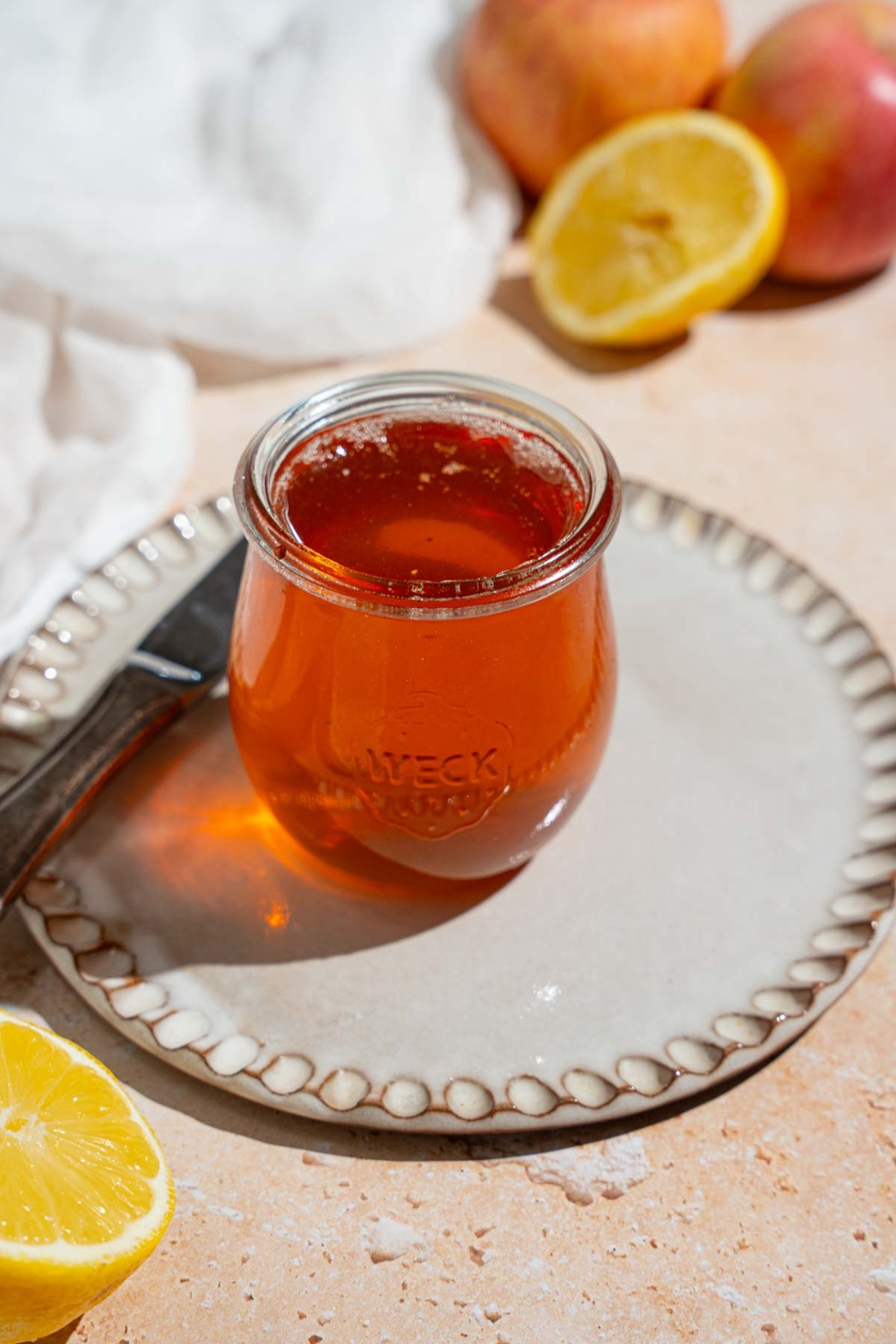
Table of Contents
Why I Love This Apple Jelly Recipe
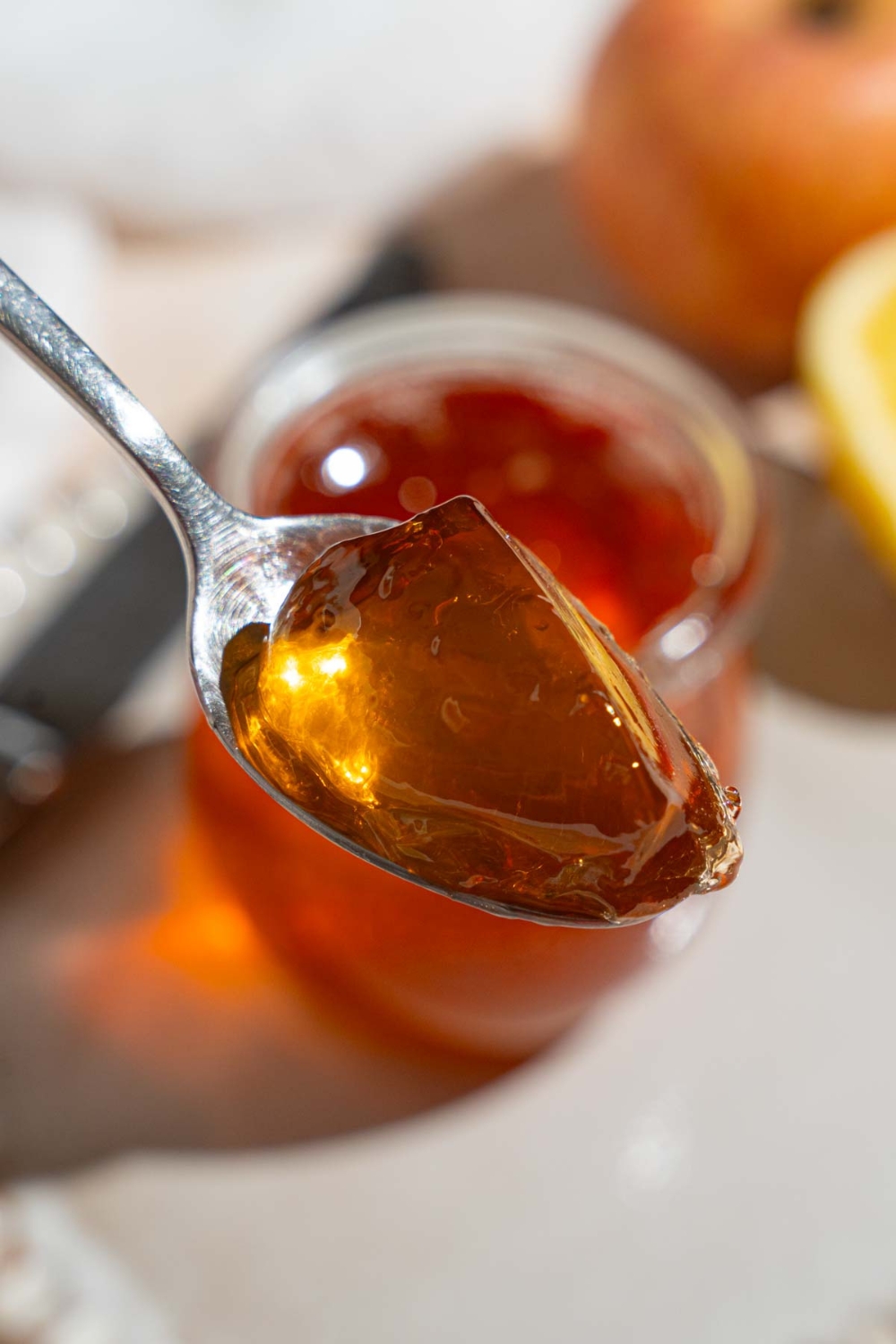
As the fall season approaches, there's nothing I love more than turning fresh apples into jars of delicious apple-flavored jelly. This homemade apple jelly is one of those recipes that proves how simple ingredients—just apples, sugar, and lemon juice—can create something extraordinary. It tastes like chilled apple juice with a jelly texture that spreads perfectly on toast, mini waffles, apple pancakes, and really anything you like putting jelly on. It's so versatile! I also love how straightforward the process is: simmer, strain, sweeten, and cook down until it sets into a glossy jelly.
This feels like the kind of recipe my grandma would have always kept in the pantry—comforting, practical, and timeless. And since this is an apple jelly recipe without pectin, it has that old-fashioned feel, relying only on the natural pectin in the apples to get that perfect texture every time.
Ingredients You’ll Need
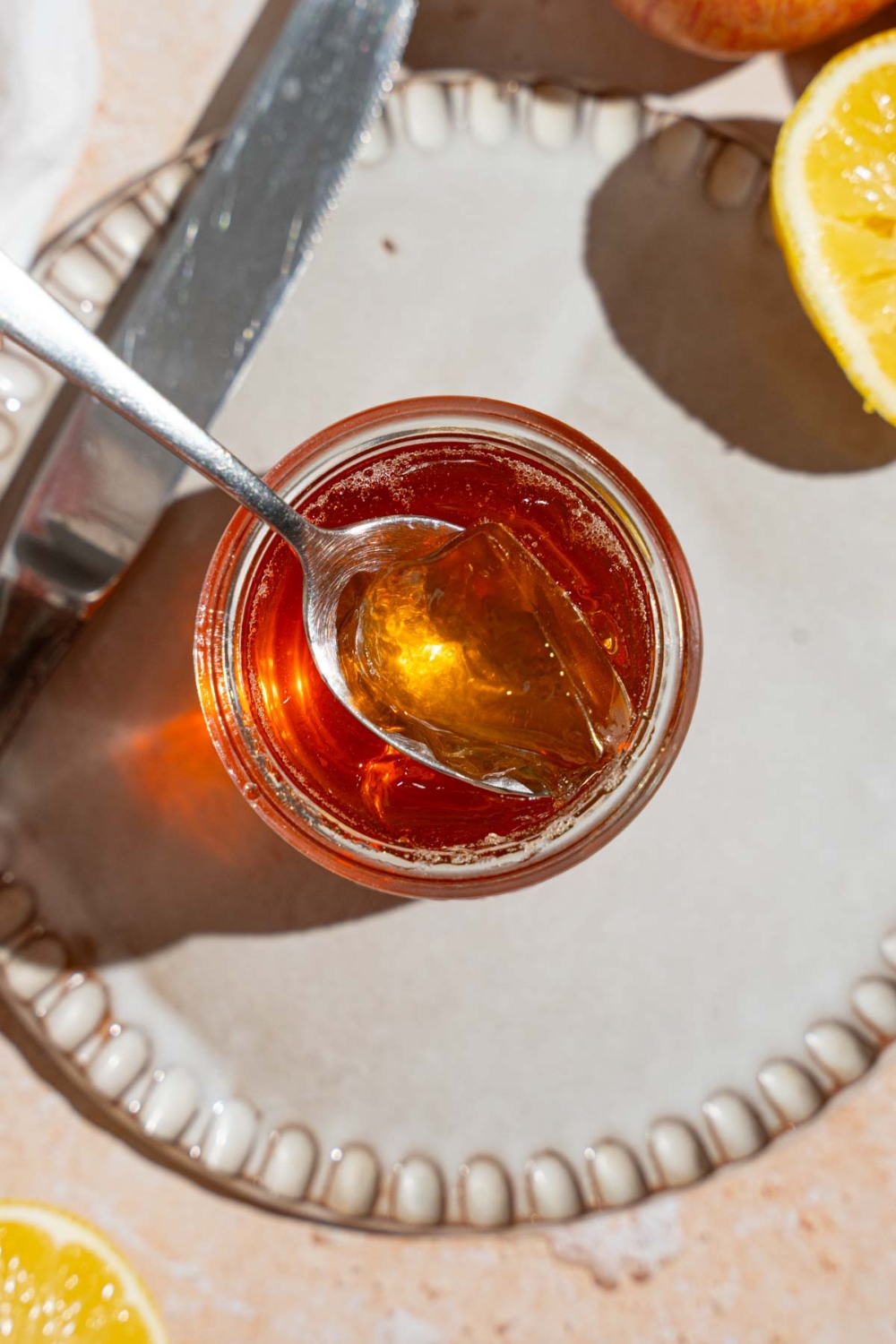
- 4 lbs apples, quartered
- 4 cups water
- 2 cups sugar
- ½ lemon, juiced
How To Make Apple Jelly
Step 1 – Simmer the Apples
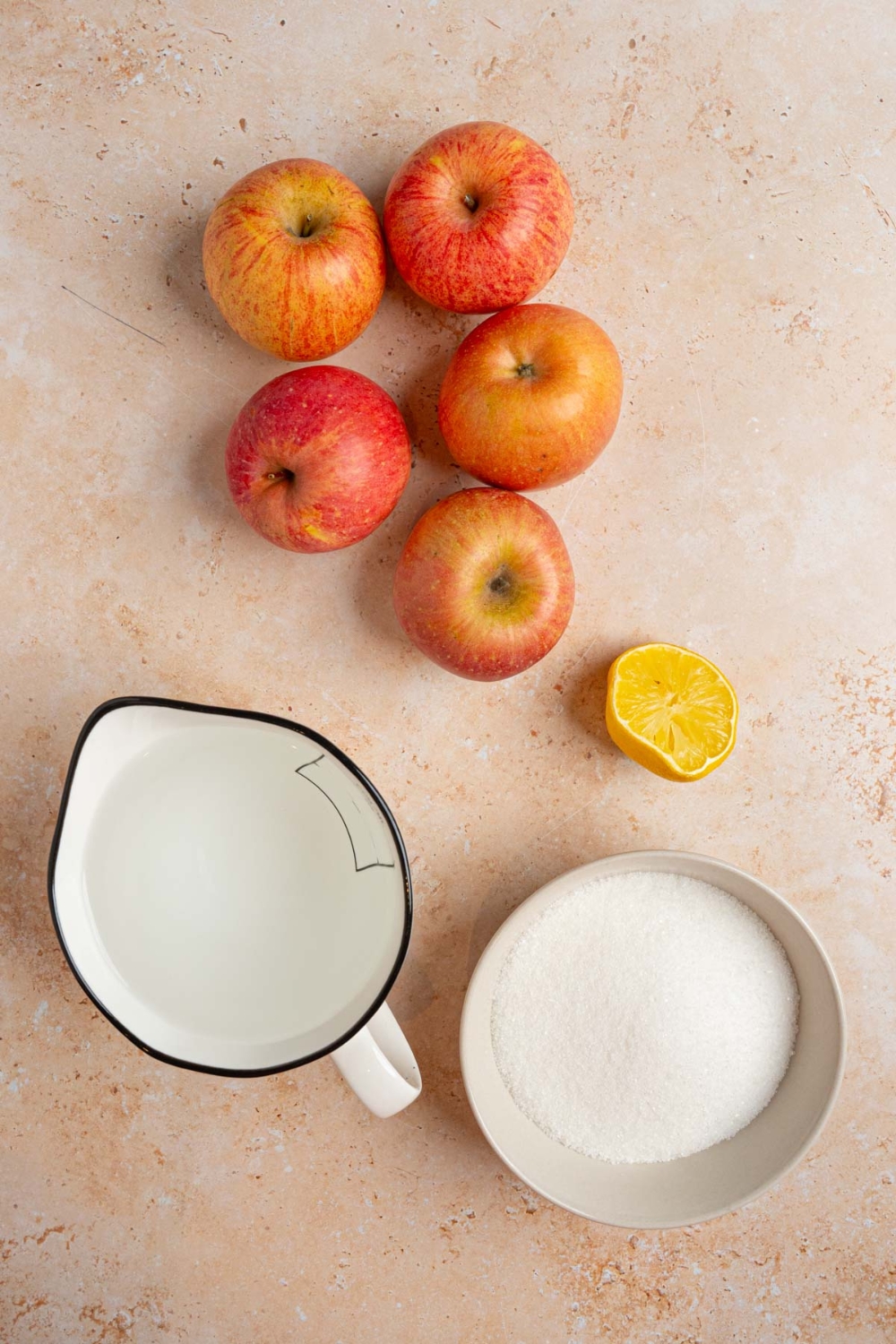
Place the quartered apples in a large pot and add the 4 cups of water to the pot. Bring to a boil over medium-high heat, then reduce to a simmer and cook for about 30 minutes, until the apples are soft.
Step 2 – Mash and Strain
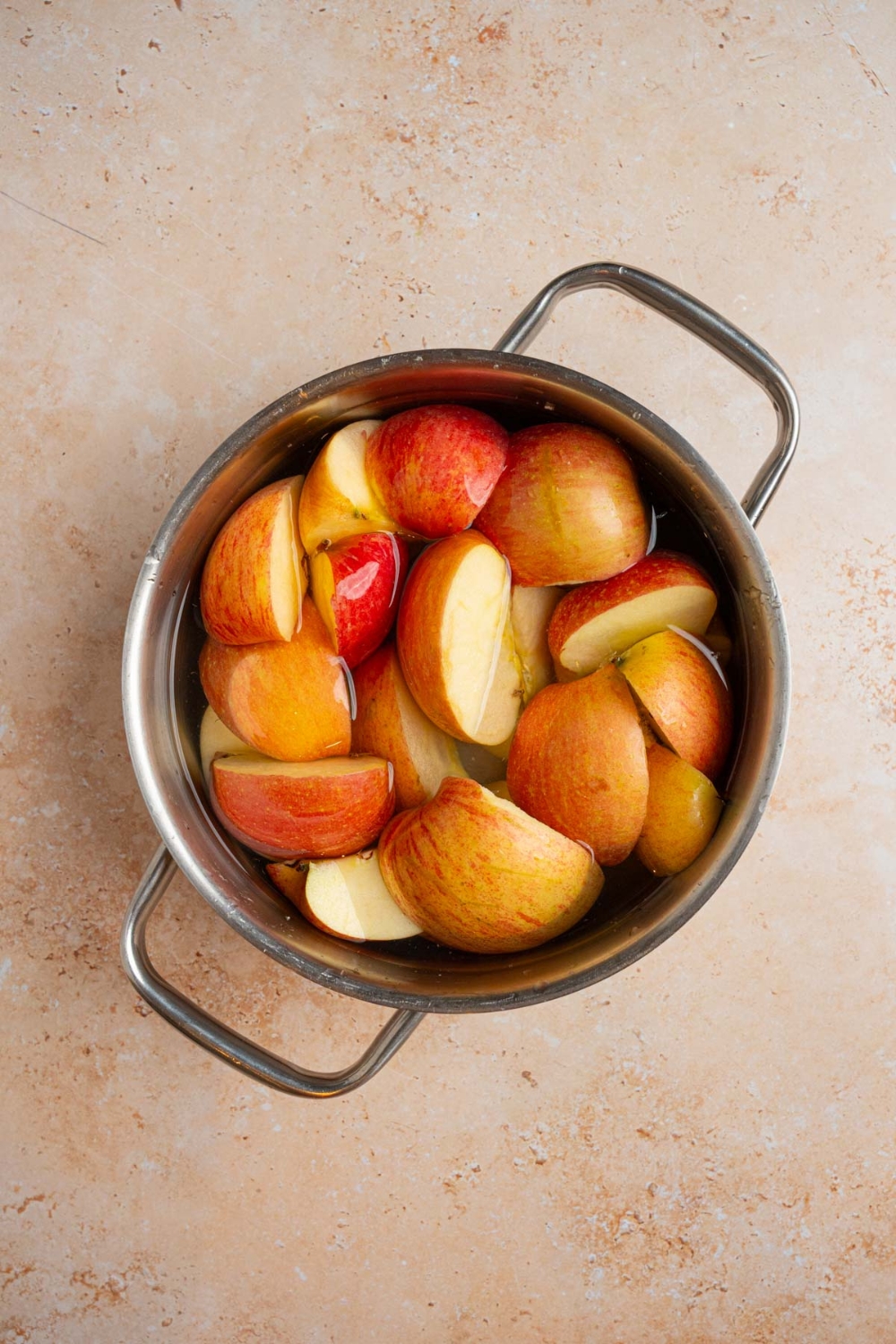
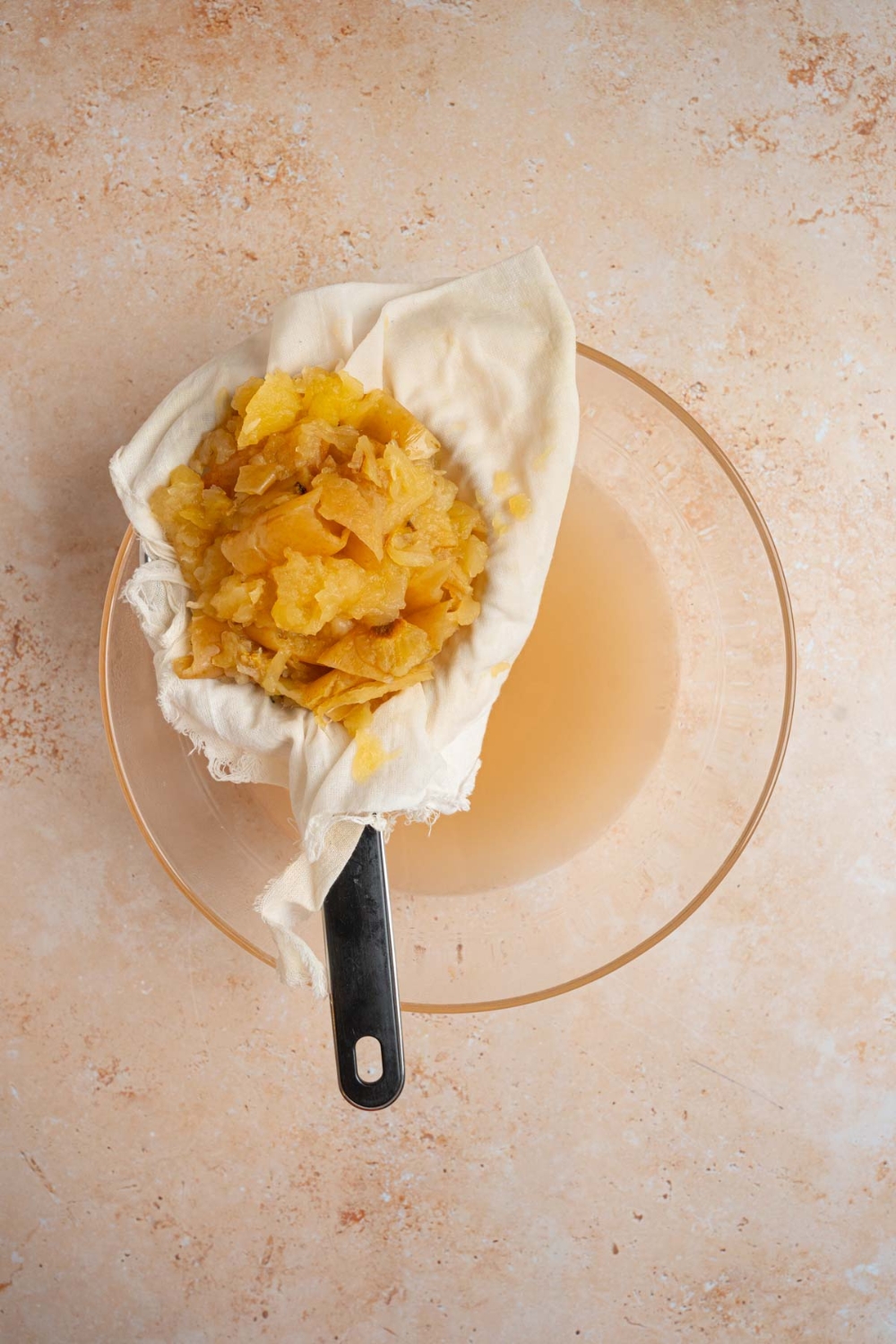
Mash the apples well with a potato masher. Strain the mixture through a fine-mesh sieve lined with cheesecloth to collect clear apple juice. Do not press the apple solids too hard, or the jelly will turn cloudy.
Step 3 – Sweeten the Juice
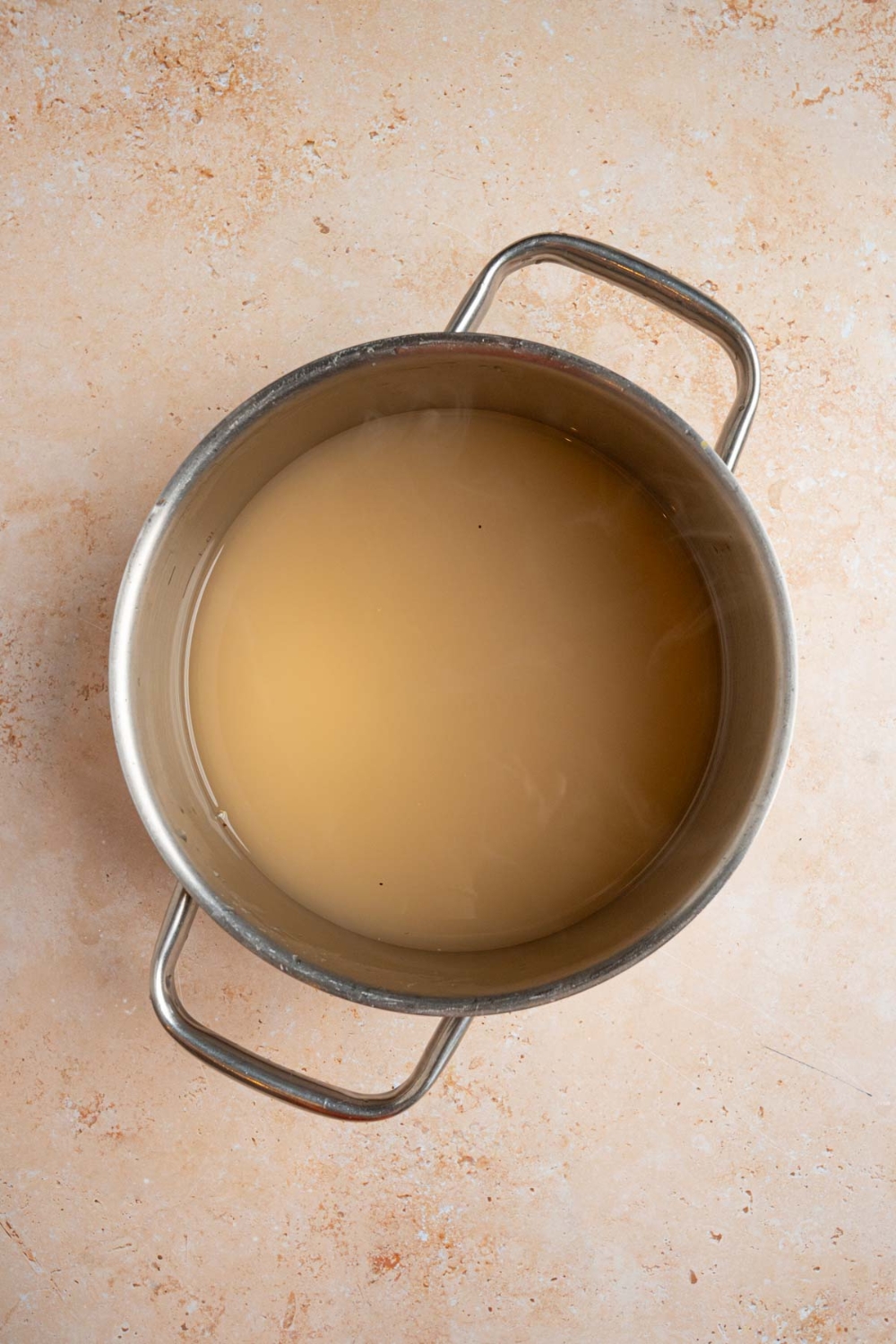
Return the apple juice to the pot. Stir in the sugar and lemon juice and continue stirring until dissolved.
Step 4 – Cook to Reduce
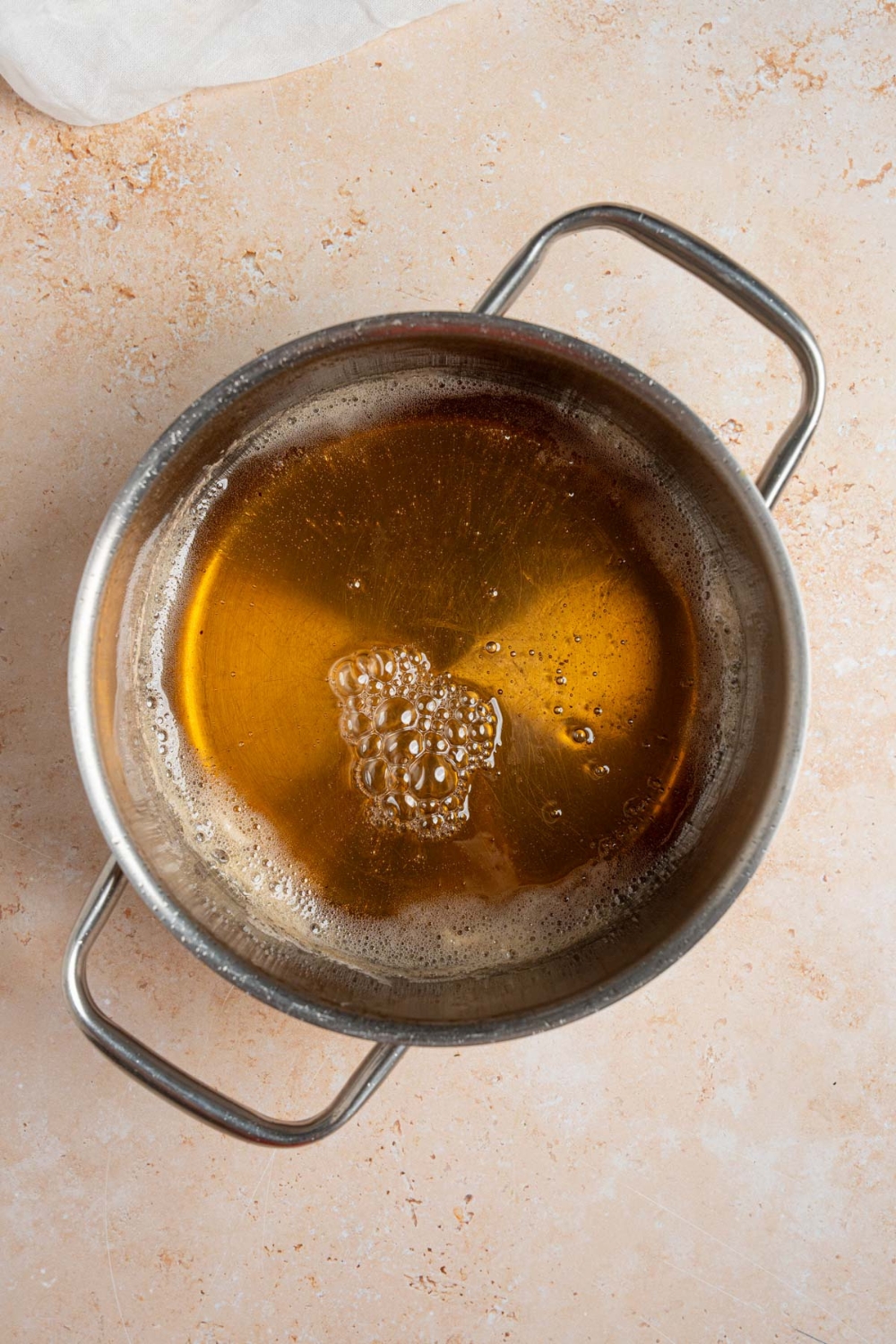
Bring the mixture back to a simmer and cook until reduced by half, skimming any foam or impurities that rise to the top.
Step 5 – Jar and Store
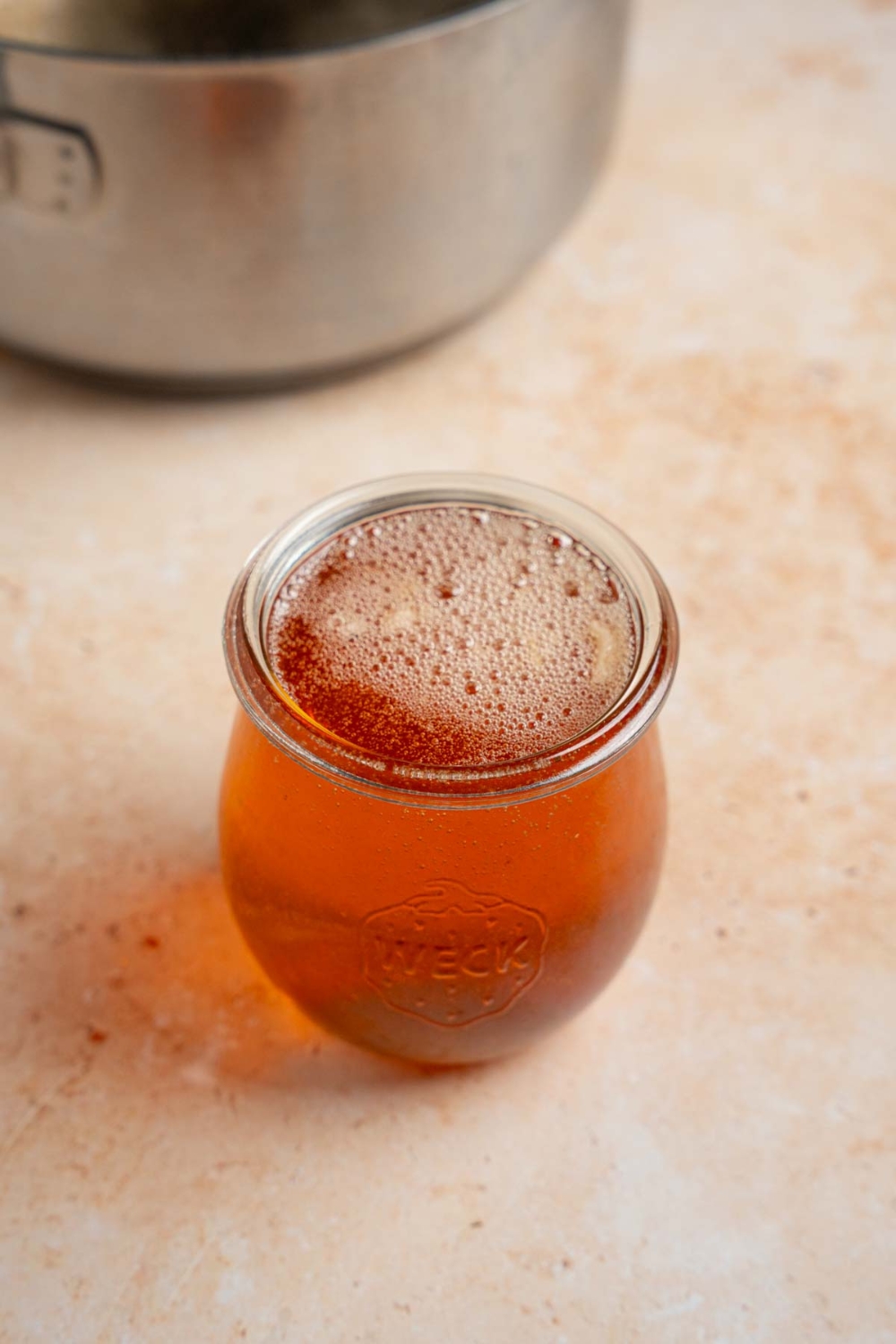
Pour the hot jelly into sterilized glass jars. Seal them tightly with lids and let the jelly cool to room temperature before refrigerating. Store the jelly in the refrigerator until you're ready to use.
My Expert Tips Section
- Choose the Right Apples – Tart apples (like Granny Smith) and slightly underripe apples have the most natural pectin, which helps the jelly set firm without added thickeners. Mixing sweet and tart varieties balances flavor while ensuring a good gel.
- Don’t Rush the Strain – Straining through cheesecloth gives you that clear, jewel-toned finish. If you squeeze or press the pulp too much, the cloudy solids push through, and your jelly will look more like applesauce. I let mine drip for a few hours for the cleanest result.
- Sugar Isn’t Just for Sweetness – In jelly, sugar works as a preservative and a texture stabilizer. Cutting it back too far prevents the jelly from setting properly and shortens its shelf life. Two cups here gives the right balance of sweetness and structure.
- Lemon Juice = Pectin Booster – The acid from lemon juice lowers the pH, which strengthens the natural pectin in apples so the jelly firms up. Without it, your jelly might stay syrupy.
- Check the Set – To test if the jelly is ready, spoon a little onto a chilled plate. If it wrinkles when you push it with your finger, it’s set. If not, simmer a little longer and test again.
- Sterilize Your Jars – Since this isn’t a long-term canning recipe, storing in sterilized jars is still important for food safety. If you don’t sterilize, plan to eat within 1–2 weeks. Properly sterilized jars can keep for up to a month in the fridge.
Apple Jelly Variations
- Cinnamon-Apple Jelly – Add 1–2 cinnamon sticks to the pot while simmering the apple juice. Remove them before straining. The cinnamon infuses a warm, cozy flavor that’s perfect for spreading on toast or pairing with fall baked goods like my apple coffee cake.
- Apple-Ginger Jelly – Slice 3–4 thin rounds of fresh ginger and add them to the pot as the apples simmer. Strain them out before finishing the jelly. The ginger adds a subtle heat that balances the sweetness beautifully.
- Spiced Fall Jelly – For a holiday-style spread, add 4–5 whole cloves and 2–3 whole allspice berries while simmering. Strain them out before adding sugar. This makes a spiced apple jelly that tastes amazing on biscuits or as a glaze for roasted meats.
- Apple-Cranberry Jelly – Swap half the apples with fresh cranberries for a tart, jewel-toned jelly. It’s especially festive around Thanksgiving and Christmas.
- Apple-Vanilla Jelly – Stir in ½ teaspoon of vanilla extract once the jelly is cooked but before pouring into jars. The vanilla rounds out the flavor and adds a subtle sweetness.
Apple Jelly Recipe FAQs
Do I need to peel or core the apples?
No, you don’t need to peel or core them. The skins and cores are actually important because they contain natural pectin, which helps the jelly set without adding store-bought pectin. Just wash the apples well, then cut them into quarters before cooking.
Can I use apple cider instead of fresh juice?
Yes! You can substitute apple cider for the strained juice. Just simmer the cider with sugar and lemon juice as directed in this recipe. Keep in mind that cider may give the jelly a slightly deeper color and a richer, more robust apple flavor.
How long does homemade apple jelly last?
If stored in sterilized jars and kept in the refrigerator, apple jelly will last about 4 weeks. If you skip sterilizing and simply store it in a clean container, plan to use it within 1–2 weeks for best quality.
Can I can apple jelly for long-term storage?
Yes, you can safely can apple jelly using the water-bath method. Follow the USDA’s tested canning guidelines to ensure shelf stability and food safety. When processed and sealed correctly, canned apple jelly can last up to 12–18 months in a cool, dark pantry.
What’s the best way to use apple jelly?
Apple jelly is incredibly versatile. Spread it on things like toast or baked goods, swirl it into yogurt or oatmeal, use it as a glaze for chicken or pork, or even whisk it into dressings and sauces for a touch of sweetness.
Final Thoughts
This apple jelly is one of those recipes that feels old-fashioned in the best way—simple ingredients, straightforward method, and a sweet payoff. Make it once, and you’ll start looking forward to apple season just to stock your fridge with jars of this golden spread. If you're anything like me, you'll start putting it on everything! Give this recipe a try and leave me a comment and review below—I love hearing from you! And if you're looking for another spreadable recipe, check out my Christmas Jam.
More Apple Recipes To Try
Homemade Apple Jelly Recipe (No Pectin Needed)
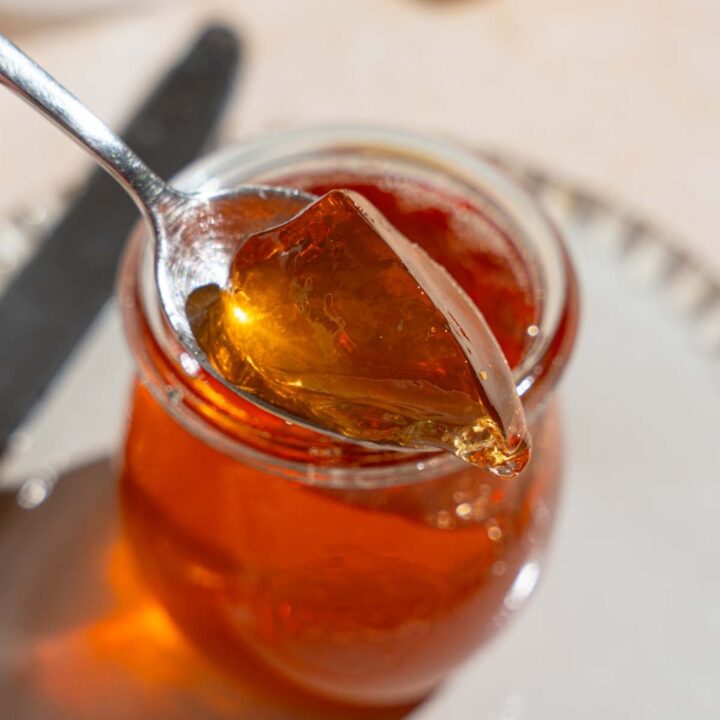
If you’ve made my Apple Butter or love the cozy flavor of my Applesauce Cake, this apple jelly will be right up your alley. It’s smooth, jewel-toned, and made with just apples, sugar, and lemon juice—no added pectin. The natural pectin in the apples gives the jelly its glossy set, while the lemon brightens up the sweetness. Whether you spread it on toast, swirl it into yogurt, or use it as a glaze for baked goods, this easy apple jelly is as versatile as it is delicious.
Ingredients
- 4 lb apple, cut in quarters
- 4 cups water
- 2 cups sugar
- ½ lemon juice
Instructions
1. Place the apples in a large pot and add the 4 cups of water. Place the pot over medium-high heat and bring to a boil.
2. Drop the heat and allow the apples to simmer for 30 minutes until they are soft.
3. Mash the apples well, then strain through a fine mesh sieve lined with a cheesecloth to obtain clear apple juice.
4. Return the apple juice to the pot and combine with the sugar and lemon juice. Bring back to a simmer and cook until reduced to half.
5. Skim any impurities on the surface, then pour the mixture into a jar.
Nutrition Information:
Yield:
8Serving Size:
1Amount Per Serving: Calories: 311Total Fat: 0gSaturated Fat: 0gTrans Fat: 0gUnsaturated Fat: 0gCholesterol: 0mgSodium: 8mgCarbohydrates: 81gFiber: 5gSugar: 73gProtein: 1g
Sarah g
I am excited to try this. It says 1/2 lemon juice. Is it 1/2 cup?
Brendan Cunningham
Hey Sarah, it's 1/2 of a lemon juiced (the amount of juice squeezed from a half of a lemon). Sorry for any confusion!
Becca
Can bottled lemon juice be used in this recipe? If so, how much? Thanks in advance!
Brendan Cunningham
Yes definitely! About 1 tablespoon is perfect
Jennifer Brookshire
I cooked my juice on simmer for an hour & I got 2 small jars & 1 pint jar. Does this mean it’s not correct? Taste sweet
Brendan Cunningham
Hi Jennifer, that sounds totally fine! The yield can vary depending on how much juice you started with and how much it reduced while simmering. Getting a pint jar plus a couple of smaller jars is definitely possible with this recipe. The jelly will also continue to thicken as it cools, so I’d let it sit overnight before checking the final consistency. If it tastes good and has set to a jelly-like texture, you’re all set!
Ell
Hi! How much does this make? Somewhere it says yields 10. 10 What. Somewhere else it says yields eight. serving size 1. 8 what 1 what. Curious because I might half it. Thanks.
Brendan Cunningham
About 10 2 tablespoon servings
Ben
Just curious if you would know how much cider I would use for this recipie in place of the 4 pounds of apples. Thanks
Brendan Cunningham
Hi Ben, I suggest you use about 5 cups of unsweetened apple cider in place of the apples and water. Don’t add the 4 cups of water since the cider is replacing the strained apple juice. I haven’t tested this exact substitution. The whole apples, including their skins and cores, provide natural pectin, so jelly made with cider may not set quite as firmly. For the most reliable result, you may need to use a commercial pectin and follow the package directions.
Lucille
My apples aren’t fully covered in water and I’m using my largest pot. Should I add more water?
Brendan Cunningham
They don't need to be completely covered since they’ll soften and release juice as they cook, but you can add some more to just cover them
Janice
Do you have suggestions for using the residual pulp and skins?
Brendan Cunningham
Hi Janice, there are a few things you can do with it. If the leftover pulp is free of seeds and tough core pieces, you can run it through a food mill or blender and turn it into applesauce or apple butter. It’s also great stirred into oatmeal, muffin batter, or pancake batter. And if you don’t want to reuse it for cooking, the pulp and skins are perfect for composting!
Kristin
So I have like 3qts of juice. Is that how much I should have, or do I need to add more lemon juice and sugar to it?
Brendan Cunningham
Hi Kristin, that should be plenty I wouldn't add to it. If anything I'd simmer it down first about 1 1/2 qts of juice to concentrate it.