


This homemade stovetop stuffing is the perfect side dish for Thanksgiving or really any holiday dinner. It’s made with fluffy toasted bread cubes, tender sautéed vegetables, rich chicken broth, and the perfect balance of herbs to give you that classic stuffing flavor everyone loves. It tastes nostalgic and comforting, but even better than the boxed version.
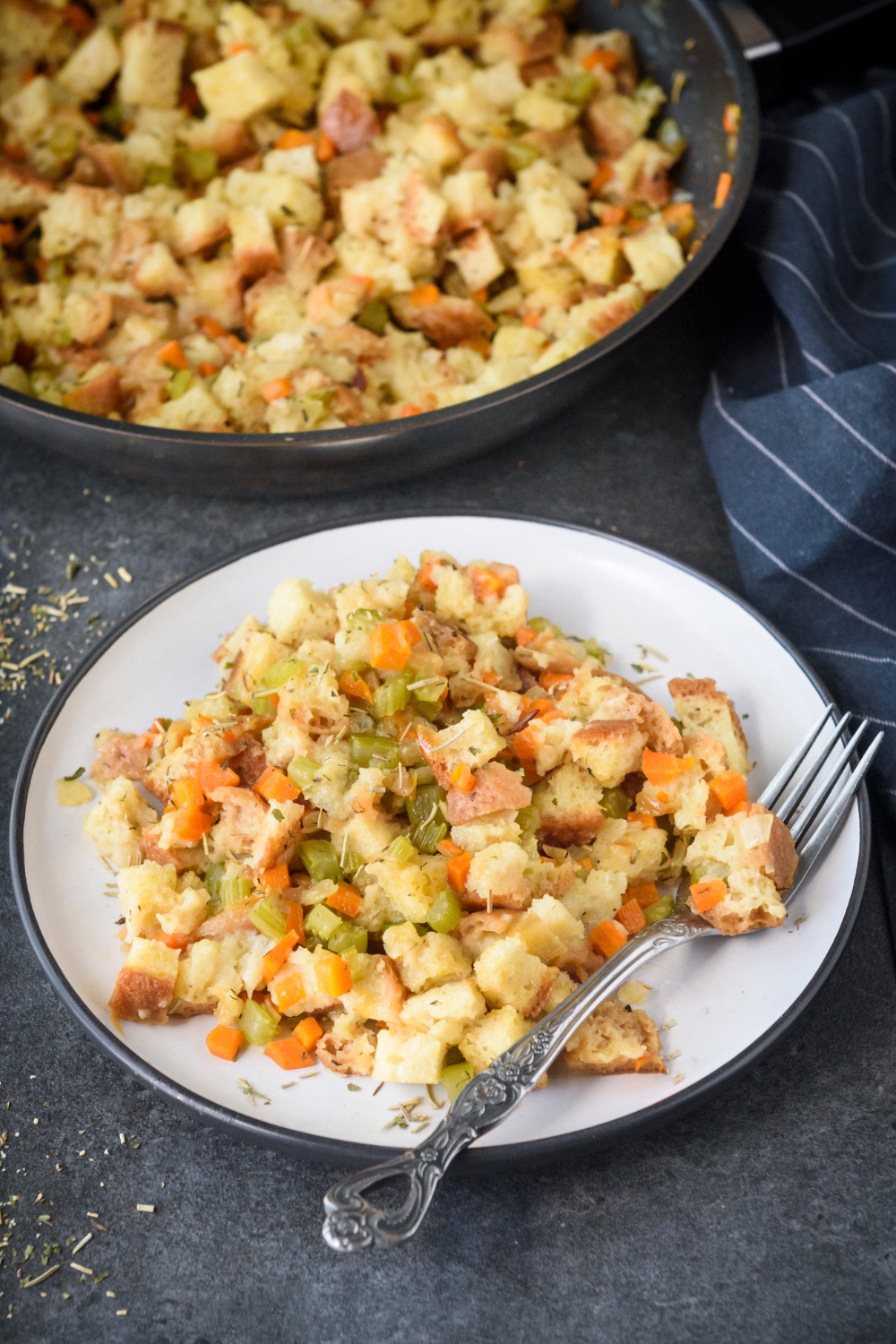
Table of Contents
Why This Stovetop Stuffing is Perfect for Thanksgiving
Boxed Stove Top stuffing has always been one of my guilty pleasures at Thanksgiving. It’s nostalgic, buttery, and loaded with savory herbs — but I’ve always wanted a homemade version that delivers the same comfort with fresher, more flavorful ingredients. So I started playing around with different veggie combinations, seasonings, and textures until I landed on this recipe… and I’m confident I nailed it.
This stuffing has everything you want in a holiday side: tender vegetables sautéed in butter, perfectly seasoned bread cubes, and just the right amount of broth so it turns out soft and moist with a little crispness around the edges. It’s the stuffing recipe that gets better with every bite.
I love serving it alongside chicken and mashed potatoes or turkey, twice baked mashed potatoes, and Ocean Spray cranberry sauce or one of these Thanksgiving casserole recipes. It fits right in with the classics but tastes like something you’d get from a homemade holiday spread rather than a box.
The best part? It’s incredibly easy to make and totally customizable. You can switch up the herbs, swap in vegetable or turkey broth, use sourdough or French bread, or even add sausage if you want something heartier. Once you taste how simple and flavorful this stovetop stuffing is, it’ll become your go-to recipe every Thanksgiving — and the side dish your family requests year after year.
Stovetop Stuffing Ingredients
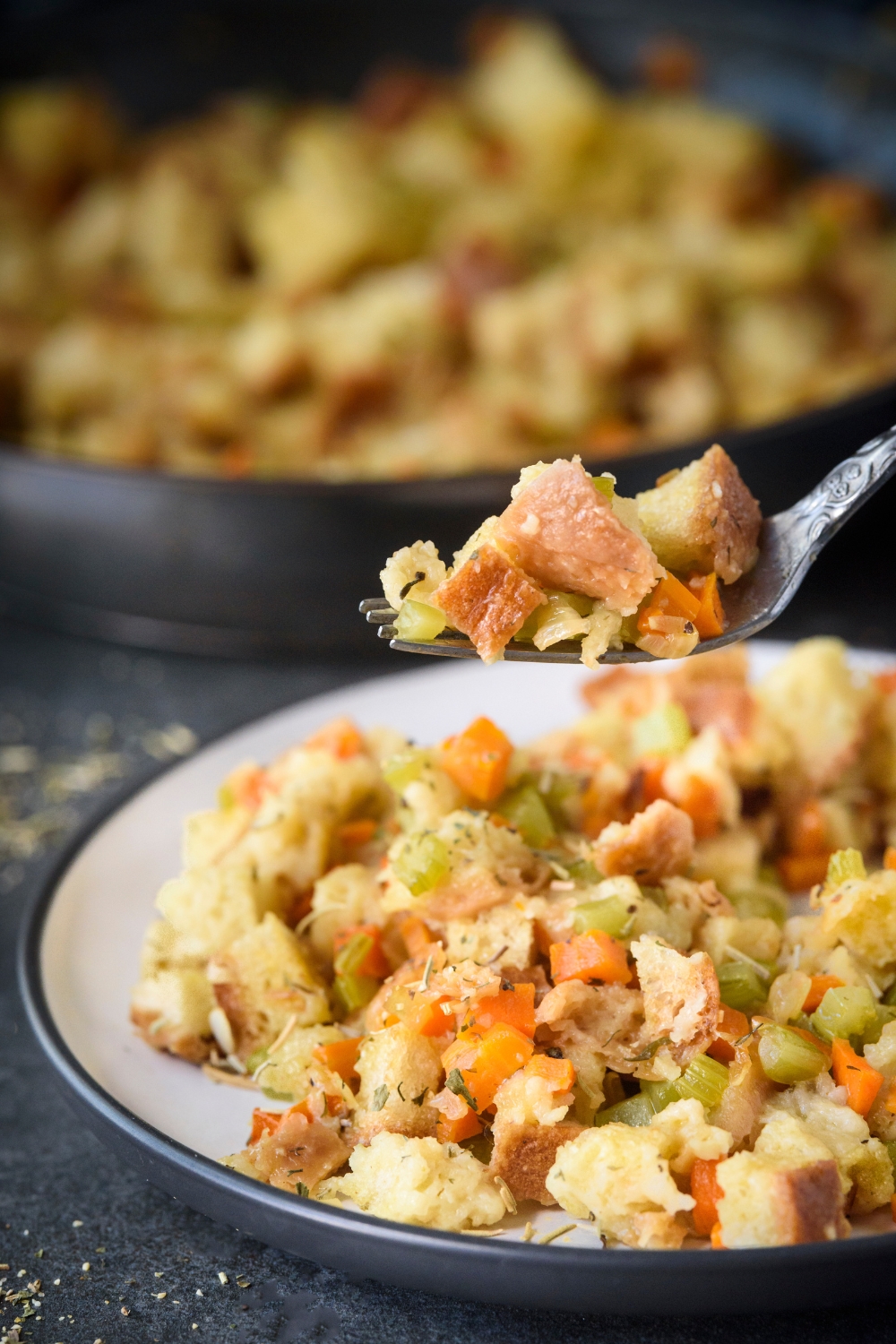
- 8 Slices of Bread- I like to use crust white bread and cut it into cubes myself.
- ½ Cup Unsalted butter- you'll want to use unsalted since we'll be adding celery salt.
- 1 Onion and 1 tsp. garlic- it gives stuffing, and so many other recipes, that perfect flavor.
- 1 Carrot and a cup of celery- for a little crunch.
- 2 Cups Chicken broth- to soak the bread and enhance the flavors. You can also use vegetable broth or beef broth.
- 1 tsp. Thyme, parsley, basil, and rosemary- essential herbs for that savory flavor.
- 1 tsp. Celery salt- for a better salty flavor.
How To Make Homemade Stovetop Stuffing
Step 1: Prep work
Preheat the oven to 340°F (170°C), then line a baking sheet or a baking dish with parchment paper. Add the cubed bread to the prepared baking sheet and bake the bread cubes for 10 minutes.
Step 2: Cook the veggies
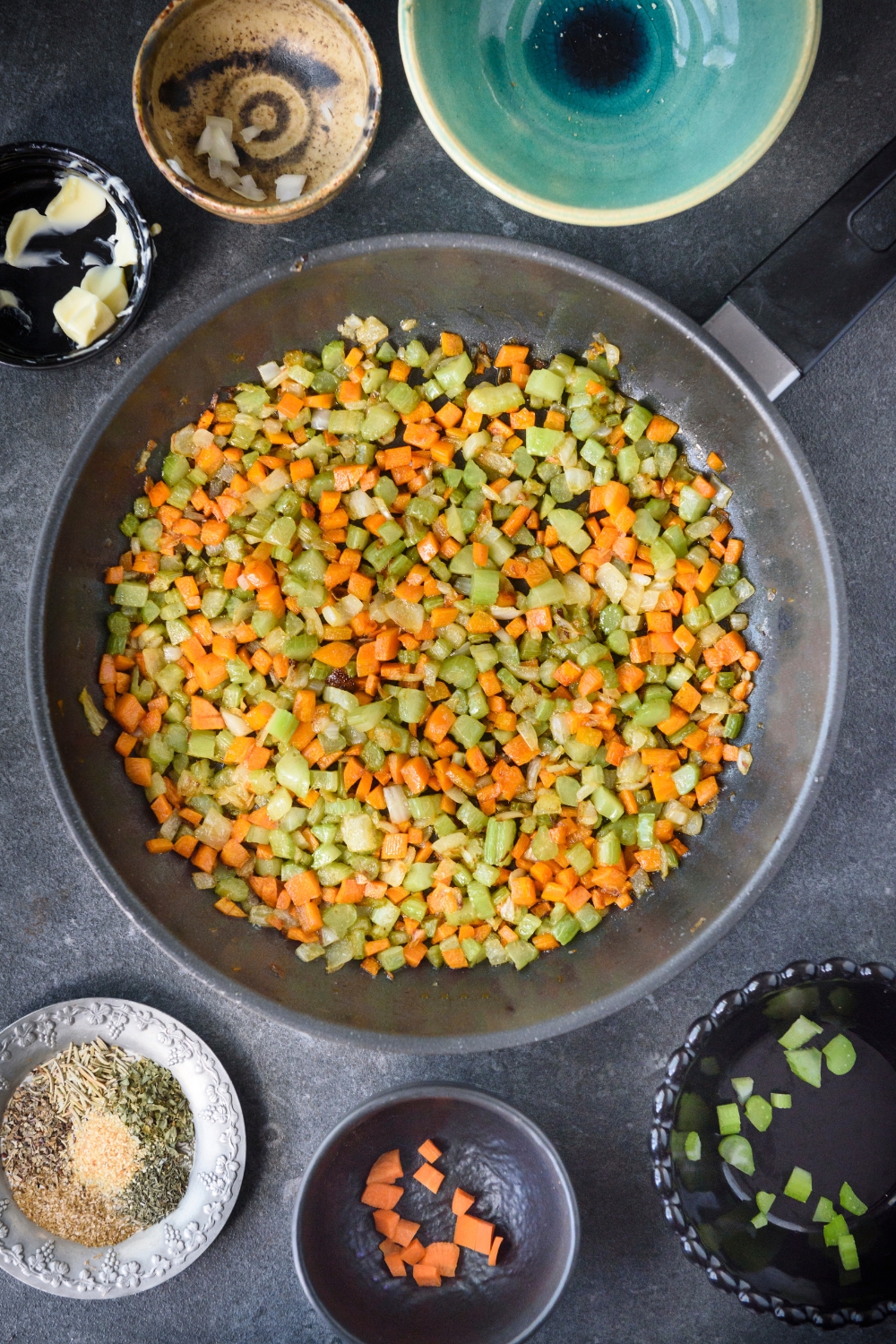
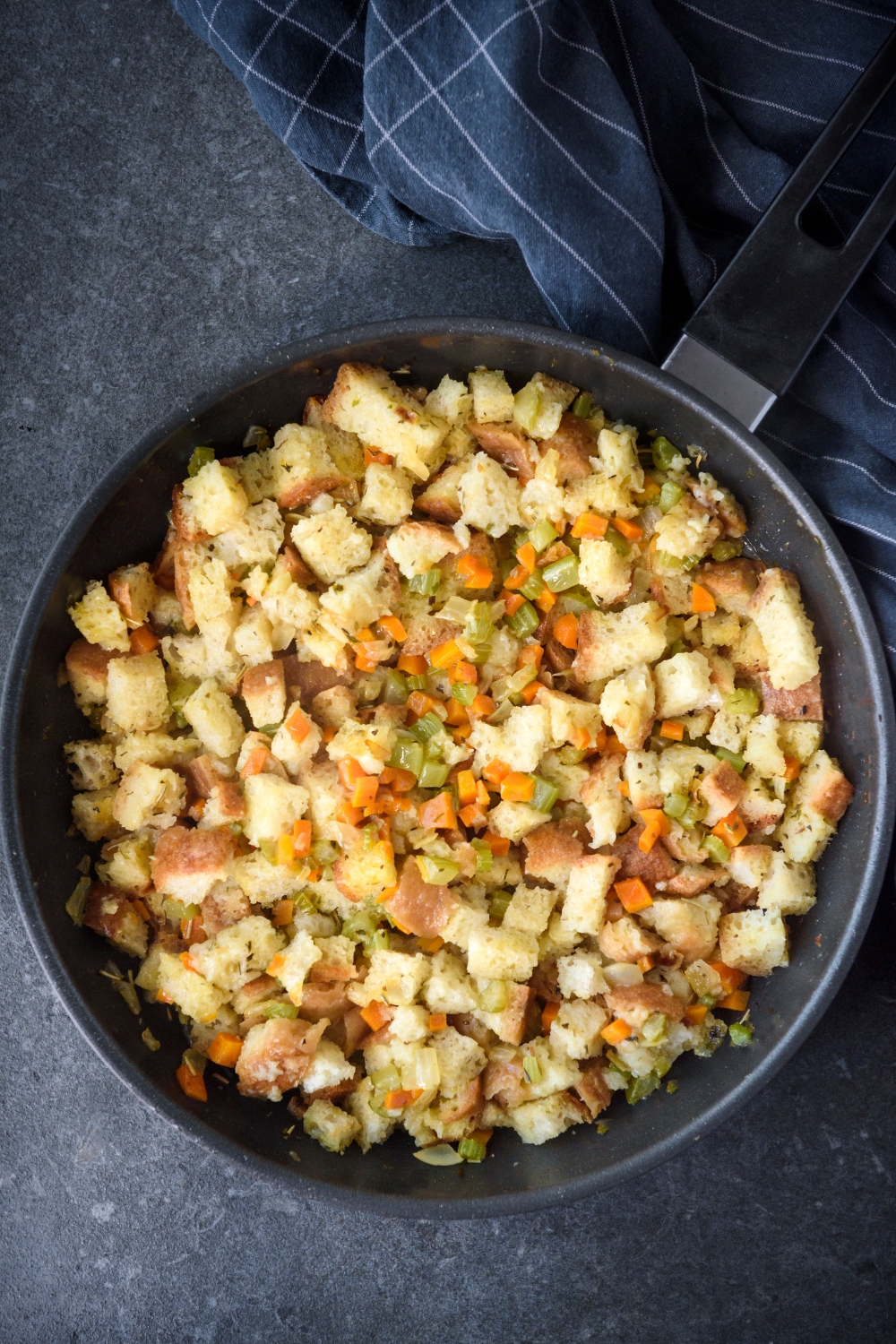
In the meantime, melt the butter in a large deep skillet and fry the onions, carrots, and celery over medium-high heat for 10 minutes or until the veggies start to soften. Add all of the herbs and stir constantly for 1 minute to fully combine them with the veggies.
Step 3: Finish the stuffing
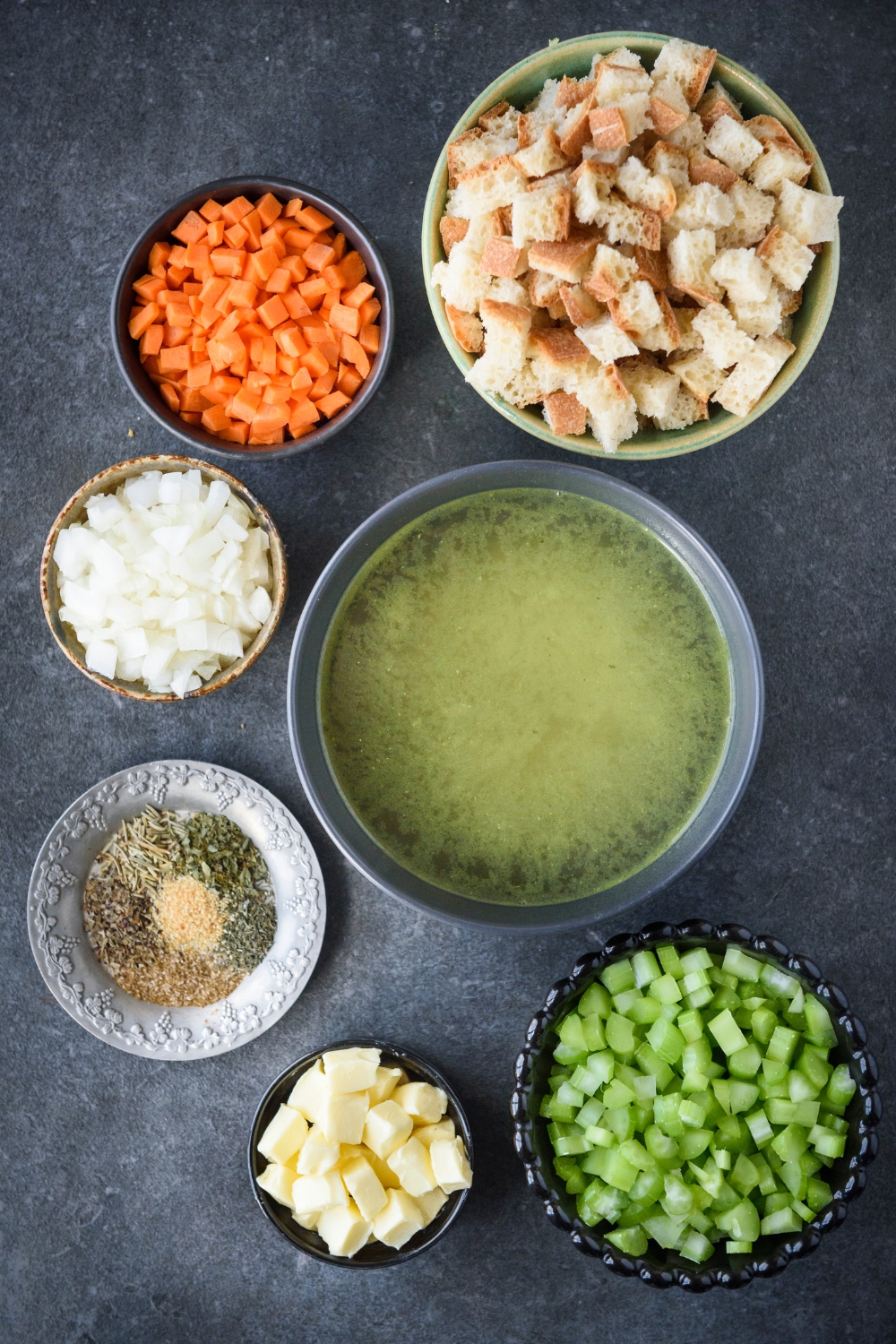
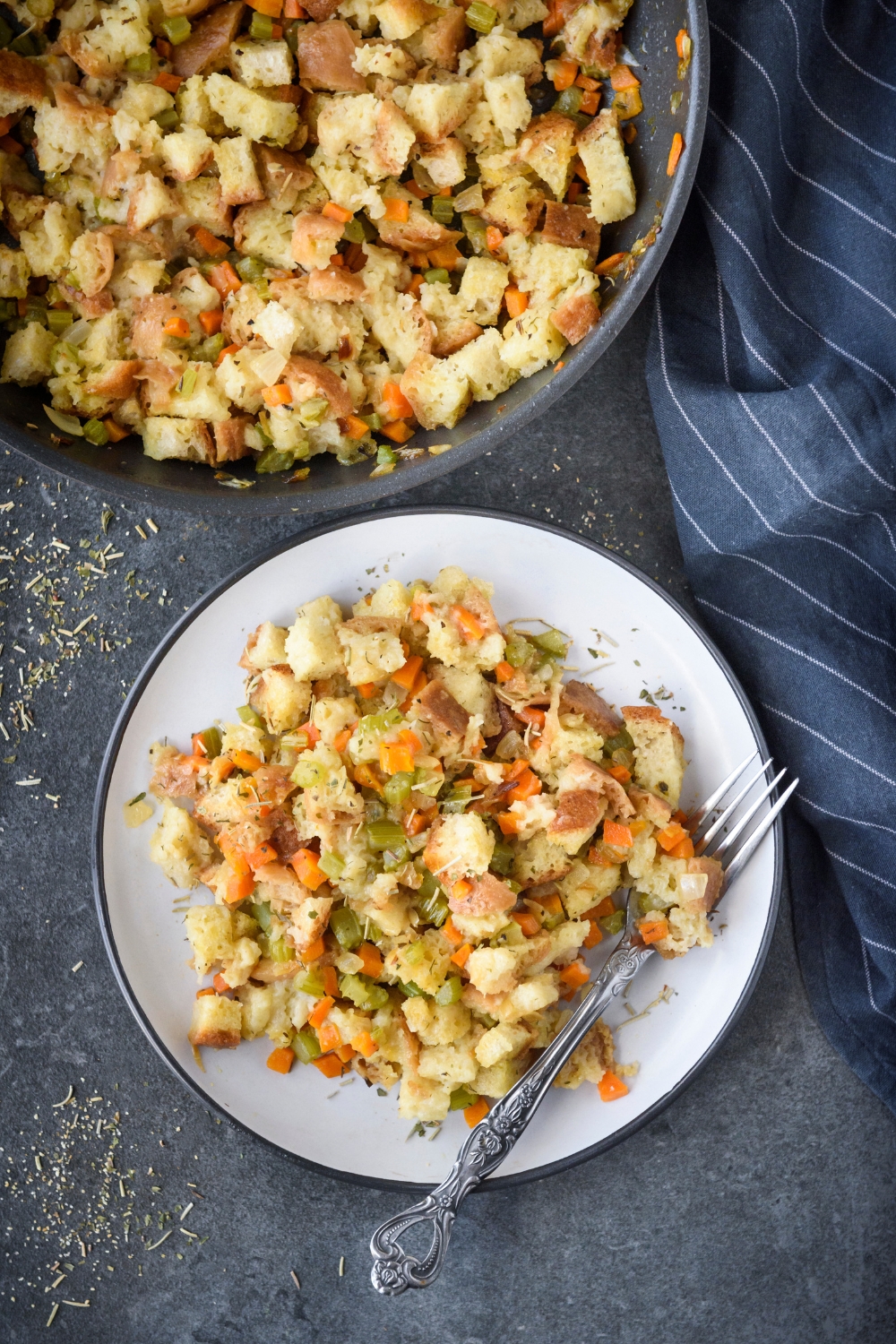
Add the chicken broth to the skillet, let it boil, then add the toasted bread cubes. Cover the skillet, remove it from the heat, and allow it to sit for 10-15 minutes. To finish up, stir gently, making sure not to overmix, or the bread will become mushy. Serve the warm with any main course you want and enjoy!
Expert Tips To Make The Best Stovetop Stuffing
- Prep the bread cubes ahead to save time on Thanksgiving Day. Toasting the bread is one of the most important steps because it prevents stuffing from turning mushy. For an easier holiday workflow, cube and toast your bread 1–2 days ahead of time. Let it cool completely, then store it in an airtight container or freezer bag. Dry bread absorbs broth more evenly, giving you that perfect tender-but-not-soggy texture.
- Cut the vegetables into small, even pieces for balanced flavor. Finely diced onions, carrots, and celery soften quickly and blend seamlessly into the stuffing instead of leaving large chunks. Uniform, bite-sized pieces help the stuffing cook evenly and infuse flavor throughout every bread cube.
- Sauté the vegetables until deeply softened for maximum flavor. Those extra few minutes of sautéing add sweetness and richness that make a big difference in the final taste. You want the veggies completely tender before adding the herbs — this builds the flavor foundation.
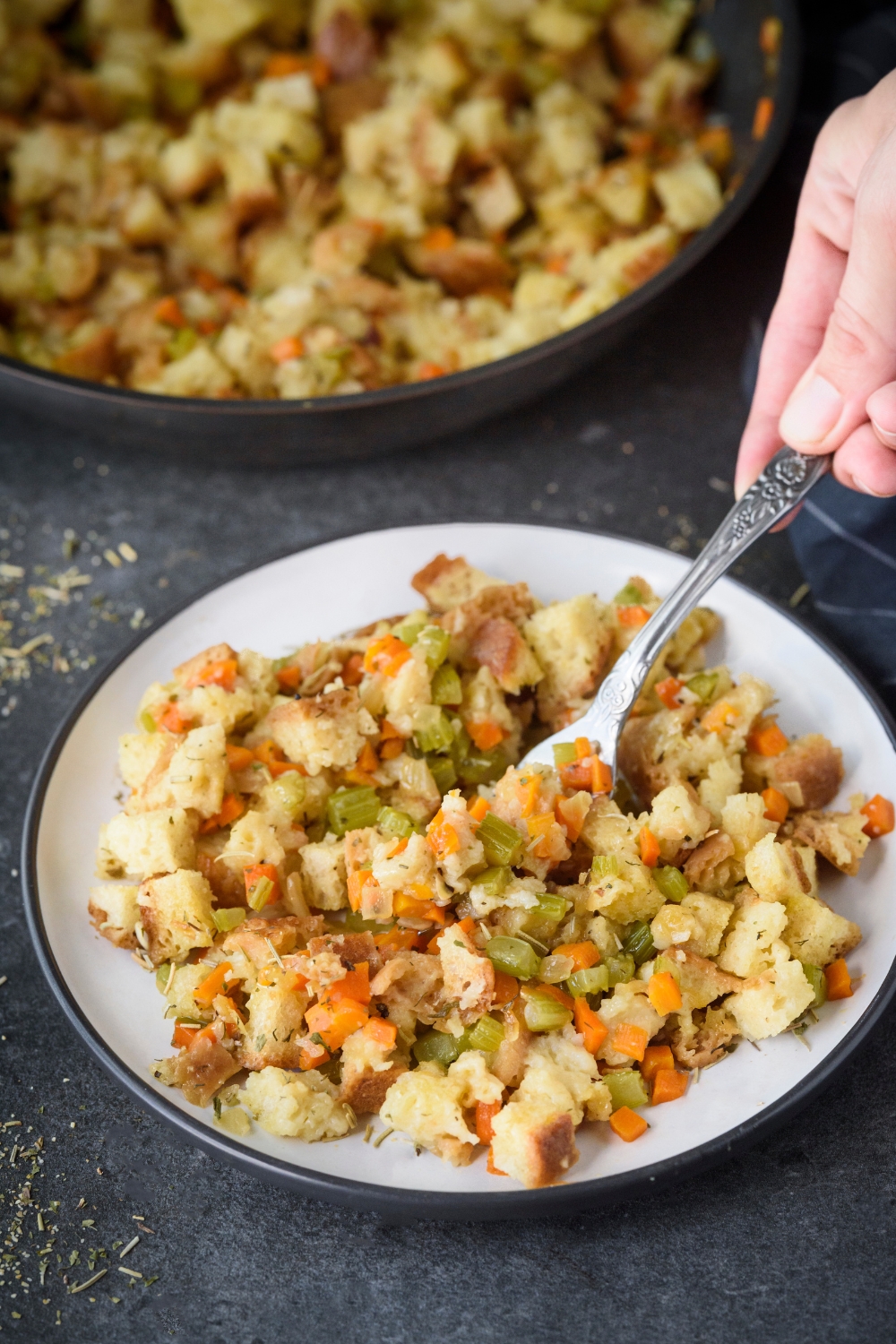
- Stir gently—stuffing should be fluffy, not mashed. Once the bread has absorbed the broth, use a light hand when mixing to keep the cubes intact. Over-stirring can turn stuffing into a paste. Fold everything together just until combined for the best texture.
- Taste and adjust the seasoning before serving. Every brand of broth and bread varies in saltiness. Give the stuffing a quick taste and adjust with more herbs, salt, or pepper as needed. A pinch of poultry seasoning or sage can instantly boost that classic Thanksgiving flavor.
- Customize it to fit your Thanksgiving spread. This recipe is a perfect base stuffing. You can add cooked sausage, dried cranberries, sautéed mushrooms, fresh herbs, chopped pecans, or even apples to make it heartier or more festive. It’s the easiest stuffing to personalize.
- Use turkey broth for an extra Thanksgiving touch. If you’re roasting a turkey, save the drippings or homemade turkey broth and use them in place of chicken broth. It adds incredible richness and makes the stuffing taste like it came straight from the turkey cavity — without the hassle.
- Keep it warm without drying it out. If you’re juggling multiple dishes, transfer the stuffing to a covered casserole dish and hold it in a 200°F oven. Add a splash of warm broth before serving to refresh the moisture.
Stovetop Stuffing FAQS
What is the best bread to use for stovetop stuffing?
If you want that classic boxed Stove Top flavor, white sandwich bread is the closest match because it’s soft, neutral, and absorbs broth perfectly. Sourdough is another great option if you want more structure and a slight tang, and French bread or Italian bread work well when you want a stuffing that’s a bit more hearty. The key is making sure your bread is dry and toasted, because fresh bread becomes mushy. You can truly use any bread you have on hand — even leftover rolls or buns — as long as you dry them out before mixing.
Can I make this stovetop stuffing ahead of time?
Yes, this recipe is excellent for make-ahead prep, which is especially helpful for Thanksgiving or Friendsgiving. Prepare the stuffing completely as directed, then store it in the refrigerator (covered tightly) for up to 24–48 hours. When you're ready to serve, reheat it in a baking dish at 350°F with a splash of broth to refresh the moisture. It should take about 20 minutes to warm through. This method keeps the stuffing tender without drying it out.
Can I double this stovetop stuffing recipe?
Absolutely — this recipe doubles beautifully. Simply double all ingredients and toast the bread cubes on two baking sheets instead of one to ensure they dry evenly. When mixing everything together, either use an extra-large pot or divide the ingredients between two large skillets so the veggies and bread coat evenly in the broth. The cooking and resting times stay the same.
Why is my stuffing mushy or soggy?
Mushy stuffing usually happens when the bread isn’t dried out enough or when too much broth is added. Make sure the bread cubes are toasted until firm before mixing. If the stuffing still feels too wet, let it sit uncovered for a few minutes — it will naturally firm up as it absorbs the liquid. Stir gently to avoid breaking apart the bread.
Can I use broth other than chicken broth?
Yes. You can use vegetable broth for a vegetarian stuffing or turkey broth for a richer, more Thanksgiving-inspired flavor. All three work well — just choose based on what you’re serving.
Can I add sausage or extra vegetables?
Definitely. This recipe is extremely customizable. Browned Italian sausage, breakfast sausage, mushrooms, leeks, fresh herbs, cranberries, and even nuts like pecans all make delicious additions. If you add sausage or mushrooms, cook them fully before mixing with the bread so they integrate smoothly.
How long does homemade stovetop stuffing last?
Leftovers keep for 3–4 days in the refrigerator when stored in an airtight container. Reheat with a splash of broth to bring back the moisture. You can also freeze stuffing for up to 2 months — thaw overnight and warm in the oven before serving.
How do I reheat stuffing?
I've found the best way to reheat leftover stuffing is to transfer it to a greased baking dish, add a splash of chicken broth, and bake it at 350°F for 15 minutes. Make sure to thaw any frozen leftovers overnight in the fridge or add more reheating time.
More Stuffing Recipes
- Chicken stuffing bake
- My wife's famous chicken stuffing casserole
- Seafood stuffing
- Crock pot pork chops with stuffing
- Chicken and dressing
Homemade Stovetop Stuffing (Perfect for Thanksgiving)

This homemade stovetop stuffing is the perfect side dish for Thanksgiving or really any holiday dinner. It’s made with fluffy toasted bread cubes, tender sautéed vegetables, rich chicken broth, and the perfect balance of herbs to give you that classic stuffing flavor everyone loves. It tastes nostalgic and comforting, but even better than the boxed version.
Ingredients
- 8 slices white bread, cubed
- ½ cup unsalted butter
- 1 medium onion, diced
- 1 large carrot, diced
- 1 cup celery, diced
- 2 cups chicken broth
- 1 teaspoon thyme
- 1 teaspoon parsley
- 1 teaspoon basil
- 1 teaspoon garlic
- 1 teaspoon celery salt
- 1 teaspoon rosemary
Instructions
- Preheat the oven to 350°F (175°C). Add the cubed bread to a large baking sheet and bake for 10 minutes.
- Heat the butter in a large skillet and fry onions, carrots, and celery. Cook everything over medium-high heat for 10 minutes or until the veggies are softened.
- Add the herbs and celery salt to the skillet and stir constantly for 1 minute to combine.
- Add the chicken broth, let it boil, and then add the toasted cubed bread to the skillet. Cover the skillet with a lid, remove it from the heat, and let it sit for 10-15 minutes.
- Stir gently just until everything combines, making sure not to over-stir. Serve warm.
Notes
Store any leftovers in an airtight container in the refrigerator for 4 days. Freeze in a freezer-safe container for 3 months.
Nutrition Information:
Serving Size:
1 cupAmount Per Serving: Calories: 197Total Fat: 16.3gSaturated Fat: 10gTrans Fat: 0gUnsaturated Fat: 0gCholesterol: 41mgSodium: 470mgCarbohydrates: 10gFiber: 1.4gSugar: 2.4gProtein: 3.2g
Tori
You guys nailed this recipe!!!!!