


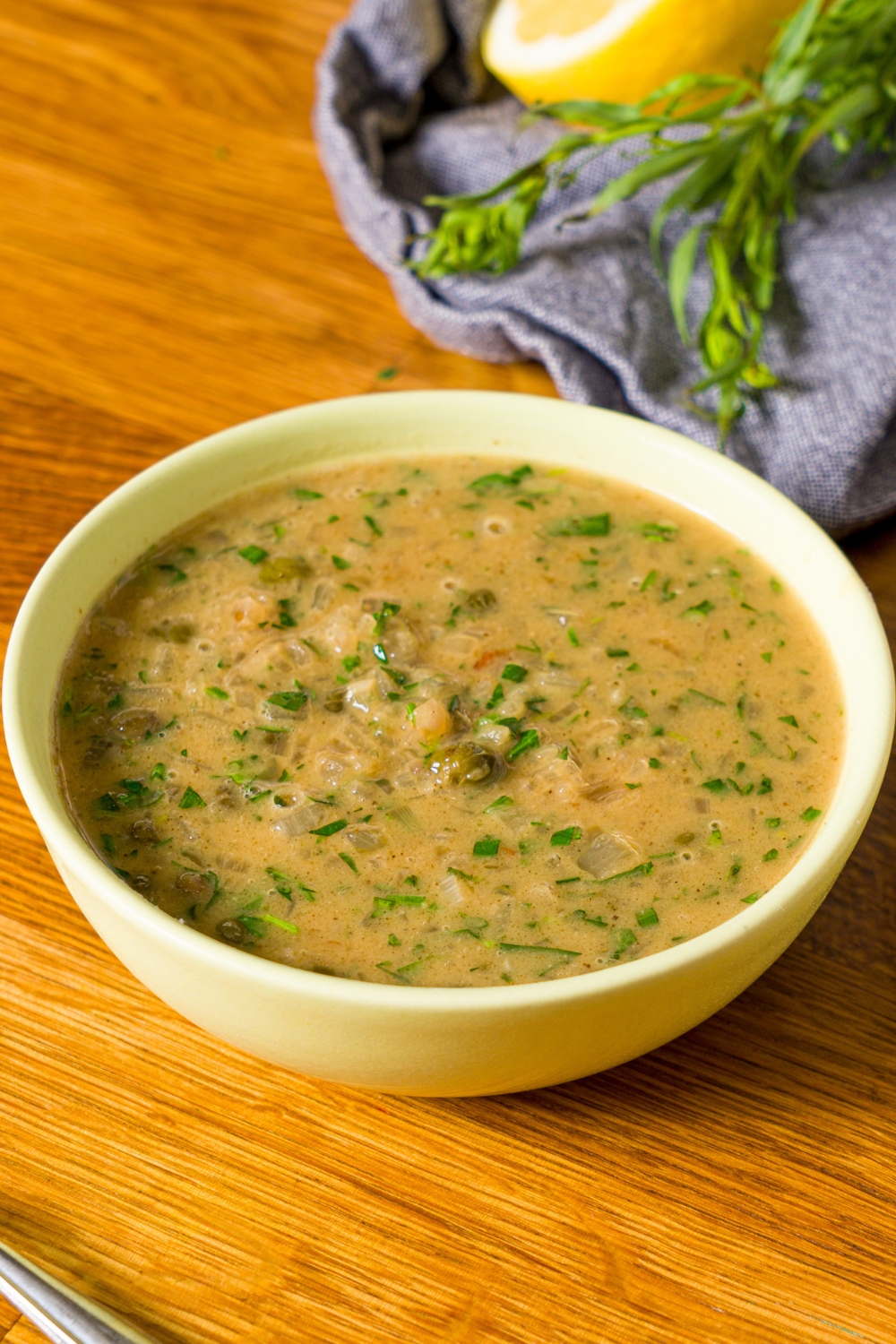
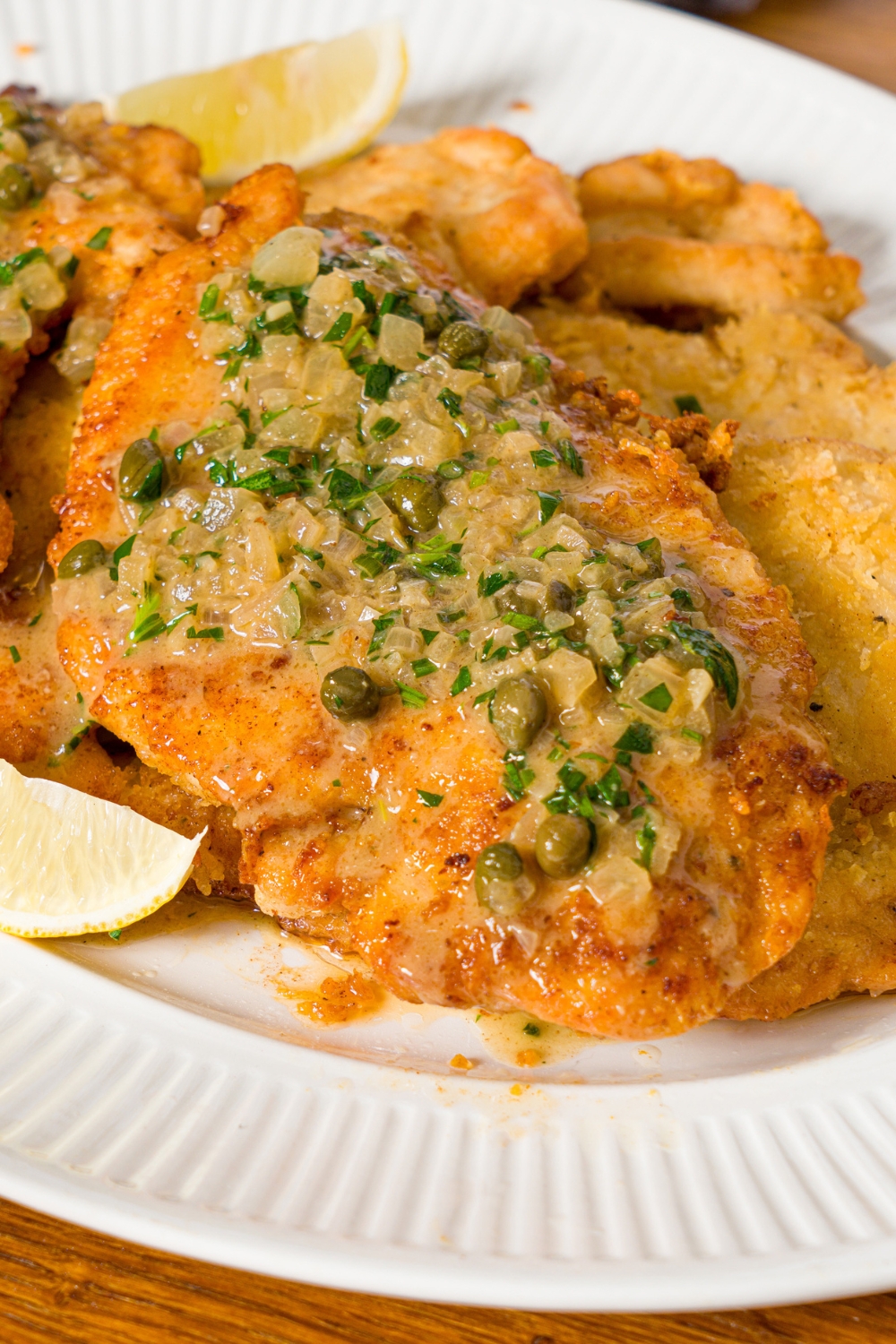
This piccata sauce comes together in one pan with bright lemon, briny capers, white wine, and butter. It’s an easy lemon caper sauce for chicken, fish, pasta, potatoes, and roasted vegetables.
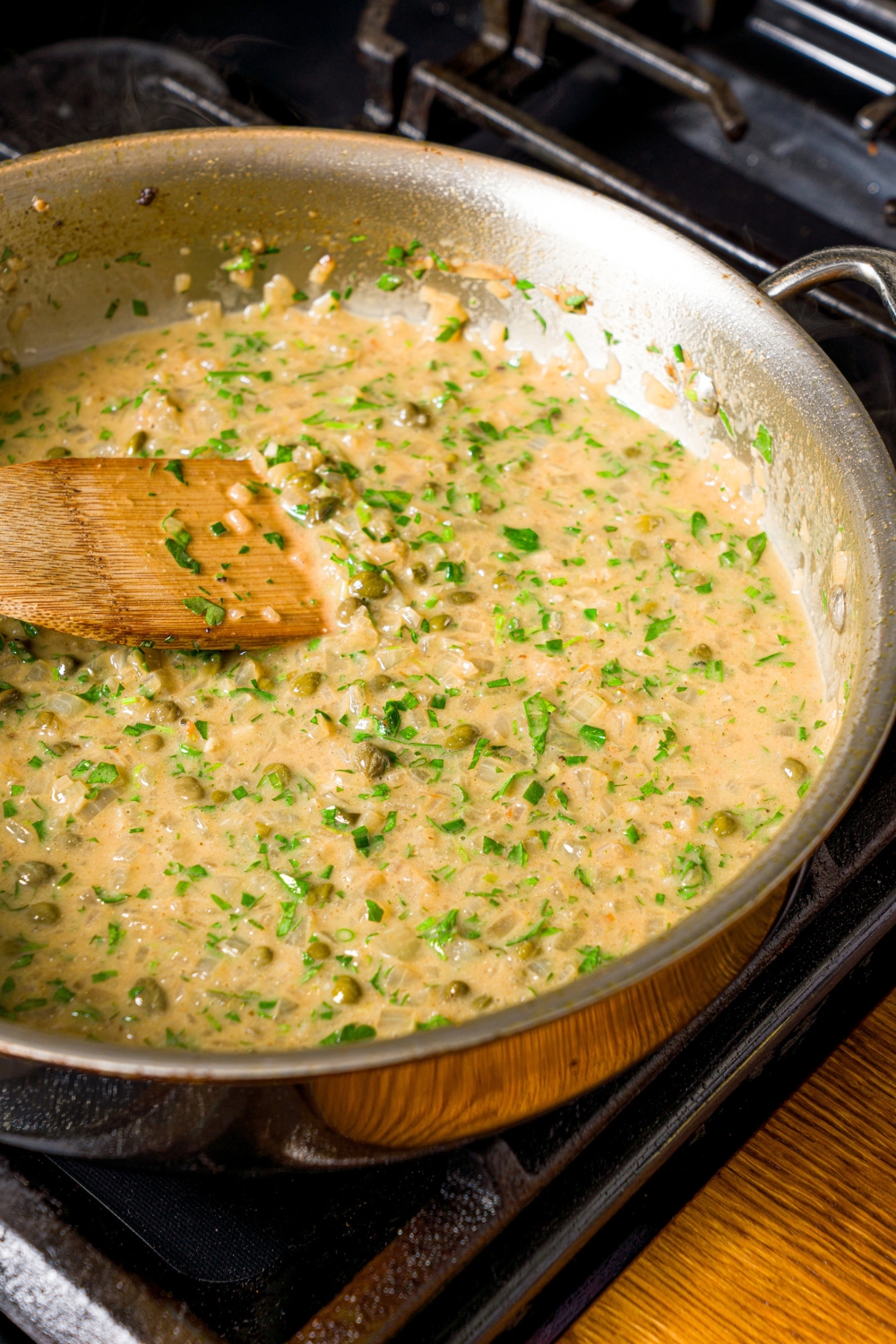
Table of Contents
Why This Piccata Sauce Recipe Works
My favorite part about chicken piccata is the sauce, so I wanted to make a homemade version that's perfect for making that classic dish and more. What I like most about this version is that the sauce tastes bright without being aggressively sour. The white wine and chicken stock reduce into a flavorful base, while the lemon is added near the end so its flavor stays fresh and easy to control.
The white miso is my twist on the traditional sauce. You can’t immediately identify it once everything comes together, but it adds a deeper savory flavor that makes the broth, capers, and butter taste more complete. Fresh parsley, chives, and tarragon keep the finished sauce from feeling too rich.
I've included chicken in this recipe if you want to make classic chicken piccata with the homemade lemon butter caper sauce. The chicken gets a thin layer of mayonnaise followed by a Parmesan and flour coating. It cooks up golden in the skillet and leaves flavorful browned bits behind for the sauce. Once the cold butter is whisked in, the sauce becomes glossy enough to cling to the chicken instead of running straight onto the plate.
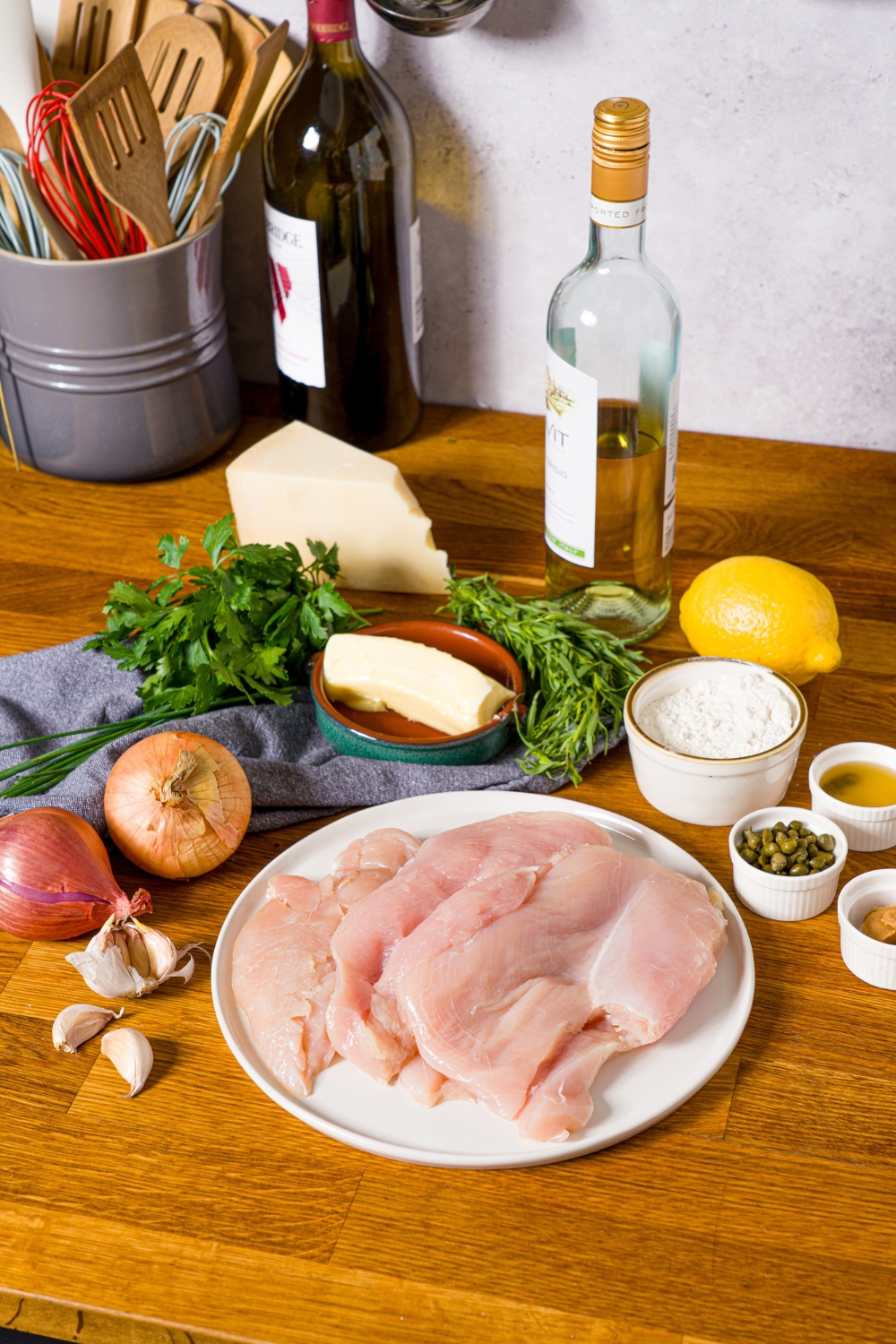
Ingredients
For the Parmesan Chicken:
- 2 large boneless, skinless chicken breasts
- Salt and black pepper, to taste
- ⅓ cup mayonnaise, as needed
- ½ cup all-purpose flour
- ⅓ cup finely grated Parmesan cheese
- 1 to 2 tablespoons olive oil, plus more as needed
For the Piccata Sauce:
- 2 shallots, finely chopped
- ½ small white onion, finely chopped
- 2 garlic cloves, minced
- ½ cup dry white wine
- 1 cup low-sodium chicken stock
- ¼ cup capers, drained
- 2 tablespoons caper brine
- 1 teaspoon white miso
- 2 to 3 tablespoons fresh lemon juice
- 4 tablespoons cold unsalted butter, cut into cubes
- ⅓ cup finely chopped fresh parsley
- 1 tablespoon finely chopped fresh tarragon
- 2 tablespoons finely chopped fresh chives
- Lemon wedges, for serving
Ingredient Notes
- Chicken breasts: Slice each breast into thin cutlets and pound them to an even thickness. This helps every piece cook at the same rate without the edges drying out.
- Mayonnaise: Brush on a very thin layer. You only need enough to help the Parmesan-flour mixture stick. Too much can make the coating heavy or gummy.
- White wine: Use a dry white wine you’d enjoy drinking, such as Pinot Grigio, Sauvignon Blanc, or an unoaked Chardonnay. Avoid sweet wine. For an alcohol-free version, replace it with additional low-sodium chicken stock.
- Capers: Capers packed in brine work best because the brine is also used in the sauce. Taste before adding extra salt since the capers, Parmesan, miso, and stock all contribute sodium.
- White miso: This isn’t a traditional piccata ingredient, but it gives the sauce extra savory depth. Whisk it into the stock so it dissolves completely.
- Lemon: Fresh lemon juice is essential here. Start with 2 tablespoons, then add more after tasting so the sauce doesn’t become overly sharp.
- Butter: Use cold unsalted butter and whisk it in off the heat. Cold butter melts gradually and helps the sauce turn smooth and glossy.
- Tarragon: Fresh tarragon has a distinctive flavor, so 1 tablespoon is plenty. If you’re using dried tarragon, reduce it to about 1 teaspoon.
How to Make Piccata Sauce
Step 1: Cook the Chicken (optional if you're making chicken piccata)
Skip this step if you’re making the piccata sauce for fish, pasta, vegetables, or another dish.
Slice the chicken breasts horizontally into thin cutlets, then pound them to an even thickness. Season lightly with salt and black pepper. Combine the flour and Parmesan in a shallow dish. Brush each cutlet with a very thin layer of mayonnaise, then coat it in the flour mixture. Shake off any excess.
Heat 1 to 2 tablespoons of olive oil in a large skillet over medium-high heat. Cook the chicken in batches for about 3 to 4 minutes on the first side and 1 to 3 minutes on the second, depending on thickness. Transfer the chicken to a plate once it’s golden and reaches 165°F in the center.

Step 2: Cook the Aromatics
If you cooked the chicken, lower the heat to medium and remove any burned coating from the skillet while leaving the golden browned bits behind.
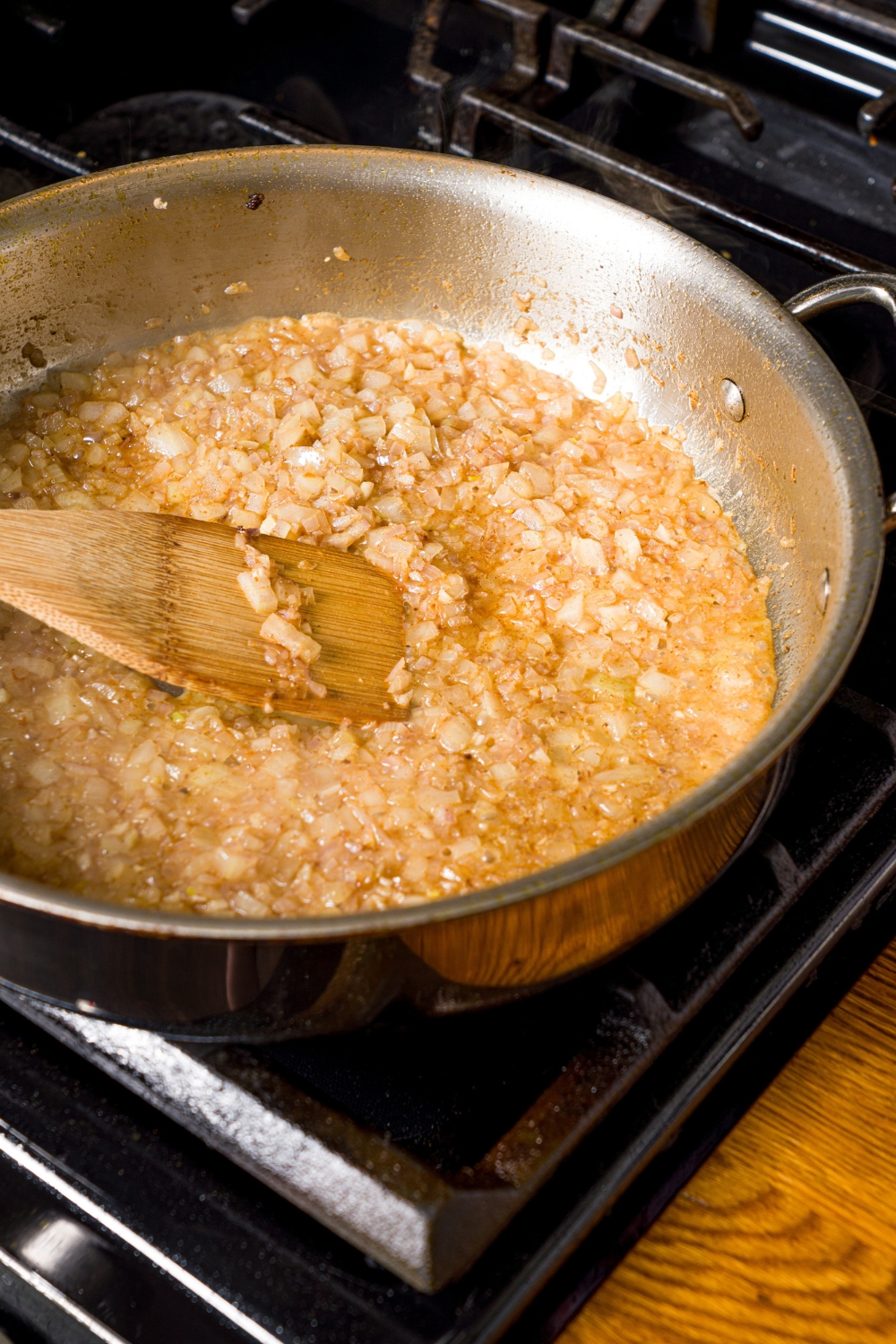
If you’re making the sauce without chicken, heat 1 tablespoon of olive oil and 1 tablespoon of butter in a large skillet over medium heat. Add the shallots and onion. Cook for 3 to 4 minutes, until softened. Stir in the garlic and cook for about 30 seconds, just until fragrant.
Step 3: Reduce the Wine
Pour in the white wine and scrape the bottom of the skillet to release any browned bits. Let the wine simmer until it has reduced by roughly half. This concentrates the flavor and cooks off the harsh alcohol taste.

Step 4: Add the Stock
Whisk the white miso into the chicken stock until dissolved. Pour the mixture into the skillet along with the caper brine. Simmer for 5 to 8 minutes, until the sauce has reduced and lightly coats the back of a spoon.
Step 5: Finish the Piccata Sauce
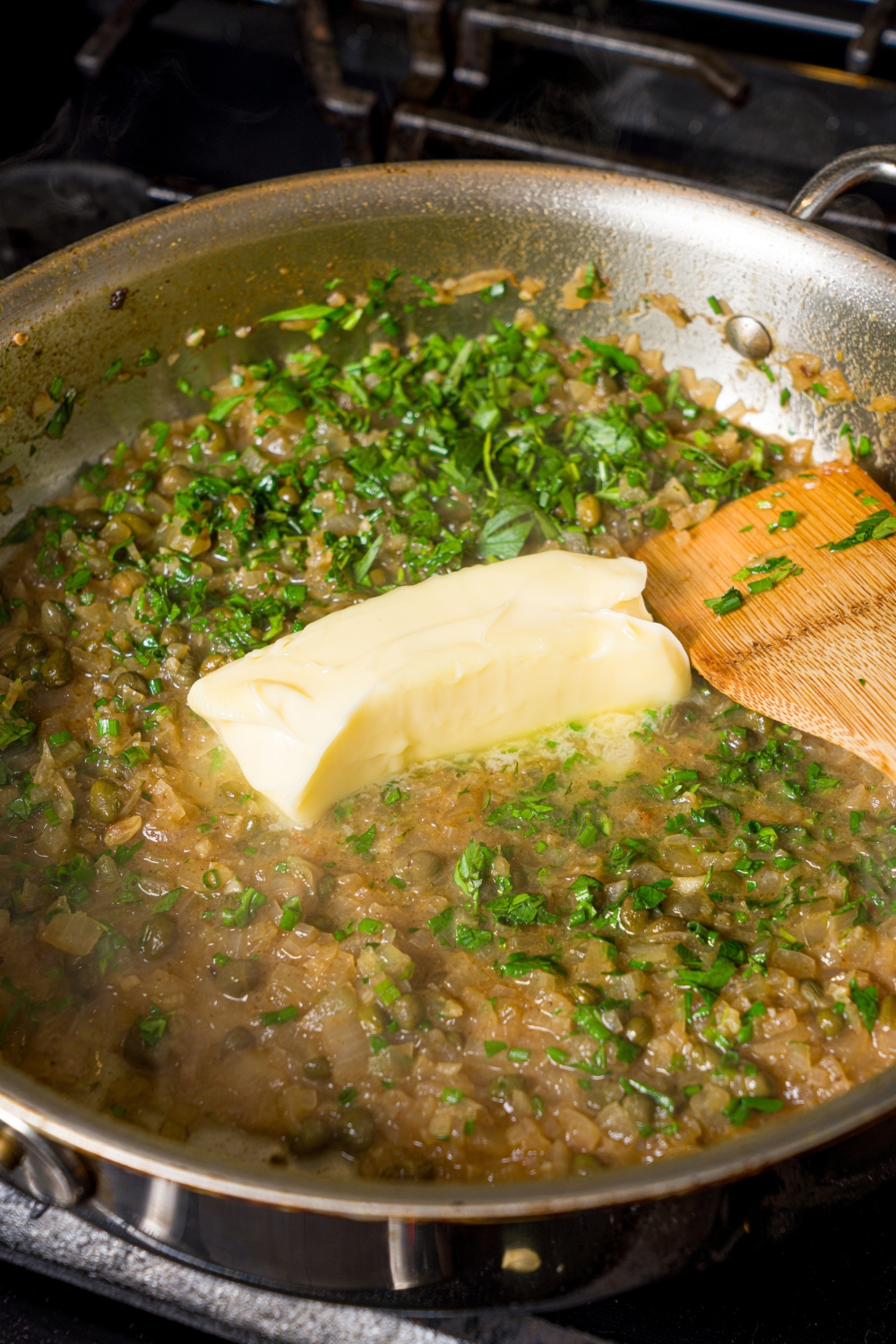
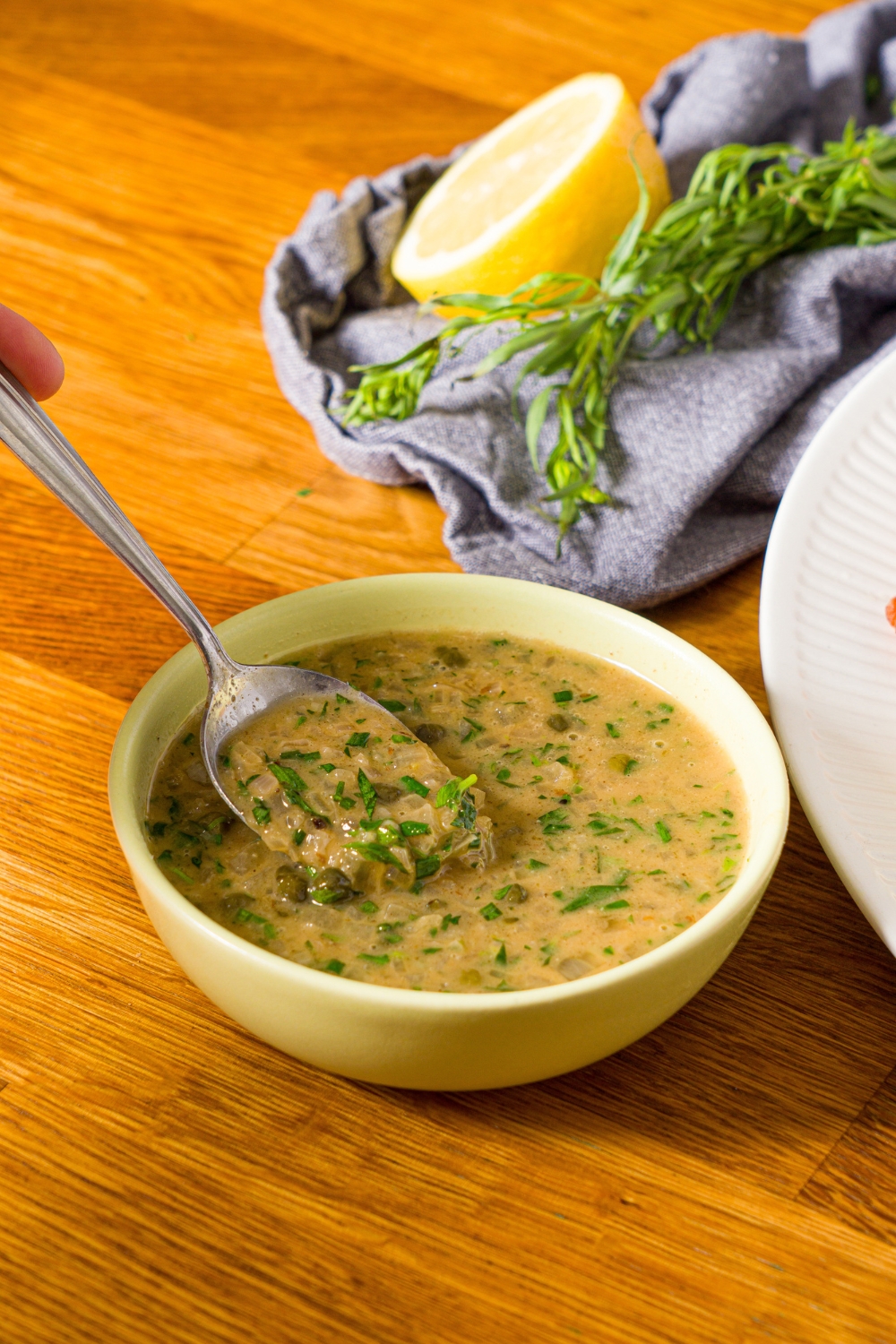
Remove the skillet from the heat. Whisk in the cold butter one piece at a time, allowing each addition to melt before adding more. Stir in 2 tablespoons of lemon juice, the capers, parsley, tarragon, and chives. Taste and add more lemon juice, black pepper, or salt only if needed.
Step 6: Serve
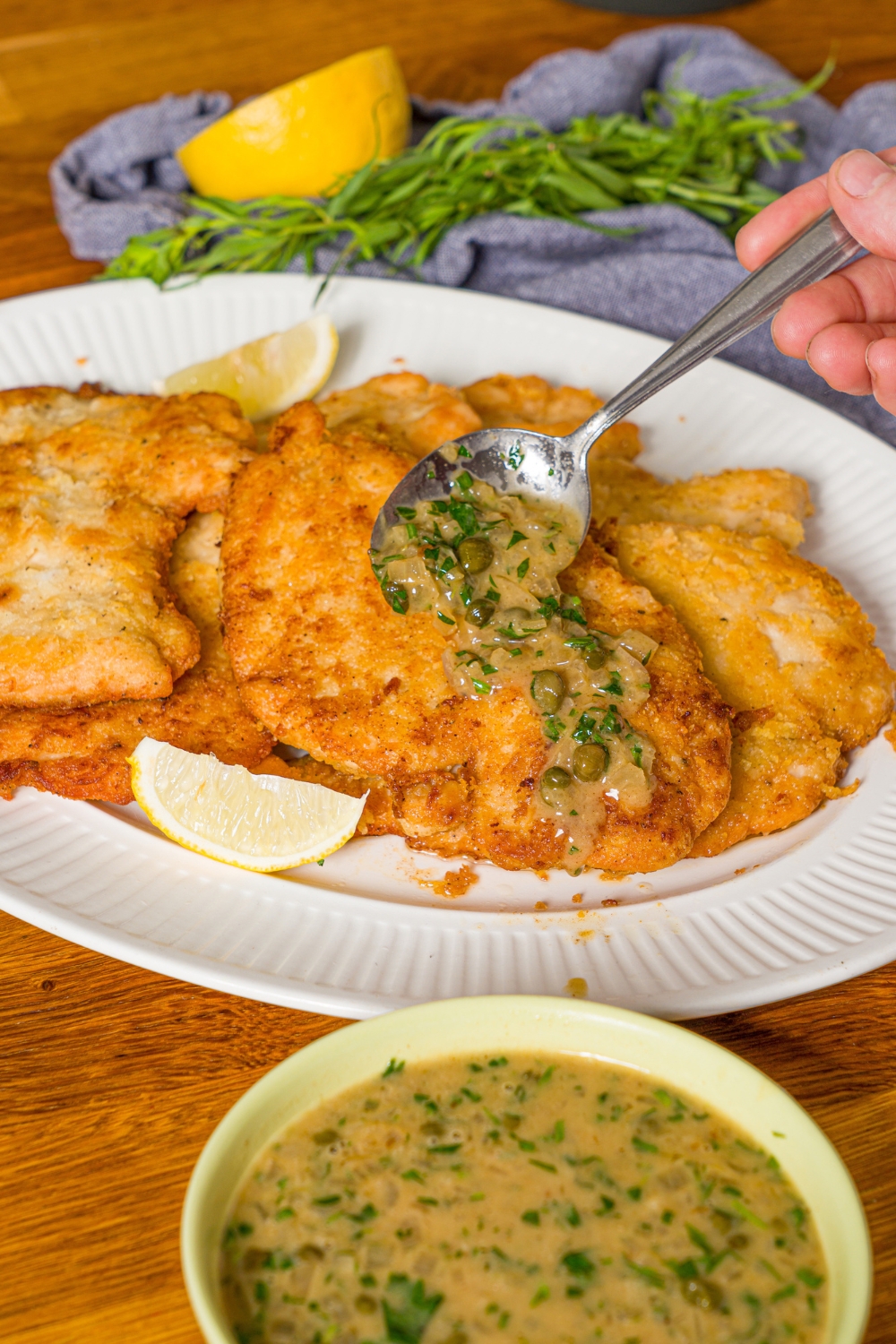
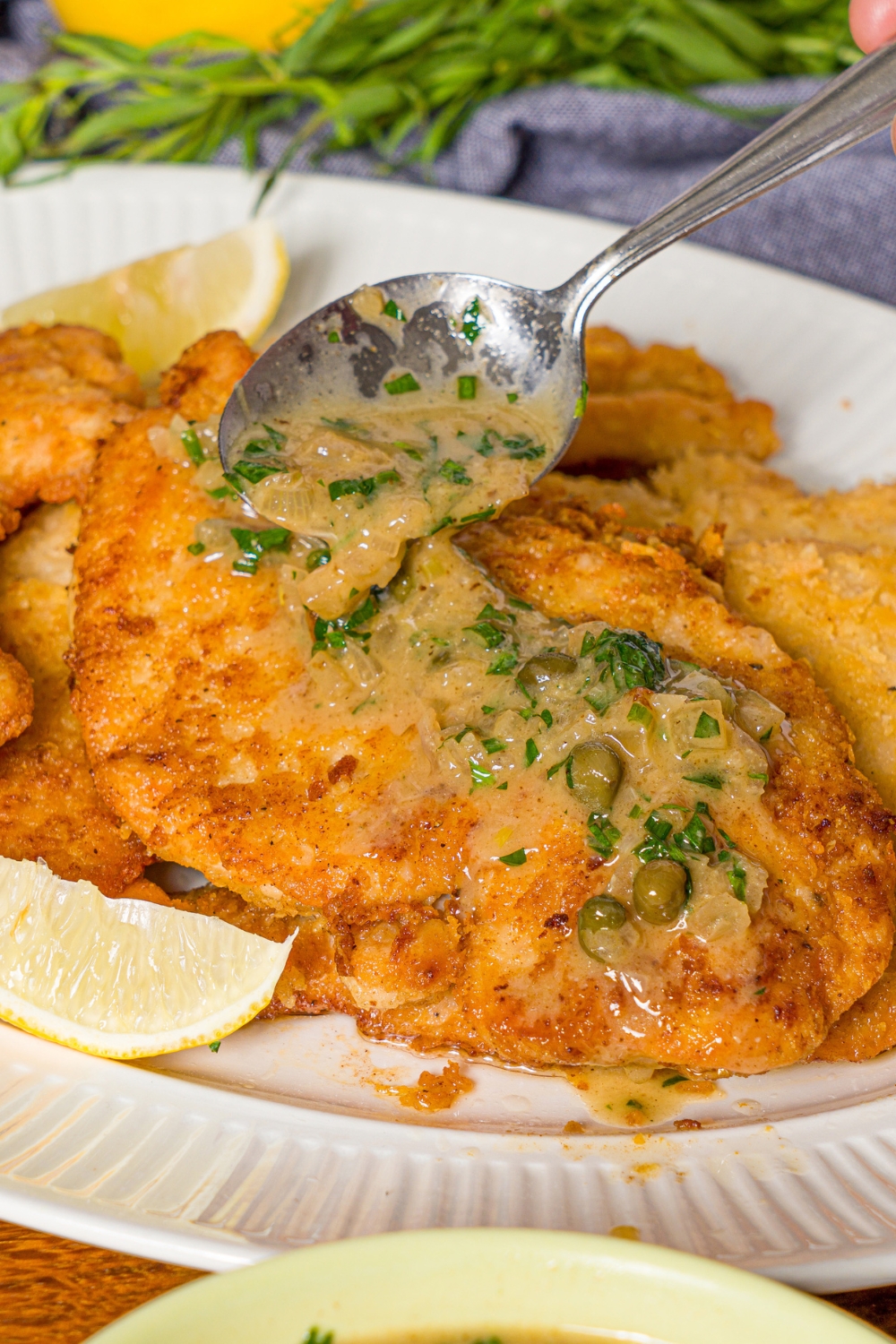
If you made the chicken, return it to the skillet and spoon the sauce over each cutlet. Warm it briefly over low heat without letting the sauce boil.
If you made the sauce on its own, spoon it immediately over fish, shrimp, pasta, pork, potatoes, or roasted vegetables. Serve with fresh lemon wedges and extra herbs.
My Tips for the Best Piccata Sauce
- Use a wide skillet. A wider pan gives the wine and stock more surface area to reduce evenly, helping the sauce develop flavor without taking too long.
- Build a flavorful base even without chicken. If you skip the chicken, let the shallots and onion soften until they’re lightly golden. This creates some of the savory depth you’d otherwise get from the browned bits left in the pan.
- Keep the sauce slightly loose before adding butter. It will thicken as the cold butter is whisked in and continue tightening as it cools. If the reduced liquid already looks thick, the finished sauce may become heavy.
- Take the skillet off the heat before adding butter. Whisk in the cold butter gradually so it melts into the liquid instead of separating into an oily layer.
- Add the lemon and herbs last. Fresh lemon, parsley, chives, and tarragon lose some of their brightness when simmered. Stirring them in at the end keeps the sauce tasting fresh.
- Taste after adding the capers. Capers, caper brine, miso, Parmesan, and chicken stock can all add salt. Wait until the sauce is finished before deciding whether it needs more seasoning.
- Fix a separated sauce with cold water. If the butter begins looking oily, remove the pan from the heat and whisk in 1 teaspoon of cold water or stock. This can help bring the sauce back together.
- Loosen it based on how you’re serving it. For chicken or fish, keep the sauce thick enough to coat a spoon. For pasta, add a small splash of warm stock or reserved pasta water so it coats the noodles more easily.
- Add cooked proteins only at the end. Return chicken, fish, shrimp, or pork to the skillet just long enough to warm and coat. Simmering them in the sauce can dry them out and soften any golden crust.
- Serve it soon after finishing. Piccata sauce is glossiest and most balanced while warm. If it thickens before serving, whisk in a small splash of warm stock over low heat.
Ways to Use Piccata Sauce
Piccata sauce works with much more than chicken:
- Fish: Spoon it over salmon, cod, halibut, tilapia, or sole.
- Shrimp: Toss it with sautéed shrimp and serve over pasta or rice.
- Pork: Use it with thin pork cutlets or roasted pork tenderloin.
- Pasta: Toss it with spaghetti, linguine, angel hair, or my creamy garlic Parmesan pasta.
- Potatoes: Serve it over mashed potatoes, roasted potatoes, or crispy smashed potatoes.
- Vegetables: Drizzle it over asparagus, broccoli, green beans, artichokes, or cauliflower.
- Rice: Spoon the chicken and sauce over white rice, risotto, or orzo.
- Bread: Serve crusty bread on the side to soak up the lemon butter sauce.
Piccata Sauce FAQs
What is piccata sauce?
Piccata sauce is a bright, buttery pan sauce commonly made with lemon juice, capers, white wine or broth, and butter. It’s most closely associated with chicken piccata, but it can also be served with fish, shrimp, pasta, pork, and vegetables.
What does piccata sauce taste like?
Piccata sauce tastes buttery, lemony, savory, and briny. The lemon and capers give it a bright, tangy flavor, while reduced wine, broth, and butter make it richer and more balanced.
This version also includes shallots, herbs, and white miso for additional savory depth.
Does piccata sauce contain cream?
Traditional piccata sauce generally doesn’t require cream. Butter is whisked into the reduced wine and broth to give the sauce its glossy, lightly thickened texture.
How do you thicken piccata sauce?
Let the wine and chicken stock reduce before adding the butter. Reduction concentrates the flavor and naturally gives the liquid more body. The chicken’s flour coating also leaves a small amount of starch in the skillet. Once cold butter is whisked in, the sauce should lightly coat the back of a spoon.
Why did my piccata sauce separate?
The sauce was probably too hot when the butter was added or it was boiled afterward. Remove the skillet from direct heat and whisk in cold butter gradually. If it begins separating, remove it from the heat and whisk in a teaspoon of cold water or stock until it comes back together.
Why is my piccata sauce too sour?
Too much lemon juice or insufficient reduction can make the sauce taste sharp. Start with 2 tablespoons of lemon, taste the finished sauce, and add more only if needed. If it’s already too sour, whisk in another tablespoon of cold butter or a small splash of chicken stock.
Can I make piccata sauce without wine?
Yes. Replace the wine with an equal amount of low-sodium chicken stock. The sauce will have less complexity, so you may want to add a little extra lemon zest or a teaspoon of white wine vinegar after reducing it.
What is the best white wine for piccata sauce?
Use a dry white wine such as Pinot Grigio, Sauvignon Blanc, or an unoaked Chardonnay. Avoid sweet wines because their flavor becomes more concentrated as the sauce reduces. You don’t need an expensive bottle, but use something that tastes pleasant enough to drink.
What can I substitute for capers?
Chopped green olives are the closest substitute because they provide a similar salty, briny flavor. Use slightly less at first, then adjust after tasting. The sauce won’t taste exactly like piccata without capers, but the lemon butter base will still work.
Can I make piccata sauce ahead of time?
You can prepare the reduced wine, stock, shallot, onion, garlic, miso, and caper-brine base up to 1 day ahead. Reheat the base over low heat, then whisk in the cold butter, lemon juice, capers, and herbs immediately before serving. This gives you a fresher flavor and more stable texture than fully finishing the sauce in advance.
Can you use piccata sauce for fish?
Yes. Piccata sauce is especially good with salmon, cod, sole, tilapia, and halibut. Cook the fish separately, then spoon the finished lemon caper sauce over it just before serving.
Is piccata sauce gluten-free?
The sauce itself can be gluten-free if the stock, miso, and other packaged ingredients are certified gluten-free. The chicken coating in this recipe contains wheat flour. For a gluten-free chicken piccata, replace the all-purpose flour with a gluten-free flour blend and check all product labels.
More Easy Sauce Recipes
- White pizza sauce
- Cajun alfredo sauce
- Sherry sauce
- Lemo cream sauce
- Alfredo sauce without heavy cream
Piccata Sauce

This piccata sauce comes together in one pan with bright lemon, briny capers, white wine, and butter. It’s an easy lemon caper sauce for chicken, fish, pasta, potatoes, and roasted vegetables.
Ingredients
For the Piccata Sauce:
- 2 shallots, finely chopped
- ½ small white onion, finely chopped
- 2 garlic cloves, minced
- ½ cup dry white wine
- 1 cup low-sodium chicken stock
- ¼ cup capers, drained
- 2 tablespoons caper brine
- 1 teaspoon white miso
- 2 to 3 tablespoons fresh lemon juice
- 4 tablespoons cold unsalted butter, cut into cubes
- ⅓ cup finely chopped fresh parsley
- 1 tablespoon finely chopped fresh tarragon
- 2 tablespoons finely chopped fresh chives
- Lemon wedges, for serving
For the Parmesan Chicken (*if making chicken piccata):
- 2 large boneless, skinless chicken breasts
- Salt and black pepper, to taste
- ⅓ cup mayonnaise, as needed
- ½ cup all-purpose flour
- ⅓ cup finely grated Parmesan cheese
- 1 to 2 tablespoons olive oil, plus more as needed
Instructions
- Prepare the optional chicken: Slice the chicken breasts horizontally into thin cutlets, then pound them to an even thickness. Season lightly with salt and black pepper.
- Combine the flour and Parmesan in a shallow dish. Brush each chicken cutlet with a very thin layer of mayonnaise, then coat it in the flour mixture. Shake off any excess.
- Heat 1 to 2 tablespoons of olive oil in a large skillet over medium-high heat. Cook the chicken in batches for 3 to 4 minutes on the first side and 1 to 3 minutes on the second, depending on thickness. Transfer it to a plate once golden and cooked to 165°F.
- For sauce without chicken: Skip the first three steps and heat 1 tablespoon of olive oil with 1 tablespoon of butter in a large skillet over medium heat.
- Add the shallots and onion to the skillet. Cook for 3 to 4 minutes, until softened. Add the garlic and cook for another 30 seconds, just until fragrant.
- Pour in the white wine and scrape up any browned bits from the bottom of the skillet. Simmer until the wine has reduced by about half.
- Whisk the white miso into the chicken stock until dissolved. Pour it into the skillet along with the caper brine. Simmer for 5 to 8 minutes, until the liquid has reduced and lightly coats the back of a spoon.
- Remove the skillet from the heat. Whisk in the cold butter one piece at a time, allowing each piece to melt before adding the next.
- Stir in 2 tablespoons of lemon juice, the capers, parsley, tarragon, and chives. Taste and add more lemon juice, black pepper, or salt if needed.
- If you made the chicken, return it to the skillet and spoon the sauce over the cutlets. Warm briefly over low heat without allowing the sauce to boil.
- If you made only the sauce, serve it immediately over fish, shrimp, pasta, pork, potatoes, or roasted vegetables. Finish with lemon wedges and additional fresh herbs.
Notes
This recipe can be used to make chicken piccata or piccata sauce on its own. The chicken ingredients are optional, so you can skip them and serve the finished lemon butter caper sauce with fish, shrimp, pasta, pork, potatoes, or vegetables.
Nutrition Information:
Yield:
2Serving Size:
1Amount Per Serving: Calories: 1100Total Fat: 51gSaturated Fat: 13gUnsaturated Fat: 38gCholesterol: 159mgSodium: 2150mgCarbohydrates: 84gFiber: 7gSugar: 9gProtein: 66g
Leave a Reply