


This ditalini pasta recipe toasts the noodles in olive oil, simmers them risotto-style in broth, and finishes with a splash of cream, butter, and Parmesan for an ultra-silky sauce. Everything happens in a single saucepan, so you get al dente pasta coated in its own garlicky sauce in about the time it takes to set the table! The process is so simple that you can make my chicken Alfredo garlic bread or garlic bread pizza for a comforting side dish.
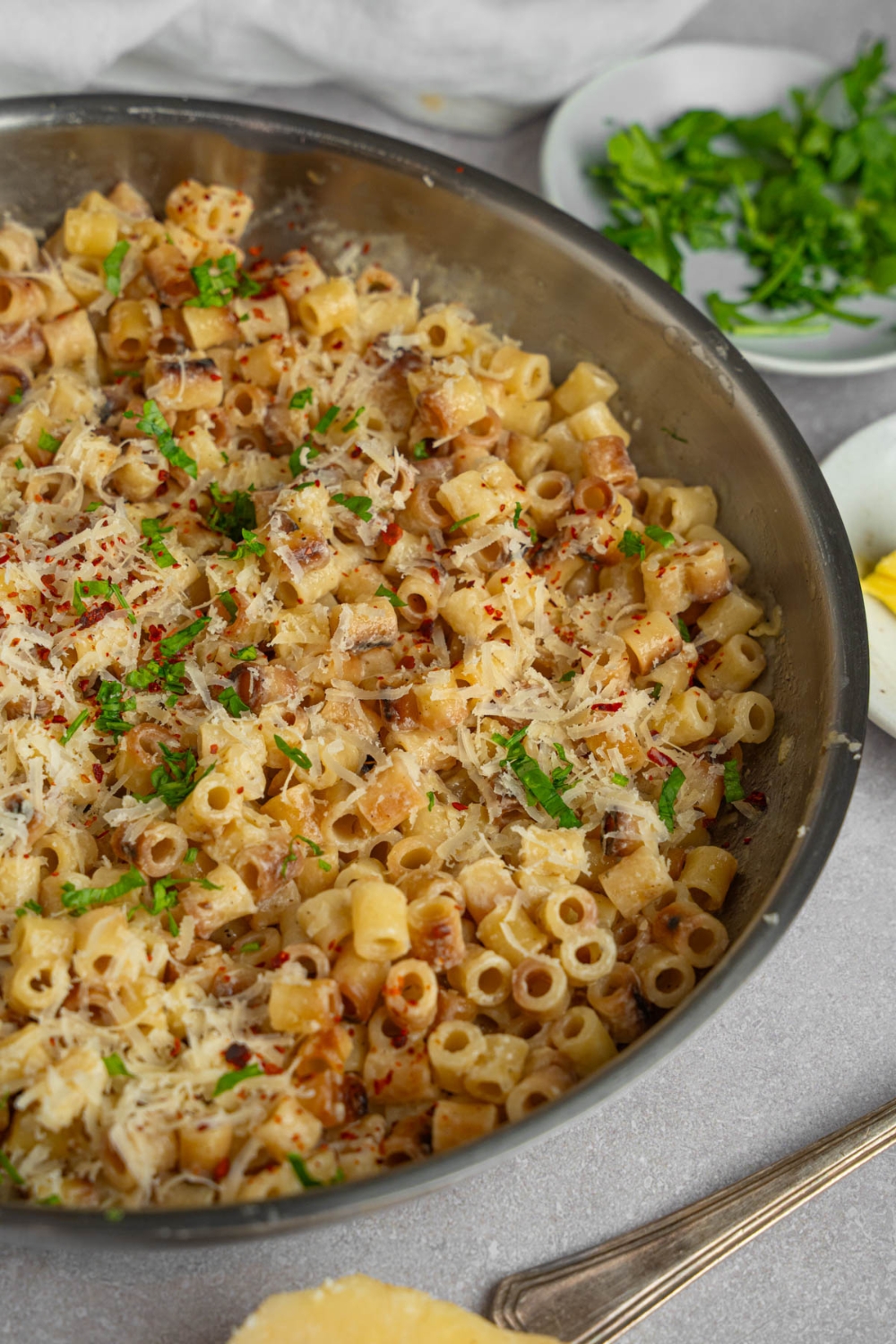
Table of Contents
Why You’ll Love This Easy Ditalini Pasta Recipe
I came up with this ditalini pasta recipe on a busy weeknight when I didn’t feel like boiling a huge pot of water. I saw viral Ditalini pasta recipes on social media and was inspired to make my own recipe. I had a half-box of ditalini, some broth, and a hunch that toasting the pasta first—like in arroz con fideos—would take it to the next level. It worked even better than expected!
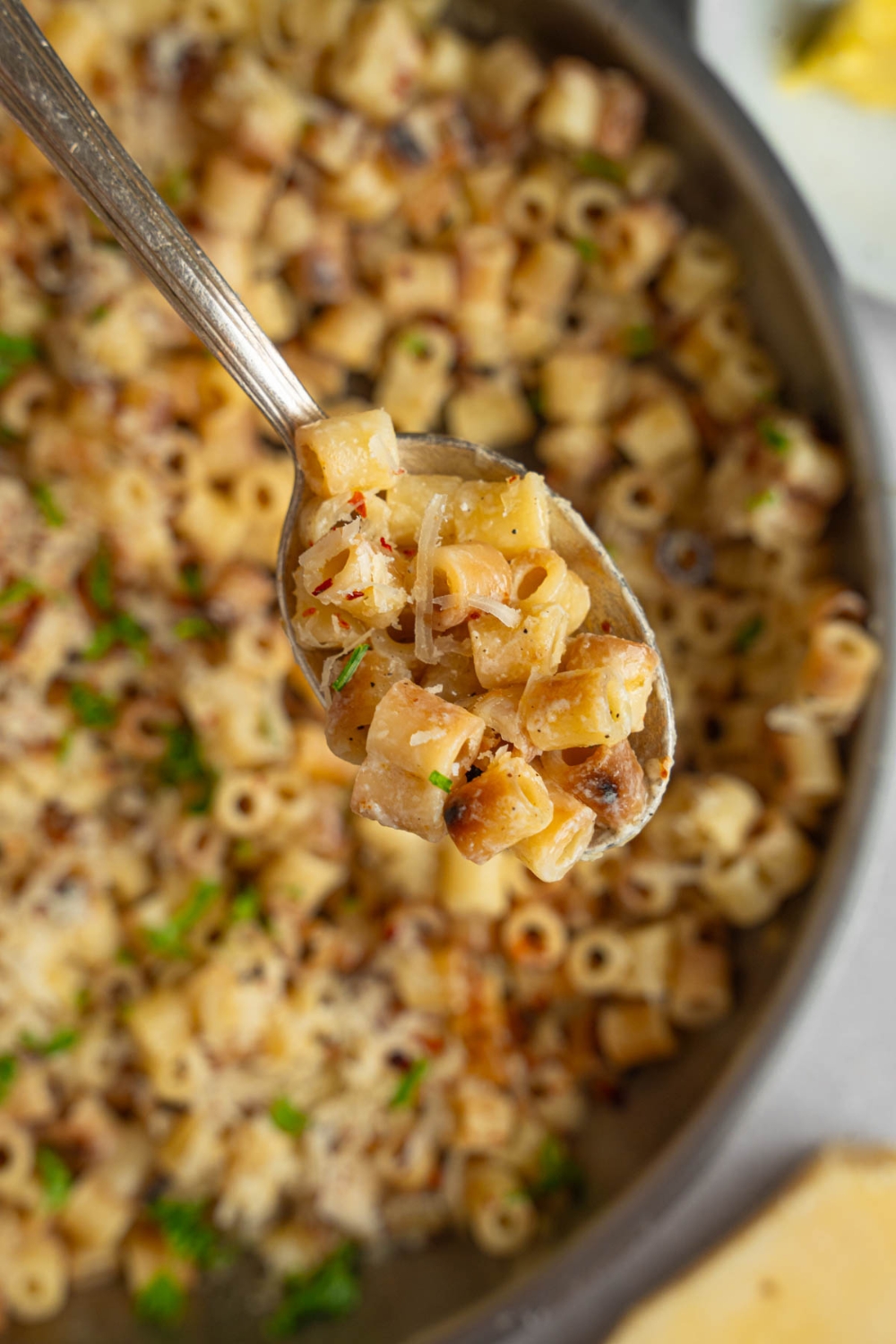
Ditalini’s short tube shape is perfect for soaking up sauce, so every bite is creamy and flavorful without being overly wet. Browning the pasta adds a rich, nutty layer that gives this dish way more depth than you’d expect from just a few ingredients.
Best of all, it’s a true one-pan pasta recipe: the noodles cook directly in seasoned broth, so you don’t have to drain anything or babysit boiling water. The natural starch thickens the sauce, making this an easy comfort food recipe you’ll come back to again and again.

Ingredients You’ll Need
Pasta & Broth:
- 1 (16-oz) box ditalini pasta
- 3 tablespoon olive oil
- 3 cups chicken broth or stock
Flavor Base:
- ½ tablespoon minced garlic (about 1 ½ tsp)
- ½ teaspoon Italian seasoning
Creamy Finish:
- ½ cup heavy cream
- ½ cup freshly grated Parmesan cheese
- 3 tablespoon butter
Seasonings & Garnish:
- ½ teaspoon onion powder
- 2 tablespoon chopped fresh parsley, plus extra for topping
- Salt & pepper, to taste
- Optional: extra Parmesan and red-pepper flakes for serving

How to Make Ditalini Pasta (Creamy One-Pan Method)
Step 1: Toast the Pasta
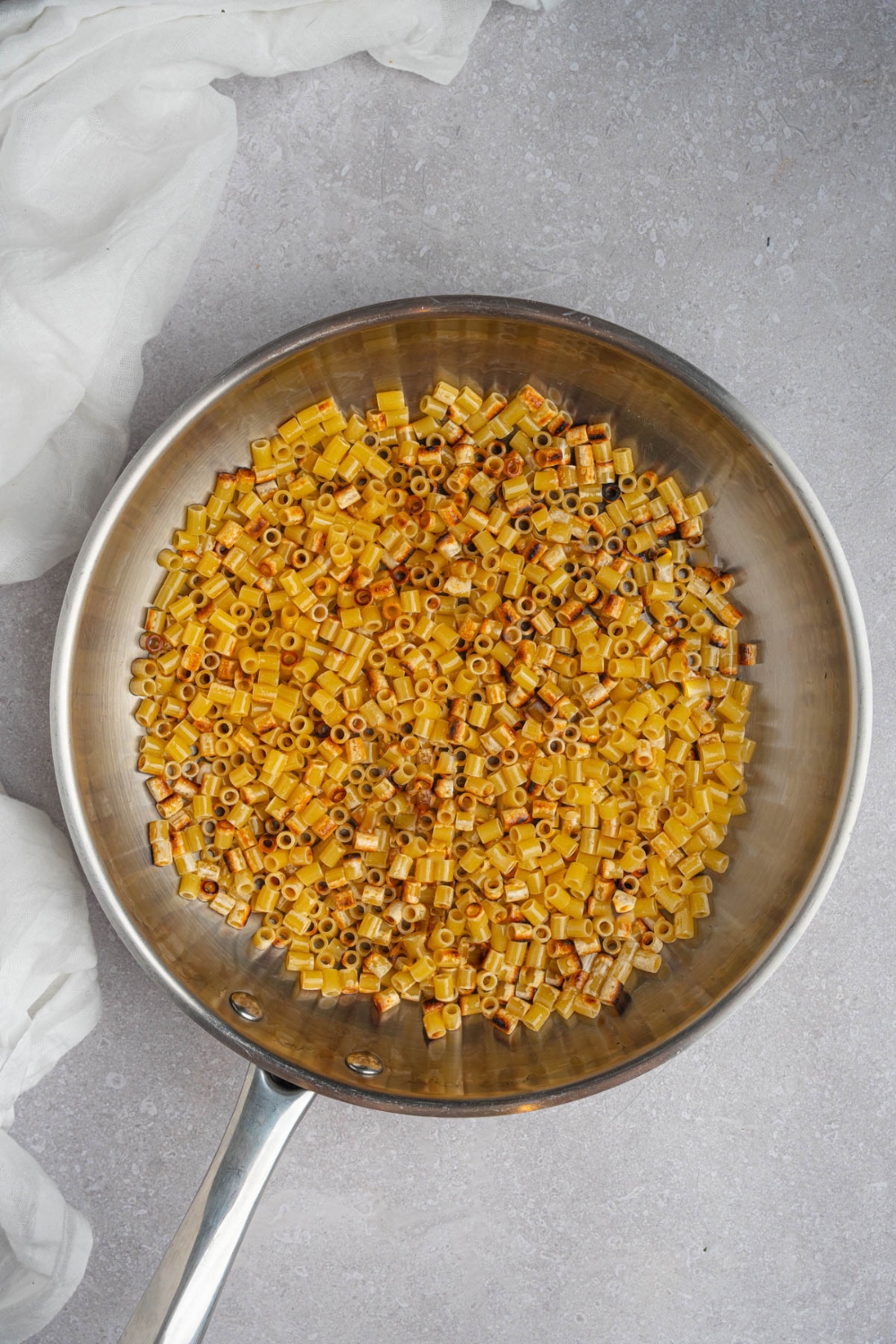
Heat olive oil in a deep saucepan over medium heat. Add the dry ditalini and stir for 2-3 minutes, until several pieces turn a light golden color. Keep the noodles moving so none of them scorch.
Step 2: Saute the Aromatics
Stir in the minced garlic and Italian seasoning; cook for 1 minute, until fragrant.
Step 3: Simmer in Broth
Add the chicken broth and bring to a gentle boil. Cook, stirring occasionally, until the liquid reduces and the pasta is al dente—about 8-10 minutes. Taste a noodle; if you like it softer, add a bit of water and continue simmering.
Step 4: Cream & Cheese
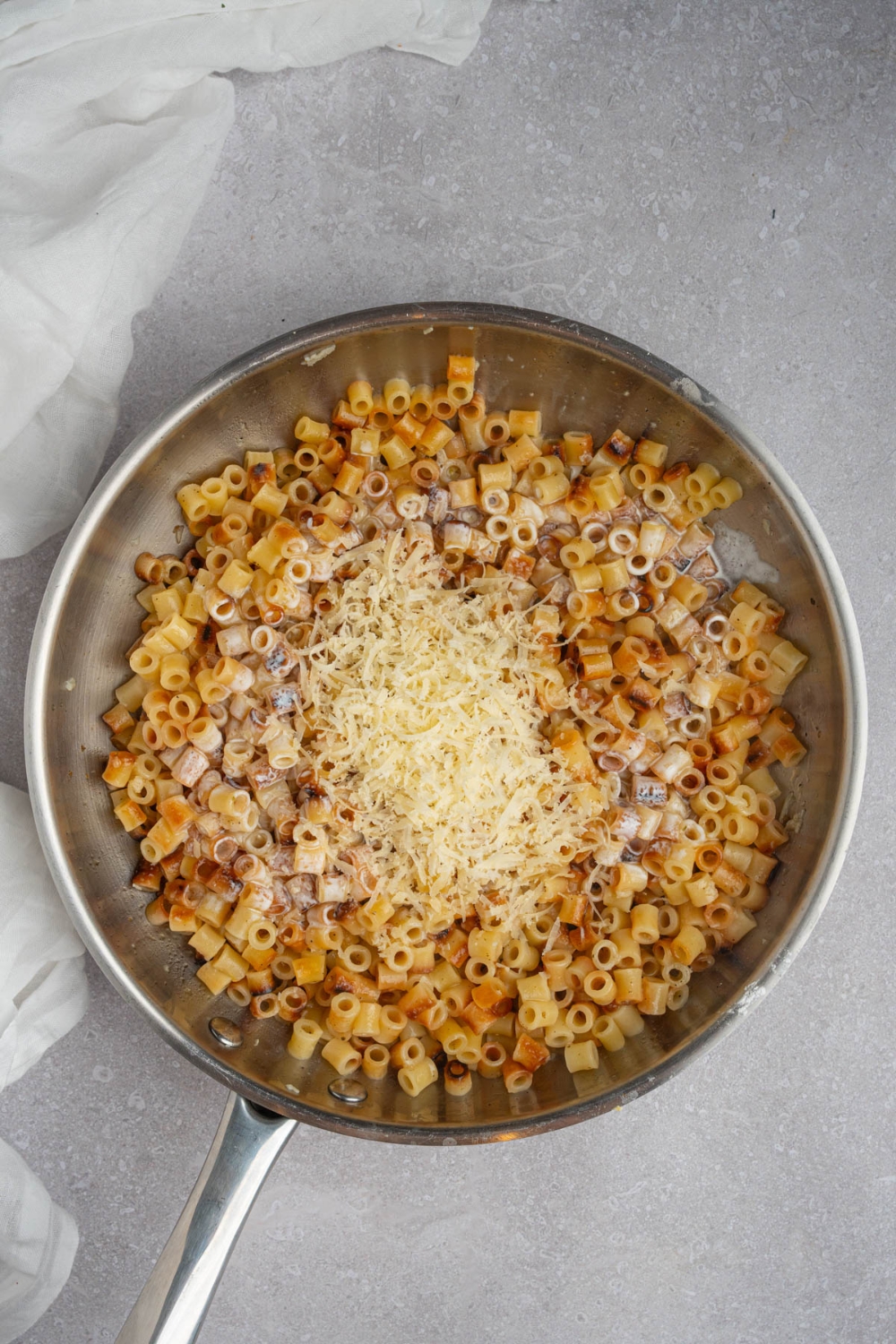
Lower the heat. Stir in the heavy cream, Parmesan, onion powder, parsley, and a generous pinch of each salt and pepper. Simmer 1-2 minutes until the sauce thickens and coats the pasta.
Step 5: Butter & Serve
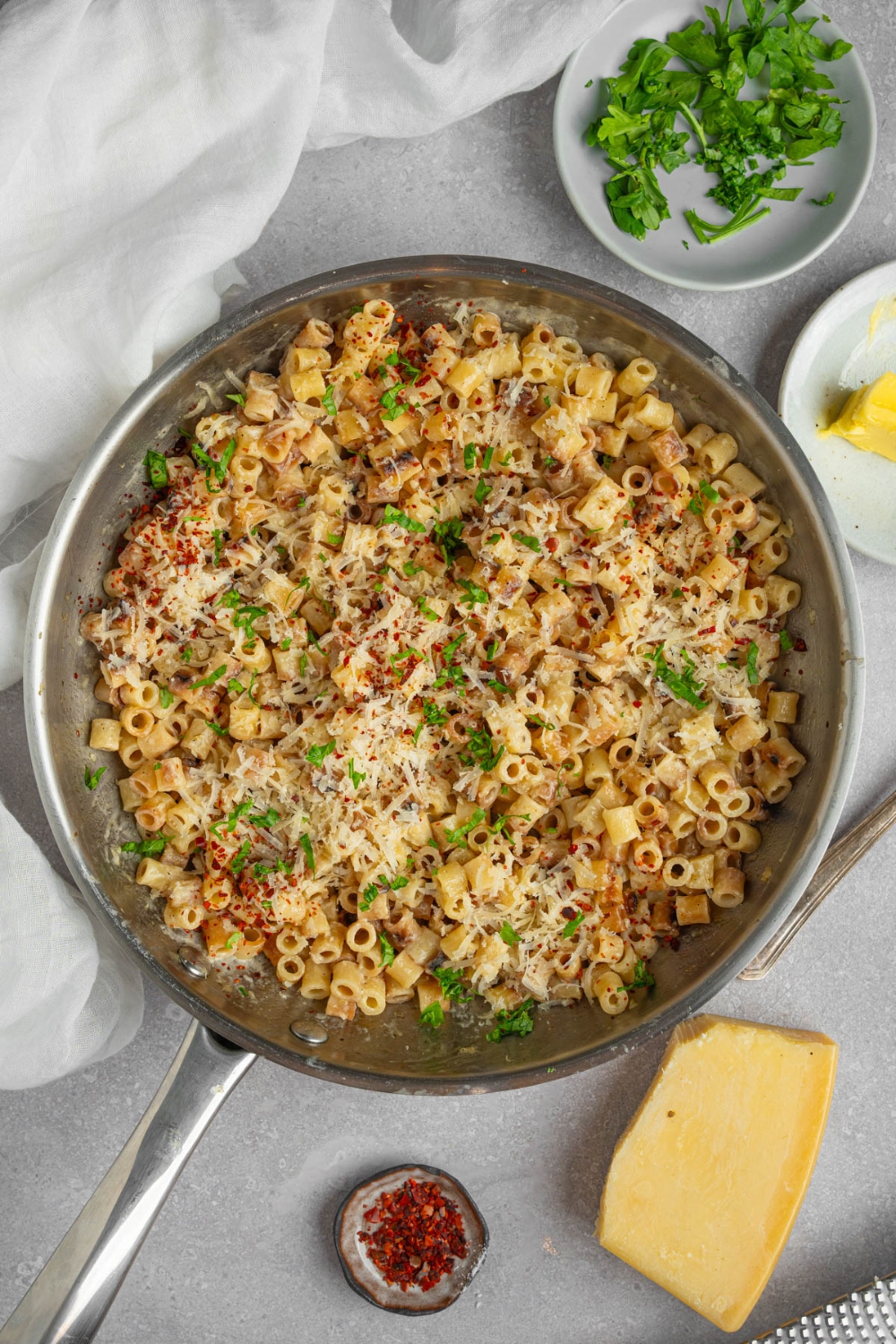
Swirl in the butter until glossy. Spoon into bowls and top with more parsley, Parmesan, and a pinch of chili flakes if you like a bit of heat. Eat right away—the sauce thickens as it stands.
My Expert Tips Section
- Why toast the pasta? Dry toasting triggers Maillard reactions in the wheat proteins and caramelizes surface starches at around 300 °F, adding a subtle roasted flavor and creating a micro-shell that slows water penetration. Result: a deeper taste and a firmer al dente bite, even after sitting.
- Risotto-style starch release – Cooking pasta directly in a measured amount of broth ensures that all the surface starch remains in the pot. As those starch granules burst (around 180 °F), they emulsify with olive oil and, later, cream and butter, resulting in a velvety texture without the need for roux or thickeners.
- Cheese emulsification zone – Parmesan’s casein proteins bind best below 190 °F. Add it off the boil; scorching temperatures cause fat separation (greasy puddles), while cooler temperatures keep the sauce glossy. Use freshly grated cheese—pre-shredded cheese is often coated with anti-caking agents that prevent it from melting.
- Salt timing – Broth salinity varies, so season boldly after the cream is added. Cream’s milk proteins can mute the perceived saltiness; adding sodium too early can trick you into oversalting once the dairy rounds out the flavor.
- Cream-to-stock ratio – A 1:5 cream-to-liquid proportion (½ cup cream to 2 ½ cups broth) enriches without cloaking the pasta. If you scale the recipe, keep that ratio to avoid a soupy or overly thick result.
- Carry-over thickening – Starch continues to swell for 2-3 minutes after the heat is removed. Aim for a sauce that’s slightly loose in the pot; it will tighten to perfect nappe consistency by the time you grab bowls and forks.
Variations for Other Ditalini Pasta Recipes
- Ditalini Pasta with Peas and Ham – Inspired by this Ditalini pasta with peas and Parmesan from Posh Plate: cook ditalini with peas, heavy cream, and Parmesan (plus a touch of butter), stirring until the sauce lightly coats the pasta.
- Lemon-Herb Ditalini – Add 1 teaspoon lemon zest and a squeeze of juice with the cream; swap parsley for fresh basil.
- Spicy Sausage Ditalini – Brown ½ lb Italian sausage before toasting the pasta, and proceed as written, using sausage drippings in place of some of the olive oil.
- Veggie Upgrade – Stir in 1 cup thawed peas or roasted broccoli during Step 4 for color and fiber.
- Mushroom & Thyme – Sauté 1 cup sliced creminis with the garlic; replace Italian seasoning with ¼ teaspoon dried thyme.
FAQs About This Ditalini Pasta Recipe
Can I use milk instead of heavy cream?
Yes, you can substitute whole milk, but it will be thinner than heavy cream. To mimic the richness, whisk in 1 teaspoon of cornstarch before adding it to the recipe. This helps thicken the sauce and maintain that creamy texture.
What if I don't have broth? Can I use water?
If you're out of broth, use 2½ cups of water and stir in 1 bouillon cube or 1 teaspoon of Better Than Bouillon. This adds the savory depth needed to flavor the pasta as it simmers.
How do I prevent sticky leftovers?
When reheating, add 1–2 tablespoons of hot water or broth to loosen the sauce and revive the pasta. Stir gently over low heat until smooth and creamy again.
Can I make this recipe gluten-free?
Yes—use gluten-free ditalini or small elbows and watch the liquid level; some GF pastas absorb slightly less.
Do I have to use ditalini pasta?
Nope! You can substitute orzo, small shells, elbows, or any small pasta shape. Just be sure to adjust the simmer time based on the package directions so the pasta stays al dente.
More Recipes To Try Next
- White bolognese
- New Orleans pasta
- Chicken bacon ranch pasta
- Baked boursin pasta
- Cajun chicken pasta
- Tini's mac and cheese
Creamy One-Pan Ditalini Pasta Recipe
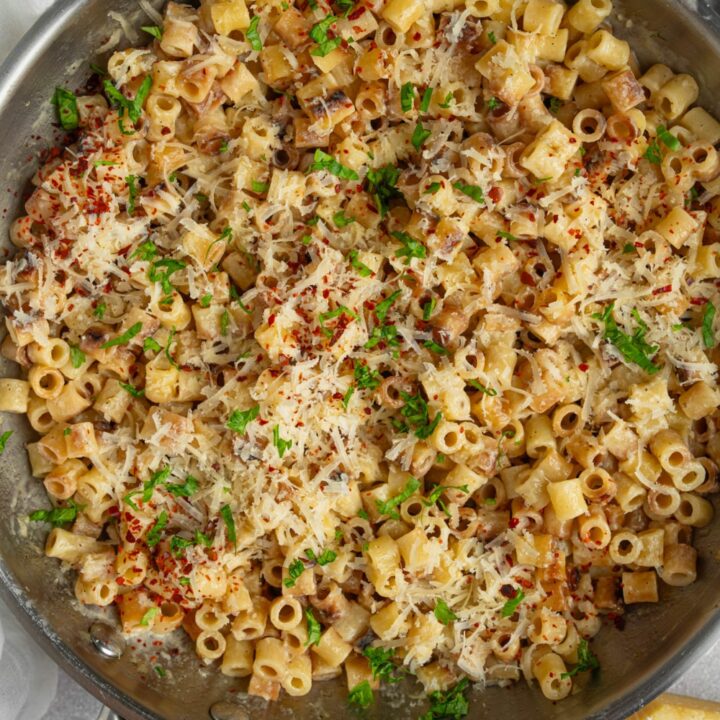
This ditalini pasta recipe toasts the noodles in olive oil, simmers them risotto-style in broth, and finishes with a splash of cream, butter, and Parmesan for an ultra-silky sauce. Everything happens in a single saucepan, so you get al dente pasta coated in its own garlicky sauce in about the time it takes to set the table!
Ingredients
- 1 16oz box of Ditalini pasta
- 3 tablespoons olive oil
- 3 cups chicken broth or stock
- ½ tablespoons minced garlic
- ½ teaspoon Italian seasoning
- ½ cup heavy cream
- ½ cup grated Parmesan cheese
- 3 tablespoons butter
- ½ teaspoon onion powder
- 2 tablespoon parsley
- Salt and pepper to taste
Instructions
1. Heat olive oil in a saucepan. Add ditalini Pasta & stir for about 2-3 minutes until slightly golden, being careful not to burn the pasta.
2. Add the minced garlic and Italian seasoning and stir for 1 minute. Add chicken broth. Let boil until most of the broth is absorbed. (Taste the pasta to see if it’s cooked to your liking, add a little water if you prefer your noodles softer as I prefer it al dente)
3. Add heavy whipping cream and Parmesan. Add a generous amount of salt, pepper, onion powder, and parsley,
4. Stir in butter and serve. Garnish with parsley, parmesan cheese, and chili flakes.
Nutrition Information:
Yield:
4Serving Size:
1Amount Per Serving: Calories: 533Total Fat: 35gSaturated Fat: 16gTrans Fat: 1gUnsaturated Fat: 16gCholesterol: 72mgSodium: 1042mgCarbohydrates: 41gFiber: 2gSugar: 3gProtein: 14g
Alli
I made this tonight. It needed more liquid and I ended up using closer to 3 cups chicken broth. I like al dente but it was crunchy without the extra liquid. It also just says 1/2 onion powder so I assumed it was 1/2 tsp. It was good. It definitely needed the butter, salt and red pepper flakes. Overall we liked it and it was nice to make something with ingredients we already had on hand.
Brendan Cunningham
Hey Alli, thank you so much for the feedback and I'm glad you liked the recipe!