


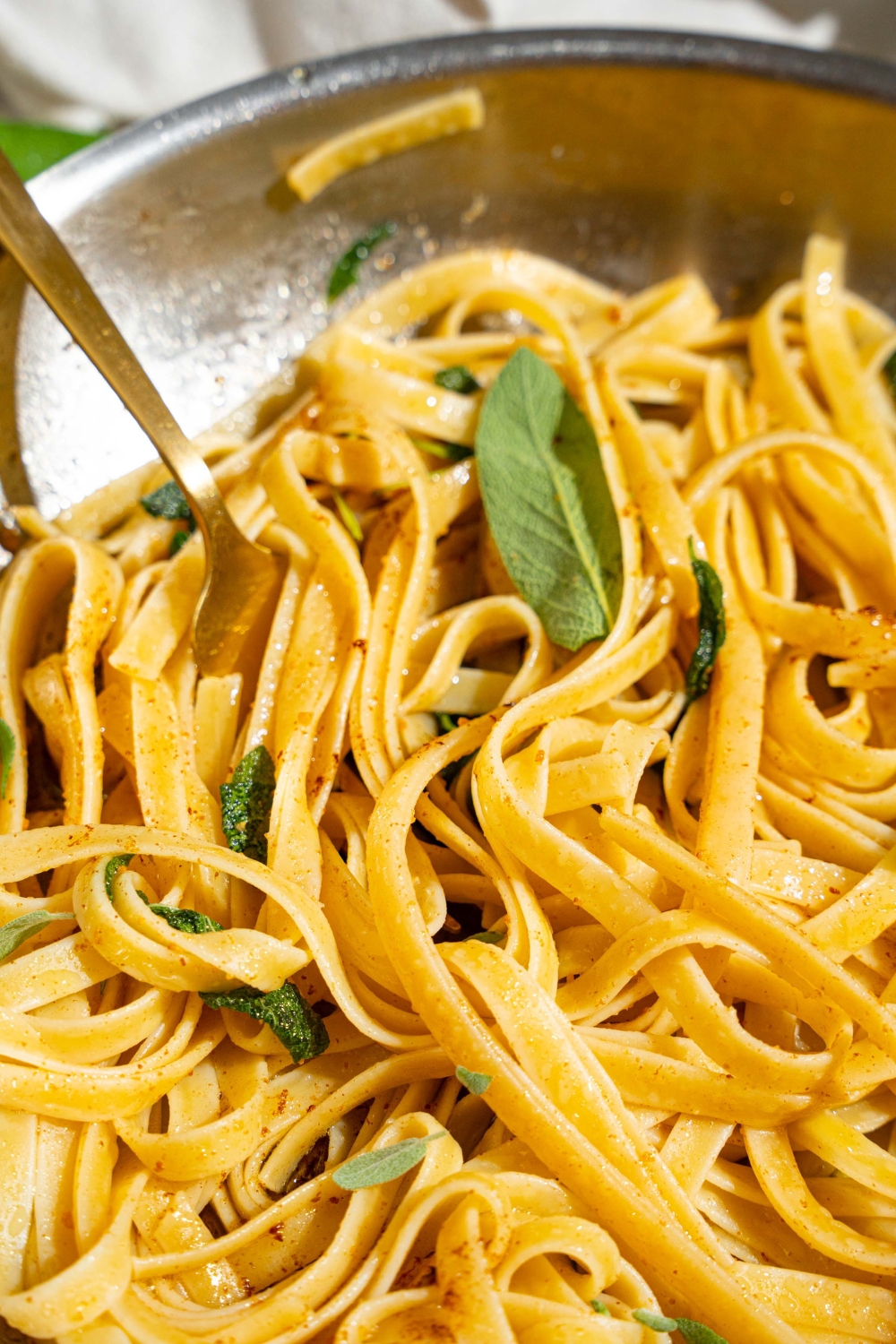
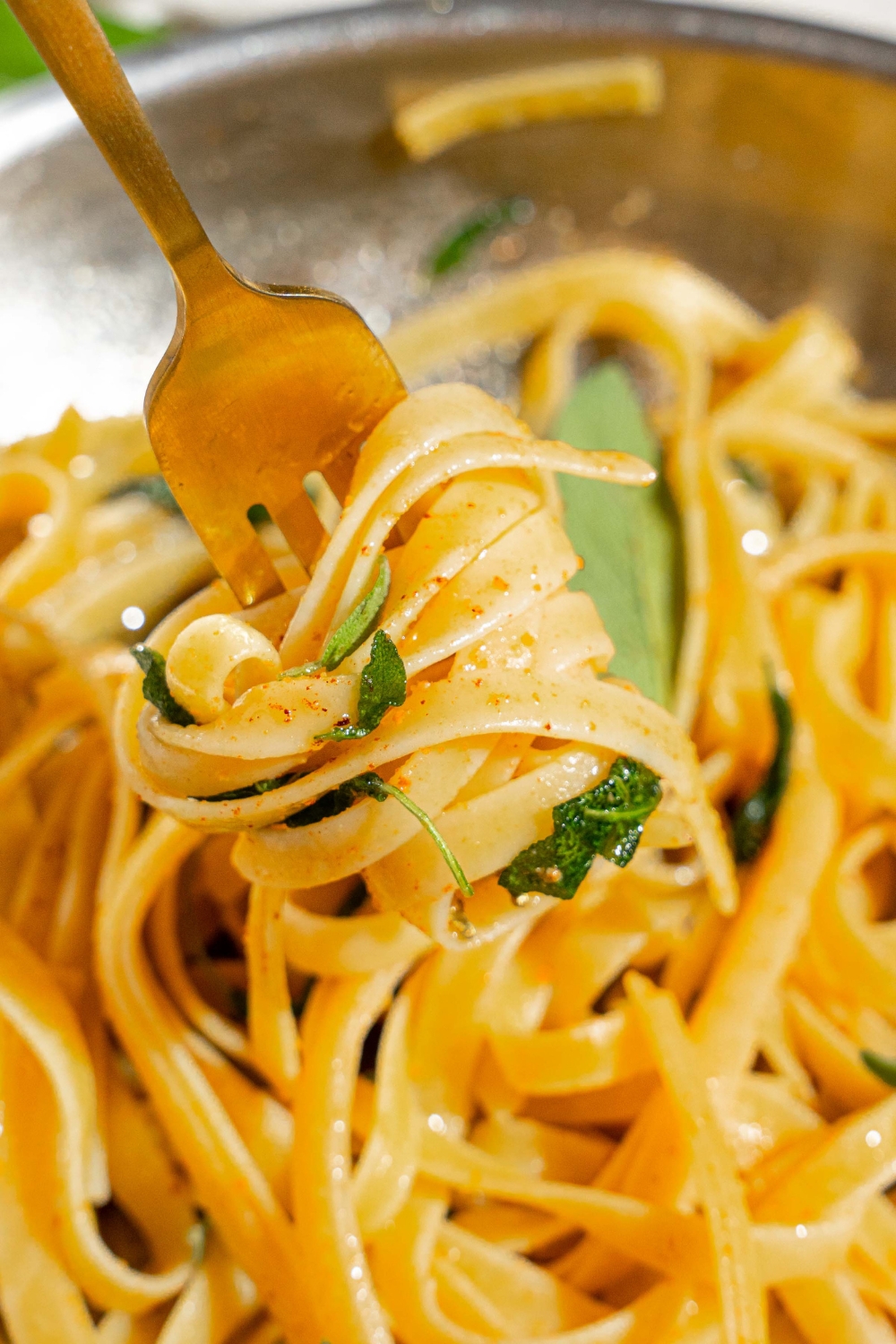
This brown butter sauce turns simple pasta into something deeply rich, nutty, and aromatic. With just browned butter, fresh sage, and a pinch of salt, you get a brown butter pasta sauce that tastes like it took way more effort than it actually does. The butter cooks until it is golden and fragrant, the sage crisps up in the pan, and when you toss it with hot pasta, gnocchi, or ravioli, every bite is savory and full of flavor. Once you learn how to make this sage brown butter sauce, you will want to use it on everything, from pasta and vegetables to seafood and roasted potatoes.
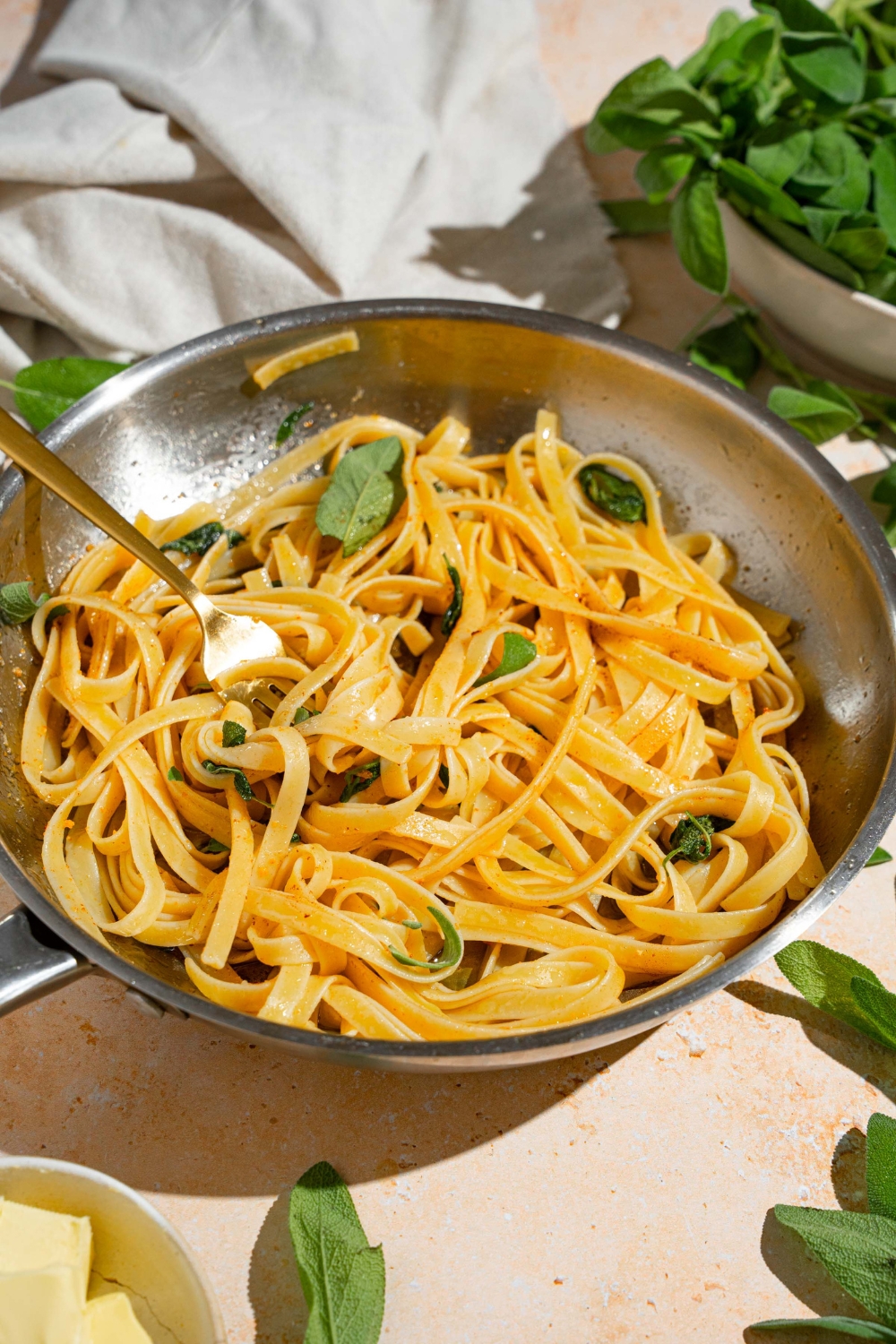
Table of Contents
Why You'll Love This Brown Butter Pasta Sauce
I've been on a pasta sauce kick lately, testing different ways to make simple sauces that still taste restaurant-level at home. I've recently made saffron cream sauce, Cajun cream sauce, and a bunch of other flavorful options, but this brown butter sauce might be the most impressive in terms of effort-to-flavor ratio. It still amazes me that browning butter and adding sage and salt can create such a complex, rich sauce with almost no ingredients.
This recipe is all about technique-driven flavor. Browning the butter properly unlocks a toasted, almost caramel-like depth that you simply can't get from plain melted butter. You see the milk solids turn golden and smell the nutty aroma that tells you it is ready. The sage leaves crisp gently in the hot butter and perfume the sauce without overpowering it. When you spoon this brown butter sauce over hot pasta and add a little pasta water to help it cling, you get a silky coating that feels luxurious, even though no cream or cheese is required.
It's also incredibly fast and versatile. You can make the sauce in about 5–10 minutes, which makes it perfect for busy weeknights when you still want something that tastes elegant. It works with long pastas like fettuccine, short shapes like orecchiette or penne, and is especially good with gnocchi or cheese-filled ravioli. You can also drizzle it over roasted vegetables, baked salmon, or chicken. This sauce is one of those foundational recipes that is worth mastering, because once you have a reliable brown butter sauce in your back pocket, it opens up a lot of easy, high-flavor meals.
Ingredients You’ll Need
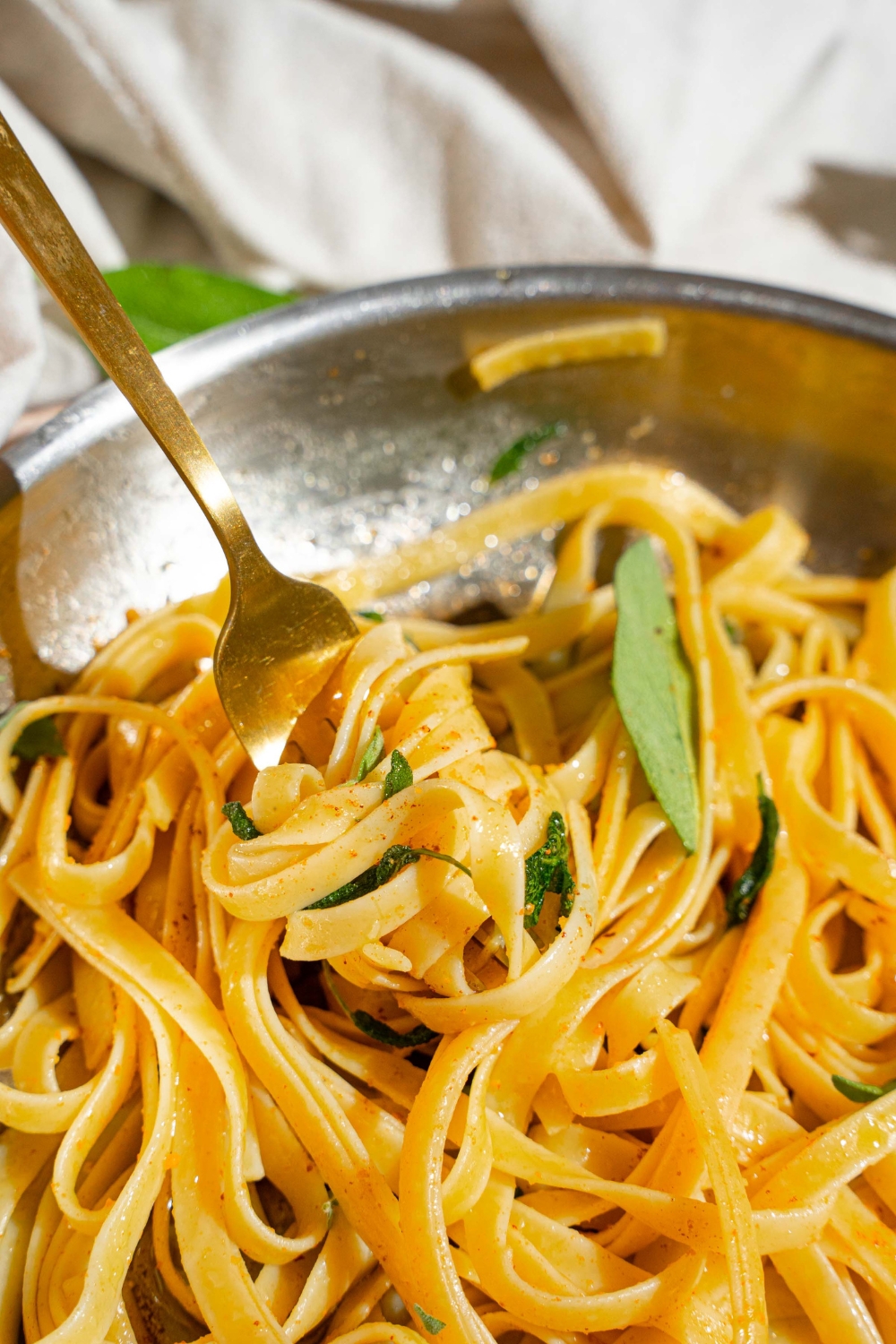
- 150 g butter, cubed (see notes below)
- 20 sage leaves (fresh)
- Salt, to taste (if using unsalted butter)
- 12 oz pasta of your choice
How To Make Brown Butter Sauce
Step 1: Start the Butter
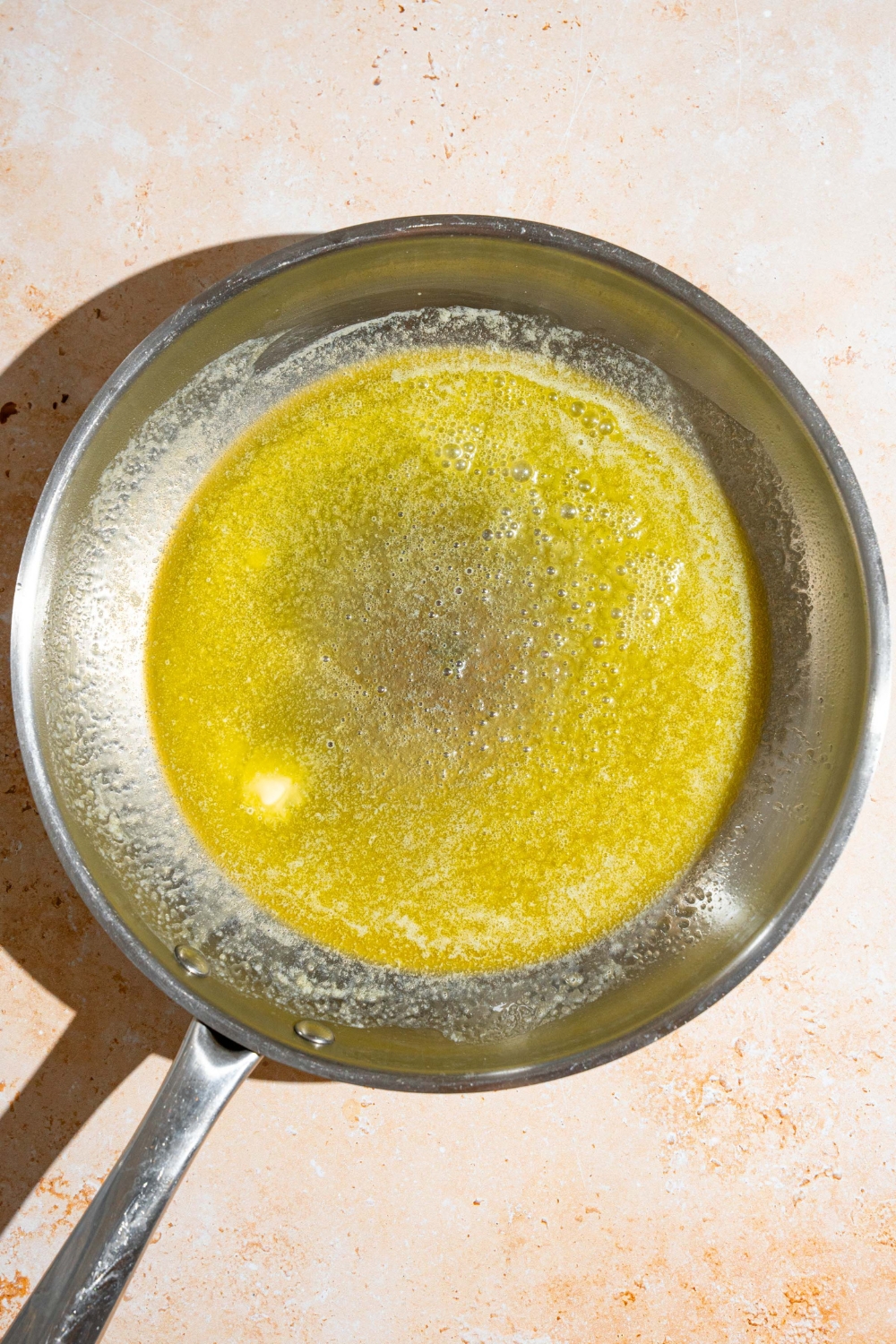
Add the cubed butter to a wide frying pan and place it over medium heat. Let the butter melt completely.
Step 2: Add the Sage
Once the butter begins to sizzle, add the sage leaves directly to the pan. They will start to crisp and release their aroma into the butter.
Step 3: Brown the Butter Slowly
Continue cooking the butter, gently swirling the pan so it heats evenly. The butter will bubble vigorously and crackle loudly. If it browns too quickly, reduce the heat slightly.
Step 4: Watch for the Color Change
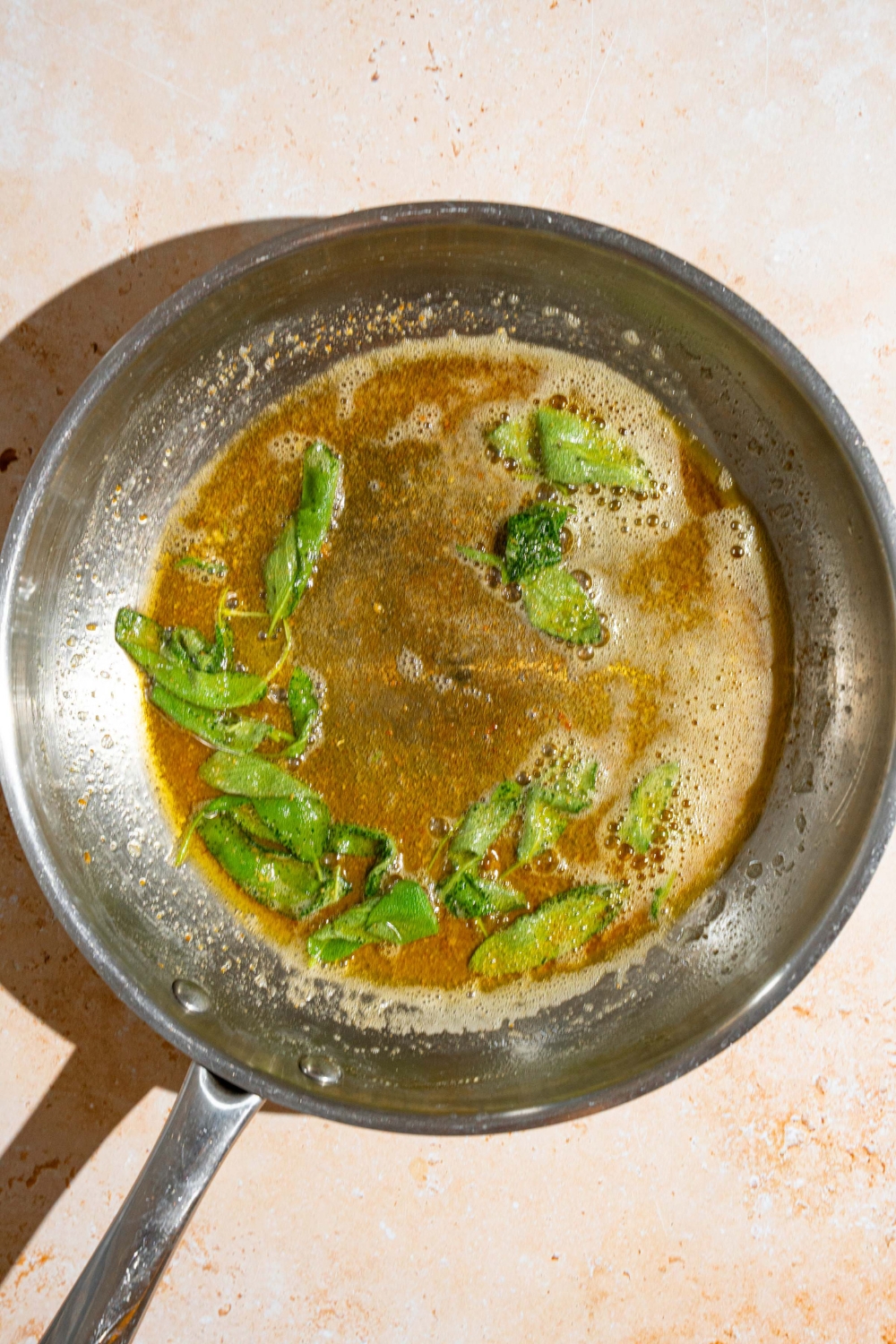
After a few minutes, the bubbling will calm, and a layer of foam will form on top. Swirl the pan occasionally and peek underneath the foam to monitor the milk solids. This process takes about 5 minutes.
Step 5: Remove at the Right Moment
As soon as the milk solids at the bottom turn golden brown (not dark brown or black), remove the pan from the heat. The butter will continue to cook briefly from residual heat, so timing is key.
Step 6: Toss with Pasta
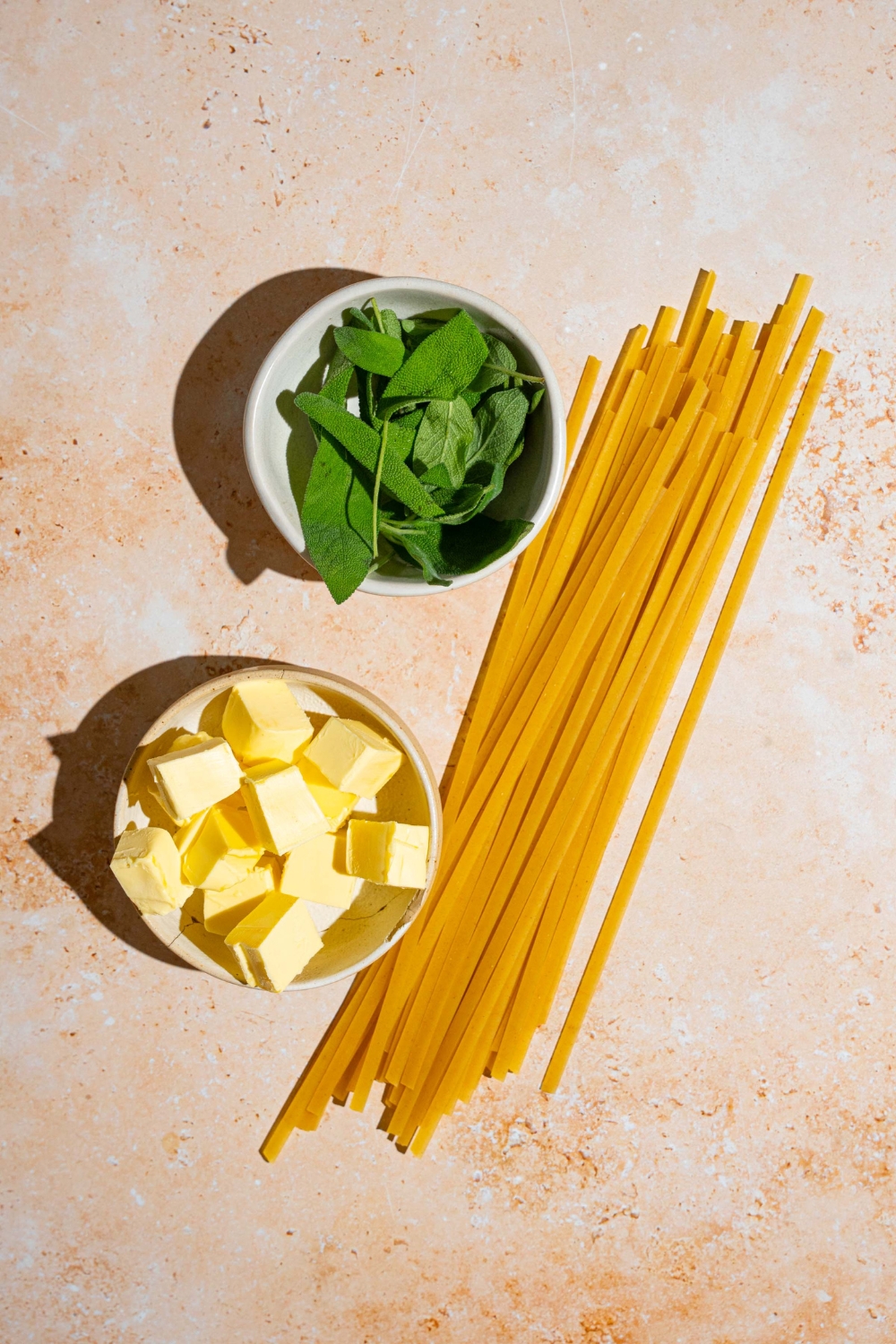
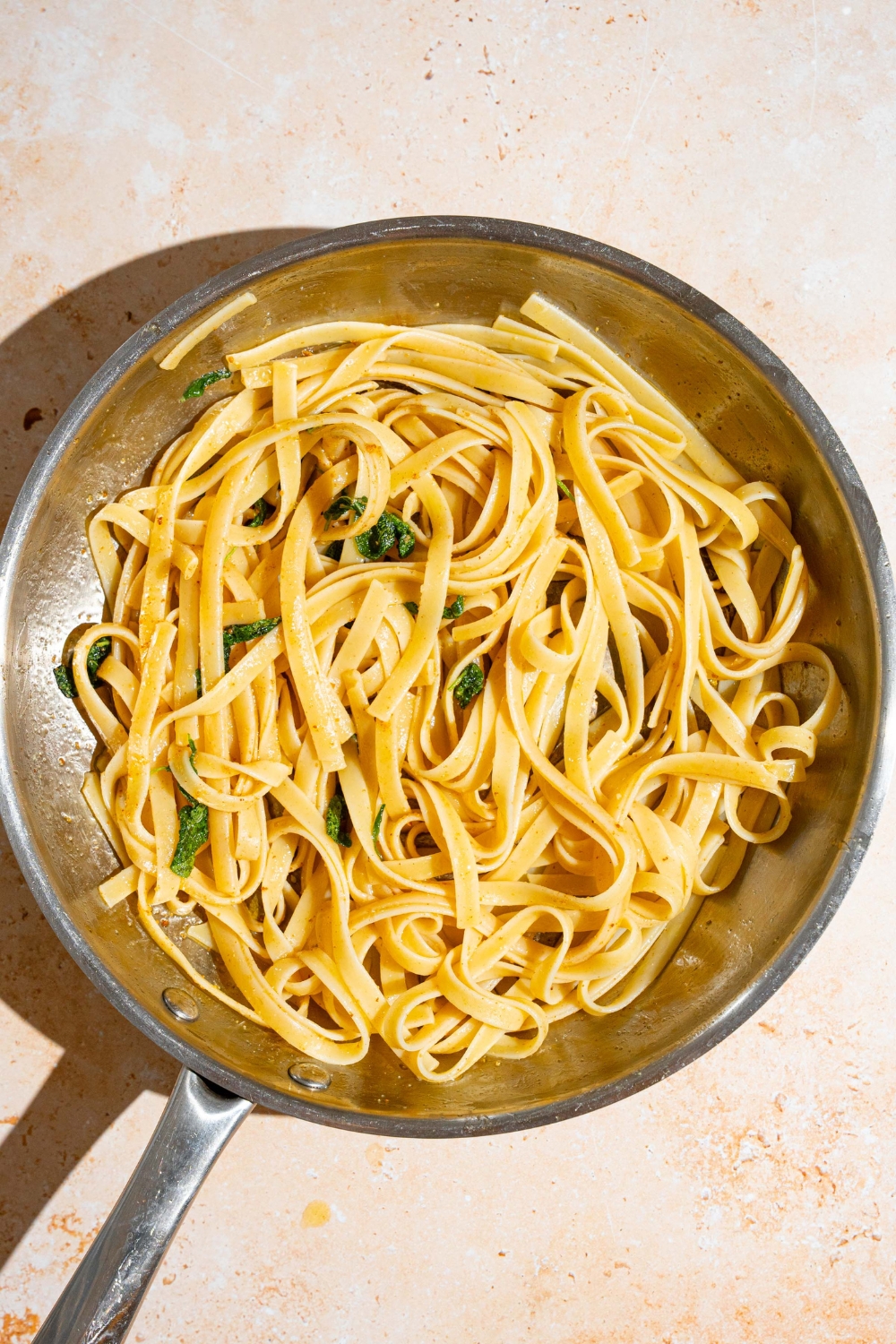
Spoon the brown butter over the cooked pasta or toss the pasta in the skillet. Toss the pasta gently to coat it in the sauce.
Step 7: Finish & Serve
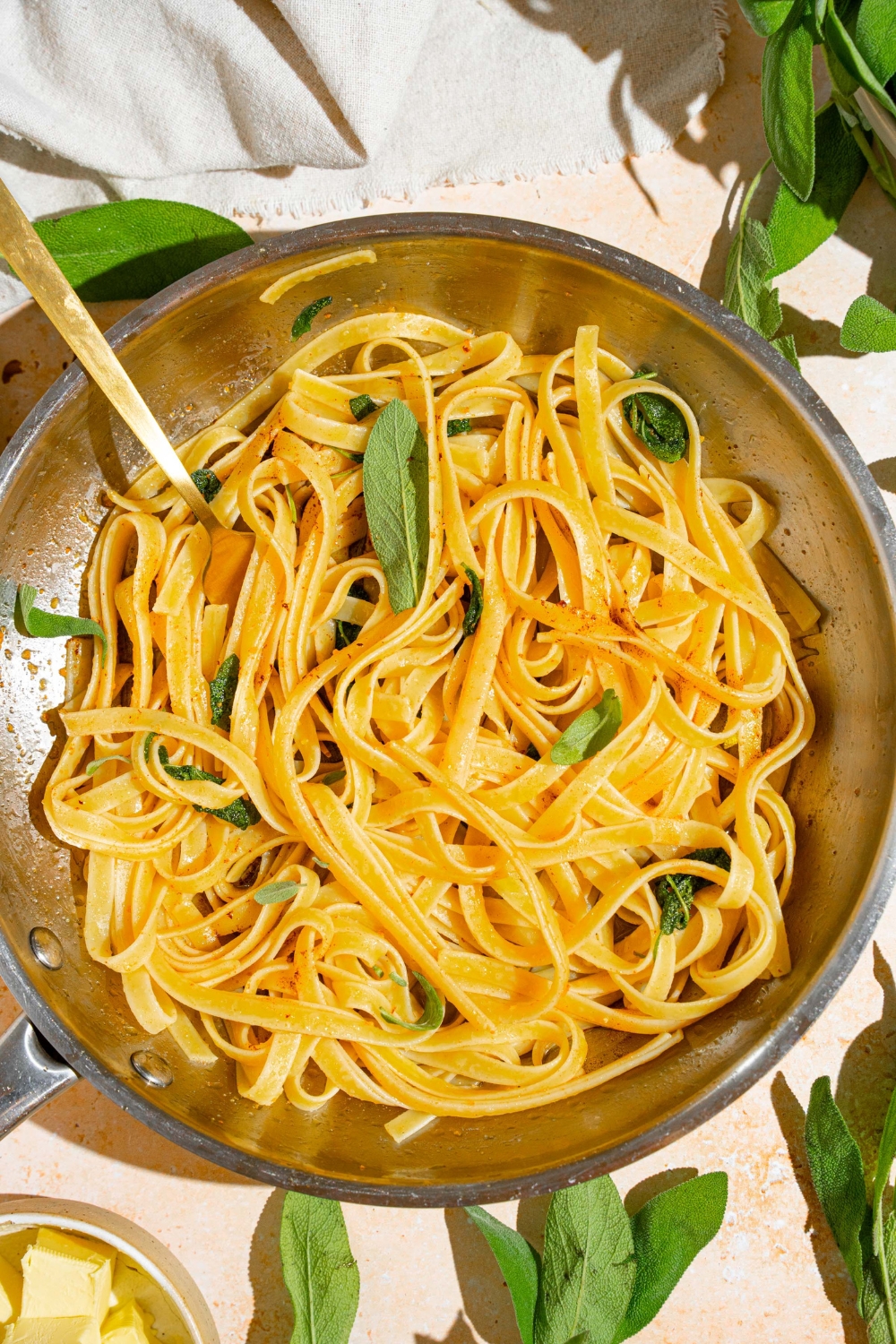
Season lightly with salt if needed and serve immediately while warm and aromatic.
Expert Tips To Make The Best Brown Butter Sauce
- Use unsalted butter if possible. Unsalted butter gives you full control over the seasoning. Brown butter concentrates flavor, including salt, so starting with salted butter can make the sauce taste overly salty once it reduces and you add Parmesan or salty pasta water. With unsalted butter, you can taste at the end and add just enough salt to balance the dish.
- Cut the butter into cubes for even browning. Cutting the butter into small pieces helps it melt more evenly in the pan. This means the milk solids disperse and brown at the same time instead of some bits burning while others stay pale. Add the cubes to a light-colored saucepan or skillet so you can clearly see the color change as it browns.
- Stay by the stove and watch the color. Brown butter can go from perfect to burnt in less than a minute, especially once it starts to foam. After the butter melts and the foaming slows down, watch the bottom of the pan closely. You're looking for the milk solids to turn a deep golden brown and for a nutty, toasted aroma. As soon as it reaches that stage, take the pan off the heat so it does not continue darkening.
- Add sage at the right time. Sage cooks very fast. Once the butter is close to golden, add the sage leaves and let them sizzle for 30–60 seconds until they crisp slightly and turn a deeper green. If the sage starts to darken too quickly, pull the pan off the heat and swirl so the leaves finish crisping gently in the residual heat without burning. Burnt sage will taste bitter, so err on the side of lightly crisp, not dark brown.
- Use all the foamy bits, they are full of flavor. The foam and browned specks in the butter are where most of the flavor lives. Those little brown flecks are the toasted milk solids that give brown butter its nutty taste. When you pour the sauce over pasta or into a serving bowl, use a spatula to scrape all the browned bits and foam from the bottom of the pan. Do not leave them behind.
- Deglaze with a splash of pasta water if needed. If you're tossing brown butter with pasta, reserve a little pasta cooking water and add a splash directly to the pan with the butter and sage. The starchy water helps emulsify the butter and cling to the noodles, giving you a silky, restaurant-style sauce instead of just oily butter sitting in the bottom of the bowl.
- Season at the end, not at the beginning. Brown butter intensifies as it cooks, and ingredients like Parmesan, sun-dried tomatoes, or salty broth can add more salt. Taste the finished sauce with a piece of pasta or a spoonful before adding extra salt. Often, a small pinch of salt and a crack of black pepper at the end are all you need.
- Pair it with the right dishes. Brown butter sauce shines when you keep the rest of the dish simple. It's especially good with plain pasta shapes like spaghetti, fettuccine, or orecchiette, pillowy gnocchi, cheese or spinach ravioli, and delicate fillings like butternut squash or mushroom ravioli. It's also amazing drizzled over roasted vegetables such as Brussels sprouts, cauliflower, and squash, or spooned over baked salmon and white fish. Choosing simple, neutral pairings lets the nutty brown butter and sage stand out.
Brown Butter Sauce FAQs
How do I know when brown butter is done?
Brown butter is ready when the melted butter turns a warm golden color, tiny brown specks (the milk solids) form on the bottom of the pan, and it smells nutty and toasty, almost like toasted hazelnuts or caramel. It should never be black or smell burnt. As soon as the color turns from yellow to golden brown and the aroma changes from buttery to nutty, take the pan off the heat so it doesn't go too far.
Can I make brown butter sauce ahead of time?
Brown butter sauce is at its best fresh, but you can make it ahead. Brown the butter and sage, let it cool, and store it in a covered container in the refrigerator for up to 3–4 days. When you're ready to use, reheat gently over low heat until melted and warm. If you're tossing it with pasta, add a little pasta water to help it emulsify and coat the noodles nicely.
Can I reheat brown butter sauce?
Yes, you can reheat brown butter, but you want to do it gently. Warm it over low heat on the stove just until it melts and loosens up again, stirring often. Avoid high heat, because once butter is browned, it can burn more quickly if overheated. If it seems too thick, you can add a splash of pasta water, broth, or lemon juice, depending on how you're using it.
What pasta works best with brown butter sauce?
Brown butter sauce works with many types of pasta, but it shines with shapes that hold onto the sauce. Gnocchi, ravioli, tortellini, fettuccine, tagliatelle, and orecchiette are all excellent options. Stuffed pastas like cheese ravioli, spinach ravioli, mushroom ravioli, or butternut squash ravioli pair especially well with brown butter and sage flavor.
Why add sage to brown butter?
Sage is a classic pairing with brown butter because its earthy, slightly peppery flavor and aroma complement the nutty butter perfectly. The leaves crisp up in the hot butter and add both flavor and a bit of texture to the sauce. It's especially good with fall flavors like squash, sweet potato, and mushrooms, and with cheese-filled pastas.
Can I use dried sage instead of fresh?
Fresh sage gives the best flavor and crisp texture in brown butter sauce. If you only have dried sage, use it sparingly. About ¼ to ½ teaspoon is best, and add it to the butter once it's already browned, letting it sizzle briefly off the heat. Dried sage is more intense and does not crisp the same way, so use a light hand and taste as you go.
Can I use salted butter for brown butter sauce?
You can use salted butter, but be careful with additional salt. Browning butter concentrates all of its flavors, including the salt, and ingredients like Parmesan or pasta water can add even more. If you use salted butter, wait until the very end to taste the sauce and add only a small pinch of extra salt if needed. Many people find they don't need to add much, if any, extra salt when starting with salted butter.
What else can I use brown butter sauce on besides pasta?
Brown butter sauce is incredibly versatile. It's delicious drizzled over roasted vegetables (especially Brussels sprouts, cauliflower, green beans, and squash), spooned over seared or baked salmon, white fish, or scallops, or served with roast chicken, pork chops, or steak. It's also amazing on mashed potatoes, gnocchi, risotto, and even simple sautéed greens. Once you know how to make it, you will find lots of ways to use it beyond pasta.
Pasta Sauces To Try Next
- Cajun alfredo sauce
- Cream sauce base
- Alfredo sauce without heavy cream
- Tuscan chicken pasta
- Chicken bacon ranch pasta
- White wine sauce
- Alfredo sauce with cream cheese
Brown Butter Sauce

This brown butter sauce turns simple pasta into something deeply rich, nutty, and aromatic. With just browned butter, fresh sage, and a pinch of salt, you get a brown butter pasta sauce that tastes like it took way more effort than it actually does. The butter cooks until it is golden and fragrant, the sage crisps up in the pan, and when you toss it with hot pasta, gnocchi, or ravioli, every bite is savory and full of flavor. Once you learn how to make this sage brown butter sauce, you will want to use it on everything, from pasta and vegetables to seafood and roasted potatoes.
Ingredients
- 150 g butter cubed (see notes)
- 20 sage leaves see notes
- Salt to taste if using unsalted butter
- 12 oz pasta of your choice
Instructions
1. Melt the butter in a frying pan over medium heat. Once it begins to sizzle, add the sage leaves to the pan.
2. Continue cooking the butter, gently swirling the pan so it heats evenly. The butter will start to bubble vigorously and crackle loudly—reduce the heat slightly if it seems to be browning too fast.
3. As it cooks, the bubbling and noise will calm down, and a layer of foam will form on top. Keep swirling the pan so you can see beneath the foam. This process takes about 5 minutes.
4. Watch closely for the milk solids at the bottom of the pan to turn brown, not black. Remember, the butter will continue cooking briefly even after removing it from the heat.
5. As soon as the specks are golden brown, take the pan off the heat and use immediately.
6. Spoon the brown butter gently over the pasta, then skim some of the foamy bubbles from the top and layer them on as well for extra flavor and richness.
Nutrition Information:
Yield:
4Serving Size:
1Amount Per Serving: Calories: 414Total Fat: 31gSaturated Fat: 20gUnsaturated Fat: 12gCholesterol: 81mgSodium: 240mgCarbohydrates: 29gFiber: 3gSugar: 1gProtein: 6g
Leave a Reply