


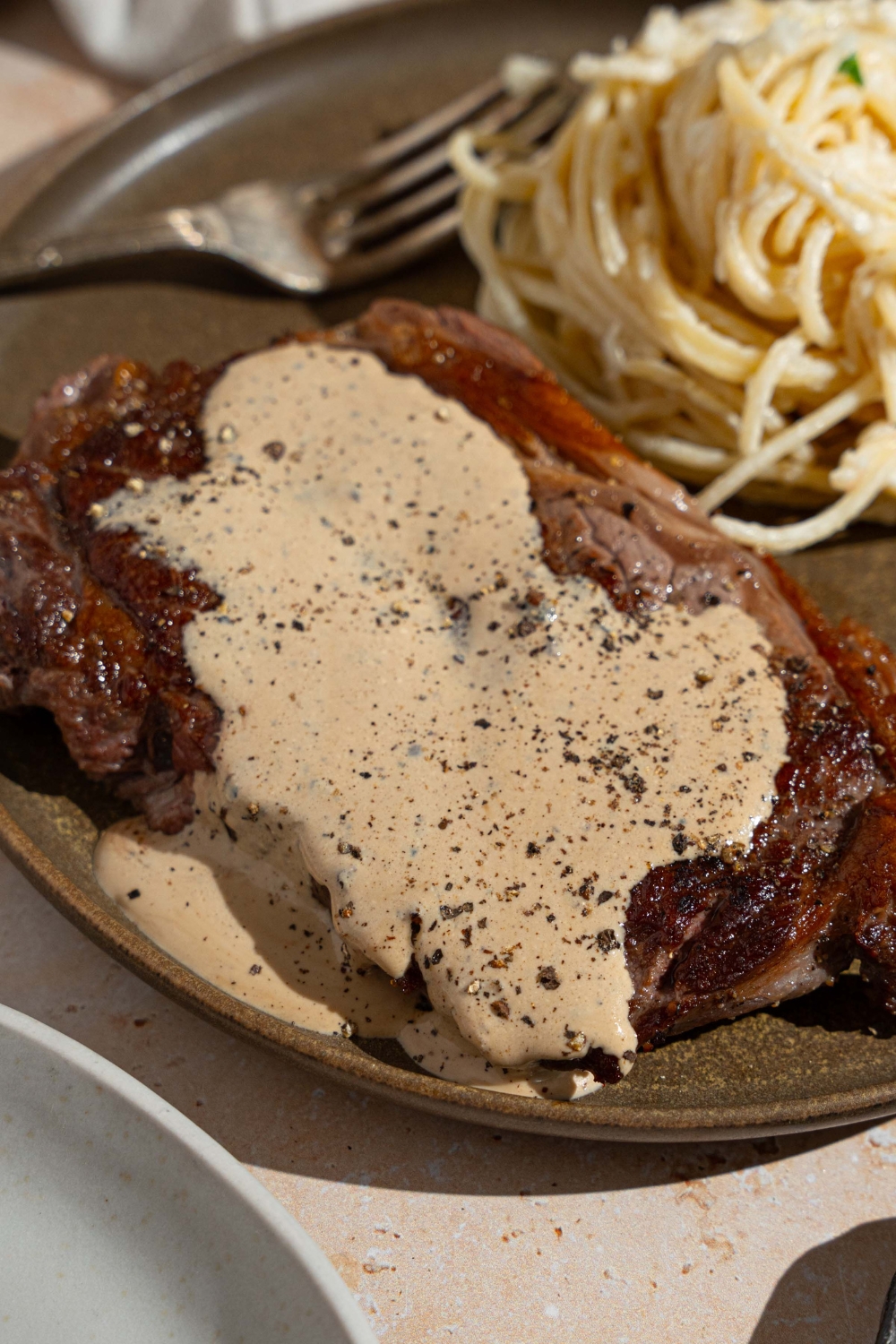
This peppercorn sauce is the same bold, creamy, restaurant-style sauce you’d expect at a classic steakhouse. Made directly in the pan after searing your steaks, it captures every browned bit of flavor, then builds depth with brandy, beef stock, cream, and freshly crushed black peppercorns. The result is a sauce that’s luxurious without being heavy, spicy without being harsh, and perfectly balanced for beef. If you’ve ever ordered steak au poivre and wondered how that sauce comes together so quickly, this is the method.
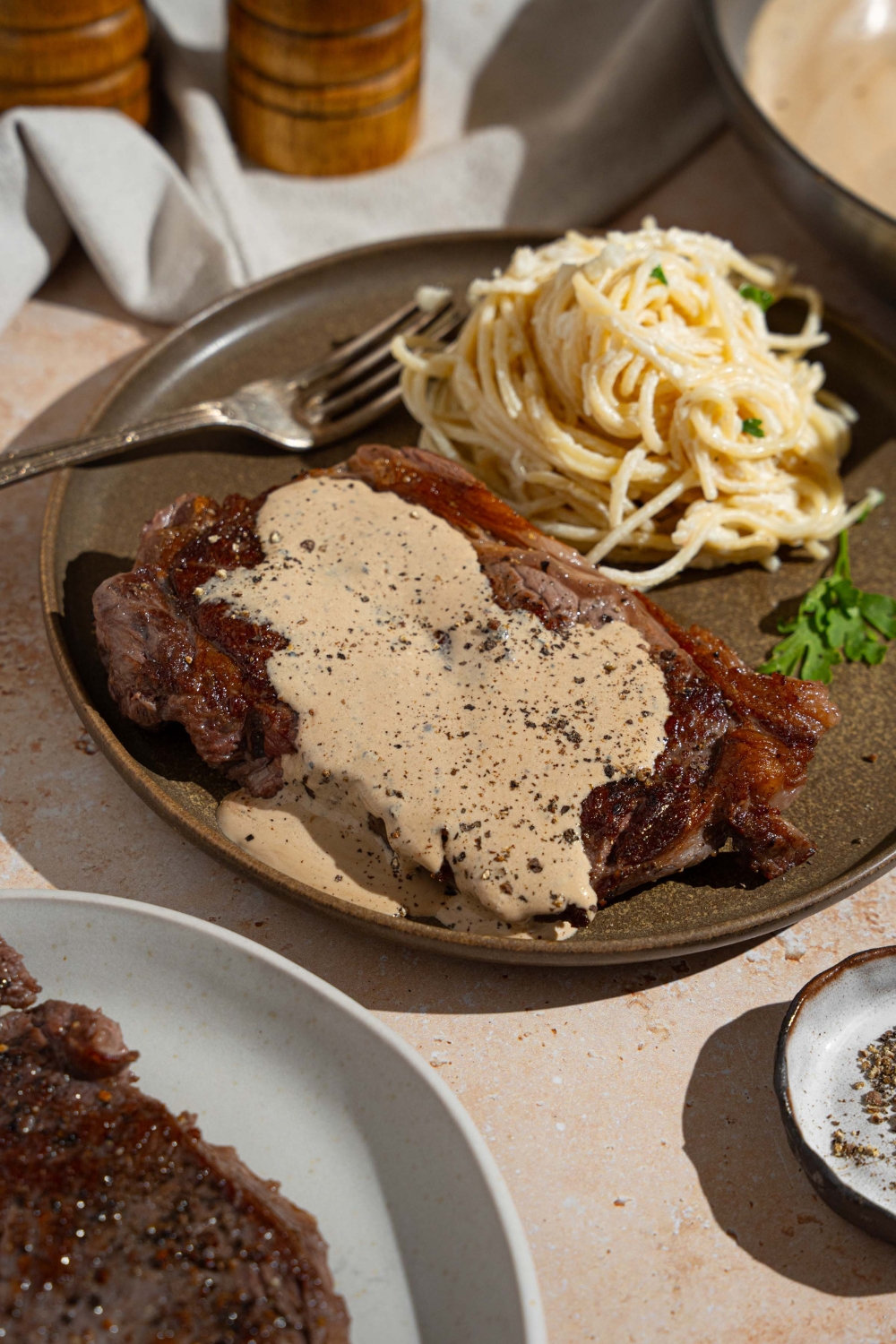
Table of Contents
Why You'll Love This Peppercorn Sauce Recipe For Steak
This peppercorn sauce is the real deal, the kind that tastes like a steakhouse did the cooking, not a packet. It’s built on solid technique, not thickener tricks. No flour, no cornstarch, no weird shortcuts. The sauce thickens the way it’s supposed to, by reducing the liquid, emulsifying it with fat, and pulling every bit of flavor from the browned bits left behind in the pan.
Using crushed whole peppercorns instead of ground pepper is what makes it legit. You get that warm pepper heat, but it stays fragrant and complex instead of turning sharp or bitter. And because you build the sauce right in the same skillet you seared the steak in, it tastes unmistakably beefy and cohesive, like the sauce belongs there, not like something you poured on at the end.
It’s also one of the fastest ways to make any steak feel elevated. Even a simple cut turns into a “special dinner” once it’s topped with this glossy peppercorn sauce. If you can sear a steak and keep your heat under control, you can make this. And once you do, it’s the sauce you'll make every time you're cooking steak.
Ingredients You’ll Need (and Why They Matter)
For the Steaks:
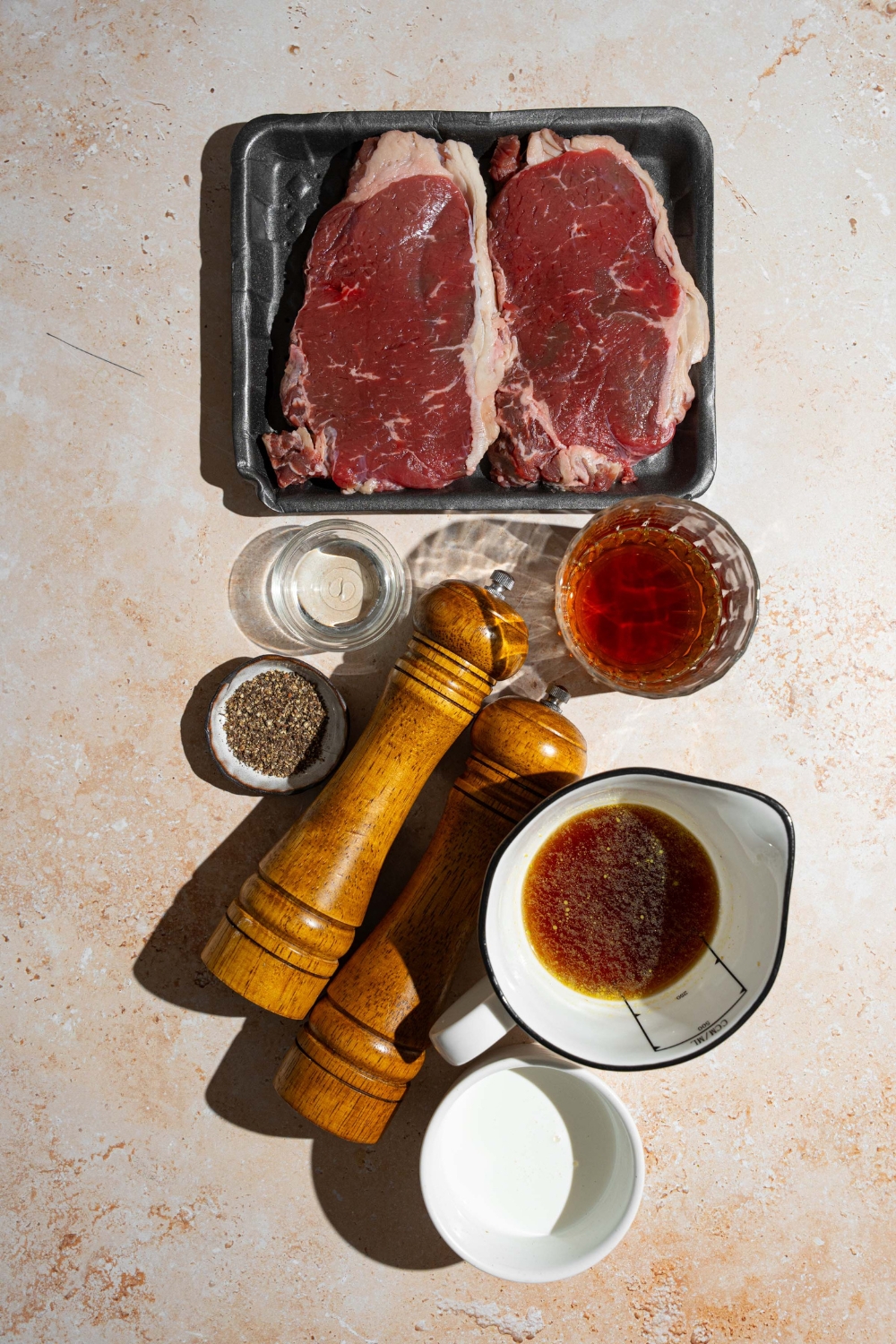
- 2 (10 oz) steaks (New York strip, ribeye, porterhouse, or sirloin)
- Salt and black pepper, to taste
- 1 tablespoon vegetable oil (high smoke point is essential)
For the Peppercorn Sauce:
- ⅓ cup brandy or cognac - adds warmth, depth, and classic steakhouse aroma
- ¾ cup low-sodium beef broth or stock - concentrates savory flavor without over-salting
- ½ cup heavy cream - provides body and silkiness
- 2–3 teaspoon coarsely crushed whole black peppercorns - the heart of the sauce. Whole peppercorns matter. Pre-ground pepper lacks the aromatic oils that define a true peppercorn sauce.
How To Make Peppercorn Sauce for Steak
Step 1: Bring the Steaks to Temperature
Remove the steaks from the refrigerator about 20 minutes before cooking. This allows them to cook more evenly and prevents a cold center.
Step 2: Season Just Before Cooking
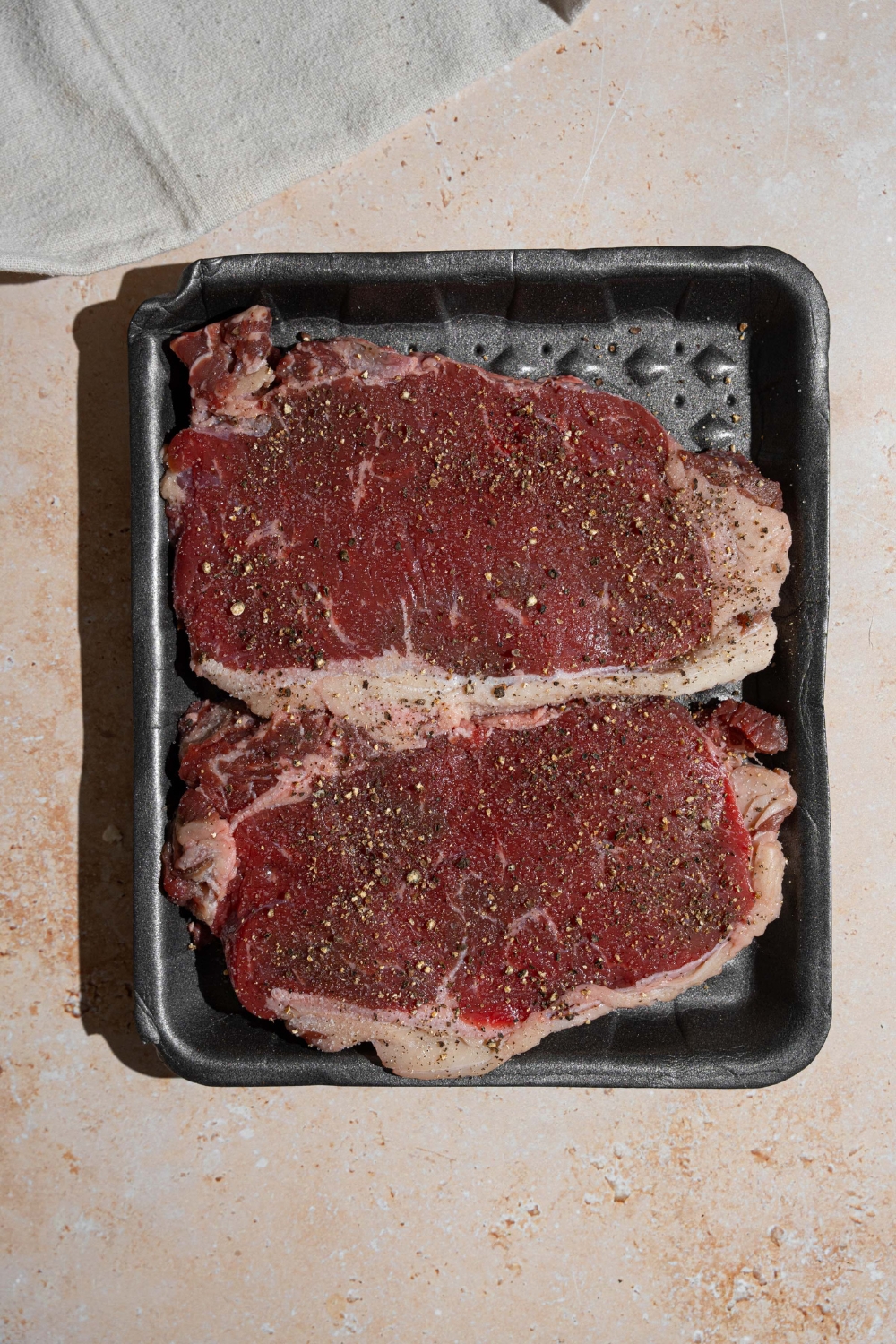
Right before the steaks hit the pan, season both sides generously with salt and crushed black pepper. Salting earlier can draw out moisture; salting right before searing promotes a better crust.
Step 3: Sear the Steaks
Heat a heavy skillet (preferably cast iron or stainless steel) over high heat until very hot. Add the vegetable oil and let it heat until it just begins to smoke. Add the steaks and sear for 2 minutes on the first side, without moving them. Flip and cook for another 2 minutes for medium-rare. Stack the steaks briefly and use tongs to sear the fat cap for extra flavor. Transfer the steaks to a plate, tent loosely with foil, and let them rest.
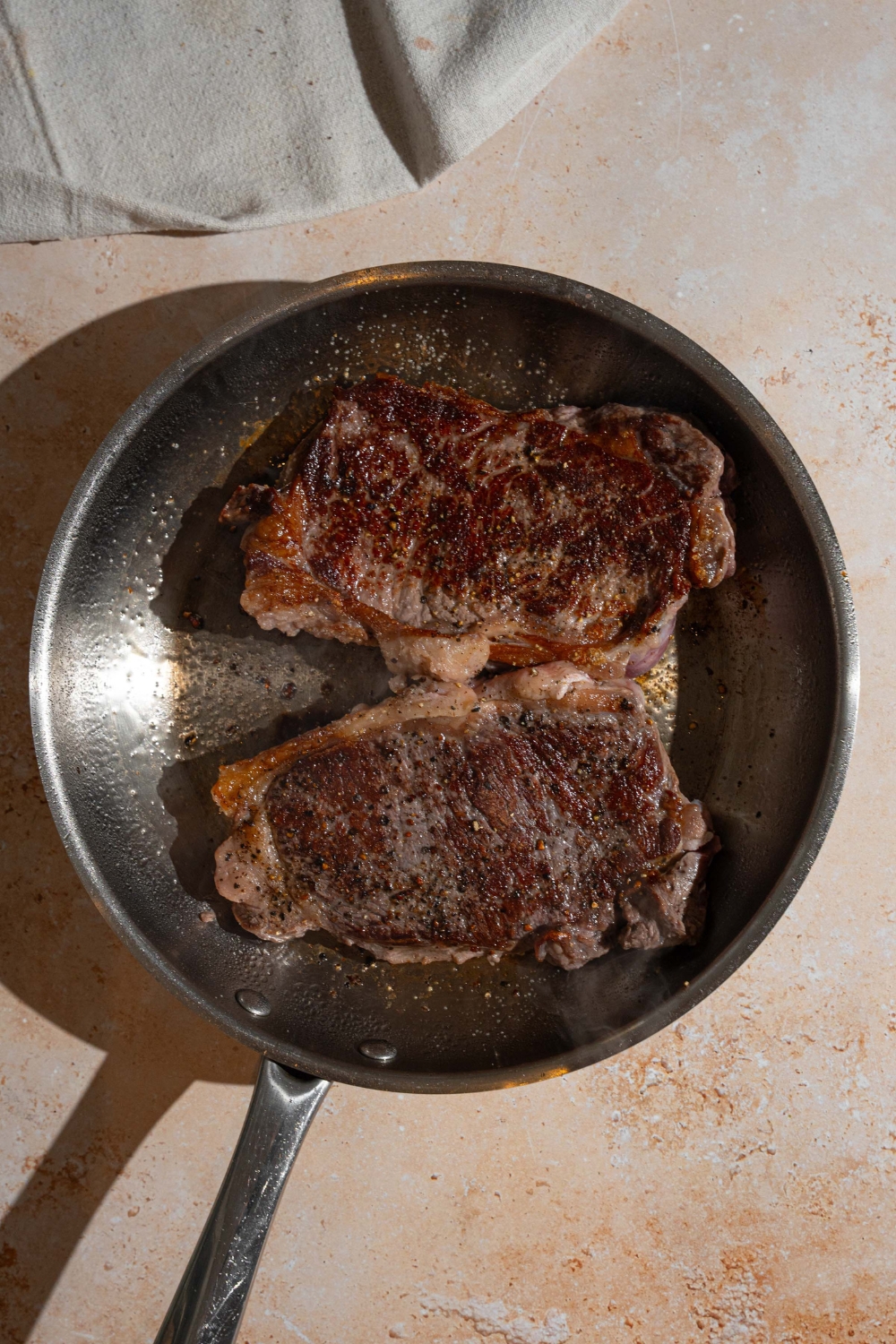
Step 4: Deglaze with Brandy or Cognac
Reduce the heat slightly but keep the pan hot. Carefully pour in the brandy or cognac. It will bubble aggressively. Scrape up the browned bits from the bottom of the pan; this is where the flavor lives. Let the alcohol simmer rapidly until the harsh alcohol smell cooks off, and the liquid reduces significantly.
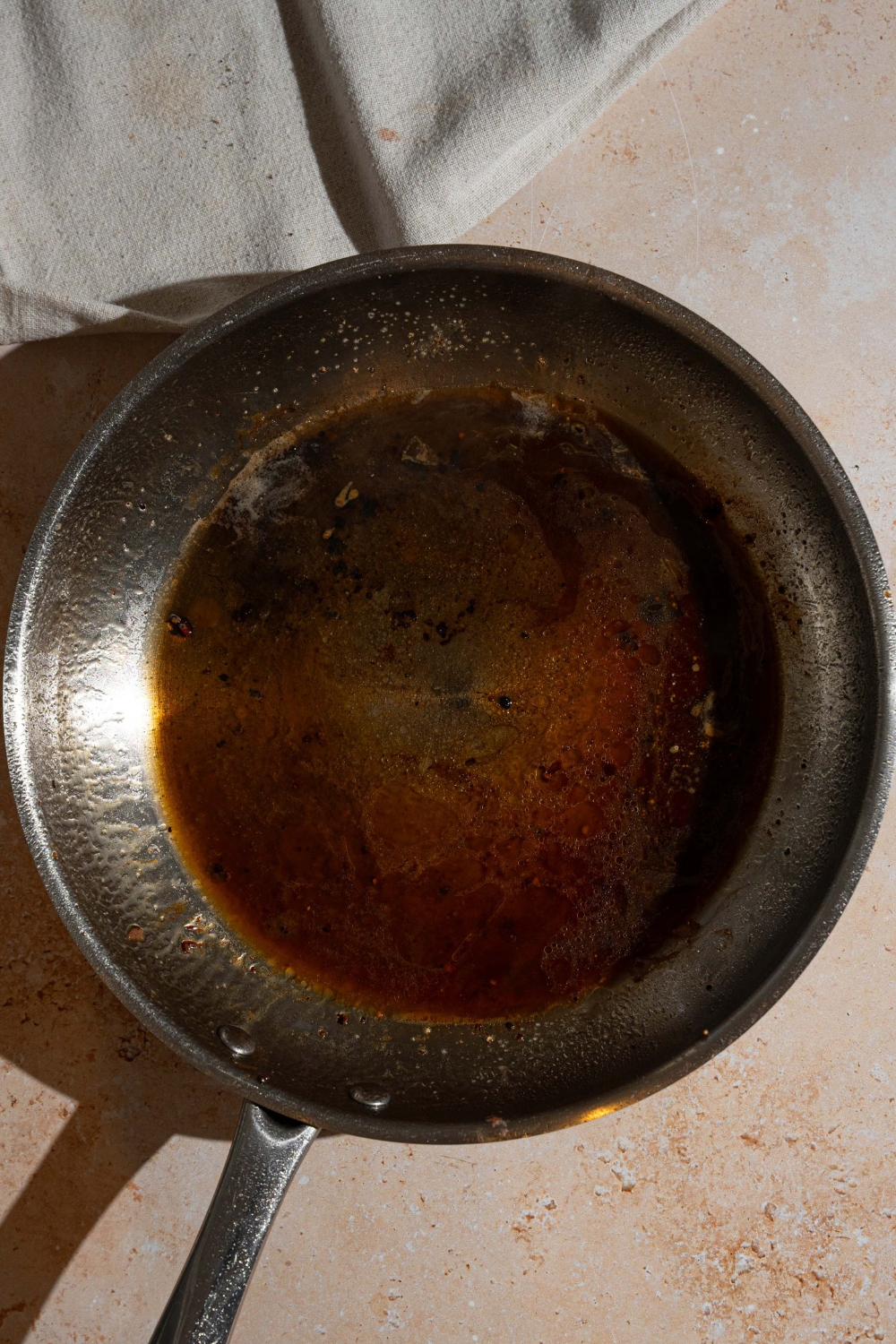
Step 5: Reduce the Broth
Add the beef broth and bring to a rapid simmer. Cook for 2–3 minutes, allowing it to reduce by about half. This concentrates the savory backbone of the sauce.
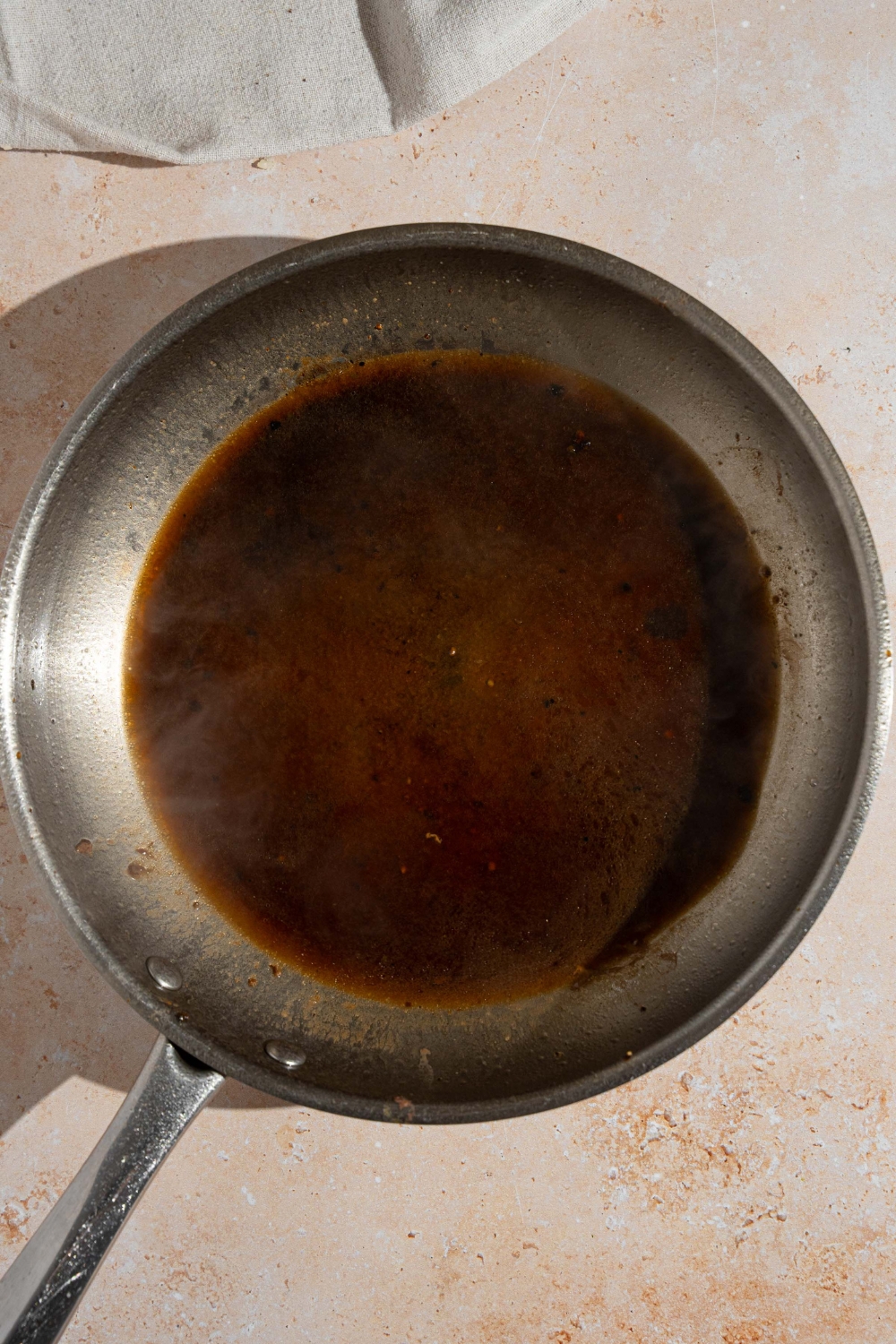
Step 6: Finish with Cream and Peppercorns
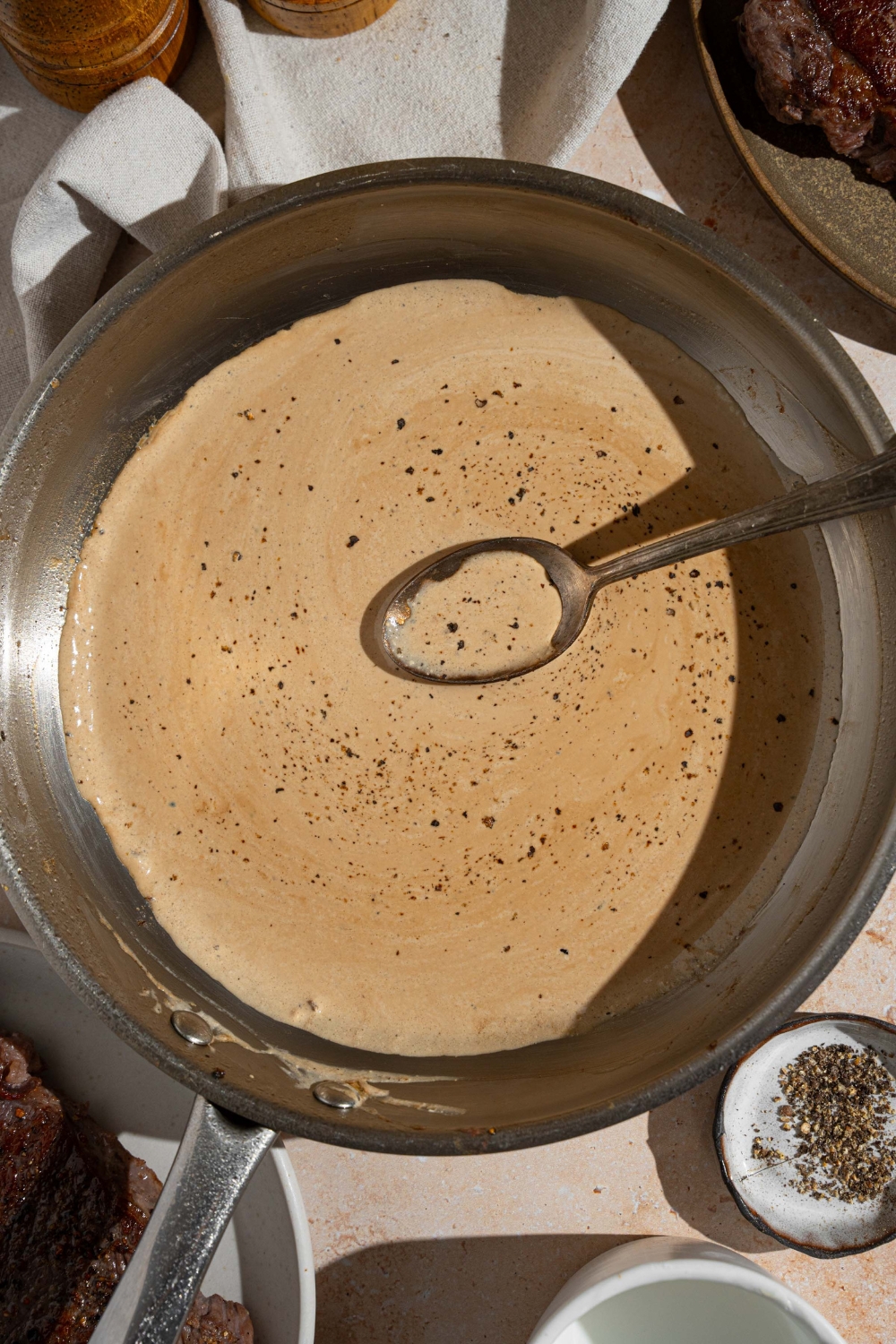
Lower the heat to medium. Stir in the heavy cream and the crushed peppercorns. Let the sauce simmer gently for 1–2 minutes, just until it thickens slightly. Do not boil; boiling can cause the sauce to separate.
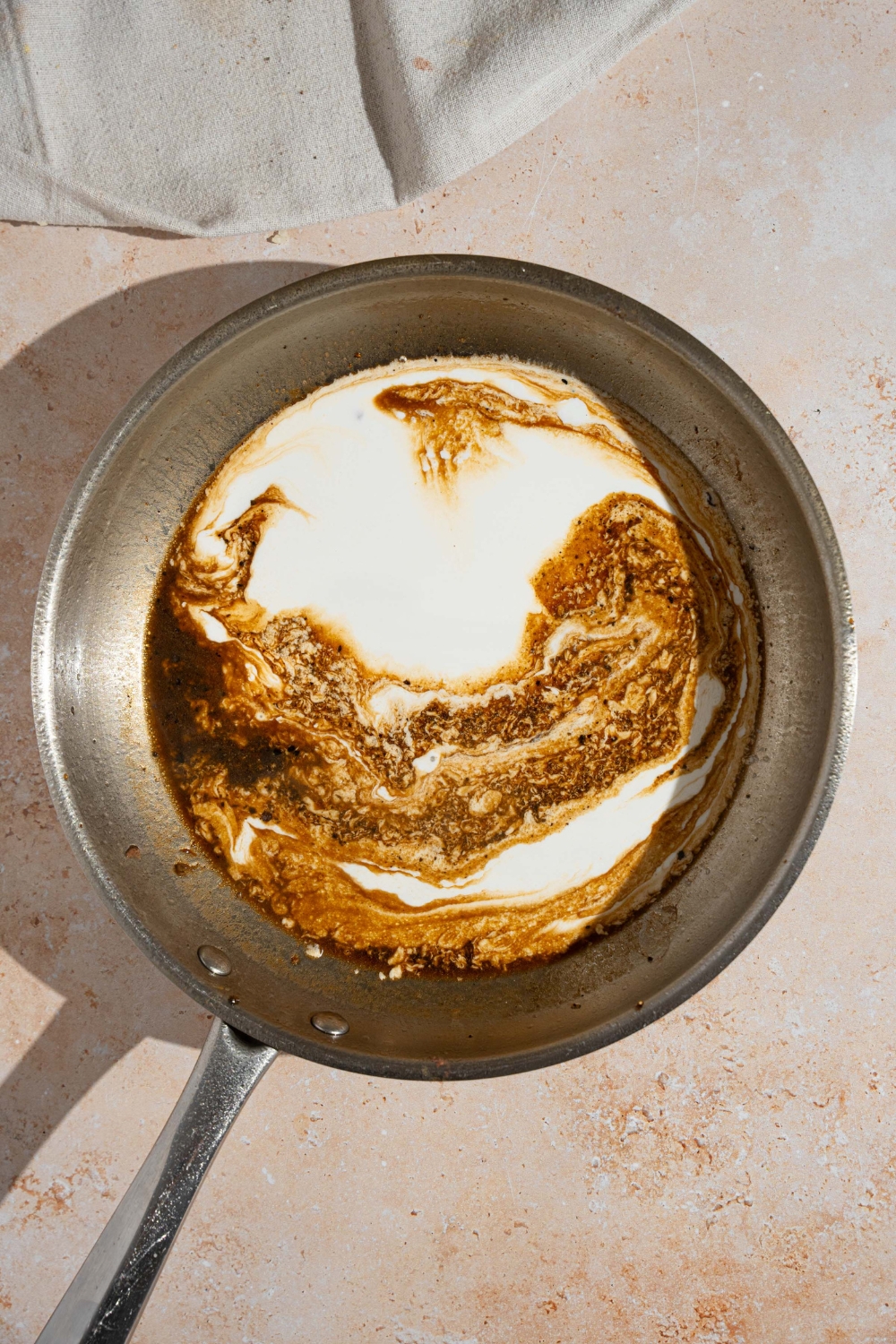
Step 7: Taste and Adjust
Taste the sauce and adjust with salt or additional crushed pepper if needed. The sauce should be rich, peppery, and balanced, not sharp or overly spicy.
Step 8: Serve
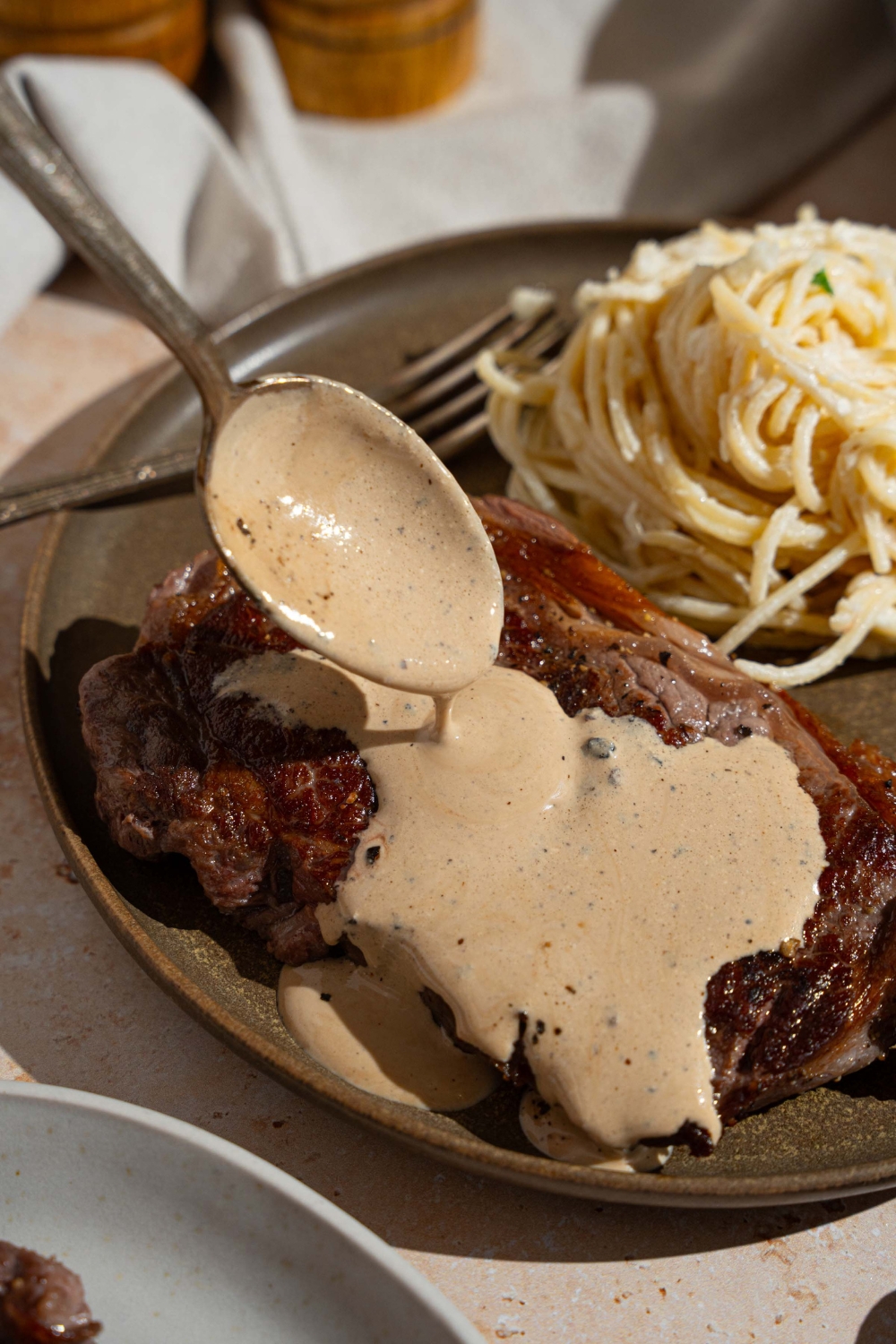
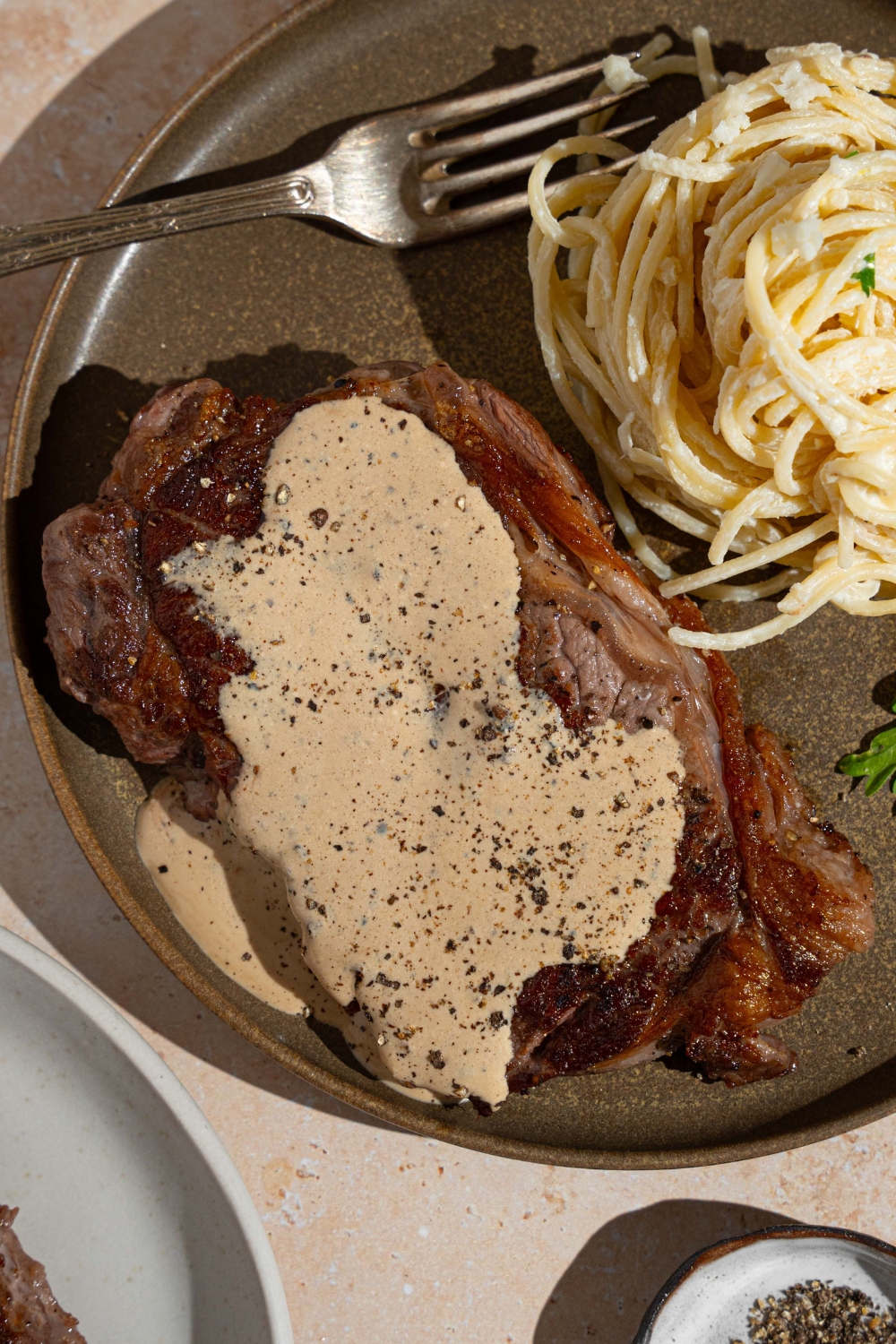
Place the rested steaks on warm plates and spoon the peppercorn sauce generously over the top. Serve immediately.
Expert Tips For The Best Peppercorn Sauce and Steak
- Crush peppercorns, don’t grind them. Coarsely crushed peppercorns deliver a classic peppercorn bite without tasting harsh or dusty. The bigger pieces release aroma more slowly, so the sauce tastes fragrant and complex, not just spicy. A mortar and pestle is perfect, but the bottom of a skillet or a rolling pin works too.
- Salt early, pepper right before searing the steaks. Salt can go on generously right before cooking (or a bit earlier if you have time), but pepper can burn at very high heat. Since you’re searing in a smoking-hot pan, use crushed pepper, press it into the steak, and don’t overdo it. You’ll add more pepper to the sauce anyway.
- Get the pan really hot before the steak goes in. You want the oil shimmering and just starting to smoke, so you get a deep sear fast without overcooking the inside. If the pan isn’t hot enough, the steak will steam, and you’ll miss the fond you need for the sauce.
- Sear hard, then leave it alone. Once the steak hits the skillet, don’t move it around. That uninterrupted contact is what builds crust. Two minutes per side is a good medium-rare guide for thinner cuts, but thickness changes everything, so use time as a baseline, not a guarantee.
- Don’t skip the fat-edge sear. Holding the steak with tongs and searing the fat strip renders it and adds extra flavor to the pan. It also helps prevent chewy, unrendered fat on the plate.
- Let the steak rest fully while you make the sauce. Resting keeps juices in the meat and gives you a stress-free window to build the sauce. Loosely tent with foil and don’t cut early, the steak will stay hotter than you think.
- Don’t skip the fond. Those browned bits on the bottom of the pan are the foundation of peppercorn sauce. When you deglaze, scrape thoroughly so that flavor dissolves into the liquid. If your pan has very dark, almost burnt bits, lower the heat and deglaze carefully so the sauce stays rich, not bitter.
- For the brandy step, reduce until the smell changes. When you add brandy or cognac, let it simmer rapidly until the sharp alcohol smell mellows. That’s your signal the alcohol has mostly cooked off and you’re left with that warm, slightly sweet depth.
- High heat early, gentle heat at the end. Reduction is what thickens this sauce naturally, so you want a rapid simmer when you reduce the brandy and broth. But once cream goes in, lower the heat. Cream plus high heat can split, and a broken sauce won’t look or taste like steakhouse peppercorn sauce.
- Use low-sodium broth for control. Reduction concentrates everything, especially salt. Starting with low-sodium broth lets you season at the end and keeps you from accidentally making the sauce too salty.
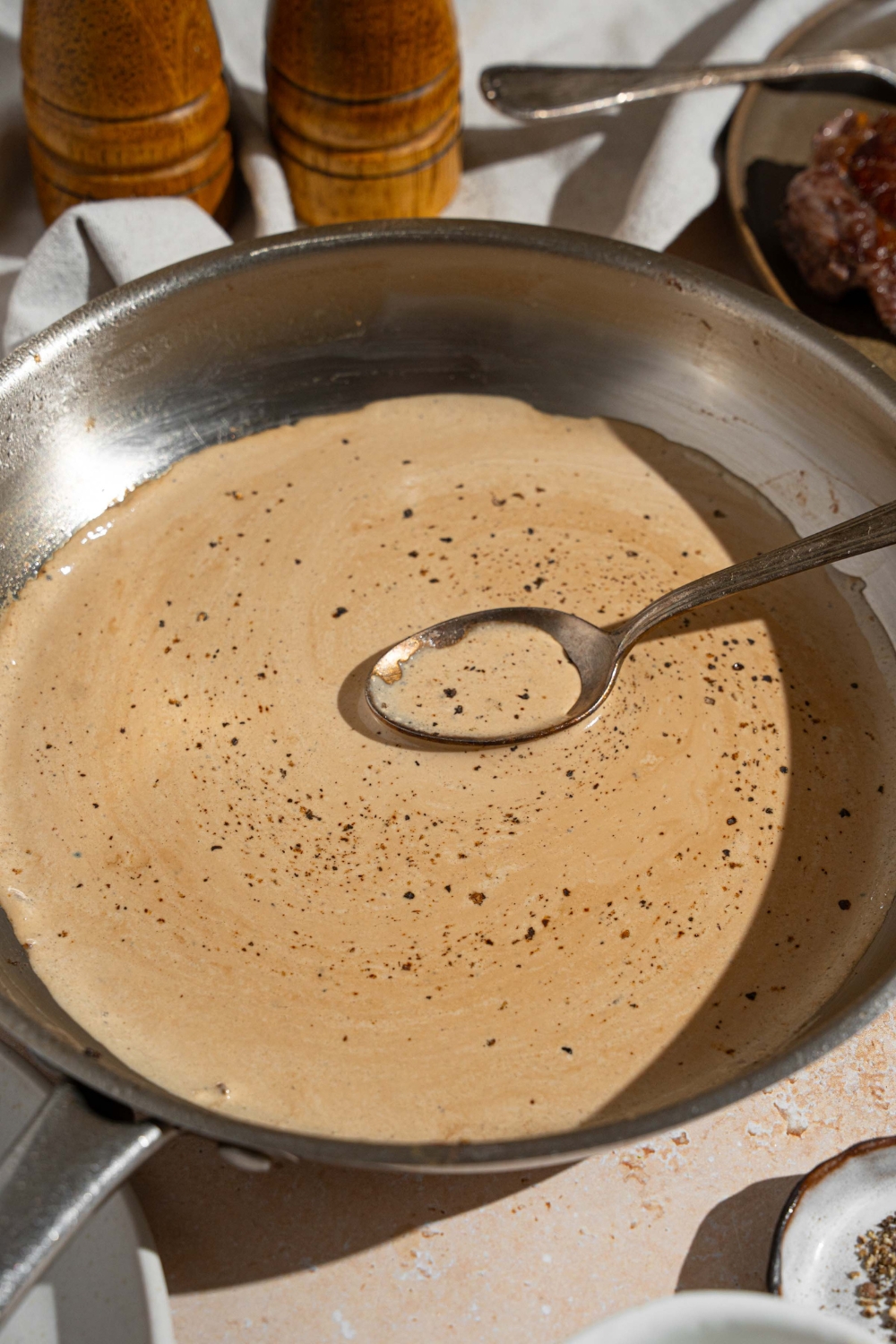
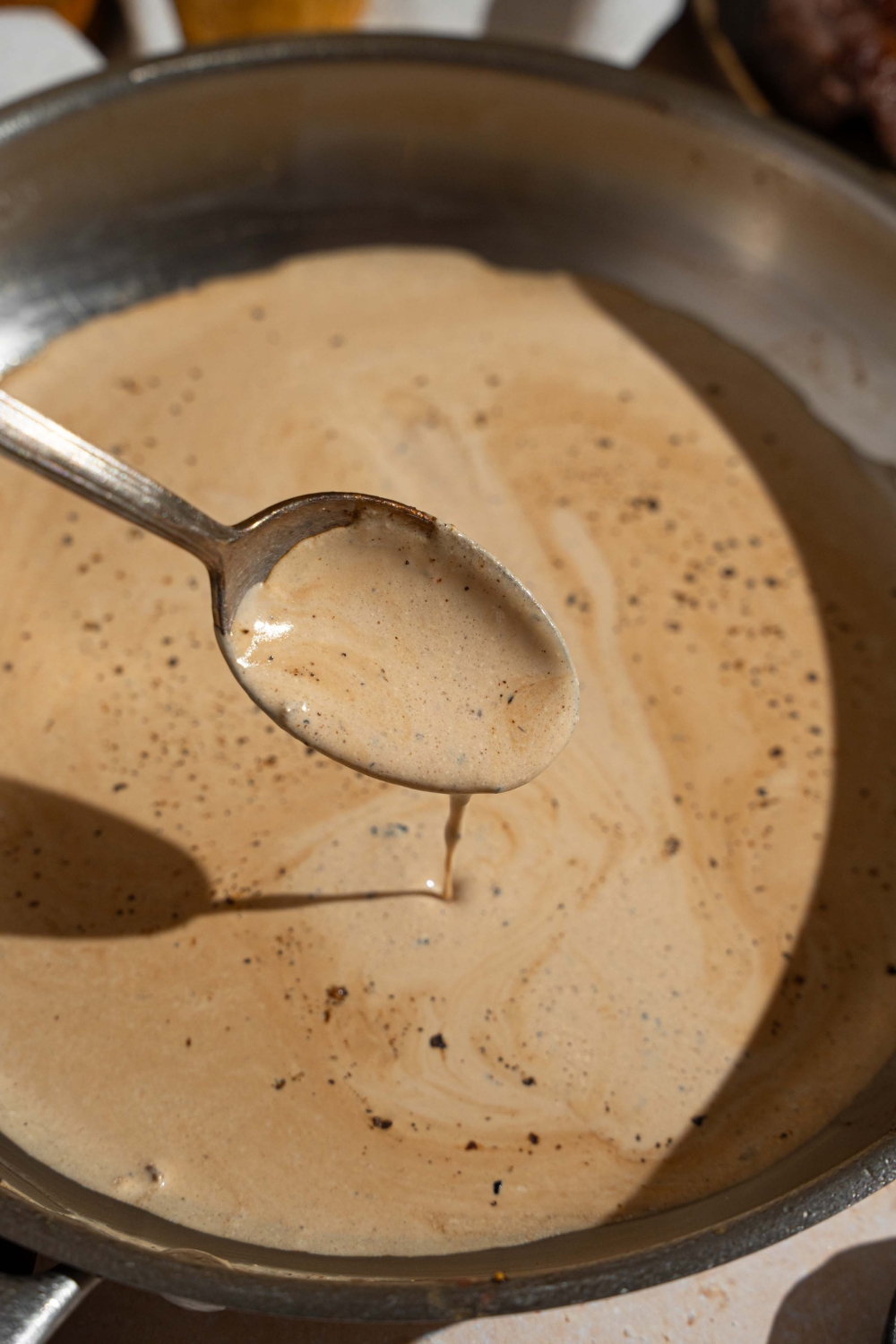
- Add cream, then simmer gently to finish. After stirring in cream, keep it at a gentle simmer for 1–2 minutes. You’re looking for a sauce that lightly coats the back of a spoon, not a thick gravy. If it thickens too much, a splash of broth loosens it instantly.
- Taste at the end and adjust like a pro. Peppercorn sauce should be bold, but balanced. Finish with salt to bring it alive, and add pepper in small pinches if you want more bite. Remember the steak is seasoned too, so taste the sauce before adding a lot more salt.
- Serve immediately for best texture. Peppercorn sauce is at its glossiest right off the heat. It thickens as it sits, and the pepper blooms over time, so spoon it over the steak and serve while everything is hot. Warm plates help keep the sauce silky longer.
Peppercorn Sauce FAQs
Is peppercorn sauce spicy?
It’s warm and aromatic, not aggressively spicy. Using coarsely crushed peppercorns gives you that classic peppery bite without the harsh bitterness you can get from finely ground pepper. The spice is there, but it’s balanced and steak-friendly.
Do I use black peppercorns or mixed peppercorns?
Black peppercorns are the classic steakhouse choice and give the most traditional flavor. Mixed peppercorns work too and add a slightly fruitier, more floral note. If you use mixed peppercorns, keep the crush coarse so the sauce stays smooth and not gritty.
Can I make peppercorn sauce ahead of time?
It’s best fresh because it thickens as it sits and the pepper blooms over time. That said, you can make it ahead and reheat it on the stovetop in a pan over low heat, adding a splash of cream or broth and whisking until smooth and glossy again.
How do I store and reheat leftover peppercorn sauce?
Store it in an airtight container in the fridge for up to 3 days. Reheat on low heat, whisking constantly, and add a small splash of cream or broth to loosen it back to a pourable consistency. Avoid boiling, which can cause separation.
What steaks work best with peppercorn sauce?
Ribeye, strip steak, filet mignon, and sirloin are all great choices. Ribeye and strip can handle a bold sauce because they’re richer cuts, while filet mignon benefits from the extra flavor since it’s very tender but milder. Sirloin is a great budget-friendly option that still tastes elevated with this sauce.
Can I use green peppercorns instead of black peppercorns?
Yes. Green peppercorns give a milder, slightly briny pepper flavor and are common in classic French-style peppercorn sauce. If you use them packed in brine, drain them well and crush lightly before adding.
Why did my peppercorn sauce break or look curdled?
The heat was too high after adding cream, or the sauce boiled hard. Cream sauces need gentle heat. Lower the heat immediately and whisk gently to bring it back together. If it’s stubborn, a small splash of warm cream and steady whisking usually helps smooth it out.
How do I thicken peppercorn sauce without flour or cornstarch?
Reduction is the thickener. Simmer the broth until it reduces by about half, then add cream and gently simmer until it coats the back of a spoon. If you want it thicker, reduce the broth a bit more before adding cream.
Can I use milk instead of cream?
Not recommended. Milk doesn’t have enough fat to emulsify properly, and it’s much more likely to split. If you need a lighter option, half-and-half can work, but the sauce won’t be as rich or stable as it is with cream.
Do I have to use alcohol for peppercorn sauce?
No. Brandy or cognac adds that classic steakhouse depth, but you can skip it. If you don’t want alcohol, deglaze the pan with extra broth instead and reduce it well. You’ll still get a delicious, beefy peppercorn sauce, just with a slightly less complex finish.
Can I make peppercorn sauce without a cast iron skillet?
Yes. Any heavy skillet works. The key is building a good sear on the steak so you get fond, then scraping it up when you deglaze to flavor the sauce.
My Final Thoughts
This peppercorn sauce for steak is a foundational recipe, the kind that teaches you how sauces really work. It’s bold, elegant, and deeply satisfying, and it turns a good steak into a memorable one. Once you master this method, you’ll never need a bottled steak sauce again. Try this peppercorn sauce on steak, and leave me a comment and review below so I can hear what you think of the combo.
Sauce Recipes To Try Next
- A1 steak sauce
- Creamy horseradish sauce
- Oyster sauce
- Coney sauce
- Cajun garlic butter sauce
- Katsu sauce
- Cream sauce base
Peppercorn Sauce For Steak

This peppercorn sauce for steak is the same bold, creamy, restaurant-style sauce you’d expect at a classic steakhouse. Made directly in the pan after searing your steaks, it captures every browned bit of flavor, then builds depth with brandy, beef stock, cream, and freshly crushed black peppercorns. The result is a sauce that’s luxurious without being heavy, spicy without being harsh, and perfectly balanced for beef. If you’ve ever ordered steak au poivre and wondered how that sauce comes together so quickly, this is the method.
Ingredients
- 2 10oz Steaks of your choice, New York Strip, Porterhouse, Sirloin, ribeye
- Salt and pepper
- 1 tablespoon vegetable oil
- ⅓ cup brandy or cognac
- ¾ cup beef broth/stock, low sodium
- ½ cup heavy cream
- 2 – 3 teaspoon coarsely crushed whole black peppercorns
Instructions
1. Take the steaks out of the refrigerator about 20 minutes before cooking to bring them to room temperature.
2. Just before cooking, season both sides of the steaks generously with salt and crushed black pepper.
3. Heat oil in a skillet over high heat until it begins to smoke. Add the steaks and sear for 2 minutes on the first side, then flip and cook for another 2 minutes for medium-rare.
4. Stack the steaks and use tongs to sear the fat strip. Transfer the steaks to a plate, cover loosely with foil, and let rest while you prepare the sauce.
5. In the same skillet, pour in brandy or cognac and simmer rapidly, scraping up any browned bits, until the alcohol has mostly evaporated and the smell mellows.
6. Add broth and bring to a rapid simmer. Cook for 2–3 minutes until reduced by half.
7. Reduce heat to medium. Stir in cream and additional crushed pepper. Simmer gently for 1–2 minutes until the sauce thickens slightly. Avoid boiling.
8. Taste and adjust seasoning with salt and pepper as needed.
9. Serve the steaks on warm plates and spoon the sauce over the top. Serve immediately.
Nutrition Information:
Yield:
2Serving Size:
1Amount Per Serving: Calories: 652Total Fat: 49gSaturated Fat: 23gUnsaturated Fat: 26gCholesterol: 137mgSodium: 421mgCarbohydrates: 3gFiber: 1gSugar: 2gProtein: 25g
Leave a Reply