


This skillet lasagna gives you cheesy, saucy lasagna without boiling noodles in a separate pot or turning on the oven. The dry lasagna sheets cook right in the meat sauce, then everything gets finished with melted mozzarella in the same skillet. It’s an easy one-pan dinner with the flavor of classic lasagna and a fraction of the work and cleanup.
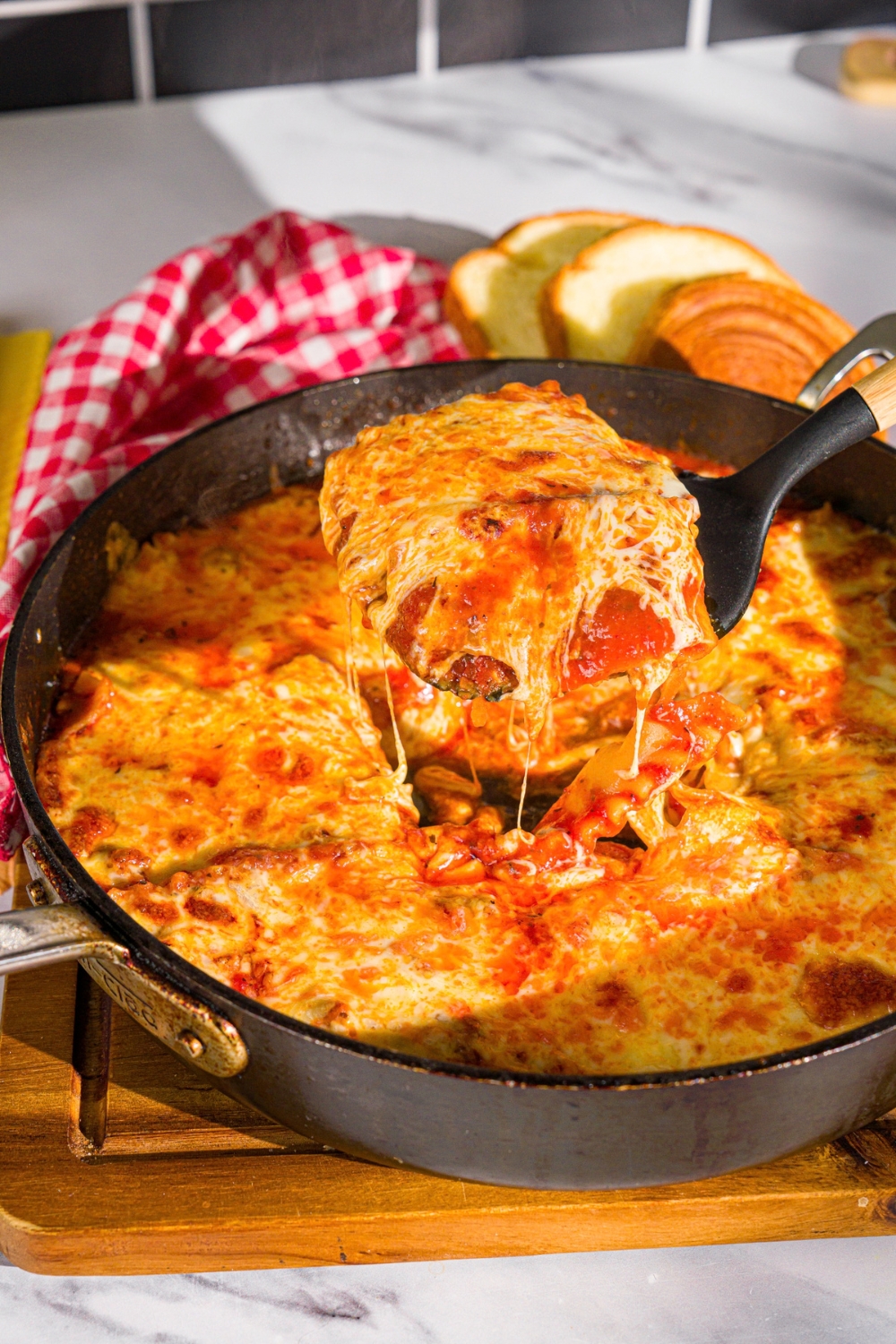
Table of Contents
Why You'll Love This One Pan Lasagna
I’ve been seeing every kind of viral lasagna on social media lately, from lasagna soup to layerless lasagna, but the skillet version from @calmoni.recipes caught my attention the most. It looked ridiculously easy, and I liked that it still had the structure of lasagna without all the usual assembly.
So I made my own version with ground beef, a simple tomato sauce, lasagna sheets, and melted mozzarella. The noodles cook directly in the sauce, which means there’s no separate pot to boil pasta and no stacking layer after layer in a baking dish.
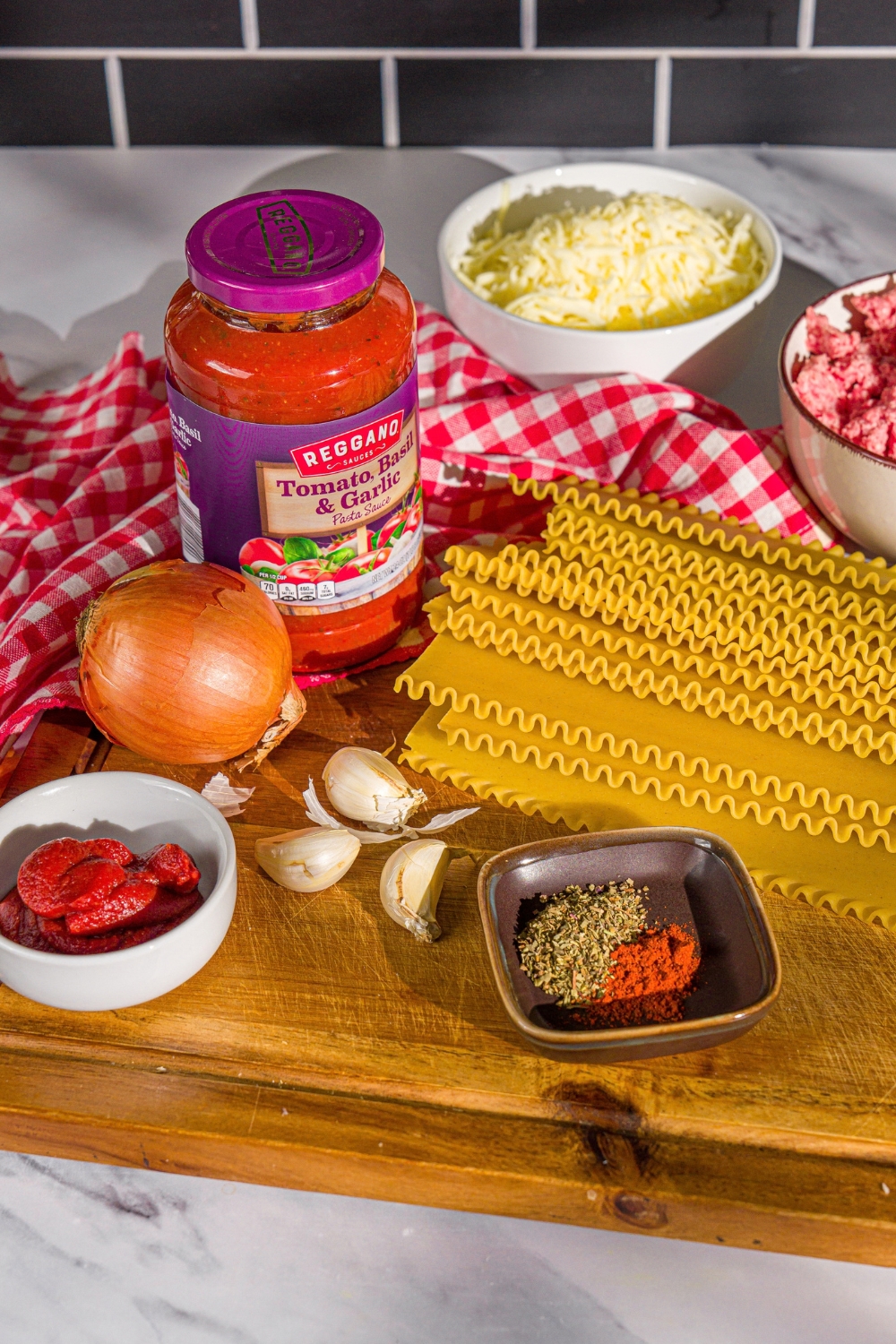
The easy assembly method is really why this recipe works so well for me. You get the saucy, cheesy comfort of lasagna, but the whole thing stays on the stovetop and uses one pan. It’s the version I make when I want lasagna on a weeknight and don’t want to spend the time and effort making the traditional one.
Ingredients You'll Need
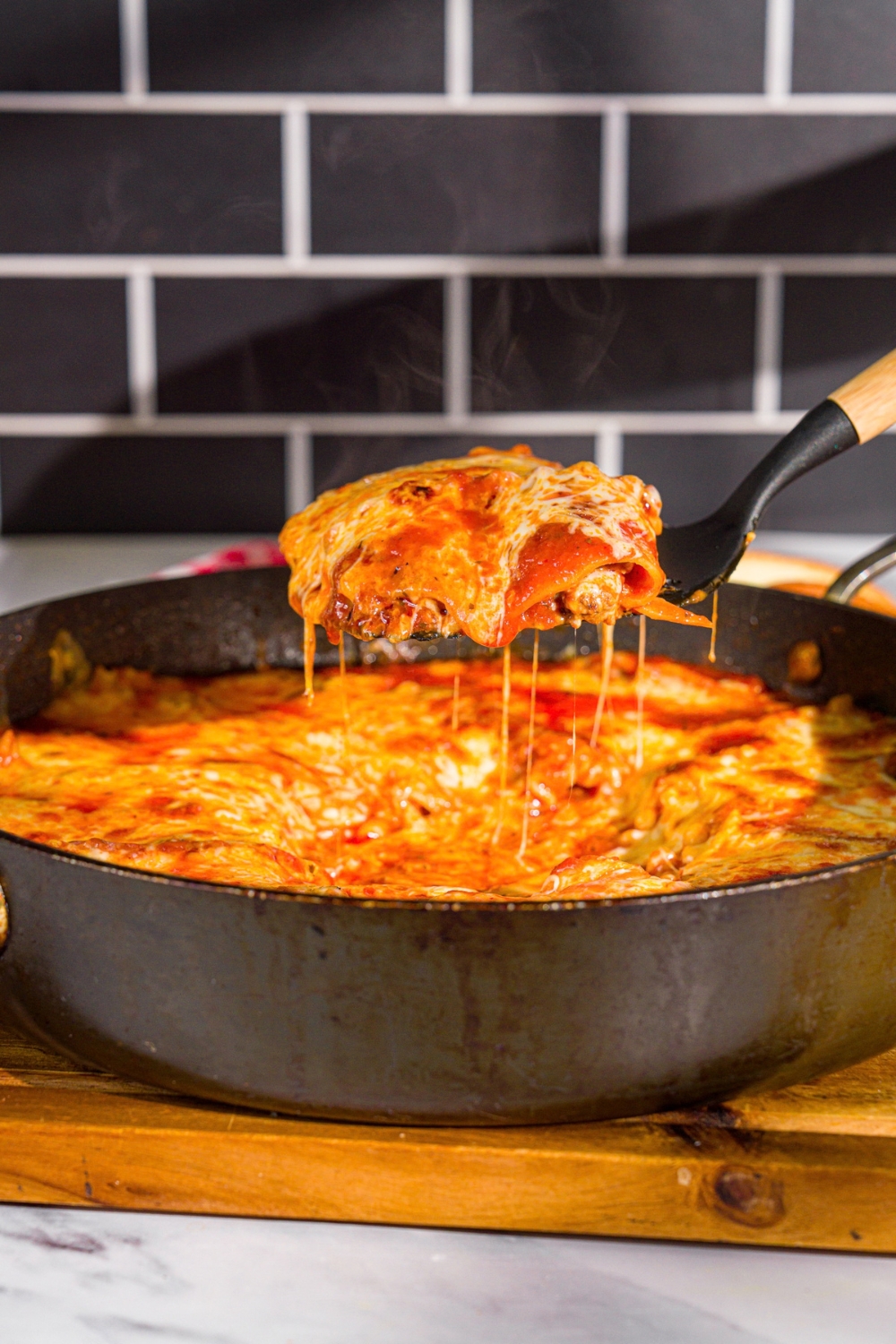
- 1 lb. ground beef
- 1 medium onion, small diced
- 3 cloves garlic, minced
- 1 ½ tbsps. tomato paste
- 16 oz. tomato sauce
- ½-2/3 cup water
- 1 tbsps. olive oil
- 1 tsp. Italian seasoning
- ½ tsp. paprika
- ½ tsp. black pepper
- 1 tsp. salt
- 1 cup shredded mozzarella
- ½ box (8 oz.) dry lasagna sheets
Ingredient Notes and Substitutions
- Ground beef: I like using 85/15 or 90/10 ground beef here. You get enough fat for good flavor without leaving the skillet greasy. Ground Italian sausage also works if you want a stronger, more seasoned meat sauce.
- Lasagna noodles: Use regular dry lasagna noodles, not oven-ready sheets. Since the noodles cook directly in the sauce, they need enough liquid and time to soften properly. Break them only as much as needed to fit the skillet.
- Tomato sauce: A plain tomato sauce works best because you’re building the flavor yourself with garlic, onion, tomato paste, and seasonings. If you use a seasoned pasta sauce instead, taste before adding extra salt.
- Tomato paste: This adds depth and gives the sauce a more concentrated tomato flavor. Letting it cook briefly with the garlic and seasonings before adding the sauce helps take away that raw tomato paste taste.
- Mozzarella: Low-moisture mozzarella is the best choice because it melts well without releasing a lot of liquid. Fresh mozzarella can make the skillet lasagna noticeably wetter.
- Water: The extra water is important because the dry lasagna sheets absorb liquid as they cook. Start with ½ cup and add a little more if the sauce looks too thick before the noodles are tender.
- Italian seasoning: This keeps the seasoning simple, but you can replace it with a mix of dried basil and oregano if that’s what you have.
- Onion: A yellow or white onion both work well. Dice it fairly small so it softens quickly and disappears into the meat sauce instead of leaving large pieces throughout the skillet.
How to Make Skillet Lasagna
Step 1: Brown the Beef and Onion
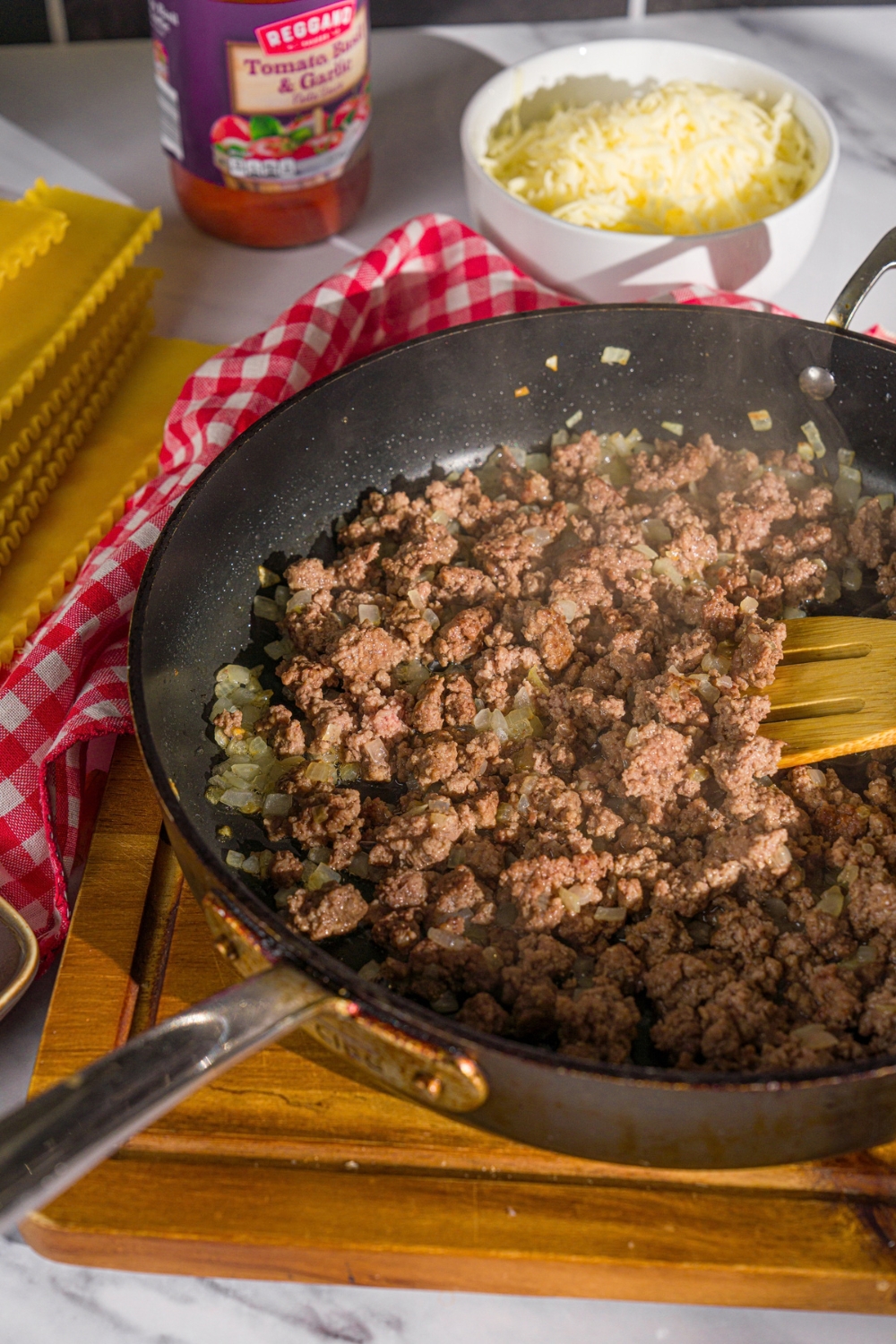
Heat the olive oil in a large skillet over medium-high heat. Add the ground beef and diced onion and cook until the beef is browned and the onion has softened. Drain off any excess grease if needed.
Step 2: Build the Meat Sauce
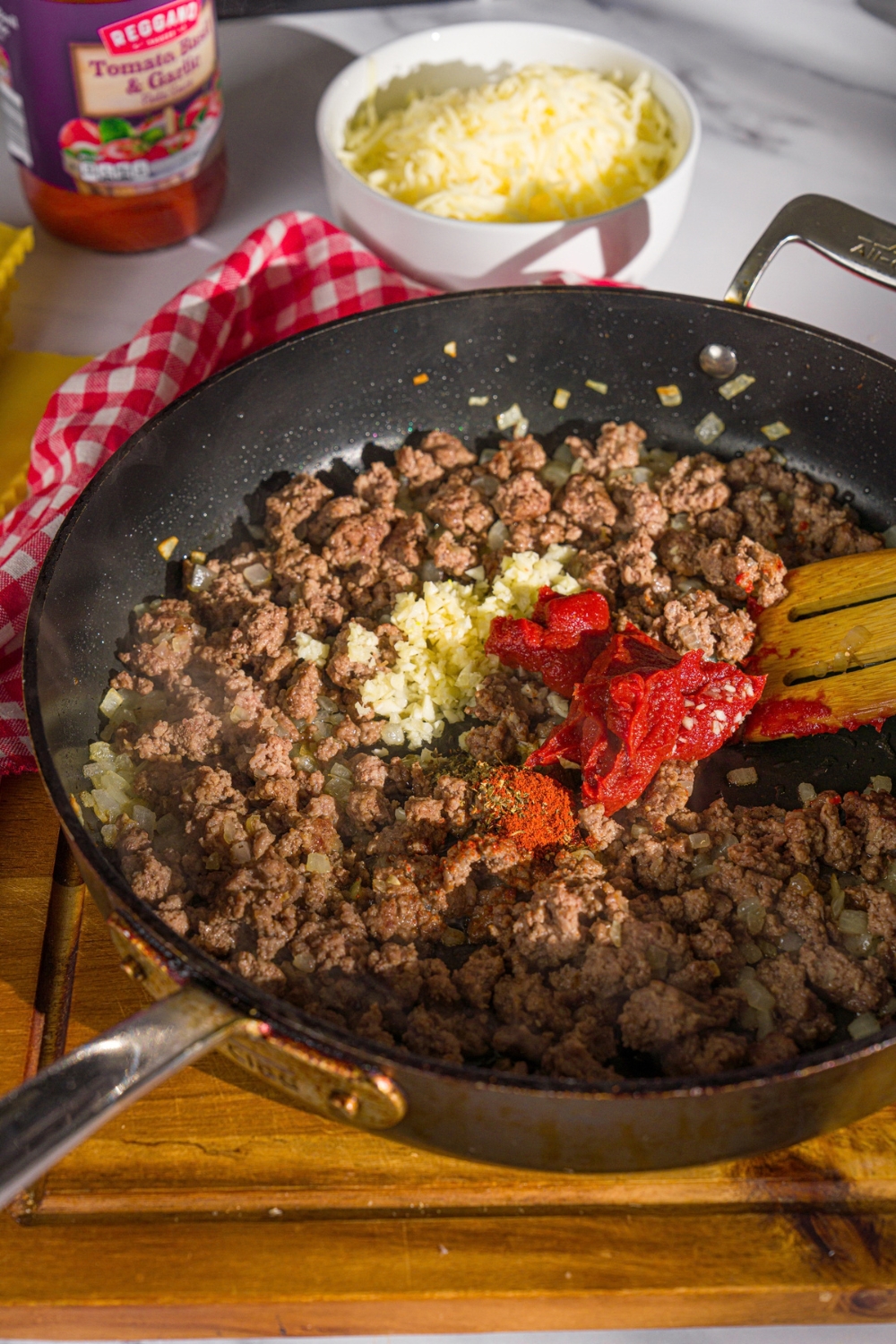
Add the garlic, tomato paste, Italian seasoning, paprika, black pepper, and salt. Cook for 1–2 minutes, stirring often, until the garlic is fragrant and the tomato paste darkens slightly.
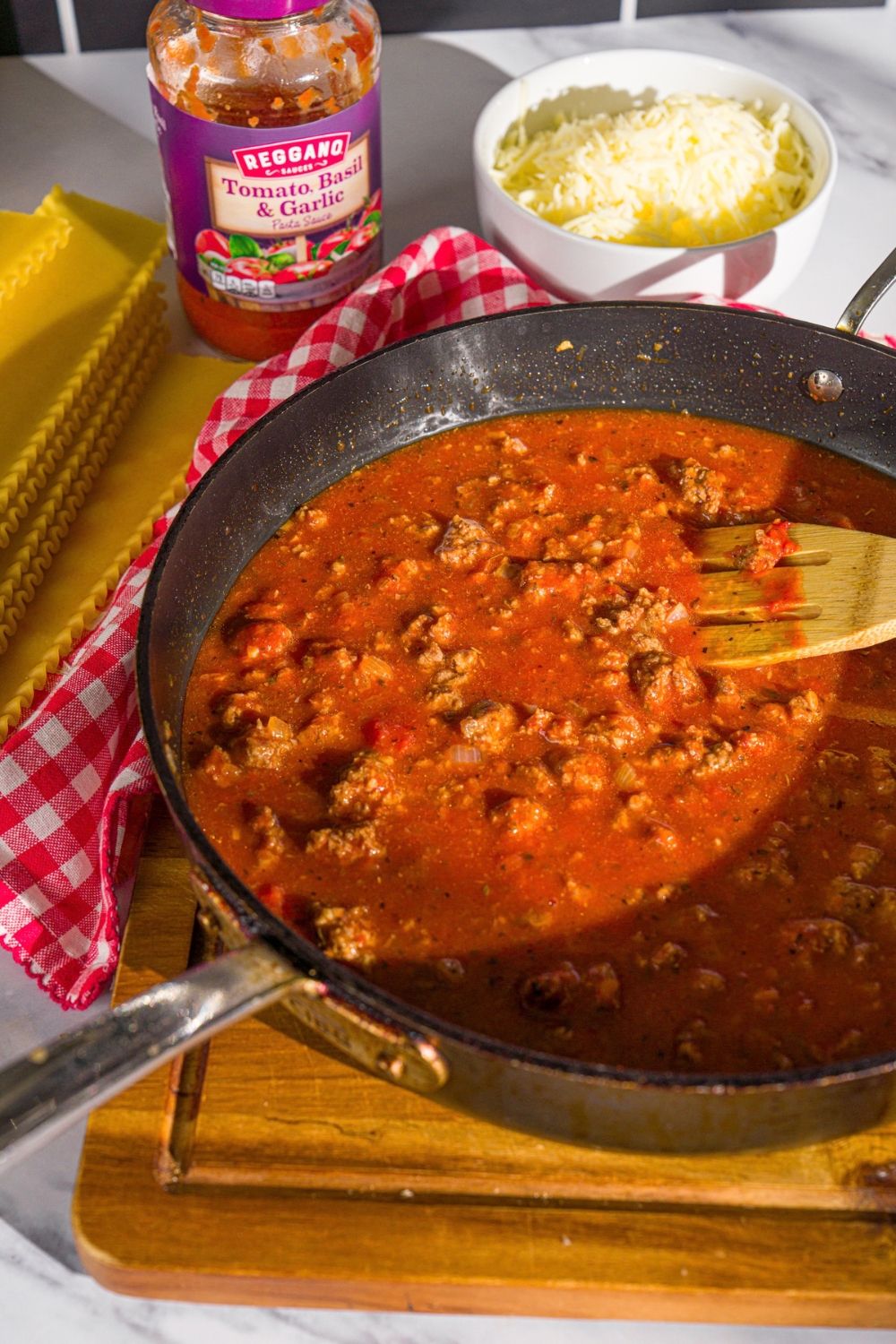
Pour in the tomato sauce and ½ cup of water. Stir well, bring everything to a simmer, then cover and cook for about 10 minutes.
Step 3: Add the Lasagna Noodles
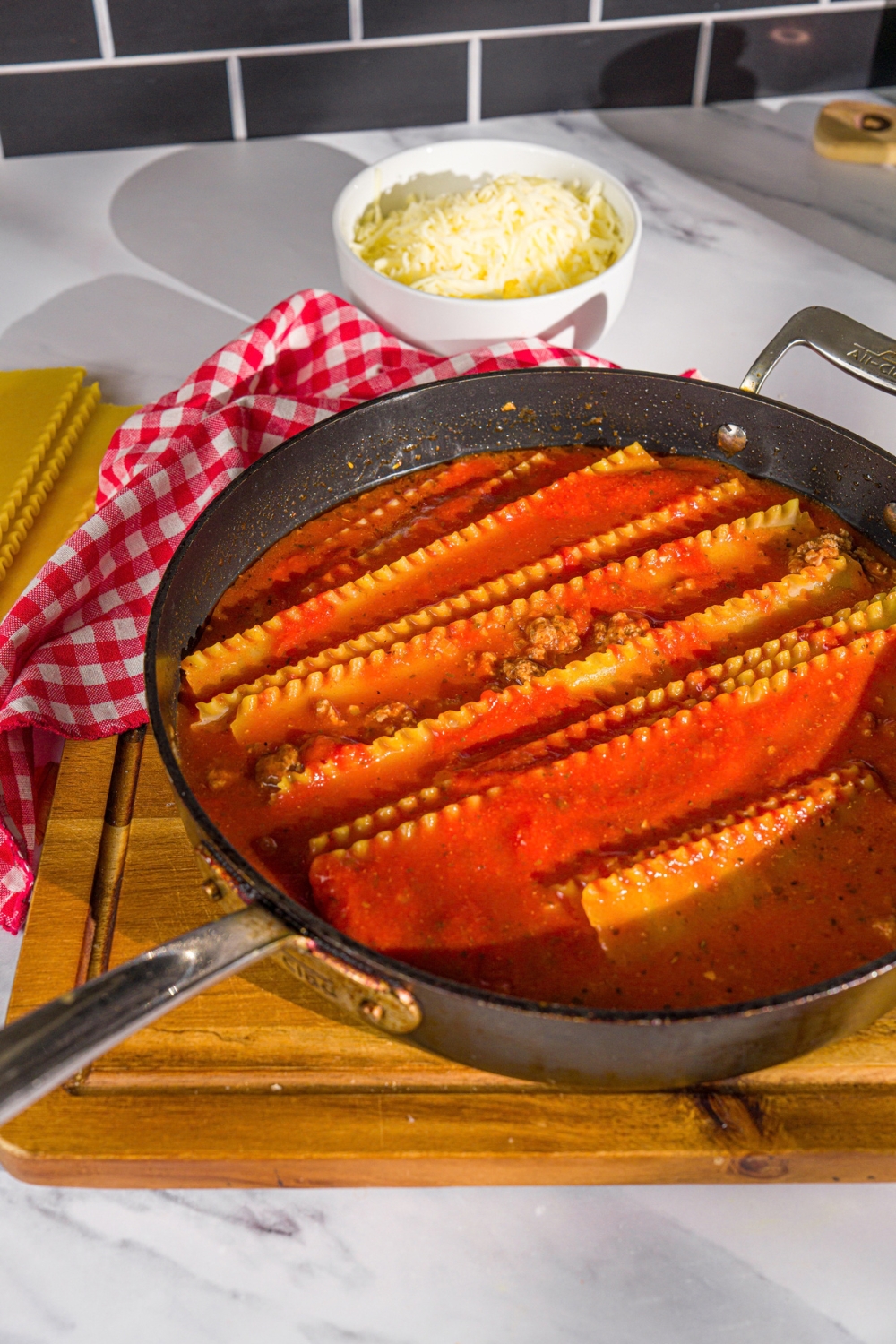
Arrange the dry lasagna sheets over the sauce, breaking them as needed to fit the skillet. Press them down so they’re covered with sauce, but don’t stir. If the sauce looks too thick to fully cover the noodles, add a little more water.
Step 4: Cook the Lasagna
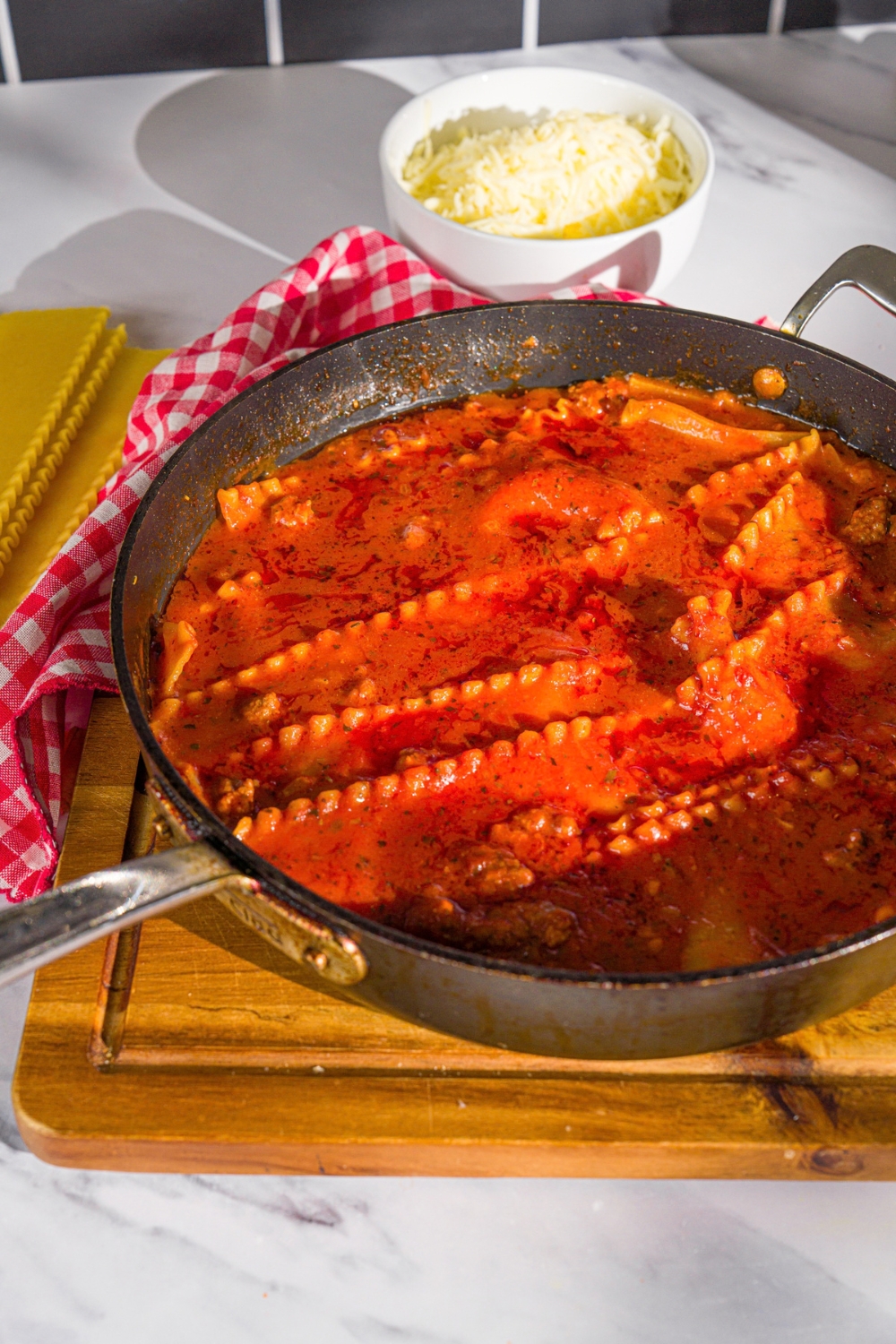
Cover the skillet, reduce the heat to low, and cook for 8–10 minutes, or until the noodles are al dente and the sauce has thickened. Check near the end to make sure the bottom isn’t sticking and that the noodles still have enough liquid around them to finish cooking.
Step 5: Add the Cheese
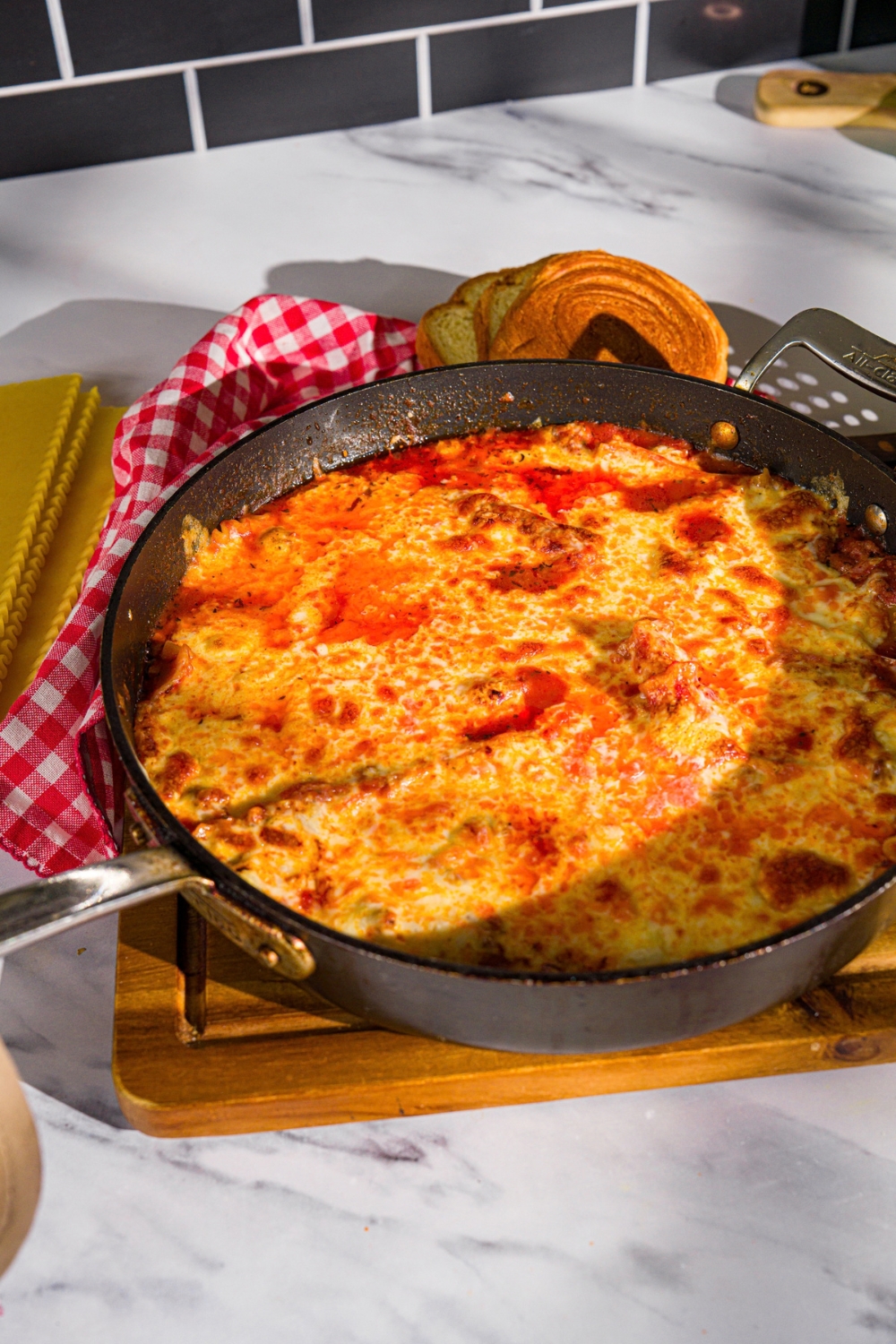
Remove the skillet from the heat and sprinkle the mozzarella evenly over the top. Cover again for 1–2 minutes, until the cheese is completely melted.
Step 6: Rest and Serve
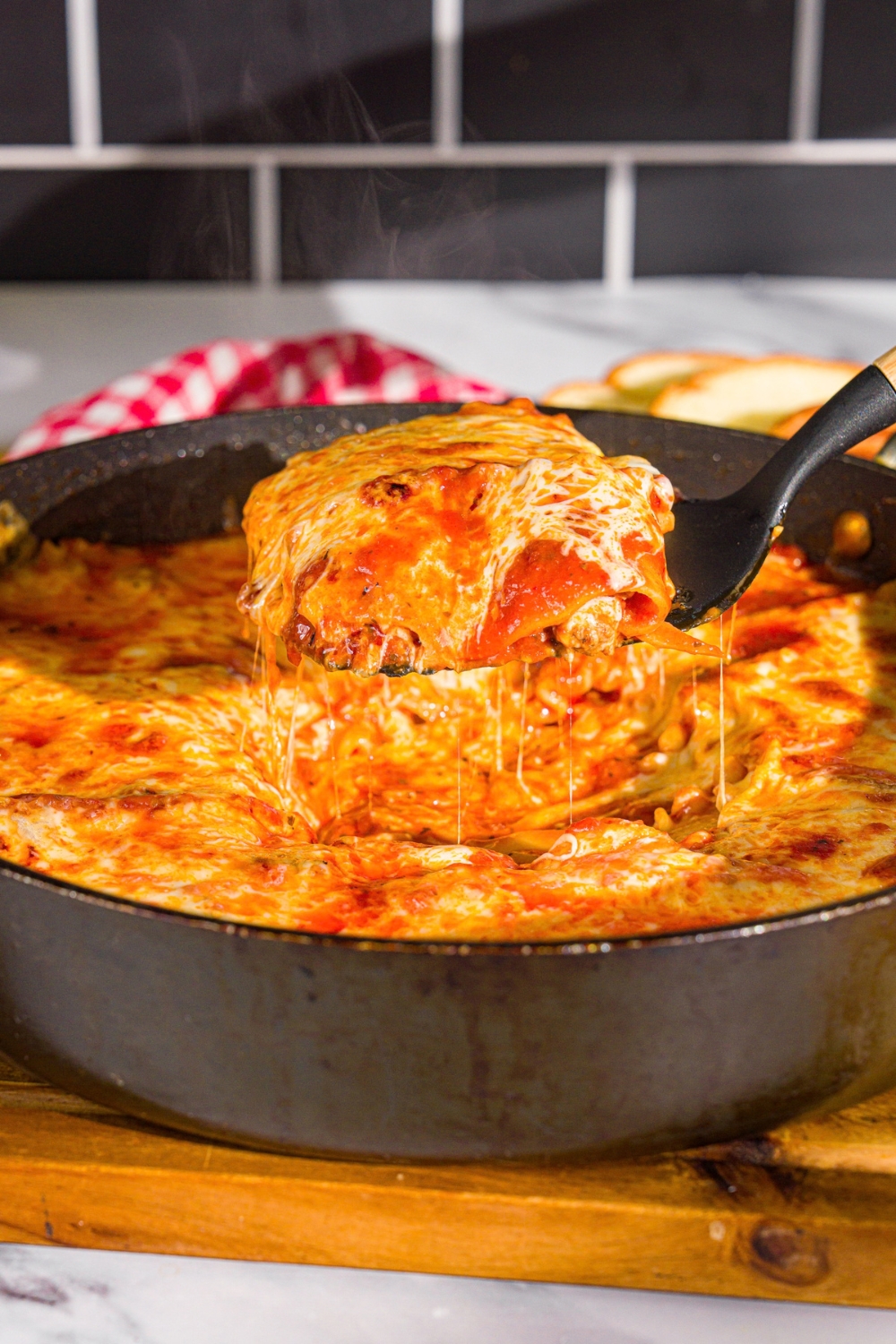
Let the skillet lasagna sit for a few minutes before serving. This gives the sauce time to settle around the noodles and makes it easier to scoop into portions.
Tips for the Best Skillet Lasagna
- Use a wide skillet with a tight-fitting lid. A 12-inch skillet gives the noodles enough room to spread out instead of piling on top of each other. The lid matters too, since trapped steam helps cook the pasta evenly.
- Keep the heat low once the noodles go in. The sauce needs to simmer gently while the pasta cooks. If the heat is too high, the bottom can burn before the noodles have time to soften.
- Avoid stacking too many noodle pieces together. A little overlap is fine, but thick stacks can cook unevenly and leave firm spots in the center. Spread the sheets across as much of the skillet as possible.
- Rotate the skillet if one side cooks faster. Stovetop burners don’t always heat evenly, especially with a large pan. Turning the skillet halfway through helps the noodles and sauce cook more consistently.
- Check the pasta itself, not just the timer. Lasagna noodle thickness varies by brand, so start testing a piece around the 8-minute mark. It should be tender with just a slight bite in the center.
- Watch the bottom of the pan near the end. As the pasta absorbs liquid, there’s less sauce protecting the skillet from direct heat. If you hear aggressive sizzling instead of a gentle simmer, turn the burner down.
- Finish with fresh herbs if you have them. A little chopped basil or parsley added after cooking gives the finished skillet some freshness and cuts through the richness of the beef and mozzarella.
Skillet Lasagna Variations
- Add ricotta. Dollop ricotta over the lasagna just before adding the mozzarella. Cover the skillet and let both cheeses warm together for a version that’s closer to traditional lasagna.
- Make it three-cheese. Add grated Parmesan with the mozzarella for a sharper, saltier finish. You can also spoon in a little ricotta for mozzarella, Parmesan, and ricotta in the same skillet.
- Add spinach. Stir a few handfuls of baby spinach into the meat sauce and let it wilt before adding the lasagna noodles. It’s an easy way to work vegetables into the meal without changing the cooking method.
- Add mushrooms. Sauté sliced mushrooms with the onion and beef until their moisture cooks off. They add more savory flavor and work especially well with the tomato sauce.
- Make it spicy. Add crushed red pepper flakes with the garlic or use hot Italian seasoning if you want some heat throughout the sauce.
- Turn it into a pizza lasagna. Add sliced pepperoni over the mozzarella before covering the skillet. It’s a simple variation that works especially well if you’re making this for kids.
How to Store and Reheat Skillet Lasagna
- In the fridge: Let the lasagna cool, then transfer leftovers to an airtight container and refrigerate for up to 4 days. The noodles will continue soaking up some of the sauce as they sit, so the texture will be a little thicker the next day.
- To reheat: Add a spoonful of tomato sauce or a small splash of water before reheating if the lasagna looks dry. Warm individual portions in the microwave in 30–60 second intervals, or cover a larger portion and reheat in a 350°F oven until hot.
- In the freezer: Let the lasagna cool completely, then freeze individual portions in airtight freezer-safe containers for up to 2 months. Smaller portions thaw and reheat more evenly than freezing the entire skillet.
- To reheat from frozen: Thaw overnight in the refrigerator, then reheat until hot throughout. Add a little extra sauce before reheating if needed, then finish with fresh mozzarella or Parmesan if you want to freshen it up.
Skillet Lasagna FAQs
What is skillet lasagna?
Skillet lasagna is a stovetop version of lasagna made entirely in one pan. Instead of boiling the noodles separately and assembling layers in a baking dish, the dry lasagna sheets cook directly in the meat sauce and the mozzarella melts over the top.
Do you have to boil lasagna noodles for skillet lasagna?
No. That’s one of the main advantages of this recipe. The dry lasagna noodles soften directly in the tomato sauce as the skillet simmers. Just make sure the noodles are covered with enough sauce and liquid so they can cook evenly.
What size skillet should I use?
A 12-inch skillet with a tight-fitting lid works best. It gives the lasagna sheets enough room to spread out and keeps it from becoming too saucy. A wide sauté pan or braiser with a lid can also work.
How do I know when the lasagna noodles are done?
Start checking the noodles around the 8-minute mark. Stick a knife or fork into one of the thicker pieces and make sure it’s tender with just a slight bite in the center. Different brands of lasagna noodles can take a few minutes longer.
Why are my lasagna noodles still hard?
The most common reason is that the noodles weren’t completely surrounded by enough liquid while cooking. Add a small splash of water, press the noodles back underneath the sauce, cover the skillet, and continue cooking over low heat until tender.
Can I use oven-ready lasagna noodles?
You can, but they’re usually thinner than regular lasagna sheets and may cook faster. Start checking them earlier and keep an eye on the sauce since they may not need exactly the same amount of liquid or cooking time.
Can I make skillet lasagna ahead of time?
I’d make the meat sauce ahead rather than assembling the entire skillet. Refrigerate the cooked sauce for up to a few days, then reheat it and add the dry noodles when you’re ready to eat. If the noodles sit in the sauce too long before cooking, they can absorb liquid and soften unevenly.
Can you make lasagna entirely on the stovetop?
Yes. This recipe never needs to go into the oven. The beef and sauce cook first, the noodles simmer directly in the same skillet, and the mozzarella melts under the lid after the heat is turned off.
Viral Recipes to Try Next
- French onion mac and cheese
- Tini's mac and cheese
- Mac and cheese lasagna
- Chicken alfredo lasagna
- Sheet pan chicken broccoli lasagna
Viral Skillet Lasagna

This skillet lasagna gives you cheesy, saucy lasagna without boiling noodles in a separate pot or turning on the oven. The dry lasagna sheets cook right in the meat sauce, then everything gets finished with melted mozzarella in the same skillet. It’s an easy one-pan dinner with the flavor of classic lasagna and a fraction of the work and cleanup.
Ingredients
- 1 lb. ground beef
- 1 medium onion, small diced
- 3 cloves garlic, minced
- 1 ½ tbsps. tomato paste
- 16 oz. tomato sauce
- ½-2/3 cup water
- 1 tbsps. olive oil
- 1 tsp. Italian seasoning
- ½ tsp. paprika
- ½ tsp. black pepper
- 1 tsp. salt
- 1 cup shredded mozzarella
- ½ box (8 oz.) dry lasagna sheets
Instructions
1. In a large skillet, heat the olive oil over medium high heat. Once it is hot, add the onions and ground beef and cook until browned.
2. Once the meat is browned add in the garlic, tomato paste, and seasonings. Stir to combine and cook on low for 1-2 minutes until the garlic is fragrant.
3. Pour in the tomato sauce and water. Bring it to a simmer, cover and cook for 10 minutes.
4. Once the sauce has simmered, add the pasta sheets in a flat layer covered in the sauce. Do not stir!
5. Cover and cook on low for 8-10 minutes or until the pasta is al dente and the sauce is thickened.
6. Remove from the heat and top with mozzarella cheese. Cover for 1-2 minutes until the cheese has melted.
Nutrition Information:
Yield:
4Serving Size:
2 slicesAmount Per Serving: Calories: 633Total Fat: 37gSaturated Fat: 15gUnsaturated Fat: 22gCholesterol: 162mgSodium: 1816mgCarbohydrates: 22gFiber: 4gSugar: 9gProtein: 51g
Leave a Reply