


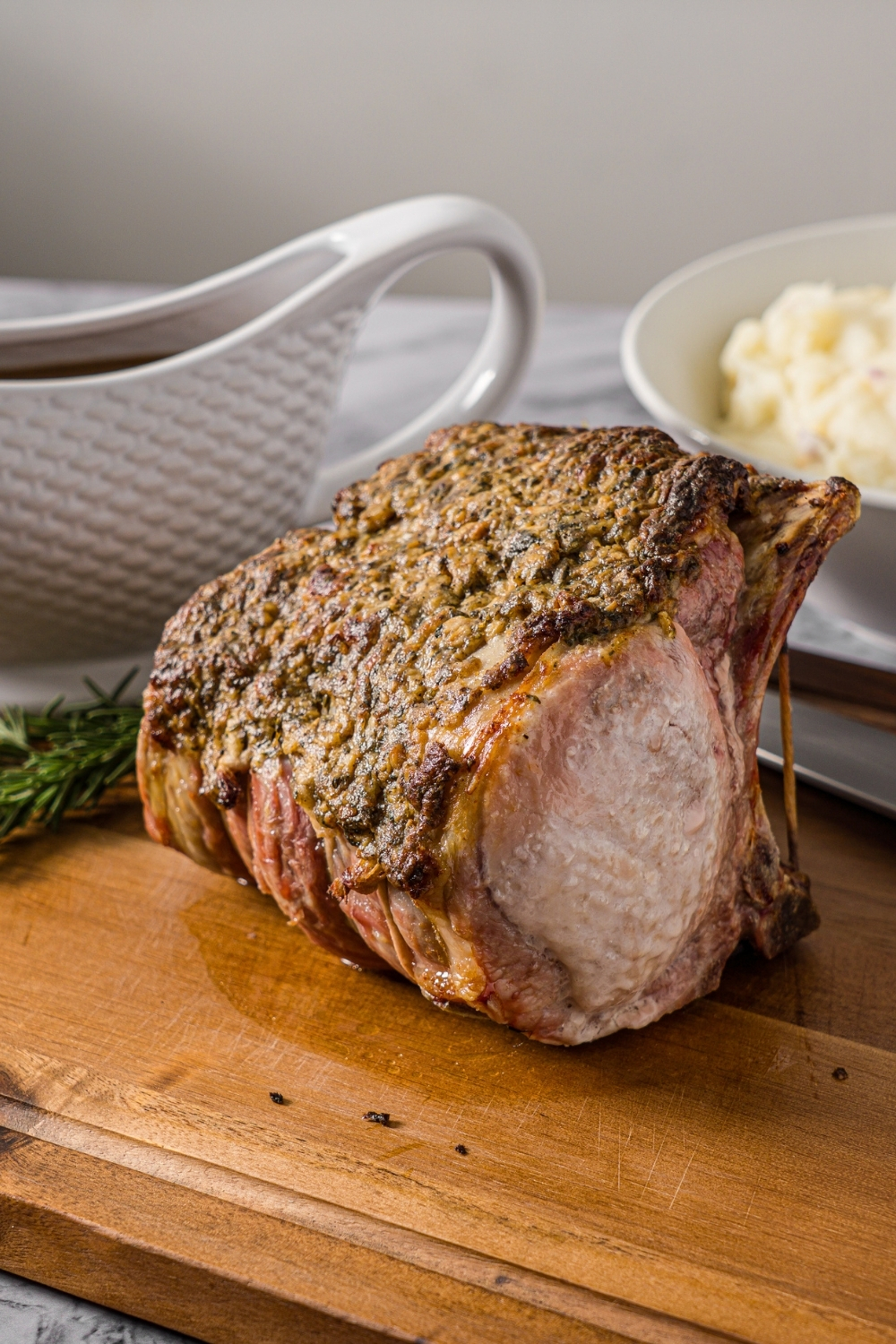
This rack of pork is brined so the meat stays juicy and seasoned all the way through, then roasted with a Dijon-herb-garlic crust that gives you a flavorful, savory exterior and makes the whole kitchen smell unreal. The end result is tender, sliceable pork with crispy edges and a true holiday-roast flavor, even if you’re making it on a random weekend.
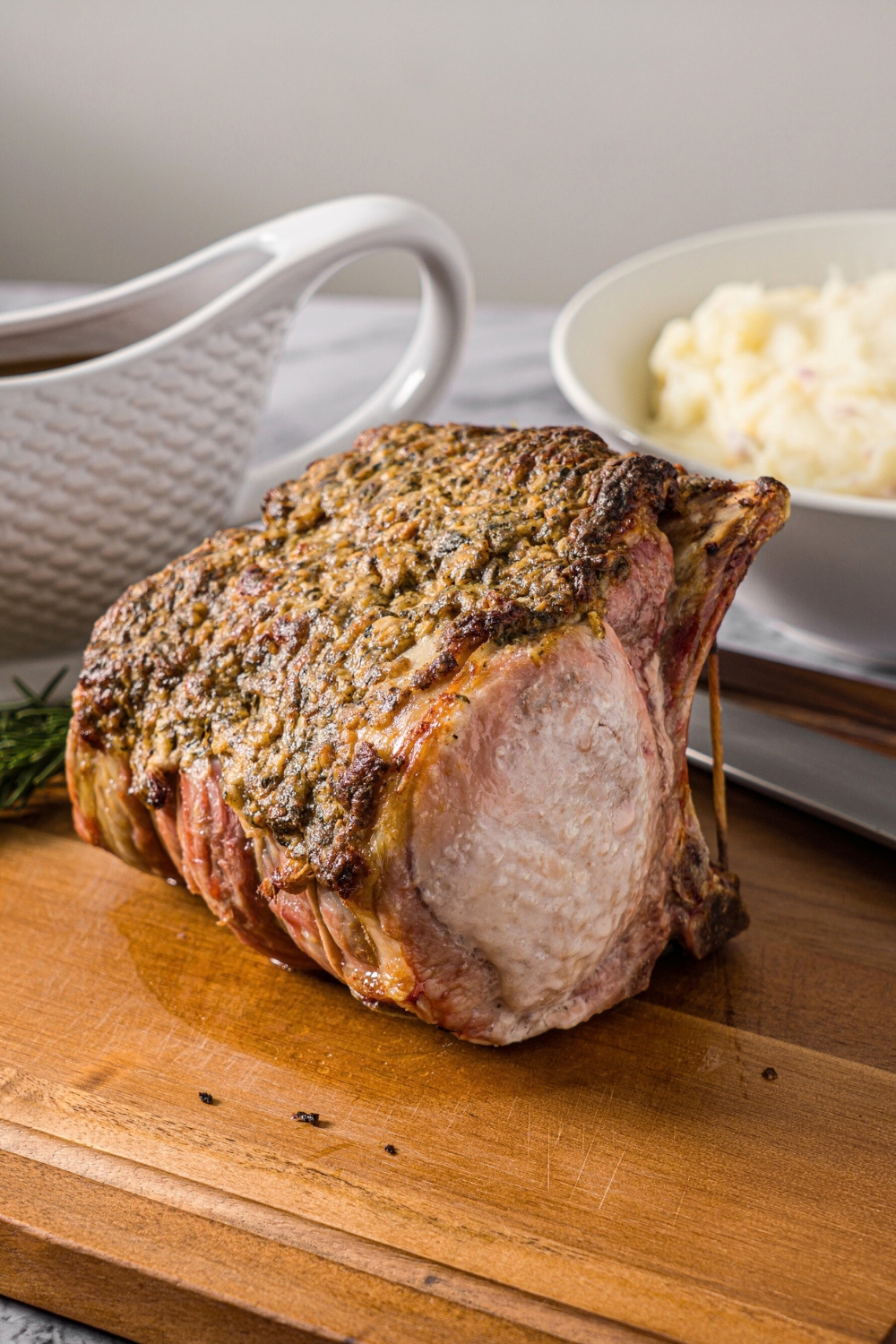
Table of Contents
What Is a Rack of Pork?
A rack of pork is basically the pork version of a rib roast, cut with the rib bones still attached. It roasts beautifully, slices into impressive rib chops for serving, and looks like a showstopper on the table without needing a fancy technique.
Why You'll Love This Pork Rib Roast Recipe
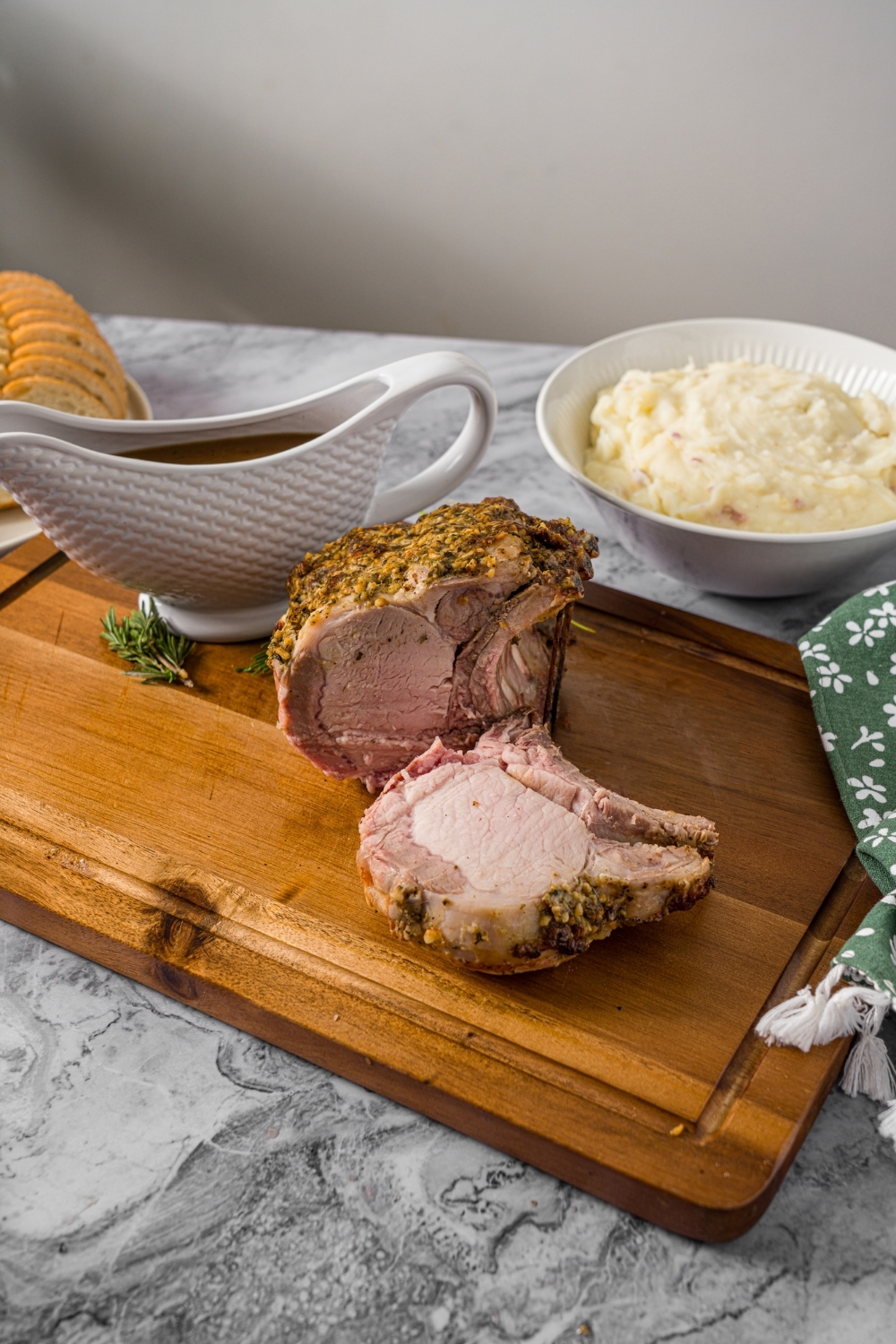
This rack of pork, also known as a pork rib roast, is an inexpensive, easy, yet impressive meal to make if you're hosting. The brine does the heavy lifting in this recipe. It keeps the pork tender, juicy, and well-seasoned so you’re not relying on the crust alone for flavor. Then the Dijon-herb-garlic coating adds that bold, savory finish that makes it taste like you put in way more effort than you actually did.
It’s also the perfect special occasion dinner that still works any time of year. Make it for Christmas or Easter, serve it with roasted potatoes and veggies, or slice leftovers thin for sandwiches the next day (it’s incredible cold, too).
And this recipe is built for reliable results. The brine helps prevent the number one pork roast problem: dryness. The crust adds big flavor without being fussy, and cooking to the right internal temperature keeps it tender and sliceable instead of overcooked.
Ingredients You'll Need
For the Brine:
- 2.5 pounds rack of pork (pork rib roast)
- 4 cups water (room temp or slightly cool)
- 4 tablespoons kosher salt
- 1 tablespoon brown sugar
- 1 to 2 sprigs fresh rosemary
- 1 to 2 sprigs fresh thyme
- 1 tablespoon peppercorns
- 1 garlic clove, halved
- 1 bay leaf
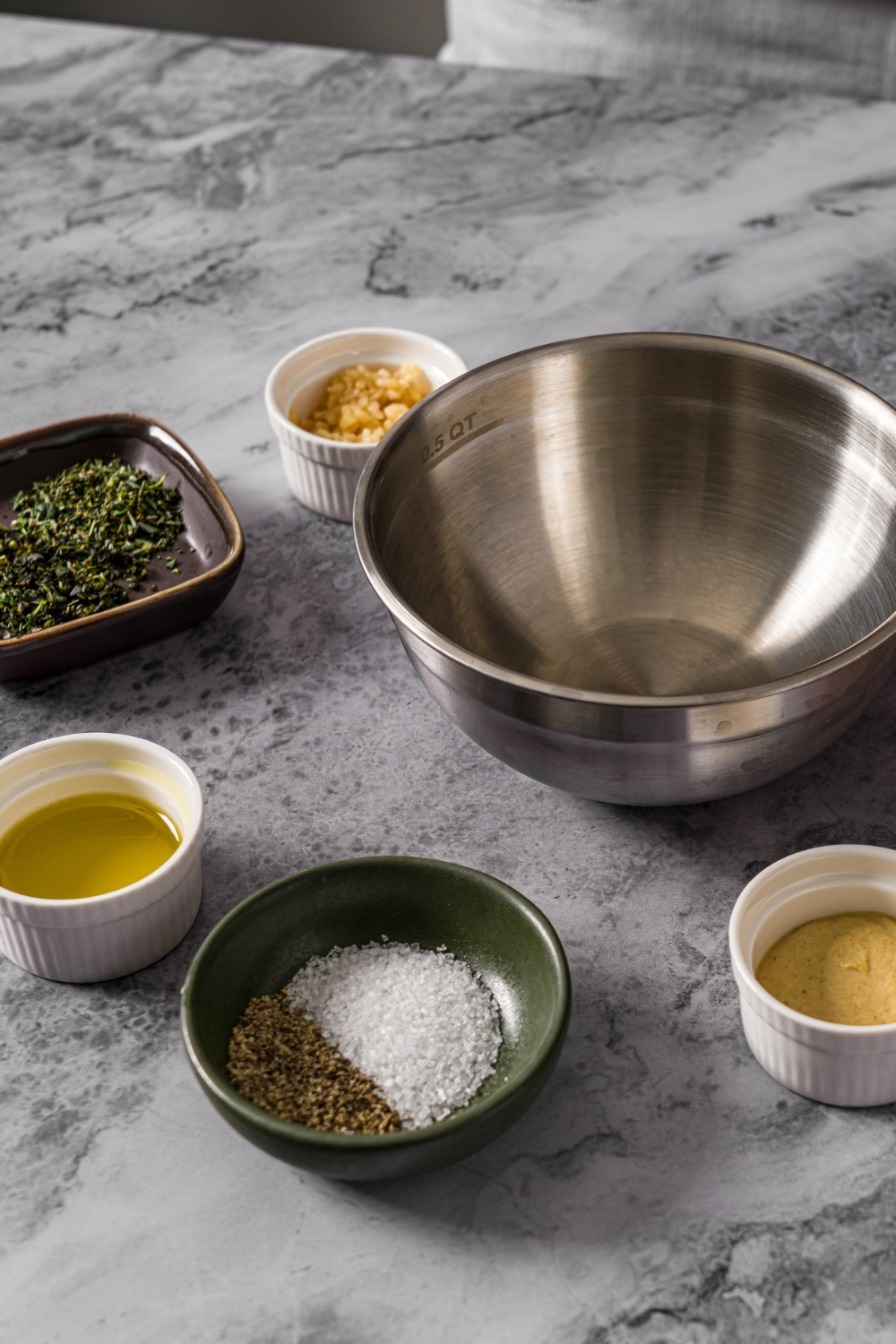
For the Garlic Herb Crust:
- 1 tablespoon olive oil
- ½ tablespoon Dijon mustard
- 2 garlic cloves, minced
- 1 teaspoon kosher salt
- ½ teaspoon black pepper
- 1 teaspoon fresh thyme
- 2 teaspoons fresh rosemary
Ingredient Notes That Make a Difference
- Kosher salt: Use kosher salt for brining. Different salts measure differently, and kosher is the most reliable for this style of brine.
- Brown sugar: Helps balance the salt and encourages nicer browning during roasting. Don't skip it!
- Fresh herbs: Rosemary and thyme bring the classic roast flavor. Fresh is best here, especially for the crust.
- Dijon mustard: Adds tang and helps the herb crust cling to the fat cap. Use a high-quality Dijon.
How to Cook Rack of Pork
Step 1: Make the brine
In a large glass or stainless steel bowl, add water, kosher salt, brown sugar, rosemary, thyme, peppercorns, garlic, and bay leaf. Stir until salt and sugar dissolve. Add the rack of pork. Cover and refrigerate 4-5 hours.
Step 2: Preheat and prep the pan
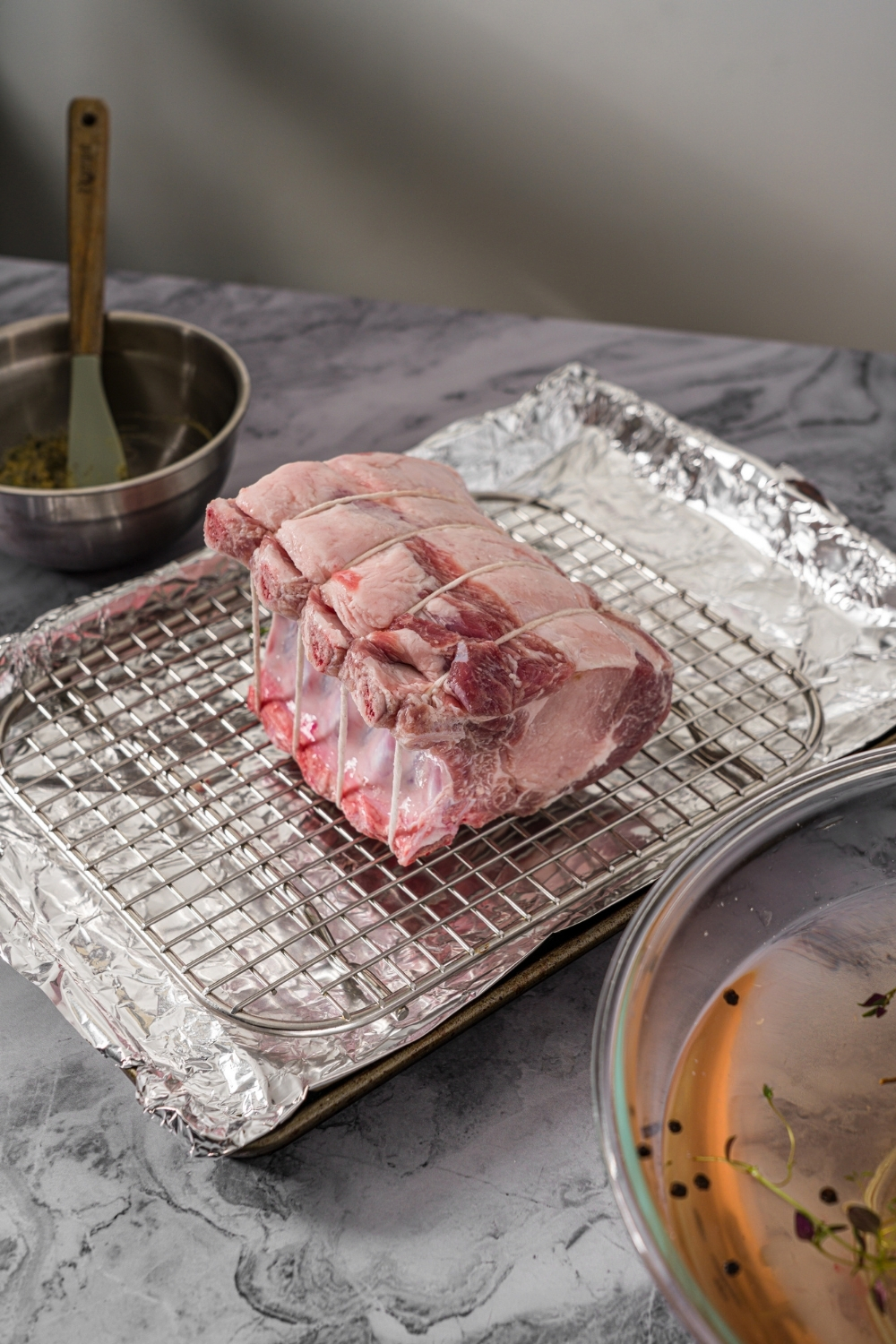
Preheat your oven to 350°F. Line a roasting pan with foil and set a wire rack inside it. This keeps heat circulating, so the roast cooks evenly.
Step 3: Dry the pork
Remove the pork from the brine and pat it completely dry. This helps the crust stick and improves browning.
Step 4: Make the herb crust
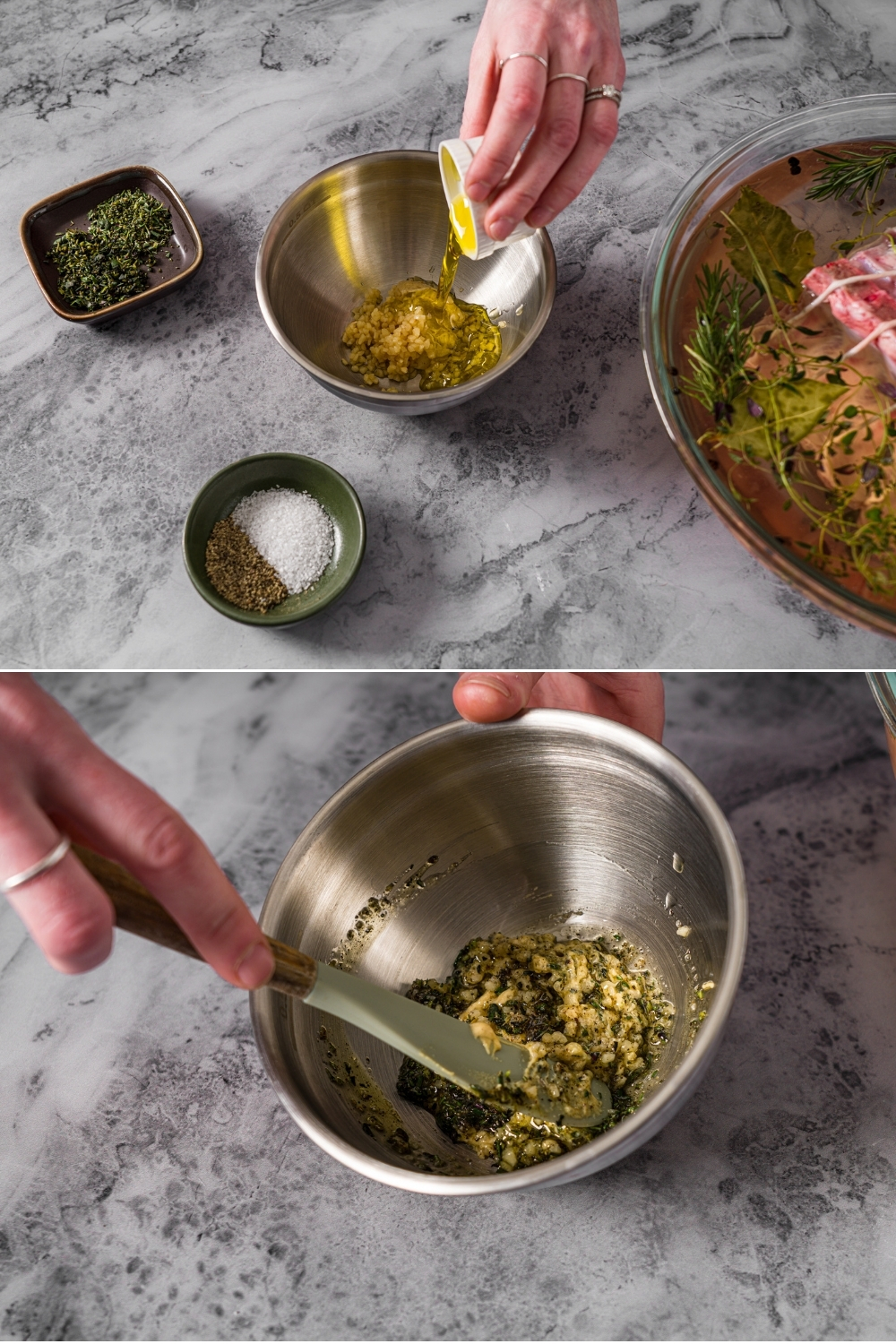
In a small bowl, mix olive oil, Dijon mustard, minced garlic, salt, pepper, thyme, and rosemary. Spread the mixture over the fat side of the rack of pork.
Step 5: Roast the Pork
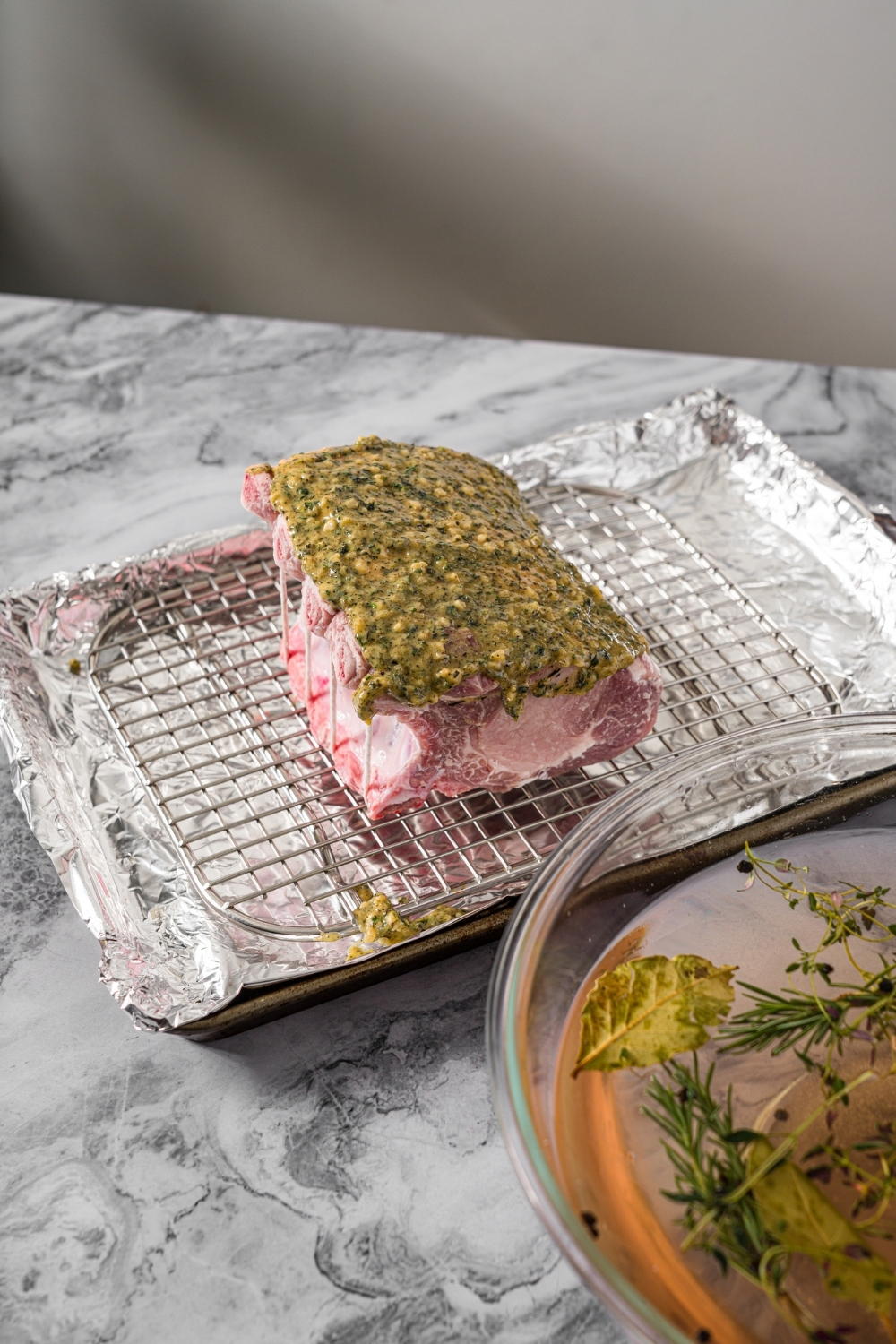
Place the pork fat side up on the wire rack. Roast on the middle oven rack for about 30-35 minutes per pound, or until the internal temperature reaches 140°F. Carryover cooking will bring it to 145°F-150°F as it rests.
Step 6: Rest
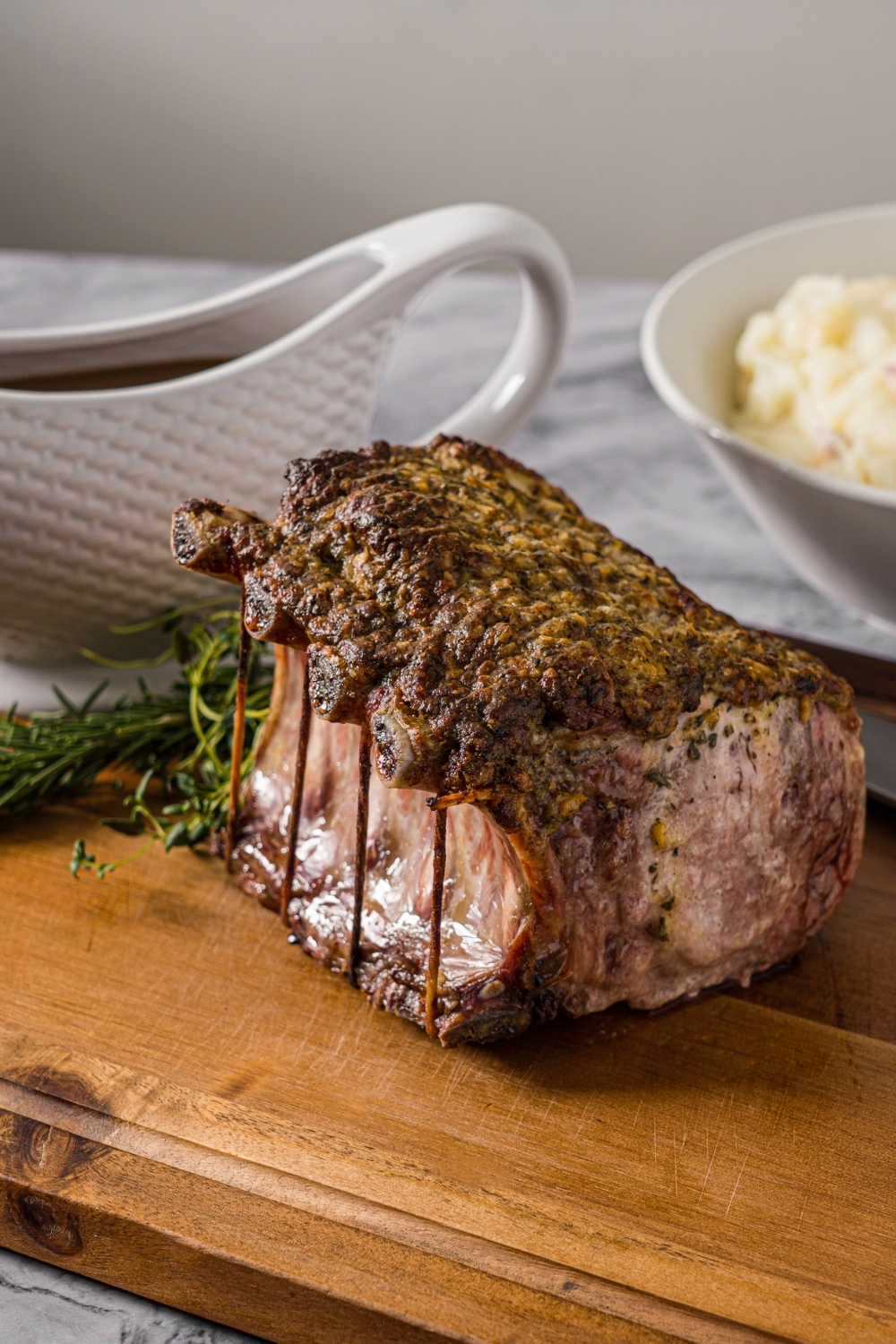
Transfer the pork to a cutting board and loosely tent with foil. Let it rest for 10-15 minutes. This keeps it juicy and makes slicing cleaner.
Step 7: Slice and Serve
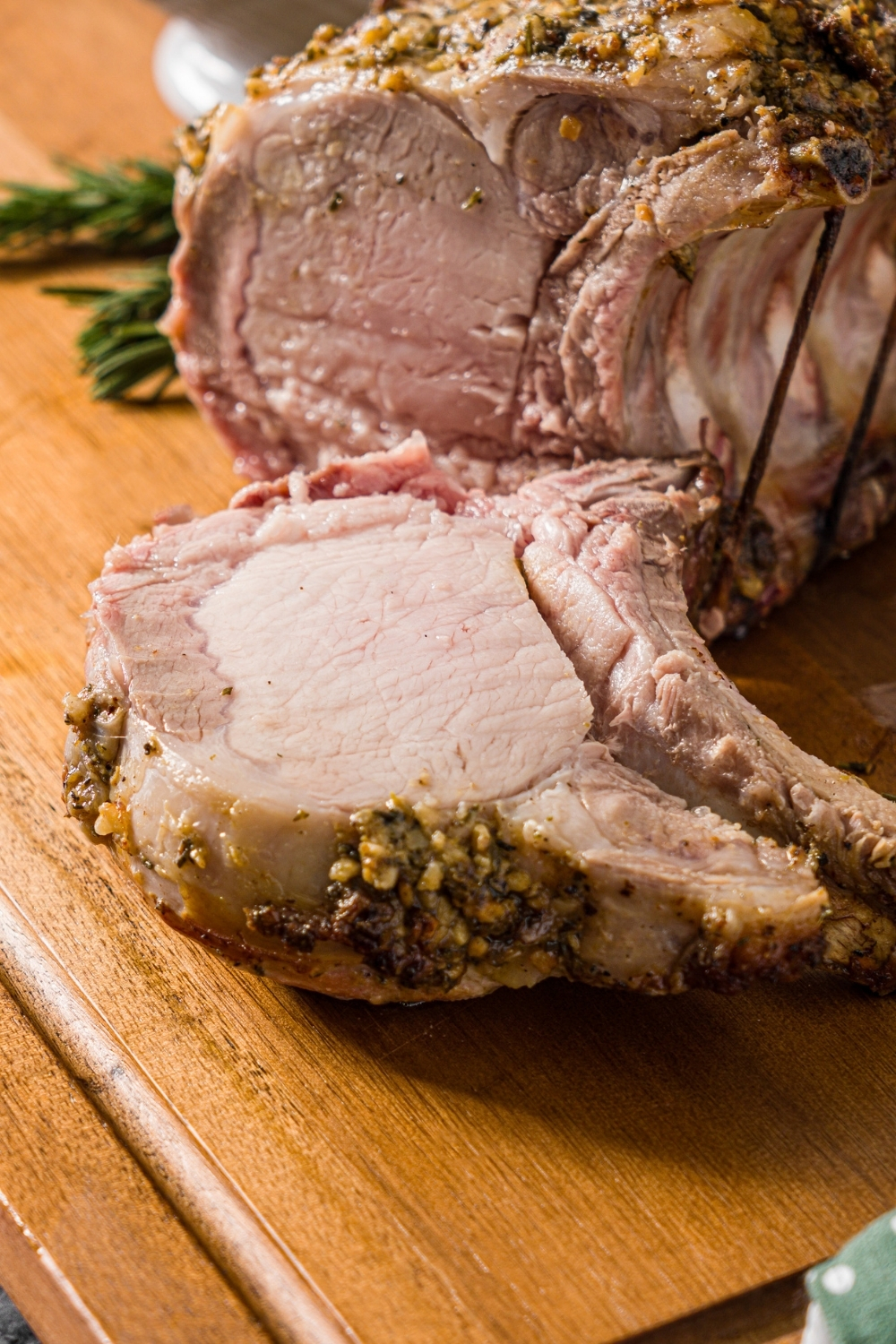
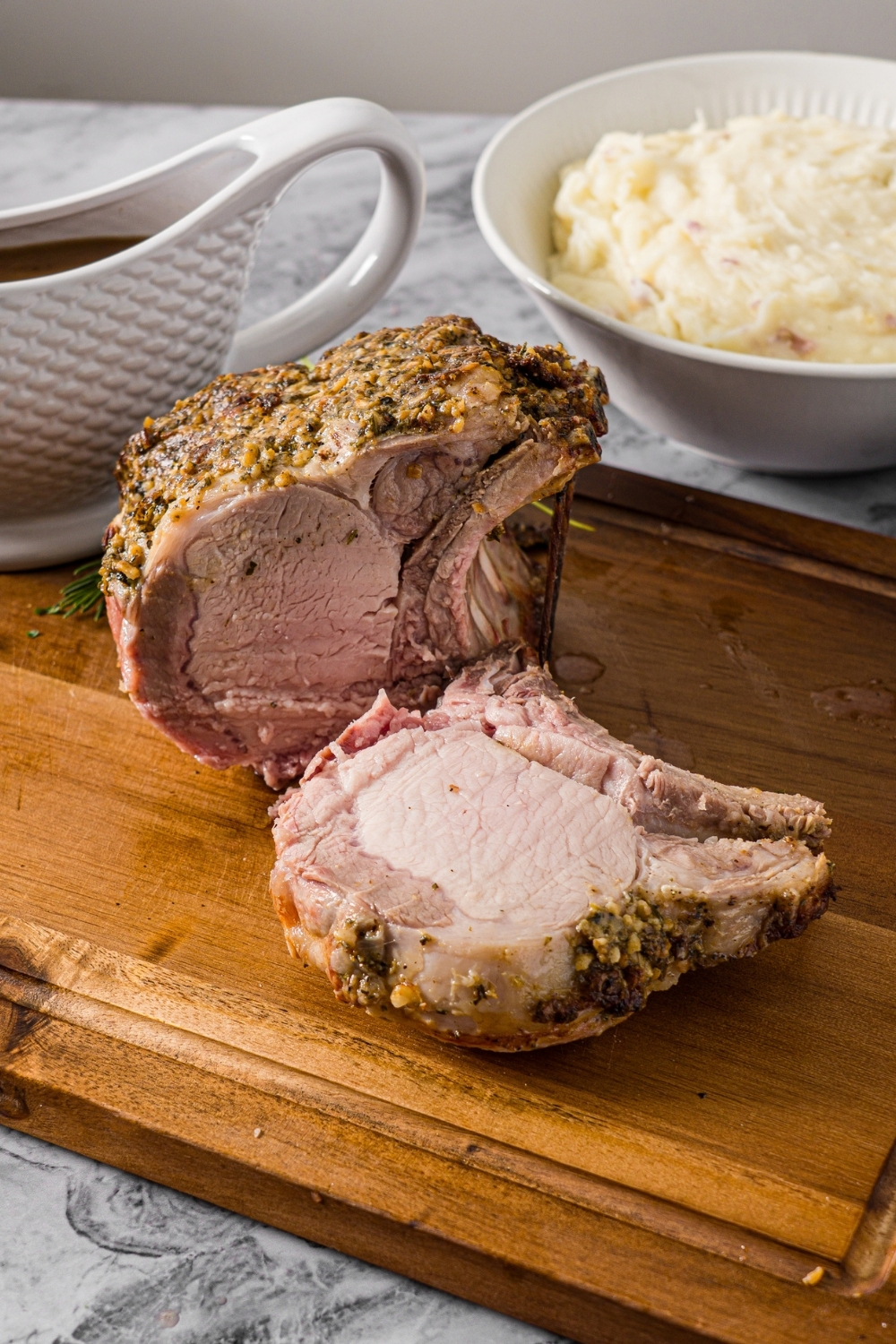
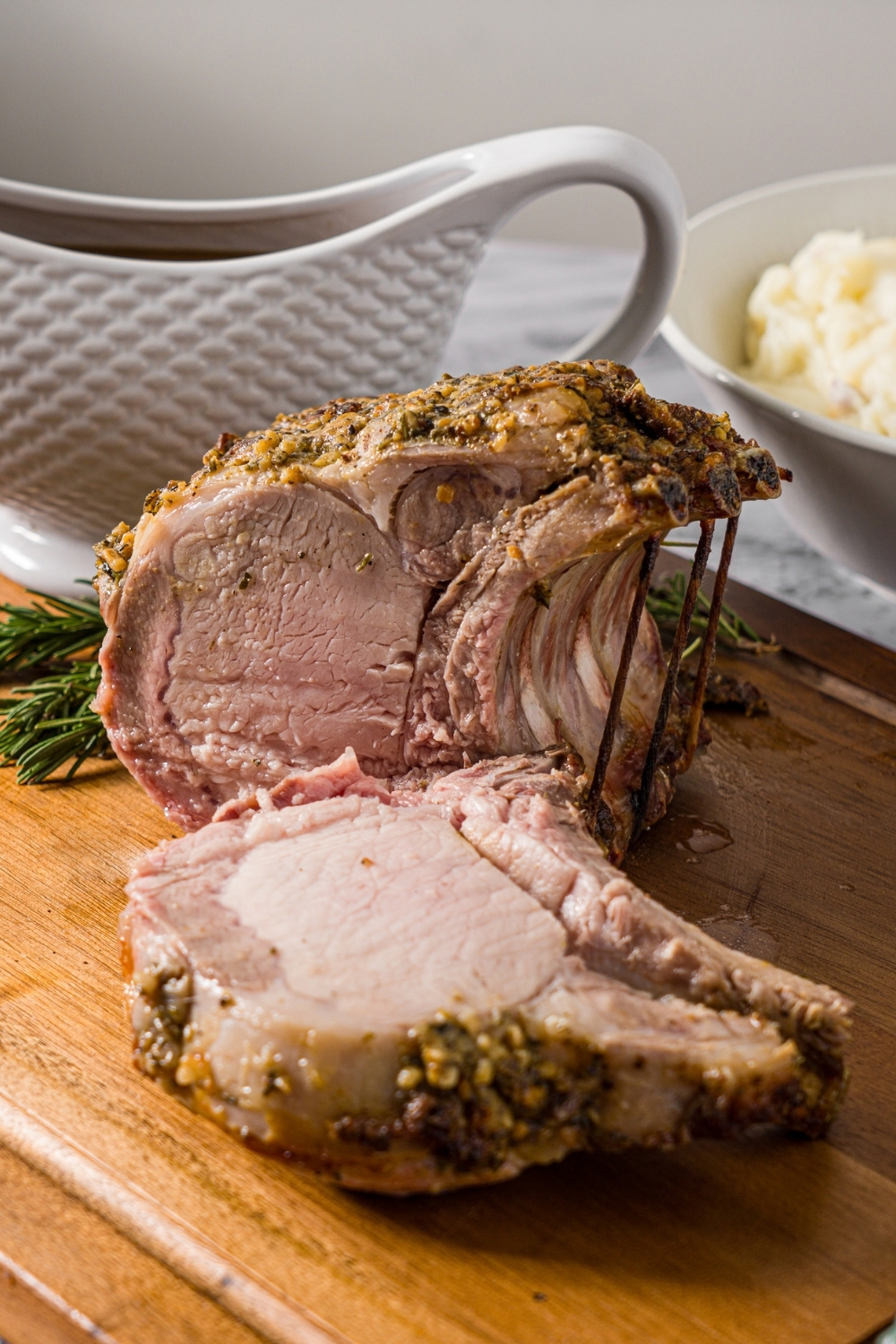
Use a sharp knife. Slice off the bones together first, then slice between ribs to separate. To slice the roast itself, place the pork cut side down and slice into portions. Serve warm with mashed potatoes and gravy for a complete holiday meal.
Pro Tips for a Juicy Pork Rib Roast
- Don’t skip the brine: Pork rib roasts can dry out fast, especially if the rack is on the leaner side. A 4-5 hour brine seasons the meat all the way through and helps it stay juicy in the oven, not just flavorful on the surface.
- Pat the pork very dry before adding the crust: Wet pork won’t brown well and the Dijon-herb crust can slide right off. After brining, blot it thoroughly with paper towels so the surface is dry and tacky, that’s how you get a crust that actually sticks and roasts up nicely.
- Chop your herbs fine: Rosemary and thyme are amazing here, but big pieces can make the crust uneven and can fall off when you slice. Finely chopped herbs spread better and give you flavor in every bite.
- Use a thermometer and trust the temperature, not the clock: The “30–35 minutes per pound” is a guide, but ovens and roast thickness vary. Pull the pork at 140°F, then let carryover cooking bring it to 145–150°F. That’s the difference between tender and dry.
- Resting is mandatory: Give the meat 10-15 minutes to rest, loosely tented with foil. Slice too soon, and the juices run out onto the board instead of staying in the pork.
- Roast fat-side up on a rack: Keeping the pork elevated helps it cook evenly and keeps the bottom from steaming. Fat-side up lets the fat baste the meat as it roasts.
- Slice it the easy way: First, cut off the bones in one piece using a sharp knife. Then slice between the ribs to make chops, and slice the remaining roast across the grain for tender slices.
What to Serve With Rack of Pork
This pork rib roast is rich and savory, so it pairs best with classic sides that have a holiday dinner feel without a ton of extra work.
- Potatoes: Roasted potatoes are perfect for soaking up juices. My favorite side is creamy mashed potatoes with pork gravy for a full-on comfort food meal.
- Green veggies: Green beans, roasted asparagus, or roasted brussels sprouts balance the richness and keep the plate feeling fresh.
- Roasted carrots: They add a little natural sweetness and look great on the plate next to the herb crust.
- Something sweet on the side: Apple sauce or cranberry sauce is a classic pairing because sweet and pork always works. Even a simple apple chutney-style topping is amazing here.
- Simple salad: A light salad with a tangy vinaigrette, like this iceberg lettuce salad, is a great fresh contrast that keeps the meal from feeling too heavy.
Pork Roast Storage and Reheating Tips
- Refrigerator: Store leftover rack of pork in an airtight container in the fridge for up to 4 days. For the best moisture, keep it in larger slices instead of fully chopped.
- Reheating (keep it juicy): Reheat gently at 300°F, covered with foil, until warmed through. Add a small splash of broth (or a little pan juice if you have it) to the dish so the pork steams lightly instead of drying out.
- Freezing: Freeze sliced pork in an airtight container or freezer bag for up to 2 months. Thaw overnight in the fridge, then reheat low and slow (covered) for the best texture.
Rack of Pork FAQs
How long do you cook a rack of pork at 350°F?
A good guideline is 30-35 minutes per pound at 350°F, but the most reliable way is using a meat thermometer. Roast until the thickest part hits about 140°F, then rest so carryover cooking brings it to 145–150°F.
What temperature should a pork rib roast be cooked to?
For the juiciest result, pull it at around 140°F and let it rest 10-15 minutes. The final temperature should land in the 145–150°F range. Resting is what keeps it tender and sliceable.
How long do you brine a rack of pork?
4-5 hours is ideal for a roast around 2.5 pounds. Brining it for longer can make the outer layer taste too salty, especially with a smaller rack.
Do I have to use a wire rack to roast pork?
It’s strongly recommended. A wire rack helps hot air circulate, so the pork cooks more evenly and browns better. If you don’t have one, you can roast directly in the pan, but the bottom may be softer from sitting in juices.
Why is my pork rib roast dry?
Dry pork is almost always from overcooking or slicing too soon. Use a meat thermometer, pull it out of the oven before it goes past the target temperature, and rest it for 10-15 minutes before slicing so the juices stay in the meat.
Can I use dried herbs instead of fresh?
Yes, but fresh herbs give the best crust flavor. If you’re using dried, use about ⅓ the amount since dried herbs are more concentrated.
How do you carve a rack of pork?
For the cleanest slices, first cut the rib bones off in one piece with a sharp knife. Then slice between the ribs to make chops, and slice the remaining roast across the grain for tender pieces.
My Final Thoughts on This Recipe
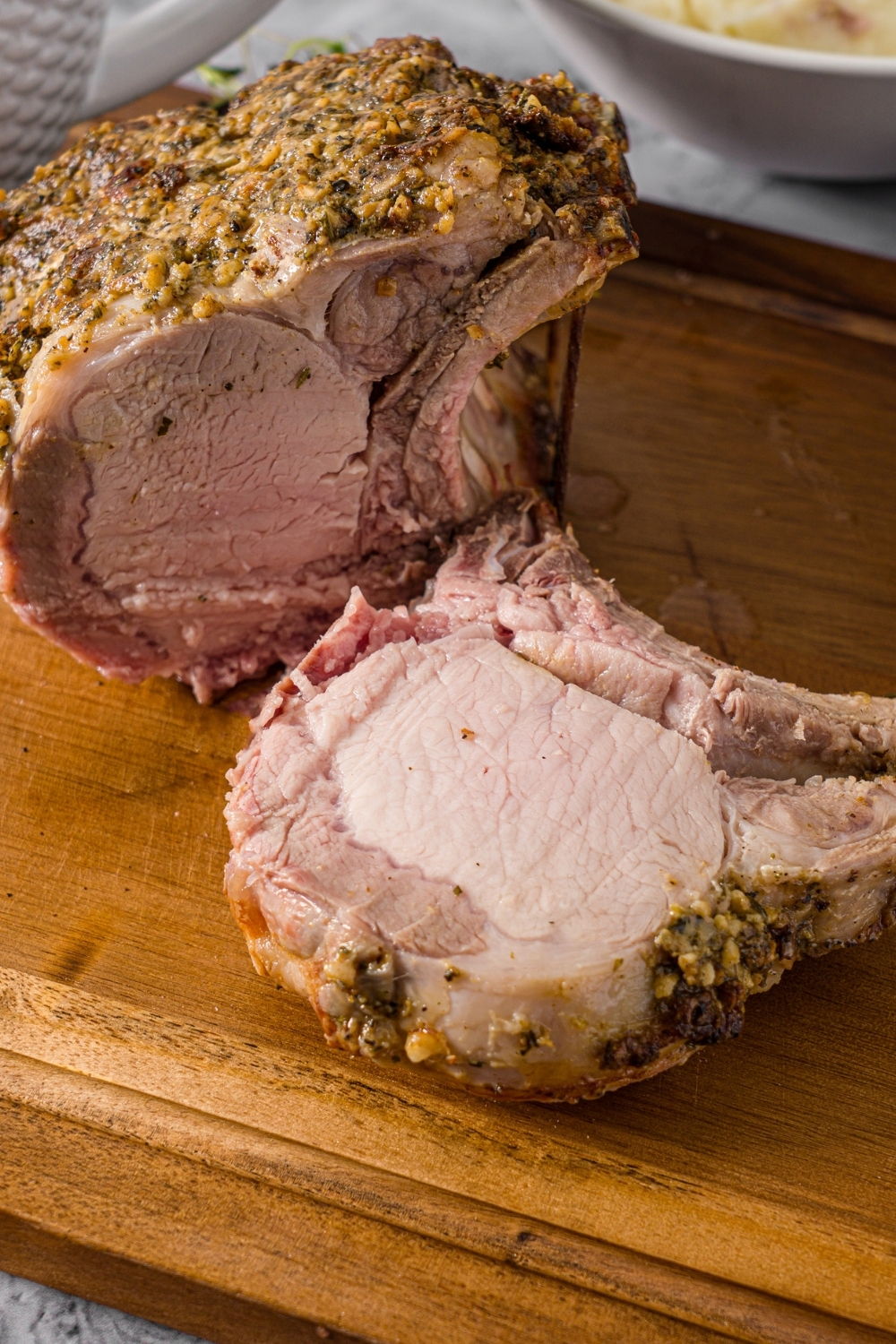
This rack of pork is juicy, flavorful, and surprisingly easy. The brine keeps it tender, the Dijon herb crust adds big roasted flavor, and the temperature-guided method prevents the most common mistake, overcooking. Let it rest, slice clean, and you’ll have a pork rib roast that looks impressive and tastes even better. Try this for your next hosting meal, and let me know what everyone thought by leaving a review and comment below.
Pork Recipes to Try Next
- Glazed spiral ham
- Baked ham shank
- Pork chop casserole
- Boneless pork ribs
- French onion pork chops
- Baked pork chops and rice
Rack of Pork (Juicy Pork Rib Roast Recipe)

This rack of pork is brined so the meat stays juicy and seasoned all the way through, then roasted with a Dijon-herb-garlic crust that gives you a flavorful, savory exterior and makes the whole kitchen smell unreal. The end result is tender, sliceable pork with crispy edges and a true holiday-roast flavor, even if you’re making it on a random weekend.
Ingredients
Brine:
- 2.5 pounds rack of pork (pork rib roast)
- 4 cups water (room temp or slightly cool)
- 4 tablespoons kosher salt
- 1 tablespoon brown sugar
- 1 to 2 sprigs fresh rosemary
- 1 to 2 sprigs fresh thyme
- 1 tablespoon peppercorns
- 1 garlic clove, halved
- 1 bay leaf
Garlic Herb Crust:
- 1 tablespoon olive oil
- ½ tablespoon Dijon mustard
- 2 garlic cloves, minced
- 1 teaspoon kosher salt
- ½ teaspoon black pepper
- 1 teaspoon fresh thyme
- 2 teaspoons fresh rosemary
Instructions
- Add all brine solution ingredients to a large glass or stainless steel bowl. Stir until salt and sugar have dissolved. Add the pork roast to the brine. Cover for 4-5 hours and chill in the fridge.
- Heat oven to 350°F. Line a roasting pan with aluminum foil and with a wire rack.
- Remove the pork from the brine. Pat it dry before spreading on the crust mixture.
- In a small bowl, mix together olive oil, mustard, garlic, salt, rosemary, black pepper, and thyme. Spread over the fat side of the rack of pork.
- Place the meat, fat side up, on the wire rack in the pan.
- Place pork on the middle rack of the oven. Roast for about 30-35 minutes per pound at 350°F. The temperature should reach 140°F. Carry over cooking will bring it to 145-150°F as it rests.
- Place pork on a cutting board and loosely cover with foil. Rest the meat for 10-15 minutes.
- To slice, use a sharp knife to slice off all the bones together. Then slice between ribs to separate them. Place roasted pork cut side down and slice roast.
Nutrition Information:
Yield:
4Serving Size:
1Amount Per Serving: Calories: 739Total Fat: 44gSaturated Fat: 15gUnsaturated Fat: 29gCholesterol: 250mgSodium: 6358mgCarbohydrates: 9gFiber: 3gSugar: 4gProtein: 75g
Javi
Delicious pork recipe. One of my favorites and I've tried a lot.
Brendan Cunningham
Glad you liked it Javi!