


This Italian chicken pastina soup is the cozy, nourishing bowl you make when you need something warm and comforting fast. It’s a simple chicken soup with tender veggies, rotisserie chicken, tiny pastina, and a Parmesan rind that adds that slow-simmered Italian flavor. Blend part of the soup for a silky broth, then finish with Parmesan and parsley for the perfect comforting dinner or feel-better meal.
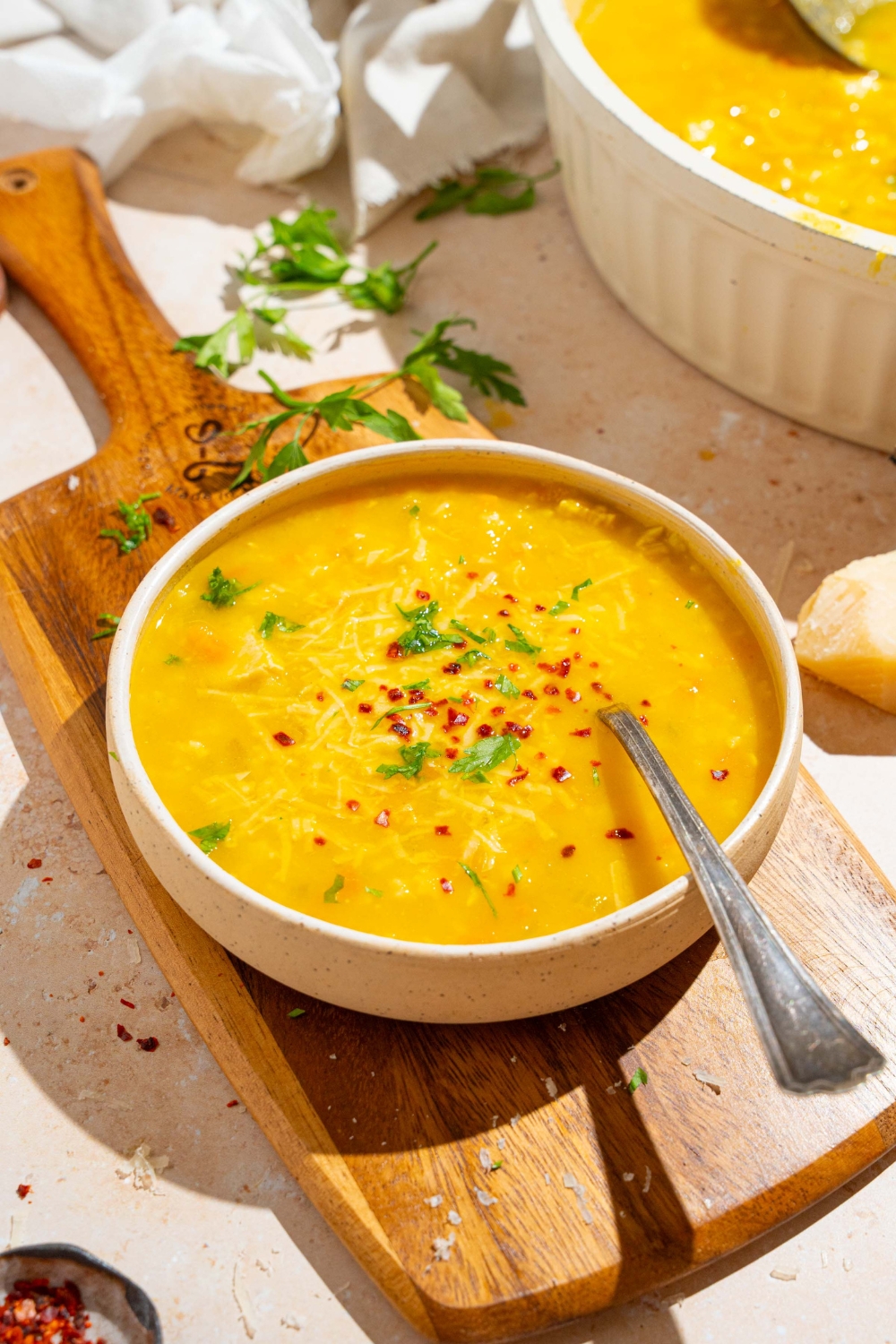
Table of Contents
Why You’ll Love This Italian Chicken Pastina Soup Recipe
Chicken pastina soup, also called Italian penicillin soup or “Nonna’s penicillin,” is exactly what it sounds like: simple, nourishing, and somehow always hits the spot. It’s the kind of soup you crave when you want something warm and comforting, when you’re feeling run down, or when you just want a cozy dinner that tastes like it came from a real Italian kitchen.
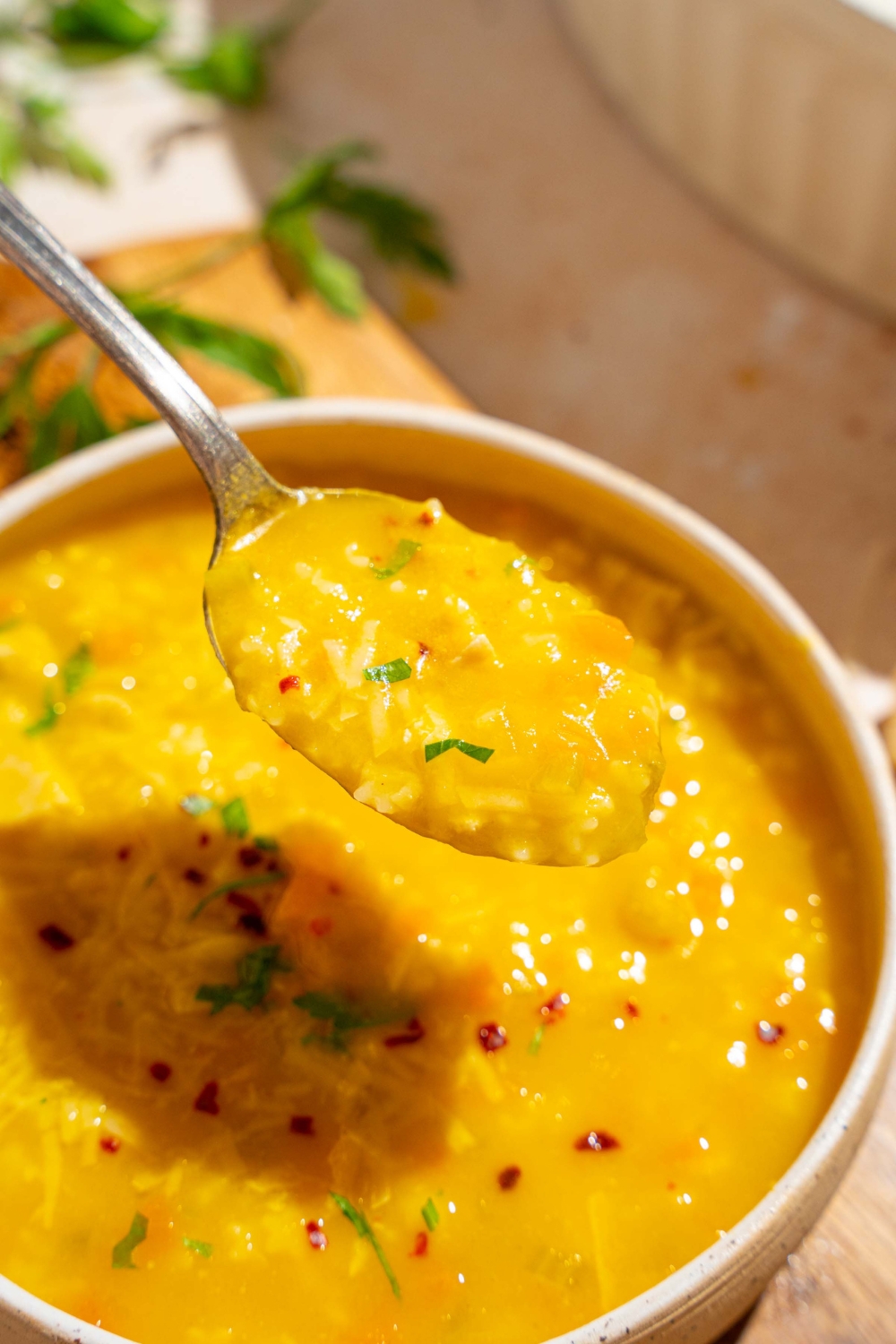
What makes this version special is the texture. Blending part of the vegetables into the broth creates a velvety base without any cream, so the soup feels rich and soothing while still tasting clean and light. Then the Parmesan rind quietly does its job in the background, adding that savory, slow-simmered depth that makes the whole pot taste like you cooked it all day.
Finish it with tiny pastina and shredded chicken, and you’ve got the ultimate comfort bowl: hearty, cozy, and ridiculously easy to make. It’s one of those recipes you’ll keep in your back pocket and make on repeat, especially once you see how good it is for such a simple pot of soup.
Chicken Pastina Soup Ingredients
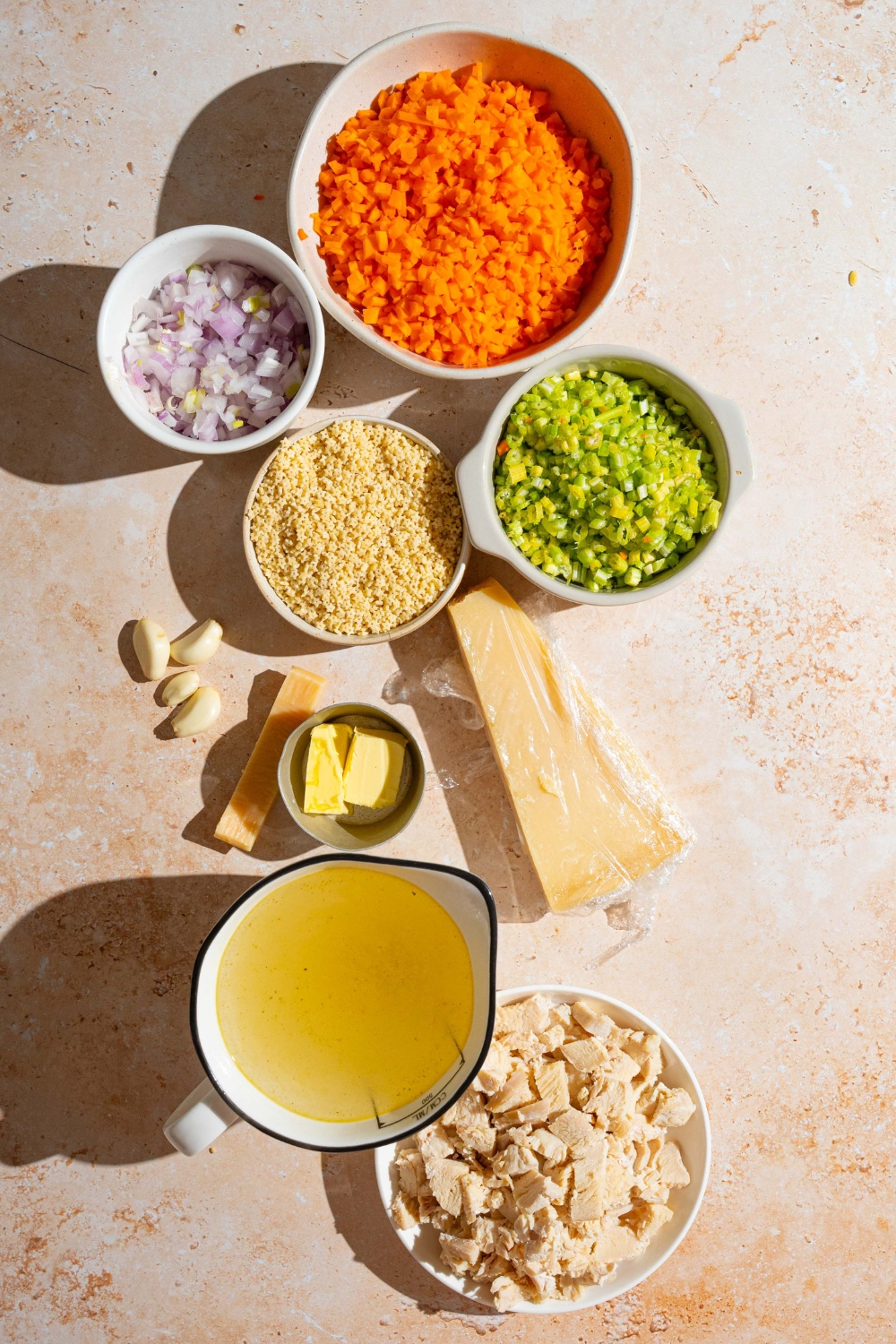
- 2 tablespoons extra virgin olive oil
- 1 tablespoon butter
- 1 large onion, finely diced
- 4 stalks celery, diced small
- 4 medium cloves garlic, minced
- 8 cups low-sodium chicken broth, plus more as needed
- 2 large carrots, finely diced
- 1 Parmesan rind (optional but recommended)
- 1 teaspoon kosher salt, plus more to taste
- ⅓ cup uncooked pastina (double if you like lots of pasta)
- 2 cups cooked chicken (rotisserie or leftover), shredded
- Grated Parmesan, for serving
- Finely chopped fresh parsley, for garnish
How to Make Italian Penicillin Soup
Step 1: Sauté the vegetables
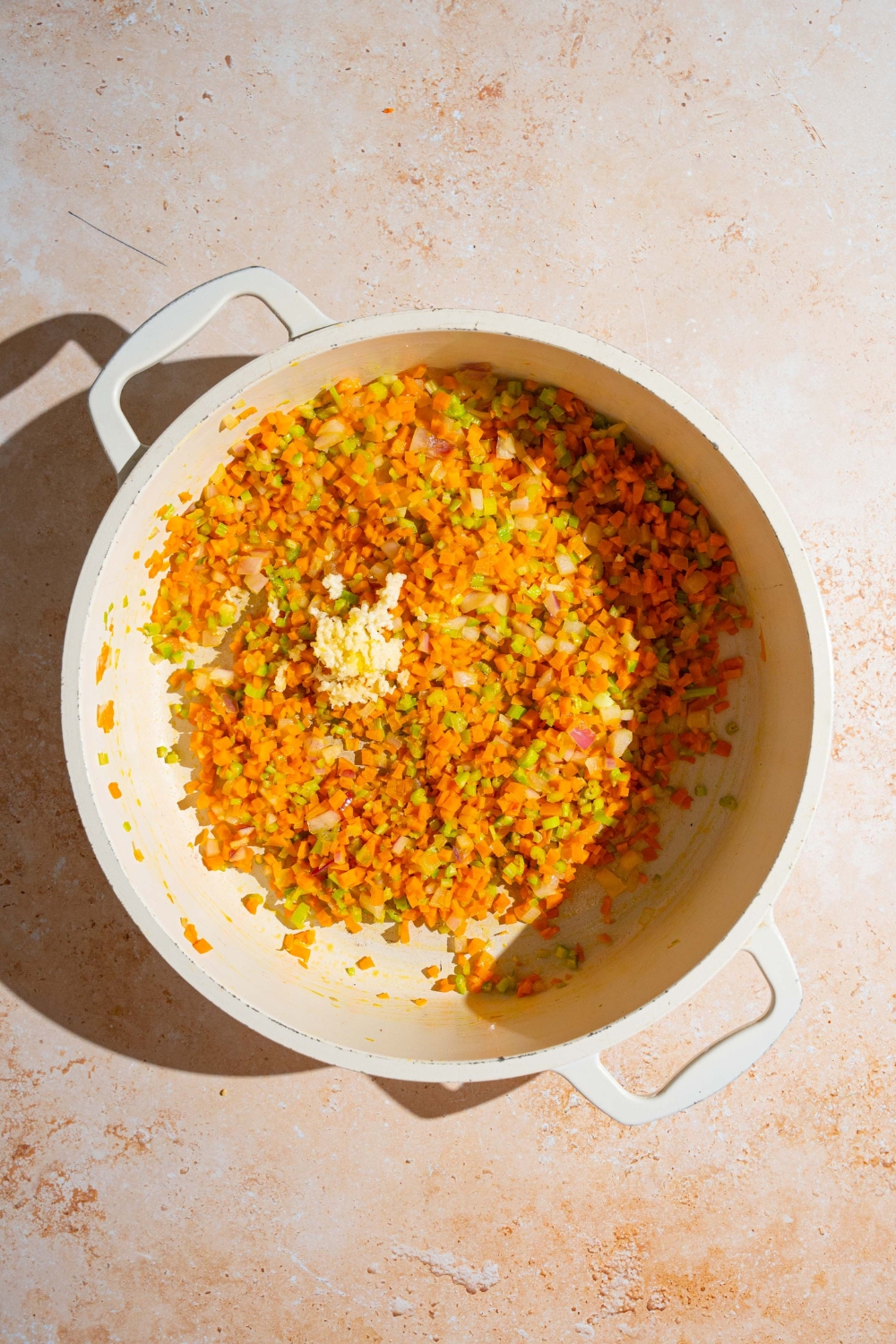
Heat a large Dutch oven or soup pot over medium heat. Add the olive oil and butter. Add the onion, carrot, and celery and cook for 4–5 minutes, stirring occasionally, until the onion is soft and translucent. Add the garlic and cook for 2 minutes, stirring to prevent it from browning.
Step 2: Simmer the soup
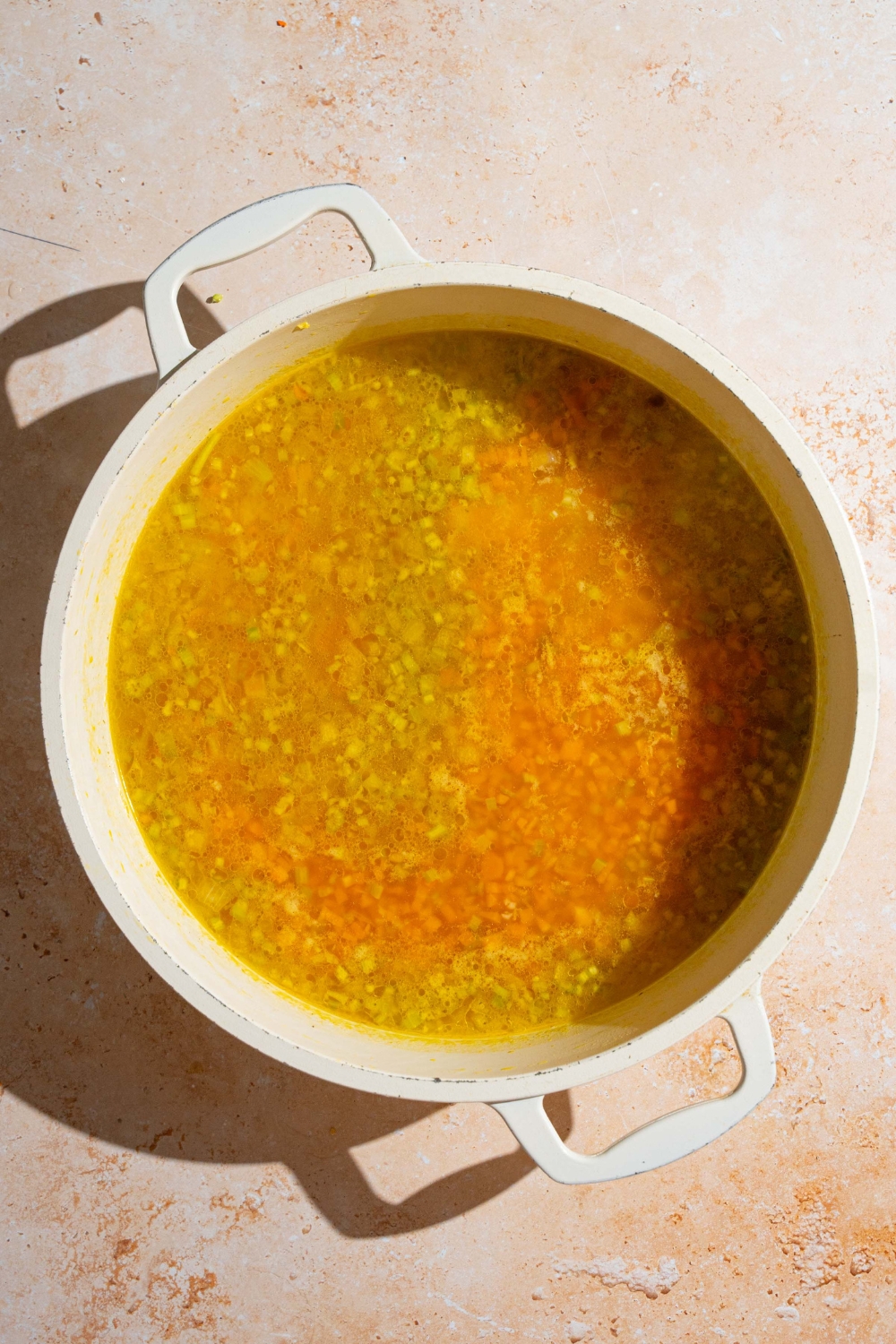
Pour in the chicken broth, add the Parmesan rind (if using), and season with salt. Bring to a boil, then reduce to a steady simmer. Cook uncovered for 20–25 minutes, until the vegetables are tender.
Step 3: Blend for a silky broth
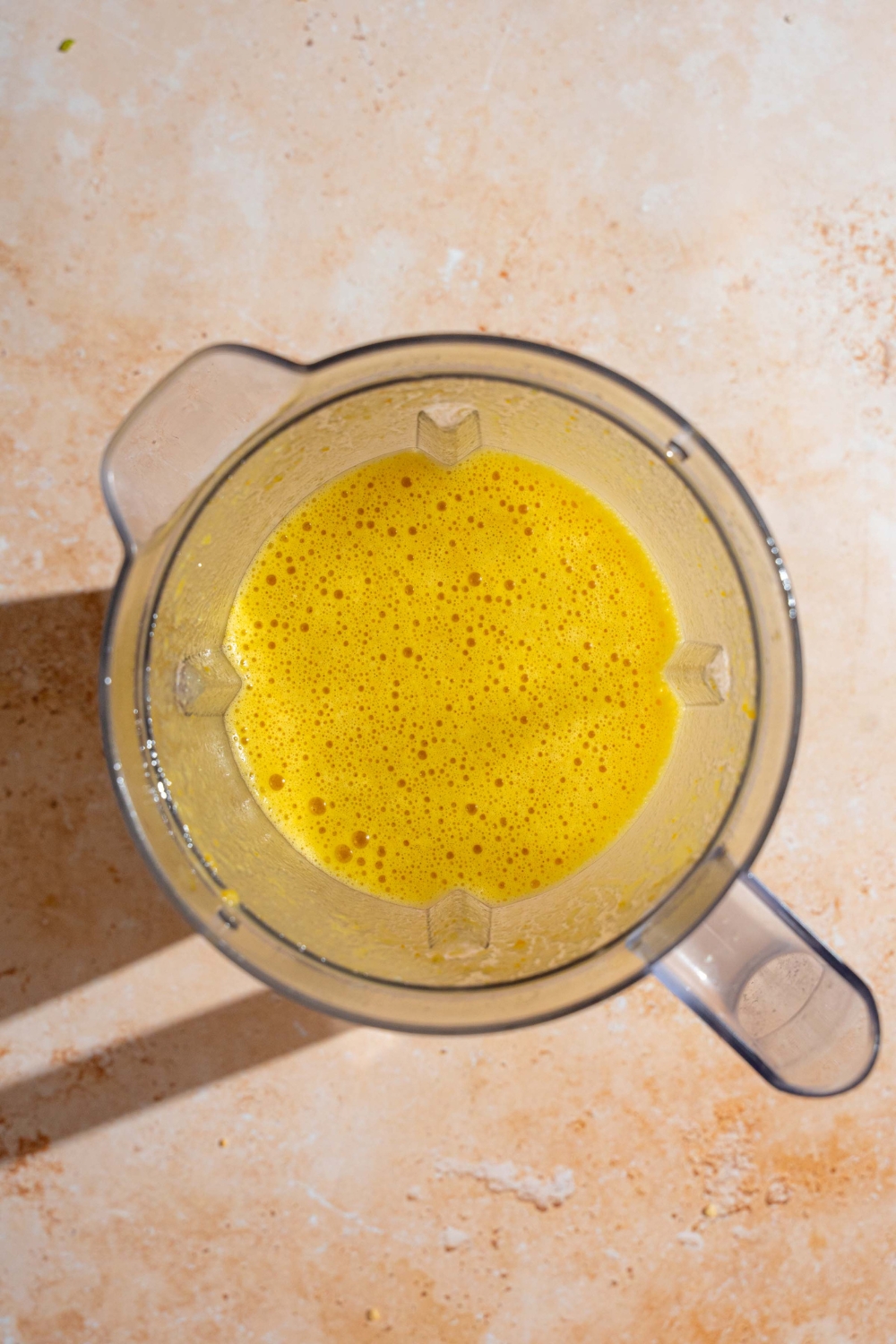
Remove and discard the Parmesan rind. Use a slotted spoon to transfer about 2 cups of the cooked vegetables to a plate and set them aside. Use an immersion blender to puree the remaining soup in the pot until smooth. If you're using a blender, let the soup cool slightly, blend in batches, and vent steam safely by removing the center cap and covering the opening with a kitchen towel.
Step 4: Cook the pastina
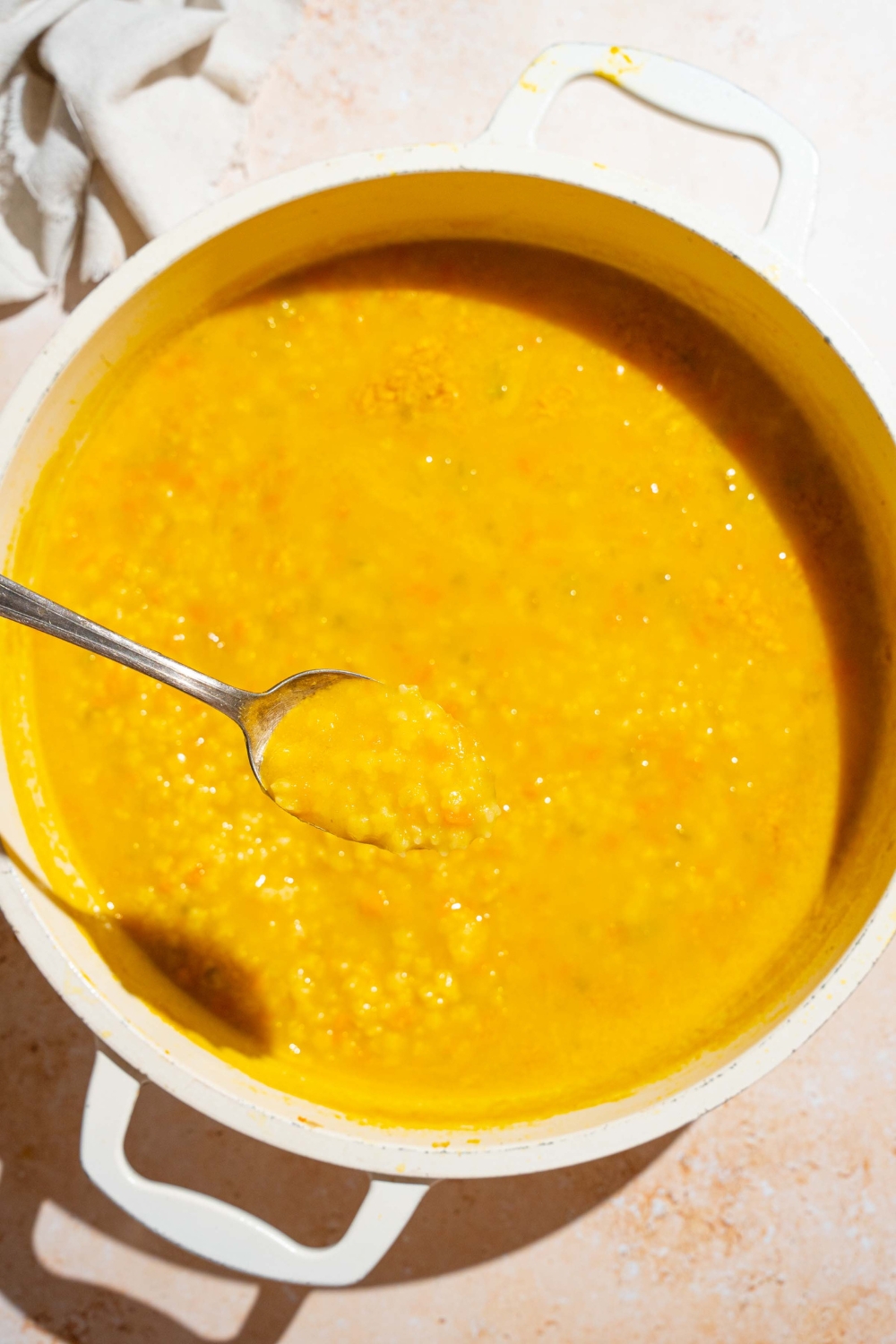
Add the pastina to the pot, bring to a boil, then reduce to a simmer. Cook uncovered for the time listed on the pastina package, stirring occasionally.
Step 5: Finish and rest
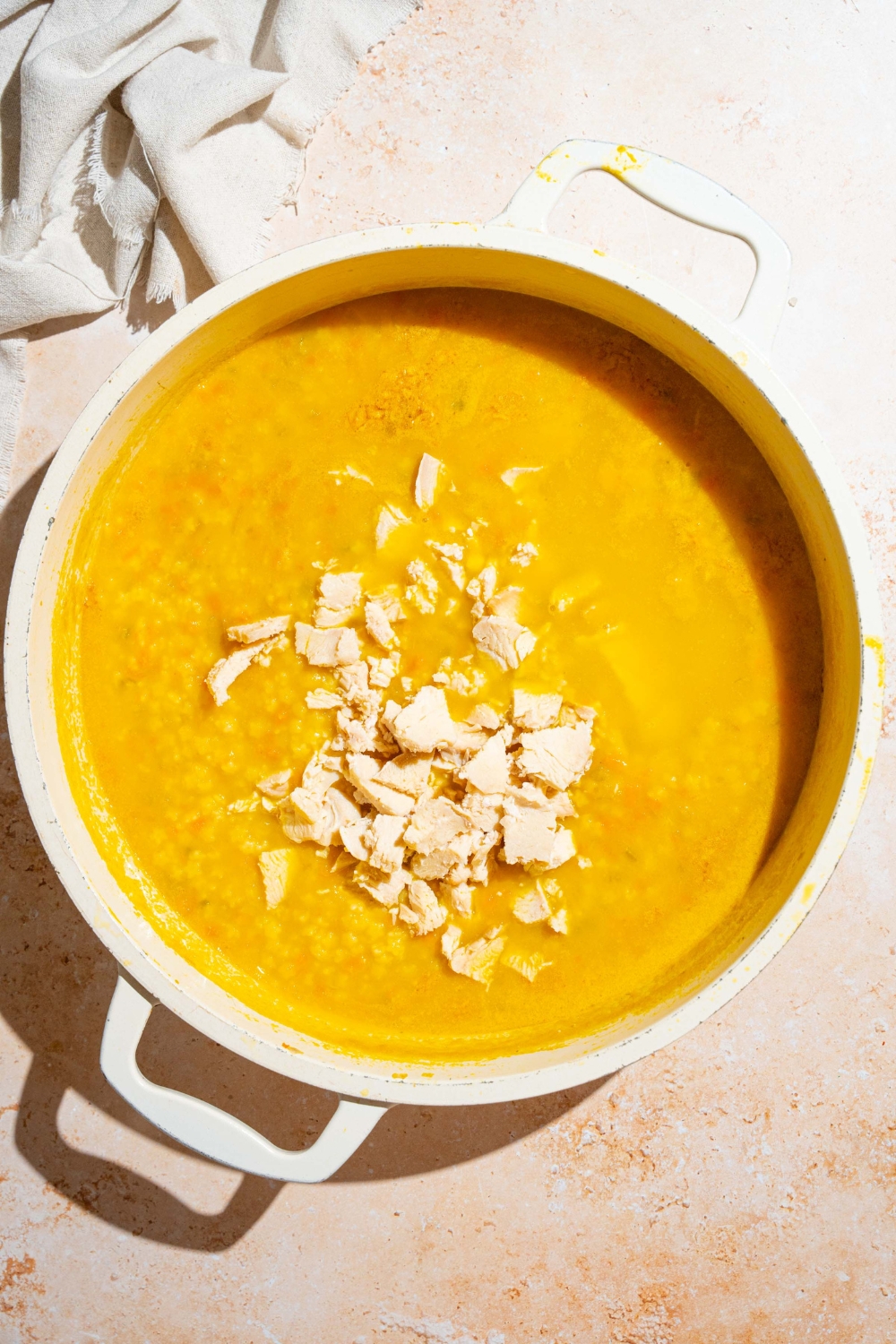
Stir in the shredded chicken and the reserved vegetables. Cover and let the soup rest for about 20 minutes to thicken slightly. Taste and adjust seasoning as needed.
Step 6: Serve
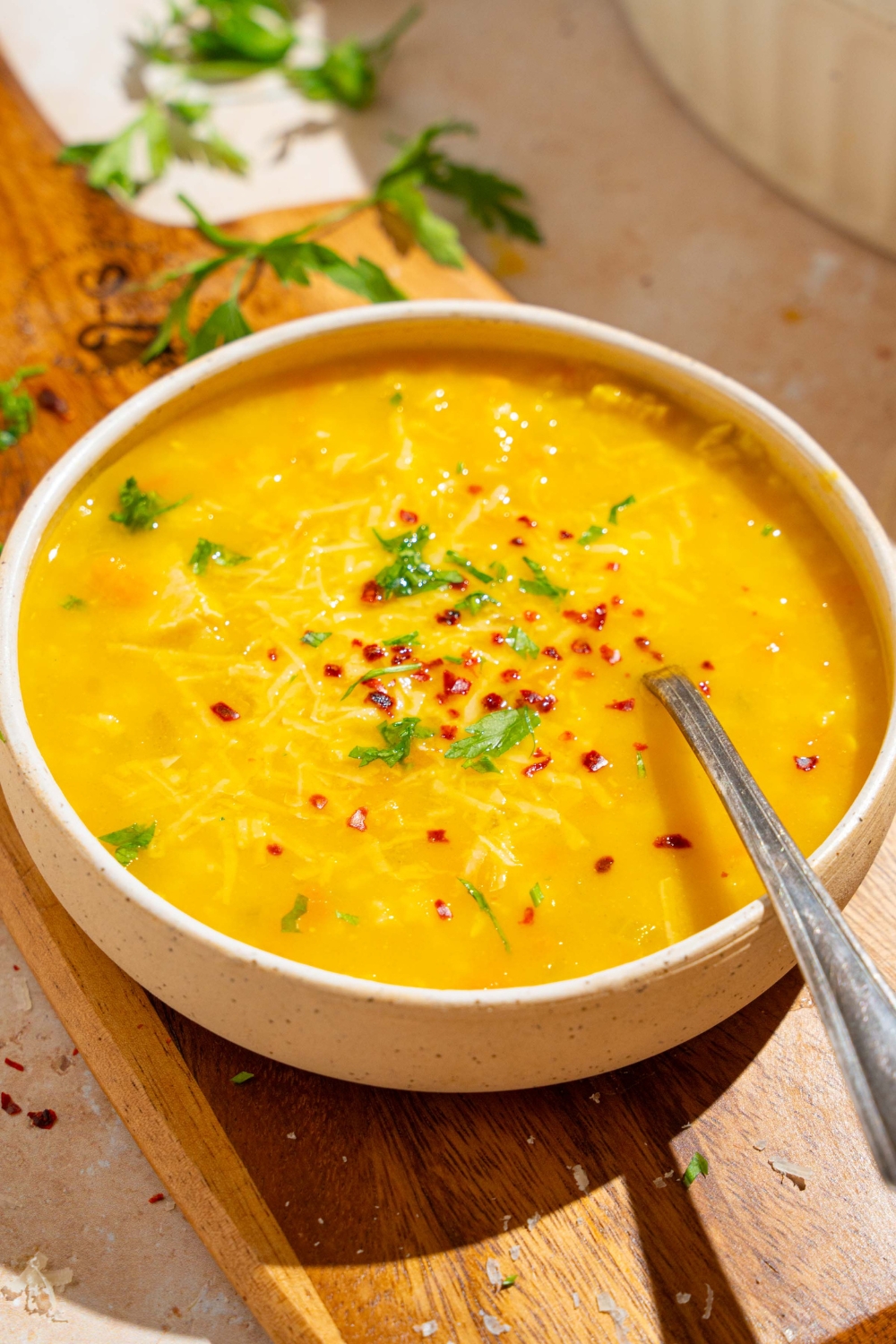
Serve the soup warm, topped with grated Parmesan and freshly chopped parsley.
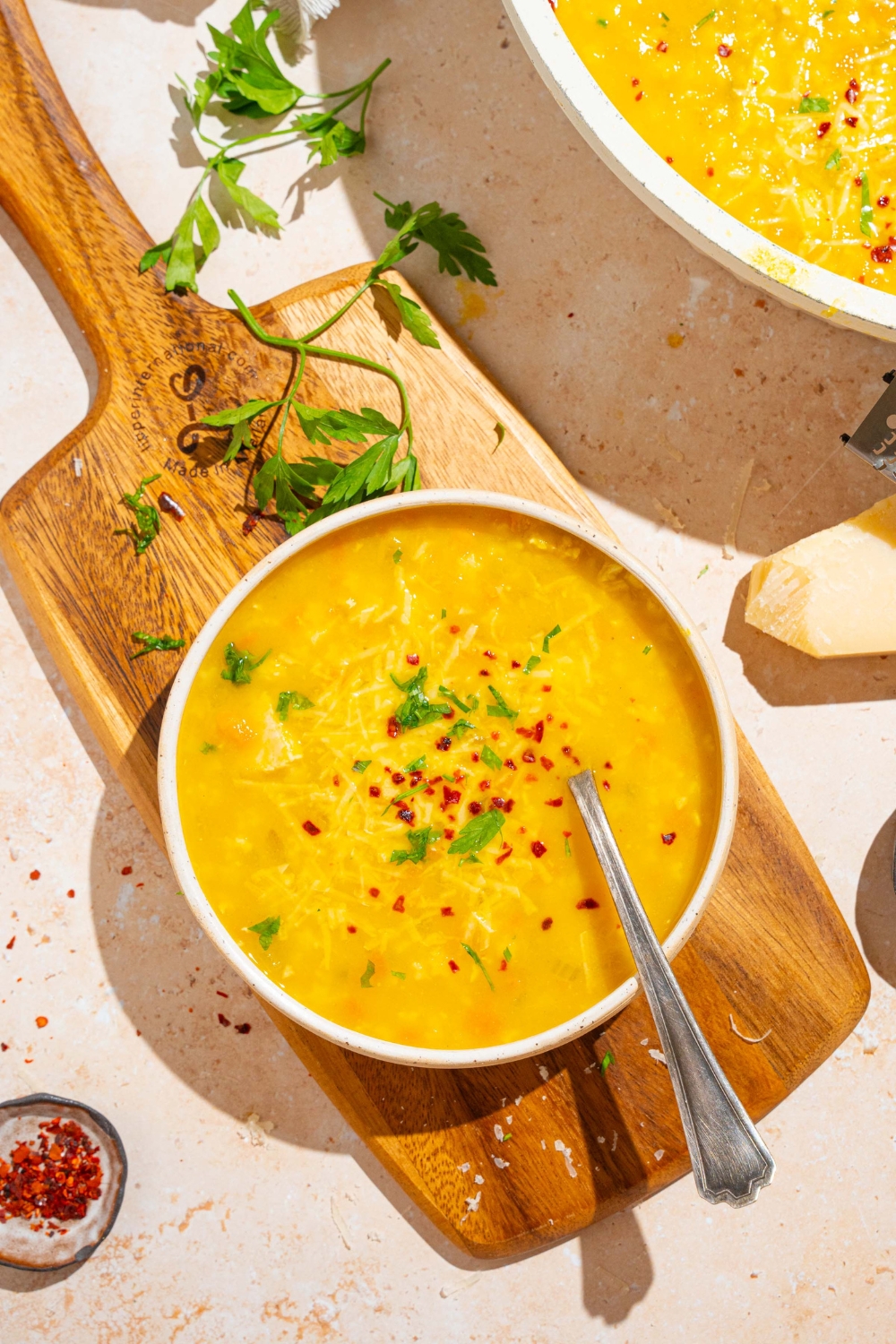
Expert Tips To Make The Best Chicken Pastina Soup
- Use a small dice for the vegetables: Finely diced onion, celery, and carrots soften evenly, cook faster, and blend into a smoother base. Smaller pieces also make every spoonful feel more “Nonna-style” and cozy.
- Don’t rush the sauté: Those first 4–5 minutes in oil and butter matter. Let the onions soften, and the vegetables sweat a bit so they build natural sweetness and depth. This is what makes the soup taste finished instead of like broth with stuff in it.
- Parmesan rind is the secret flavor boost: A Parmesan rind gives the broth that savory, slow-simmered richness without extra work. Drop it in while the soup simmers, then remove it before blending. If you don’t have one, the soup is still great, but the rind takes it up a notch.
- Blend only part of the soup for the perfect texture: Pull out a couple of cups of vegetables before blending, then puree the rest. This gives you a silky broth without cream, but you still get real texture in the final bowl when you stir the reserved veggies back in.
- Pastina timing matters: Pastina cooks fast and can go from perfect to mushy quickly. Add it only after blending, stir often so it doesn’t stick, and start checking early based on the package time.
- Control thickness with broth: Pastina continues to absorb liquid as it sits, especially during the rest step and after refrigeration. Keep extra broth nearby and loosen the soup as needed until it’s as brothy or thick as you like.
- Salt at the end for best accuracy: Broth brands vary, and the Parmesan rind adds saltiness, so wait until the chicken and pasta are in before deciding how much more salt you need.
- Best leftover tip for perfect texture: If you know you’ll have leftovers, cook the pastina separately and add it to bowls as you serve. It keeps the soup from turning extra thick overnight and makes reheating easier and more brothy.
Italian Chicken Pastina Soup FAQs
What is Italian penicillin soup?
Italian penicillin soup is a nickname for a cozy Italian-style chicken soup that feels especially soothing when you’re sick or run down. It’s usually made with broth, chicken, tiny pasta like pastina, and simple aromatics, the kind of “Nonna soup” that’s warm, nourishing, and easy to digest.
Can I make chicken pastina soup without blending?
Yes. Blending makes the broth silky and richer without cream, but you can skip it for a more traditional brothy chicken pastina soup. Just simmer the veggies until tender, then add pastina and chicken.
What can I use instead of pastina?
If you can’t find pastina, acini di pepe, orzo, stelline (little stars), ditalini, or small pearl couscous, all work well. Cook time varies by pasta shape, so follow the package instructions and start checking early.
Can I use rotisserie chicken?
Yes, rotisserie chicken is perfect here. It’s already cooked and flavorful, and it makes this soup come together fast. Stir it in at the end so it warms through without drying out.
How long does chicken pastina soup last in the fridge?
Stored in an airtight container, it keeps well in the refrigerator for about 3–4 days. It will thicken as it sits, so plan to add a little extra broth when reheating.
How do I reheat it without it getting too thick?
Reheat gently over low heat and add a splash of broth or water until it loosens back up. Pastina absorbs liquid as it sits, so thinning it during reheating is normal and expected.
Can I freeze chicken pastina soup?
Yes, but it freezes best without the pasta because pastina can turn soft after thawing. For best results, freeze the soup after the blending step, then thaw, reheat, and cook fresh pastina when you’re ready to serve.
My Final Thoughts
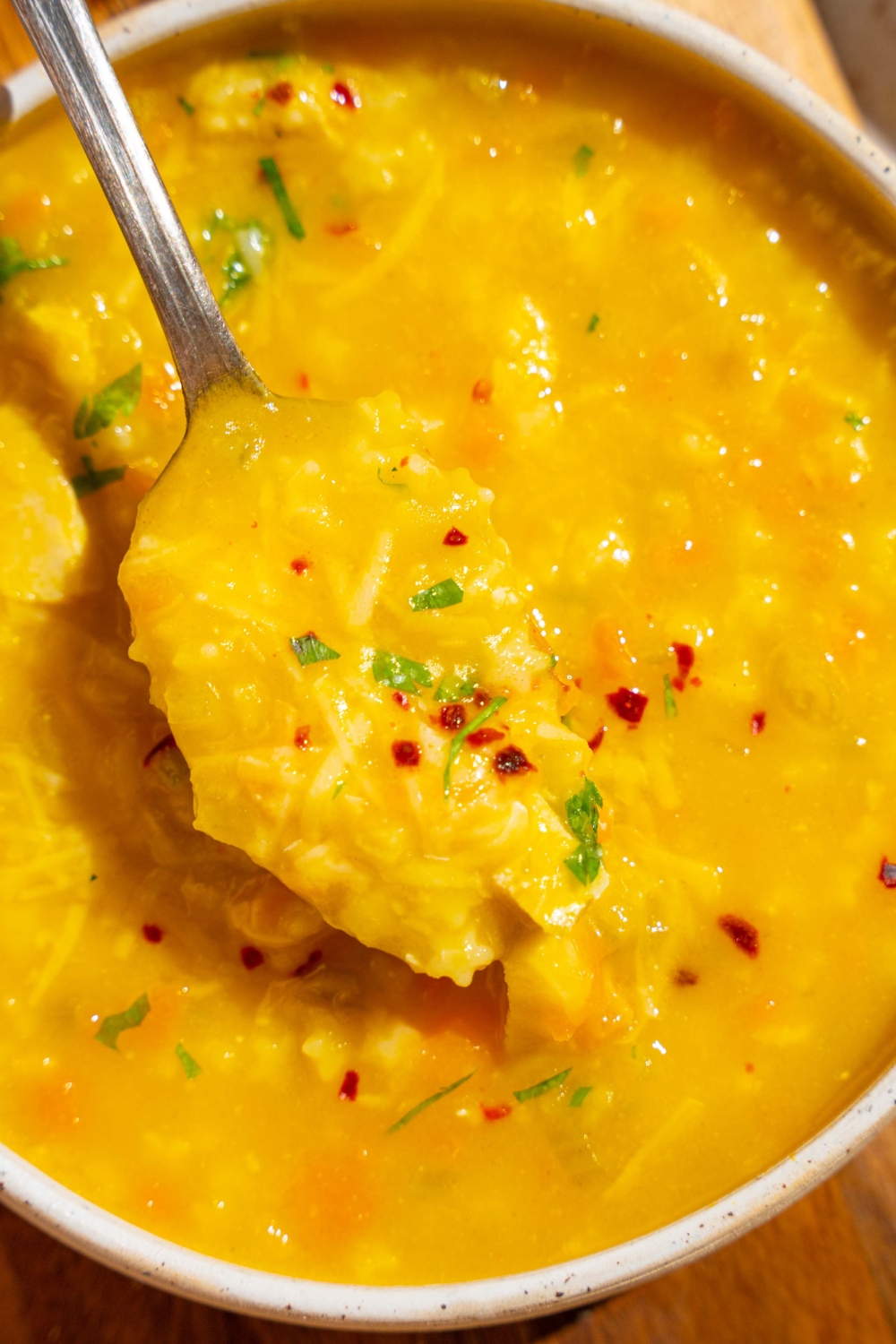
This Italian chicken pastina soup is the kind of recipe you’ll make once and keep forever. The silky blended broth plus tiny pastina makes it feel extra comforting without extra work. If you make it, don’t skip the Parmesan and parsley at the end; they bring the whole bowl to life. Give this cozy, comforting soup recipe a try and let me know what you think by leaving a comment and review below.
Soup Recipes to Try Next
- Senate bean soup
- Creamy Parmesan Italian sausage soup
- Spicy Sicilian chicken soup
- Qdoba chicken tortilla soup
- Sausage and lentil soup
Chicken Pastina Soup (Italian Penicillin Soup Recipe)

This Italian chicken pastina soup is the cozy, nourishing bowl you make when you need something warm and comforting fast. It’s a simple chicken soup with tender veggies, rotisserie chicken, tiny pastina, and a Parmesan rind that adds that slow-simmered Italian flavor. Blend part of the soup for a silky broth, then finish with Parmesan and parsley for the perfect comforting dinner or feel-better meal.
Ingredients
- 2 tablespoons extra virgin olive oil
- 1 tablespoon butter
- 1 large onion, finely diced
- 4 stalks celery, diced small
- 4 medium cloves garlic, minced
- 8 cups low-sodium chicken broth, more if needed
- 2 large carrots, finely diced
- 1 parmesan rind, (optional)
- 1 teaspoon kosher salt, more to taste
- ⅓ cup uncooked pastina, tiny pasta, double if you like a lot of pasta
- 2 cups cooked chicken ,rotisserie or leftover chicken
- grated Parmesan, for serving
- finely chopped fresh parsley, for garnish
Instructions
1. Heat a large Dutch oven or soup pot over medium heat. Add oil, butter, onion, carrot, and celery. Stir and cook for 4–5 minutes, or until the onions are soft and translucent, stirring occasionally. Add the garlic and cook for another 2 minutes, stirring well.
2. Pour in the broth and add the parmesan rind (if using), and salt. Bring to a boil, then reduce to a steady simmer and cook uncovered for 20–25 minutes, or until the vegetables are tender.
3. Remove the parmesan rind if used. Using a slotted spoon, take out about 2 cups of the cooked vegetables and set them aside.
4. Use an immersion blender to puree the remaining soup in the pot until smooth.If using a traditional blender, let the soup cool slightly. Remove the center cap from the blender lid and cover the opening with a kitchen towel to safely vent steam while blending.
5. Add the pasta to the pot, bring to a boil, then reduce to a simmer. Cook uncovered for the time listed on the package.
6. Stir in the shredded rotisserie (or leftover) chicken and the reserved vegetables. Cover and let the soup rest for about 20 minutes to thicken slightly.
7. Taste and adjust seasoning as needed.
8. Serve warm, topped with grated parmesan and freshly chopped parsley.
Nutrition Information:
Yield:
6Serving Size:
1Amount Per Serving: Calories: 311Total Fat: 19gSaturated Fat: 5gUnsaturated Fat: 14gCholesterol: 77mgSodium: 1739mgCarbohydrates: 10gFiber: 1gSugar: 3gProtein: 24g
Leave a Reply