


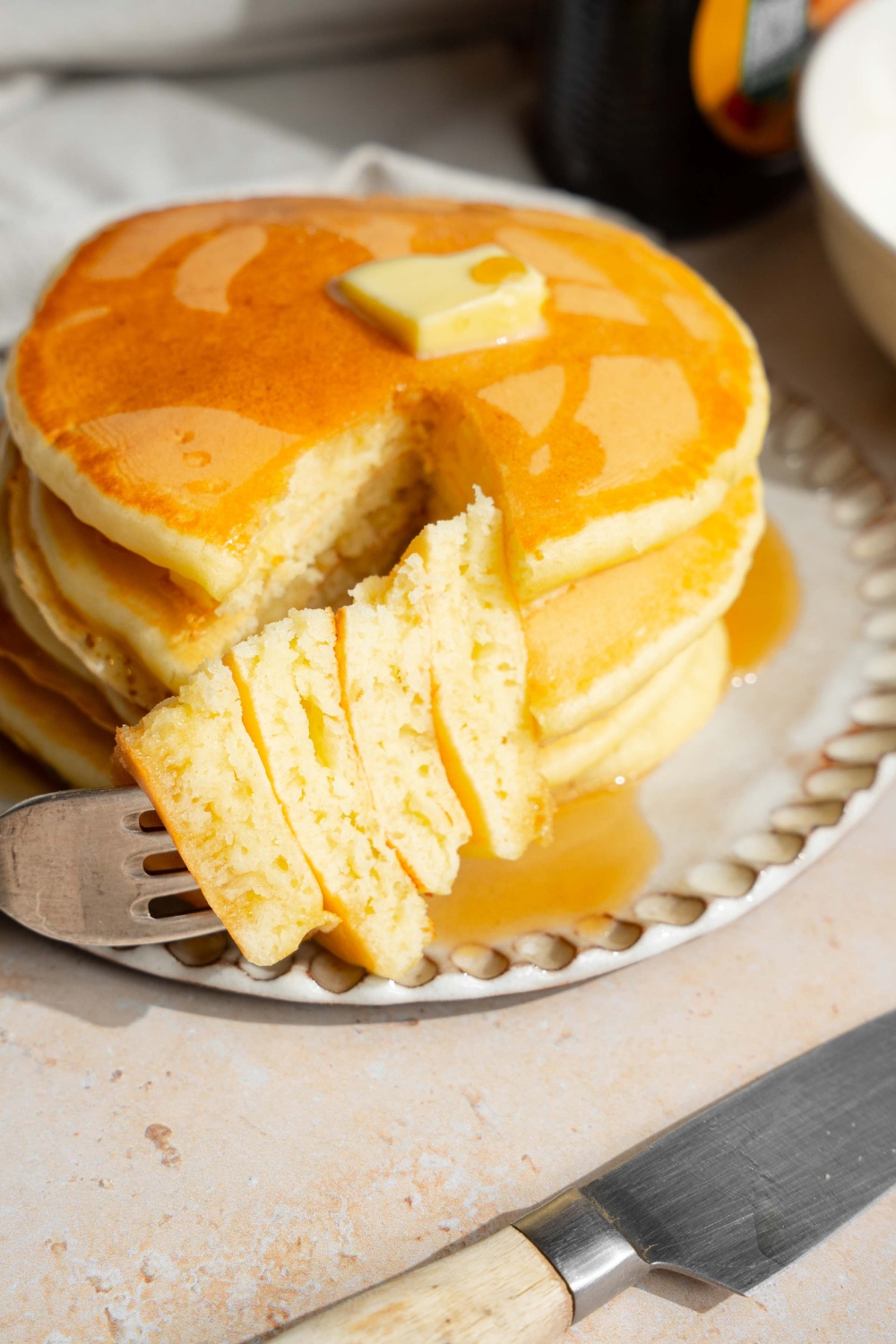
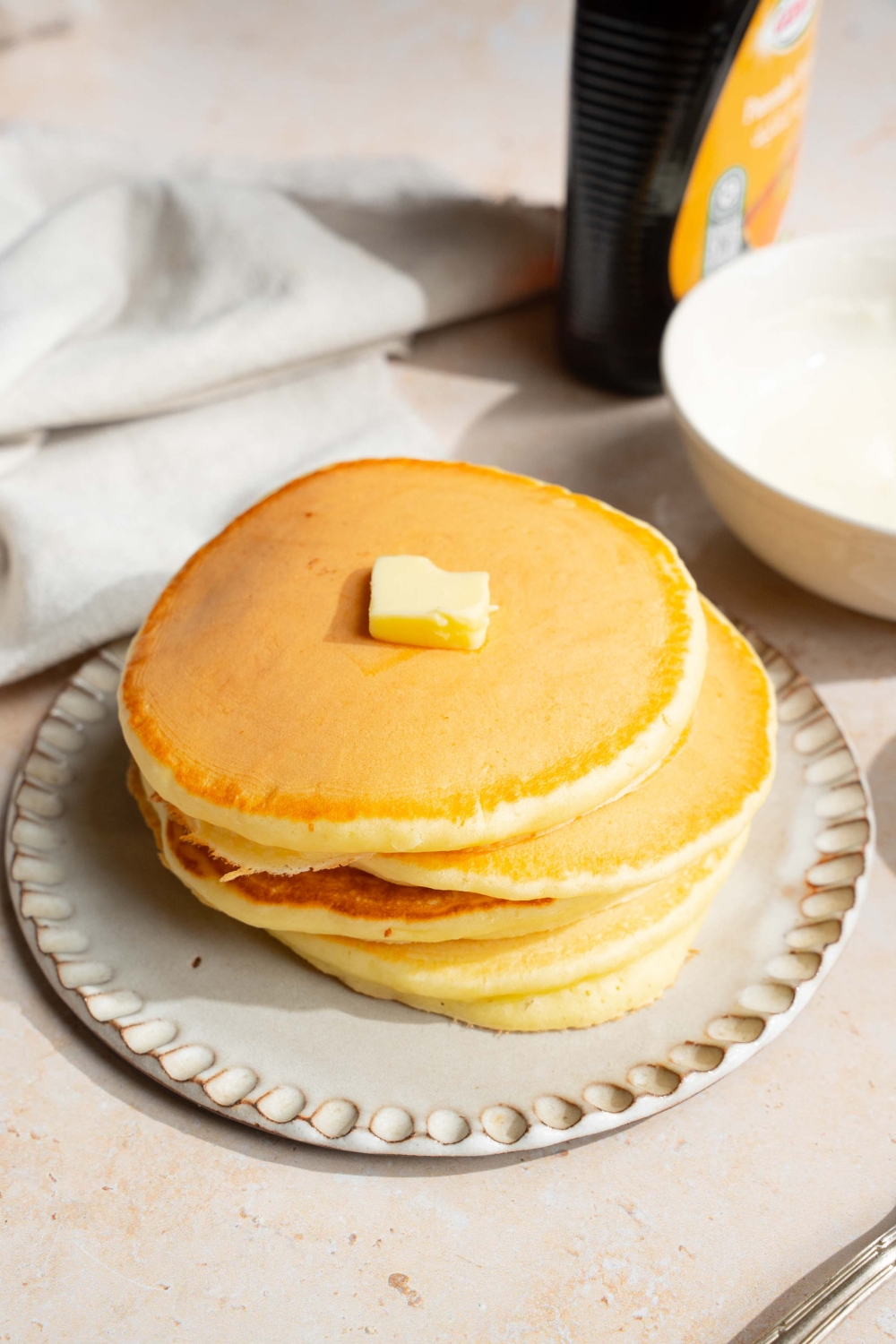
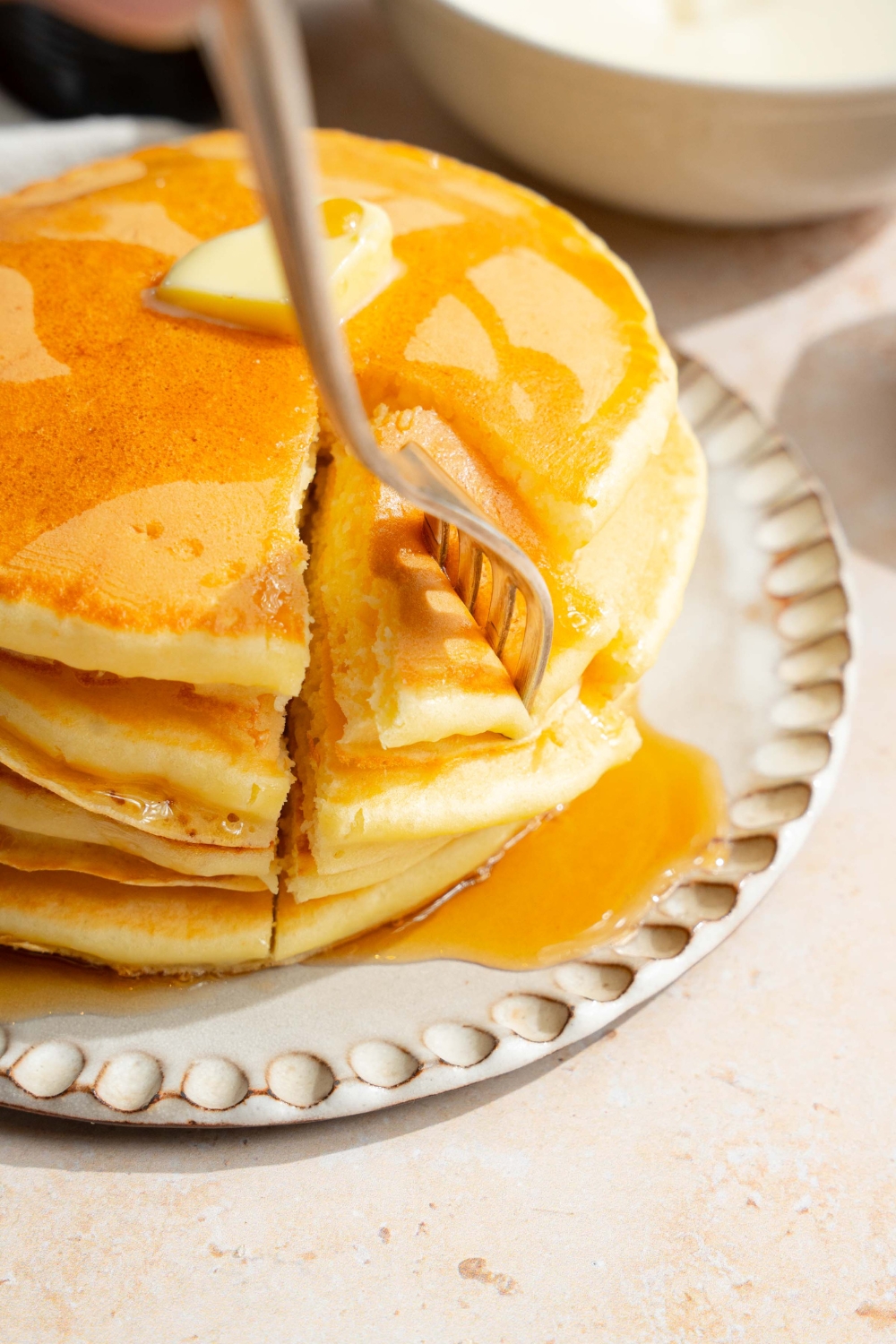
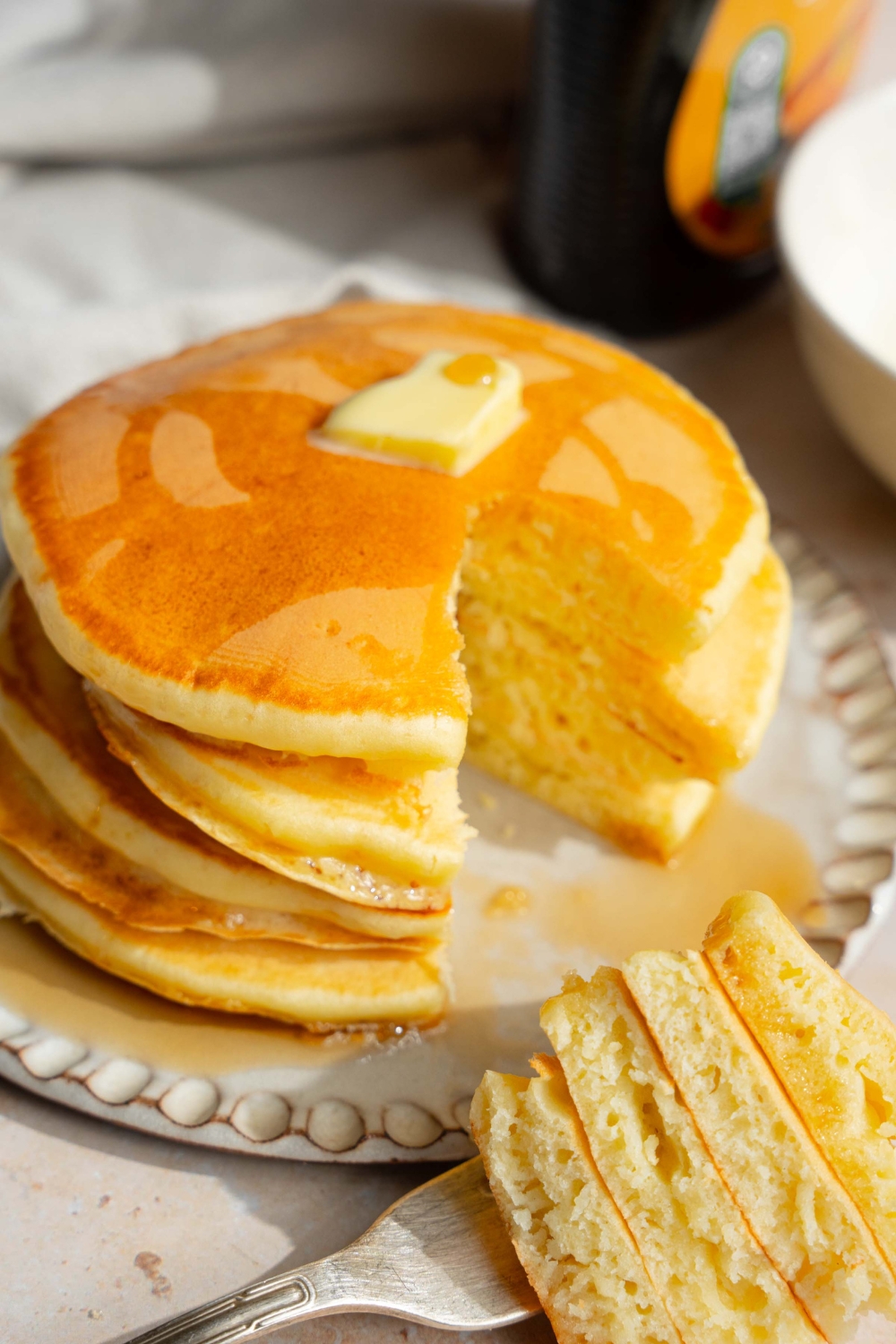
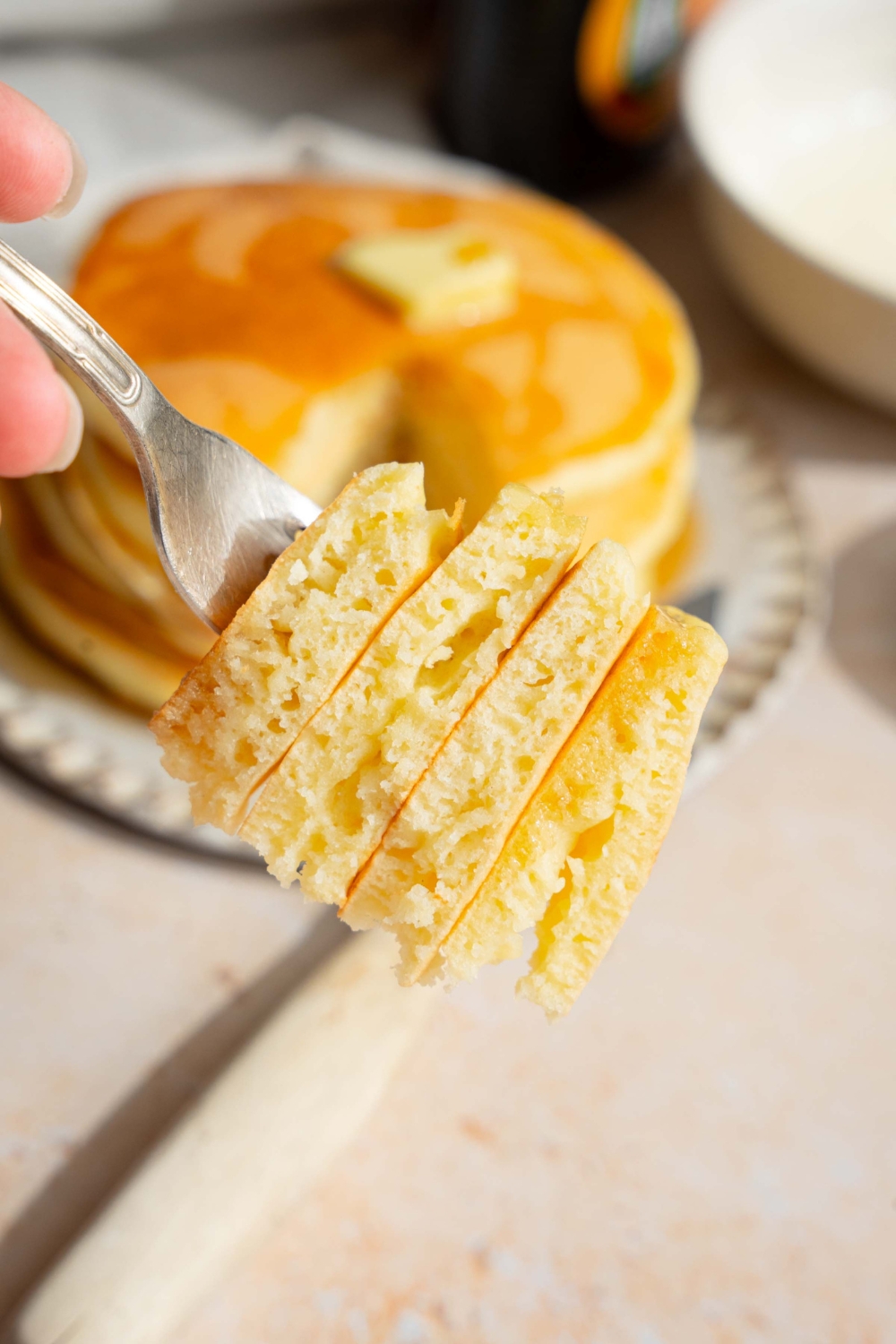
These light and fluffy pancakes with self-rising flour come together fast and puff up beautifully on the griddle. Since self-rising flour already has the leavening built in, you don’t have to fuss with extra steps to get a great rise. They’re soft in the middle, golden on the outside, and ideal for busy mornings or weekend brunch when you want pancakes without overthinking it.
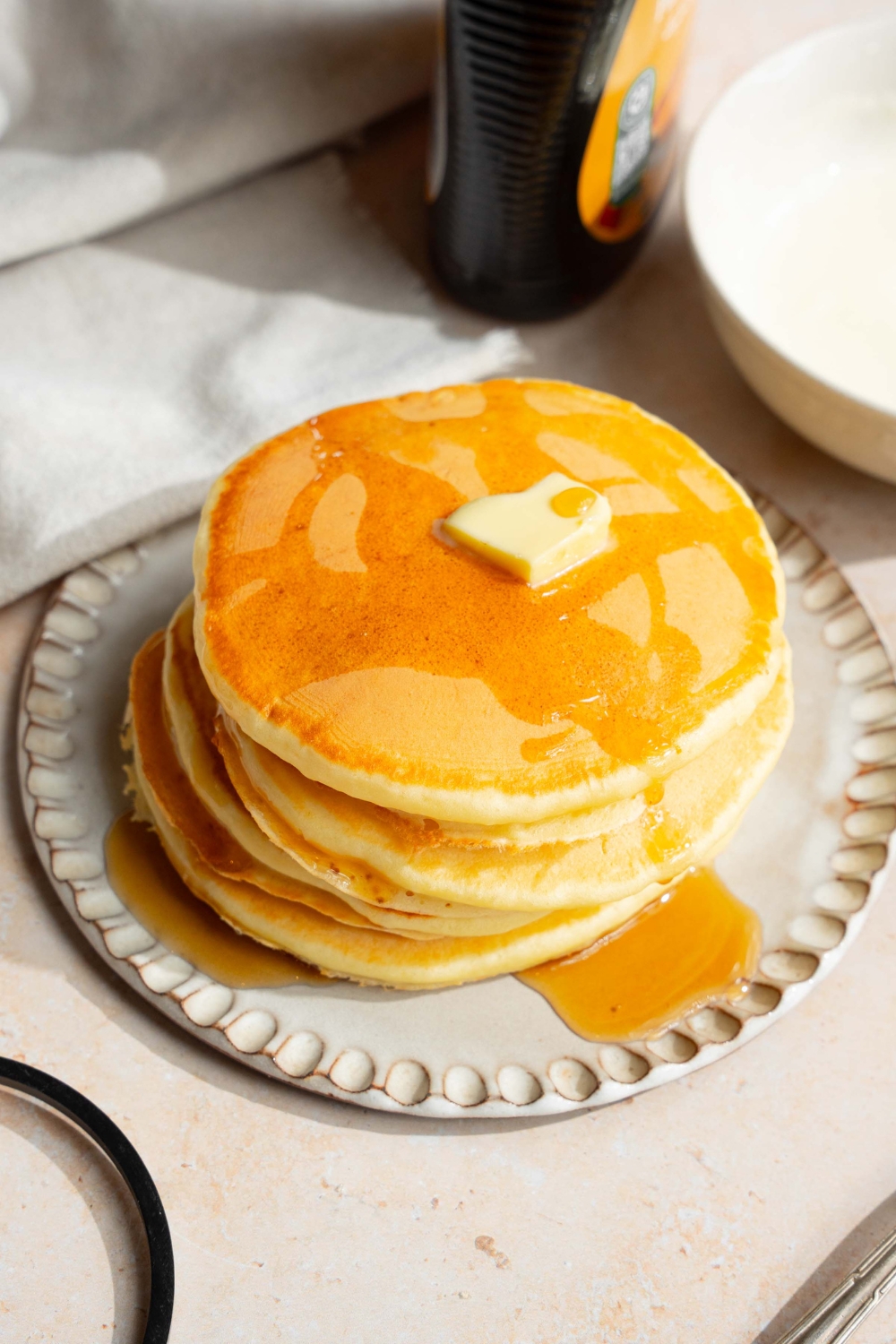
Table of Contents
Why You'll Love These Self-Rising Flour Pancakes
These self-rising flour pancakes are reliable, and that’s what makes them so good. Self-rising flour takes the guesswork out of getting a good rise, and that quick batter rest helps the flour hydrate so you get fluffier pancakes with a tender bite.
They also taste great with minimal effort. Buttermilk (or yogurt) adds a little tang and keeps the texture soft, and the batter is forgiving enough that you can easily customize it with blueberries, chocolate chips, or whatever you’ve got in the pantry.
The process is simple, too. Mix, rest 5 minutes, cook, and you’re eating the most delicious pancakes you can make at home.
Fluffy Pancakes Ingredients List
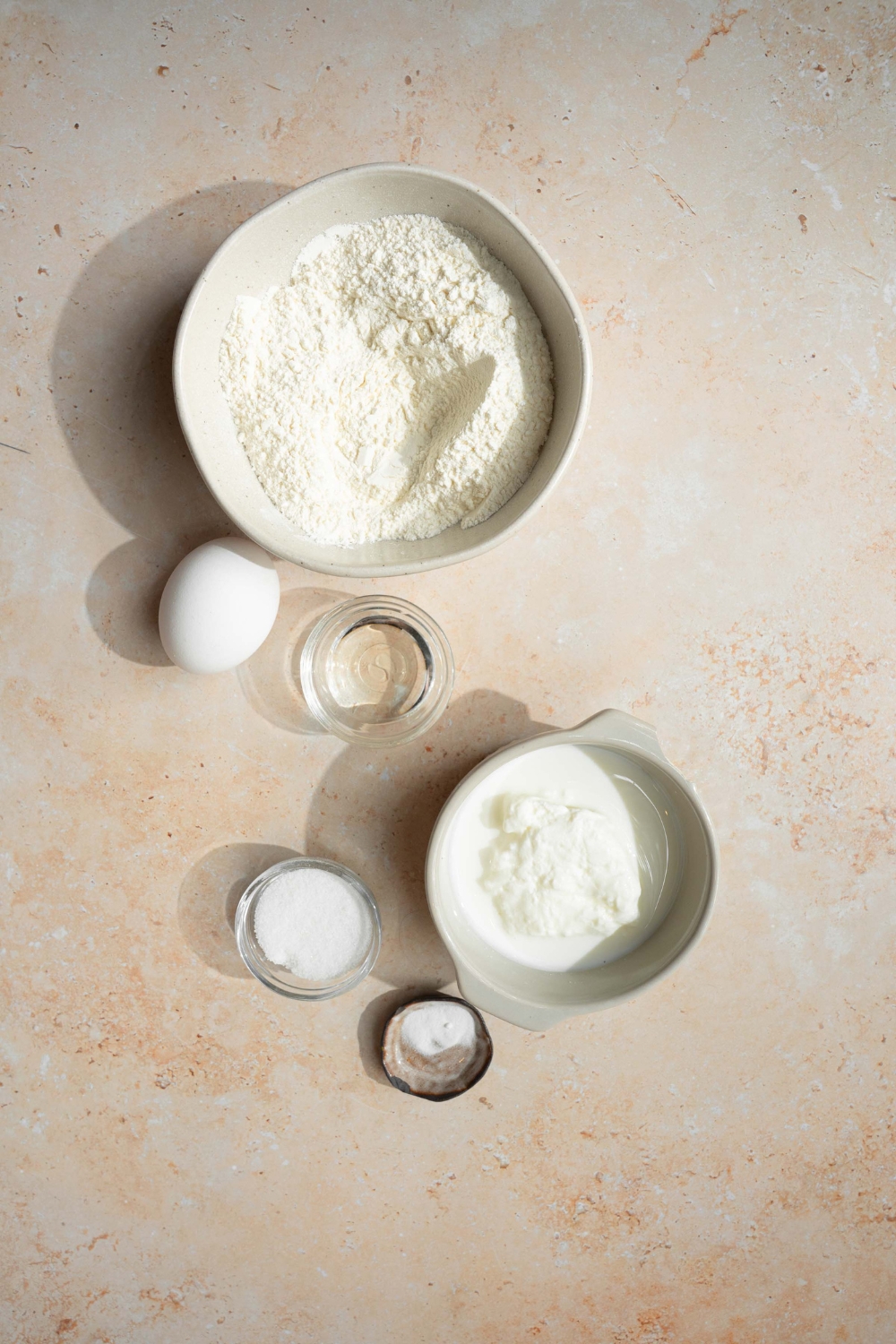
- 1 ½ cups self-rising flour
- 1 tablespoon granulated sugar
- ¼ teaspoon baking soda
- 1 large egg
- 1 cup buttermilk (or yogurt)
- 2 tablespoons vegetable oil (or melted butter)
- For cooking: oil or nonstick cooking spray
Ingredient Notes That Make These Pancakes Better
- Self-rising flour: This is the star of the recipe. It typically contains flour, baking powder, and salt. Because brands vary slightly, don’t add extra salt unless you taste and feel like it needs it after cooking your first pancake.
- Baking soda: This gives an extra lift and reacts with buttermilk (or yogurt). It helps your pancakes rise taller and brown nicely.
- Buttermilk vs yogurt: Buttermilk gives classic pancake flavor and fluffy texture. Yogurt works too, but it’s thicker, so you may need to thin it with a splash of milk or water to get the right batter consistency.
- Oil vs melted butter: Oil keeps pancakes soft and moist. Melted butter gives a richer flavor and slightly crisp edges.
How to Make Pancakes with Self-Rising Flour
Step 1: Mix the dry ingredients
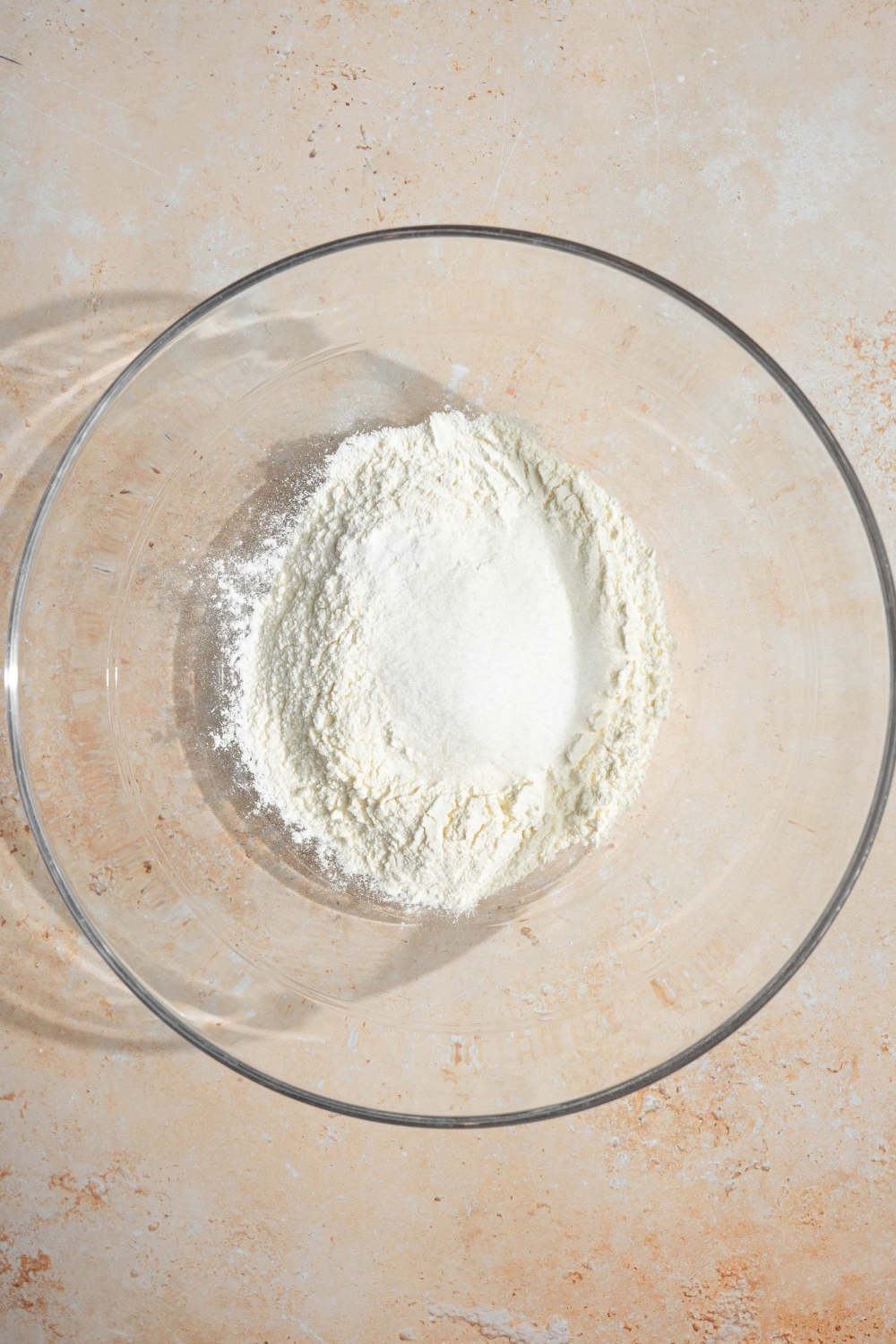
In a medium bowl, whisk self-rising flour, sugar, and baking soda.
Step 2: Mix the wet ingredients
In a separate bowl, whisk egg, buttermilk (or yogurt), and oil (or melted butter) until light and slightly foamy.
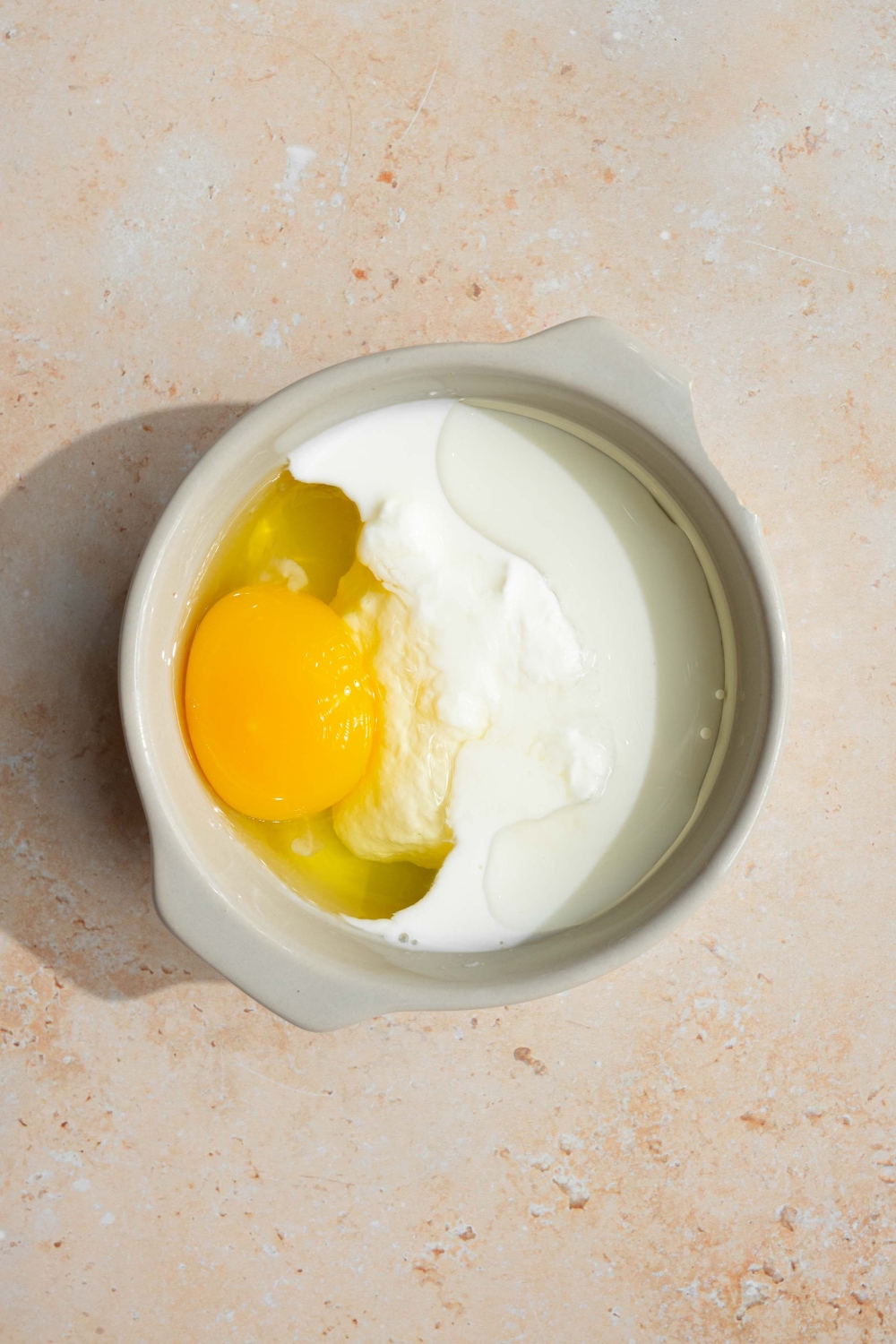
Step 3: Combine
Pour the wet ingredients into the bowl of dry ingredients and stir just until combined. A few small lumps are fine. Do not overmix.
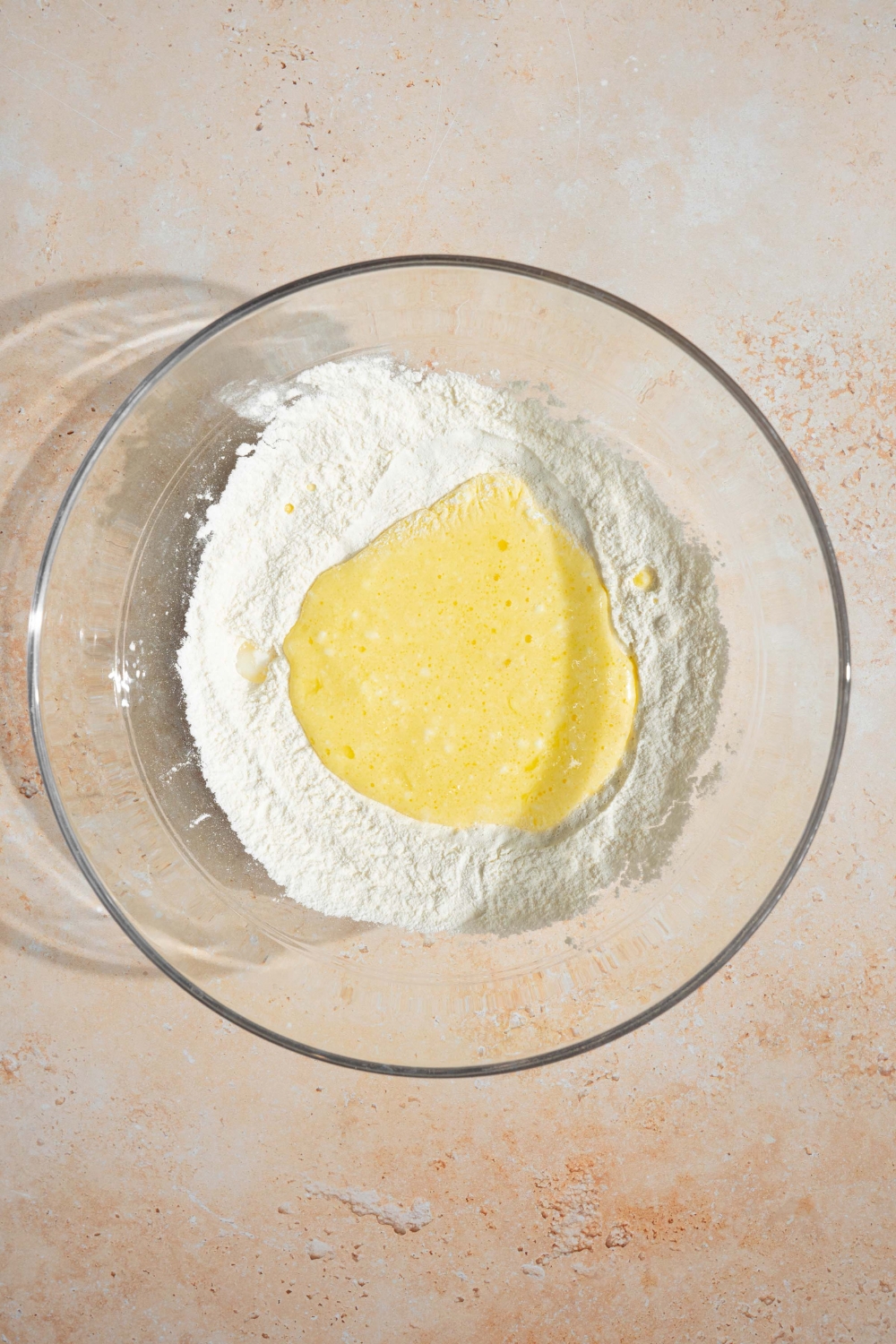
Step 4: Rest the batter
Let batter rest about 5 minutes while you heat your skillet or griddle over medium-high heat. The pan is ready when a drop of water sizzles and dances across the surface.
Lightly coat the surface of the pan with oil or spray it with nonstick spray.
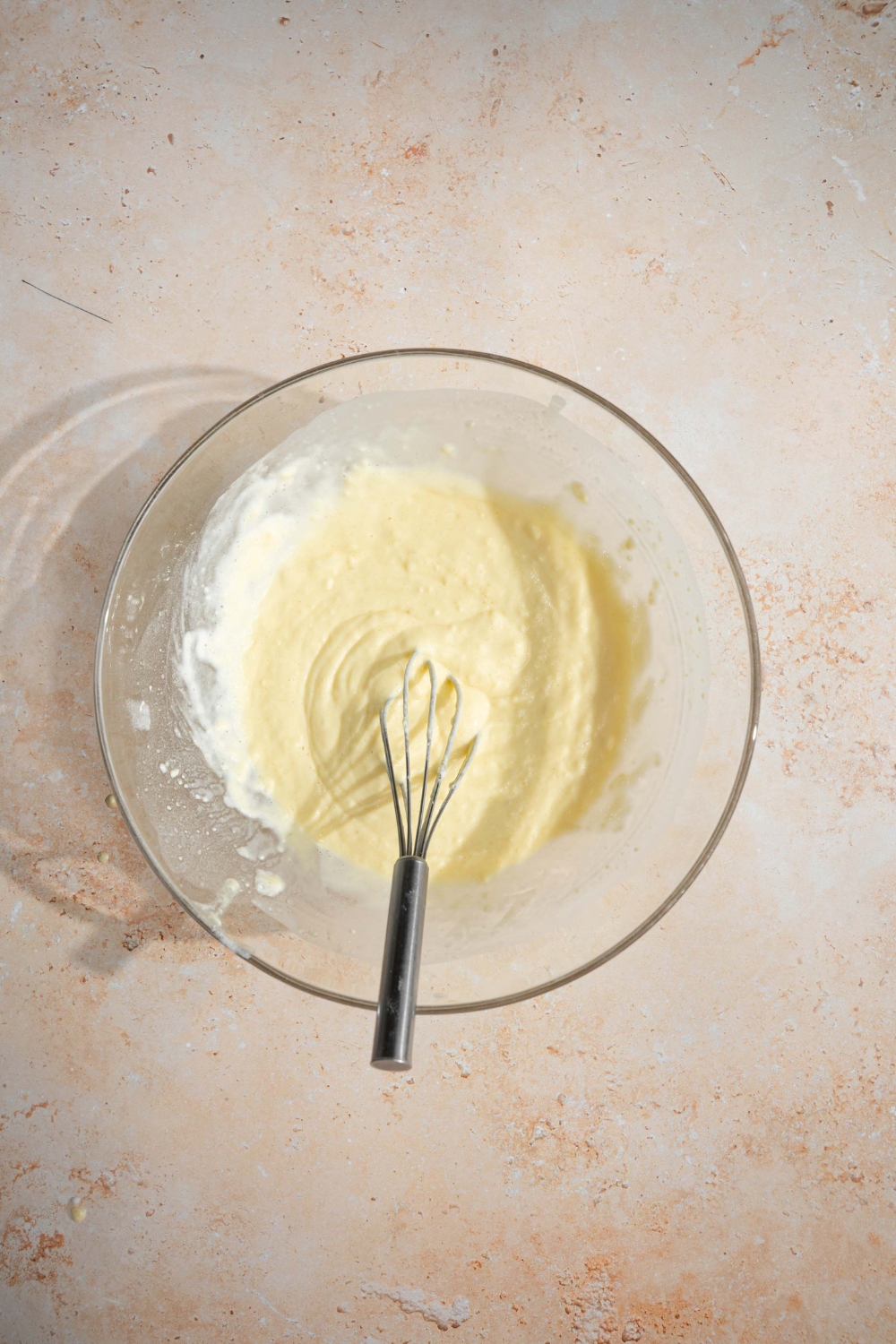
Step 5: Cook
Scoop about ¼ cup batter per pancake. Cook until bubbles rise to the top and edges begin to set. Flip and cook the other side until golden and cooked through.
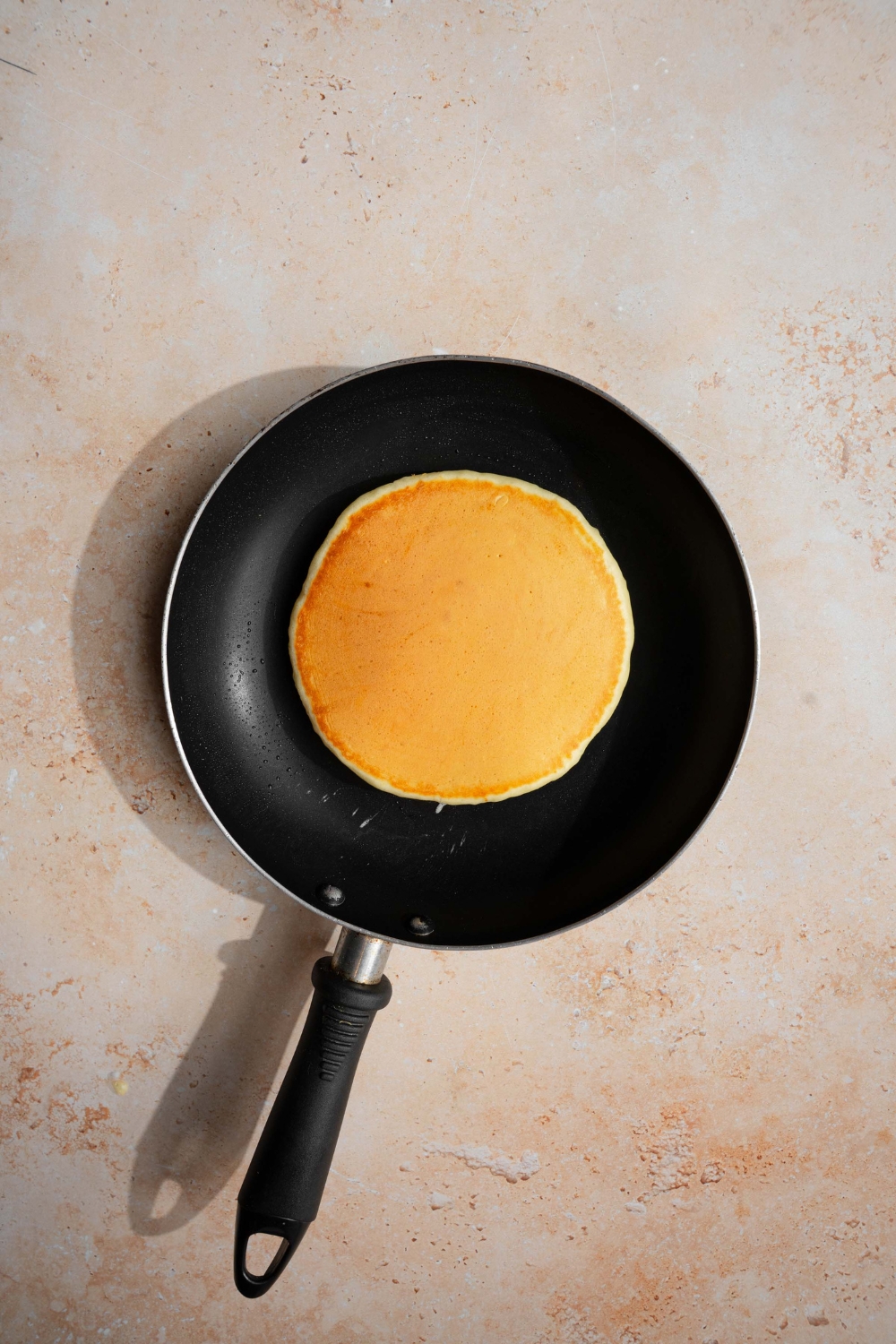
Step 6: Serve
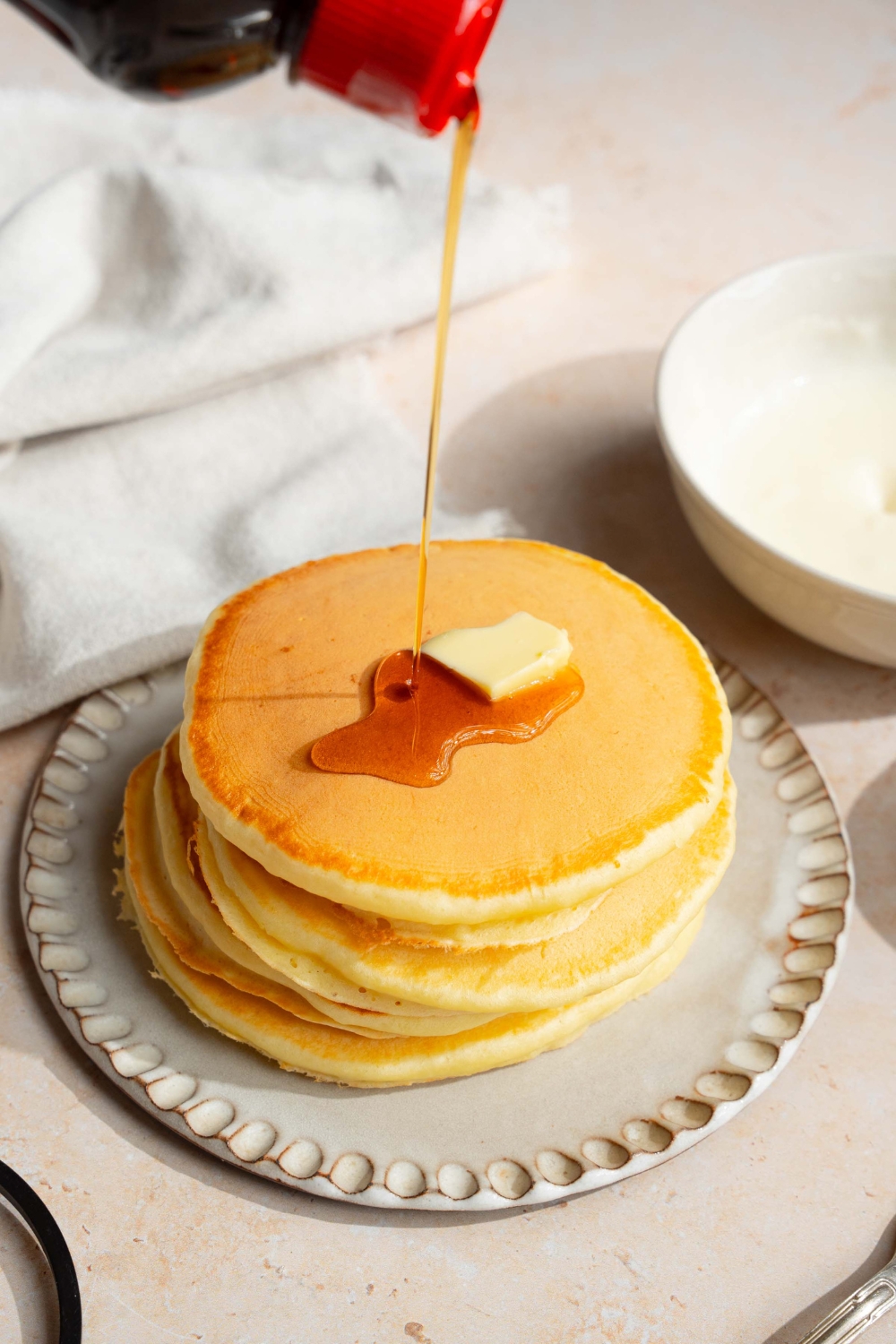
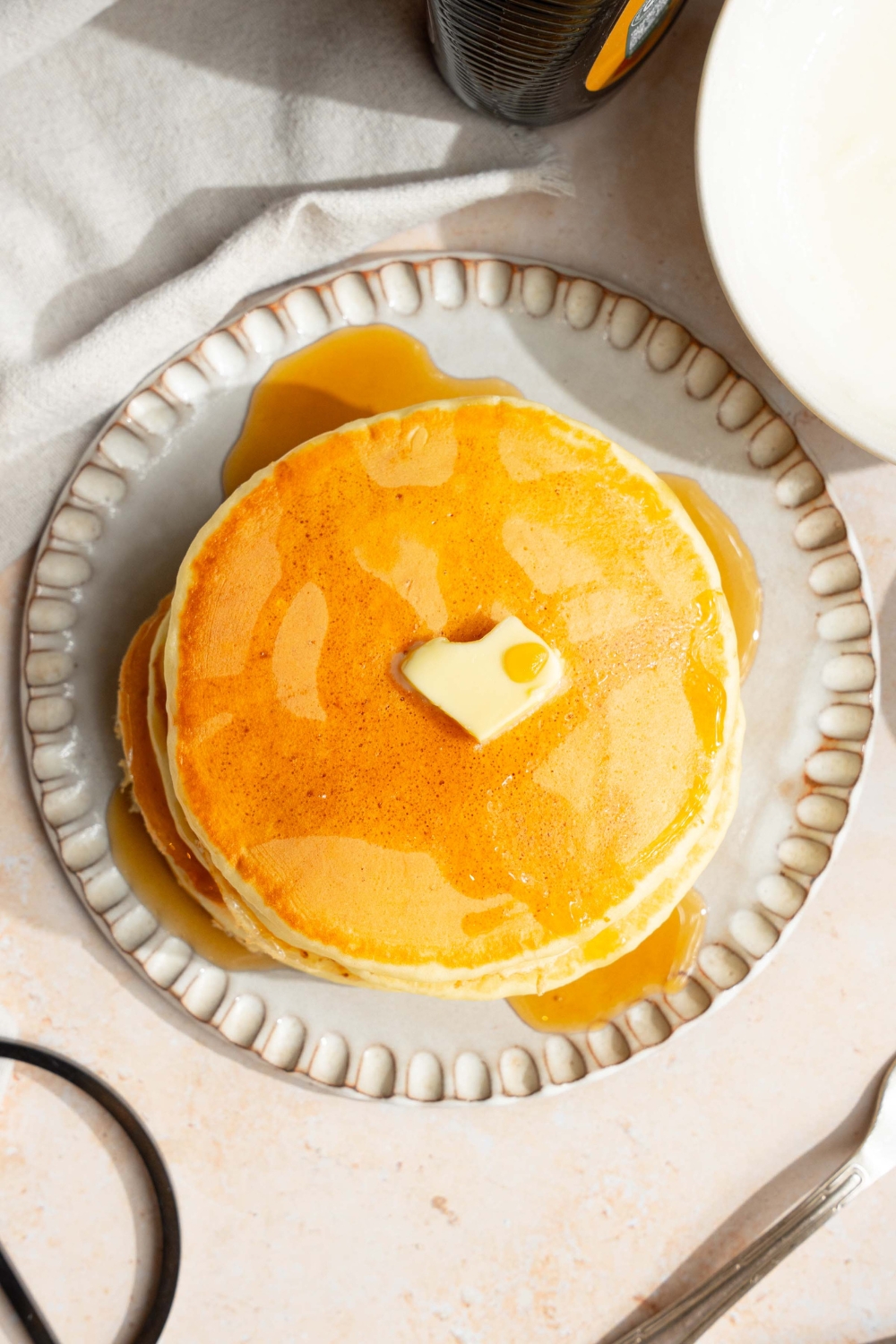
Serve these fluffy pancakes hot with your favorite toppings, like butter and maple syrup.
Pro Tips for The Fluffiest Pancakes
- Don’t overmix the batter. Overmixing builds gluten and makes pancakes tough. Stir just until the flour disappears. A few lumps are totally fine, they cook out.
- Let the batter rest for 5 minutes. This little rest thickens the batter slightly and helps the leavening do its job, which means fluffier pancakes with a better texture.
- Use the right heat (medium is usually the sweet spot). If the pan is too hot, the outside browns before the inside cooks. Medium-high can work on some stoves, but if your pancakes are browning too fast, drop to medium. You want a steady sizzle, not aggressive smoking.
- Flip once, and flip at the right time. Wait until you see bubbles on top and the edges look set. Flip too early, and they spread. Flip too late, and they dry out. Multiple flips deflate pancakes, so keep it to one.
- Cook a test pancake first. The first one tells you everything: if the heat is right, if the batter needs a splash more liquid, and how quickly they’re browning. Adjust, then cook the rest with confidence.
Pancake Variations You Can Make
- Blueberry Pancakes: For the best look (and to avoid purple batter), pour the batter first, then sprinkle blueberries on top before flipping. They’ll sink in slightly and cook perfectly.
- Chocolate Chip Pancakes: Pour the batter, then sprinkle chocolate chips on top right away. This keeps the chips evenly spaced and prevents them from sinking to the bottom of the bowl.
- Banana Pancakes: Add a few banana slices on top of the poured batter, then flip once you see bubbles and set edges. The bananas caramelize slightly and taste amazing.
- Cinnamon Pancakes: Whisk ½ teaspoon cinnamon into the dry ingredients for a warm, cozy flavor. If you want it sweeter, add a tiny splash of vanilla too.
Storage and Reheating Tips For Fluffy Pancakes
- Refrigerator: Store leftover pancakes in an airtight container in the fridge for up to 3 days.
- Reheating: Warm in the microwave for 15 to 25 seconds for a soft, quick reheat. Reheat at 325°F in the oven until warmed through (best for keeping the edges a little crisp). To keep fluffy, warm in a skillet over low heat, flipping once, until hot.
- Freezing: Freeze pancakes in a single layer first, then transfer to a freezer bag for up to 2 months so they don’t stick together. Reheat straight from frozen in the toaster oven, or microwave, and then crisp briefly in a skillet if you want.
Pancakes with Self-Rising Flour FAQs
Can I use self-rising flour instead of all-purpose flour for pancakes?
Yes. Self-rising flour works great for pancakes because it already has leavening and salt mixed in, so your pancakes rise nicely without needing extra baking powder.
Do I need baking powder or baking soda if I’m using self-rising flour?
Usually no. Adding extra leavening can make pancakes taste bitter or rise too fast and collapse. If a recipe calls for self-rising flour, stick with it as written.
What’s the difference between self-rising flour pancakes and regular pancakes?
Self-rising flour pancakes tend to be fluffier with less measuring because the leavening is already built in. Regular pancakes usually rely on baking powder/soda added separately.
Why are my self-rising flour pancakes flat?
Most of the time it’s from overmixing, batter that sat too long, or a pan that wasn’t hot enough. Mix gently, rest the batter about 5 minutes, and cook on medium heat so they rise and cook through evenly.
Can I make pancake batter ahead of time?
It’s better fresh. Self-rising flour starts working as soon as it’s mixed with liquid, so if it sits too long, you can lose lift. If you need to prep ahead, mix the dry and wet separately and combine right before cooking.
Can I use milk instead of buttermilk?
Yes. Buttermilk adds a slight tang and extra tenderness, but regular milk works. If you want a buttermilk-style swap, add 1 tablespoon of lemon juice or vinegar to 1 cup of milk and let it sit 5 minutes.
Can I use melted butter instead of oil?
Yes. Butter adds flavor and slightly crisper edges. Just make sure it’s not scorching hot when you mix it in.
How do I know when to flip pancakes?
Flip when you see bubbles on top and the edges look set, usually after 2-3 minutes. Flip once and cook the other side until golden.
What toppings are best for fluffy pancakes?
Maple syrup and butter are a classic combo, but honey, fresh fruit, whipped cream, nut butter, and chocolate chips are all great toppings.
My Final Thoughts
These pancakes with self-rising flour are the easiest way to get fluffy, homemade pancakes without extra steps. Mix, rest, cook, and you’re done. Keep the batter gentle, don’t overmix, and you’ll get soft, golden pancakes that everyone will love. Try this fluffy pancake recipe and let me know what you think by leaving a comment and review below.
More Pancake Recipes to Try Next
Fluffy Pancakes with Self Rising Flour

These light and fluffy pancakes with self-rising flour come together fast and puff up beautifully on the griddle. Since self-rising flour already has the leavening built in, you don’t have to fuss with extra steps to get a great rise. They’re soft in the middle, golden on the outside, and ideal for busy mornings or weekend brunch when you want pancakes without overthinking it.
Ingredients
- 1 ½ cups Self-Rising Flour
- 1 tablespoon granulated sugar
- ¼ teaspoon baking soda
- 1 large egg
- 1 cup buttermilk or yogurt
- 2 tablespoons vegetable oil or melted butter
Instructions
1. In a medium bowl, whisk together the self-rising flour, sugar, and baking soda.
2. In a separate bowl, whisk the egg, buttermilk, and oil or melted butter until light and slightly foamy. Pour the wet mixture into the dry ingredients and stir just until combined. A few small lumps are perfectly fine—do not overmix.
3. Let the batter rest for about 5 minutes while you heat your griddle or skillet over medium-high heat. The surface is ready when a drop of water sizzles and dances across it. Lightly brush with oil or coat with nonstick spray.
4. Scoop about ¼ cup of batter onto the hot surface for each pancake. Cook until bubbles rise to the top and the edges begin to set. Flip and cook the other side until golden brown and cooked through.
5. Serve hot with your favorite toppings.
Nutrition Information:
Yield:
6Serving Size:
1 pancakeAmount Per Serving: Calories: 306Total Fat: 6gSaturated Fat: 1gUnsaturated Fat: 5gCholesterol: 33mgSodium: 157mgCarbohydrates: 52gFiber: 2gSugar: 5gProtein: 9g
Leave a Reply