


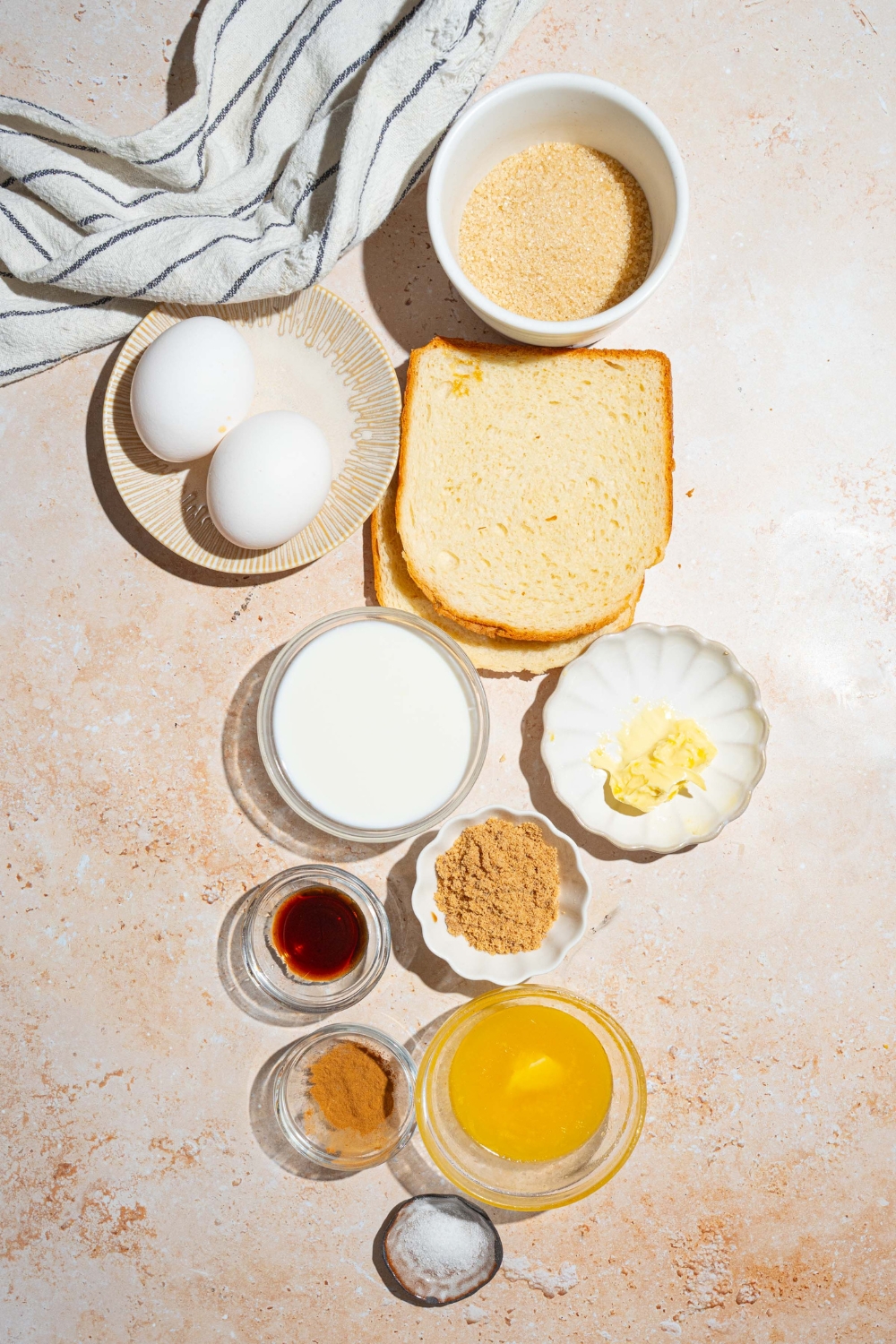
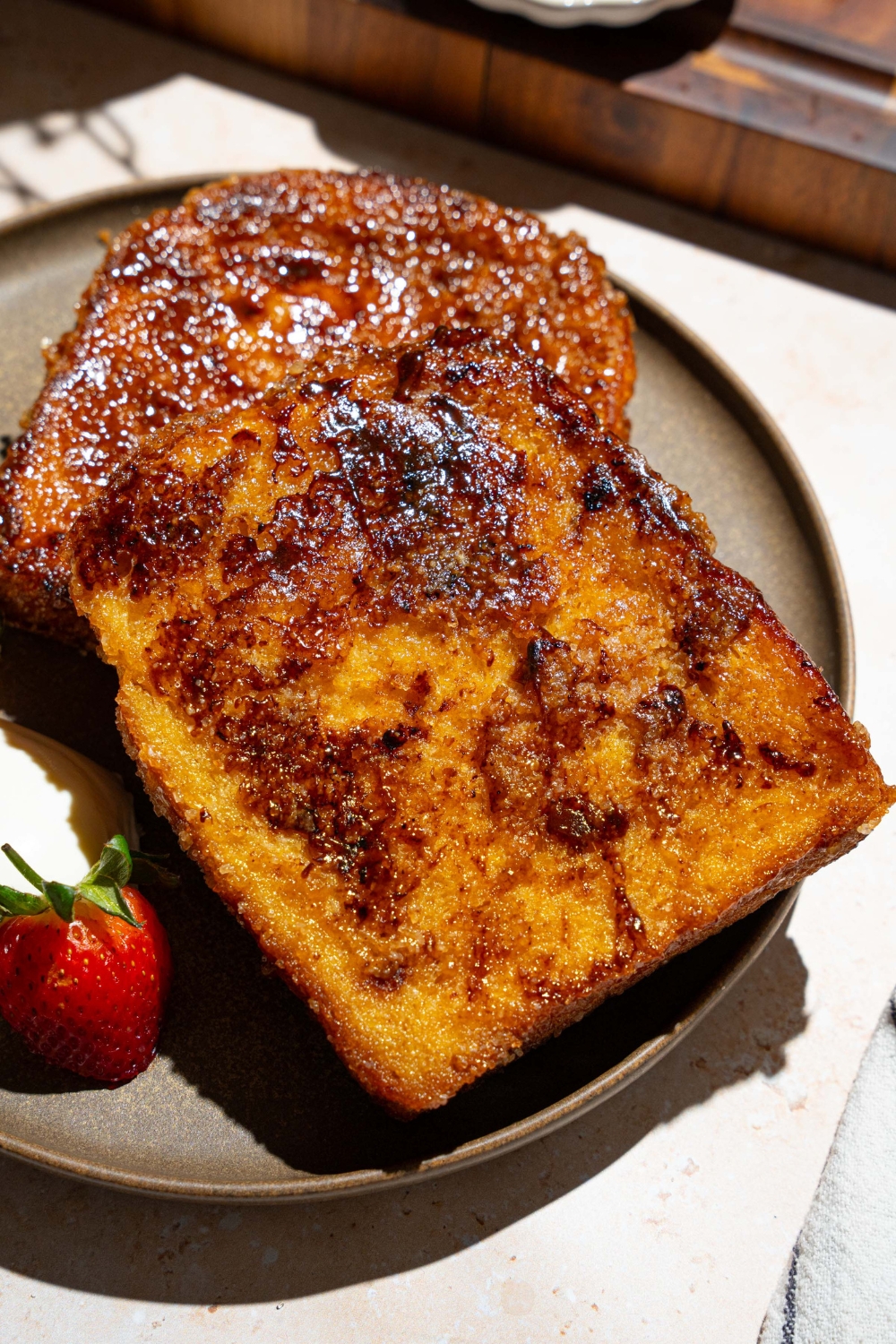
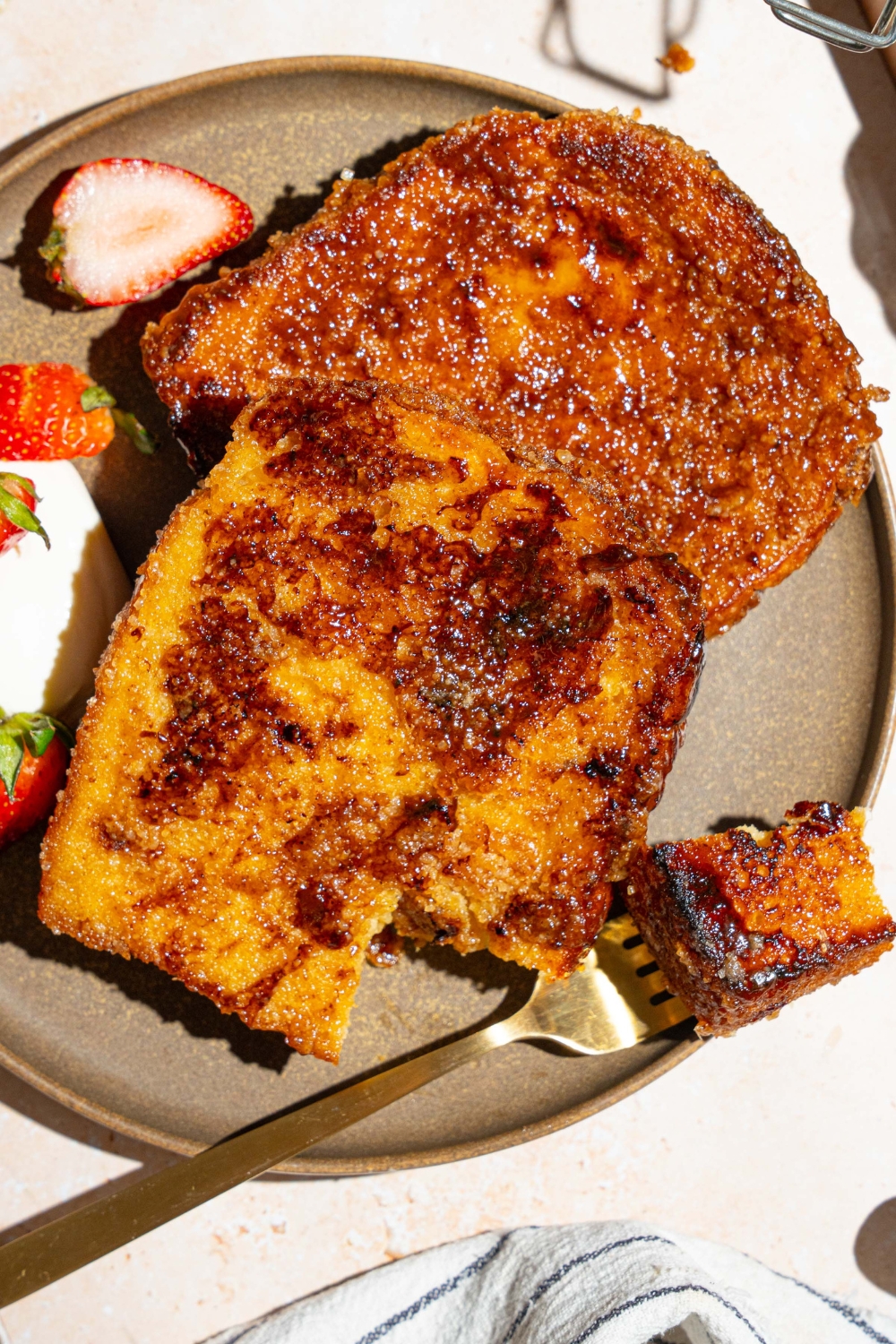
This Crème Brûlée French Toast has a soft, custardy brioche center with a thin caramelized sugar crust that cracks when you cut into it. It’s made entirely in a skillet, so you get that signature brûléed finish without needing a kitchen torch. It’s an easy upgrade from classic French toast and a great choice for holiday breakfasts, brunch, or whenever you’re cooking for guests.
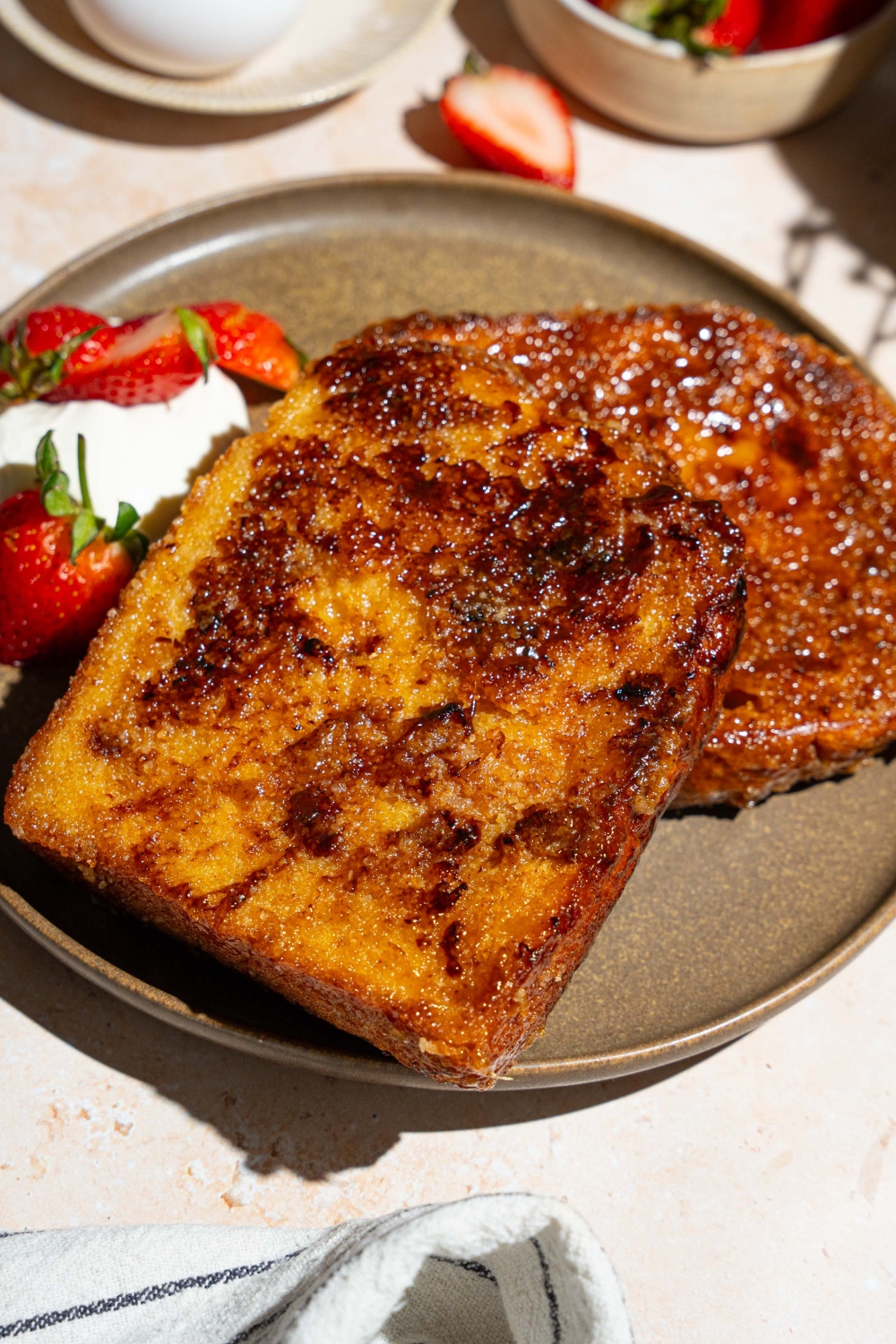
Table of Contents
Why You'll Love This Viral Crème Brûlée French
French toast has always been one of my favorite breakfasts, whether I’m making it at home or ordering it at a diner. After I made my Brioche French Toast Casserole, I kept thinking about how much better brioche made the casserole. It absorbs the custard without losing its structure, and the thick slices give you that soft center I always want from really good French toast.
That’s what made me want to try this crème brûlée version. Instead of stopping at a good custardy French toast, each slice gets coated in turbinado sugar and cooked until the outside caramelizes into a thin, crisp shell. Breaking through that sugar crust into the soft brioche underneath is easily my favorite part of the recipe.
And even though it looks like something you’d order at a brunch spot, you don’t need a torch or any special equipment to make it. Everything happens right in the skillet, which makes it realistic for a weekend breakfast but impressive enough for Christmas morning, Easter brunch, or whenever you need to make breakfast for a group.
Ingredients You'll Need
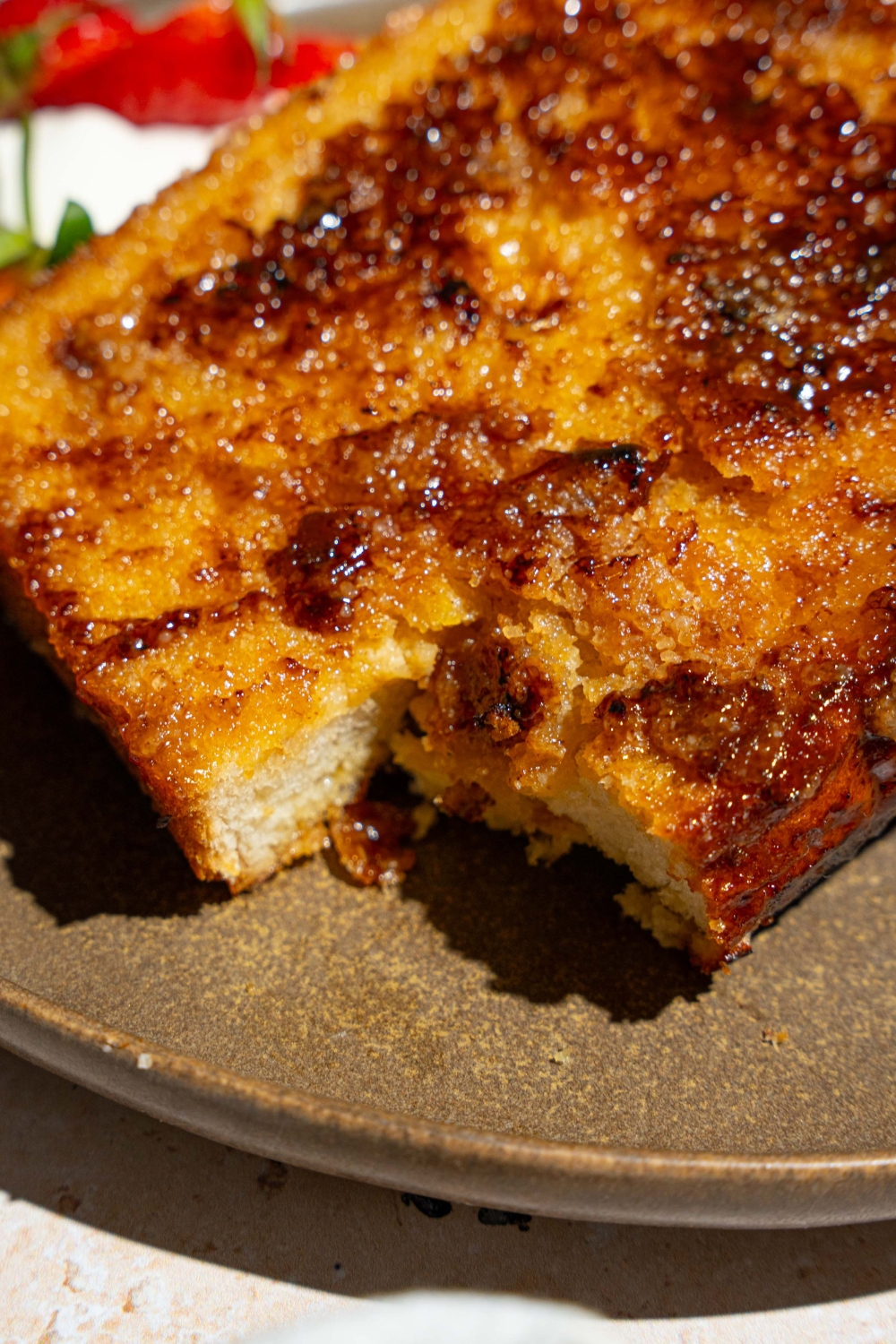
- 4–6 slices brioche, cut 1–1½ inches thick, preferably slightly stale
- 2 large eggs
- ¼ cup whole milk
- 2 tbsps. unsalted butter, melted
- 2 tbsps. packed brown sugar
- 1 tbsp. vanilla extract
- ½ tsp. ground cinnamon
- ¼ tsp. kosher salt
- ½–¾ cup turbinado sugar, for coating
- Butter, for cooking
Ingredient Notes and Substitutions
- Brioche: Thick-cut brioche is ideal for this recipe because it’s soft, rich, and sturdy enough to soak up the custard without falling apart. Slightly stale bread works even better since it absorbs more of the egg mixture. Challah is the closest substitute.
- Turbinado sugar: This is what creates the crackly caramelized crust. Its larger crystals melt more slowly than regular granulated sugar, which gives the outside time to caramelize before it burns. If you can't find turbinado sugar, you can use granulated white sugar, but keep the heat on the lower side so it doesn’t burn before the French toast is cooked through.
- Eggs and milk: These form the custard that gives the French toast its soft center. Whole milk gives it extra richness without making the mixture too heavy.
- Brown sugar: A small amount in the custard adds extra caramel flavor underneath the brûléed crust. Light or dark brown sugar both work.
- Vanilla: Vanilla reinforces the crème brûlée flavor and works especially well with brioche. Vanilla bean paste is a great upgrade if you have it.
- Cinnamon: I use just enough cinnamon to warm up the custard without turning this into cinnamon French toast. The caramelized sugar should still be the main flavor on the outside.
- Butter: Use butter to lightly grease the skillet between batches. You don’t need much since too much can interfere with the sugar making direct contact with the pan and forming a crisp crust.
How to Make Crème Brûlée French Toast
Step 1: Make the Custard
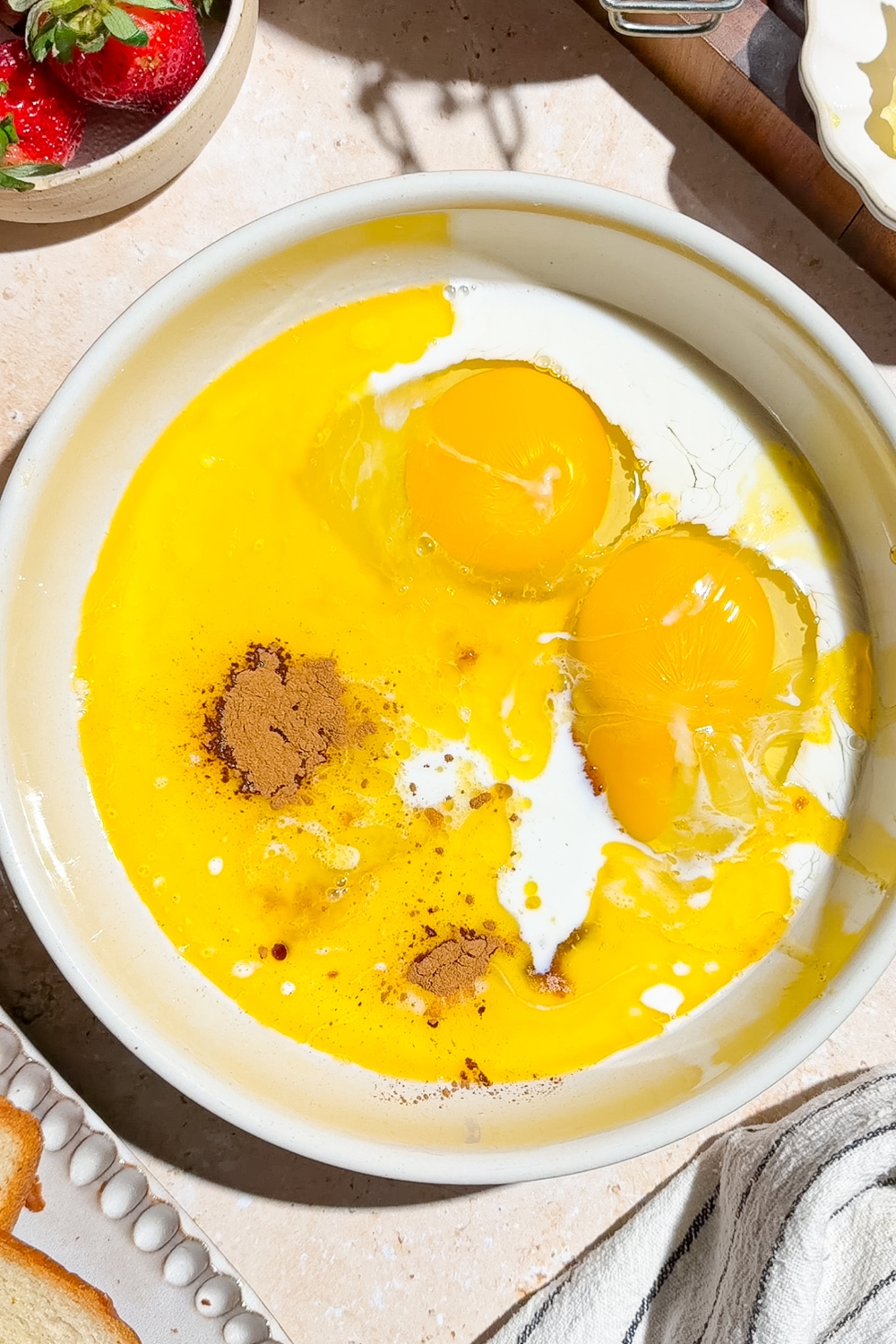
In a shallow bowl, whisk together the eggs, whole milk, melted butter, brown sugar, vanilla, cinnamon, and salt until smooth.
Step 2: Prep the Sugar Coating
Add the turbinado sugar to a separate shallow dish. Keep it nearby so you can coat each slice right after soaking it.
Step 3: Soak the Brioche
Dip each slice of brioche into the custard for about 30–60 seconds per side. You want the bread to absorb the custard without getting so saturated that it starts falling apart.
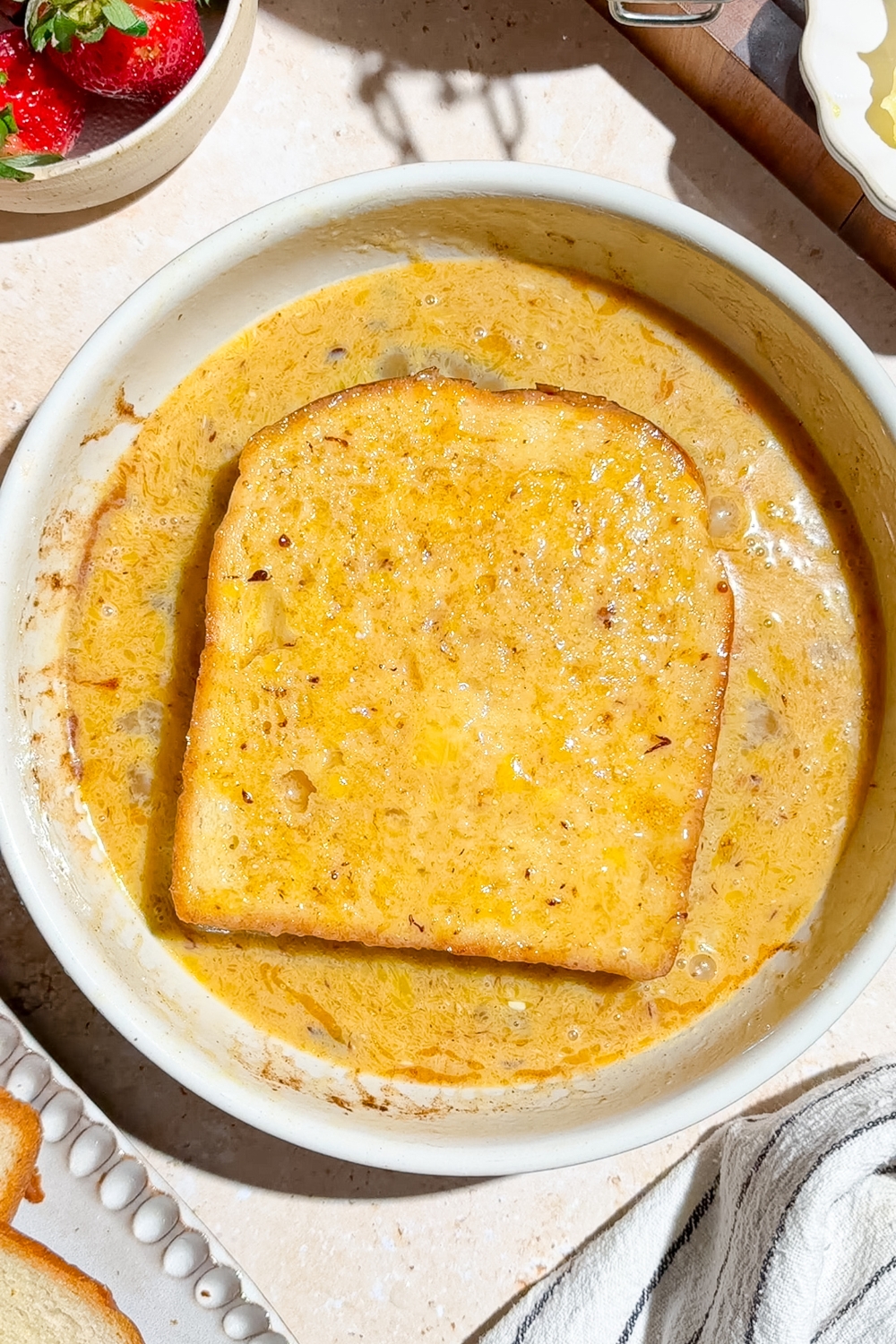
Step 4: Coat With Sugar
Transfer the soaked brioche to the turbinado sugar and lightly coat both sides. Shake off any excess so you’re left with a thin, even layer of sugar.
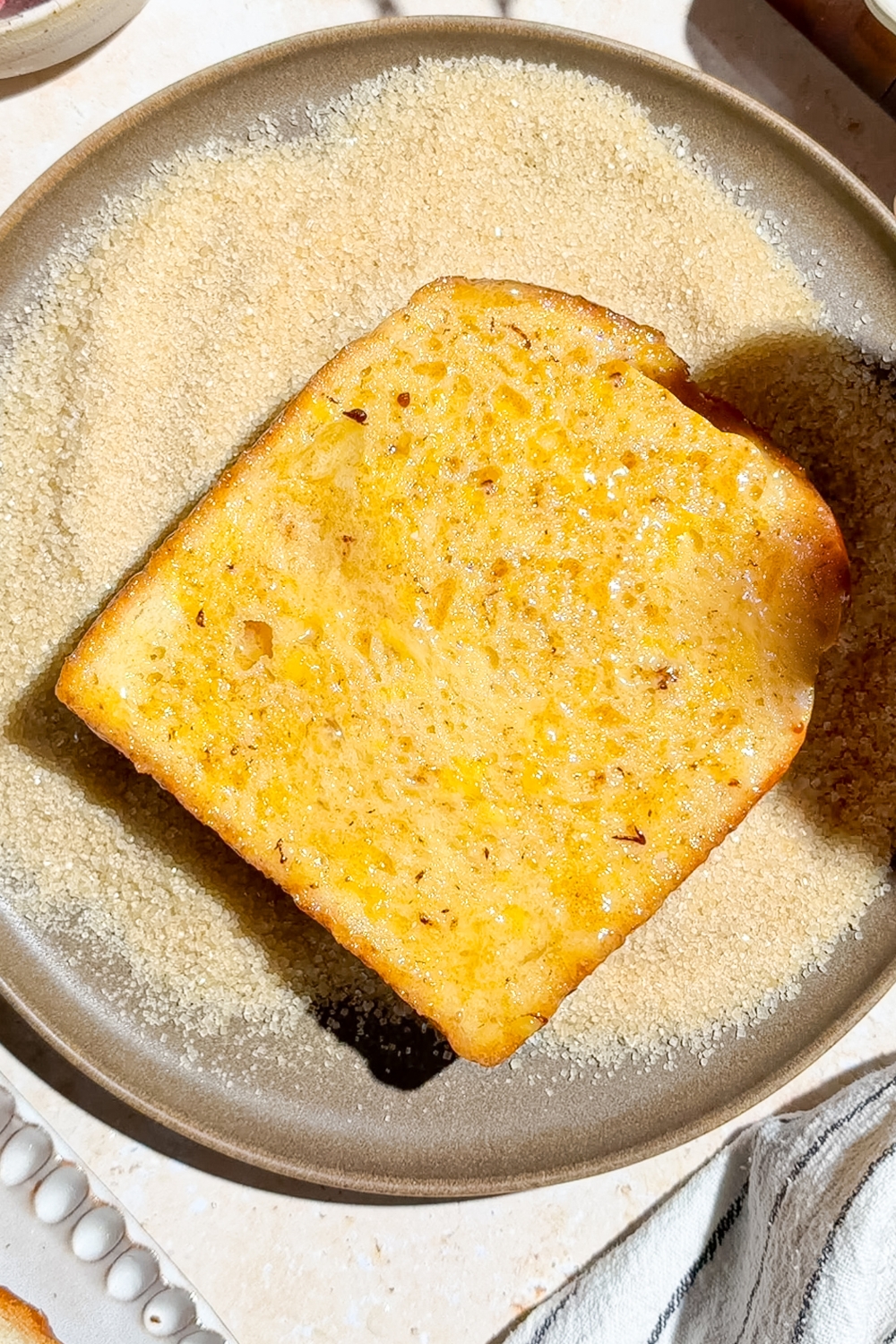
Step 5: Caramelize the French Toast
Heat a large skillet or griddle over medium-low heat and lightly grease it with butter. Add the coated brioche and cook for 3–5 minutes per side, without moving it around too much, until the sugar melts into a deep golden crust and the center is cooked through.
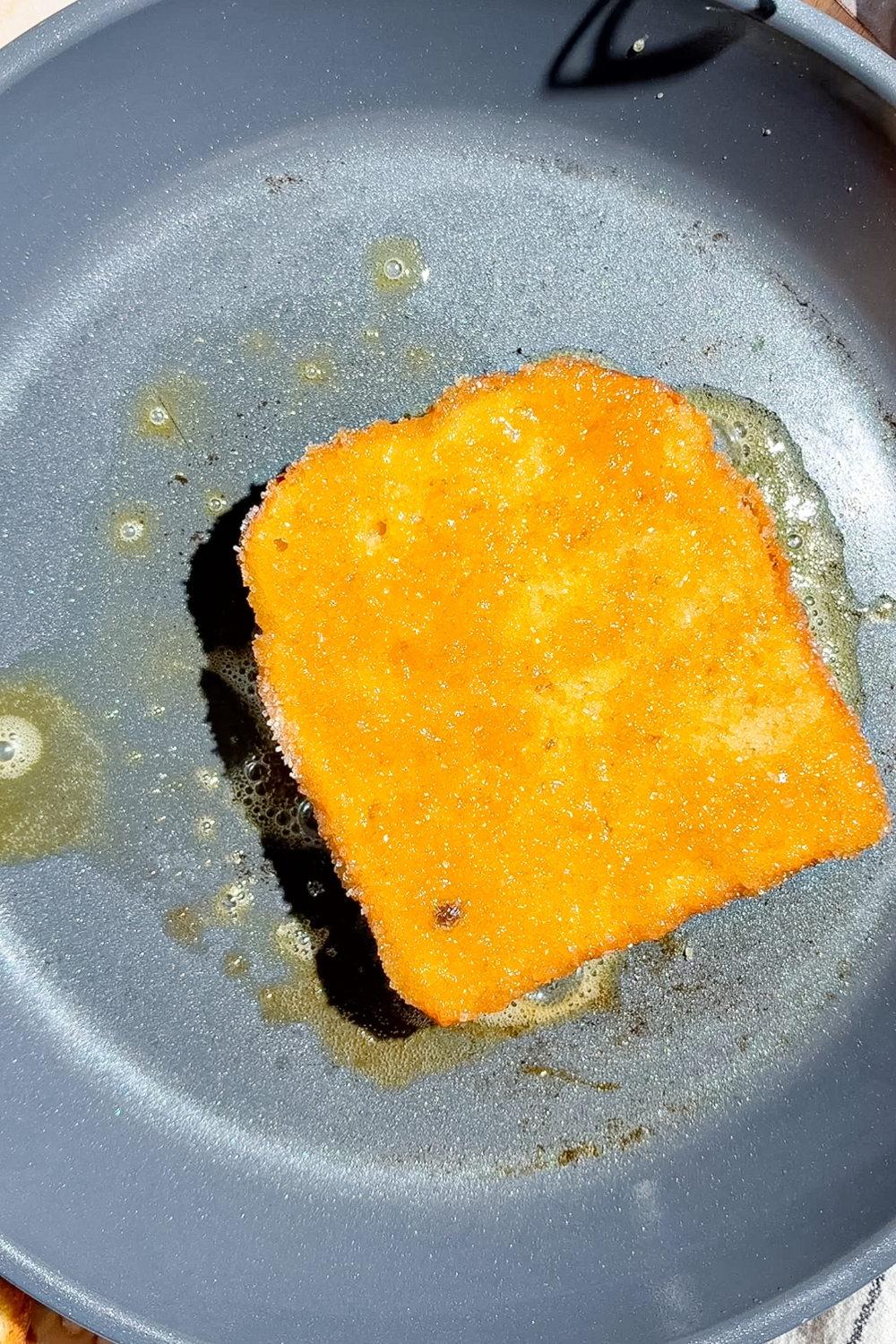
Step 6: Let the Crust Set
Transfer the French toast to parchment paper or a wire rack and let it sit for 1–2 minutes. This gives the caramelized sugar time to harden into that signature crackly brûlée crust.
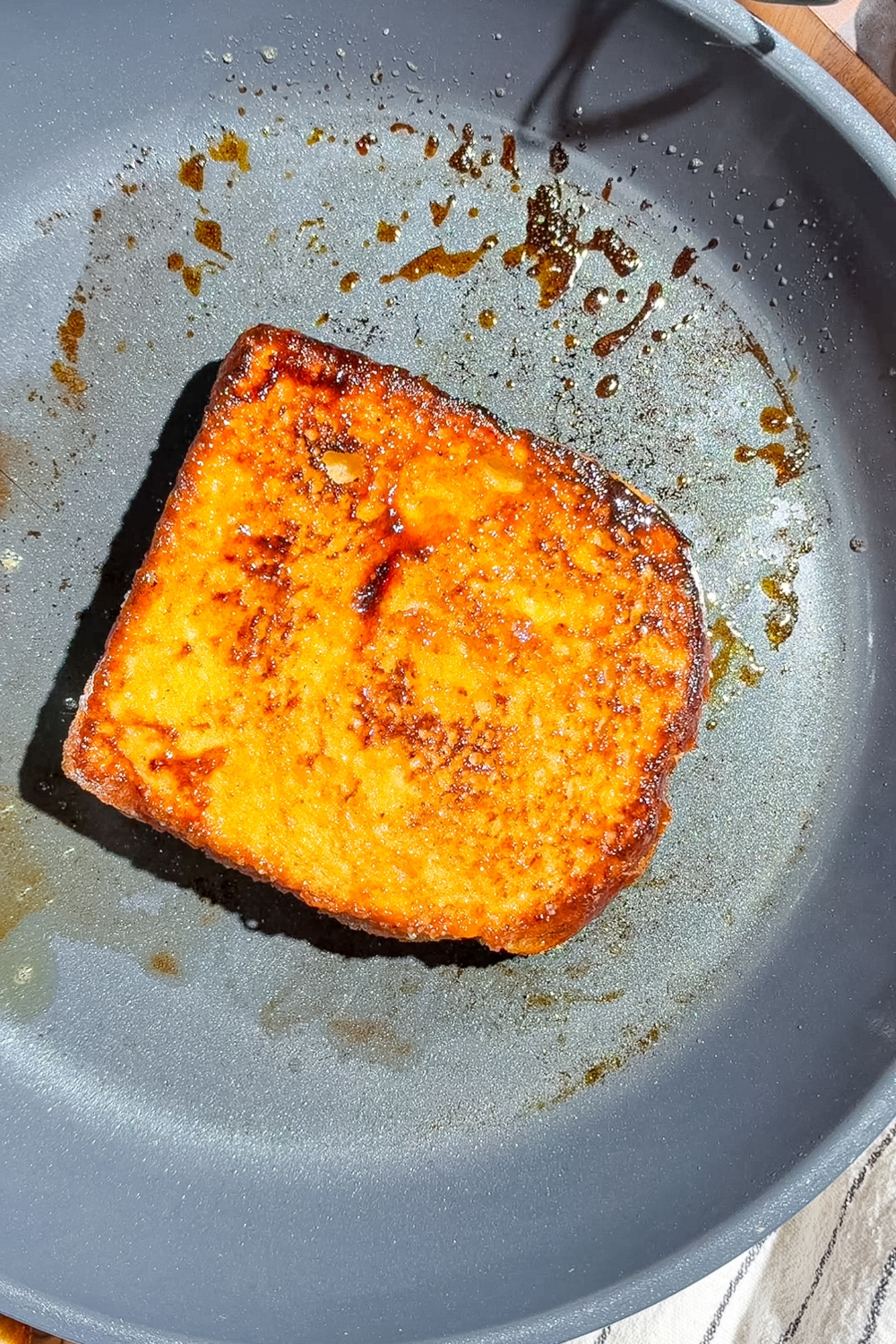
Step 7: Serve
Serve warm with fresh berries, whipped cream, maple syrup, or powdered sugar if you want, though I think it’s best when you can really taste the caramelized sugar crust.
Tips for the Best Crème Brûlée French Toast
- Use thick slices of brioche. Around 1–1½ inches is ideal. Thinner slices can get too soft after soaking and won’t give you that custardy center.
- Keep the sugar coating thin. A heavy layer of turbinado sugar can burn before the bread cooks through. You only need enough to cover the surface evenly.
- Cook over medium-low heat. This is the biggest key to getting the brûléed crust right. Lower heat gives the sugar time to melt and caramelize without turning bitter.
- Leave the bread alone once it hits the skillet. Moving it around too much interrupts the caramelization. Let each side sit undisturbed until the crust has formed.
- Clean the skillet between batches. Burnt sugar left behind can stick to the next slice and give it a bitter flavor. Carefully wipe or scrape away any dark caramel before adding more butter.
- Let the crust harden before serving. Give the finished French toast a minute or two off the heat. The sugar firms up as it cools slightly, which is what gives you that crisp crème brûlée-style shell.
- Serve it right away. This French toast is best while the inside is still warm and the sugar crust is crisp. If it sits too long, the moisture from the bread can start softening the caramelized exterior.
Crème Brûlée French Toast FAQs
What is Crème Brûlée French Toast?
Crème Brûlée French Toast combines custard-soaked bread with the caramelized sugar crust of crème brûlée. It's also called marry me French toast. In this version, thick brioche is coated in turbinado sugar and cooked directly in a skillet, so both sides develop a thin, crisp caramel shell without needing a kitchen torch.
Do I need a kitchen torch to make Crème Brûlée French Toast?
No. This recipe is specifically made without a torch so it's conveinent. The sugar caramelizes directly against the hot skillet as the French toast cooks, giving you that signature crackly crust using the same pan you cook the bread in.
Can I use regular sugar instead of turbinado sugar?
Yes. Granulated sugar is the best easy substitute. Use a thin, even coating since the smaller crystals melt faster and can burn more quickly. Demerara sugar is another excellent option and behaves very similarly to turbinado.
What bread is best for Crème Brûlée French Toast?
Thick-cut brioche is my favorite because it absorbs plenty of custard while still holding together in the skillet. Challah is another great choice. Slightly stale bread works especially well because it can soak up the custard without becoming as fragile.
Can I make Crème Brûlée French Toast ahead of time?
I wouldn’t fully cook it ahead if you want the best caramelized crust. Instead, whisk the custard the night before and refrigerate it, then slice the brioche and have the sugar ready. Soak, coat, and cook the French toast shortly before serving.
Why isn’t my sugar crust getting crispy?
The pan may be too cool, the sugar coating may be too thick, or the bread may be getting moved before the sugar has time to caramelize. Use a thin layer of sugar and let each side cook undisturbed until the surface is deeply golden.
Why is my Crème Brûlée French Toast soggy?
The brioche was likely soaked for too long or was too fresh and soft to begin with. Thick, slightly stale brioche handles the custard best. The bread should absorb the mixture but still be sturdy enough to lift from the bowl without bending or falling apart.
How do I make Crème Brûlée French Toast for a crowd?
Cook the French toast in batches and place finished slices on a wire rack in a low oven while you finish the rest. For holidays or brunch, I like to prep the custard and toppings ahead so all that’s left is soaking and cooking once everyone is ready to eat.
What should I serve with Crème Brûlée French Toast?
Fresh berries are my first choice because their tartness balances the caramelized sugar. Whipped cream, powdered sugar, or a little maple syrup also work, although I’d serve syrup on the side so the crisp sugar crust stays intact.
French Toast Recipes to Try Next
- Challah French Toast Casserole
- Sheet Pan French Toast
- Hawaiian Roll French Toast
- French Toast for One
- Pioneer Woman French Toast Casserole
Crème Brûlée French Toast

This Crème Brûlée French Toast has a soft, custardy brioche center with a thin caramelized sugar crust that cracks when you cut into it. It’s made entirely in a skillet, so you get that signature brûléed finish without needing a kitchen torch. It’s an easy upgrade from classic French toast and a great choice for holiday breakfasts, brunch, or whenever you’re cooking for guests.
Ingredients
- 4–6 slices brioche, cut 1–1½ inches thick, preferably slightly stale
- 2 large eggs
- ¼ cup whole milk
- 2 tbsps. unsalted butter, melted
- 2 tbsps. packed brown sugar
- 1 tbsp. vanilla extract
- ½ tsp. ground cinnamon
- ¼ tsp. kosher salt
- ½–¾ cup turbinado sugar, for coating
- Butter, for cooking
Instructions
1. In a shallow bowl, whisk together the eggs, milk, melted butter, brown sugar, vanilla, cinnamon, and salt until smooth.
2. Add the turbinado sugar to a separate shallow dish and set aside.
3. Heat a large skillet or griddle over medium-low heat and lightly grease with butter.
4. Dip each slice of brioche into the custard mixture for 30–60 seconds per side, allowing the bread to absorb the custard without becoming overly saturated.
5. Transfer the soaked brioche to the turbinado sugar and lightly coat both sides. Shake off any excess so there is a thin, even layer of sugar.
6. Place the coated brioche onto the hot buttered skillet. Cook undisturbed for 3–5 minutes per side, or until deeply golden and the sugar has melted and caramelized into a crisp crust.
7. Flip carefully and avoid moving the bread repeatedly so the caramelized crust has time to form. Adjust the heat as needed to prevent the sugar from burning.
8. Repeat with the remaining brioche, adding more butter and turbinado sugar as needed. Carefully remove any burnt or excess caramelized sugar from the skillet between batches.
9. Transfer the finished French toast to parchment paper for a few minutes to allow the caramelized exterior to set.
10. 4Serve warm with fresh berries, whipped cream, maple syrup, or powdered sugar.
Nutrition Information:
Yield:
4Serving Size:
1Amount Per Serving: Calories: 129Total Fat: 9gSaturated Fat: 5gUnsaturated Fat: 4gCholesterol: 110mgSodium: 191mgCarbohydrates: 9gFiber: 0gSugar: 8gProtein: 4g
Leave a Reply