


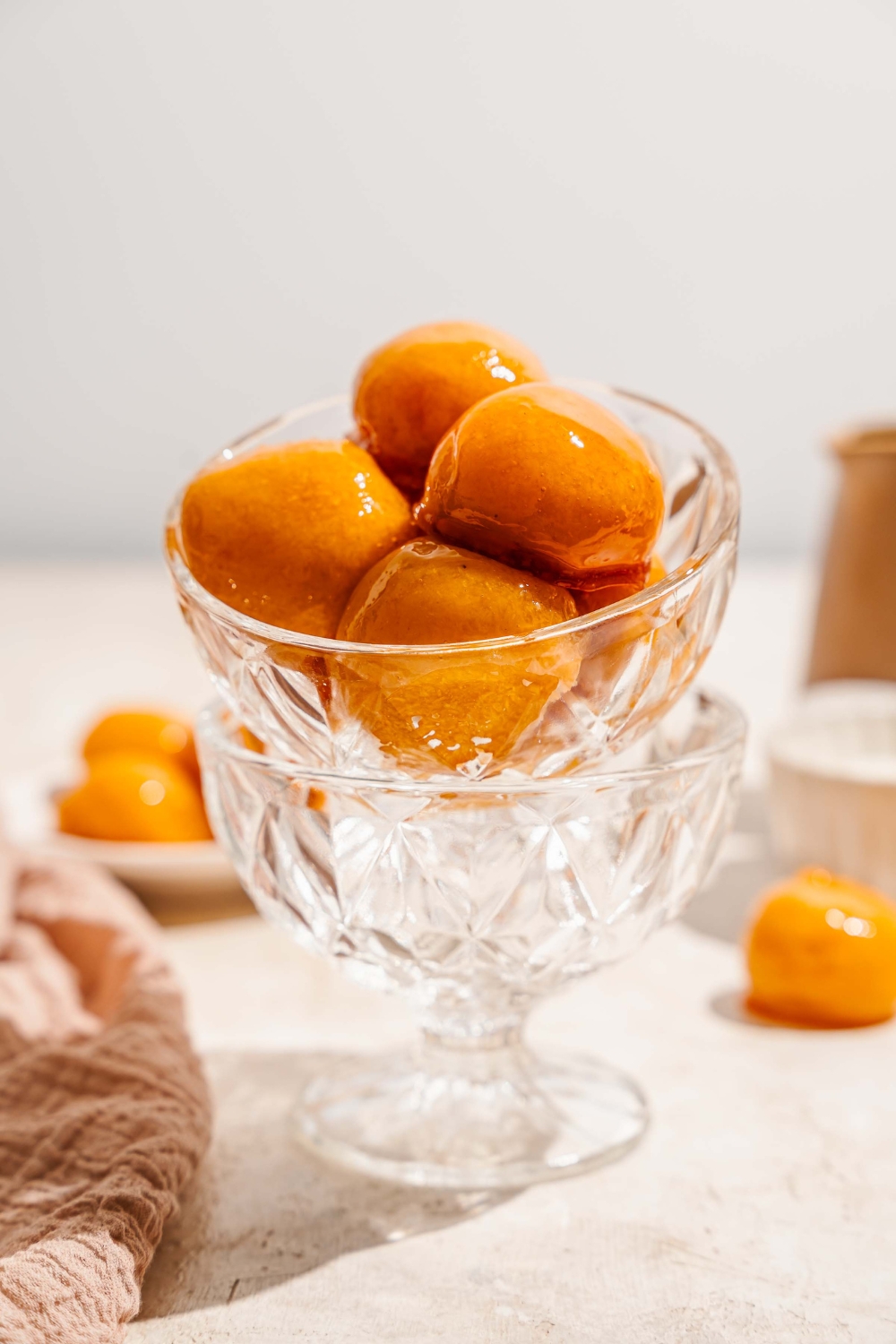
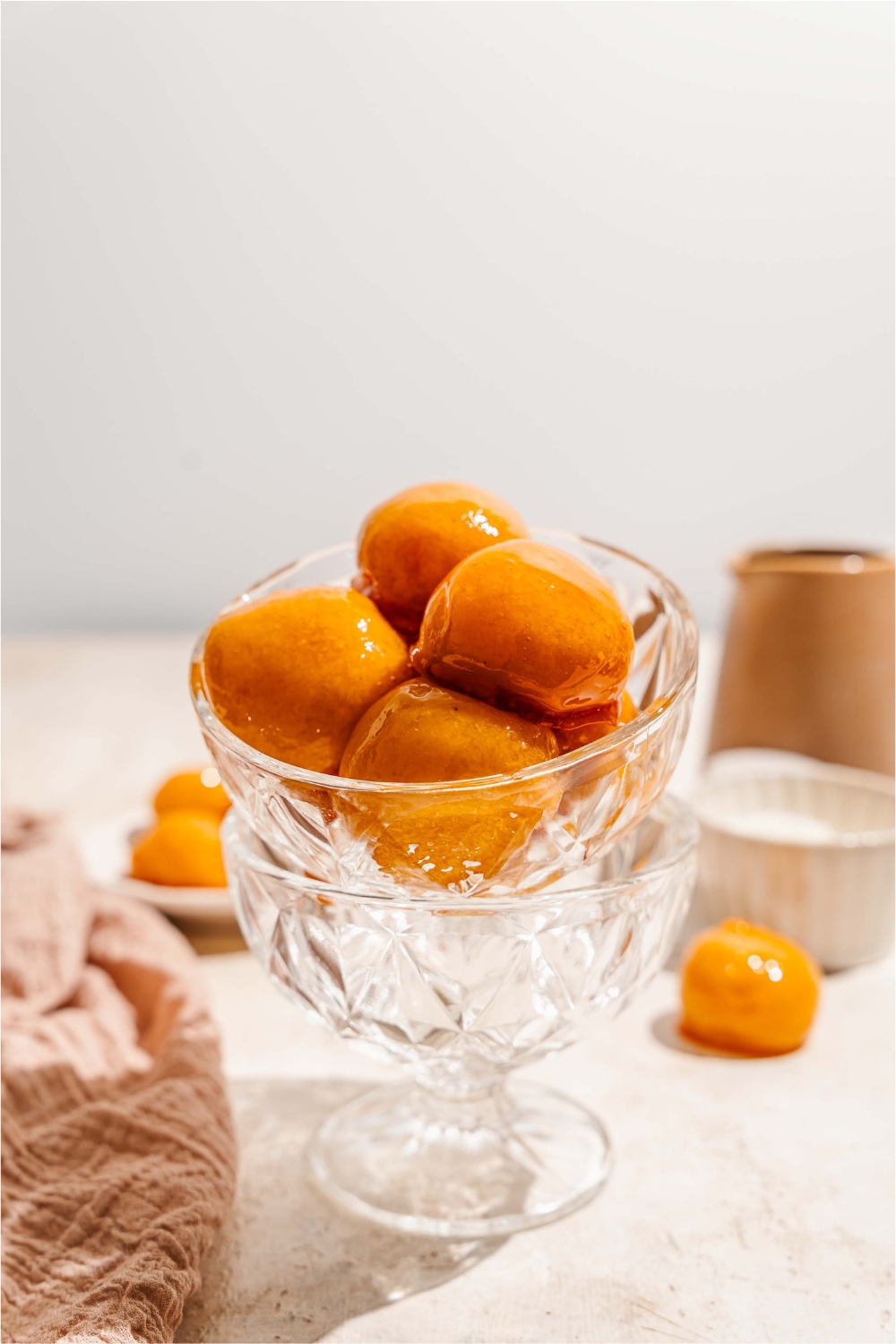
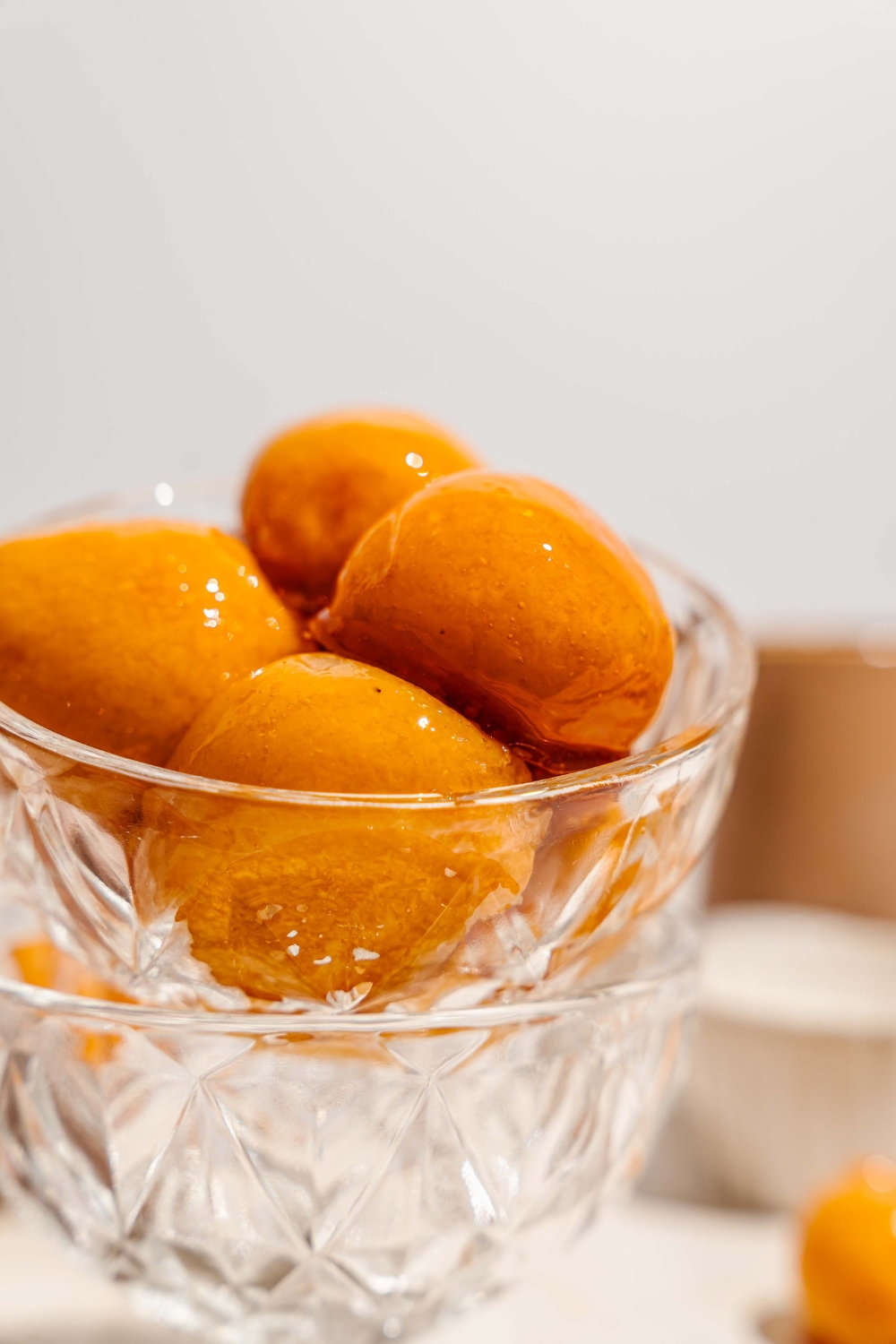
These viral Bala Baiana candies have one of the best texture combinations I’ve tried in a homemade dessert. Each one has a soft, chewy coconut center surrounded by a thin caramel shell that cracks as soon as you bite into it. The glossy coating makes them look impressive, but the filling only requires sweetened condensed milk, shredded coconut, and butter.
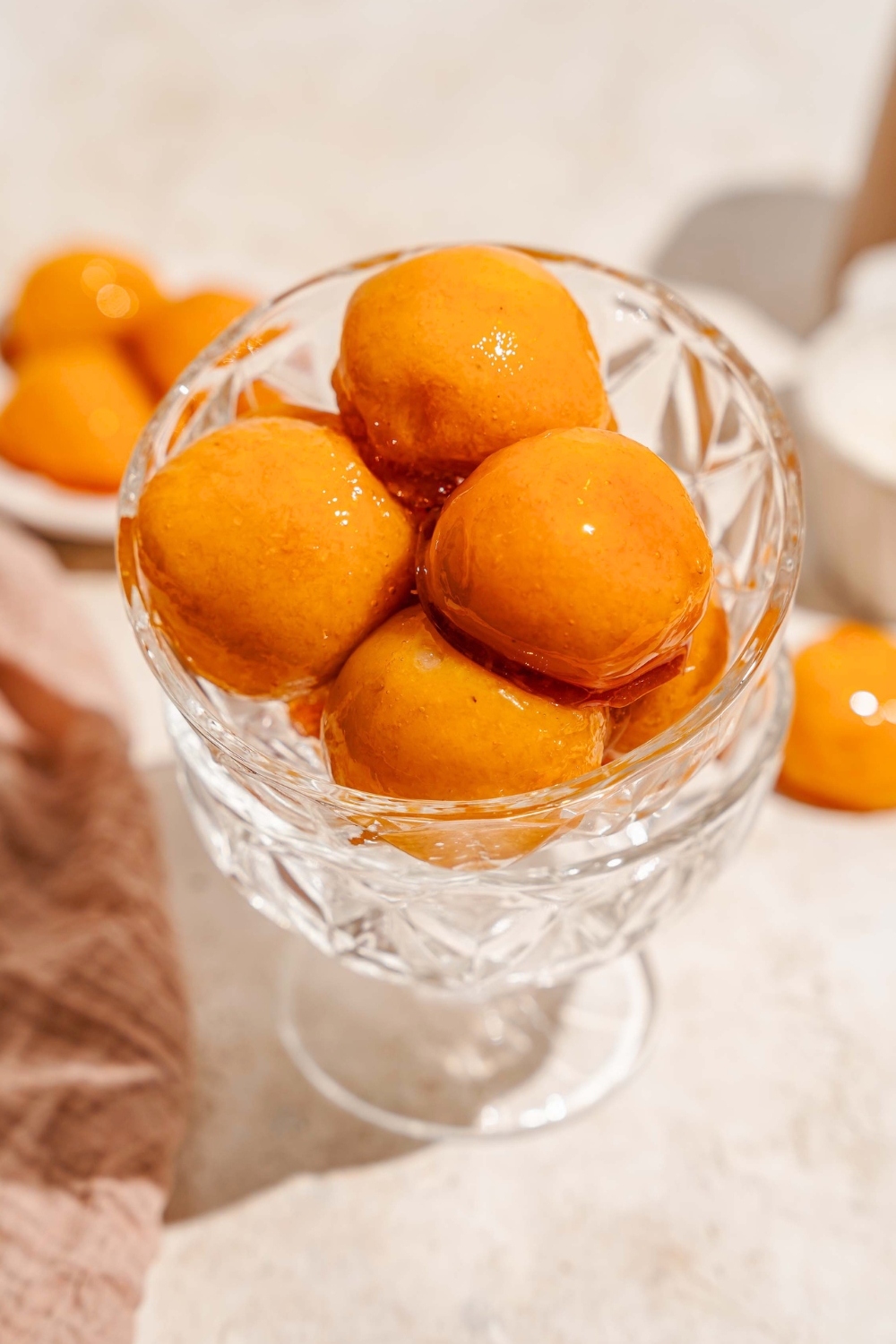
Table of Contents
What Is Bala Baiana?
Bala Baiana is a traditional Brazilian candy made with a creamy coconut and sweetened condensed milk filling covered in a thin, glass-like caramel shell. It’s also commonly called bala de vidro, meaning “glass candy,” because of its clear, crisp sugar coating.
The coconut center is similar to a beijinho, a Brazilian coconut brigadeiro, but dipping it in caramel gives Bala Baiana its signature glossy appearance and crackly texture.
Why You’ll Love This Brazilian Coconut Candy
The texture is unlike anything else. The caramel shell shatters with the first bite before giving way to a soft, chewy coconut filling that tastes rich, buttery, and almost fudgy.
It uses a short ingredient list. The filling only needs condensed milk, shredded coconut, and butter. The crisp outer shell is made with sugar, water, and a little vinegar.
They look impressive. Once the caramel hardens, the candies have a smooth, glossy finish that makes them perfect for holidays, parties, dessert tables, and homemade gifts.
The process is easier than it looks. The caramel requires your full attention, but the rest of the recipe is straightforward. Cook and chill the coconut filling, roll it into balls, dip each one in the syrup, and let the shell harden.
Ingredients You’ll Need
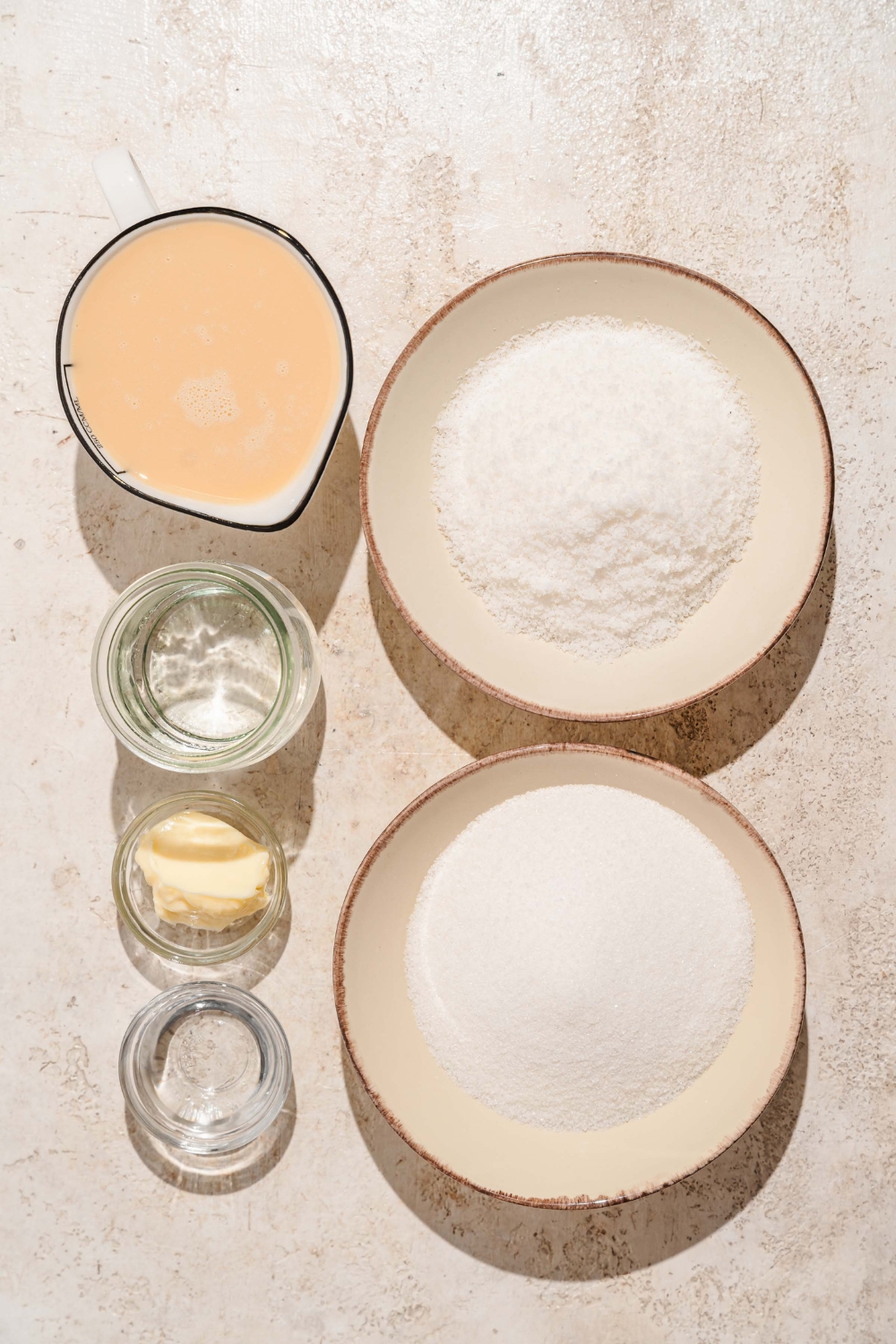
Coconut Filling:
- 1 tablespoon salted butter
- 1 can sweetened condensed milk, 14 ounces
- ⅔ cup sweetened shredded coconut
Caramel Coating:
- 1 cup granulated sugar
- ½ cup water
- 1 tablespoon white vinegar
Ingredient Notes
- Sweetened condensed milk: This creates the rich, fudgy base of the coconut filling. Don’t substitute evaporated milk, which isn’t sweetened or thick enough to produce the same consistency.
- Sweetened shredded coconut: Finely shredded coconut gives the filling a smoother texture and makes the candies easier to shape. If your coconut has long strands, pulse it briefly in a food processor before adding it to the filling.
- Salted butter: Butter adds richness and helps create a smooth coconut mixture. You can also use a small amount to grease your hands before rolling the filling into balls.
- Granulated sugar: Regular white sugar creates the thin, crisp caramel shell and makes it easier to monitor the syrup as it turns amber. Brown sugar will change the flavor and color of the coating, so I don’t recommend substituting it.
- White vinegar: A small amount of vinegar helps prevent the sugar syrup from crystallizing as it cooks. You won’t taste it in the finished candy.
How to Make Bala Baiana
Step 1: Cook the Coconut Filling
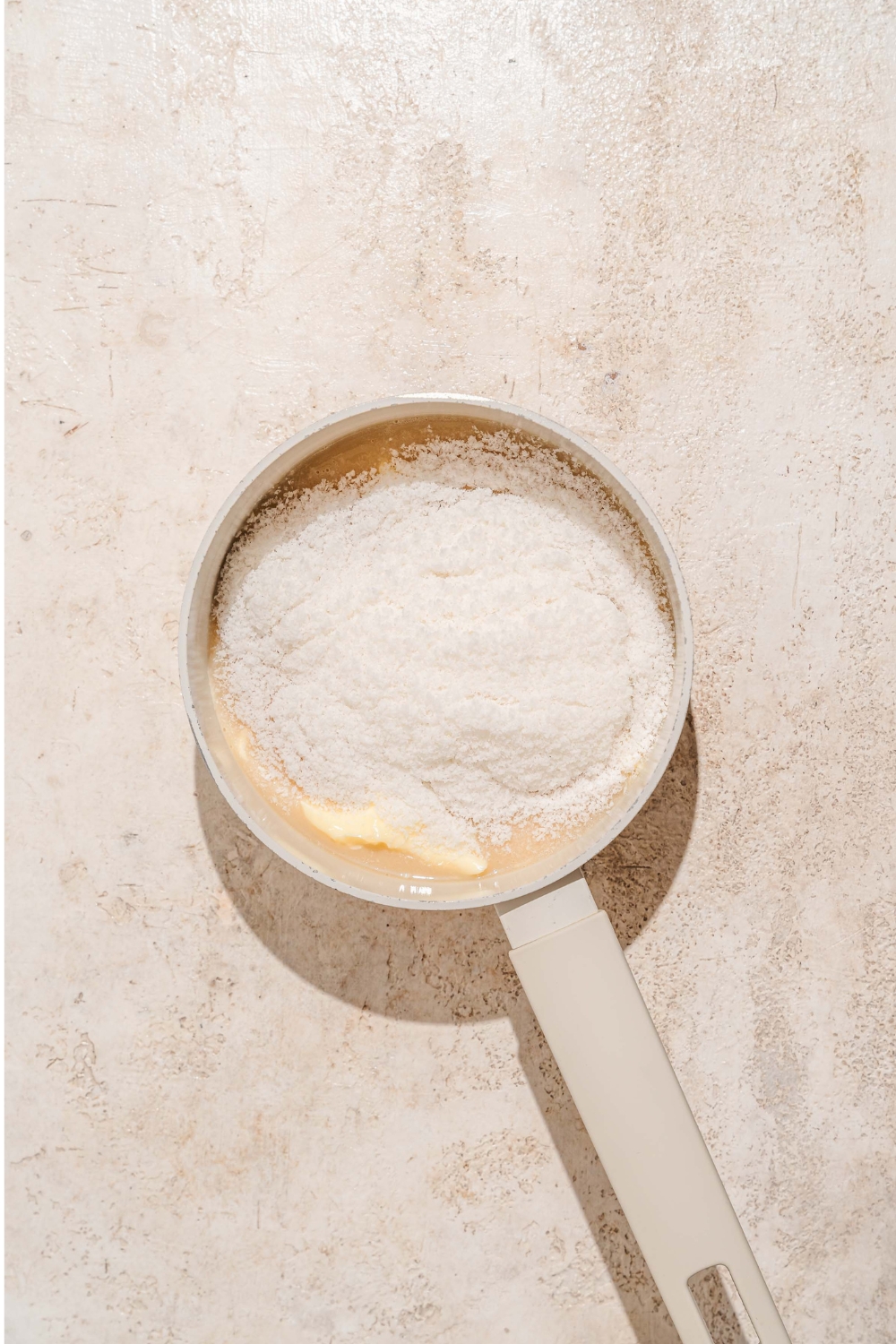
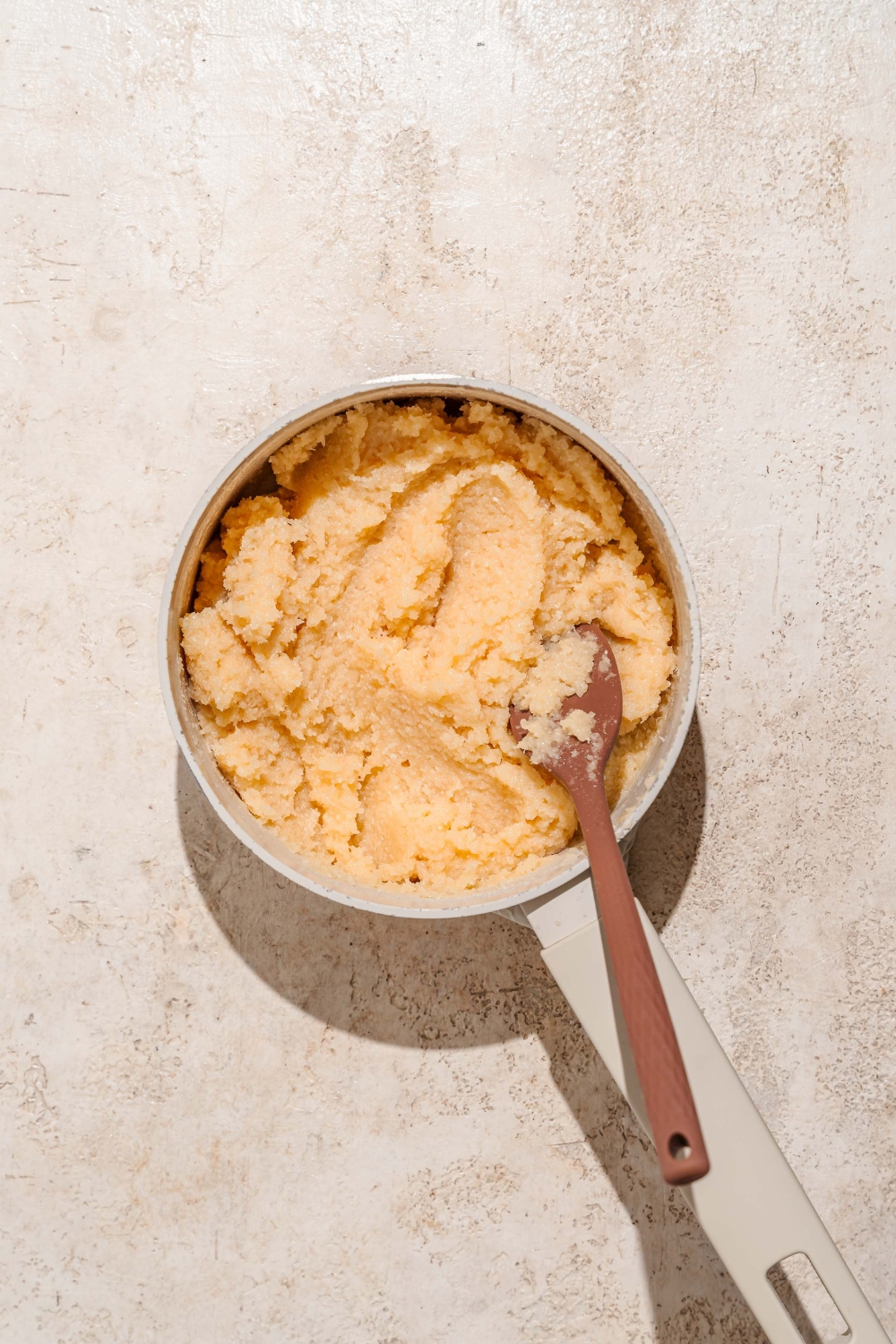
Melt the butter in a medium saucepan over medium heat. Add the sweetened condensed milk and shredded coconut. Stir until the mixture is evenly combined.
Cook for 5-7 minutes, stirring constantly and scraping along the bottom and corners of the pan. The filling is ready when it becomes thick, pulls away from the sides, and briefly leaves a clear path when you drag the spatula across the bottom.
Step 2: Chill the Filling
Transfer the coconut mixture to a lightly greased bowl or plate. Cover and refrigerate it for 30 to 60 minutes, or until completely cool and firm enough to handle. Don’t try to shape the filling while it’s warm. It will be much softer and stickier.
Step 3: Roll the Coconut Balls
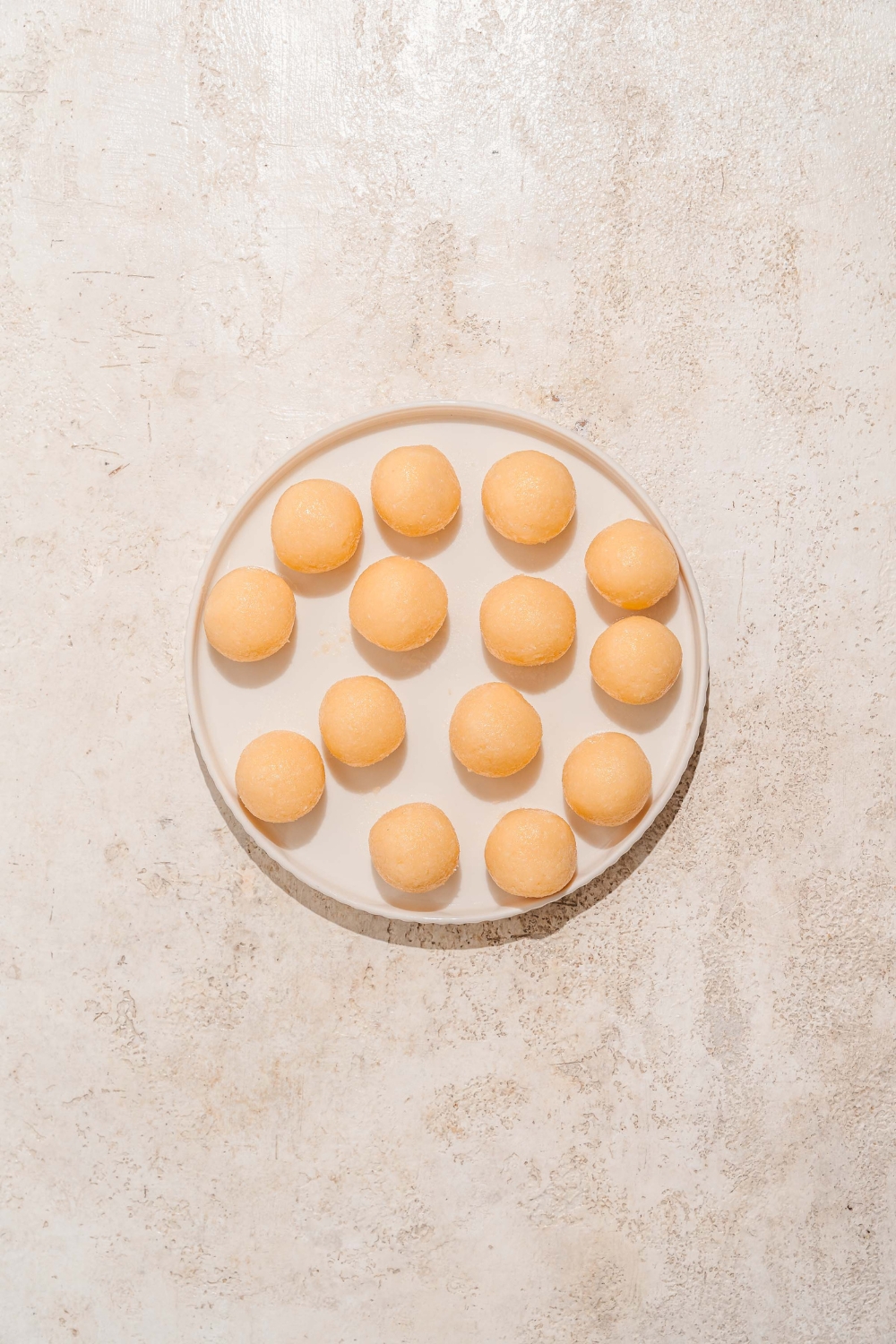
Line a tray with parchment paper or a silicone baking mat. Lightly grease your hands with butter or neutral oil. Scoop about 1 tablespoon of filling and roll it between your palms until smooth.
Place the ball on the prepared tray and repeat with the remaining filling. This recipe should make approximately 20-24 candies, depending on their size. Insert a toothpick into each coconut ball, making sure it’s secure without pushing it all the way through. Refrigerate the shaped balls while you prepare the sugar coating.
Step 4: Make the Caramel Coating
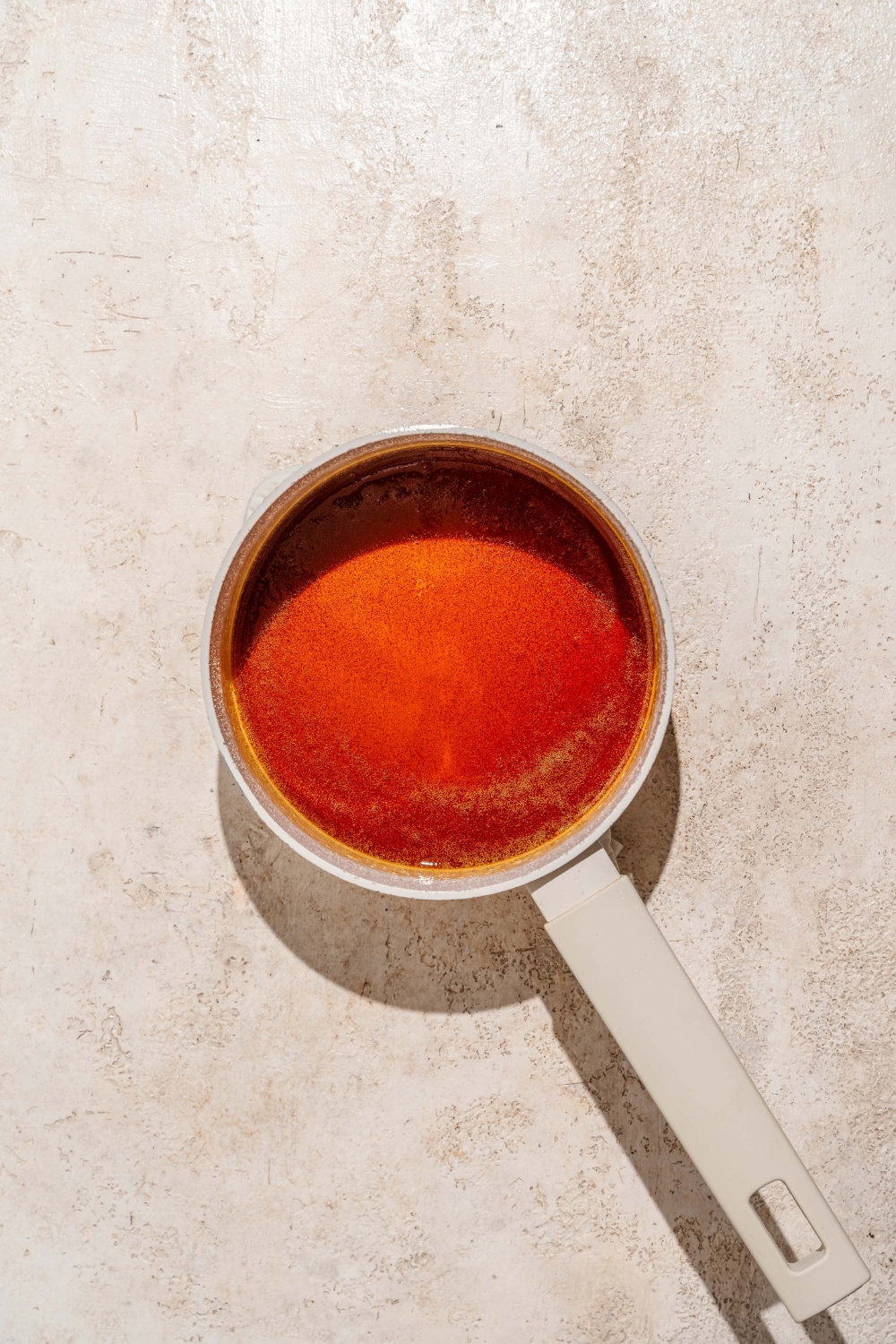
Add the sugar, water, and vinegar to a clean, light-colored saucepan. Heat over medium-high heat, stirring gently only until the sugar has dissolved. Once the mixture begins boiling, stop stirring.
Continue cooking until the syrup reaches the hard-crack stage, approximately 300-310°F, and turns a light golden amber color. Sugar syrup at this temperature cools into a hard, brittle shell. Don’t wait for the syrup to become very dark. It can go from pleasantly caramelized to bitter and burned quickly.
Step 5: Dip the Coconut Balls
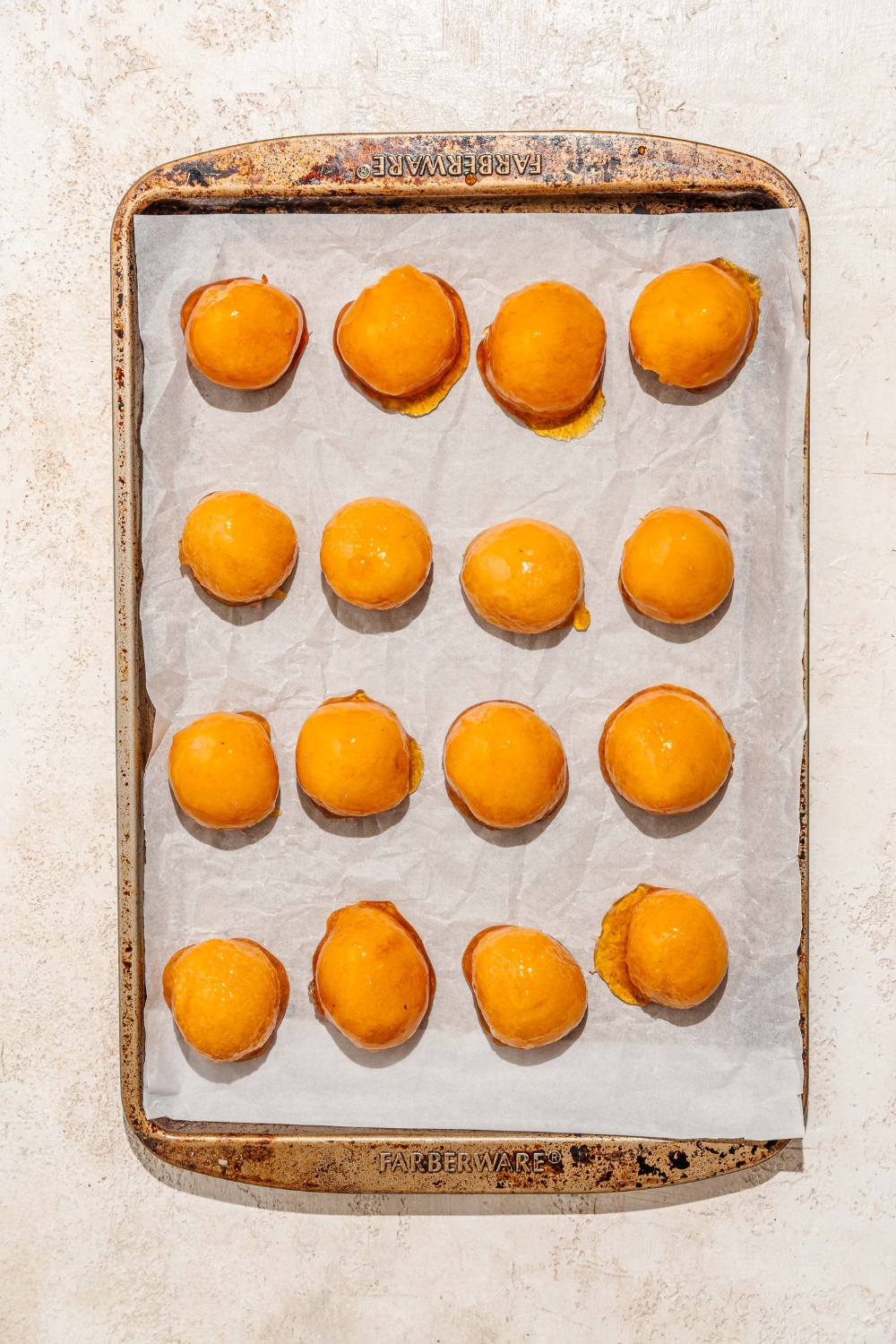
Remove the caramel from the heat. Working carefully and quickly, hold one coconut ball by its toothpick and dip it into the caramel. Tilt the saucepan as needed so the ball becomes completely coated.
Lift it out and let the excess syrup drip back into the pan for a few seconds. Place the coated candy on the prepared tray. Repeat with the remaining coconut balls. Hot sugar can cause serious burns, so keep your hands away from the syrup and don’t touch the coating until it has completely hardened.
Step 6: Let the Shell Set
Let the Bala Baiana sit at room temperature until the caramel coating is fully hard, usually 5-10 minutes. Gently twist and remove the toothpicks. You can place the candies in small paper cups or wrap them individually once the coating is completely cool.
My Tips for the Best Bala Baiana
- Prepare everything before cooking the syrup. Insert the toothpicks into the coconut balls and have your lined tray ready before you start the caramel. Once the syrup reaches the correct temperature, you’ll need to dip the candies quickly.
- Use a light-colored, heavy-bottomed saucepan. A pale interior makes it easier to monitor the caramel’s color, while a heavy base distributes heat more evenly and reduces the risk of burning.
- Cook the syrup to the hard-crack stage. For the thin, crisp shell, heat the caramel to about 300°F-310°F on a candy thermometer. Remove it from the heat as soon as it reaches temperature and turns a light amber color.
- Tilt the pan while dipping. Carefully tipping the saucepan creates a deeper pool of caramel, making it easier to coat each coconut ball without using more syrup.
- Don’t scrape the bottom of the saucepan. As the caramel sits, the sugar closest to the bottom may become darker and more bitter. Dip from the upper portion of the syrup rather than scraping up the last bit.
- Gently rewarm thickened caramel. If the coating becomes too thick before you finish, place the pan over low heat just until it becomes fluid again. Avoid letting it continue to darken.
- Use a silicone baking mat when possible. The hardened candies release more easily from silicone than from parchment paper, especially if a small pool of caramel forms beneath them.
- Make the candies on a dry day. Humidity causes hard candy coatings to absorb moisture and become sticky. For the longest-lasting crunch, avoid making Bala Baiana in a warm, humid kitchen.
- Make separate batches for larger quantities. Caramel thickens quickly, so doubling it in one saucepan can make dipping difficult. Prepare a fresh batch of syrup when coating more candies.
How to Store Bala Baiana
Store Bala Baiana in a single layer inside an airtight container at room temperature. Keep the container in a cool, dry place away from heat, sunlight, and humidity. The candies have their best crisp texture within 1-2 days, but they can be stored for up to 3 days. If you need to stack them, place a sheet of parchment paper between each layer to prevent sticking.
I don’t recommend refrigerating the finished candies. Moisture and condensation can cause the caramel shell to become soft or sticky, especially once the container is opened.
You can prepare the coconut filling ahead of time and refrigerate the uncoated balls in an airtight container for up to 3 days. Let them sit at room temperature briefly before dipping so they aren’t extremely cold.
To freeze them, place the uncoated coconut balls in a freezer-safe container for up to 1 month. Thaw them overnight in the refrigerator, then bring them closer to room temperature before coating them with caramel. Don’t freeze the fully coated candies since condensation will damage the crisp shell.
Bala Baiana FAQs
Is Bala Baiana the same as beijinho?
No, Bala Baiana and beijinho have similar coconut fillings, but they’re finished differently. Beijinho is usually rolled in shredded coconut or sugar, while Bala Baiana is dipped in a thin, crisp caramel coating.
What does Bala Baiana mean?
Bala Baiana roughly translates to “Bahian candy” or “candy from Bahia.” It’s a Brazilian coconut candy also commonly known as bala de vidro, meaning “glass candy.”
Why is my Bala Baiana sticky?
Bala Baiana usually becomes sticky when the caramel doesn’t reach the hard-crack stage or absorbs moisture from humid air. Cook the syrup to 300°F-310°F and keep the finished candies in a cool, dry place.
Why did my sugar coating crystallize?
The sugar coating can crystallize if the syrup is stirred after it begins boiling or if undissolved sugar remains on the sides of the pan. Stop stirring once the sugar dissolves and brush any visible crystals down with a wet pastry brush.
What temperature should the caramel reach?
The caramel should reach 300°F-310°F, which is the hard-crack stage. At this temperature, the syrup cools into the thin, brittle shell that gives Bala Baiana its signature crunch.
Can I make Bala Baiana without a candy thermometer?
Yes, you can use the cold-water test instead. Drop a small amount of syrup into cold water and let it cool briefly. It’s ready when it forms hard, brittle threads that snap instead of bending.
Do I have to use vinegar in Bala Baiana?
Vinegar isn’t absolutely required, but I don’t recommend leaving it out. The acid helps prevent the sugar syrup from crystallizing and doesn’t leave a noticeable vinegar taste in the finished candy.
Can I use unsweetened coconut?
Yes, you can use unsweetened shredded coconut, but the filling will be less sweet and may have a slightly firmer texture. I prefer sweetened coconut for the softer, chewier center in this recipe.
Why is my caramel coating too thick?
The coating becomes thick when the syrup cools too much before dipping is finished. Return the saucepan to low heat briefly to loosen the caramel, then let the excess syrup drip off each candy before setting it down.
Is Bala Baiana gluten-free?
Bala Baiana is naturally gluten-free when made with the ingredients in this recipe. Check the labels on the shredded coconut and other packaged ingredients if cross-contamination is a concern.
Viral Desserts to Try Next
- Watermelon Ice Cream
- Rice Paper Mochi
- Chocolate Crunch Cake
- Smashed Date S'mores
- Frozen Sour Grapes
- No-Bake Biscoff Truffles
Bala Baiana (Viral Brazilian Coconut Bonbons)

These Bala Baiana candies have a soft, chewy coconut filling wrapped in a thin caramel shell that cracks when you bite into it. This traditional Brazilian coconut candy is also known as bala de vidro, or glass candy.
Ingredients
Coconut Filling:
- 1 tablespoon salted butter (14g)
- 1 can sweetened condensed milk (395g or 14 oz.)
- ⅔ cup sweetened shredded coconut (55-60g)
Caramel Coating:
- 1 cup granulated sugar (200g)
- ½ cup water (120ml)
- 1 tablespoon white vinegar (15ml)
Instructions
- Melt the butter in a medium saucepan over medium heat. Add the sweetened condensed milk and shredded coconut and stir until combined.
- Cook for 5-7 minutes, stirring constantly and scraping the bottom and corners of the pan. The mixture is ready when it thickens and begins pulling away from the sides.
- Transfer the coconut mixture to a bowl and cover it. Refrigerate for 30-60 minutes, or until completely cooled and firm enough to handle.
- Line a tray with parchment paper or a silicone baking mat. Lightly grease your hands with butter or oil.
- Scoop approximately 1 tablespoon of filling at a time and roll it into a smooth ball. Place each ball on the prepared tray and insert a toothpick into the center.
- Add the sugar, water, and vinegar to a clean, light-colored saucepan. Bring the mixture to a boil over medium-high heat, stirring only until the sugar dissolves.
- Once the syrup begins boiling, stop stirring. Continue cooking until it reaches 300°F to 310°F on a candy thermometer and turns a light amber color.
- Remove the caramel from the heat. Carefully dip each coconut ball into the hot syrup, turning it until completely coated.
- Allow the excess caramel to drip back into the saucepan, then place the candy on the prepared tray. Work quickly since the caramel will thicken as it cools. If needed, return the saucepan to low heat briefly to loosen the syrup.
- Let the Bala Baiana sit at room temperature until the caramel shell is completely hard. Carefully remove the toothpicks before serving.
Notes
- Prepare the coconut balls, toothpicks, and lined tray before making the caramel.
- Don’t stir the sugar syrup after it begins boiling or it may crystallize.
- Use caution when dipping since the caramel is extremely hot.
- Make these on a dry day whenever possible. Humidity can cause the caramel shell to become sticky.
- Store the candies in a single layer inside an airtight container at room temperature for up to 3 days. They have their crispest texture within the first 1 to 2 days.
- Don’t refrigerate or freeze the coated candies because condensation can soften the caramel shell.
Nutrition Information:
Serving Size:
1 candyAmount Per Serving: Calories: 141Total Fat: 4gCholesterol: 11mgSodium: 42mgCarbohydrates: 25gSugar: 25gProtein: 3g
Allison
OMG so good!! I had never had these before but they're my new fav treat!
Brendan Cunningham
Amazing to hear!! They are so unique and delicious