


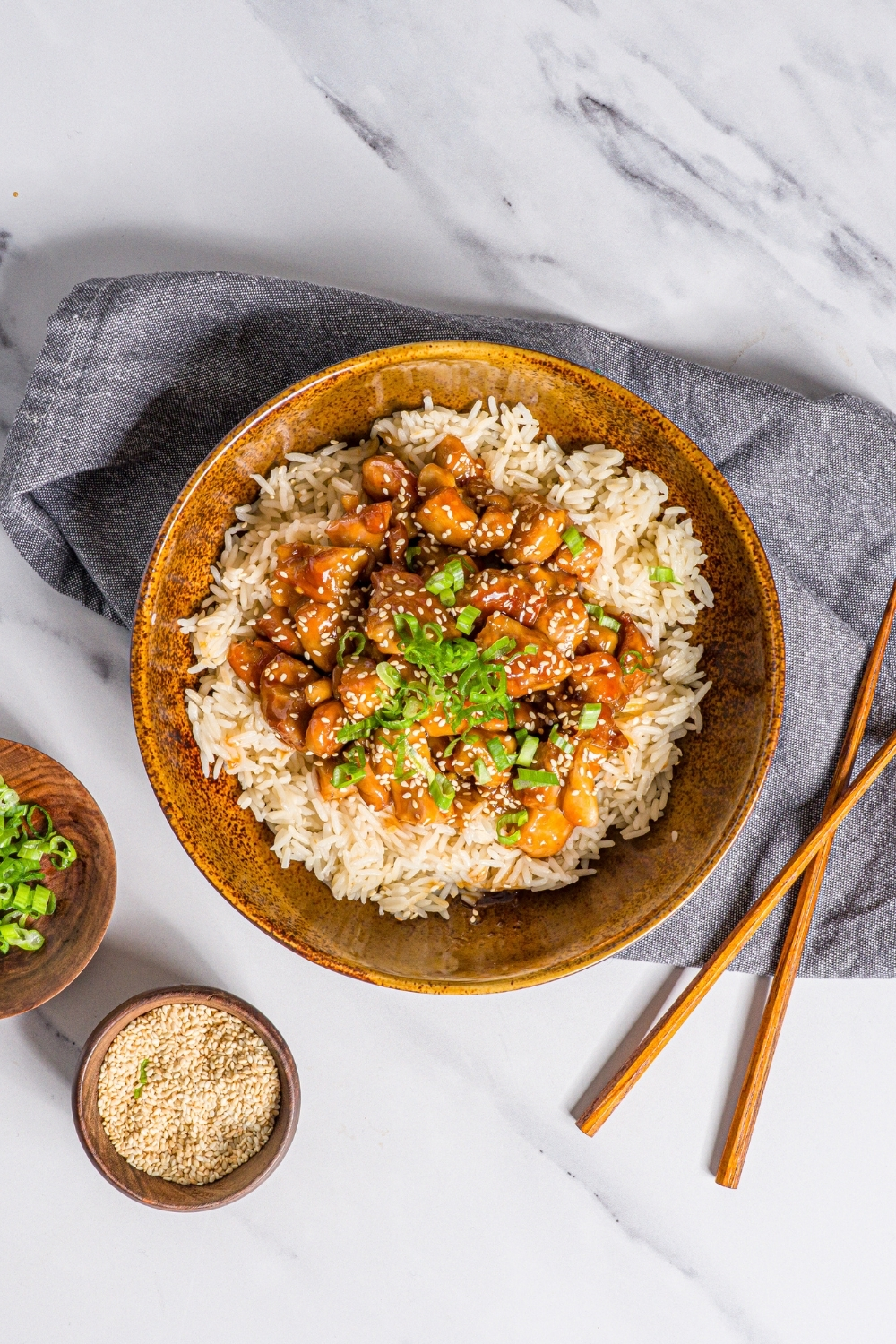
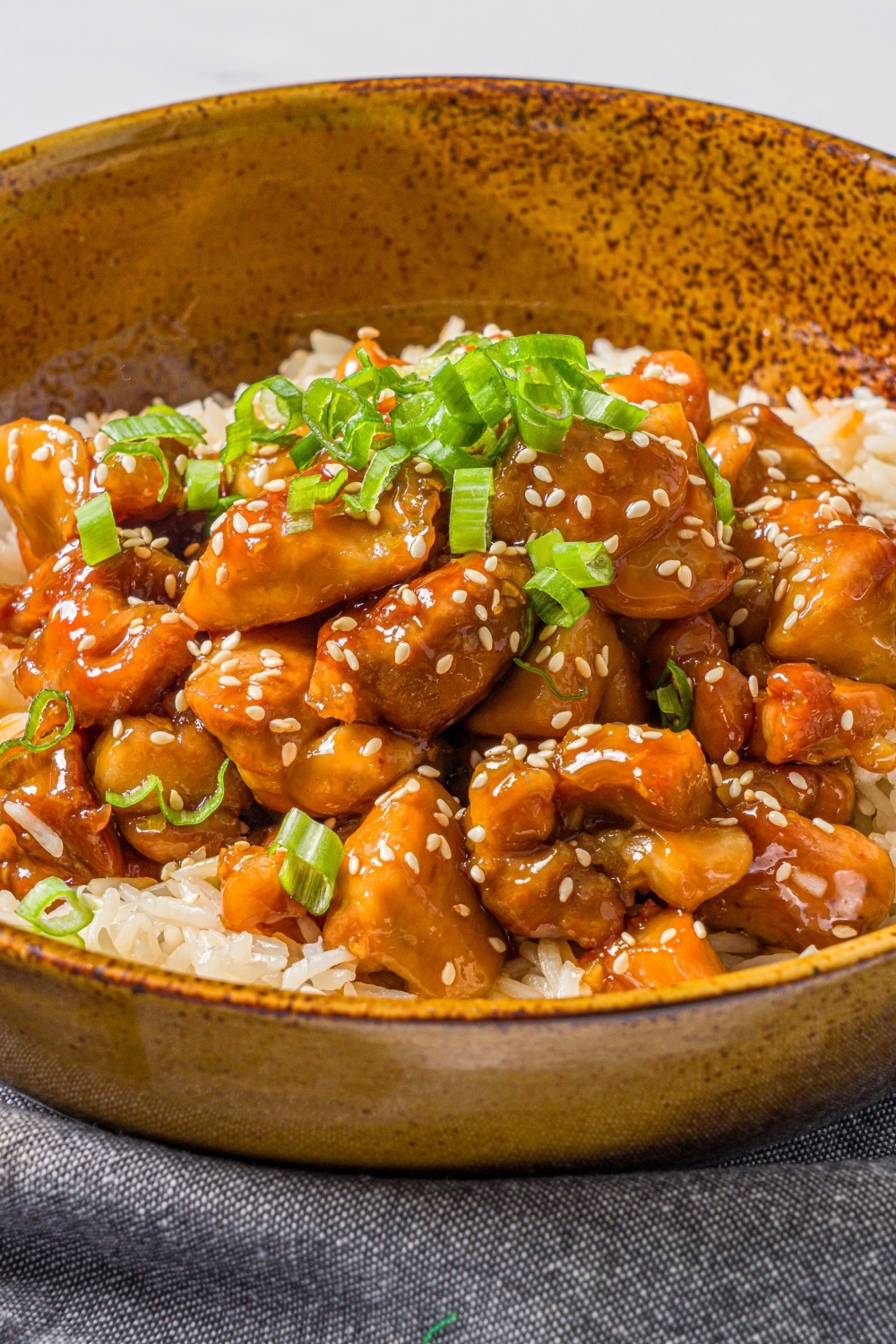
If you love chicken that’s crispy on the edges, juicy inside, and drenched in a sticky-sweet Korean glaze, you’re about to make this recipe on repeat. This sticky Korean chicken is pan-fried fast, then tossed in a glossy sauce made with soy sauce, brown sugar, sesame oil, and gochujang for that bold, addictive Korean-inspired flavor. And if you’ve made my Korean Marinated Eggs or Korean Pork Chops, you already know I make Korean dishes with a simple method that delivers a huge payoff.
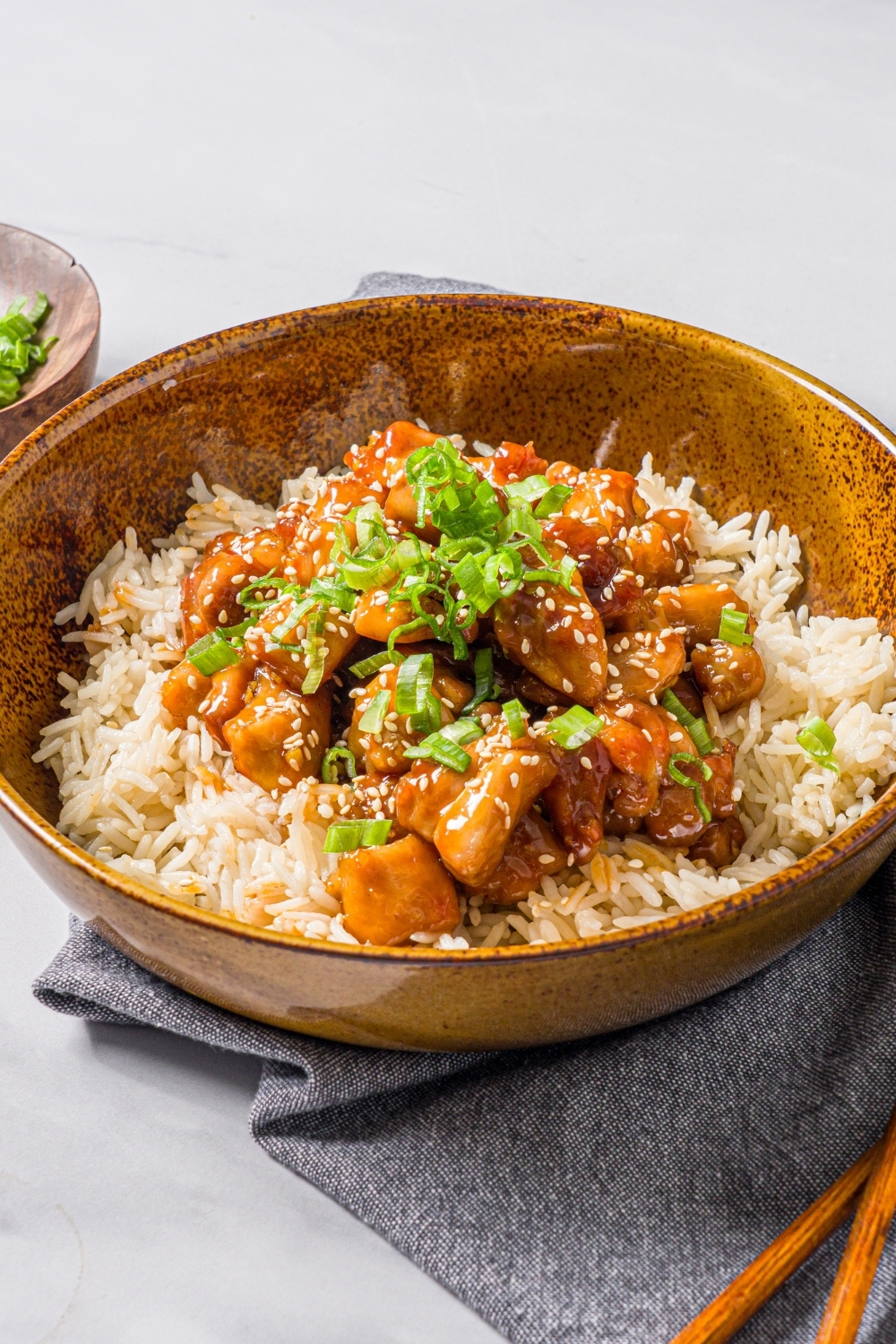
Table of Contents
Why You'll Love This Korean Chicken Recipe
This recipe delivers everything people crave from sticky Korean chicken without a long ingredient list or any special equipment. Chicken thighs stay juicy and forgiving, and that light cornstarch coating gives the sauce something to grab onto, so the glaze turns glossy and sticky instead of sliding off. The flavor is exactly what you want: sweet, salty, a little heat, and just enough sesame to make it taste like a legit Korean-inspired sauce.
It’s also one of the most versatile Korean chicken dinners you can make. Serve it over rice, stuff it into lettuce wraps, pile it into bowls with cucumbers and scallions, or pack it for meal prep. The glaze reheats like a dream, which means leftovers taste just as good the next day.
Korean Sticky Chicken Ingredients
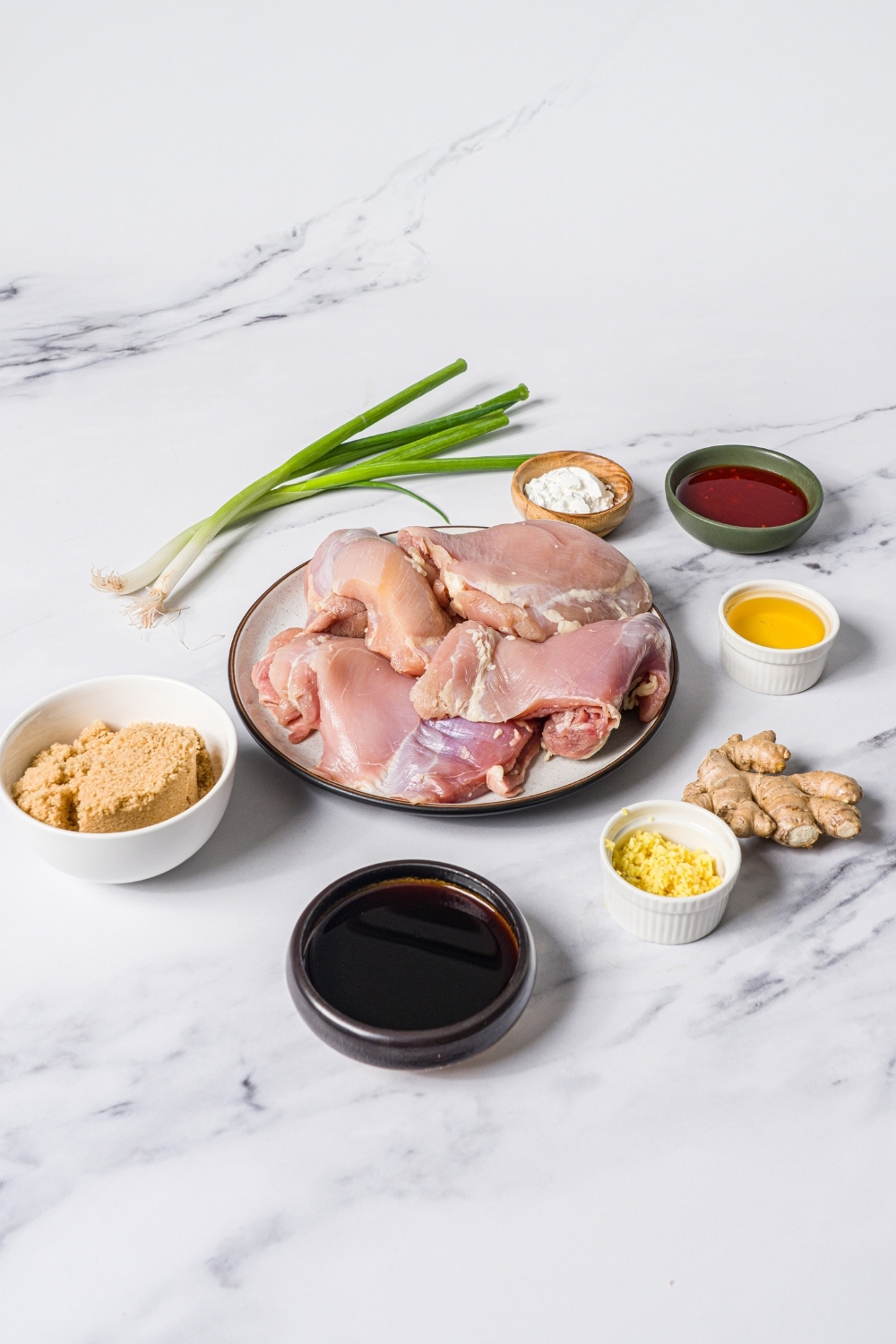
- 4 chicken thighs – Thighs stay tender and flavorful, especially in sticky sauces
- 1 tablespoon cornstarch – Helps the sauce cling and thickens naturally
- 4 cloves garlic, minced – Aromatic backbone of the dish
- 1 tablespoon fresh ginger, minced or grated – Adds warmth and brightness
- ½ cup brown sugar – Creates the sticky glaze and balances heat
- ¼ cup soy sauce – Provides umami and salt
- 2 tablespoon sesame oil – Adds nutty depth (use toasted sesame oil)
- 2 tablespoon gochujang – Fermented chili paste that defines the flavor. Gochujang varies in heat level. Start with 2 tablespoons, then adjust next time if you prefer more spice.
- Green onions, sliced – Fresh contrast
- Sesame seeds – Texture and aroma
- Cooked white rice – Essential for soaking up the sauce
How To Make Korean Sticky Chicken
Step 1: Prep the Chicken
Dice the chicken thighs into 1-inch cubes. Keeping the pieces uniform ensures even cooking.
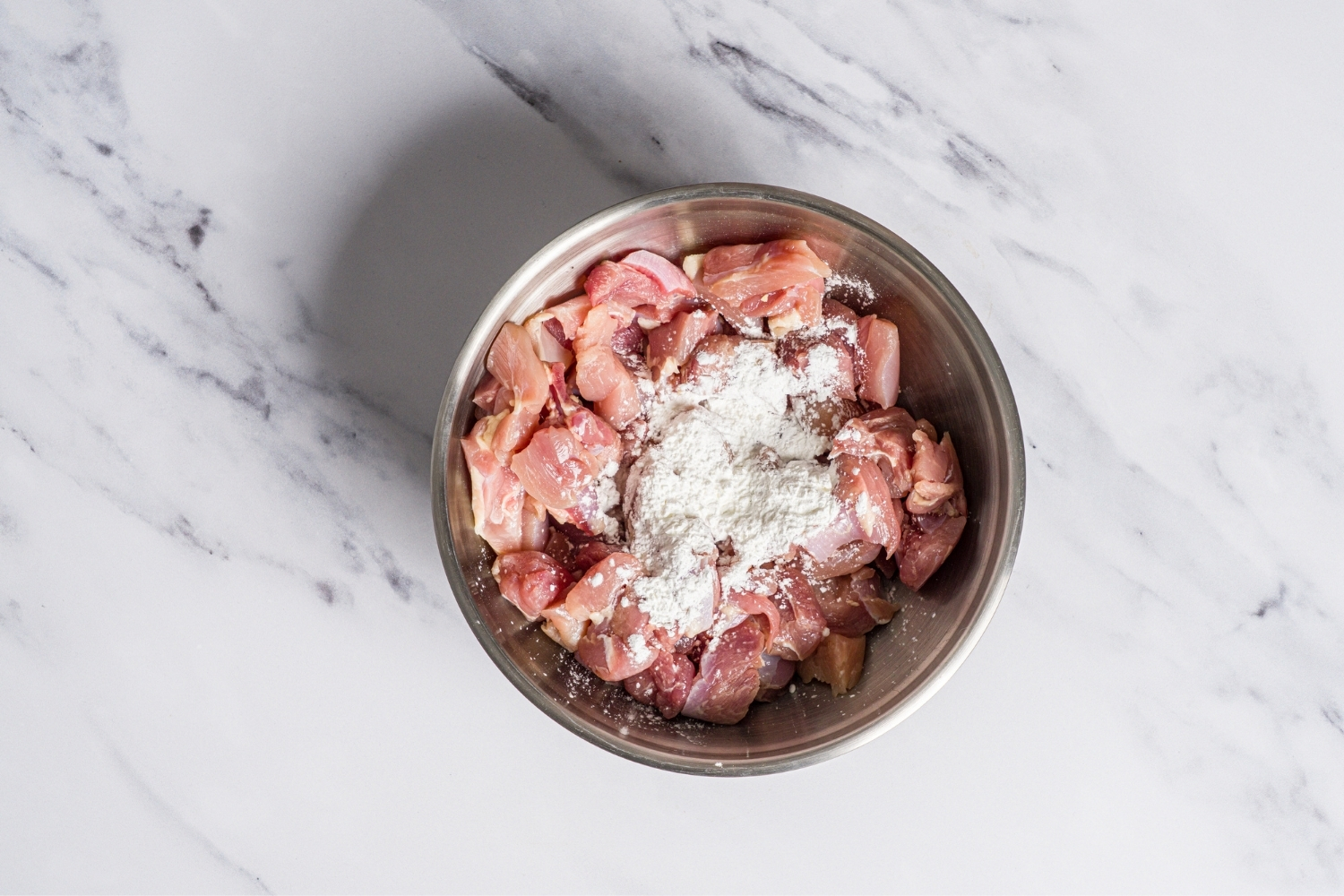
Step 2: Coat with Cornstarch
Toss the chicken thoroughly with cornstarch until all pieces are lightly coated. This step is key—it creates surface texture and helps the sauce thicken without flour or heavy reduction.
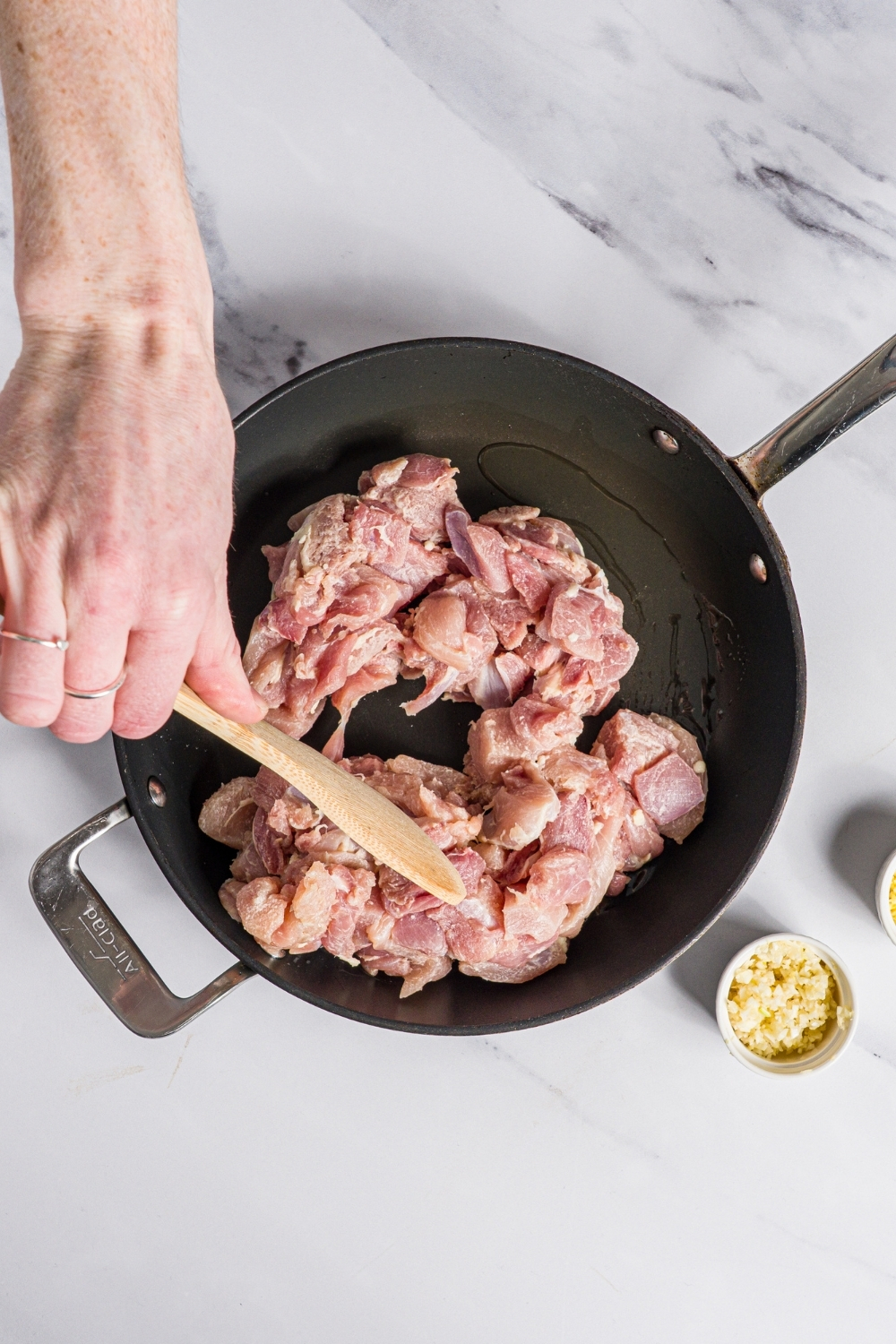
Step 3: Sear the Chicken
Heat a large skillet over medium-high heat and add about 1 teaspoon oil. Add the chicken in an even layer and let it cook undisturbed for 2–3 minutes to develop a golden crust. Stir and continue cooking until the chicken is mostly cooked through.
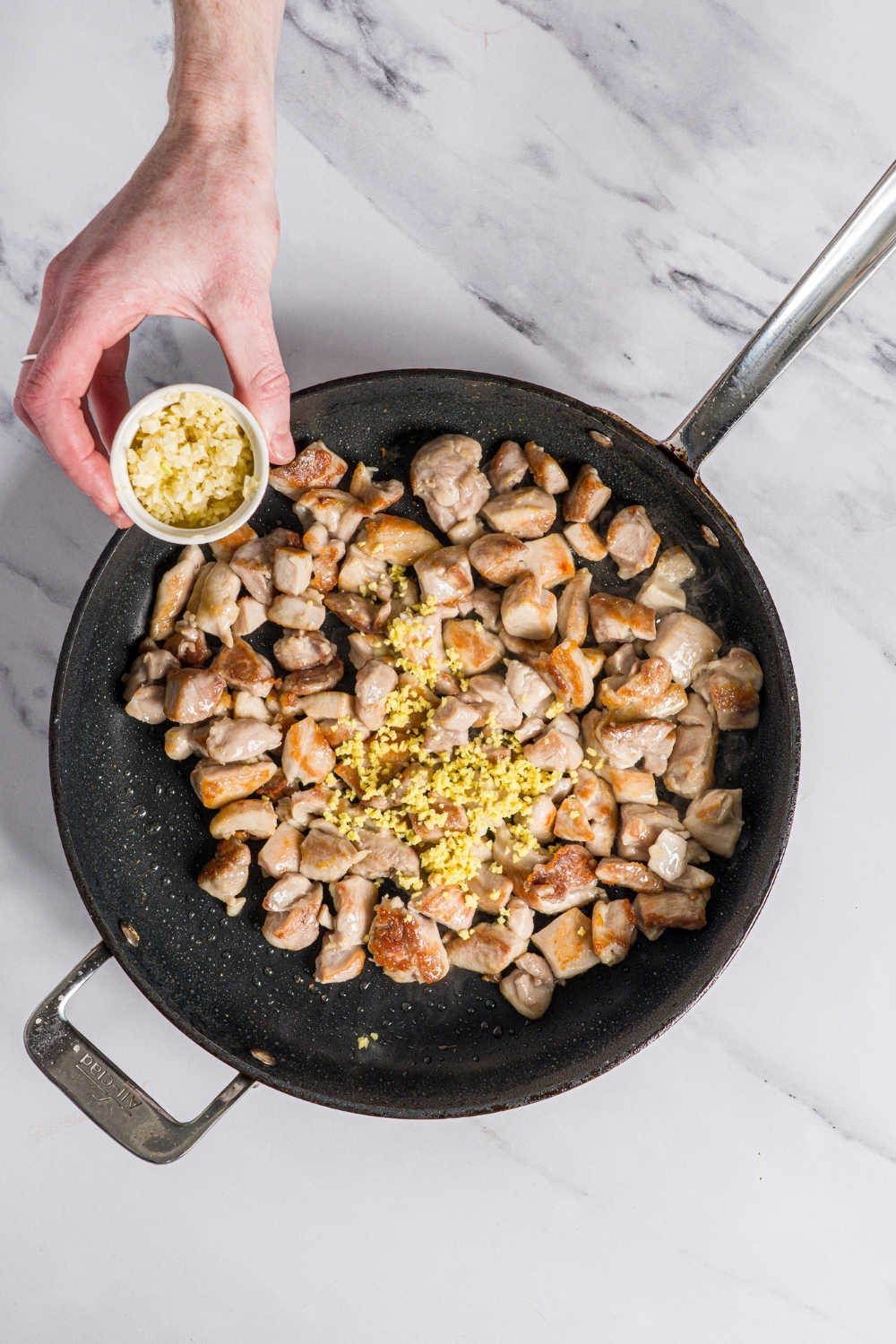
Step 4: Add Aromatics
Add the minced garlic and ginger to the pan. Stir and cook for about 1 minute, just until fragrant. Do not let them brown, as that can create bitterness.
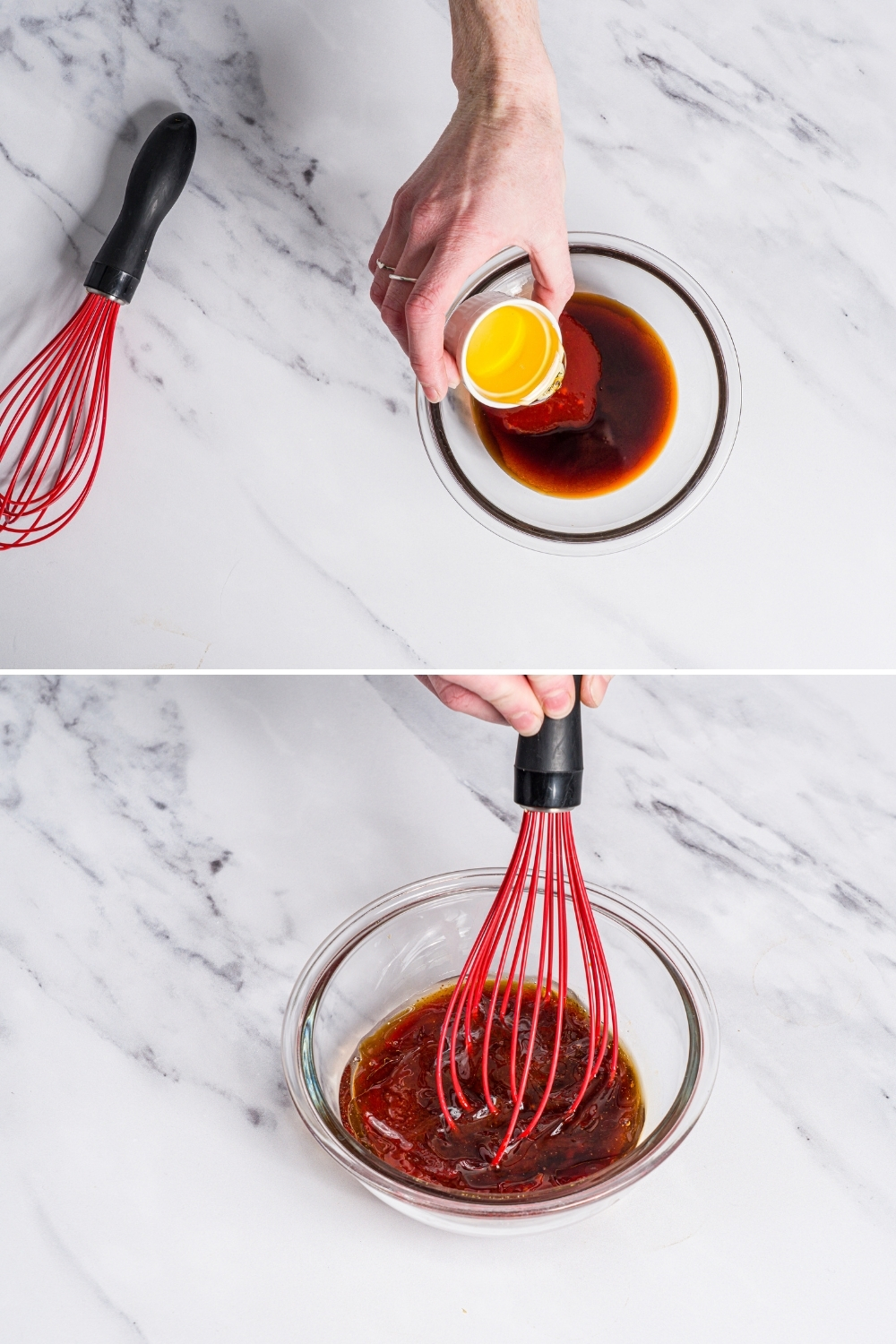
Step 5: Make the Sauce
In a bowl, whisk together the brown sugar, soy sauce, sesame oil, and gochujang until smooth.
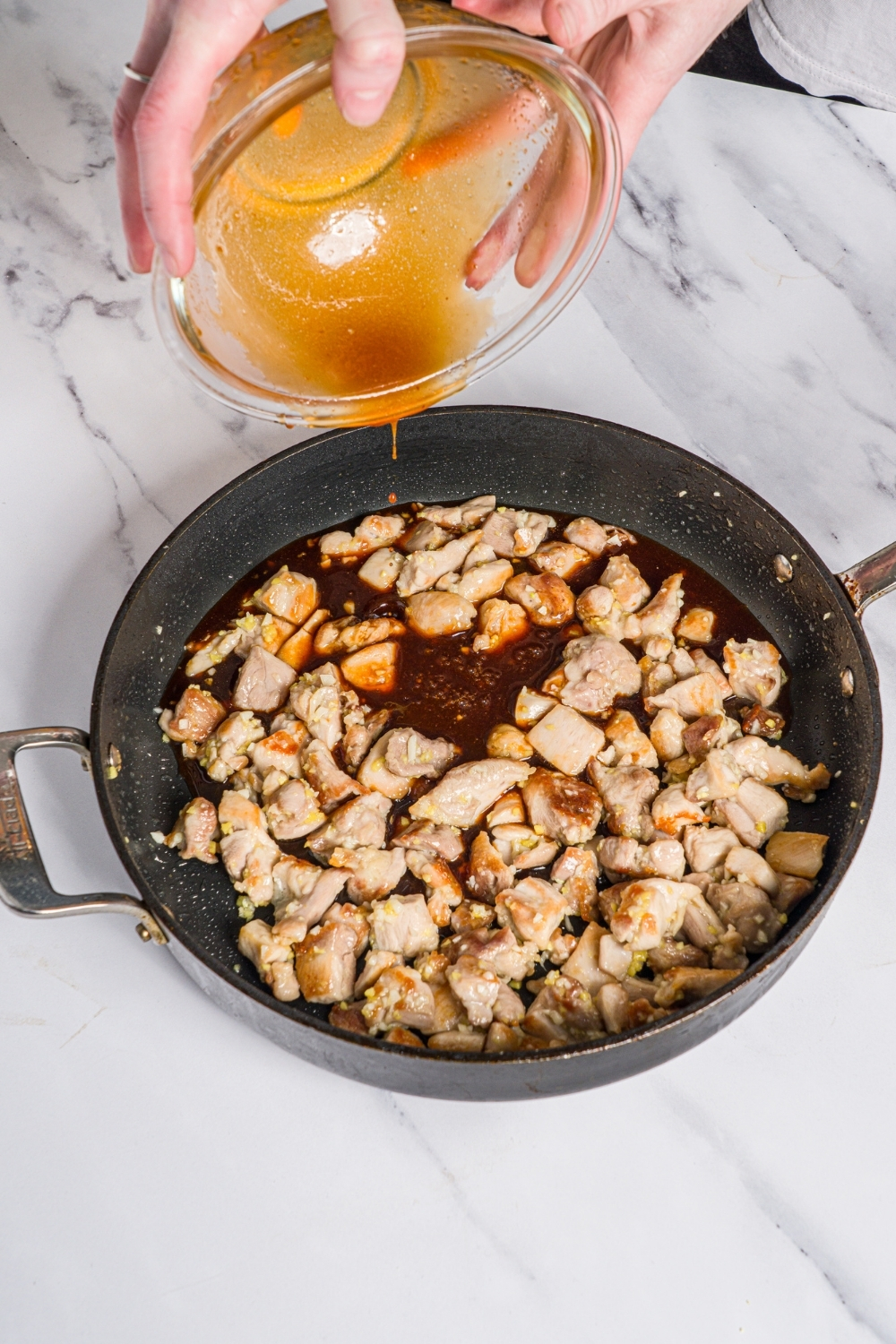
Step 6: Simmer Until Sticky
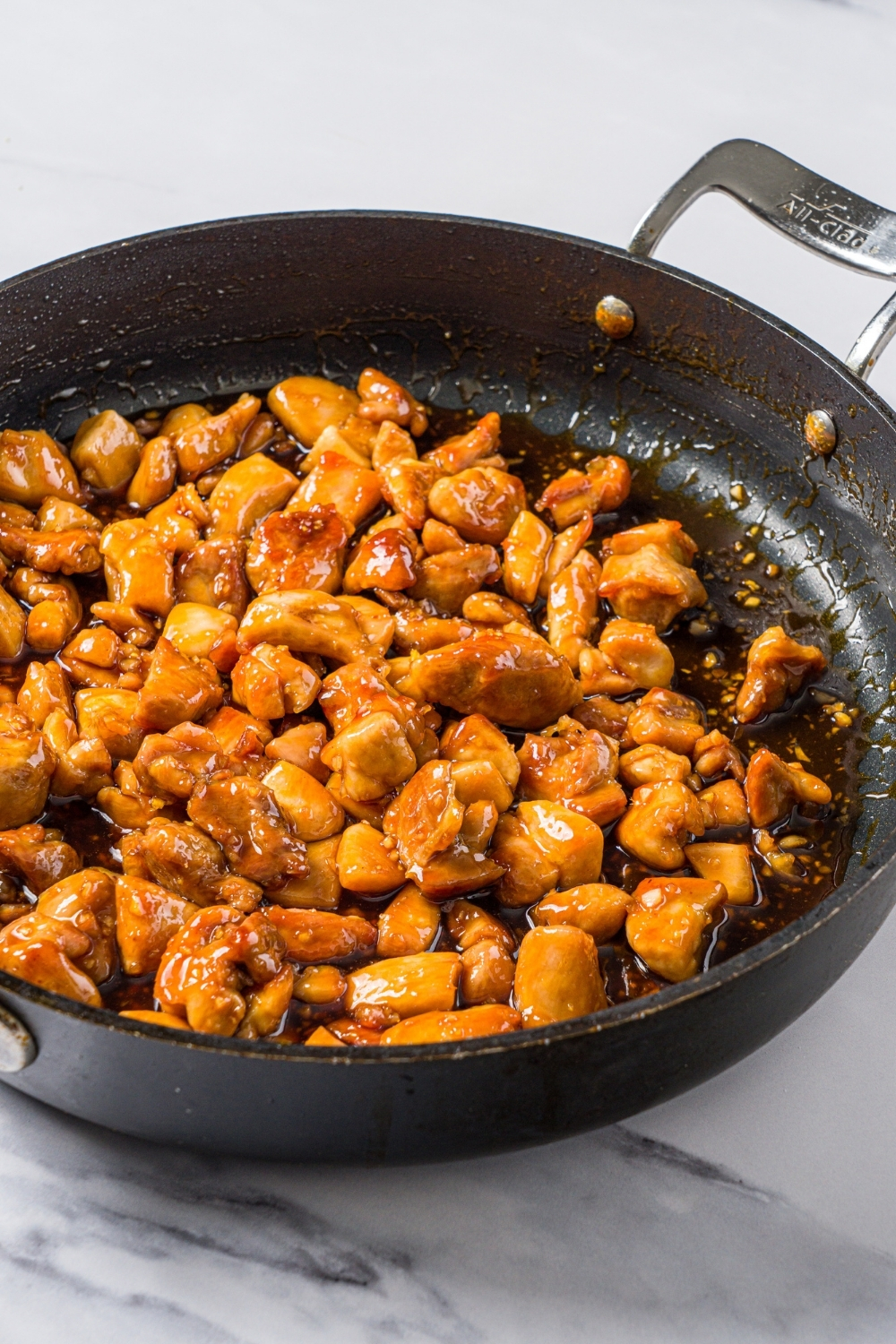
Pour the sauce into the skillet with the chicken. Reduce the heat to medium and let the sauce bubble gently, stirring often, until it thickens into a glossy glaze that coats the chicken—about 3–5 minutes.
Step 7: Serve
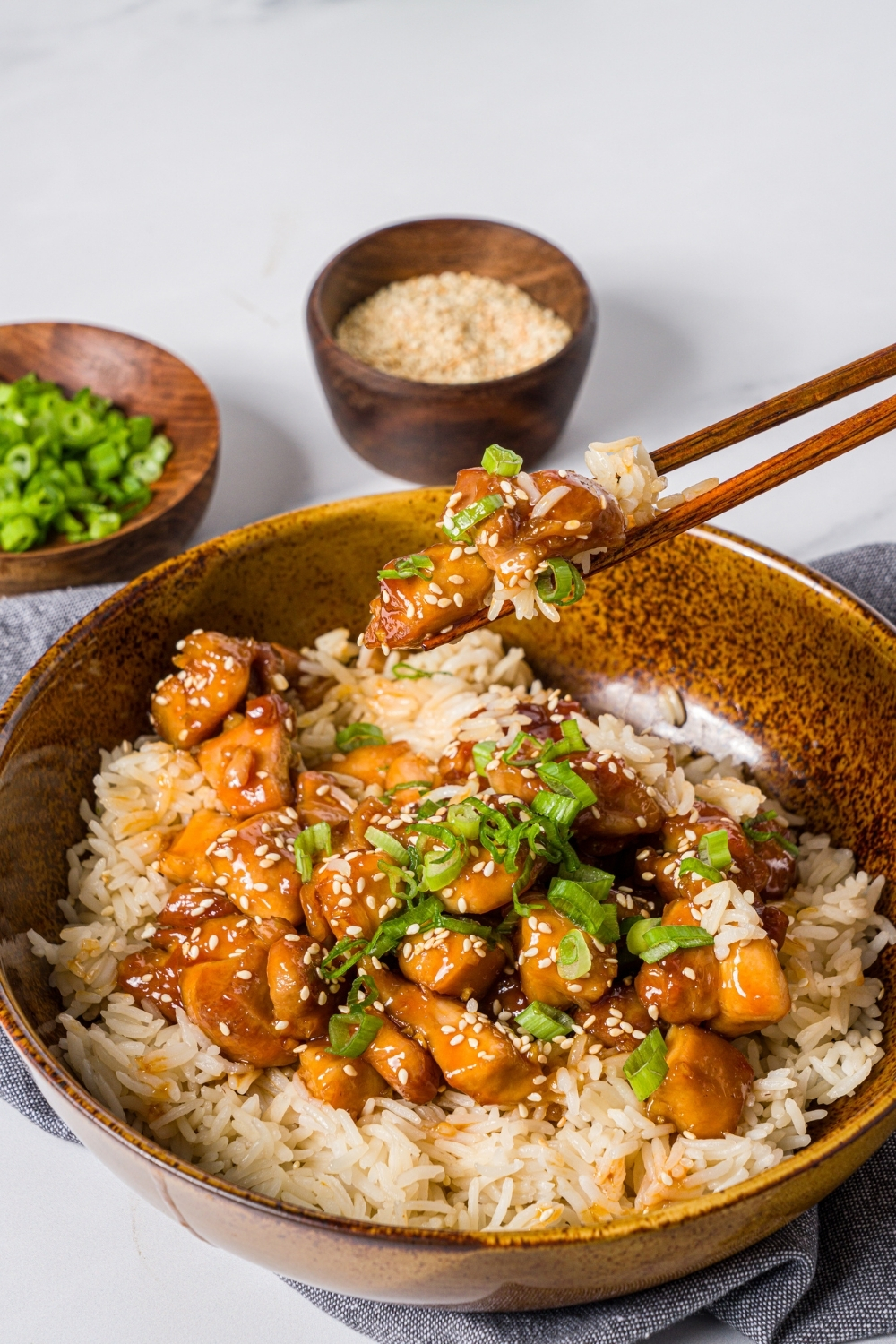
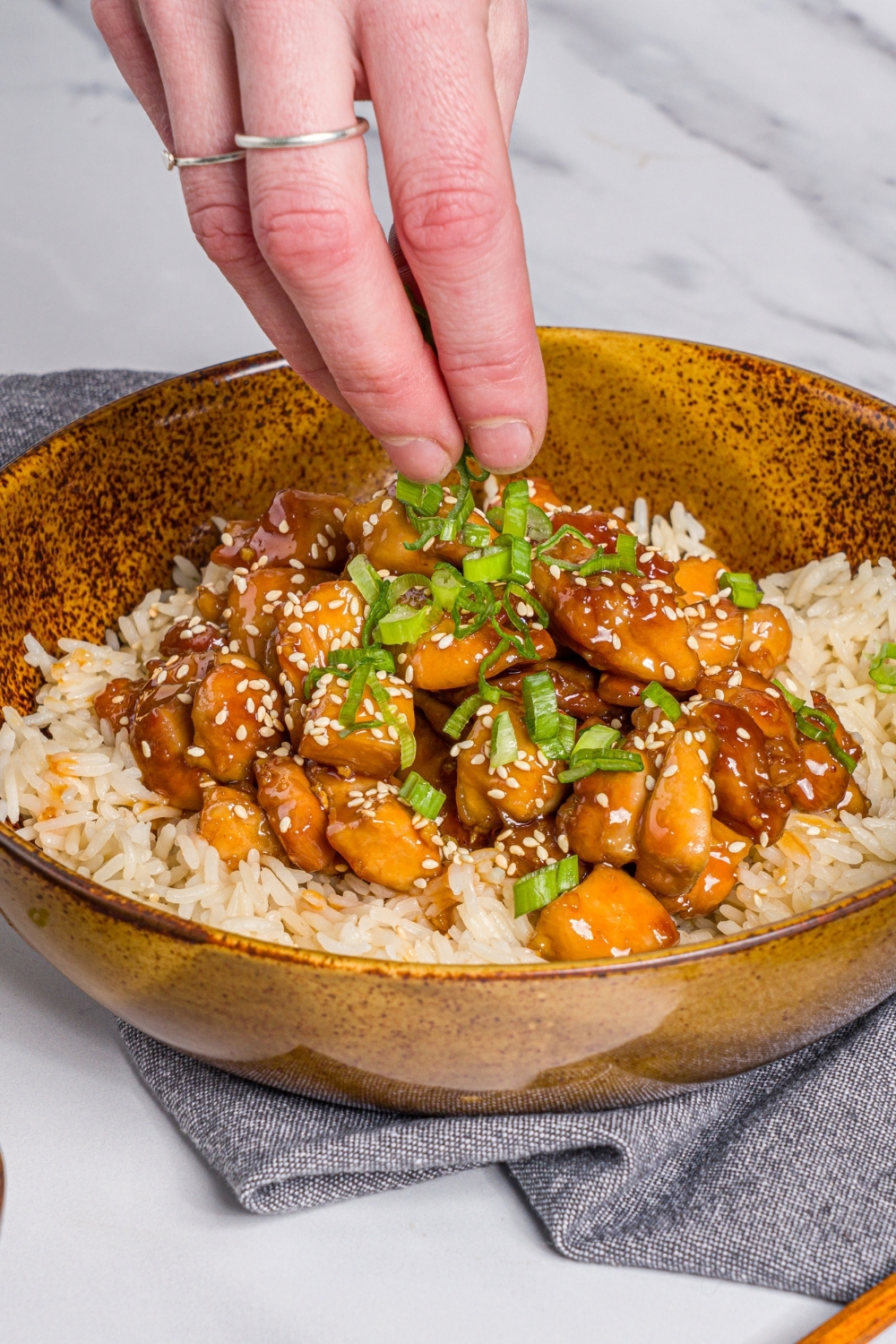
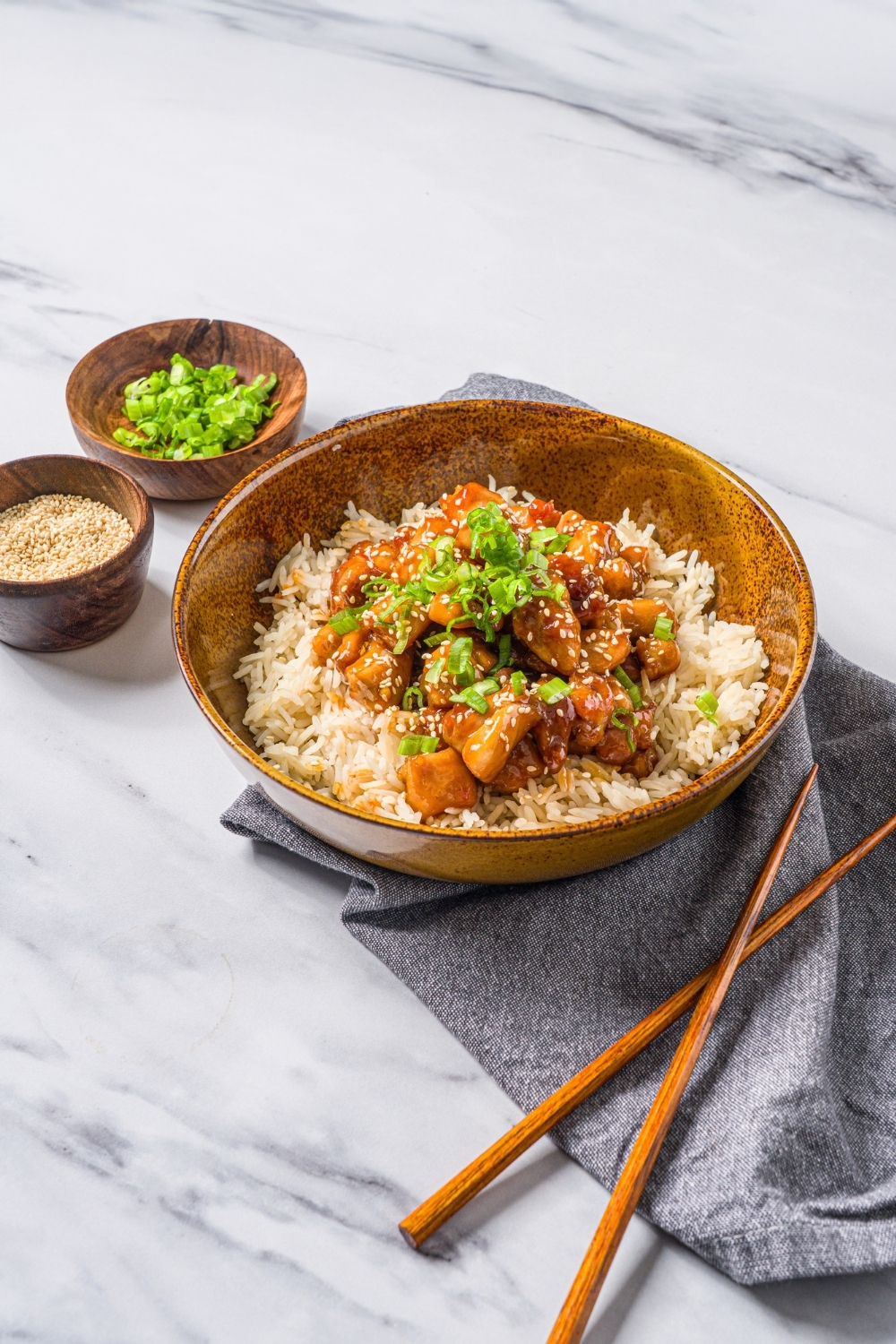
Serve the sticky chicken immediately over warm white rice. Finish with sliced green onions and sesame seeds.
Expert Tips To Make The Best Korean Chicken Recipe
- Cut the chicken evenly for consistent cook time. Aim for true 1-inch cubes and try to keep them as uniform as possible. If some pieces are much smaller, they’ll overcook and dry out while the bigger ones are still finishing. If you’re using thighs, trim off any large pockets of fat so the sauce doesn’t get greasy.
- Get the cornstarch coating right. Cornstarch is what gives you that light surface texture so the sticky glaze can cling instead of sliding off. Toss the chicken until every piece looks dry and fully coated, then shake off the excess. Too much cornstarch can create gummy spots once the sauce hits the pan. If your chicken is very wet, pat it dry first so the coating sticks evenly.
- Use the “don’t touch it” sear for better texture. Once the chicken hits the hot skillet, spread it into a single layer and leave it alone for 2 to 3 minutes. That untouched time is what builds browning and prevents sticking. If you stir too soon, the chicken steams instead of sears and you lose that slightly crisp edge that makes this recipe feel like takeout.
- Avoid overcrowding the pan. If your skillet is small, cook the chicken in two batches. Crowding traps steam and stops browning, which also makes the sauce thinner and less glossy later. If you have to batch cook, add a tiny splash of oil between batches and return all chicken to the pan before adding the aromatics and sauce.
- Add garlic and ginger after the chicken starts browning. Garlic and ginger burn fast over high heat. Waiting until the chicken has color keeps the aromatics fragrant instead of bitter. Keep them moving for about a minute, just until you smell them, then get the sauce in before the garlic starts to darken.
- Whisk the sauce until smooth before it hits the pan. Gochujang can be thick and clumpy, especially if it’s cold. Whisking it thoroughly with soy sauce, brown sugar, and sesame oil ensures the glaze turns smooth and glossy. If your gochujang is stiff, warm it for a few seconds or whisk with a tablespoon of warm water to loosen it before mixing the full sauce.
- Control the thickness like a pro. The glaze should simmer on medium heat until it looks shiny, bubbly, and coats the chicken like lacquer. If it thickens too fast, add a splash of water and stir to loosen. If it stays thin, let it bubble another minute or two, but keep stirring so the sugar doesn’t scorch.
- Do not crank the heat once the sauce is in. Brown sugar can burn quickly at high heat. Once you add the sauce, drop to medium and let it thicken gently. You want a steady bubble, not a raging boil. This is how you get that sticky finish without bitter burnt notes.
- Taste and balance at the end. Different soy sauces and gochujang brands vary a lot in salt and heat. Before serving, taste the glaze. If it’s too salty, a tiny splash of water can soften it. If it needs more sweetness, add a small pinch of brown sugar and stir until dissolved. If you want more heat, add a little more gochujang and simmer for 30 seconds.
- Use rice the right way. Serve this over hot rice so the sticky sauce soaks in. If your glaze is very thick, a spoonful of rice cooking water can loosen it just enough to drizzle over the bowl. For extra flavor, top with scallions and sesame seeds, and add something crisp on the side like cucumbers or shredded cabbage to balance the rich glaze.
- Meal prep and reheating without drying out. This chicken reheats beautifully, but keep the texture juicy by reheating gently. Warm it in a skillet over medium-low heat with a splash of water to loosen the glaze, or microwave in short bursts, stirring in between. The sauce will thicken in the fridge, so that little splash of water is the trick that brings it back to glossy.
Variations To Try
- Spicy Korean Sticky Chicken: If you want a real kick, add 1–2 teaspoons gochugaru (Korean red pepper flakes) to the sauce, or finish the chicken with a drizzle of chili oil right before serving. If you’re using chili oil, start small and build, since different brands can be wildly spicy.
- Honey Swap: For a slightly stickier, glossier glaze, replace half of the brown sugar with honey. Add the honey when you whisk the sauce so it dissolves evenly, and keep the heat at a gentle simmer so the sauce thickens without tasting scorched.
- Extra Crispy Version: For more crunch, pan-fry the chicken a few minutes longer before adding the aromatics and sauce. You’re looking for deeper golden edges. If your pan is crowded, cook the chicken in batches so it browns instead of steaming, then return everything to the skillet before saucing.
- Lettuce Wraps: Turn it into a lighter, fresh meal by serving the sticky chicken in butter lettuce leaves instead of over rice. Add sliced cucumbers, shredded carrots, or quick-pickled onions for extra crunch, then sprinkle sesame seeds and scallions on top.
- Meal Prep Bowls: Build easy lunch bowls with rice, sticky Korean chicken, and a green veggie like steamed broccoli or snap peas. If you want even more color, add shredded cabbage or edamame. Store the sauce-coated chicken separately if you like your veggies extra crisp, then reheat and assemble when you’re ready to eat.
Korean Chicken Recipe FAQs
Is Korean chicken spicy?
It can be, but it doesn’t have to be. Many Korean chicken recipes are known for sweet-spicy sauce, but you control the heat. Start with less gochujang or skip extra chili flakes, then add more at the end if you want it hotter.
Can I make a Korean chicken recipe without gochujang?
Yes, but it won’t taste quite the same. Gochujang adds sweet heat and deep fermented flavor. If you need a substitute, use chili garlic sauce or sriracha for heat, then add a small pinch of sugar to replace the sweetness gochujang brings. It will still be delicious, just less Korean-inspired.
What chicken is best for Korean chicken recipes, thighs or breasts?
Boneless chicken thighs are the best choice for most Korean chicken recipes because they stay juicy and forgiving. Chicken breast works too, just keep pieces uniform and avoid overcooking so it stays tender.
How do I make Korean chicken sticky and glossy?
The “sticky” part comes from reducing the sauce until it thickens and coats the chicken. Once you add the sauce, keep it at a gentle simmer on medium heat until it turns glossy and clings to the chicken. If it thickens too much, add a splash of water and stir to loosen.
Why is my Korean chicken sauce watery?
This usually happens if the pan is crowded or the sauce didn’t simmer long enough. Cook the chicken in a single layer (or in batches), then let the sauce bubble gently until it reduces and thickens. A slightly higher simmer with frequent stirring helps it concentrate faster.
Can I bake or air fry the chicken instead of pan frying?
Yes. For air fryer, cook the cornstarch-coated chicken at 400°F until crisp and cooked through, then toss with the hot sauce in a skillet or saucepan to thicken and coat. For baking, spread on a lined sheet pan and bake until browned, then sauce it the same way. Pan frying still gives the best sticky glaze and texture.
How do I keep Korean chicken crispy after adding sauce?
Sauced chicken is always crispiest right after tossing. For the best crunch, sear or air fry the chicken until golden first, avoid overcrowding, and serve immediately. If you want maximum crisp, keep sauce separate and toss right before eating.
Can I make Korean chicken ahead of time for meal prep?
Yes. Korean chicken recipes like this reheat well because the sauce keeps the chicken flavorful. Reheat gently with a small splash of water to loosen the glaze. It keeps well for 3 to 4 days in the fridge.
How long does Korean chicken last in the fridge?
Stored in an airtight container, it lasts 3 to 4 days. The sauce thickens as it chills, so loosen with a splash of water when reheating to bring it back to a glossy finish.
What should I serve with this Korean sticky chicken?
Steamed rice is the classic choice because it soaks up the sticky glaze. It’s also great with noodles, in lettuce wraps, or with quick sides like cucumber salad, sautéed green beans, or steamed broccoli. A sprinkle of scallions and sesame seeds finishes it perfectly.
My Final Thoughts
This Korean sticky chicken recipe is bold, comforting, and deeply satisfying. It's everything a great takeout-style dish should be, but made better at home. With minimal prep, smart technique, and a sauce that hits sweet, savory, and spicy notes perfectly, this recipe earns its place as a repeat favorite. Try this Korean chicken with a sticky-sweet glaze and let me know if you like it by leaving a comment and review below.
More Recipes You'll Love
Korean Chicken Recipe (Sticky Korean Chicken with Glaze)

If you love chicken that’s crispy on the edges, juicy inside, and drenched in a sticky-sweet Korean glaze, you’re about to make this recipe on repeat. This sticky Korean chicken is pan-fried fast, then tossed in a glossy sauce made with soy sauce, brown sugar, sesame oil, and gochujang for that bold, addictive Korean-inspired flavor. And if you’ve made my Korean Marinated Eggs or Korean Pork Chops, you already know I make Korean dishes with a simple method that delivers a huge payoff.
Ingredients
- 4 Chicken Thighs
- 1 Tablespoon Cornstarch
- 4 Cloves Garlic, Minced
- 1 Tablespoon Minced or Grated Ginger
- ½ Cup Brown Sugar
- ¼ Cup Soy Sauce
- 2 Tablespoon Sesame Oil
- 2 Tablespoons Gochujang
- Green Onions
- Sesame Seeds
- Cooked White Rice
Instructions
1. Dice the chicken into 1” cubes.
2. Toss the chicken in cornstarch to fully coat all pieces.
3. In a large skillet over medium high heat, add 1 teaspoon oil to the pan. Add the chicken in an even layer. Allow to cook untouched for 2-3 minutes before stirring to cook evenly.
4. Add the garlic and ginger and cook for about a minute until they are fragrant.
5. Whisk together brown sugar, soy sauce, sesame oil, and gochujang.
6. Add sauce to the pan with the chicken and cook on medium heat until thickened and bubbly.
7. Serve over rice and top with green onions and sesame seeds.
Nutrition Information:
Yield:
4Serving Size:
1Amount Per Serving: Calories: 491Total Fat: 26gSaturated Fat: 6gUnsaturated Fat: 19gCholesterol: 167mgSodium: 1275mgCarbohydrates: 39gFiber: 0gSugar: 33gProtein: 32g
Leave a Reply