


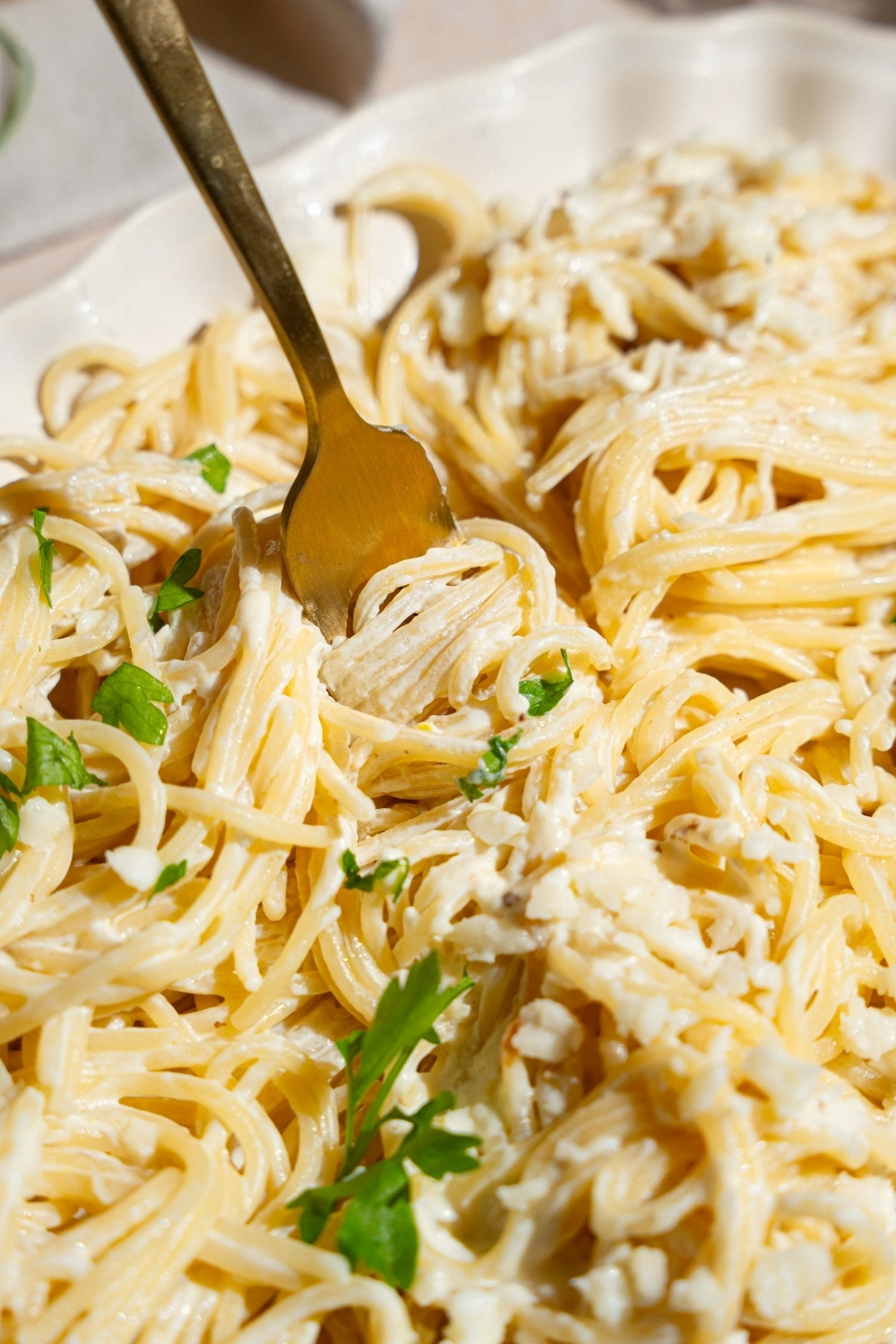
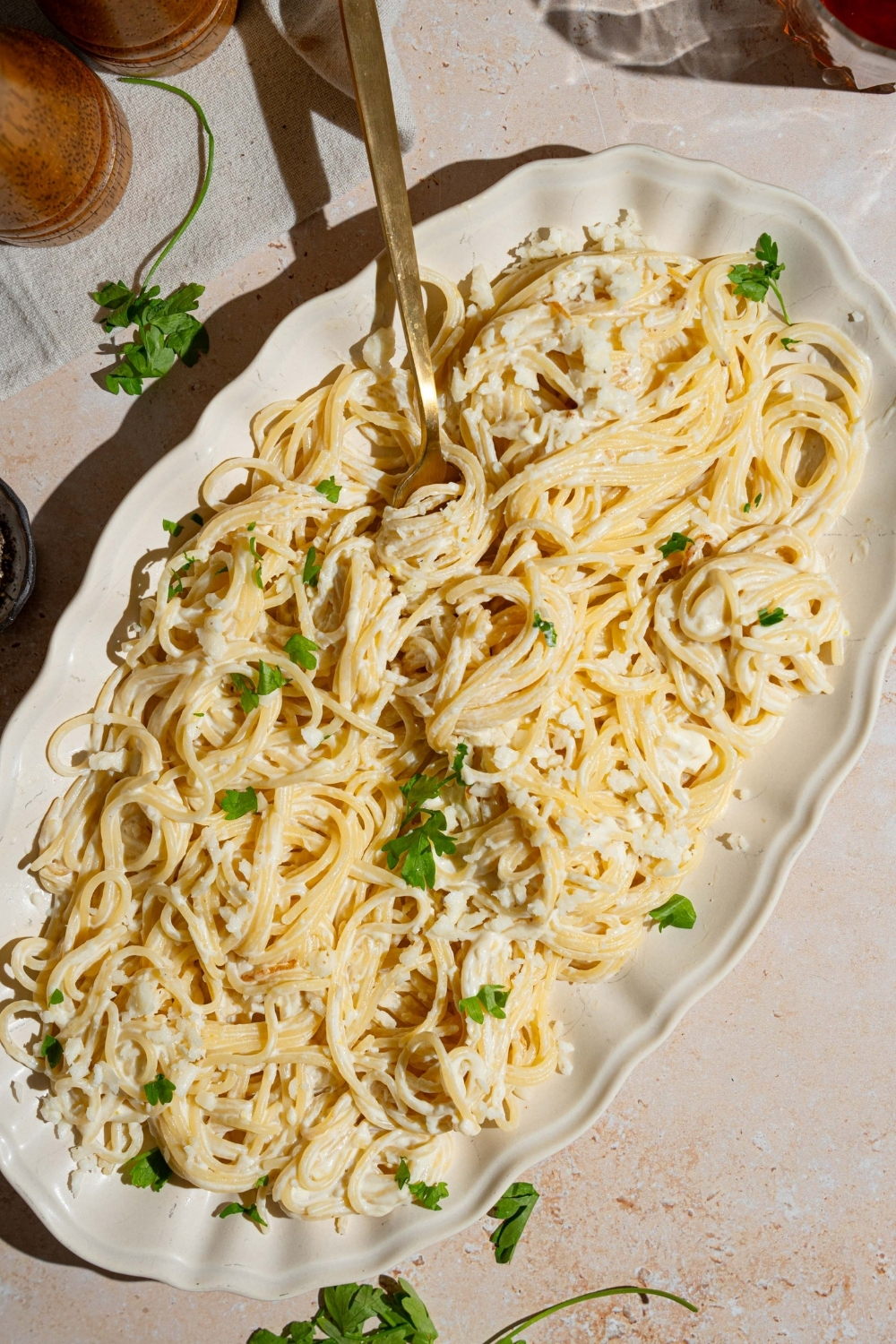
This Mexican white spaghetti, often called espagueti blanco, is creamy, comforting, and surprisingly simple. It’s made with butter, garlic, Mexican crema, pasta water, and crumbled queso fresco for a rich yet balanced sauce that coats every strand of spaghetti. This dish is a staple in many Mexican households and is often served as a side with grilled meats or roasted chicken, or at family gatherings, but it’s just as satisfying on its own.
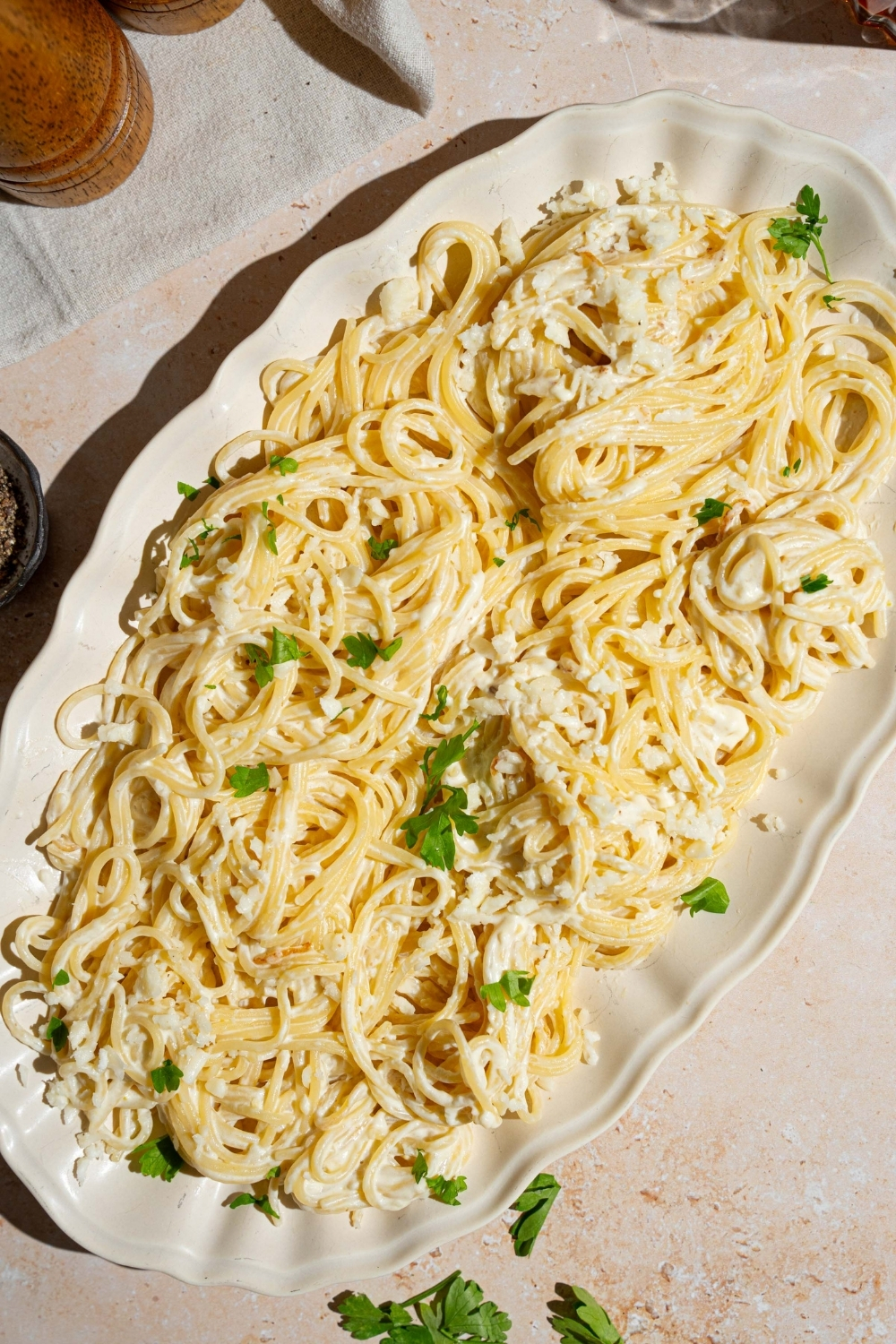
Table of Contents
Why You'll Love This Espagueti Bianco
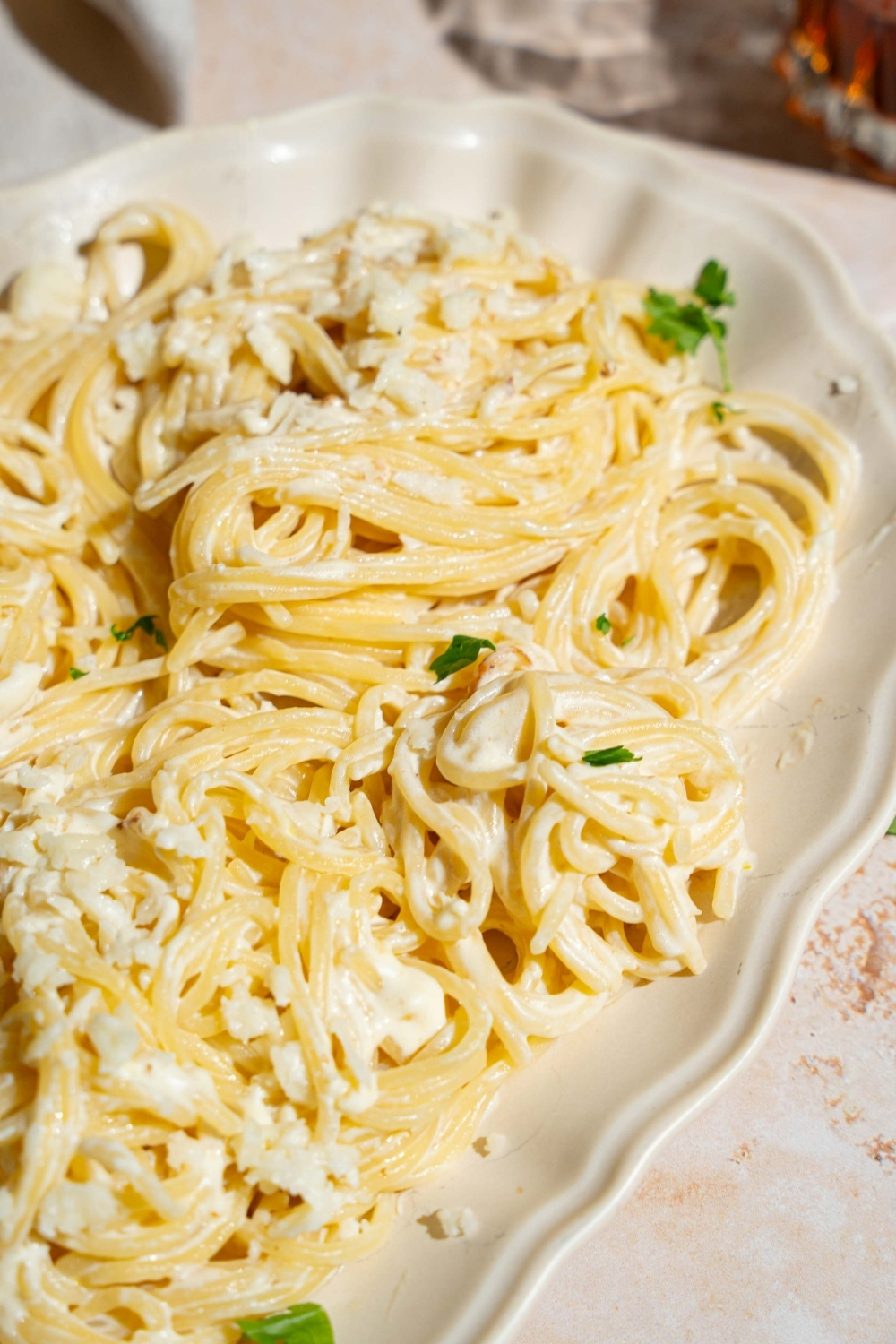
This recipe is such a perfect example of how Mexican cooking can take something familiar and make it feel totally different without getting complicated. On paper, it’s “white spaghetti,” but the flavor and texture are their own thing. Instead of heavy cream or a flour-based roux, espagueti bianco leans on Mexican crema and starchy pasta water to make a sauce that’s silky and glossy, with a light tang that keeps it from feeling heavy. It coats the noodles in that smooth, comforting way, but it still tastes clean and balanced, not like a rich Alfredo.
It’s also the kind of dish that feels instantly cozy. It’s simple, quick, and nostalgic, the kind of pasta you’d see at a family table alongside chicken, carne asada, or a big tray of baked dishes at a get-together. It’s mild enough for kids, but it’s not bland, and it’s one of those recipes that’s easy to dress up with whatever you’ve got. Add in roasted peppers, shredded chicken, Chipotle chicken, sautéed mushrooms, or a little extra cheese on top.
And I love how low-stress it is. Espagueti bianco comes together fast, uses ingredients you can usually find in a regular grocery store, and it’s forgiving. If the sauce feels too thick, a splash of pasta water fixes it. If you want it richer, a little more crema or cheese takes it there. It’s simple, honest comfort food that still feels special, especially when you serve it hot with a sprinkle of queso, a squeeze of lime, or a little black pepper on top.
Ingredients You’ll Need
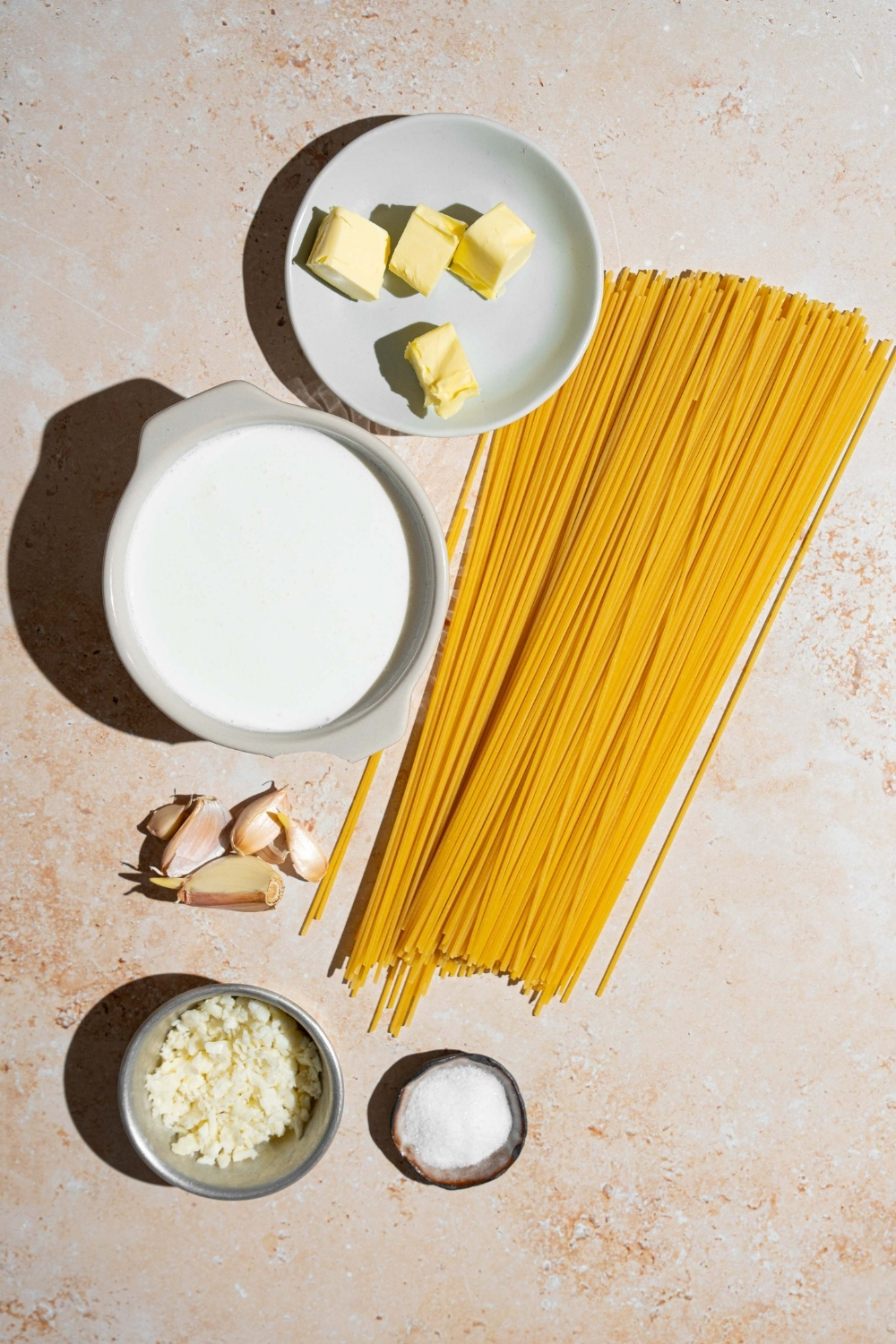
- 16 oz spaghetti
- 4 tablespoon butter
- 3–4 garlic cloves, minced
- 1½ cups Mexican crema
- ½–1 cup reserved pasta water
- 1 teaspoon salt, plus more to taste
- ½ cup queso fresco, crumbled
How To Make White Mexican Spaghetti
Step 1: Cook the Spaghetti
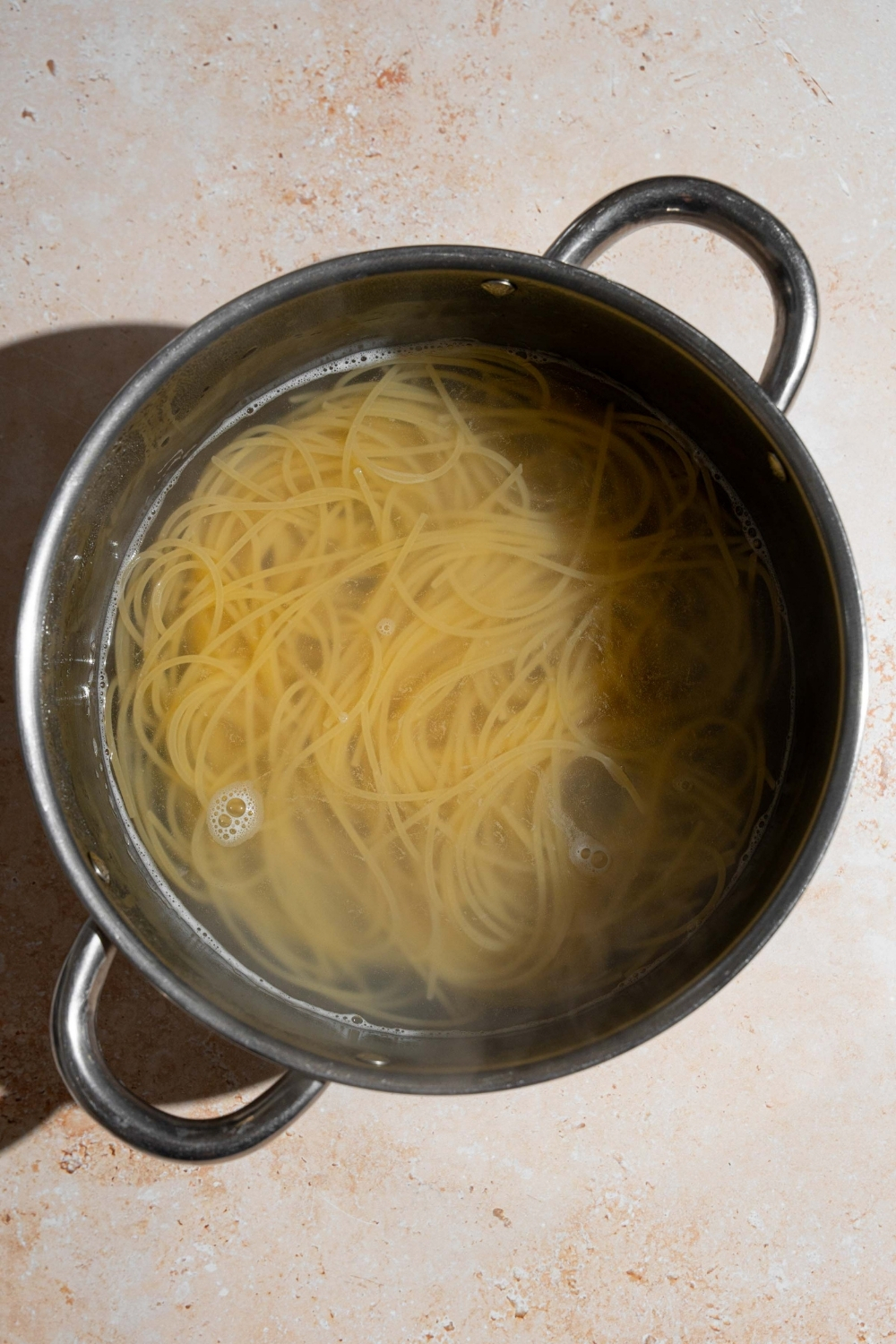
Bring a large pot of well-salted water to a rolling boil. Add the spaghetti and cook according to the package directions until al dente. Before draining, reserve at least 1 cup of the pasta water, then drain and set the spaghetti aside.
Step 2: Build the Garlic Butter Base
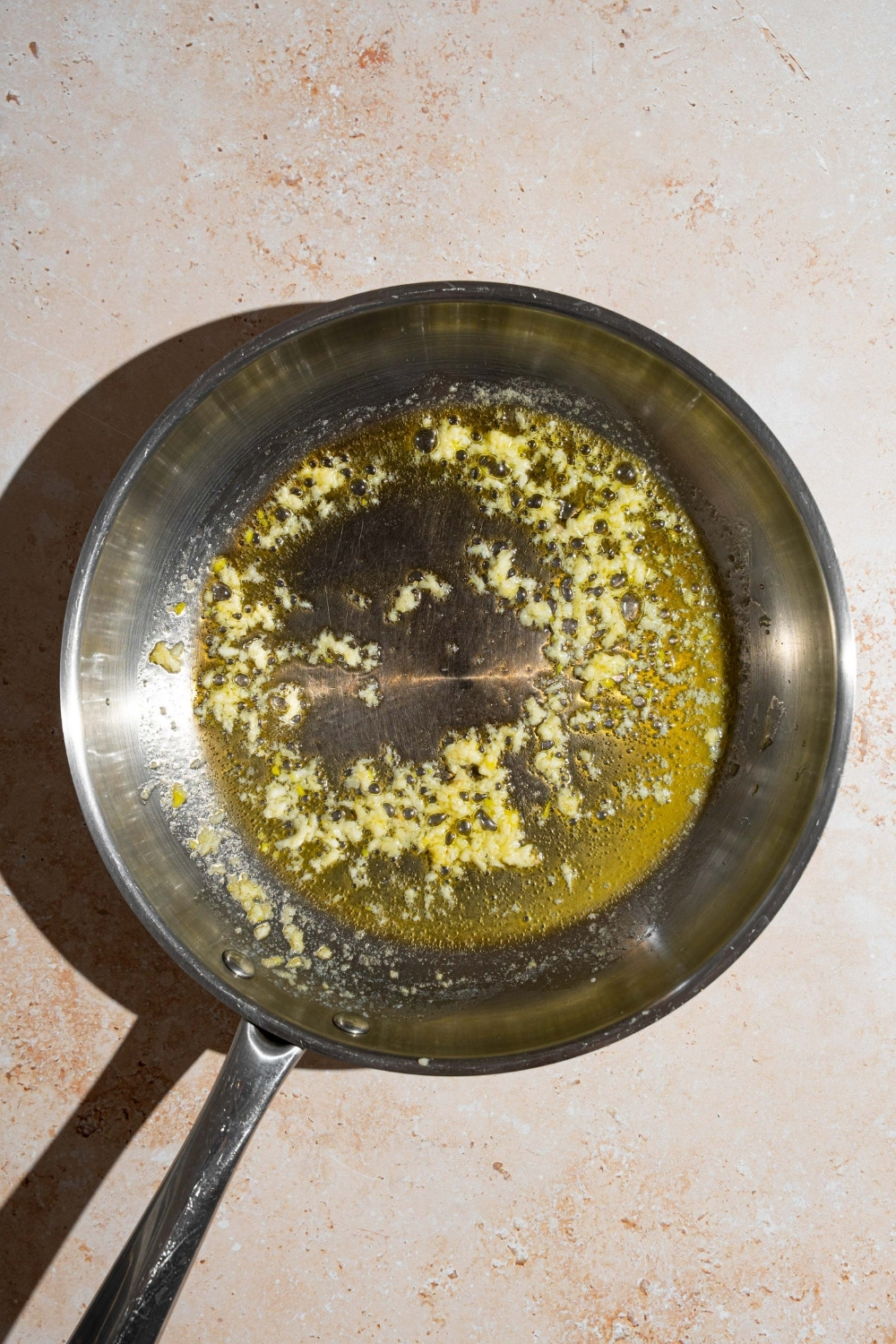
While the pasta cooks, heat a medium or large skillet over medium-low heat. Add the butter and let it melt gently. Add the minced garlic and cook for 2–3 minutes, stirring often, until fragrant. The garlic should soften but not brown; this keeps the flavor sweet and mellow.
Step 3: Create the Cream Sauce
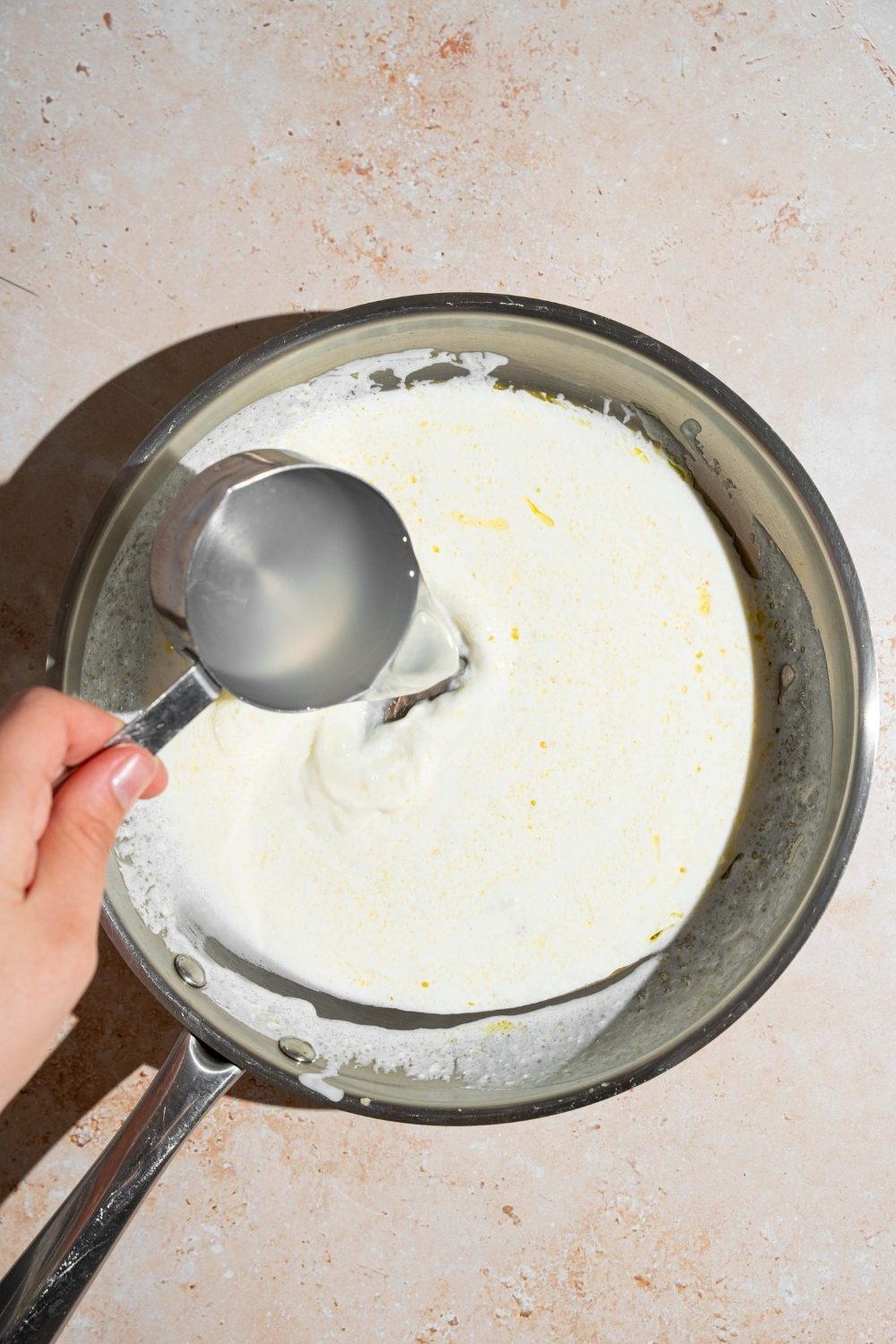
Lower the heat and add the Mexican crema, ½ cup of the reserved pasta water, and the salt. Stir or whisk gently until smooth and fully combined. Let the sauce simmer on low heat for about 5 minutes, stirring occasionally, until it thickens slightly and looks glossy. Taste and adjust seasoning as needed. If the sauce feels too thick, add more pasta water a little at a time.
Step 4: Combine the Pasta and Sauce
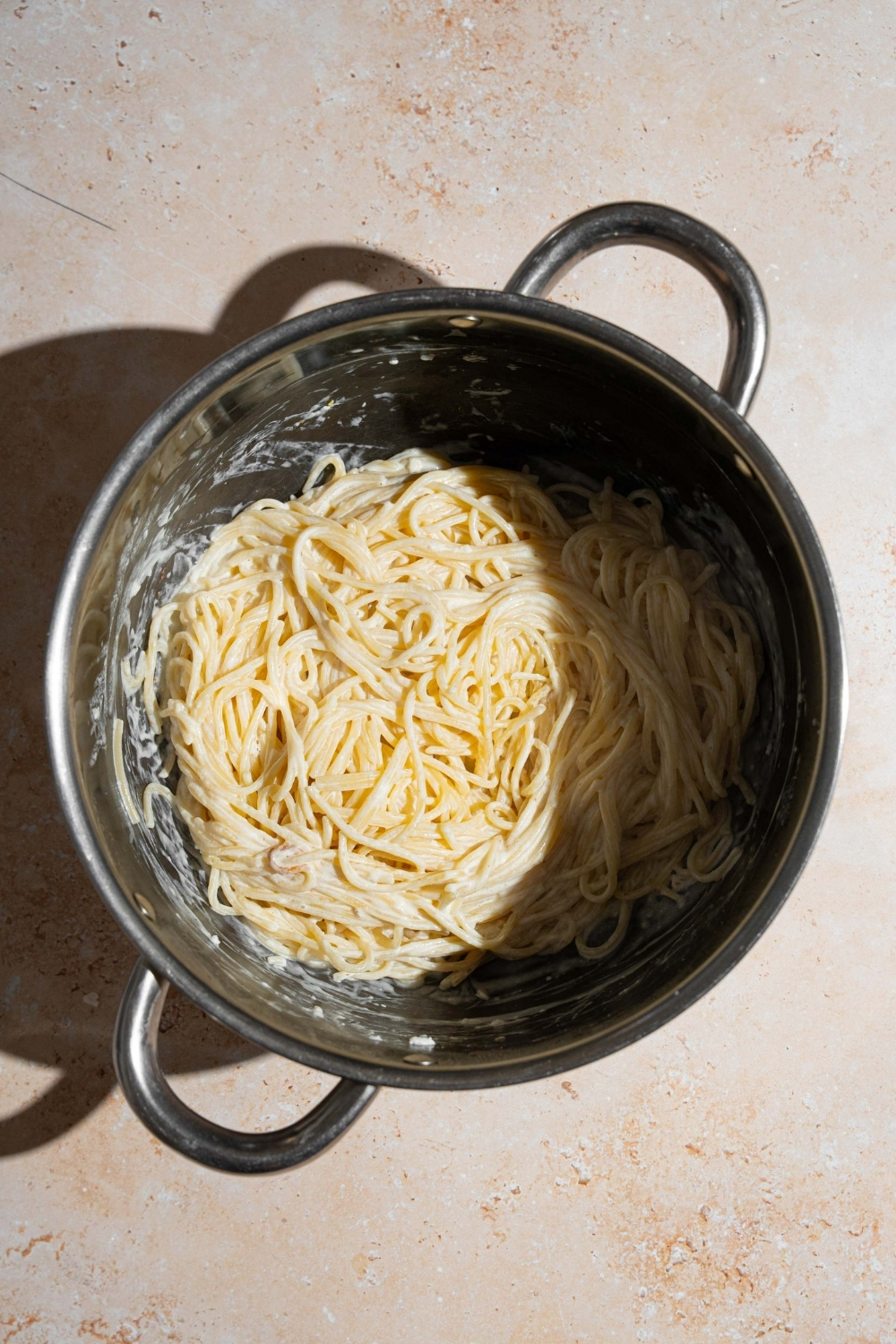
Add the cooked spaghetti directly to the skillet with the sauce. Sprinkle in the crumbled queso fresco and gently toss until the pasta is evenly coated and the cheese is distributed throughout. The queso fresco will soften but not fully melt, giving you little pockets of salty creaminess.
Step 5: Serve Immediately
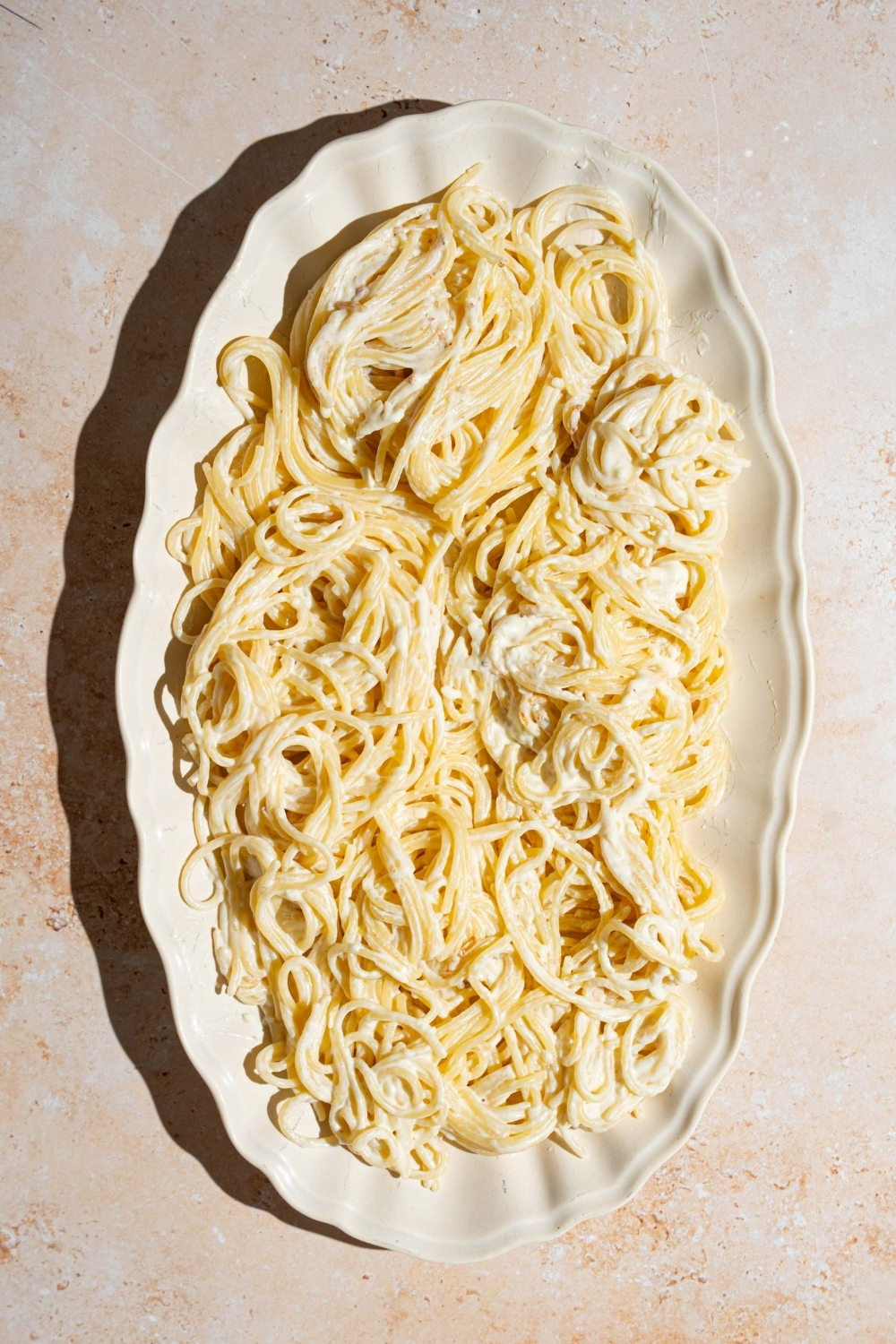
Serve hot, straight from the pan. This pasta is best enjoyed fresh while the sauce is smooth and silky.
Expert Tips To Make The Best Espagueti Bianco
- Use real Mexican crema if possible. Mexican crema is thinner and gently tangy, which is exactly what gives espagueti bianco that silky sauce without tasting heavy. If you can’t find it, sour cream works, just thin it with a splash of milk and whisk until smooth. The texture will be close, but crema has a cleaner tang and a better pour, so use it when you can.
- Keep the heat low once the crema goes in. Crema can separate or curdle if it gets too hot, especially if your pan is super hot. After you add the crema, keep everything at low heat and stir gently to keep the sauce smooth and glossy.
- Pasta water is the secret ingredient. That starchy pasta water is what emulsifies the crema into a sauce that clings to the noodles instead of sitting on top. Reserve a cup of the cooking liquid before draining, then add it gradually, a splash at a time, until the sauce looks silky and coats the spaghetti. It’s easy to thin, but hard to thicken back up, so go slow.
- Don’t brown the garlic. This sauce is delicate, and browned or burnt garlic will take over. Cook the garlic just until fragrant, about 20–30 seconds, then move on. If you see it starting to color, lower the heat immediately.
- Toss the pasta in the pan, don’t just pour sauce over noodles. Espagueti bianco is all about the coating. Add the drained spaghetti to the crema mixture and toss until every strand is glossy. This also helps the sauce tighten up and cling the way it should.
- Season thoughtfully and taste at the end. Queso fresco and other toppings add salt, so don’t over-salt early. Taste after the pasta is tossed and the cheese goes in, then adjust with salt and pepper if needed. A small squeeze of lime at the end can brighten everything without making it “citrusy.”
- Serve right away for the creamiest texture. This dish thickens as it sits because the pasta keeps absorbing the sauce. If it thickens too much, loosen it with a splash of warm pasta water right before serving, but it’s best hot and fresh when it’s silky and glossy.
Espagueti Bianco FAQs
Is espagueti bianco the same as Alfredo sauce?
No. While both are creamy, espagueti bianco is typically lighter and slightly tangier because it uses Mexican crema (and often pasta water) instead of heavy cream. It also doesn’t rely on a flour-based roux, so the sauce feels silkier and less heavy than classic Alfredo.
What is espagueti bianco made of?
Espagueti bianco is usually made with spaghetti tossed in a creamy sauce built from Mexican crema, garlic, and starchy pasta water, then finished with cheese like queso fresco (or another mild cheese) for a salty, creamy bite. The flavor is simple, cozy, and not overly rich.
Can I reheat leftovers?
Yes, but reheat them low and slow. Warm the spaghetti over low heat and add a splash of milk, crema, or water to loosen the sauce as it warms. The pasta absorbs sauce as it sits, so bringing back moisture is the key to keeping it creamy.
Can I use a different pasta shape?
Yes. Spaghetti is classic, but fettuccine and linguine work great too. Short pastas like penne or rotini also work, they just hold the sauce a little differently and may feel slightly heartier.
Is espagueti bianco usually served as a main dish or a side dish?
Traditionally, it’s often served as a side dish in Mexican meals, especially alongside chicken, grilled meats, or party spreads. That said, it can absolutely be a main dish, especially if you add protein like shredded chicken or sautéed veggies.
Can I make this ahead of time?
It’s best fresh because the sauce thickens as it sits, but you can prep to make it faster. Measure your sauce ingredients ahead and have everything ready to go, then cook the pasta right before serving and toss it fresh for the creamiest result.
Can I substitute sour cream for Mexican crema?
Yes. Sour cream works, but it’s thicker and tangier than crema, so thin it with a splash of milk and whisk until smooth before adding it to the pan. The flavor will be slightly different, but the sauce will still turn out creamy and delicious. You could also use this sour cream enchilada sauce to make it even creamier.
Why did my sauce turn grainy or break?
This usually happens when the heat is too high after adding crema. Keep the heat low, stir gently, and use pasta water to emulsify. If it starts to look separated, take it off the heat and whisk in a splash of warm pasta water until it smooths back out.
My Final Thoughts
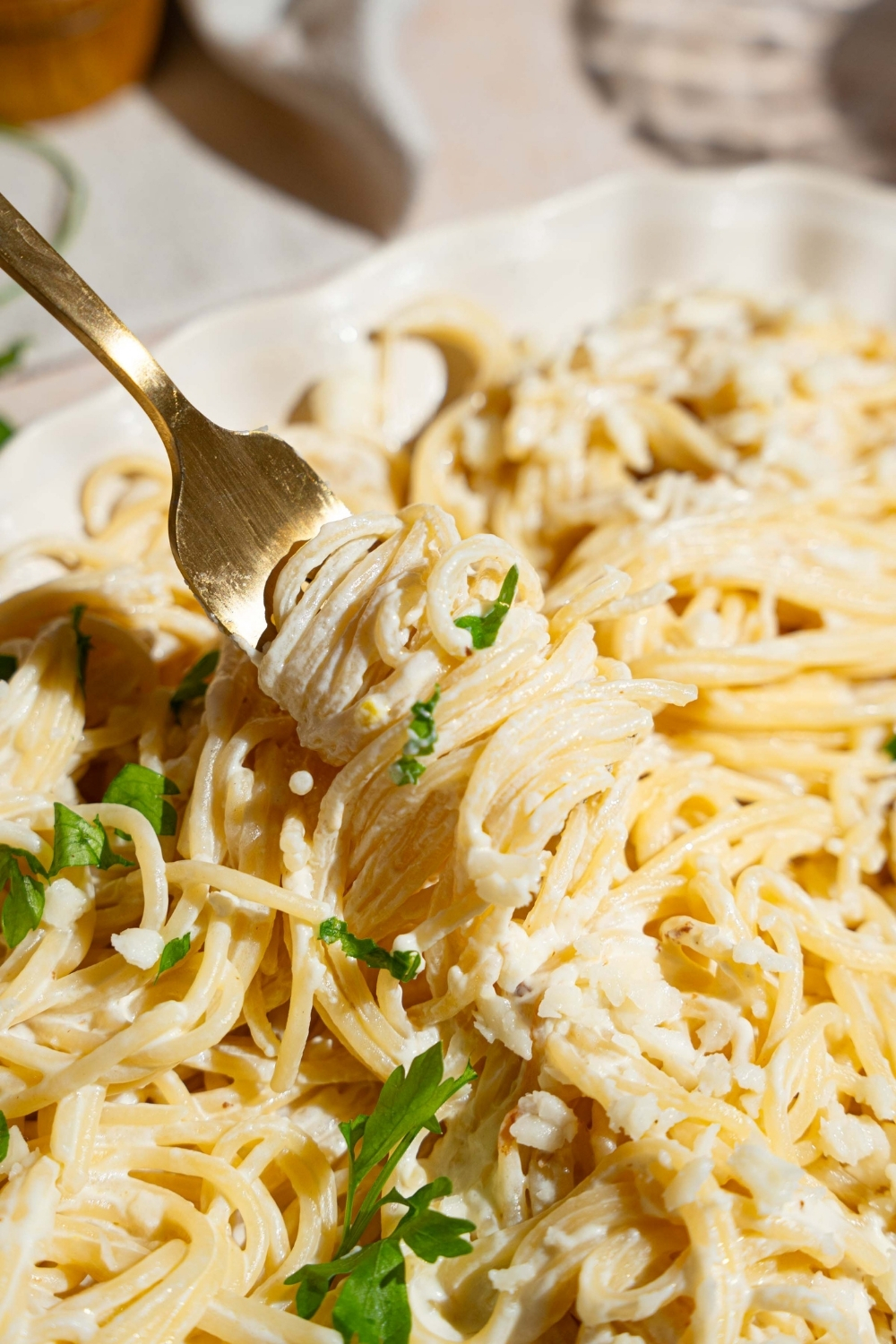
This Mexican white spaghetti (espagueti blanco) is proof that simple ingredients, treated with care, can create something incredibly comforting and memorable. Creamy without being heavy, rich without being overwhelming, and deeply satisfying, it’s a dish you’ll come back to again and again, whether as a cozy main or a perfect side to your favorite Mexican-inspired meals. Try this pasta recipe out and leave a comment and review below so I can hear your thoughts.
Mexican Recipes To Try Next
- Mexican beef chorizo
- Mexican street corn dip
- Crispy beef tacos
- Mexican casserole
- Taco casserole with tortillas
Mexican White Spaghetti (Espagueti Bianco)

This Mexican white spaghetti, often called espagueti blanco, is creamy, comforting, and surprisingly simple. It’s made with butter, garlic, Mexican crema, pasta water, and crumbled queso fresco for a rich yet balanced sauce that coats every strand of spaghetti. This dish is a staple in many Mexican households and is often served as a side with grilled meats or roasted chicken, or at family gatherings, but it’s just as satisfying on its own.
Ingredients
- 16 oz spaghetti
- 4 tablespoon butter
- 3-4 garlic cloves, minced
- 1½ cups Mexican cream (crema)
- ½ - 1 cup pasta water, reserve after boiling the spaghetti
- 1 teaspoon salt
- ½ cup queso fresco crumbled
Instructions
1. Bring a large pot of water to a boil and cook the spaghetti according to package directions.
2. While the pasta cooks, prepare the sauce in a medium or large skillet over medium-low heat. Add butter and garlic, and cook for 2–3 minutes, stirring often, until the butter has melted and the garlic is fragrant.
3. Lower the heat and add Mexican cream, reserved pasta water, and salt. Stir or whisk gently until the mixture is smooth and combined. Let it simmer on low heat for about 5 minutes, stirring occasionally, until the sauce slightly thickens. Taste and adjust salt if needed.
4. Once the pasta is cooked, reserve a cup of pasta water, drain, and return it to the pot. Pour the sauce over the spaghetti, add crumbled queso fresco, and gently toss to combine.
5. Serve immediately. Enjoy!
Nutrition Information:
Yield:
4Serving Size:
1Amount Per Serving: Calories: 724Total Fat: 53gSaturated Fat: 33gUnsaturated Fat: 20gCholesterol: 156mgSodium: 903mgCarbohydrates: 44gFiber: 2gSugar: 5gProtein: 15g
Leave a Reply