


These soft scrambled eggs give you the creamiest, softest, most luxurious eggs you'll probably ever eat at home. Instead of cooking them low and slow and walking away, this method has you moving the pan on and off the heat while you stir constantly. That simple switch changes everything. You end up with silky, custardy soft scrambled eggs with tiny curds and a glossy finish that tastes like something you would get at a restaurant, but they are ready in just a few minutes! If you have tried my Cajun Egg Boil, then you already know I love breaking down viral recipes and making them easy to nail at home, and these Gordon Ramsay-style scrambled eggs are no exception.
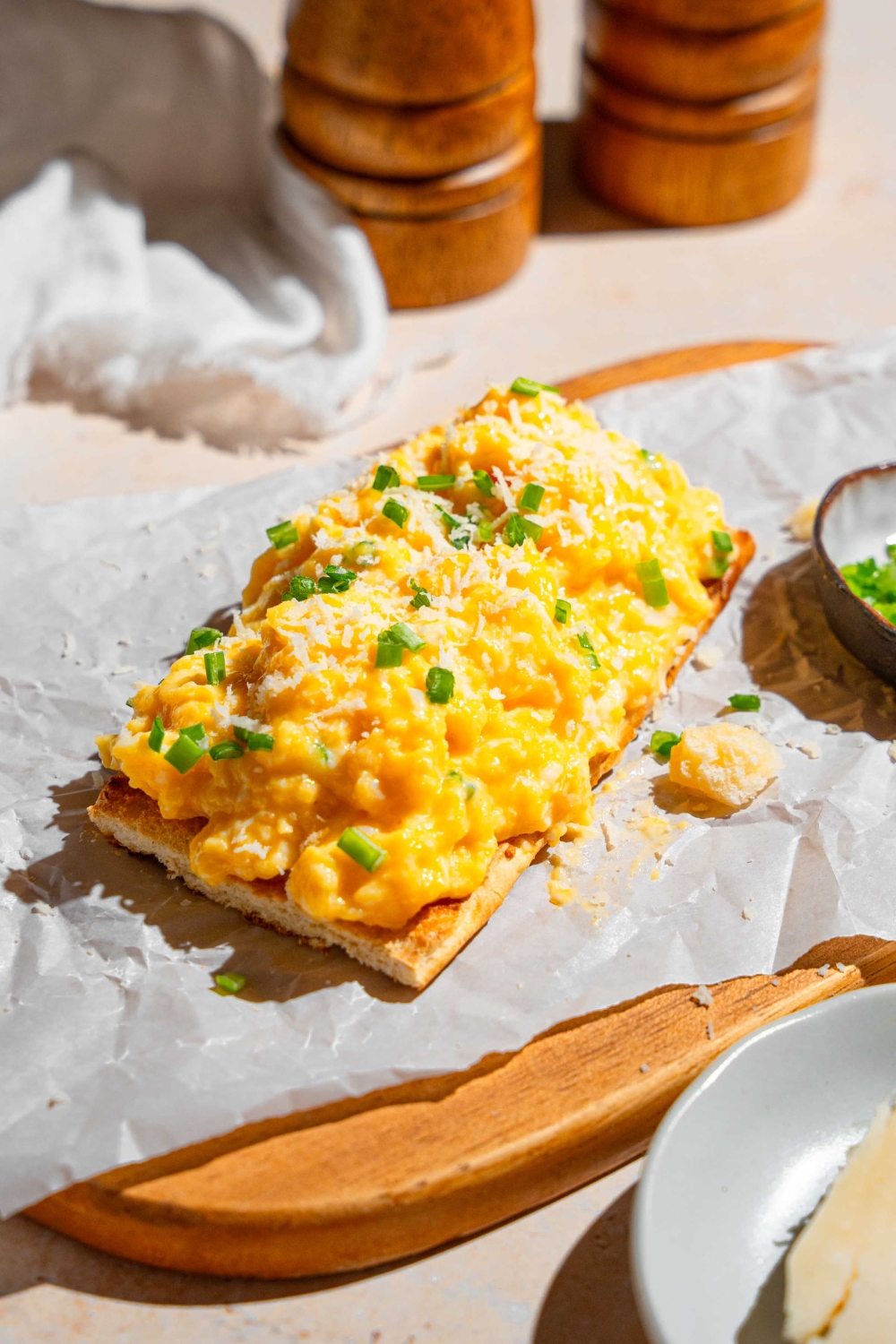
Table of Contents
Why I Love These Soft Scrambled Eggs
Scrambled eggs were one of the very first things I learned how to cook. For years, I did what most people do: cracked the eggs into a bowl, whisked them, poured them into a hot pan, and tried to cook them as quickly as possible. They were fine, but I honestly didn't realize scrambled eggs could taste this good until I tried Gordon Ramsay’s method.
I love this recipe because it completely transforms a tried-and-true basic breakfast into something elegant without making the process complicated. You don't need cream, special tools, or a fancy pan. The technique does all the work. The butter melts slowly into the eggs as they cook, the constant stirring creates tiny, soft curds instead of big, dry chunks, and the on-off heat technique keeps the eggs from overcooking or turning rubbery. You're in control the whole time, which makes them very forgiving once you understand the cues to look for.
These scrambled eggs are fast to make for a weekday breakfast but special enough for brunch if you're hosting, and they are a total game-changer if you have only ever made scrambled eggs the traditional way. Once you taste how creamy and soft they can be, it's hard to go back to dry, overcooked eggs.
I'll walk you through each step, plus give you tips on how to tell when they are perfectly done, how to adjust the texture to your liking, and how to customize them with cheese, herbs, or smoked salmon without messing up that signature Ramsay-style creaminess.
Ingredients You’ll Need
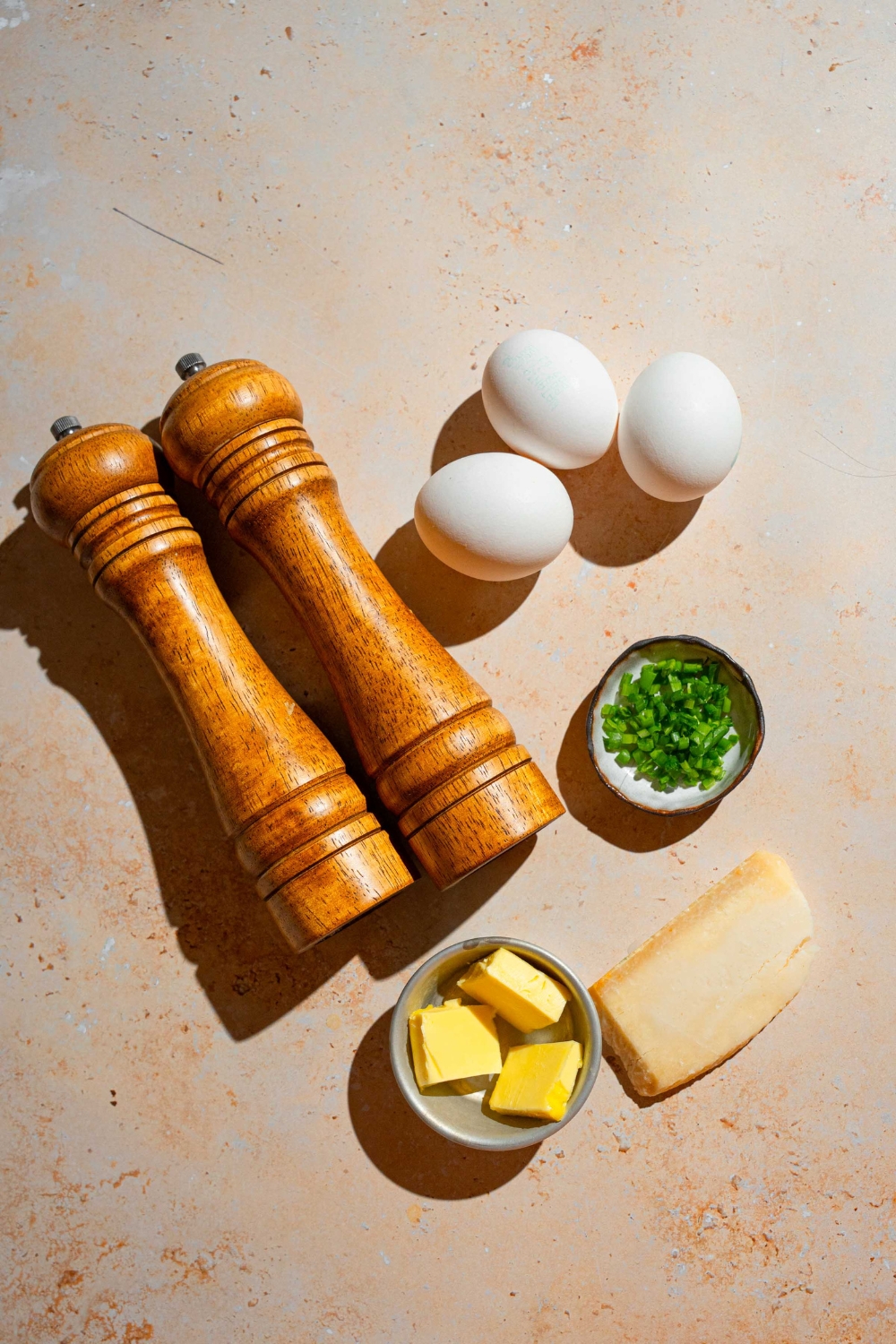
- 3 eggs
- 2 tablespoon butter
- Salt & pepper, to taste
- 2 tablespoon chives, finely chopped (to taste)
- Parmesan, optional, for topping
How To Make Soft Scrambled Eggs
Step 1: Start Cold
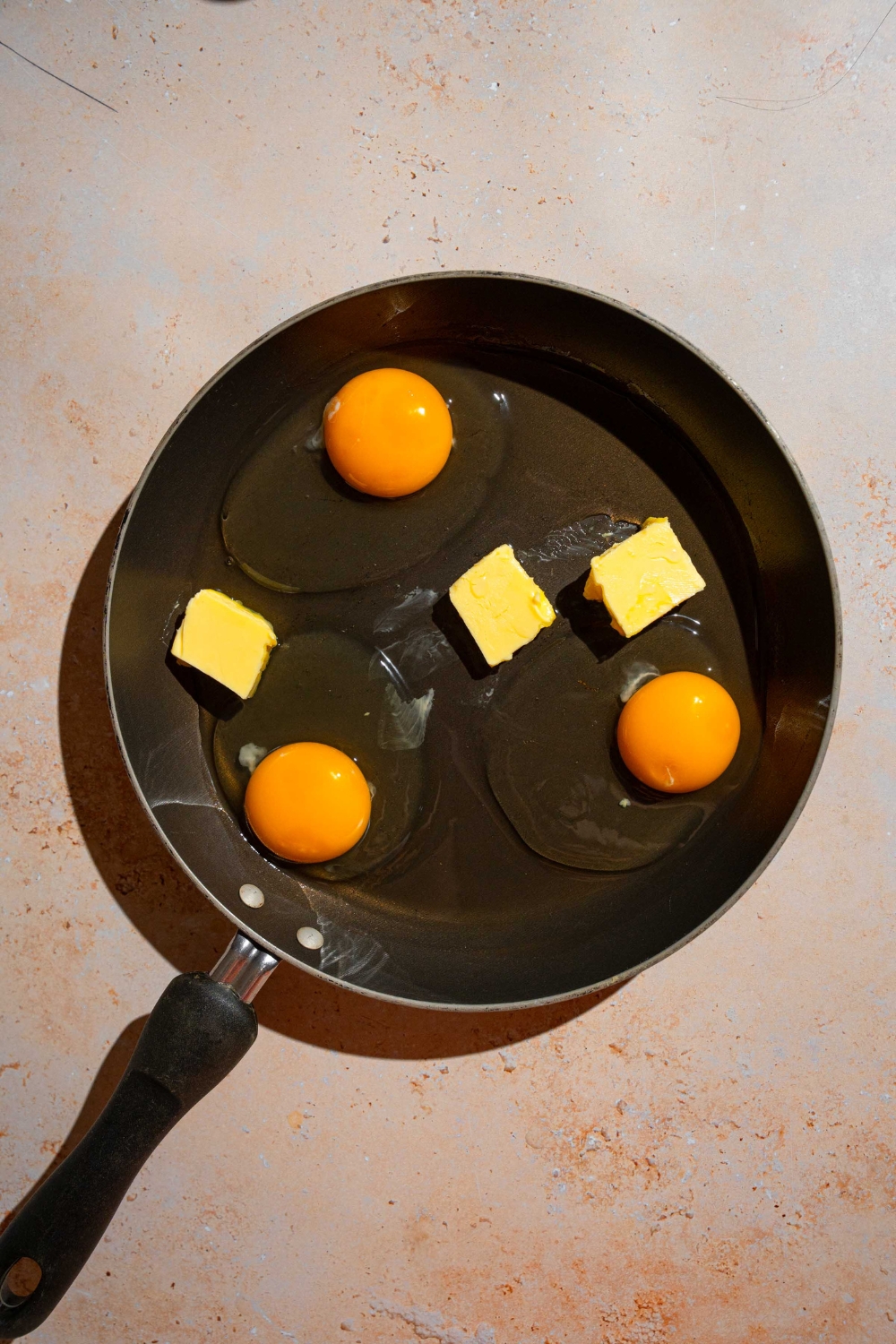
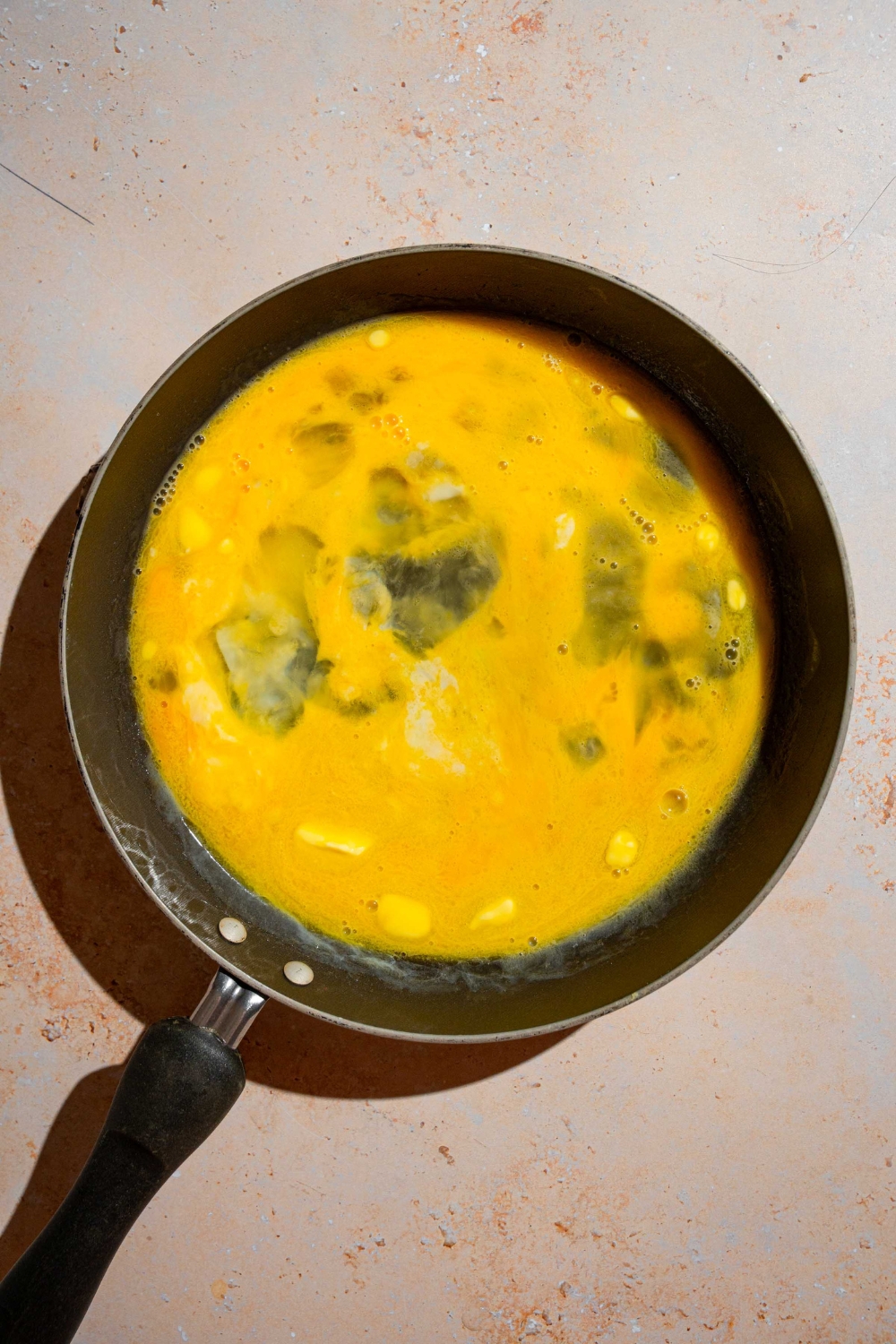
Add the eggs and butter to a cold nonstick pan. Don’t preheat—the gradual temperature increase keeps the eggs creamy.
Step 2: Heat & Stir Constantly
Place the pan over medium-high heat and stir continuously with a spatula for about 30 seconds. The eggs will begin to thicken, but shouldn’t fully set.
Step 3: Take the Eggs Off the Heat
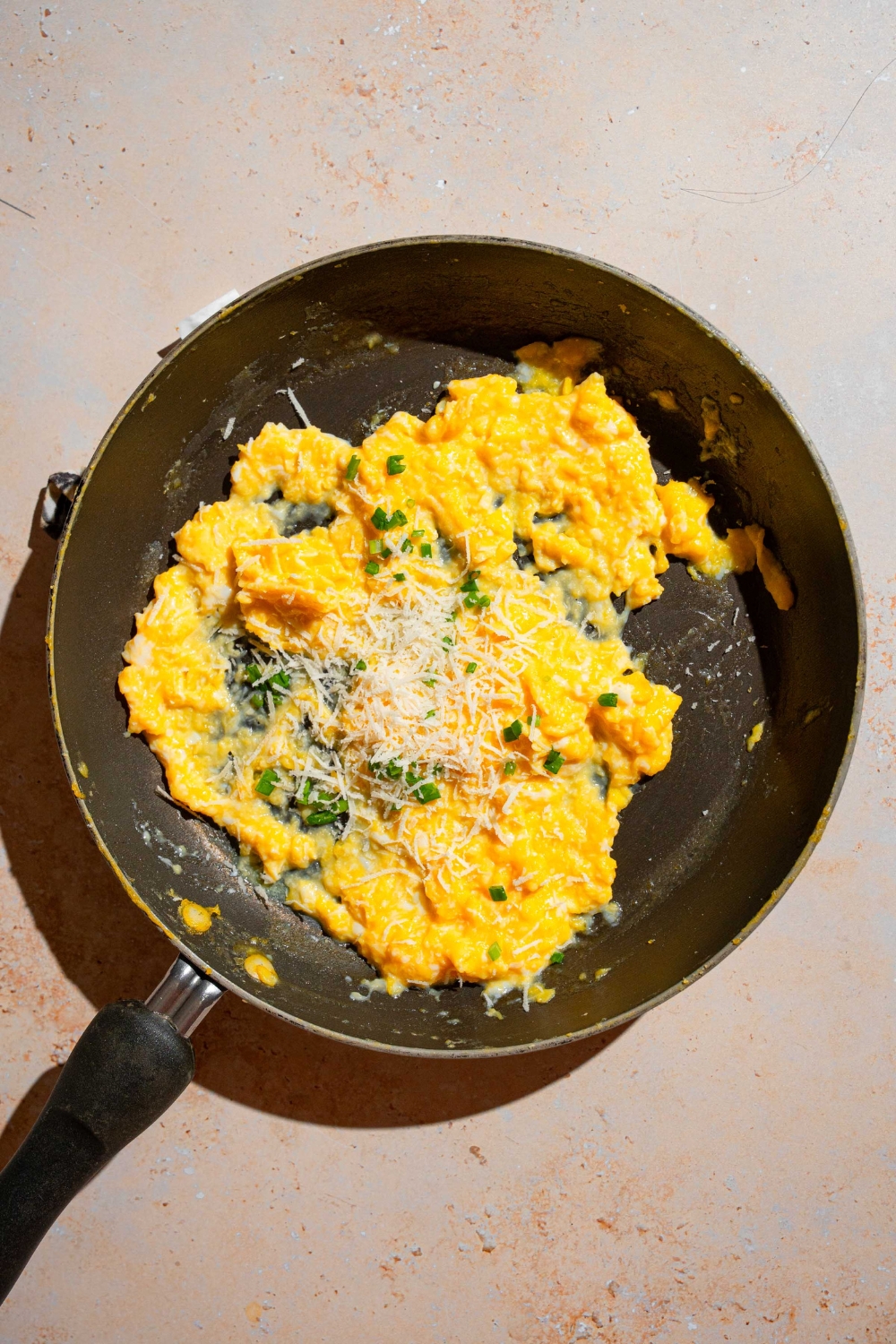
Remove the pan from the heat and continue stirring for another 30 seconds. The residual heat will keep cooking the eggs gently.
Step 4: Repeat the Process
Return the pan to the heat for a short burst, then remove it again, repeating this 3–4 times. The eggs should become glossy, soft, and custard-like.
Step 5: Season & Finish
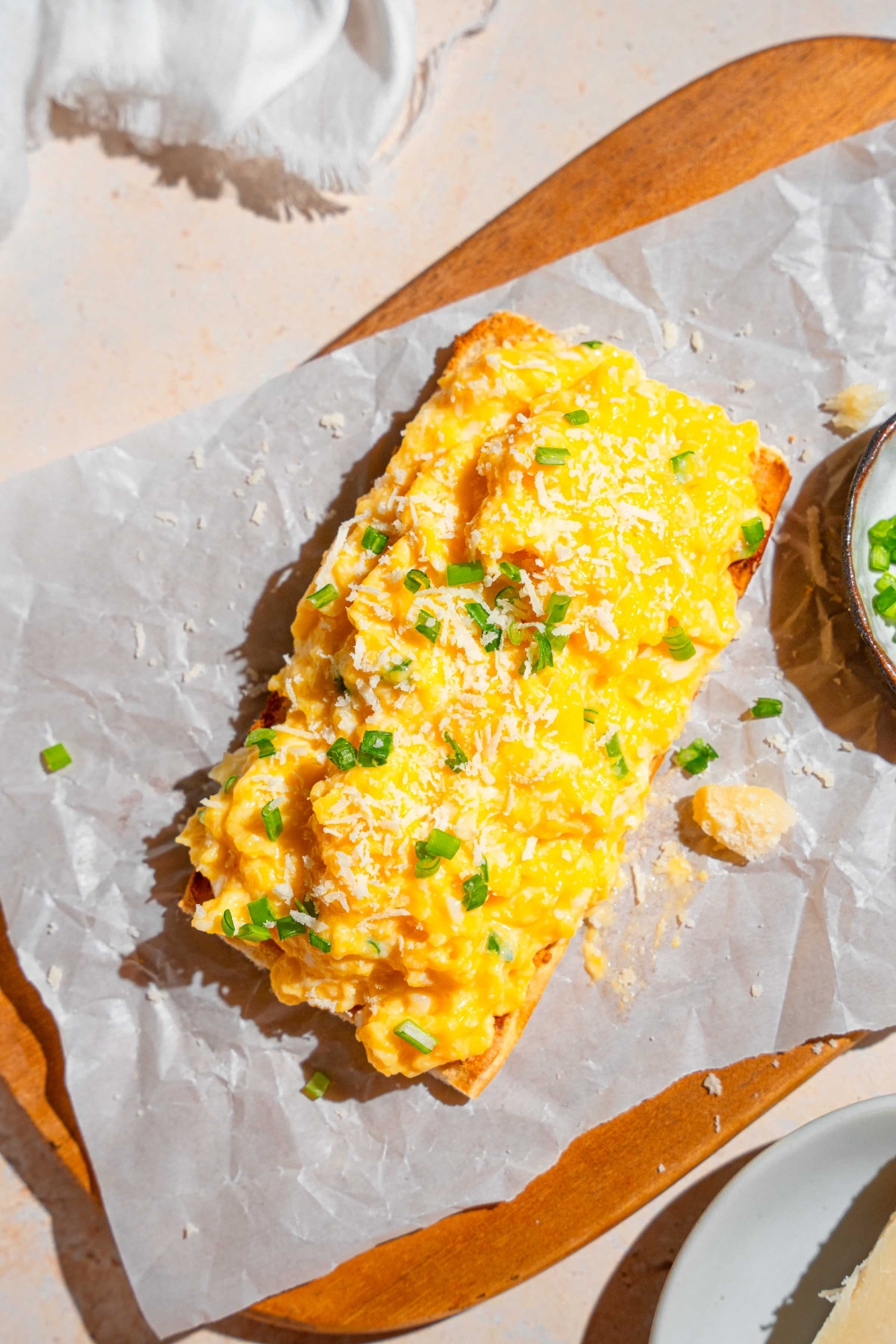
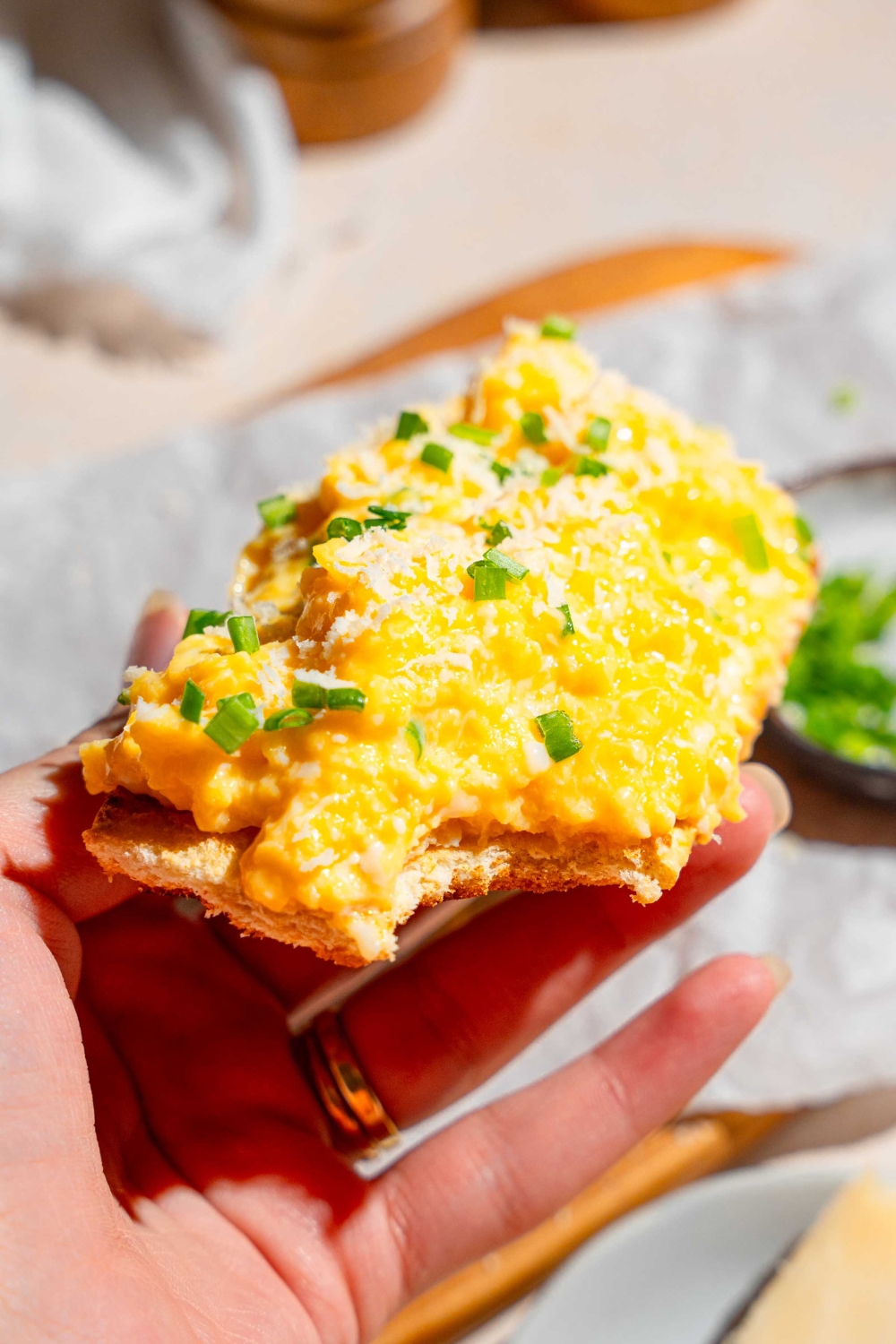
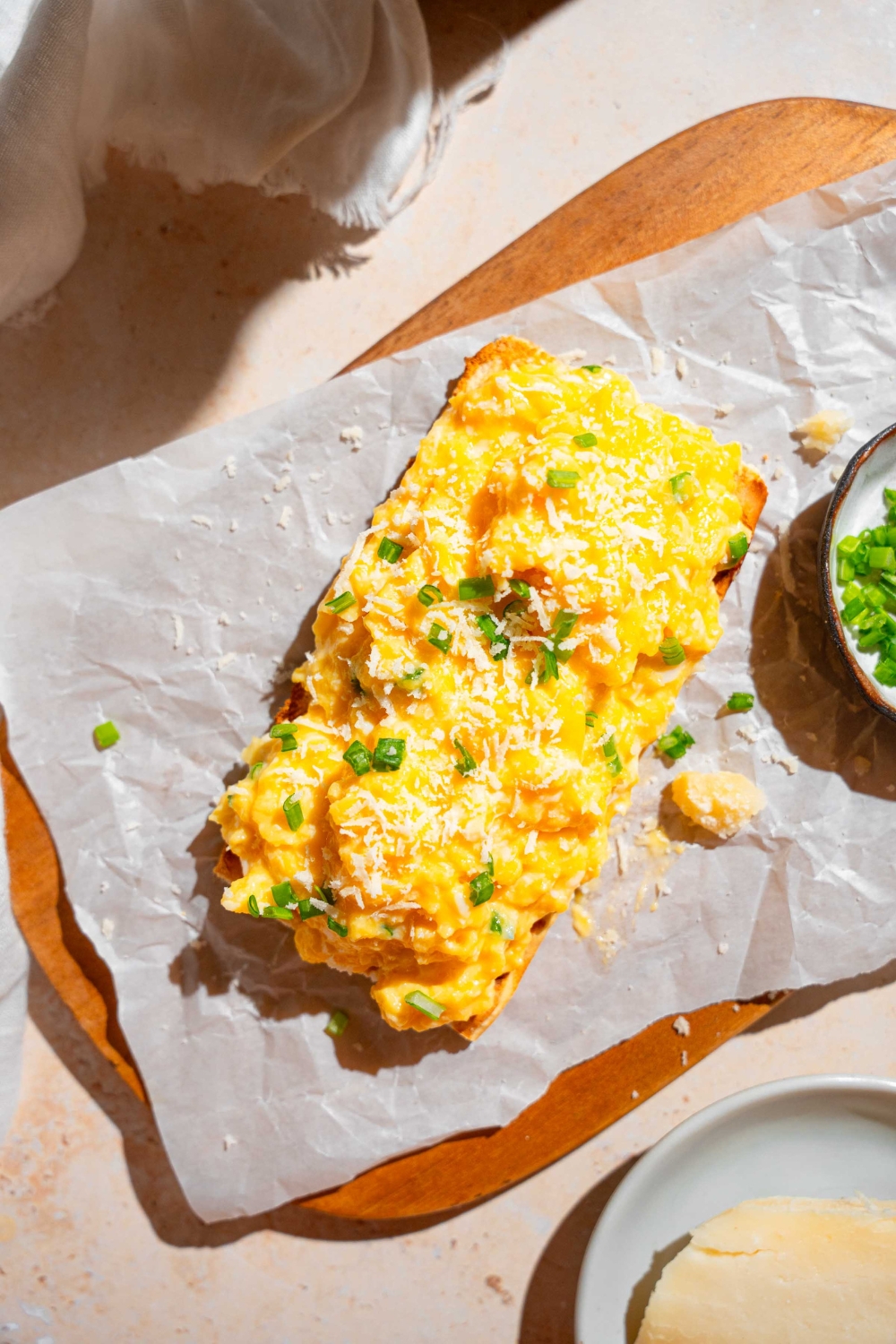
Turn off the heat completely. Season the scramble with salt, pepper, and chopped chives. Top with Parmesan and extra pepper if desired. Serve immediately; these eggs taste best fresh and hot.
Expert Tips for The Best Soft Scrambled Eggs
- Stir constantly, but gently. The magic of these eggs comes from movement. Keep the eggs moving the entire time you're cooking, lifting and folding with your spatula instead of aggressively whisking. Constant stirring keeps the curds tiny and delicate, which gives you a soft, custardy, almost sauce-like texture instead of big, dry chunks.
- Move the pan on and off the heat. Do not leave the skillet sitting on the burner. Start over medium to medium-low heat, then every 20 to 30 seconds, pull the pan off the heat and keep stirring. When the eggs stop thickening, go back on the heat. This on-off rhythm gently cooks the eggs and prevents hot spots that overcook the bottom.
- Wait to season with salt. Salt draws out moisture, and if you add it too early, it can make the eggs thinner and a little watery. For the creamiest results, cook the eggs until they are almost done, then season with salt and pepper right at the end, tasting and adjusting once the texture is where you want it.
- Pull them off while they still look a little soft. These eggs should look slightly loose and glossy when you stop cooking. They will continue to thicken and set from the residual heat in the pan and on the plate. If you cook until they look “fully done” in the pan, they will be overcooked and dry by the time you eat them. We're aiming for perfect soft scrambled eggs.
- Use a silicone or rubber spatula, not a whisk or metal spoon. A flexible spatula lets you sweep the bottom and sides of the pan cleanly, which helps cook the eggs evenly and prevents sticking. It also lets you gently fold the eggs over themselves to create those soft, creamy curds instead of breaking them apart.
- Choose a small pan for fewer eggs. If you are only making two or three eggs, use a small nonstick skillet. A big pan spreads the eggs too thin, and they will cook too fast. You want the eggs to have a little depth in the pan so you have time to move them around and control the texture.
- Use good-quality butter. Butter is a main flavor in this recipe, not just a cooking fat. A good quality salted or unsalted butter will give you richer-tasting eggs. If you use salted butter, just be a little lighter-handed with the salt at the end. I love using Kerrygold butter.
- Do not crank the heat to save time. It's tempting to turn the heat up to finish faster, but high heat will go from creamy to overcooked in seconds. Medium or medium-low heat, plus the on-off technique, gives you much more control and better texture.
- Add crème fraîche or sour cream at the end if you want them creamier. A spoonful of crème fraîche (Ramsay-style) or full-fat sour cream, stirred in at the end, instantly cools the eggs, stops the cooking, and adds a tangy richness. This is especially helpful if you're nervous about overcooking, and it makes the eggs extra silky.
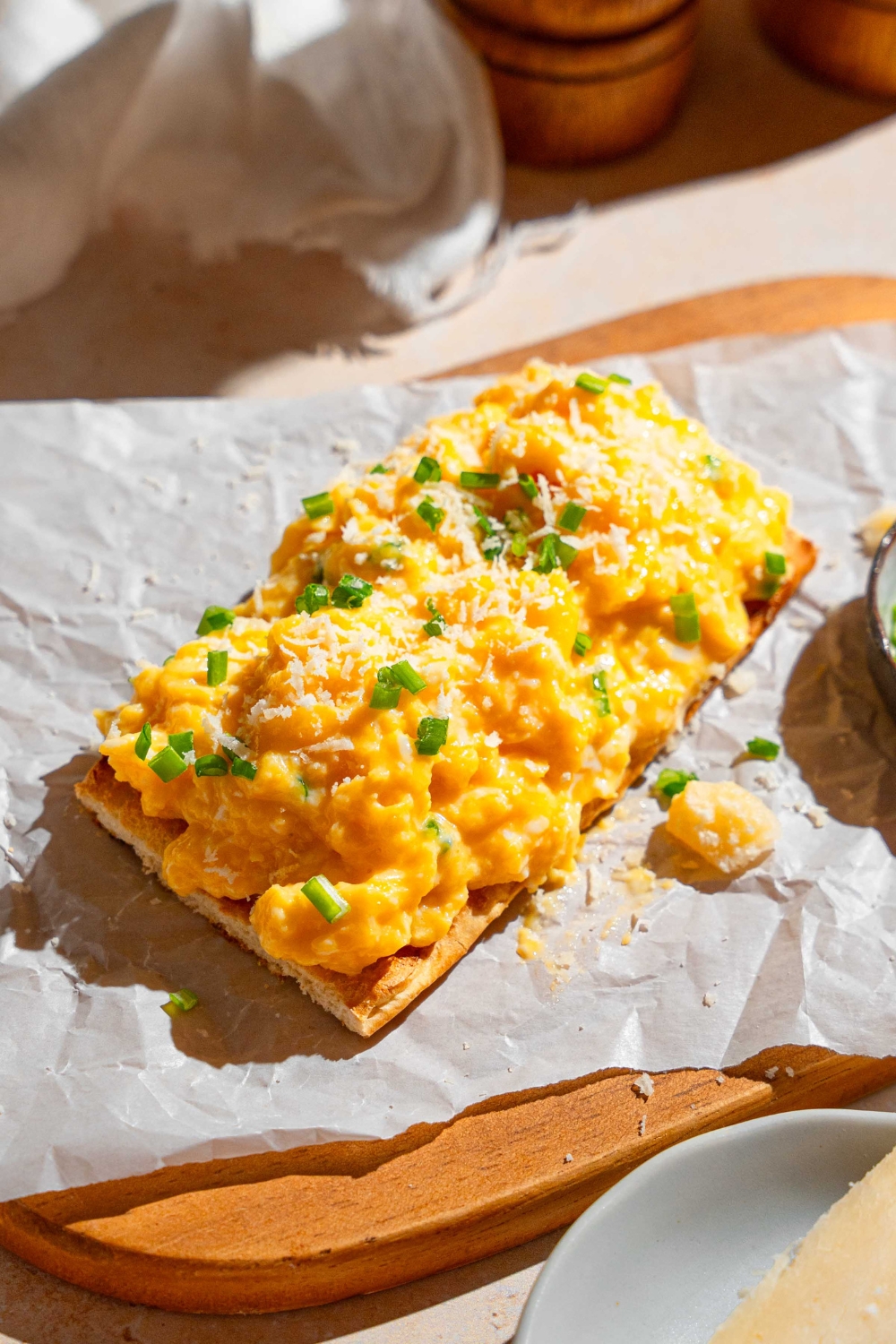
- Serve immediately on a warm plate. These scrambled eggs keep cooking as they sit, so have your toast (I love serving the eggs on a slice of toast) or sides ready before you start. Plate the eggs as soon as they are done and serve right away. If you can, use warm plates so the eggs stay soft and creamy instead of cooling and tightening too quickly.
Flavor Variations You Can Try
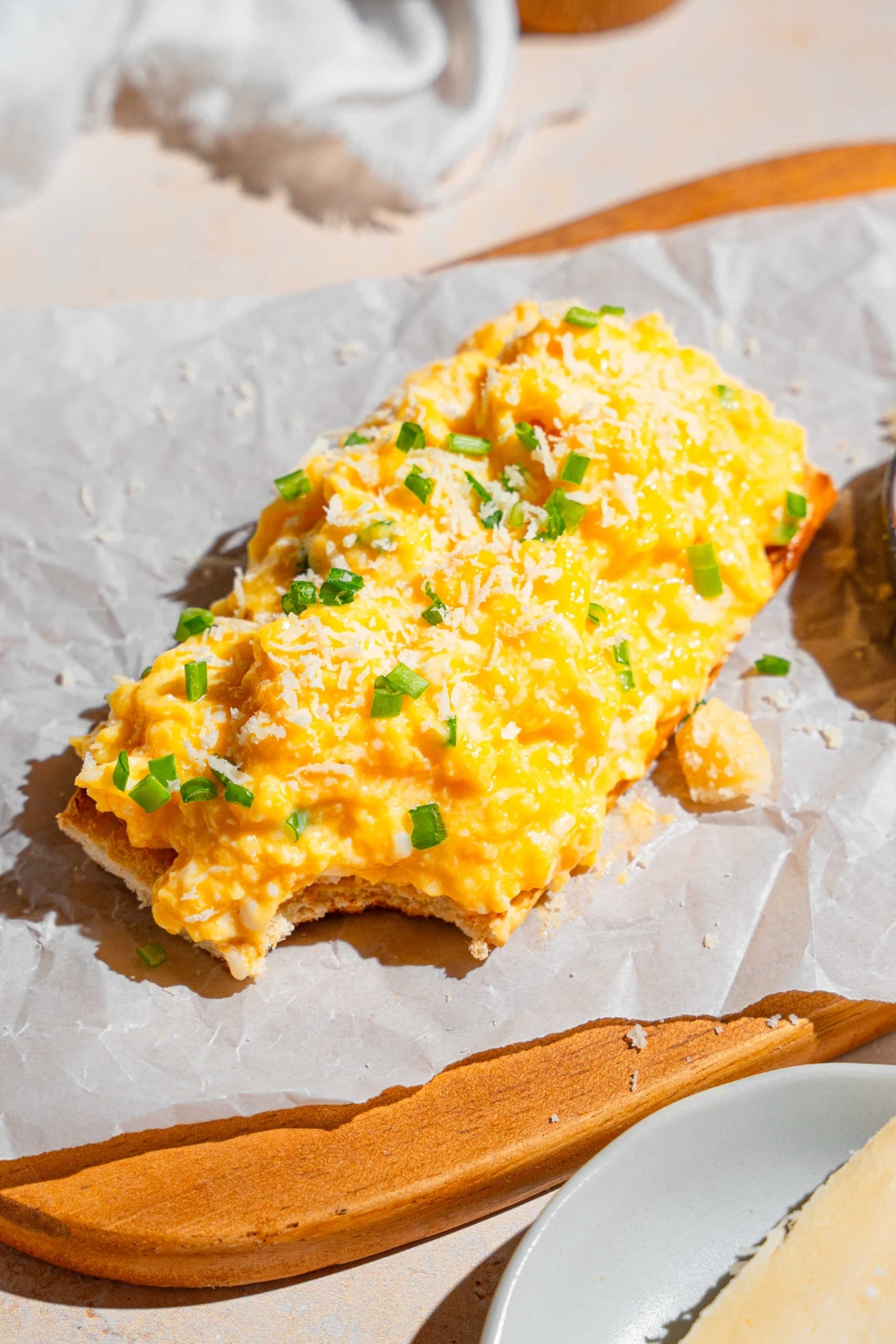
- Cheesy Soft Scrambled Eggs: As soon as the soft scrambled eggs come off the heat, stir in a handful of grated cheddar, Gruyère, or fontina. The residual heat will melt the cheese without overcooking the eggs.
- Herbed Scrambled Eggs: Sprinkle in fresh chives, parsley, dill, or basil right at the end. The herbs stay bright and fresh and add tons of flavor without changing the creamy texture.
- Smoked Salmon Scrambled Eggs: Fold small pieces of smoked salmon into the eggs off the heat, just before serving. The warmth of the soft scrambled eggs gently warms the salmon without cooking it.
- Truffle Scrambled Eggs: For a gourmet twist, finish the eggs with a tiny drizzle of truffle oil or a pinch of truffle salt. A little goes a long way and pairs perfectly with the buttery, custardy eggs.
Soft Scrambled Eggs FAQs
Why start with a cold pan?
Starting with a cold pan lets the eggs and butter heat up together slowly, which is the key to that ultra creamy, soft scrambled egg texture. Instead of shocking the eggs on hot metal and instantly overcooking the edges, they warm gradually and thicken evenly as you move the pan on and off the heat. That’s how you get silky, custard like soft scrambled eggs instead of dry, rubbery curds.
Can I use salted butter?
Yes, you can absolutely use salted butter. It will add a little more flavor right from the start. The only adjustment you need to make is at the end, go lighter on the added salt until you taste the finished eggs. You can always add more, but it is hard to fix over salted soft scrambled eggs.
Are these eggs supposed to be this soft?
Yes, Gordon Ramsay-style scrambled eggs, aka soft scrambled eggs, are meant to be soft, glossy, and slightly loose, not firm and dry. Think custardy and spoonable rather than fluffy diner-style eggs. They should still gently mound on the plate, but if you cook them until they look “fully dry” in the pan, they will be overcooked by the time you eat them.
How long do Gordon Ramsay scrambled eggs take to cook?
Once you start cooking, the eggs usually take around 3 to 5 minutes, depending on your stovetop, pan, and how many eggs you are using. The on-off heat method might feel different at first, but it goes quickly. Use visual cues more than the clock, pull them off the heat when they look softly set and still a bit glossy.
Can I add milk or cream to these scrambled eggs?
You do not need milk or cream for this style of soft scrambled eggs; the butter and technique provide all the creaminess. If you prefer, you can add a small splash of cream at the very end, once the eggs are off the heat, but too much liquid can make the eggs runny and prevent them from setting properly. If you want extra richness, crème fraîche or a little sour cream stirred in right at the end works better.
What kind of pan is best for Ramsay style scrambled eggs?
A small nonstick skillet is ideal for soft scrambled eggs because it lets you stir constantly without sticking and is easy to move on and off the heat. A silicone or rubber spatula pairs well with nonstick. You can use stainless steel if you are comfortable with it, but you will need to keep the heat lower and stir even more consistently.
Can I double the recipe to serve more people?
Yes, you can double or even triple the number of eggs, but for the best results, keep each batch to a medium size so you can control the texture. If you need a lot of soft scrambled eggs, it is often easier to cook two smaller batches back-to-back rather than crowding a very large pan, which can cause the eggs to cook unevenly.
My Final Thoughts
Viral Recipes To Try Next
Soft Scrambled Eggs (Gordon Ramsay's Viral Method)

These Gordon Ramsay scrambled eggs give you the creamiest, softest, most luxurious eggs you will probably ever eat at home. Instead of cooking them low and slow and walking away, this method has you moving the pan on and off the heat while you stir constantly. That simple switch changes everything. You end up with silky, custardy soft scrambled eggs with tiny curds and a glossy finish that tastes like something you would get at a restaurant, but they are ready in just a few minutes. If you have tried my Cajun Egg Boil, then you already know I love breaking down viral recipes and making them easy to nail at home, and these Gordon Ramsay-style scrambled eggs are no exception.
Ingredients
- 3 eggs
- 2 tablespoon butter
- Salt and pepper, to taste
- 2 tablespoon chives, to taste
- Parmesan, optional
Instructions
1. Add the eggs and butter to a cold pan, then place it over medium-high heat. Stir continuously and cook for about 30 seconds.
2. Remove the pan from the heat but keep stirring for another 30 seconds to let the residual heat continue cooking the eggs.
3. Repeat this process—alternating between heat and off heat—about 3–4 times, or until the eggs are softly scrambled and creamy.
4. Once off the heat, season with salt, pepper, and chopped chives.
5. Finish by topping with grated Parmesan and a little extra black pepper. Enjoy!
Nutrition Information:
Yield:
2Serving Size:
1Amount Per Serving: Calories: 217Total Fat: 19gSaturated Fat: 10gUnsaturated Fat: 9gCholesterol: 309mgSodium: 195mgCarbohydrates: 1gFiber: 0gSugar: 1gProtein: 10g
Christina H.
These scrambled eggs are legit. I never like scrambled eggs at home cause I don't cook them great but this method really works!! I'm going to be making scrambled eggs a ton now.