


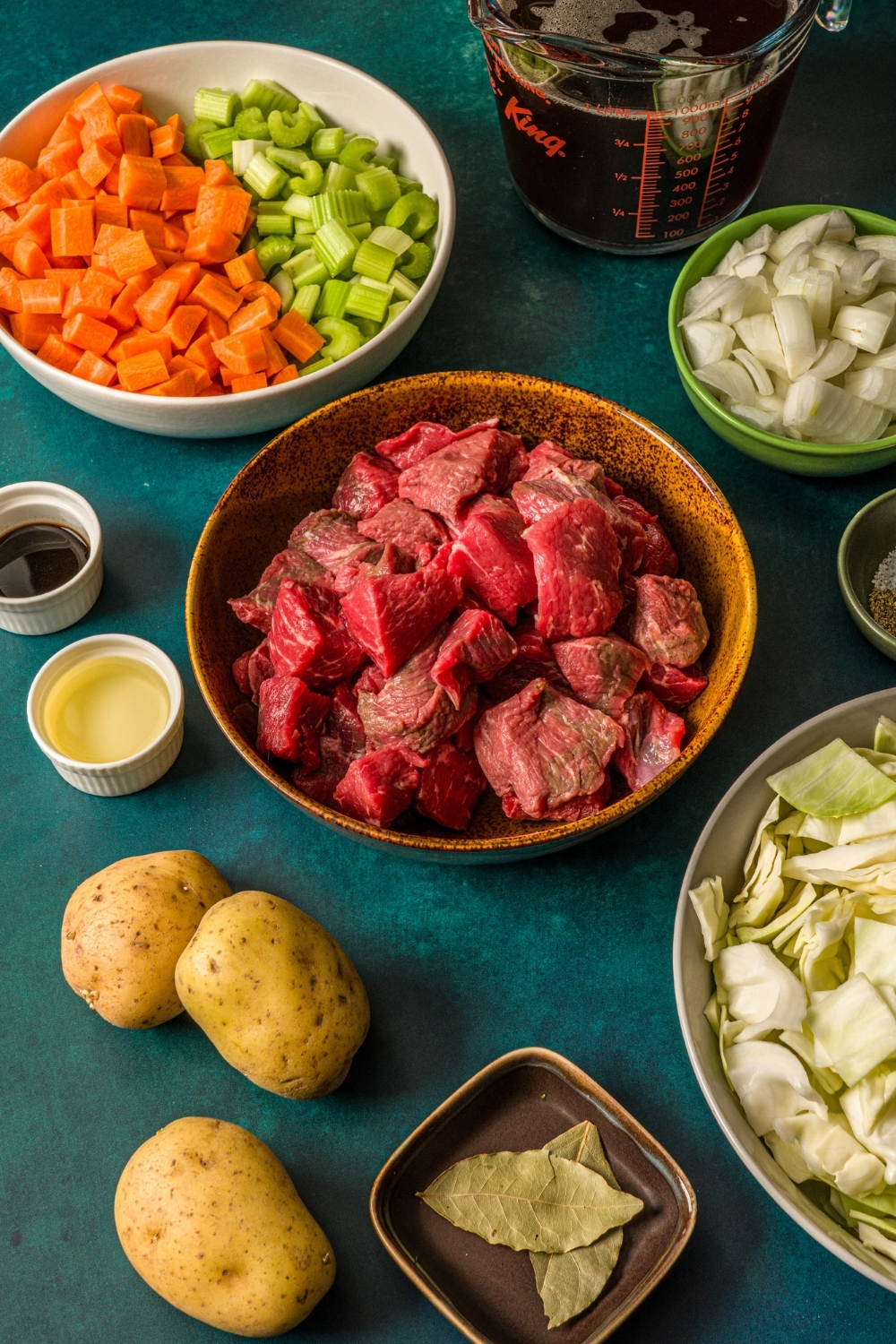
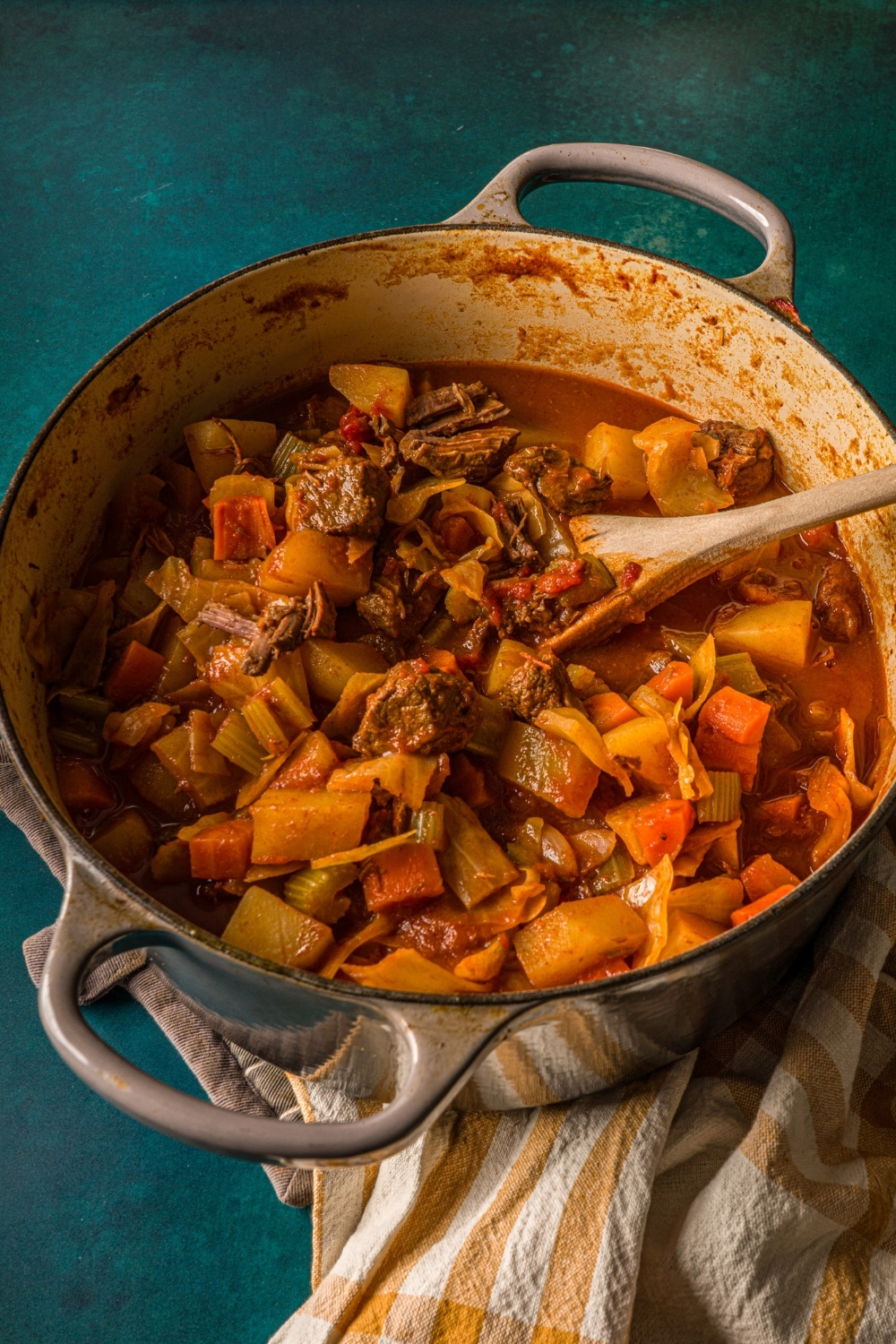
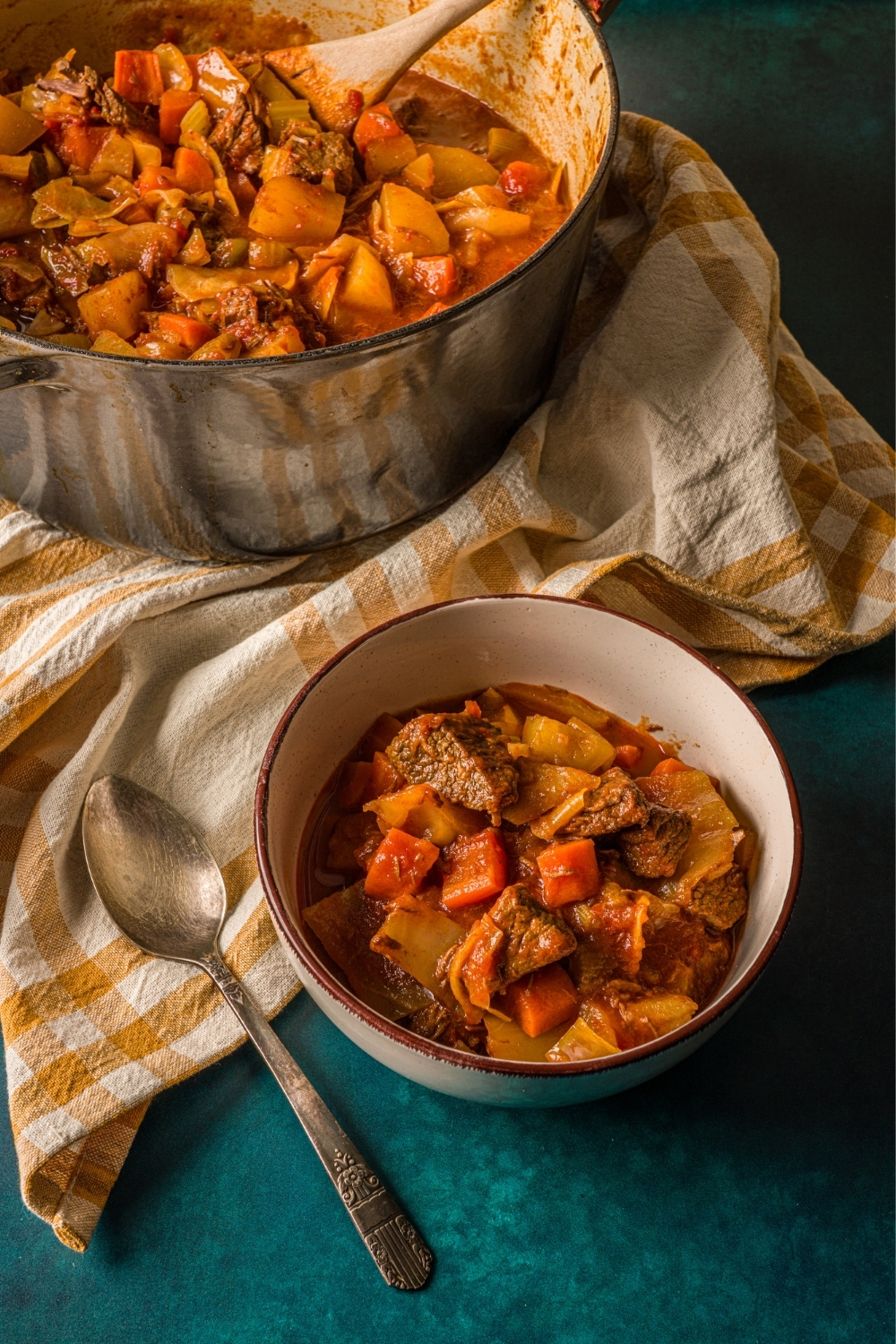
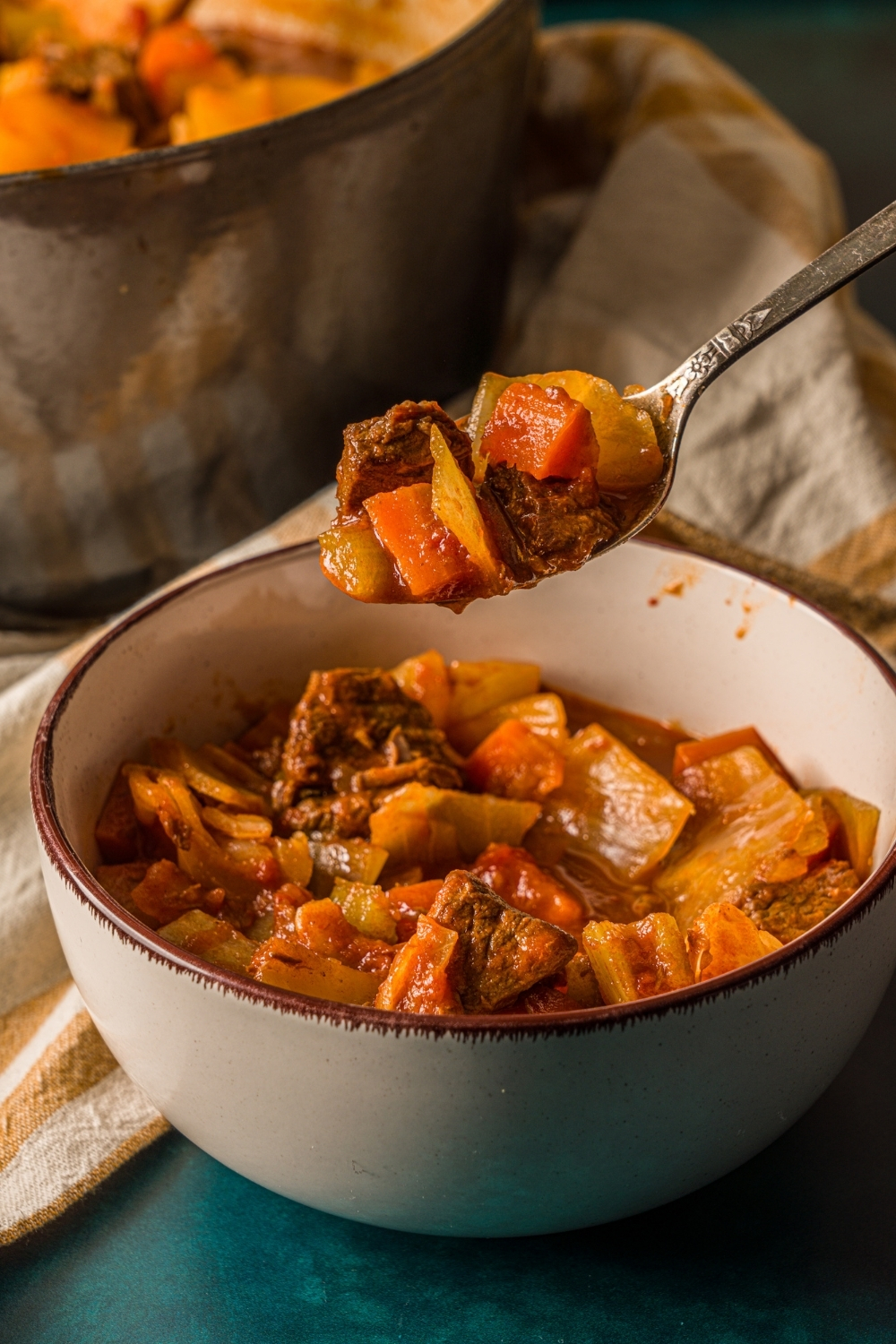
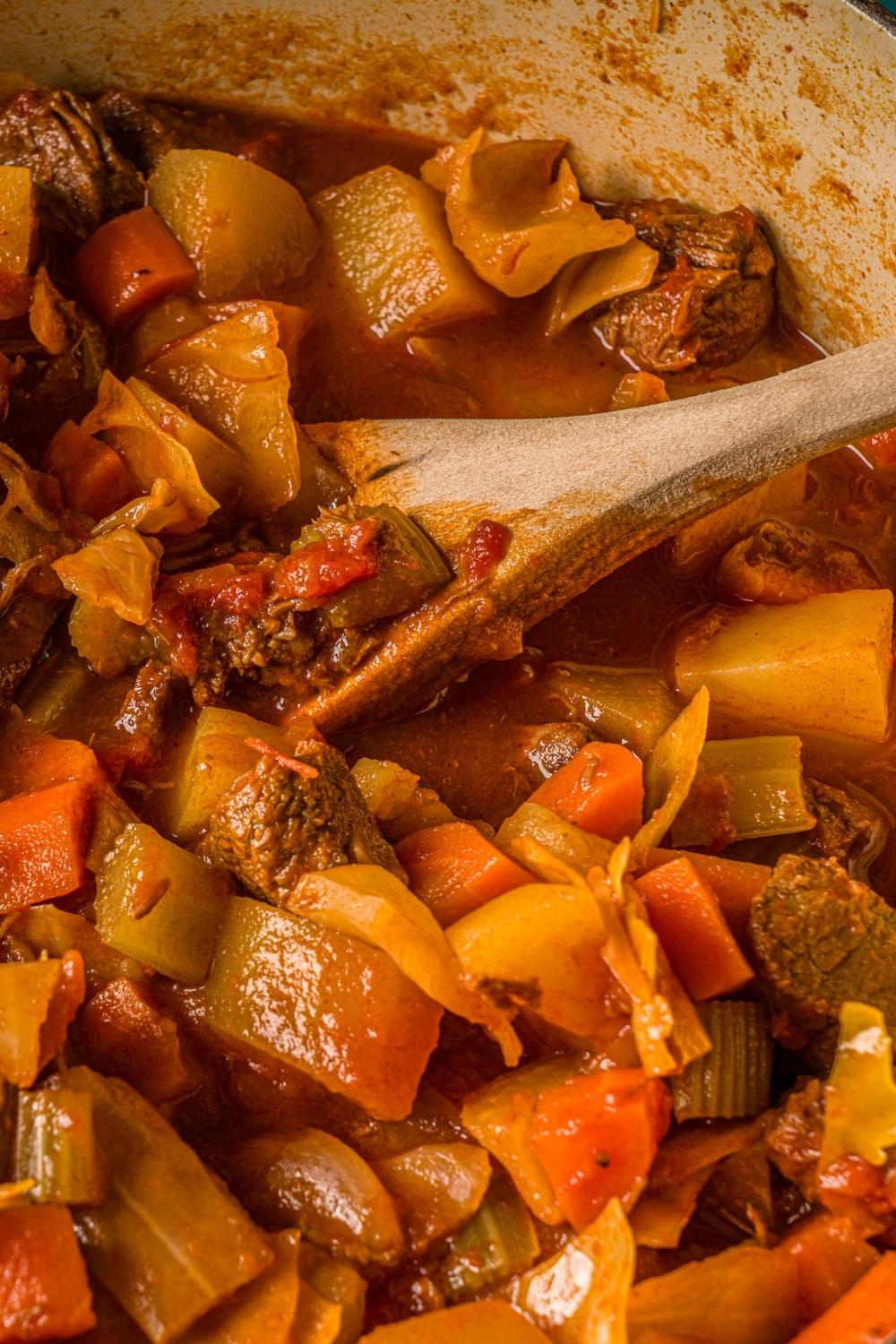
This beef and cabbage stew is rich, hearty, and deeply comforting. It's packed with tender chunks of beef, cabbage, potatoes, carrots, celery, and tomatoes in a savory, slow-simmered broth. It tastes like the kind of old-fashioned cabbage and beef stew your grandmother simmered on the stove all afternoon, but the method is straightforward and very hands-off once everything is in the pot. I love making cozy stew recipes in the winter months, and this beef and cabbage stew is one of my favorites, right alongside my salmon stew and cajun meatball stew.
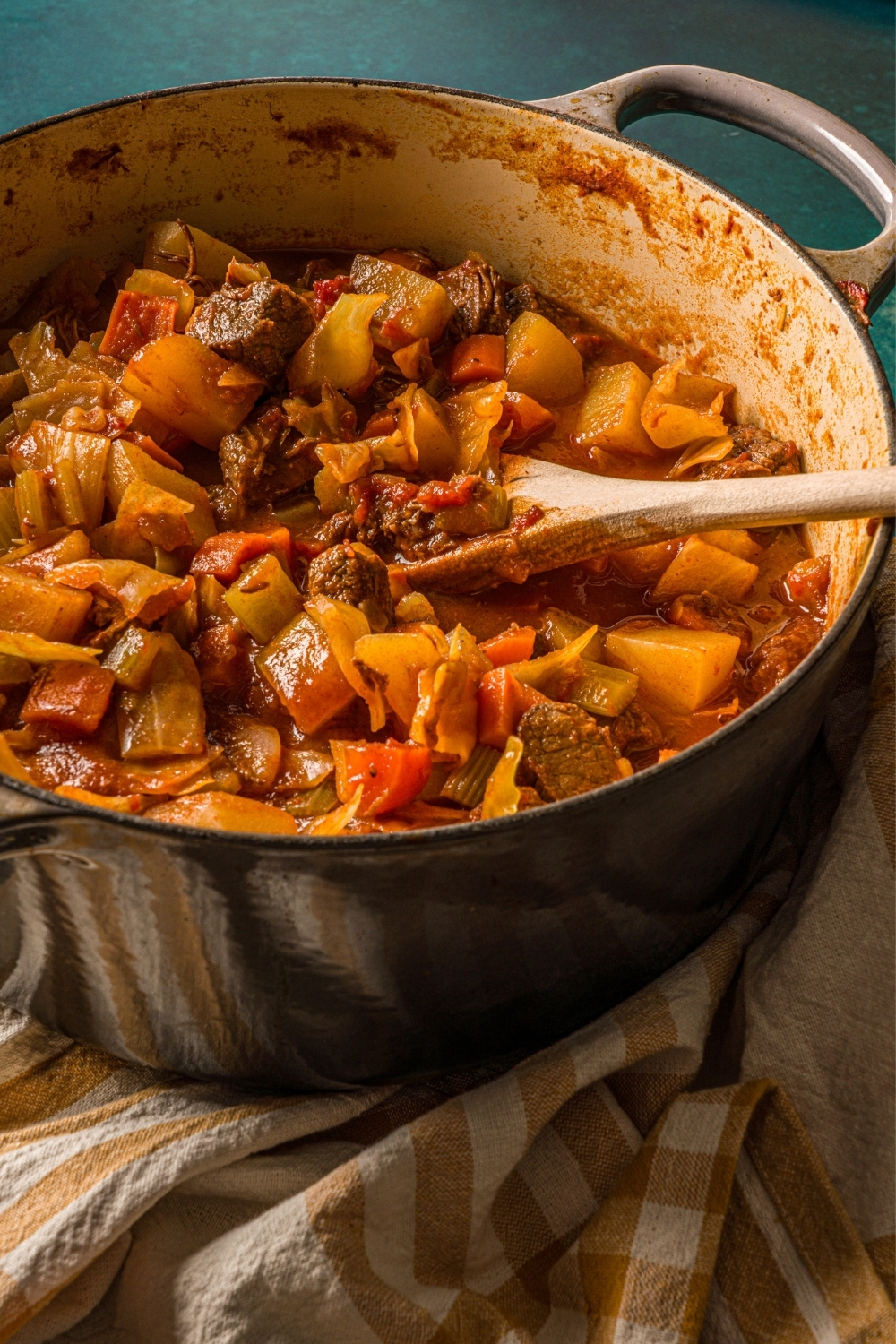
Table of Contents
Why You'll Love This Beef and Cabbage Stew
This stew builds flavor at every step. You start by browning the beef in a Dutch oven or large pot, which creates a deep, savory base. Then the beef gently simmers in broth until it is fork-tender, which gives you that “all-day” flavor even though the process is mostly hands-off. When you add the vegetables, tomatoes, and cabbage, they soak up the beefy, tomato-rich broth, turning it into a complete meal in one pot. The cabbage softens into silky ribbons that give the stew body and sweetness, and the potatoes make it extra hearty and satisfying.
It is also a very practical recipe. Beef and cabbage stew is budget-friendly, uses simple ingredients, and makes a big batch that reheats well. You can ladle it into bowls for a filling dinner, pack it into containers for easy lunches, or freeze portions for future nights when you want comfort food without cooking from scratch.
This method is forgiving and well tested, so you do not have to be an expert to get tender beef and a flavorful broth. If you are looking for a cozy, cold-weather beef stew that leans on cabbage and vegetables and feels like real home cooking, this recipe is a reliable option to keep in your rotation.
Ingredients You’ll Need
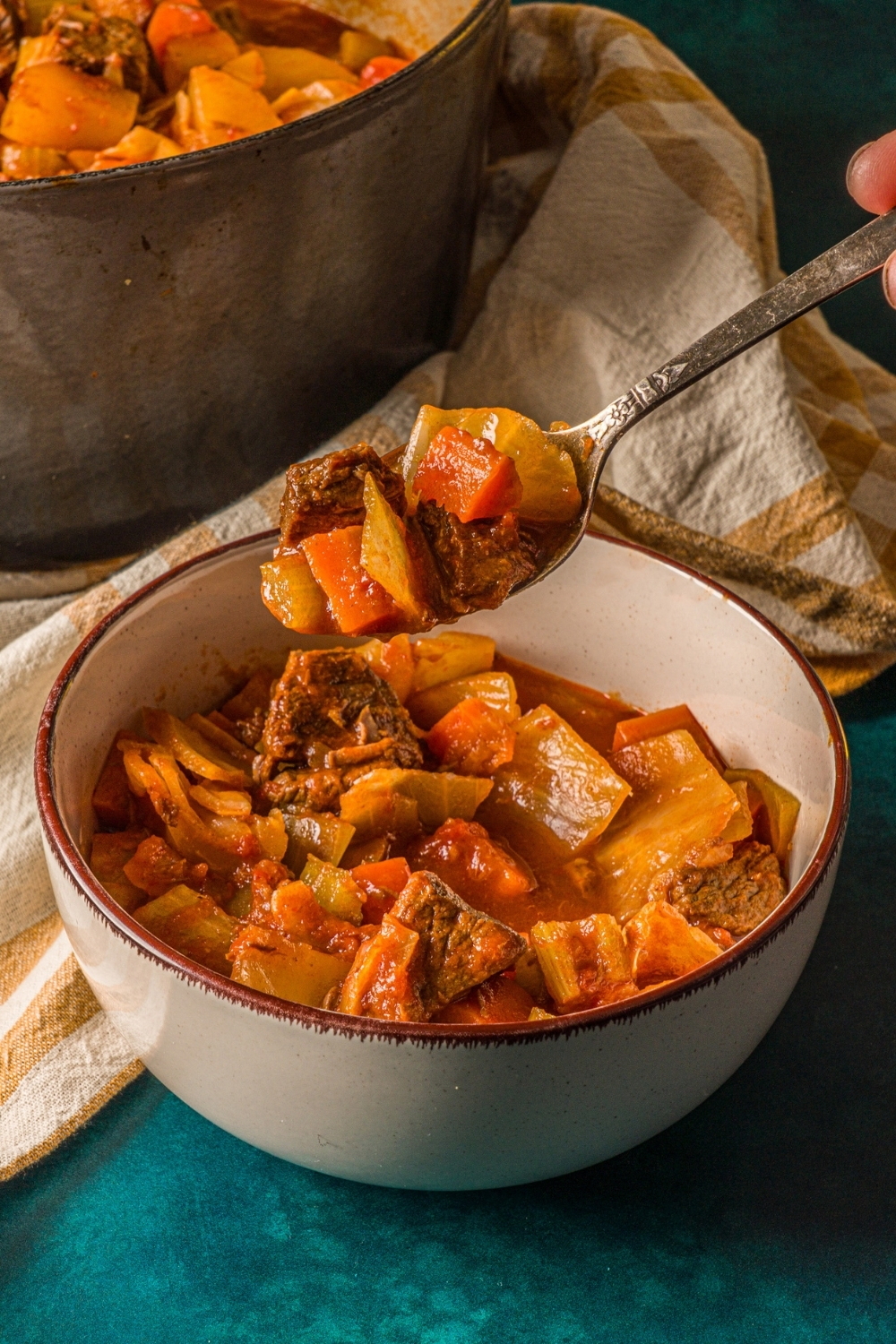
- 1 Tbsp light-flavored olive oil
- 1½ lbs beef stew meat, cut into 1-inch cubes
- 6 cups beef broth, divided
- 1 large onion, chopped into ½-inch pieces
- 2 bay leaves
- 4 medium potatoes, peeled and cut into 1-inch cubes (about 4 cups)
- 4 celery ribs, sliced thin (about 2 cups)
- 4 carrots, peeled and cut bite-size (about 3 cups)
- 1 (15 oz) can diced tomatoes
- 1 (6 oz) can tomato paste
- 1 tsp Worcestershire sauce
- 4 cups shredded cabbage
- ½ tsp kosher salt (plus more to taste)
- ½ tsp freshly ground black pepper (plus more to taste)
How To Make Beef and Cabbage Stew
Step 1: Brown the Beef
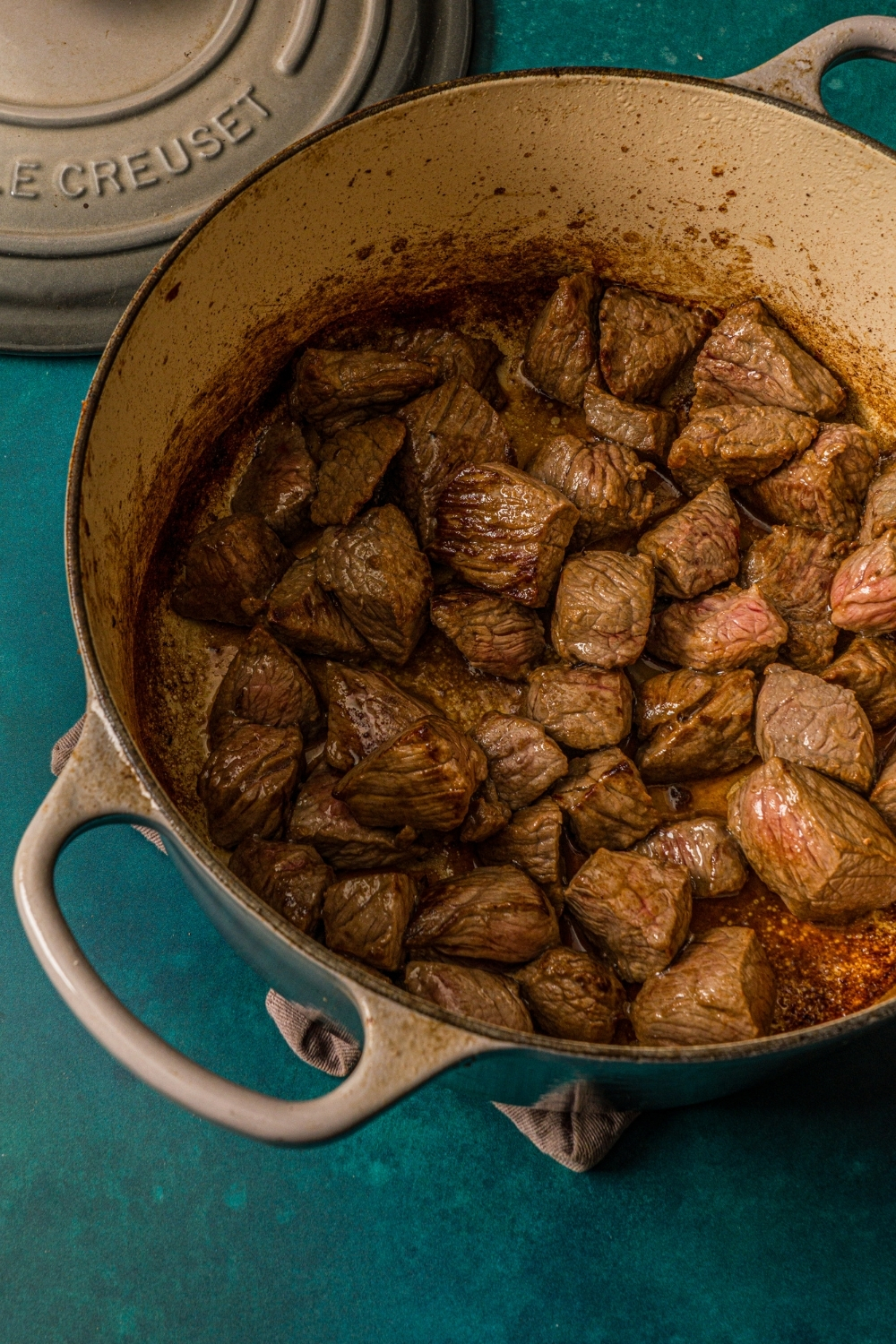
Warm the olive oil in a large pot or Dutch oven over medium-high heat. Add the beef cubes, toss to coat in the oil, and cook for about 10 minutes, turning occasionally, until browned on all sides. Browning builds deep flavor for the stew.
Step 2: Start the Stew Base
Add the chopped onion, bay leaves, and 3 cups of the beef broth. Bring the mixture to a boil, then reduce to a simmer.
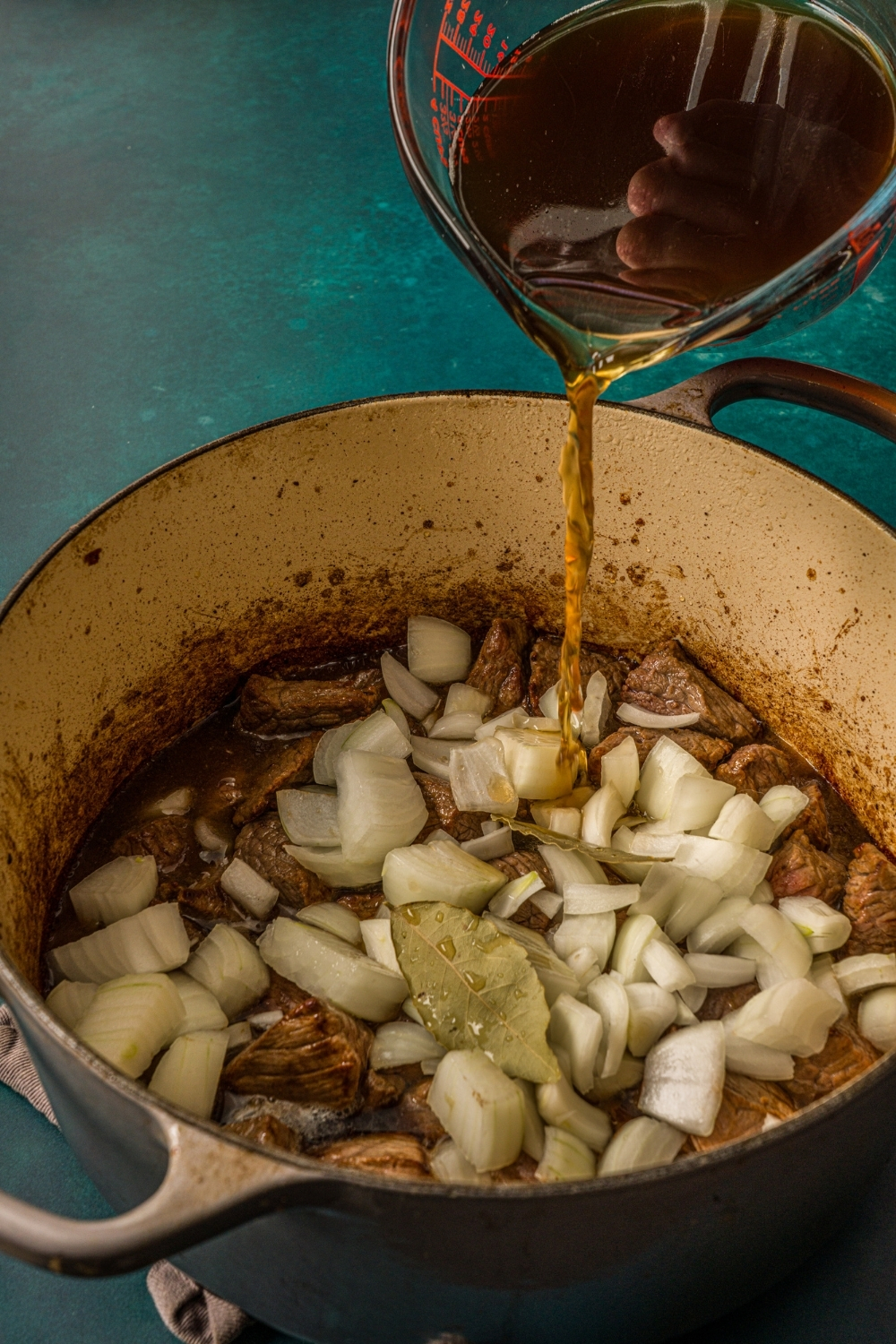
Cover and cook over medium-low heat for 2–2½ hours, or until the beef is fork-tender.
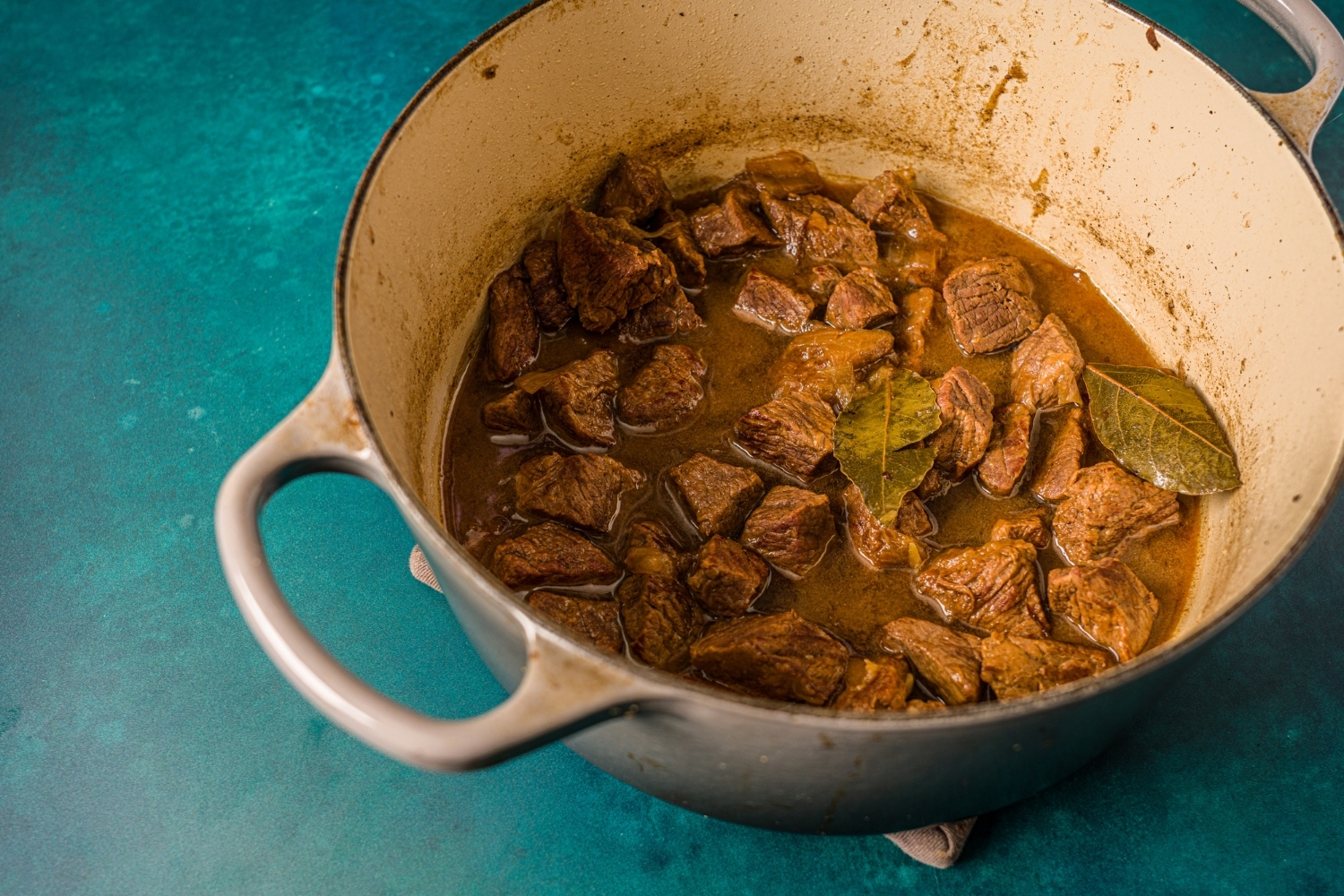
Step 3: Add the Vegetables & Tomatoes
Once the beef is tender, add the potatoes, celery, carrots, diced tomatoes, tomato paste, Worcestershire sauce, shredded cabbage, and the remaining 3 cups of broth. Stir everything together to combine well, then cover the pot and bring the mixture back to a boil.
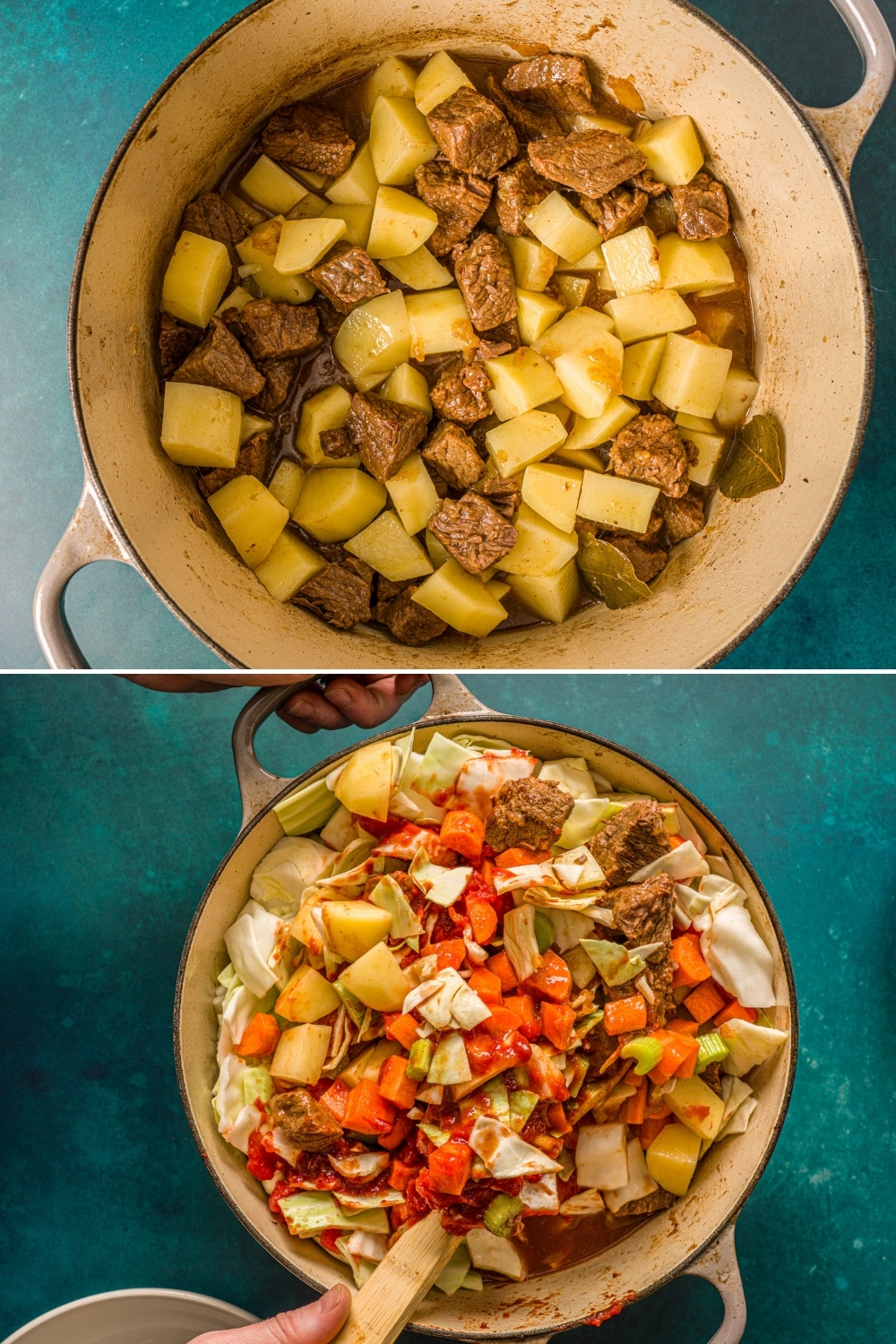
Step 4: Simmer to Finish
Reduce heat to low and let the stew simmer, covered, for 30–40 minutes, or until the potatoes are soft and the vegetables are tender. Uncover the pot, give the stew a good stir, and taste. Adjust salt and pepper to your liking.
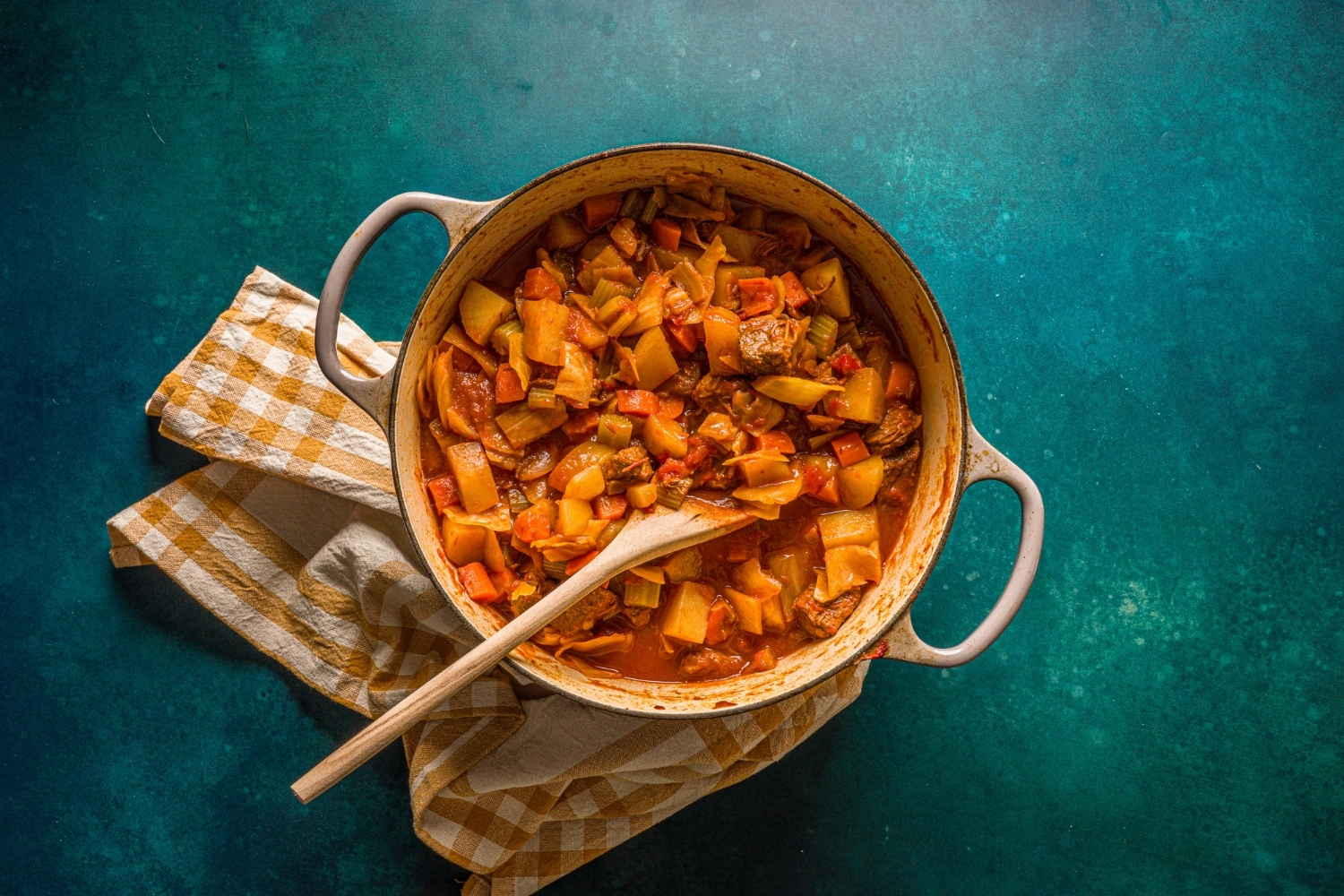
Step 5: Serve the Stew
Remove the bay leaves, ladle the stew into bowls, and serve warm. It pairs perfectly with crusty bread, cornbread, or a simple side salad.
Expert Tips To Make The Best Beef and Cabbage Stew
- Use a heavy pot or Dutch oven for even cooking. A heavy-bottomed pot or cast-iron Dutch oven distributes heat more evenly and holds a steady simmer better than a thin pot. This helps prevent scorching on the bottom and keeps the stew cooking at a gentle, consistent temperature, which is ideal for a long-cooked beef and cabbage stew.
- Brown the beef really well before adding liquid. This is one of the most important steps in any beef stew. Take the time to brown the beef on all sides in a hot pot, working in batches if needed, so you do not crowd the pan. You want deep, dark caramelization on the meat and little browned bits on the bottom of the pot. That fond dissolves into the broth later and gives your beef and cabbage stew a richer, more complex flavor instead of tasting flat.
- Simmer low and slow for tender beef. Once the broth is in the pot, keep the heat at a gentle simmer, not a hard boil. Boiling can make the beef tough and chewy. A low simmer for 2 to 2½ hours gives the collagen and connective tissue time to break down so the beef becomes fork tender and the broth takes on that classic “simmered all afternoon” flavor. If the heat is too high, turn it down and be patient.
- Use the right potatoes for stew. Yukon Gold and Russet potatoes both work well in beef and cabbage stew, but they cook a little differently. Yukon Gold potatoes hold their shape better and give you a creamy texture that does not crumble as much. Russets break down a bit more and help naturally thicken the broth. Either is a good choice, just cut them into even chunks so they cook at the same rate.
- Shred the cabbage thinly for the best texture. Cutting the cabbage into thin shreds or narrow strips helps it soften and almost melt into the stew. Thick chunks can stay a bit firm and dominate each bite. Thin cabbage gives a subtle sweetness, adds body to the broth, and blends better with the beef, potatoes, and carrots, which is what you want in a cabbage and beef stew.
- Taste and adjust the liquid toward the end. As the stew simmers, the broth can reduce and thicken. If it looks thicker than you like, do not hesitate to add a little extra beef broth or water to loosen it to your preferred consistency. Add it a bit at a time, stir, and then taste again. This lets you keep the stew hearty without turning it into something too thick or too salty.
- Season in layers and taste before serving. The broth, tomatoes, and Worcestershire sauce all bring salt and umami to the stew, so wait until the end to adjust the seasoning. After the potatoes and cabbage are tender, taste the broth and add salt and freshly ground black pepper as needed. This step makes the difference between an ok stew and one that tastes fully balanced and savory in every spoonful.
- Skim excess fat off the top if needed. Depending on the cut of beef you use, some fat will rise to the surface as the stew cooks. You can leave a little for richness, but if there is a thick layer, skim some off with a spoon toward the end of cooking. This keeps your beef and cabbage stew tasting rich without feeling greasy.
- Let the stew rest, or make it a day ahead. Like most stews, beef and cabbage stew tastes even better after it sits. Once it is done, you can turn off the heat and let it rest on the stove for 15 to 20 minutes before serving so the flavors settle. It is also an excellent make-ahead meal. The next day, the flavors are deeper, the beef is even more tender, and the broth has had time to fully develop. Reheat gently on the stove and enjoy.
Recipe Variations You Can Try
- Classic Cabbage Stew: If you want a meatless option, you can turn this into a simple cabbage stew. Leave out the beef and use vegetable broth instead of beef broth. Add an extra cup or so of cabbage and a few more carrots or potatoes to keep it hearty. The result is a flavorful vegetarian cabbage stew that is still cozy and satisfying.
- Spicy Beef and Cabbage Stew: To give the stew some heat, add ½ to 1 teaspoon red pepper flakes, 1 to 2 teaspoons chili powder, or 1 small diced jalapeño along with the other seasonings. You can adjust the spice level to your taste. This variation is perfect if you like a little warmth in your winter soups and stews.
- German-Inspired Beef and Cabbage Stew: For a German-style twist, stir in 1 cup sauerkraut (drained) and 1 teaspoon caraway seeds when you add the cabbage and other vegetables. The sauerkraut adds a pleasant tanginess and the caraway seeds bring a flavor reminiscent of rye bread, which pairs beautifully with beef and cabbage.
- Italian-Style Beef and Cabbage Stew: To give the stew an Italian flair, swap part of the beef for Italian sausage or add 8 to 12 ounces of sliced Italian sausage. Add 1 teaspoon dried basil and 1 teaspoon dried oregano with the other seasonings. You can also toss in a handful of fresh parsley at the end. The combination of tomatoes, Italian herbs, sausage, and cabbage makes this taste like an Italian-inspired comfort stew.
- Low-Carb Beef and Cabbage Stew: If you are looking for a lower carb version, replace the potatoes with 2 to 3 cups of cauliflower florets. Add them at the same time you would add the potatoes and cook until tender. The cauliflower absorbs the savory broth and keeps the stew hearty without the extra starch.
Beef and Cabbage Stew FAQs
Can I make this beef and cabbage stew in a slow cooker?
Yes, this recipe adapts well to the slow cooker. Brown the beef first in a skillet or Dutch oven, then transfer it to the slow cooker. Add the onion, potatoes, celery, carrots, diced tomatoes, tomato paste, Worcestershire sauce, bay leaves, and broth. Cook on low for 7 to 8 hours, or until the beef is tender. Stir in the cabbage during the last hour of cooking so it softens but does not overcook.
Can I freeze this stew?
Absolutely. Beef and cabbage stew freezes very well. Let the stew cool completely, then portion it into airtight containers or freezer-safe bags. Freeze for up to 3 months. When you are ready to eat, thaw overnight in the refrigerator and reheat gently on the stovetop, adding a splash of broth or water if it has thickened too much.
Can I use ground beef instead of stew meat?
Yes, you can use ground beef if that is what you have on hand. Brown about 1½ pounds of ground beef in the pot, breaking it up as it cooks, then drain off any excess fat. Add the onion, broth, and seasonings and continue with the recipe. Because ground beef cooks much faster than stew meat, you can reduce the initial simmering time. Once the vegetables are added, simmer until they are tender and the flavors have melded.
Why is my beef tough?
If the beef in your stew is tough, it usually means it has not cooked long enough. Stew meat needs time at a gentle simmer to break down the collagen and connective tissue. Keep the heat low and continue to cook until the beef becomes fork tender. Rushing this step or boiling the stew too hard can make the meat chewy.
Can I add beans to this stew?
Yes, beans are a great addition and make the stew even heartier. You can stir in 1 to 2 cups of cooked or canned beans (such as kidney beans, white beans, or cannellini beans) when you add the cabbage and other vegetables. Let them simmer with the stew so they warm through and absorb some of the flavor.
How can I make the stew thicker?
If you prefer a thicker stew, you have a couple of options. You can simmer the stew uncovered for the last 10 to 15 minutes to let some of the liquid evaporate and concentrate. Another option is to lightly mash a few of the cooked potatoes directly into the broth, which naturally thickens it and gives the stew a creamier texture.
Is there a way to make this stew lower in carbs?
Yes, you can make the stew more low-carb friendly by replacing the potatoes with cauliflower florets, kohlrabi, or another low-carb vegetable. Add the cauliflower during the same step as the potatoes and cook until tender. The result is still hearty and satisfying, but with fewer carbohydrates.
My Final Thoughts on This Delicious Stew Recipe
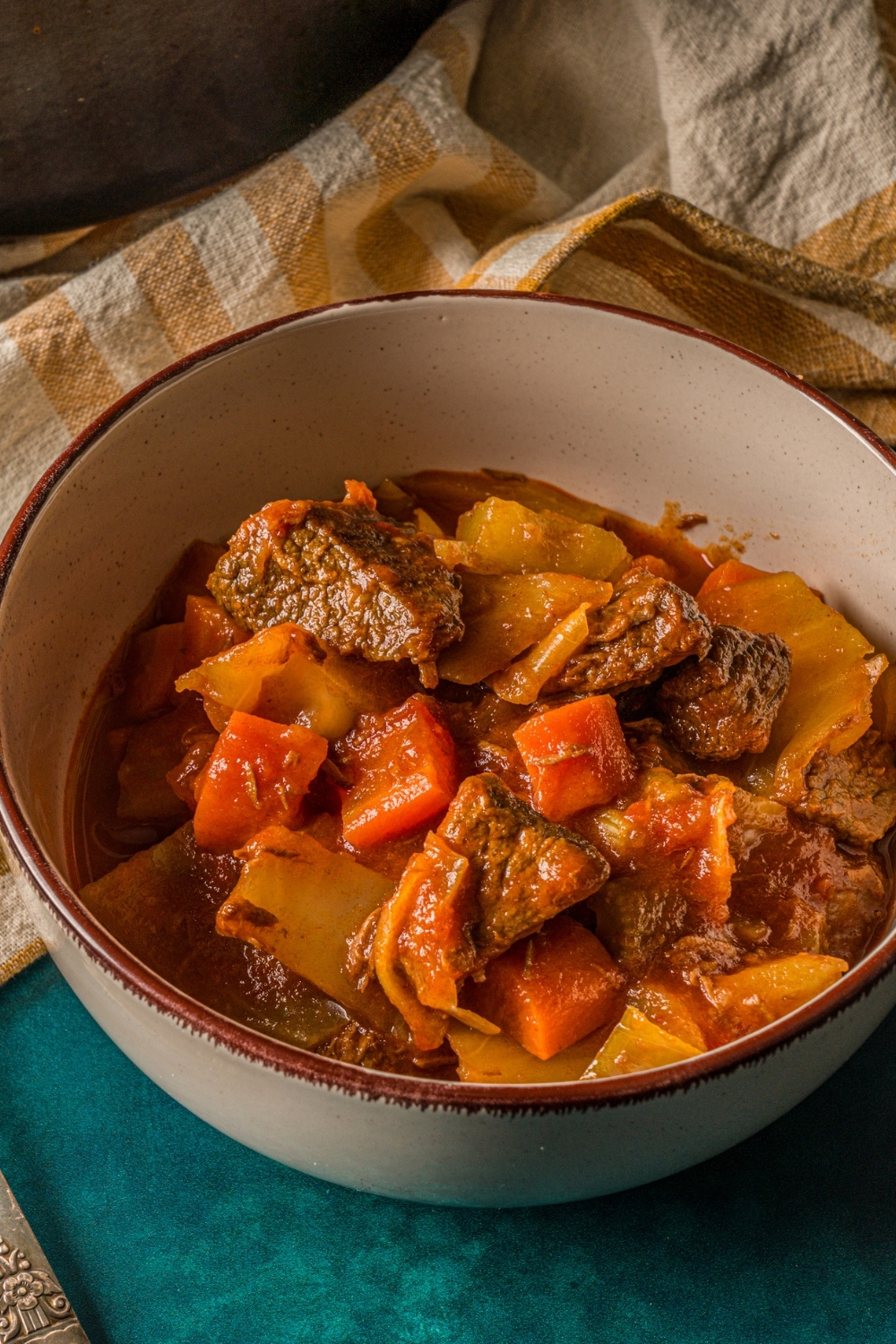
This beef stew with cabbage is hearty, warming, and full of old-school comfort. With tender beef, rich broth, and plenty of vegetables, it’s a perfect one-pot winter meal that feels rustic, nourishing, and deeply satisfying. Make it once, and it’ll quickly become a cold-weather staple. Try it out and leave me a comment and review below so I can hear your thoughts on this recipe. For another delicious dinner recipe that's delicious during the winter months, check out this glazed spiral ham.
Beef and Cabbage Stew Recipe

This beef and cabbage stew is rich, hearty, and deeply comforting. It's packed with tender chunks of beef, cabbage, potatoes, carrots, celery, and tomatoes in a savory, slow-simmered broth. It tastes like the kind of old-fashioned cabbage and beef stew your grandmother simmered on the stove all afternoon, but the method is straightforward and very hands-off once everything is in the pot. I love making cozy stew recipes in the winter months, and this beef and cabbage stew is one of my favorites, right alongside my salmon stew and cajun meatball stew.
Ingredients
- 1 tablespoon light-flavored olive oil
- 1½ pounds beef stew meat, cut into 1-inch pieces
- 6 cups beef broth, divided
- 1 large onion chopped into ½-inch pieces
- 2 bay leaves
- 4 medium potatoes, peeled and cut into 1-inch pieces, about 4 cups
- 4 celery ribs sliced thin, about 2 cups
- 4 carrots, peeled and cut into bite-sized pieces, about 3 cups
- 15-ounce can diced tomatoes
- 6-ounce can of tomato paste
- 1 teaspoon Worcestershire sauce
- 4 cups shredded cabbage
- ½ teaspoon kosher salt, adjust to taste
- ½ teaspoon freshly ground black pepper adjust to taste
Instructions
1. In a large pot or Dutch oven, warm the oil over medium-high heat. Add the beef and toss to coat. Cook until browned on all sides, turning occasionally, about 10 minutes.
2. Add the onion, bay leaves, and 3 cups of beef broth. Bring to a boil and then reduce to a simmer. Cover and continue simmering over medium-low heat until the beef is fork tender, about 2-2 ½ hours.
3. Add the potatoes, celery, carrots, diced tomatoes, tomato paste, Worcestershire, cabbage, and remaining 3 cups of broth. Stir to combine, then cover and bring to a boil.
4. Reduce to a simmer, cover, and continue simmering over low heat until the potatoes are tender, about 30-40 minutes. Uncover, stir, and taste the stew. Add salt and pepper to taste.
Nutrition Information:
Yield:
6Serving Size:
1Amount Per Serving: Calories: 422Total Fat: 11gSaturated Fat: 4gUnsaturated Fat: 7gCholesterol: 113mgSodium: 1267mgCarbohydrates: 39gFiber: 7gSugar: 8gProtein: 45g
Leave a Reply