


This baked red snapper is my go-to when I want a fish dinner that feels restaurant-level but takes almost no effort. Brush the fillets with olive oil, hit them with Creole seasoning, garlic, and lemon, then bake until flaky and finish with a quick broil for a lightly golden top. It’s bright, garlicky, perfectly seasoned, and ready in under 30 minutes.
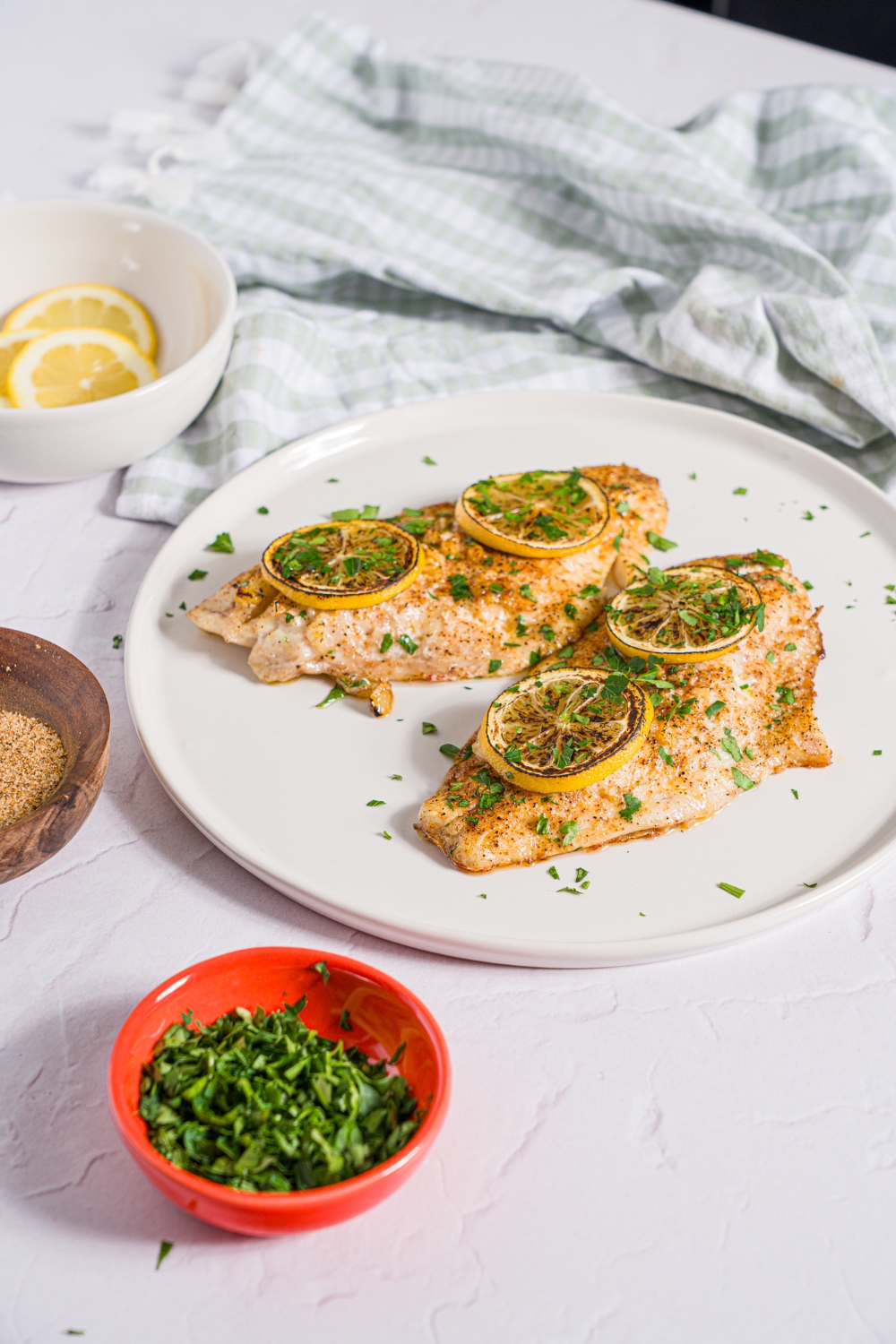
Table of Contents
Why I Love This Baked Snapper Recipe
This baked snapper recipe is simple, but it delivers big flavor with almost no moving parts. Creole seasoning gives you that instant savory kick, garlic adds depth, and lemon keeps everything fresh so the fish never tastes heavy or “fishy.” Then the quick broil at the end is the little step that makes it feel special, it gives you that just-cooked, lightly golden finish you’d expect from a restaurant plate.
It’s also one of the most reliable ways to cook red snapper fillets because the oven keeps the fish tender and evenly cooked. No flipping, no guesswork, and it’s really hard to mess up if you keep an eye on the bake time. It’s a great option for weeknights when you want something healthy and fast, but it’s also impressive enough for guests.
And it’s flexible. Keep it mild, turn up the heat with more Creole seasoning, add fresh herbs, or finish with extra lemon. It works with whatever you’re serving on the side, and cleanup is easy since you’re not babysitting a skillet or dealing with splatter.
Baked Snapper Ingredients
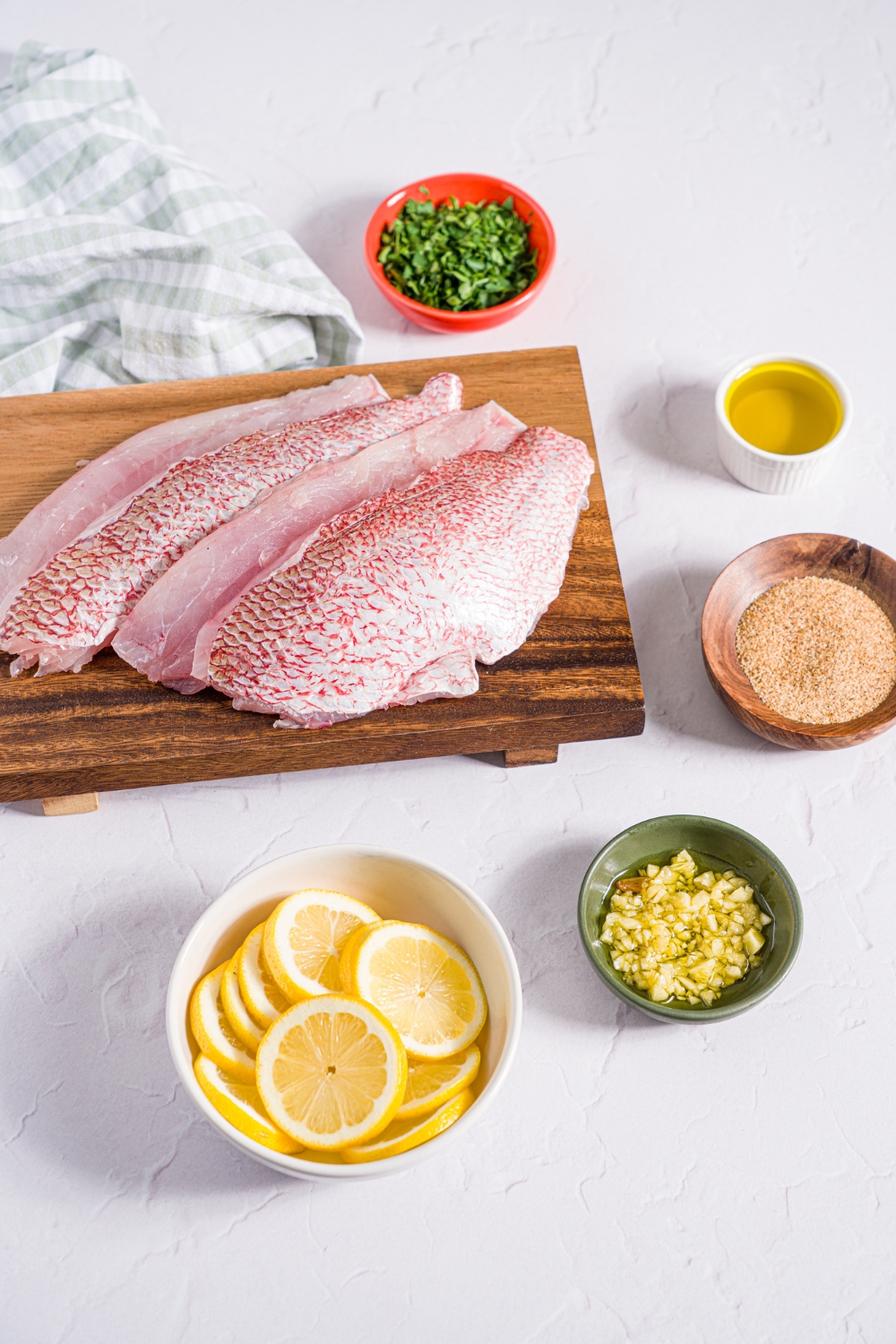
- 4 red snapper fillets (about 6-8 ounces each)
- 4 teaspoons minced garlic
- 4 teaspoons olive oil
- 4 teaspoons Creole seasoning (Tony Chachere’s or similar)
- 8 lemon slices
- 2 teaspoons chopped parsley
- Optional: extra lemon wedges for serving.
Ingredient Notes That Make This Snapper Recipe Better
- Red snapper fillets: Fresh or thawed frozen both work. If using frozen, thaw fully and pat dry so the seasoning sticks and the fish bakes instead of steaming.
- Creole seasoning: Brands vary in salt and heat. Tony Chachere’s is classic, but any Creole blend works. If your seasoning is salty, go light and add extra at the end only if needed.
- Garlic: Minced garlic on top gives you flavor without overpowering the fish. If you’re using jarred garlic, use it, but fresh minced is best.
- Lemon slices: Lemon helps keep the fish moist and adds brightness. The slices also protect the top during baking, so the snapper stays tender.
How to Make Baked Red Snapper
Step 1: Preheat the oven
Preheat oven to 400°F. Line a sheet pan with foil or parchment for easier cleanup.
Step 2: Prep the fish
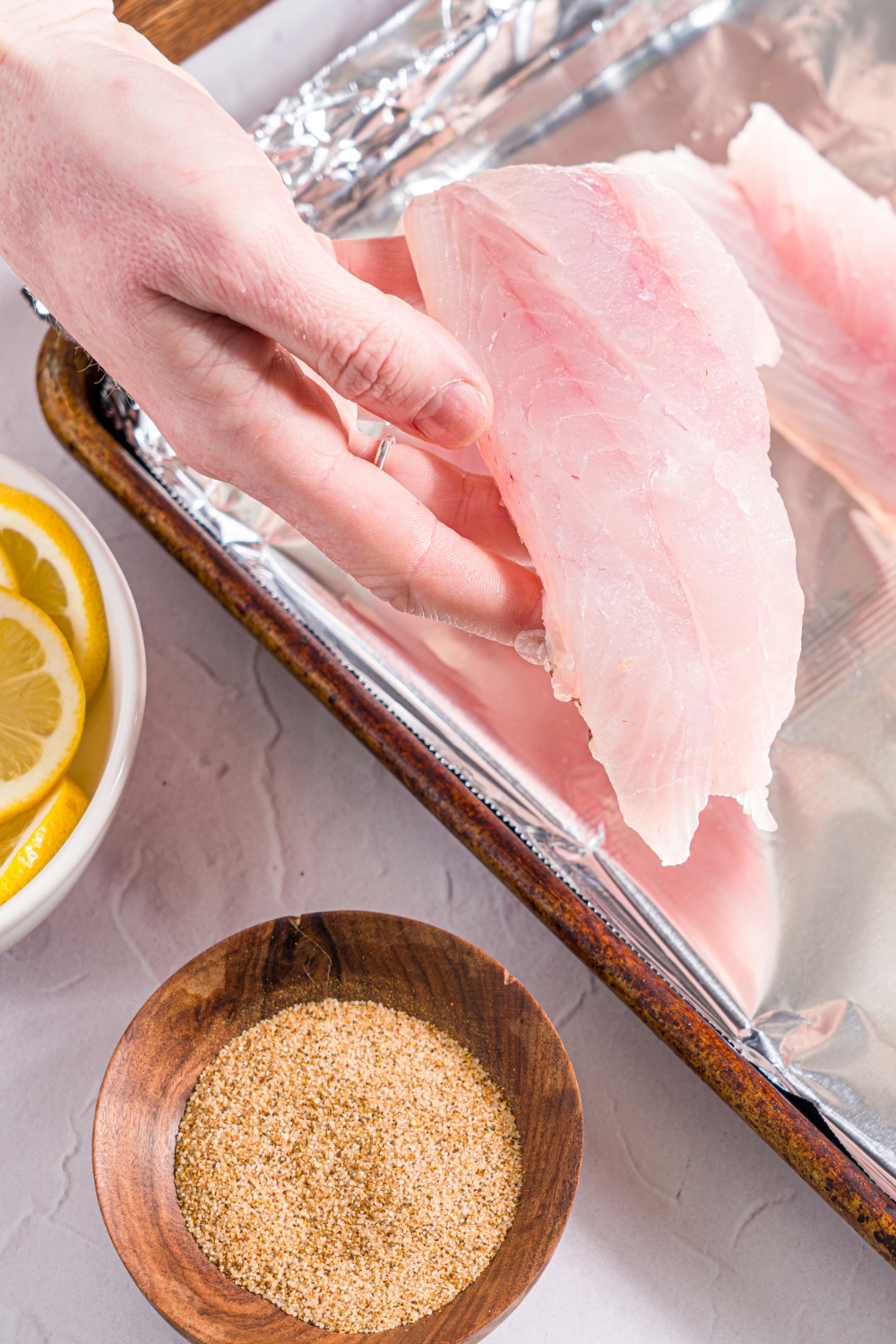
Pat the red snapper fillets dry with paper towels. This helps the oil and seasoning stick.
Step 3: Oil and season
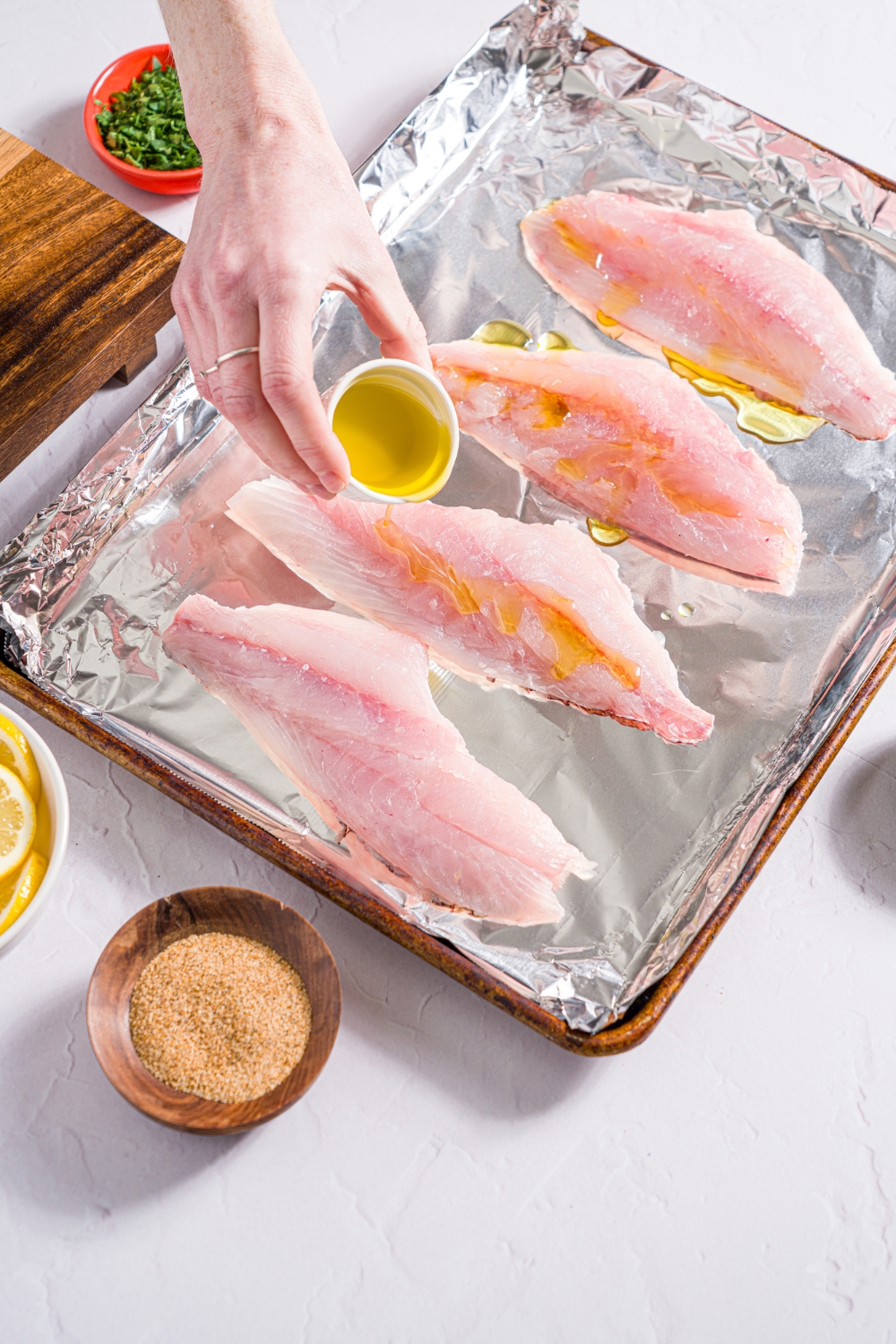
Brush olive oil over the fish. Season both sides with Creole seasoning.
Step 4: Add garlic and lemon
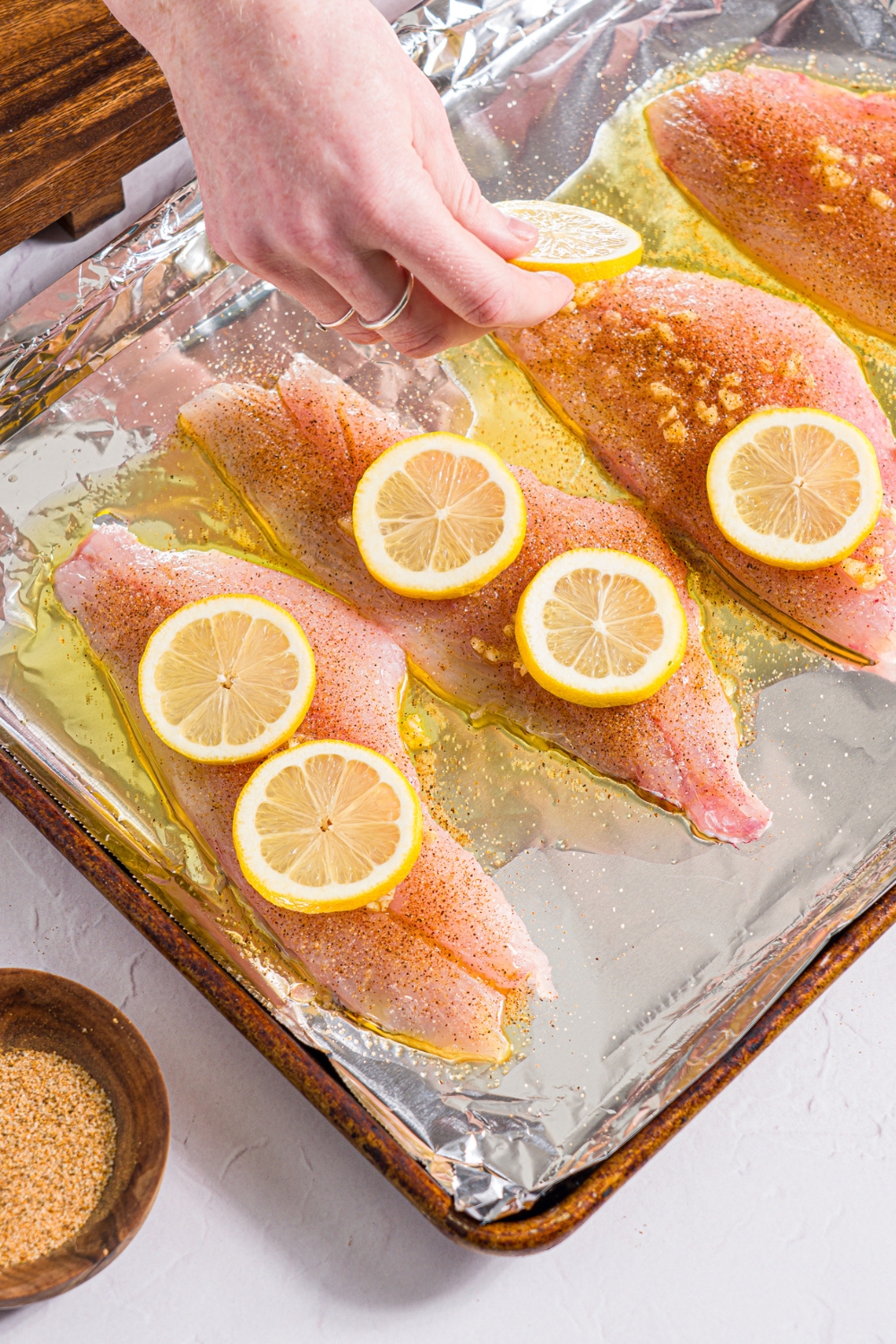
Spread minced garlic evenly over the top of each fillet. Place two lemon slices on each fillet.
Step 5: Bake
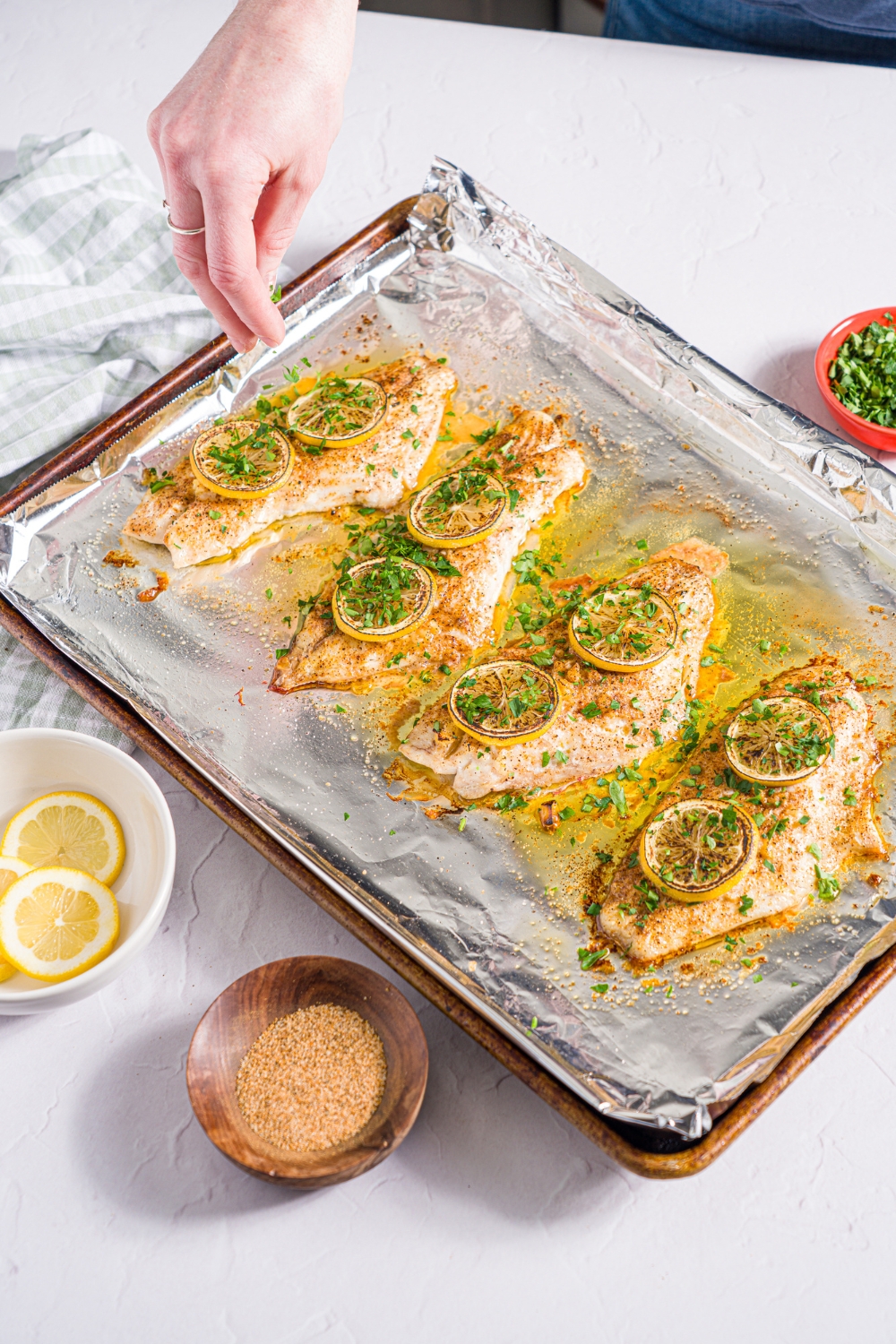
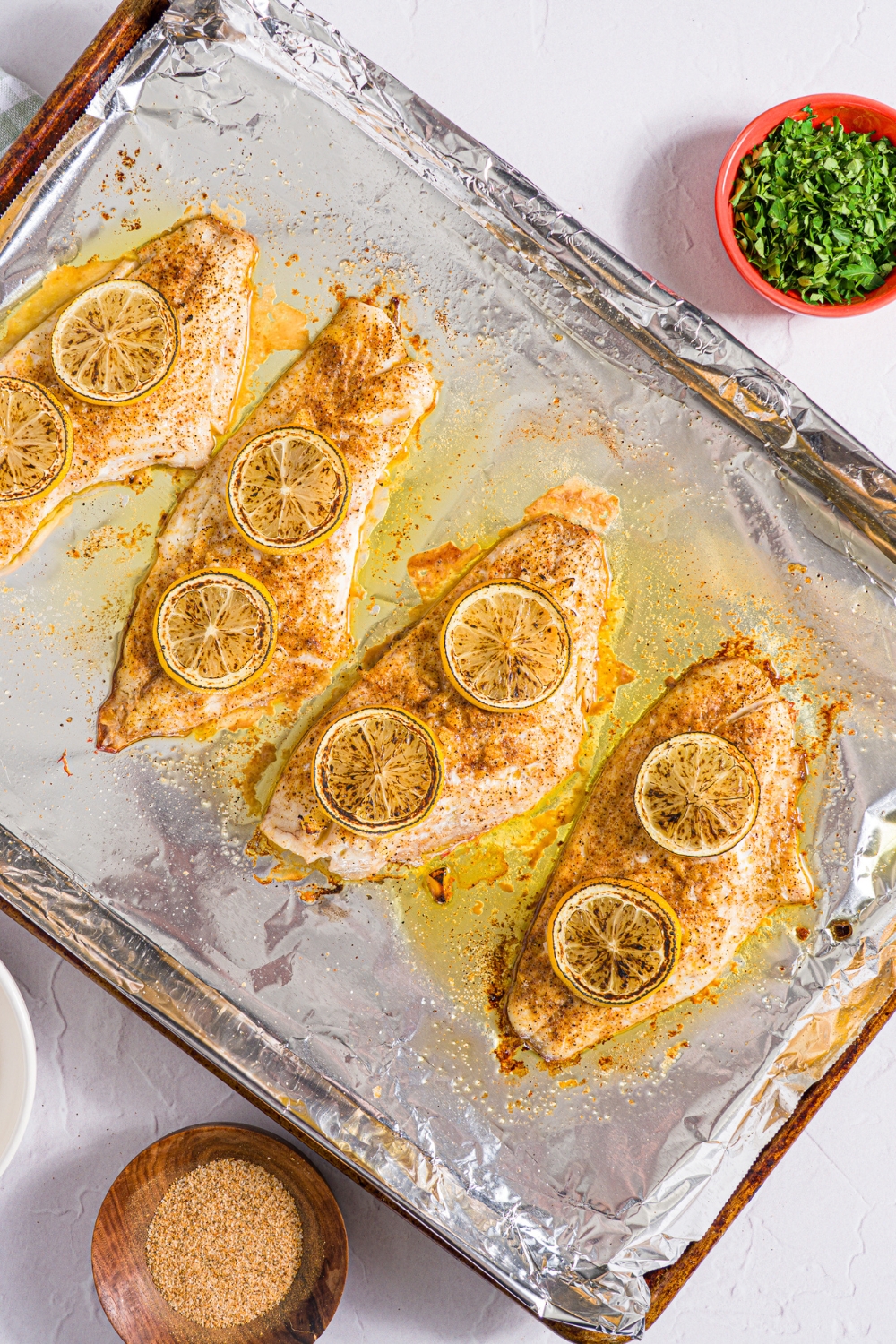
Bake at 400°F for about 20 minutes, or until the fish flakes easily with a fork.
Step 6: Broil for color
Turn the broiler on high and broil 3-5 minutes until lightly golden on top. Keep a close eye, broilers work fast.
Step 7: Finish and serve
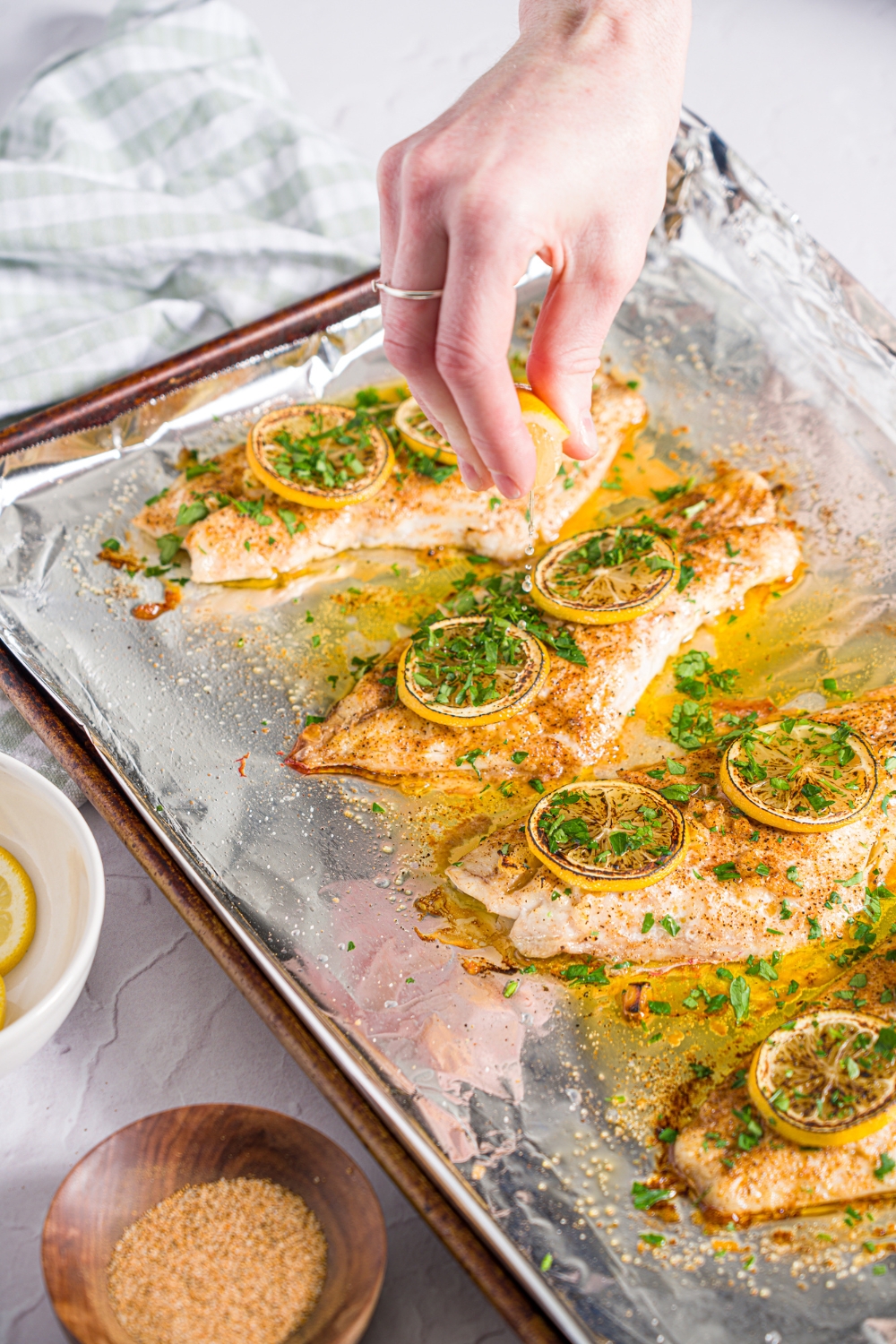
Top with chopped parsley. Squeeze extra lemon over the fish if desired and serve hot.
Pro Tips for Perfect Red Snapper
- Pat the fish dry first: This matters more than people think. Moisture on the surface makes fish steam instead of roast, and it also makes seasoning slide off. Blot the fillets with paper towels before you add olive oil and spices so you get better flavor and a firmer, flakier texture.
- Use olive oil as your "seasoning glue": A light brush of oil helps the Creole seasoning, garlic, and lemon actually stick to the fish. It also keeps lean snapper from drying out and gives you that buttery-tasting finish without needing butter.
- Don’t overcook it: Red snapper is lean, so it goes from perfect to dry fast. It’s done when the thickest part flakes easily with a fork and looks opaque. If your fillets are thin, start checking around 12-15 minutes. Thicker fillets may need closer to 16 to 18 minutes. If you have a thermometer, you’re aiming for about 125°F-135°F for juicy fish, or up to 145°F if you want it fully cooked through.
- Bake on the middle rack, then broil at the end: The middle rack gives you even cooking without blasting the top too fast. Once the fish is basically done, broil for 1-2 minutes to add color and that lightly roasted flavor. Don’t walk away, the broiler goes from golden to burnt in seconds.
- Adjust seasoning based on your Creole blend: Creole seasonings vary a lot, especially with salt and heat. If you’re not sure how salty yours is, start with a lighter coating. You can always finish with an extra pinch after baking, but you can’t take it back once it’s on there.
- Don’t bury the fish in lemon while it bakes: Lemon is amazing, but too much lemon juice baking directly on top can “cook” the surface and make the texture slightly tough. A few slices on top are perfect while baking, then add a fresh squeeze right before serving for the brightest flavor.
- Let it rest for 2 minutes before serving: Fish keeps cooking from residual heat. A quick rest helps the juices settle, makes it easier to flake cleanly, and keeps the fillets from falling apart when you move them.
- Use a lined pan for easier cleanup and better texture: Parchment or foil prevents sticking and makes cleanup fast. If you want a little more browning on the edges, preheat the sheet pan for a few minutes before adding the fish, just be careful transferring the fillets.
What to Serve With Baked Snapper
This baked red snapper is bright and savory, so it pairs best with simple sides that soak up the lemony juices and keep the meal feeling fresh.
- Rice: White rice is a classic because it absorbs all that garlicky, lemony pan juice. Coconut rice is also amazing if you want a slightly sweeter contrast with the Creole seasoning.
- Potatoes: Roasted potatoes make it feel like a full dinner, and they’re perfect for soaking up the juices. If you want something quicker, creamy mashed potatoes work too.
- Green vegetables: Steamed broccoli or green beans keep it clean and easy. Roasted brussel sprouts are also a great match, especially with an extra squeeze of lemon on top.
- Salad: A simple side salad with a light vinaigrette balances the richness and keeps the plate feeling bright. This iceberg lettuce salad is a perfect option.
- Bread: Garlic bread or crusty bread is always a good idea here because you’re going to want something to mop up the juices left on the pan and plate.
Baked Snapper Storage and Reheating Tips
- Refrigerator: Store leftover baked red snapper in an airtight container in the fridge for up to 2 days. It’s best the next day, but after that, it starts drying out.
- Reheating (keep it juicy): Oven is best. Reheat at 300°F until just warmed through. Add a small splash of water or broth to the dish and cover loosely with foil so it steams gently instead of drying out.
- Freezing: You can freeze cooked snapper, but the texture is always best fresh. If you freeze it, wrap tightly and freeze for up to 1 month. Thaw overnight in the fridge, then reheat gently in the oven at low heat.
Baked Red Snapper FAQs
How do I know when red snapper is done baking?
It’s done when the flesh looks opaque and flakes easily with a fork in the thickest part. If you’re using a thermometer, aim for 140°F to 145°F for fully cooked fish. If you like it a little juicier, you can pull it closer to 130°F to 135°F and let it rest for a couple of minutes
How long do you bake red snapper at 400°F?
Most red snapper fillets bake in about 12 to 18 minutes at 400°F depending on thickness. Thin fillets can be done around 12 to 15 minutes, thicker ones closer to 16 to 18. Start checking early because snapper is lean and can dry out if it goes too long.
Can I use frozen red snapper fillets?
Yes. For the best texture, thaw them overnight in the fridge, then pat them very dry before seasoning. If you bake from frozen, the fish can release extra water and steam instead of roasting, plus the timing is harder to nail.
Can I use a different fish instead of red snapper?
Yes. This method works great with tilapia, cod, grouper, or halibut. Just adjust bake time based on thickness, thicker fish needs a few extra minutes.
Is Creole seasoning spicy?
It depends on the brand. Many are mild to medium heat, but some are saltier or spicier than others. If you want it mild, use a lighter coating and rely on garlic and lemon for flavor. You can always add more seasoning after baking.
Can I make baked red snapper ahead of time?
Fish is best fresh, but you can prep the fillets on to the pan a few hours ahead, cover, refrigerate, then bake when you’re ready. That way, you still get the best texture and the freshest flavor.
Do I have to broil the fish?
No, but it’s a great finishing move. A quick 1-2 minute broil adds a lightly golden top and a little roasted flavor. If you skip it, the fish will still taste great, just less browned on top.
Delicious Fish Recipes to Try Next
Baked Red Snapper (Creole Lemon Garlic Snapper)

This baked red snapper is my go-to when I want a fish dinner that feels restaurant-level but takes almost no effort. Brush the fillets with olive oil, hit them with Creole seasoning, garlic, and lemon, then bake until flaky and finish with a quick broil for a lightly golden top. It’s bright, garlicky, perfectly seasoned, and ready in under 30 minutes.
Ingredients
- 4 Red Snapper Fillets; about 6-8 oz. each
- 4 teaspoon minced garlic
- 4 teaspoon olive oil
- 4 teaspoon creole seasoning like Tony Chacheres
- 8 slices lemon
- 2 teaspoon parsley chopped
Instructions
1. Preheat the oven to 400°F.
2. Brush oil on fish.
3. Season both sides of the fish with creole seasoning. Evenly spread minced garlic on top. Place two slices of lemon on each fillet.
4. Bake in the oven for 20 minutes.
5. Turn the oven broiler on high. Broil for 3-5 minutes or until golden in color.
6. Top fish with chopped parsley. Squeeze extra lemon juice on top if desired for extra flavor.
Nutrition Information:
Yield:
4Serving Size:
1Amount Per Serving: Calories: 289Total Fat: 9gSaturated Fat: 1gUnsaturated Fat: 7gCholesterol: 80mgSodium: 1642mgCarbohydrates: 5gFiber: 1gSugar: 1gProtein: 46g
Leave a Reply