


This viral butter-blanketed turkey recipe uses butter-soaked cheesecloth to make an incredibly juicy Thanksgiving turkey with golden-brown skin. I also tuck seasoned butter under the skin and fill the cavity with fresh herbs, lemon, and onion to give the turkey a ton of flavor. The cheesecloth helps protect the breast as it roasts, then comes off toward the end so the skin can crisp up. It's a surprisingly simple way to make a whole roasted turkey that'll be the centerpiece of your Thanksgiving dinner!
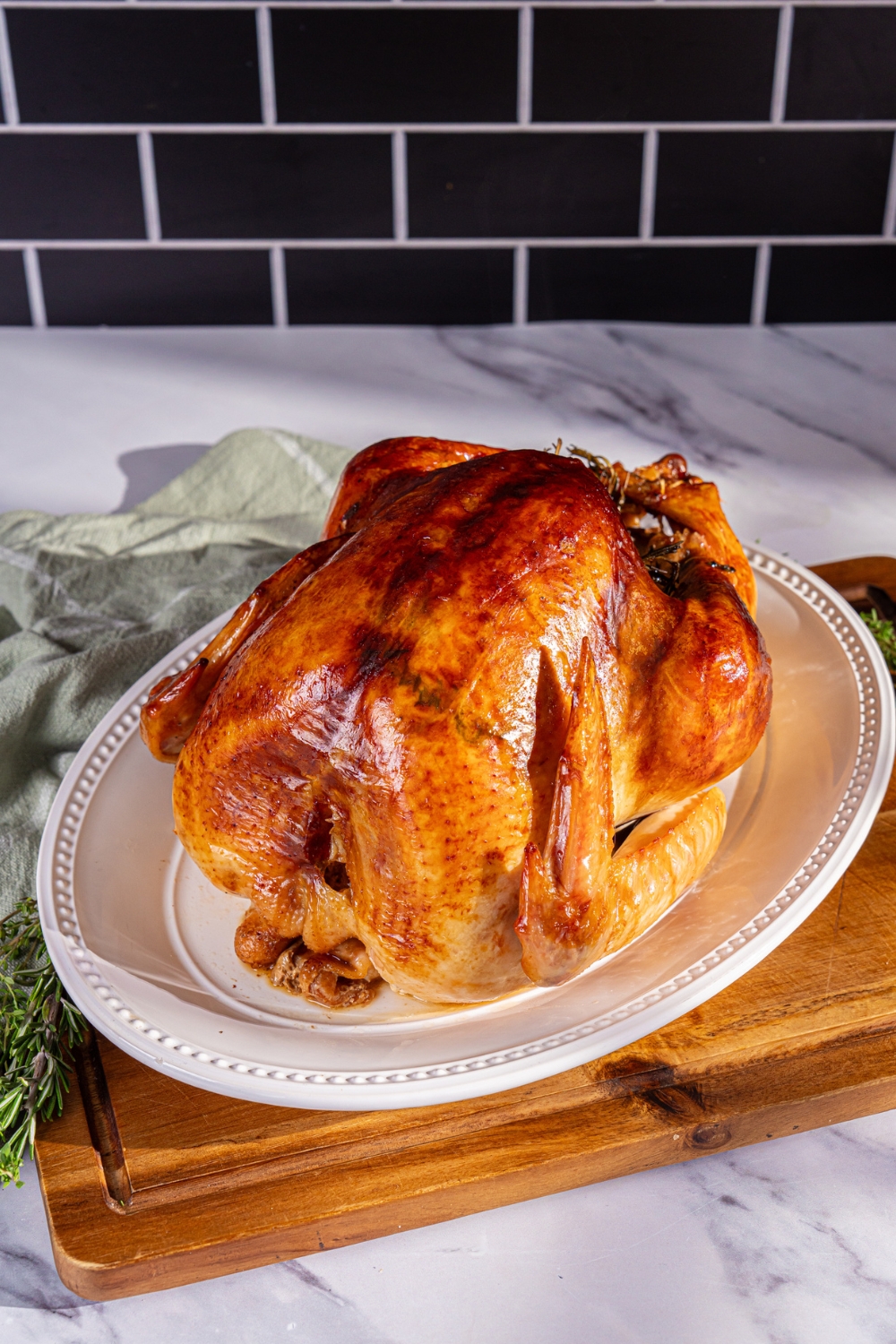
Table of Contents
Why You'll Love This Cheesecloth Turkey
I've been wanting to find a go-to Thanksgiving turkey recipe for a while now. One that I can make every year and count on turning out juicy, flavorful, and perfectly golden brown. So when I came across this viral butter-blanketed turkey video on TikTok, I knew I had to try it. I'd never thought of covering a turkey in butter-soaked cheesecloth before, and I was curious to see if it really made a difference.
I used that video as the inspiration for this recipe, and I love how simple the method is. The butter-soaked cheesecloth helps keep the turkey moist while it roasts, and the seasoned butter under the skin adds even more flavor. Then you remove the cheesecloth toward the end so the skin can turn golden brown. With fresh herbs, lemon, and onion adding flavor as it cooks, this has everything I was looking for in a Thanksgiving turkey recipe.
If you're making a whole turkey for Thanksgiving dinner, this is a great method to try. It's simple enough for a first-time Thanksgiving host but makes a the perfect main dish for the holiday table.
Cheesecloth Turkey Ingredients
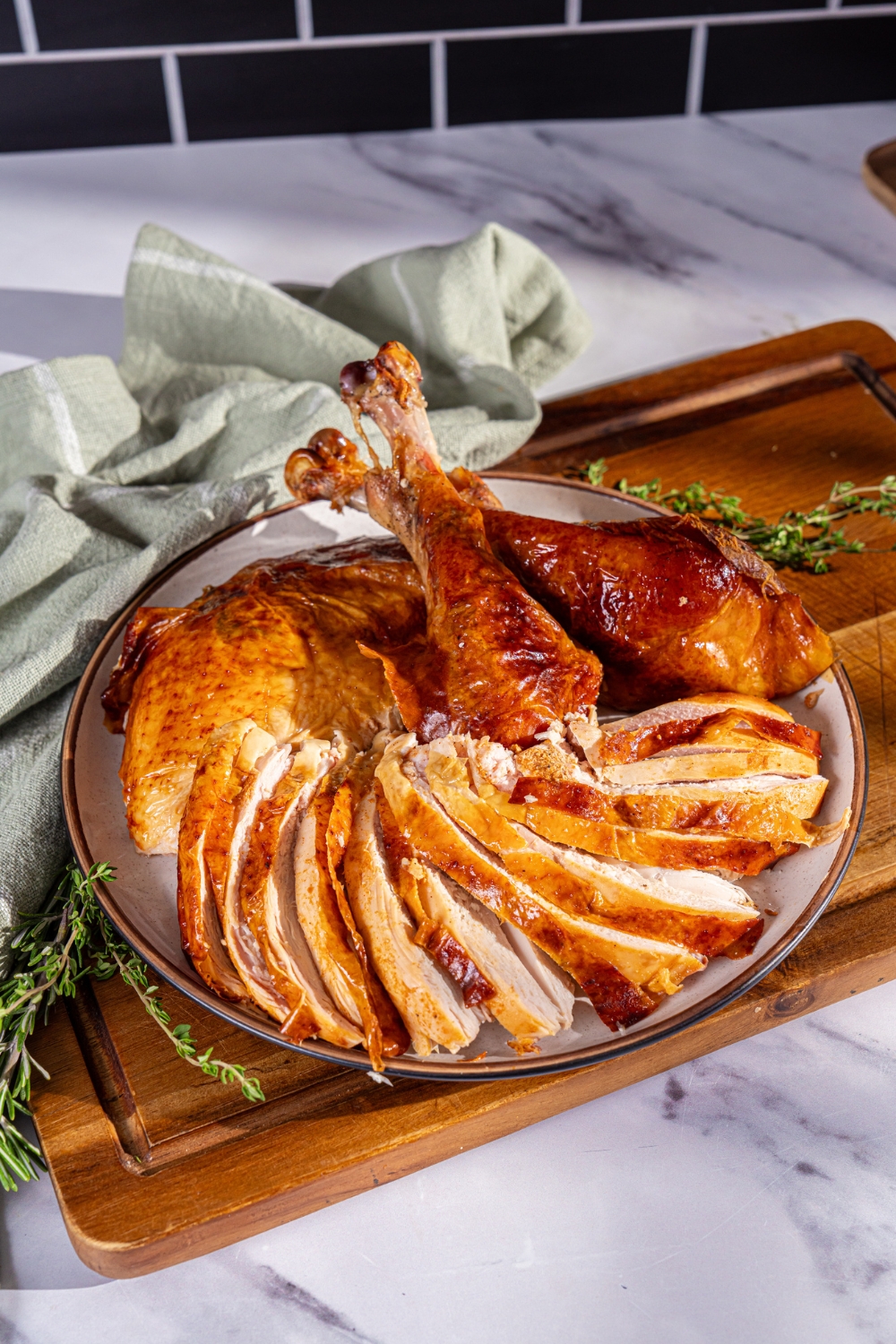
- 12-14 lb. turkey
- Kosher salt and freshly ground black pepper
- 3 sprigs fresh thyme
- 2 sprigs fresh rosemary
- 1 lemon, cut into wedges
- 1 large yellow onion, cut into 6 wedges
- 3 sticks (1 ½ cups) unsalted butter, melted, plus 4 tablespoons, at room temperature
- ½ teaspoon paprika
- 3 stalks celery, broken into thirds
- 3 medium carrots
- 1 ½ cups chicken broth
Ingredient Notes That Make This Viral Thanksgiving Turkey Better
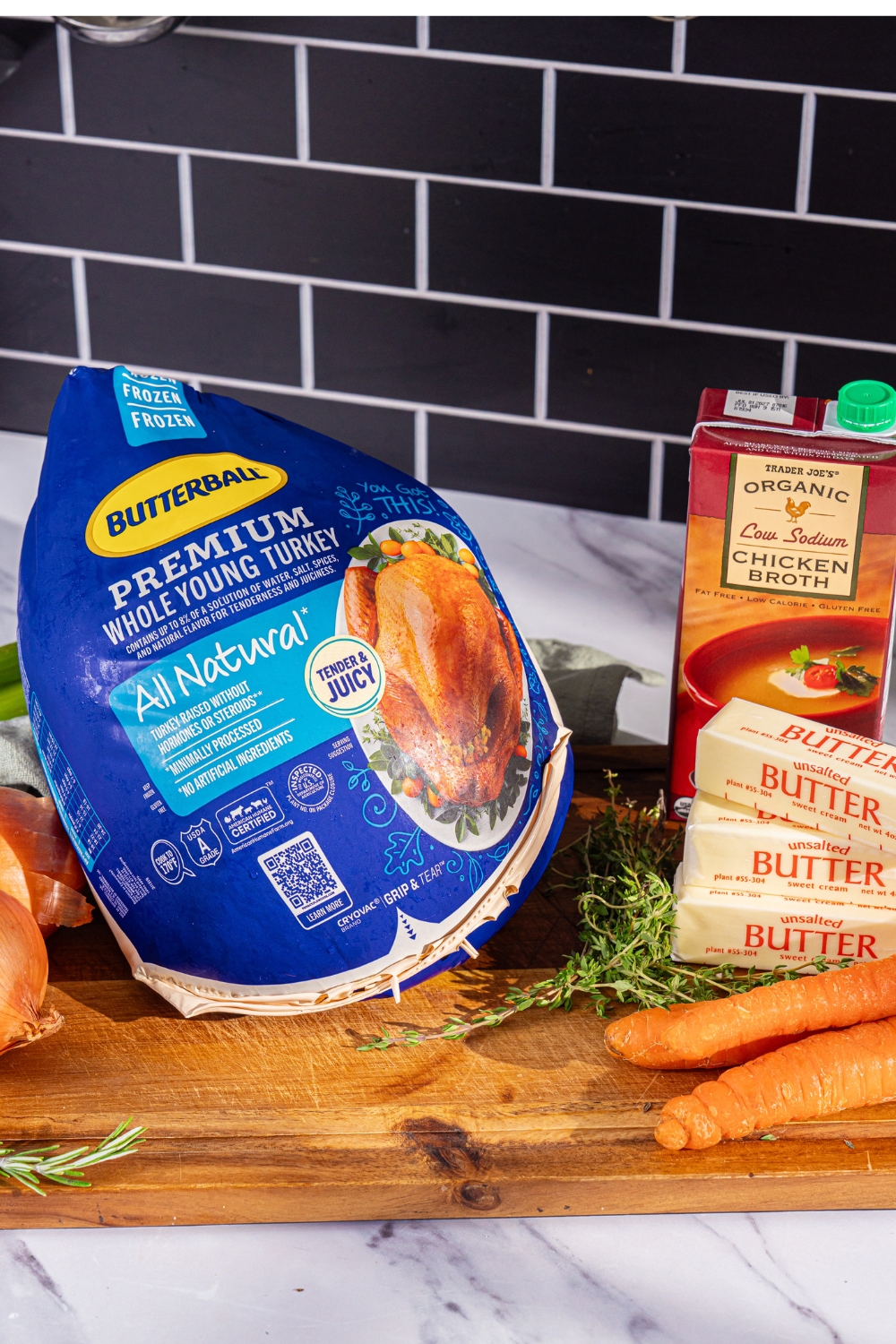
- Whole turkey: I recommend using a 12-14 pound turkey that's completely thawed. If you're using a frozen turkey, allow about 3–4 days for it to thaw in the refrigerator. Check whether your turkey is already brined or seasoned, since you may need to reduce the added salt.
- Unsalted butter: You'll need 3 sticks of melted butter to soak the cheesecloth, plus another 4 tablespoons of softened butter to spread under the turkey's skin. I recommend unsalted butter so you can control the seasoning.
- Cheesecloth: Make sure you use food-safe, 100% cotton cheesecloth, not synthetic fabric. You'll need a piece large enough to cover the turkey when folded into four layers. It needs to be completely saturated with butter before going into the oven.
- Fresh thyme and rosemary: These go inside the turkey cavity along with the lemon and onion. I recommend using fresh herbs for the best flavor.
- Paprika: I use regular paprika to season the butter that goes underneath the skin. It adds a little color and mild flavor without overpowering the turkey.
- Celery, carrots, and onion: These create an aromatic base in the roasting pan and add flavor to the drippings. You don't need to chop them finely since they'll roast underneath the turkey.
- Chicken broth: I recommend low-sodium chicken broth so the pan drippings don't become too salty. It also helps keep the vegetables and drippings from burning on the bottom of the roasting pan.
How to Cook a Turkey with Cheesecloth
Step 1: Prepare the turkey
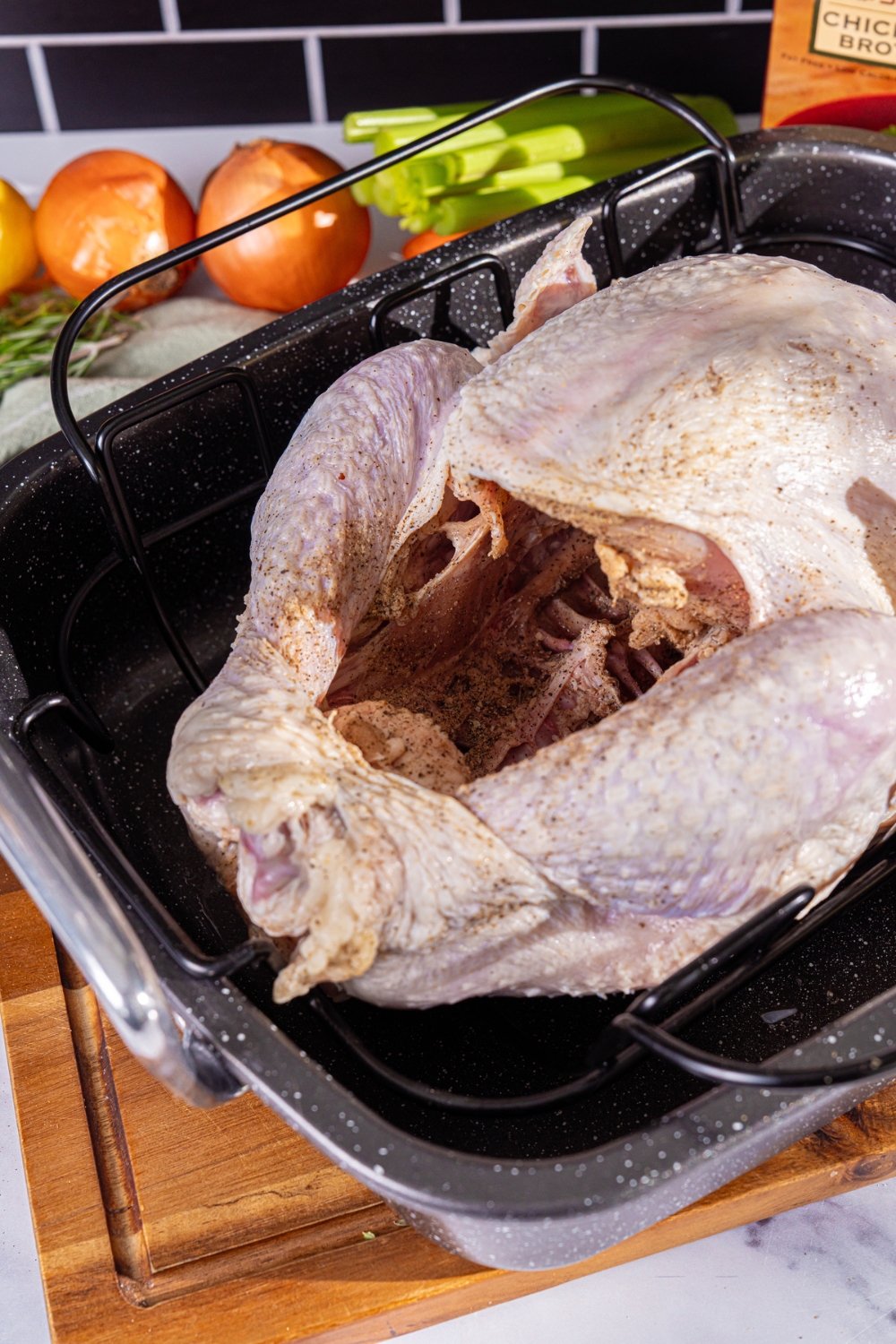
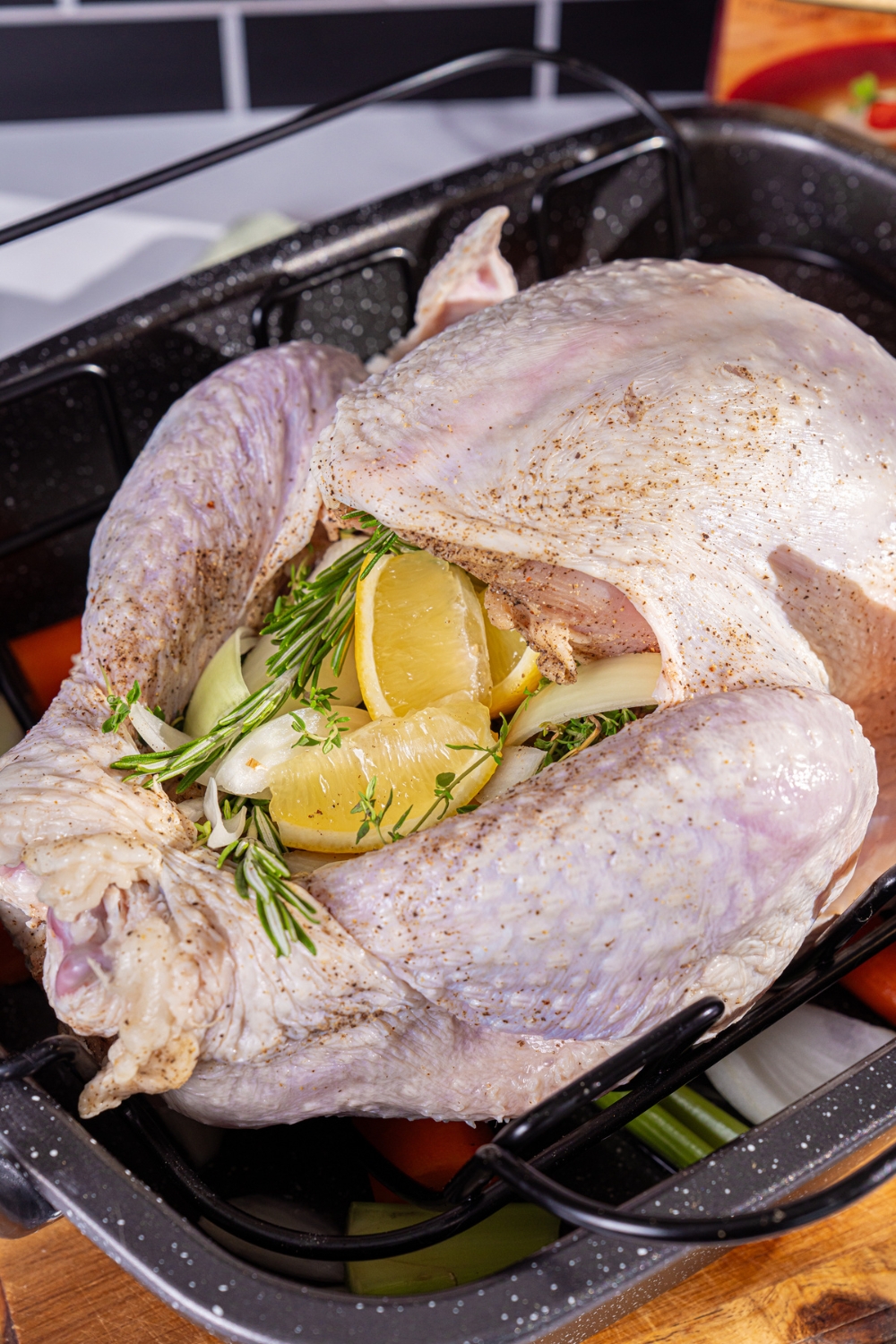
Position an oven rack in the lowest position and preheat the oven to 450°F (230°C). Remove the neck and giblets from the turkey cavity, then pat the turkey completely dry inside and out with paper towels. Season the cavity with 1 teaspoon of kosher salt and ½ teaspoon of black pepper. Loosely fill it with the thyme, rosemary, lemon wedges, and half of the onion wedges.
Step 2: Add the seasoned butter under the skin
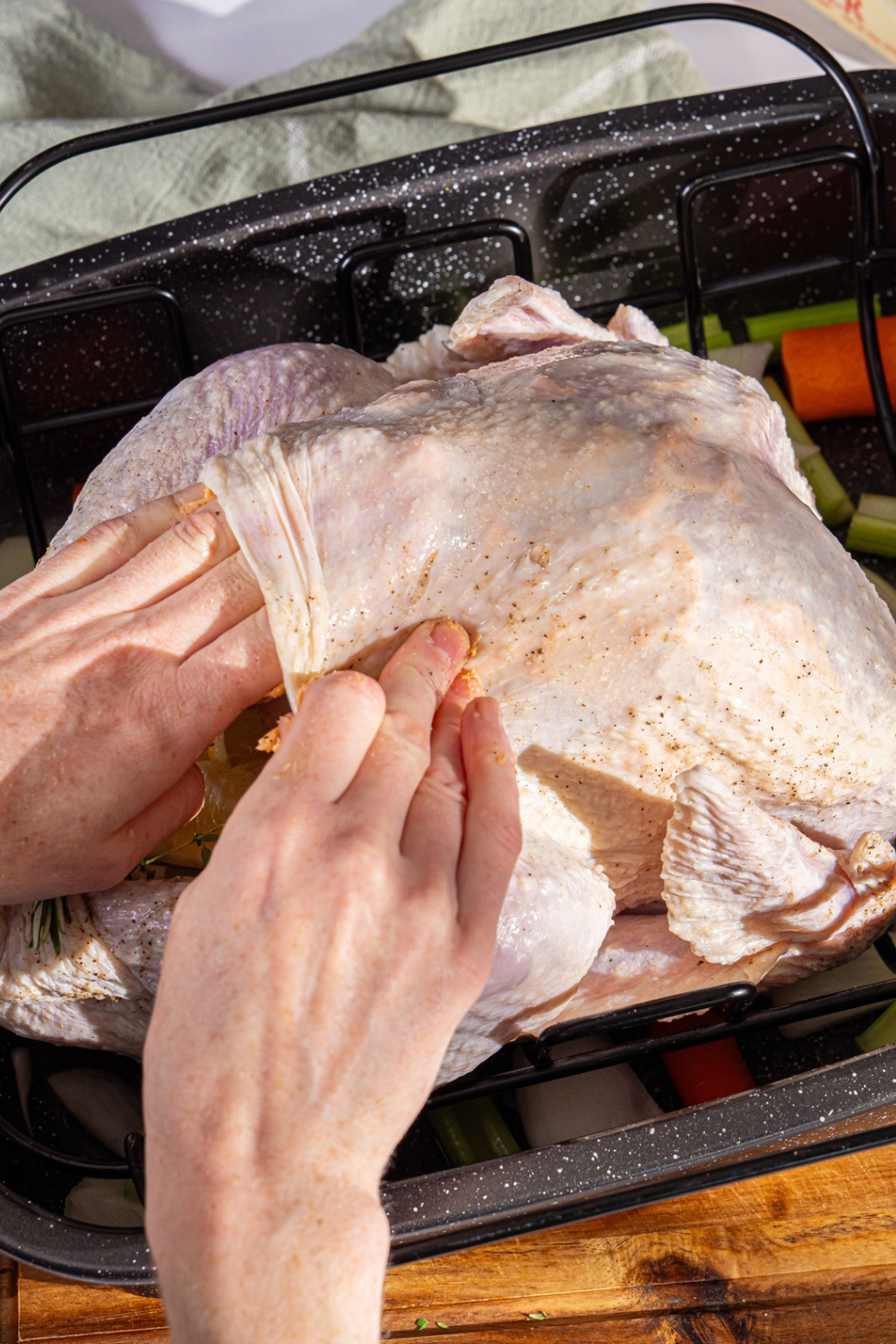
In a small bowl, mix the 4 tablespoons of softened butter with the paprika until smooth. Carefully slide your fingers underneath the skin covering the turkey breasts, working toward the legs to loosen it without tearing. Spread half of the paprika butter underneath the skin on one side and the remaining butter on the other side. Rub any leftover butter on the outside of the turkey, then season the skin evenly with 2 teaspoons of kosher salt.
Step 3: Prepare the roasting pan
Scatter the celery, carrots, and remaining onion wedges across the bottom of a large roasting pan. Set a roasting rack over the vegetables and pour in the chicken broth. Place the turkey breast-side up on the rack. Tuck the wing tips underneath the body and tie the legs together with kitchen twine.
Step 4: Make the butter blanket
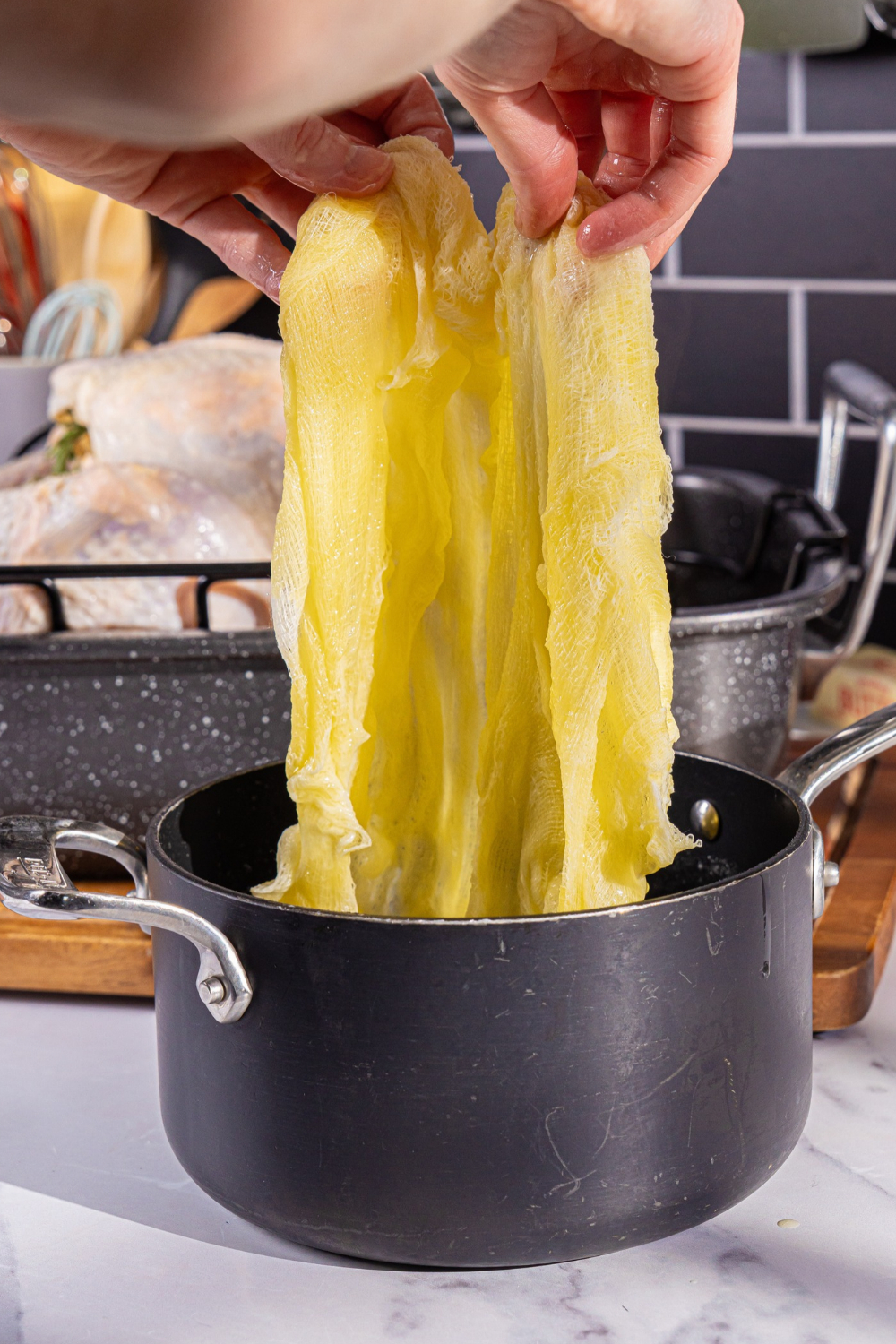
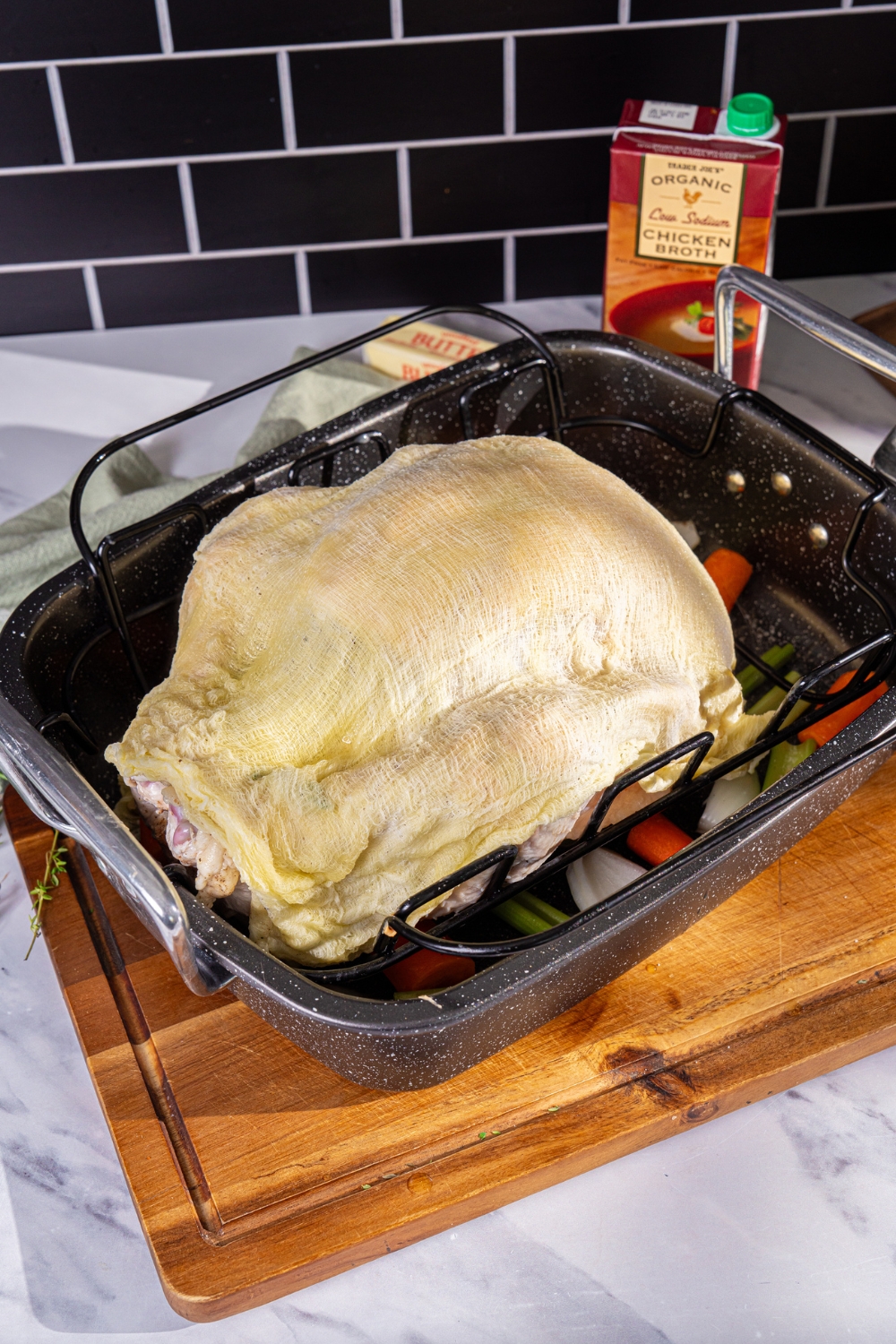
Cut a large piece of food-safe cotton cheesecloth, about 20 inches long, and fold it into four layers. Submerge the cheesecloth in the 3 sticks of melted butter until completely saturated. Gently squeeze out the excess butter, keeping the cloth well coated, then unfold and arrange it over the turkey in four layers.
Make sure the cheesecloth covers the breasts and as much of the turkey as possible without hanging over the roasting pan. Use a turkey baster to spoon some of the remaining melted butter over the cheesecloth.
Step 5: Roast and baste the turkey
Roast the covered turkey at 450°F for 30 minutes. Reduce the oven temperature to 350°F (175°C), then baste the cheesecloth with the pan juices and some of the remaining melted butter.
Continue roasting for about 2 hours, basting every 30 minutes. The cheesecloth should stay moist and buttery throughout cooking. If the bottom of the roasting pan starts drying out, add a little water to keep the drippings from burning.
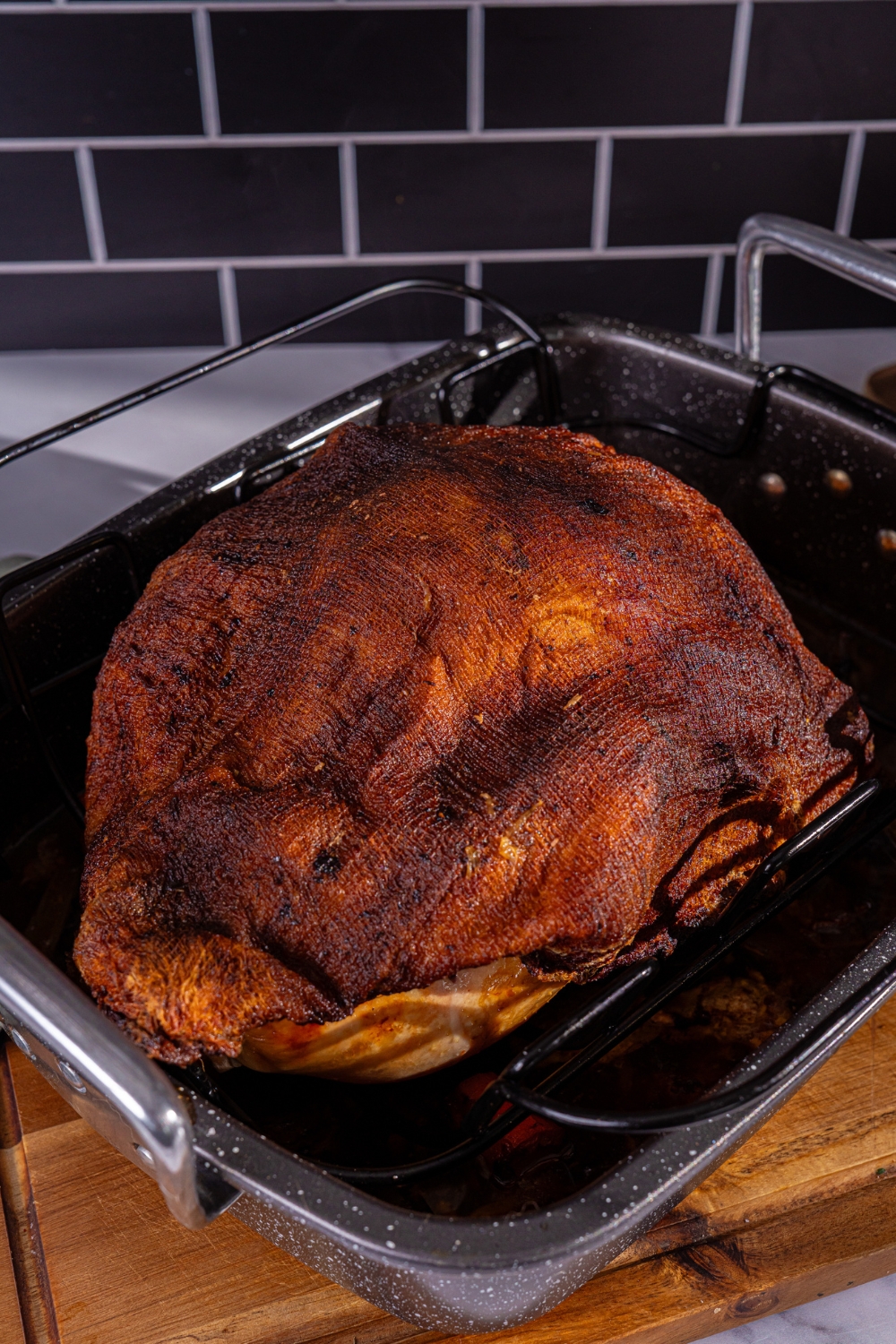
Step 6: Remove the cheesecloth and finish roasting
After the additional 2 hours, carefully remove the cheesecloth. I recommend using tongs and working slowly so you don't tear the skin. If any part of the cloth sticks, moisten it with a little pan juice before peeling it away.
Baste the turkey one more time, then return it to the oven uncovered, positioning the breast toward the back of the oven. Roast for about 30 more minutes, or until the skin is golden brown and a meat thermometer registers 165°F (74°C) in the thickest part of the breast, innermost thigh, and innermost wing, without touching the bone. The exact cooking time will depend on the turkey and your oven, so go by temperature rather than the clock.
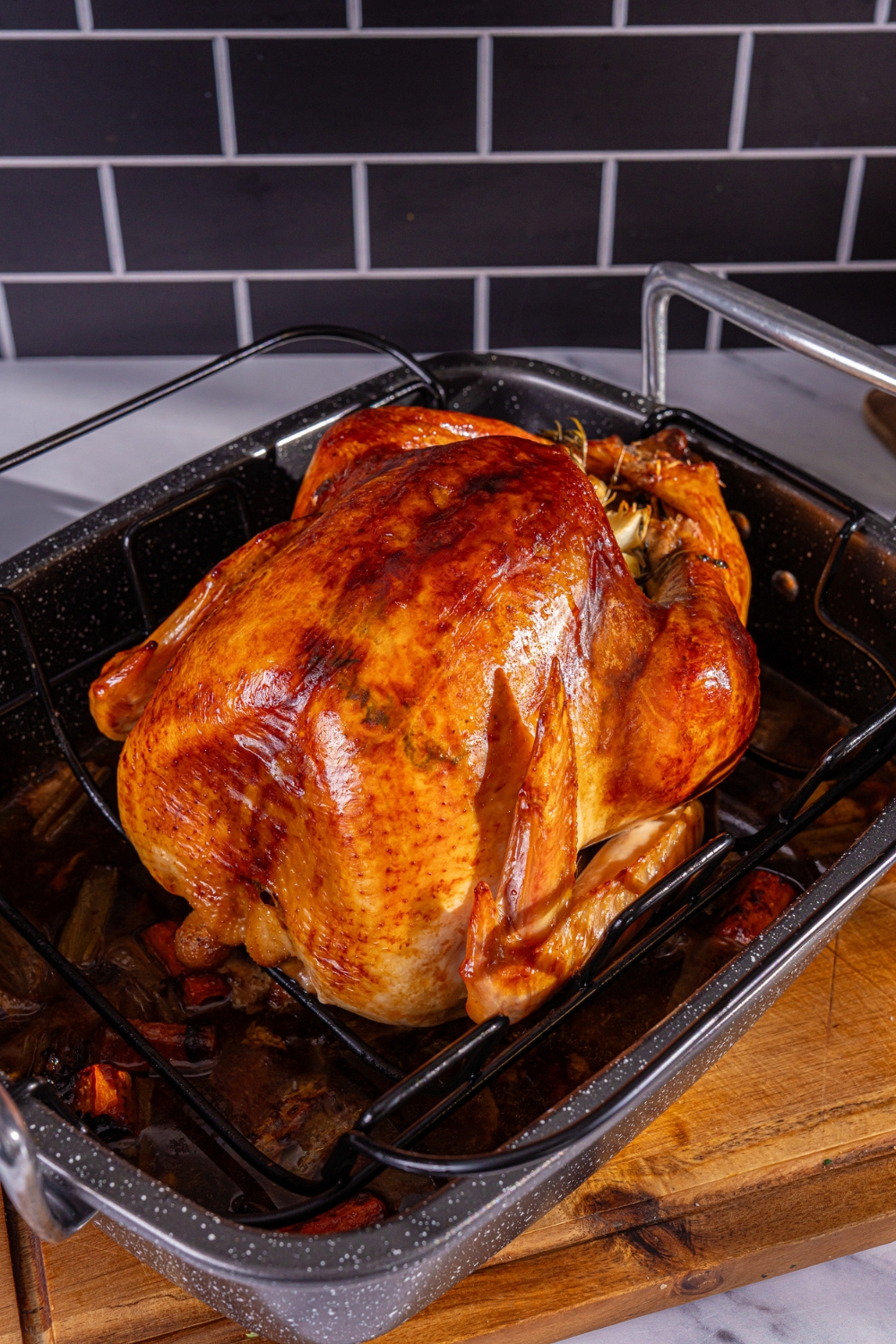
Step 7: Rest, carve, and serve
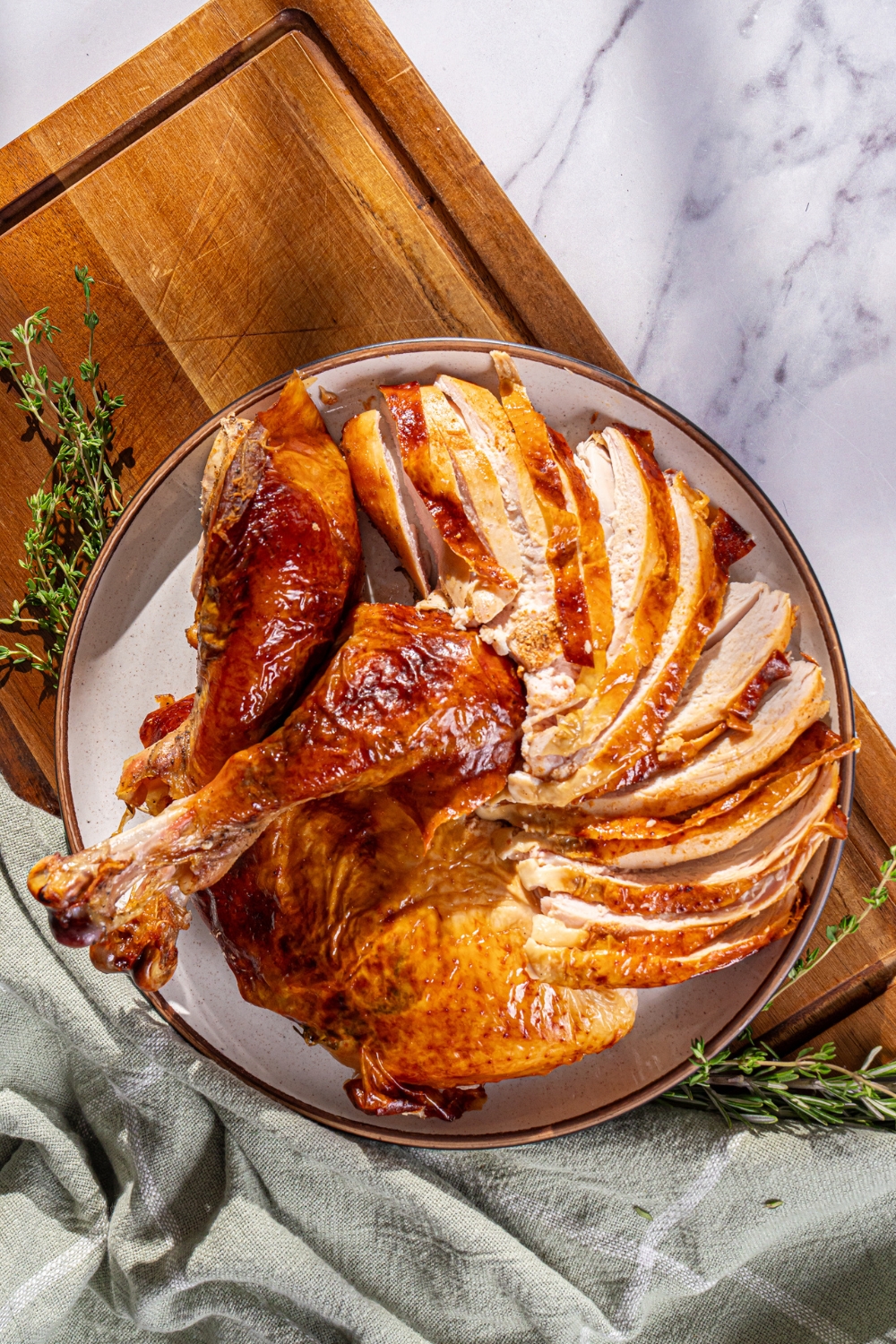
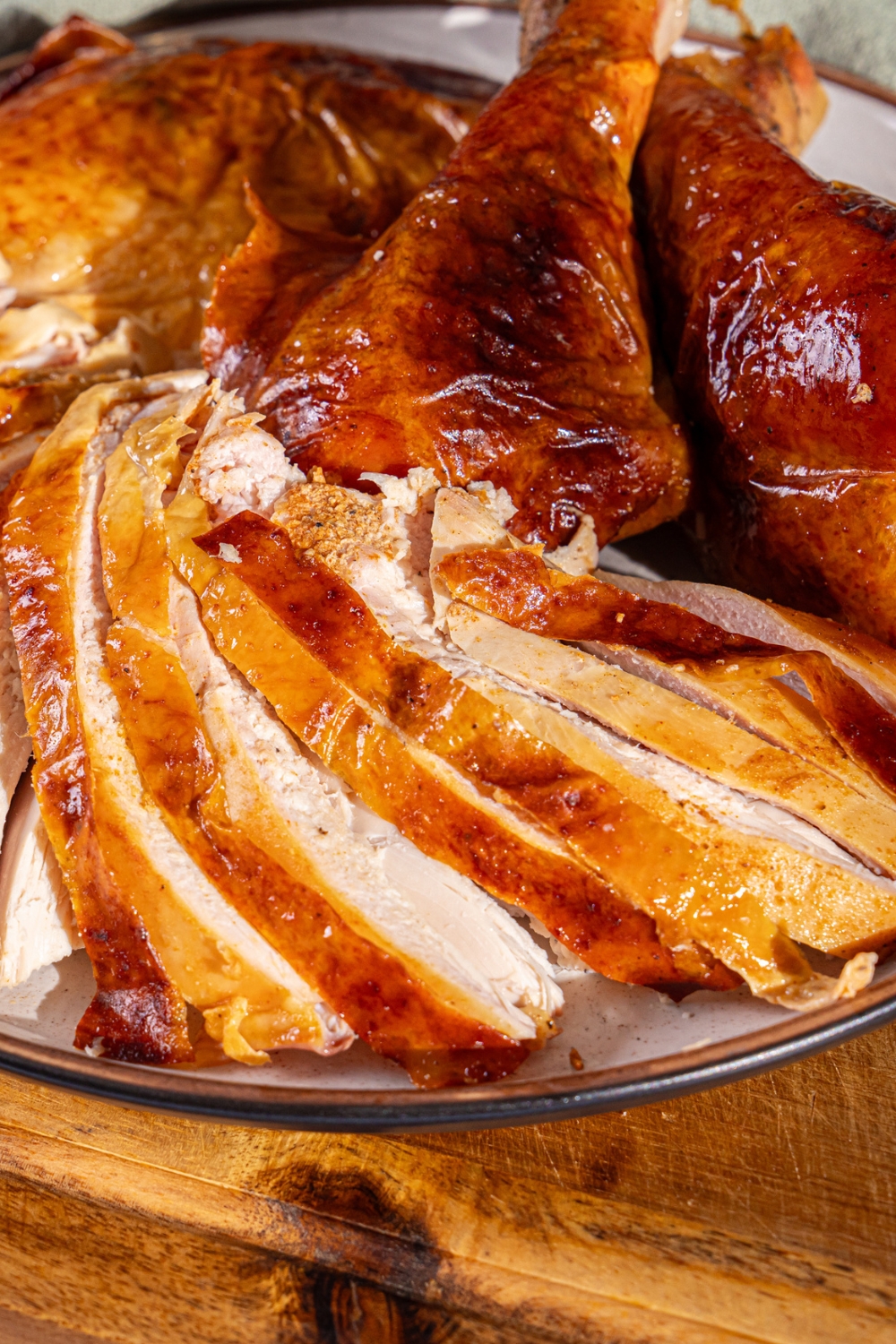
Transfer the turkey to a cutting board and let it rest for 30 minutes before carving. This gives the juices time to settle and makes the turkey easier to slice. Carve the turkey and serve it with your favorite Thanksgiving side dishes. You can also save those buttery pan drippings to make homemade turkey gravy.
My Expert Tips for The Best Cheesecloth Turkey
- Prep the turkey the night before. If you have time, season the turkey and spread the paprika butter under the skin the day before roasting. Leave it uncovered in the refrigerator overnight to help dry out the skin and give the salt more time to season the meat. Add the fresh herbs, lemon, onion, and butter-soaked cheesecloth right before roasting.
- Use a sturdy roasting pan. A 12-14 pound turkey is heavy, especially with all that butter and liquid in the pan. I recommend using a heavy-duty roasting pan with sturdy handles rather than a disposable aluminum pan. It'll be much easier and safer to move in and out of the oven.
- Make sure your oven temperature is accurate. I recommend using an oven thermometer if you have one. Some ovens run hotter or cooler than the temperature you set, and that can make a big difference when roasting a whole turkey, especially during the initial high-temperature roasting period.
- Watch the skin during the final roast. Once the cheesecloth comes off, the skin can brown pretty quickly. If the breast starts getting too dark before the turkey is fully cooked, loosely cover that area with aluminum foil. This will help prevent the skin from burning while the rest of the turkey finishes cooking.
- Save the drippings, but skim off the extra fat. This recipe uses a lot of butter, so the pan drippings will have more fat than a traditional roasted turkey. If you're making turkey gravy, I recommend straining the drippings and using a fat separator, or letting the fat rise to the top and skimming some off. You'll still get plenty of buttery flavor without ending up with greasy gravy.
Butter-Blanketed Cheesecloth Turkey FAQs
What does cheesecloth do for a turkey?
Cheesecloth helps protect the turkey breast from drying out and browning too quickly while it roasts. When you soak it in melted butter, it holds that butter against the skin as the turkey cooks. You remove the cheesecloth toward the end of roasting so the skin can finish browning. It's a simple way to make a juicy, golden-brown Thanksgiving turkey.
Is cheesecloth better than aluminum foil for roasting turkey?
Both can help protect the turkey from drying out, but they work differently. Aluminum foil traps more steam and shields the skin from direct heat, while butter-soaked cheesecloth allows more browning as the turkey roasts. For this butter-blanketed turkey recipe, I recommend sticking with cheesecloth since it's the main part of the cooking method.
How long does it take to cook a 12- 14 pound turkey?
Plan on 3–4 hours for a 12-14 pound turkey, although the exact time depends on your oven and the size of the bird. For this recipe, the turkey starts at 450°F for 30 minutes before the temperature is reduced to 350°F. I recommend checking the internal temperature before the estimated cooking time is up so you don't accidentally overcook it.
What temperature should a Thanksgiving turkey be cooked to?
A whole turkey is safely cooked when the thickest part of the breast, innermost thigh, and innermost wing all reach 165°F (74°C). Make sure the thermometer isn't touching any bones, since that can give you an inaccurate reading. I recommend using a digital meat thermometer rather than relying on the cooking time or the color of the juices.
Do you need to brine a butter-blanketed turkey?
No, you don't have to brine the turkey for this recipe. The turkey gets seasoned with salt, and the butter underneath the skin adds plenty of richness. You can dry-brine an unseasoned turkey in the refrigerator for 12–24 hours beforehand if you want to season the meat more deeply, but reduce the salt added during preparation. If your turkey is already brined or enhanced with a salt solution, I recommend skipping the additional brine altogether.
How much turkey do I need per person for Thanksgiving?
I recommend planning for 1–1 ½ pounds of whole, bone-in turkey per person. A 12-14 pound turkey should comfortably serve around 8–12 people, depending on appetites and how many side dishes you're making. If you want plenty of leftover Thanksgiving turkey for sandwiches and other recipes, plan closer to 1½ pounds per person.
Can you cook stuffing inside a cheesecloth turkey?
You can, but I recommend baking traditional bread stuffing separately. Stuffing inside the turkey increases the cooking time and needs to reach 165°F in the center to be safe to eat. This recipe already uses fresh herbs, lemon, and onion inside the cavity for flavor, so there's no need to add bread stuffing. Cooking your Thanksgiving stuffing in a separate baking dish also gives you more of those crispy, golden edges.
How do you store leftover Thanksgiving turkey?
Store leftover butter-blanketed turkey in an airtight container in the refrigerator for up to 3–4 days. I recommend carving the turkey and refrigerating it in smaller portions within 2 hours of cooking. You can also freeze leftover turkey for up to 4 months. To reheat, place the sliced turkey in a baking dish with a splash of chicken broth, cover with foil, and warm in a 325°F oven until it reaches 165°F. The broth helps keep the meat juicy instead of drying out. The leftover turkey is great for in my turkey divan, turkey pot pie, or cranberry turkey stuffing balls.
More Thanksgiving Recipes to Make
Butter-Blanketed Turkey (Viral Cheesecloth Method)

This viral butter-blanketed turkey recipe uses butter-soaked cheesecloth to make an incredibly juicy Thanksgiving turkey with golden-brown skin. I also tuck seasoned butter under the skin and fill the cavity with fresh herbs, lemon, and onion to give the turkey a ton of flavor. The cheesecloth helps protect the breast as it roasts, then comes off toward the end so the skin can crisp up. It's a surprisingly simple way to make a whole roasted turkey that'll be the centerpiece of your Thanksgiving dinner!
Ingredients
- 12-14 pound turkey
- Kosher salt and freshly ground black pepper
- 3 sprigs fresh thyme
- 2 sprigs fresh rosemary
- 1 lemon, cut into wedges
- 1 large yellow onion, cut into 6 wedges
- 3 sticks (1 ½ cups) unsalted butter, melted, plus 4 tablespoons, at room temperature
- ½ teaspoon paprika
- 3 stalks celery, broken into thirds
- 3 medium carrots
- 1 ½ cups chicken broth
Instructions
- Position an oven rack in the lowest position and preheat the oven to 450°F (230°C). Remove the neck and giblets from the turkey cavity, then pat the turkey dry inside and out with paper towels.
- Sprinkle the cavity with 1 teaspoon of kosher salt and ½ teaspoon of black pepper. Loosely stuff the cavity with the thyme, rosemary, lemon wedges, and half of the onion wedges.
- In a small bowl, combine the 4 tablespoons of softened butter with the paprika. Carefully loosen the skin over the turkey breasts and toward the legs without tearing it. Spread half of the butter mixture underneath the skin on each side. Rub any remaining butter over the outside of the turkey, then season the skin evenly with 2 teaspoons of kosher salt.
- Scatter the celery, carrots, and remaining onion wedges in the bottom of a large roasting pan. Place a roasting rack over the vegetables and pour in the chicken broth. Set the turkey breast-side up on the rack, tuck the wing tips underneath the body, and tie the legs together with kitchen twine.
- Cut a 20-inch piece of food-safe cotton cheesecloth and fold it twice to create four layers. Submerge the cheesecloth in the 3 sticks of melted butter until completely saturated. Gently squeeze out the excess butter, then arrange the four layers over the turkey, covering the breasts and as much of the turkey as possible. Make sure the cheesecloth doesn't hang over the roasting pan. Baste the cheesecloth with some of the remaining melted butter.
- Roast at 450°F for 30 minutes, then reduce the oven temperature to 350°F (175°C). Baste the cheesecloth with pan juices and remaining melted butter. Continue roasting for approximately 2 hours, basting every 30 minutes. Add a little water to the roasting pan if the drippings start to dry out.
- Carefully peel the cheesecloth off the turkey using tongs, working slowly to avoid tearing the skin. If the cheesecloth sticks, moisten it with pan juices before removing it. Baste the turkey once more.
- Return the turkey to the oven uncovered, with the breast facing toward the back of the oven. Roast for approximately 30 more minutes, or until the skin is golden brown and a meat thermometer registers 165°F (74°C) in the thickest part of the breast, innermost thigh, and innermost wing, without touching bone. Cooking time may vary depending on the size of the turkey.
- Transfer the turkey to a cutting board and let it rest for 30 minutes before carving. Slice and serve with your favorite Thanksgiving side dishes, reserving the pan drippings for gravy if desired.
Notes
- Turkey size: This recipe is designed for a 12-14 pound whole turkey and serves about 10–12 people, depending on portion sizes.
- Thawing: If using a frozen turkey, allow about 3–4 days for it to thaw completely in the refrigerator before cooking.
- Cheesecloth: Use food-safe, 100% cotton cheesecloth folded into four layers. Make sure it's completely saturated with melted butter and doesn't hang over the edges of the roasting pan or touch the oven's heating elements.
- Salt: If your turkey is already brined or contains an added salt solution, reduce the salt in the recipe to avoid making it too salty.
- Cooking time: The roasting time is about 3 hours, but it may take longer. The turkey is ready when the thickest part of the breast, innermost thigh, and innermost wing all reach 165°F (74°C).
- Resting: Let the turkey rest for 30 minutes before carving. Don't skip this step, since it helps the meat retain its juices.
Nutrition Information:
Yield:
12Serving Size:
About 6 oz. of cooked turkeyAmount Per Serving: Calories: 425Total Fat: 24gSaturated Fat: 11gUnsaturated Fat: 12gCholesterol: 215mgSodium: 450mgCarbohydrates: 1gProtein: 50g
Leave a Reply