


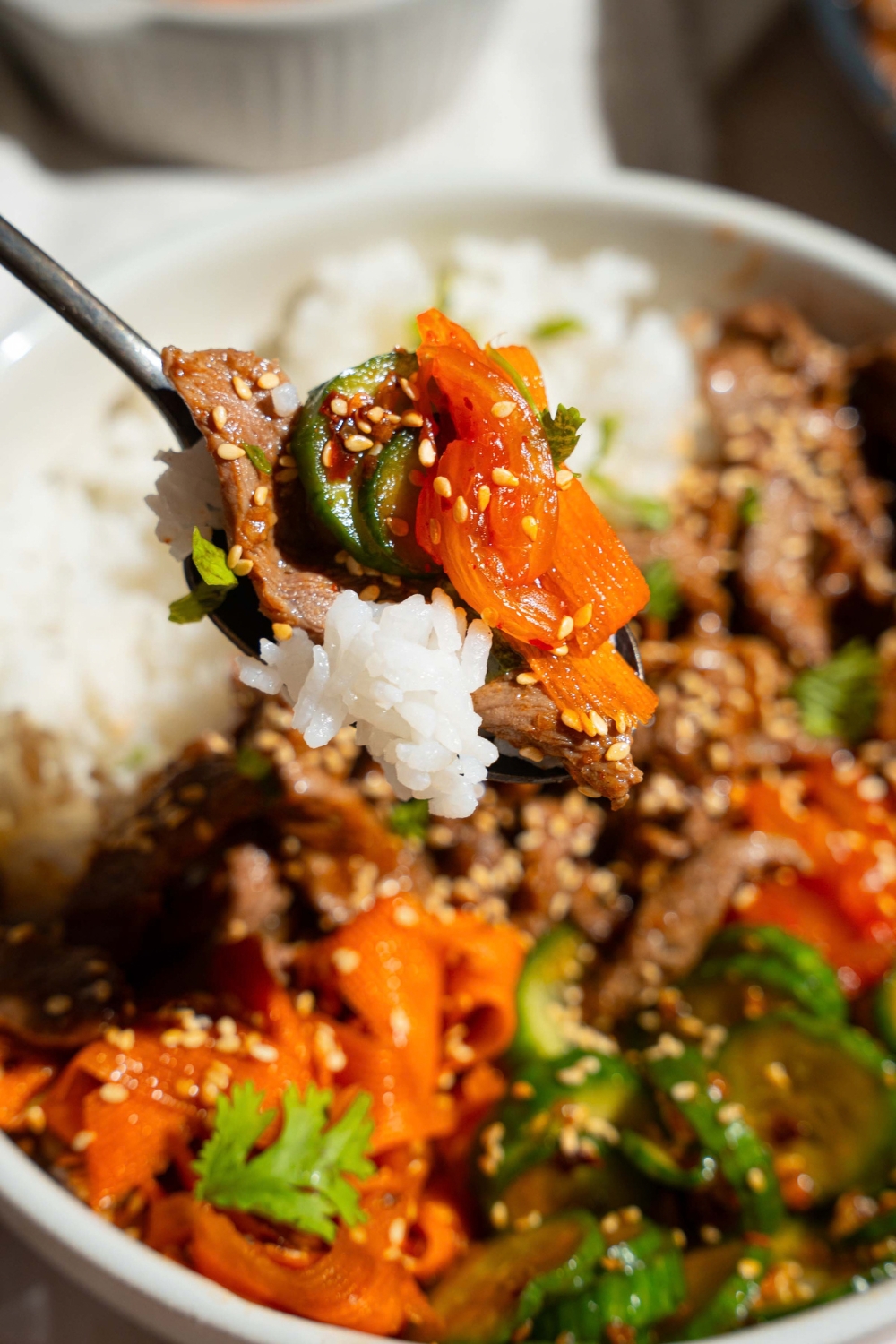
This beef bulgogi bowl is loaded with thinly sliced marinated beef, jasmine rice, kimchi, and crisp cucumber and carrot salads. The beef is savory, slightly sweet, and a little spicy from the gochujang, with fresh toppings to keep every bite balanced. These filling high-protein Korean beef bowls are great for an easy dinner or meal prep.
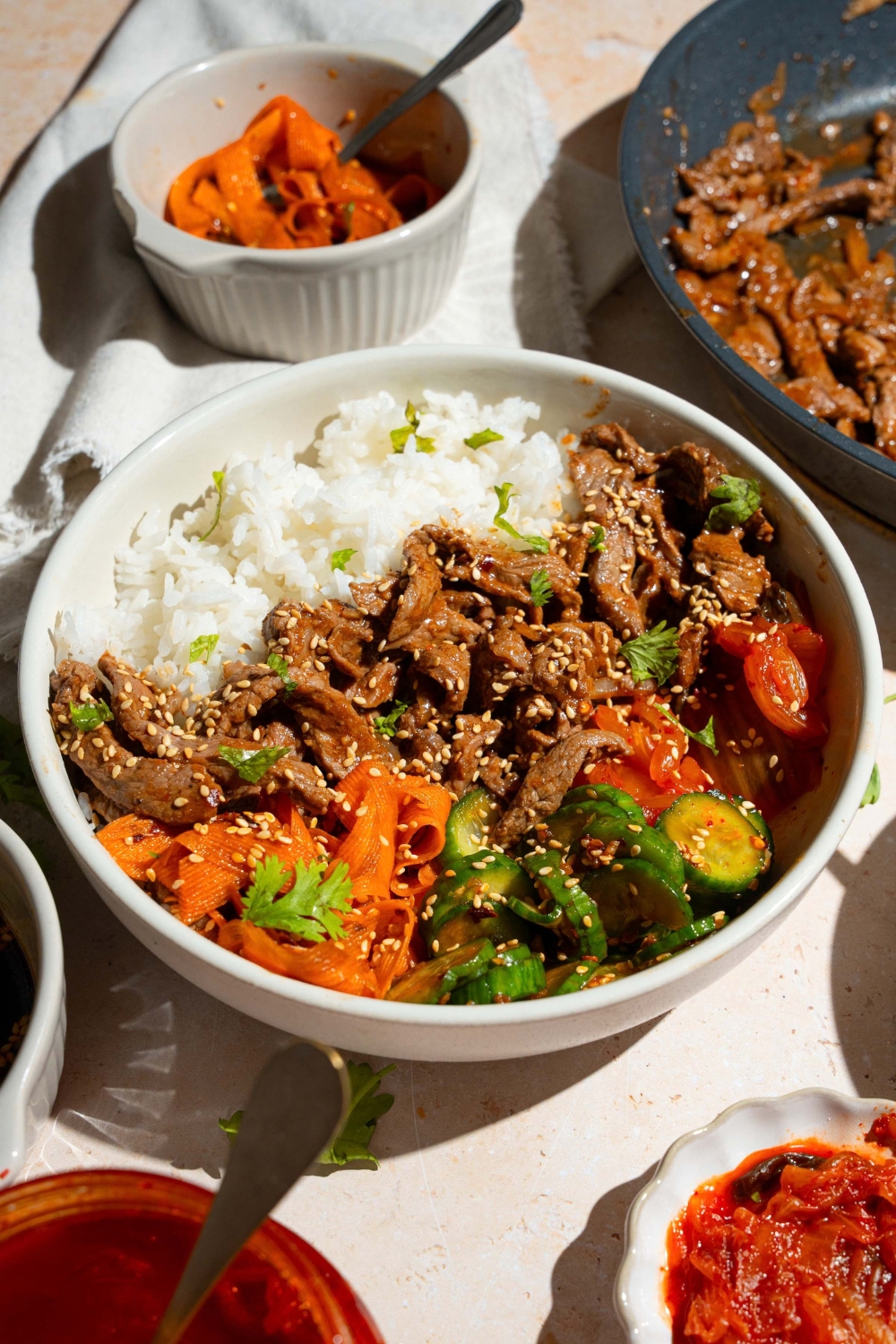
Table of Contents
Why I Love This Beef Bulgogi Bowl
I’ve been making a lot of loaded bowls lately, and a Korean beef bowl has been on my list for a while. There are so many ways you can take one, from simple ground beef and rice bowls to more traditional bulgogi-style bowls, that I could never quite decide which version I wanted to make.
Then I saw a viral beef bulgogi bowl from @sweeteatsbyj, and it was exactly the direction I’d been looking for. I loved the combination of thinly sliced marinated beef over rice with kimchi and fresh, crunchy vegetables, so I used that as the inspiration for this bowl.
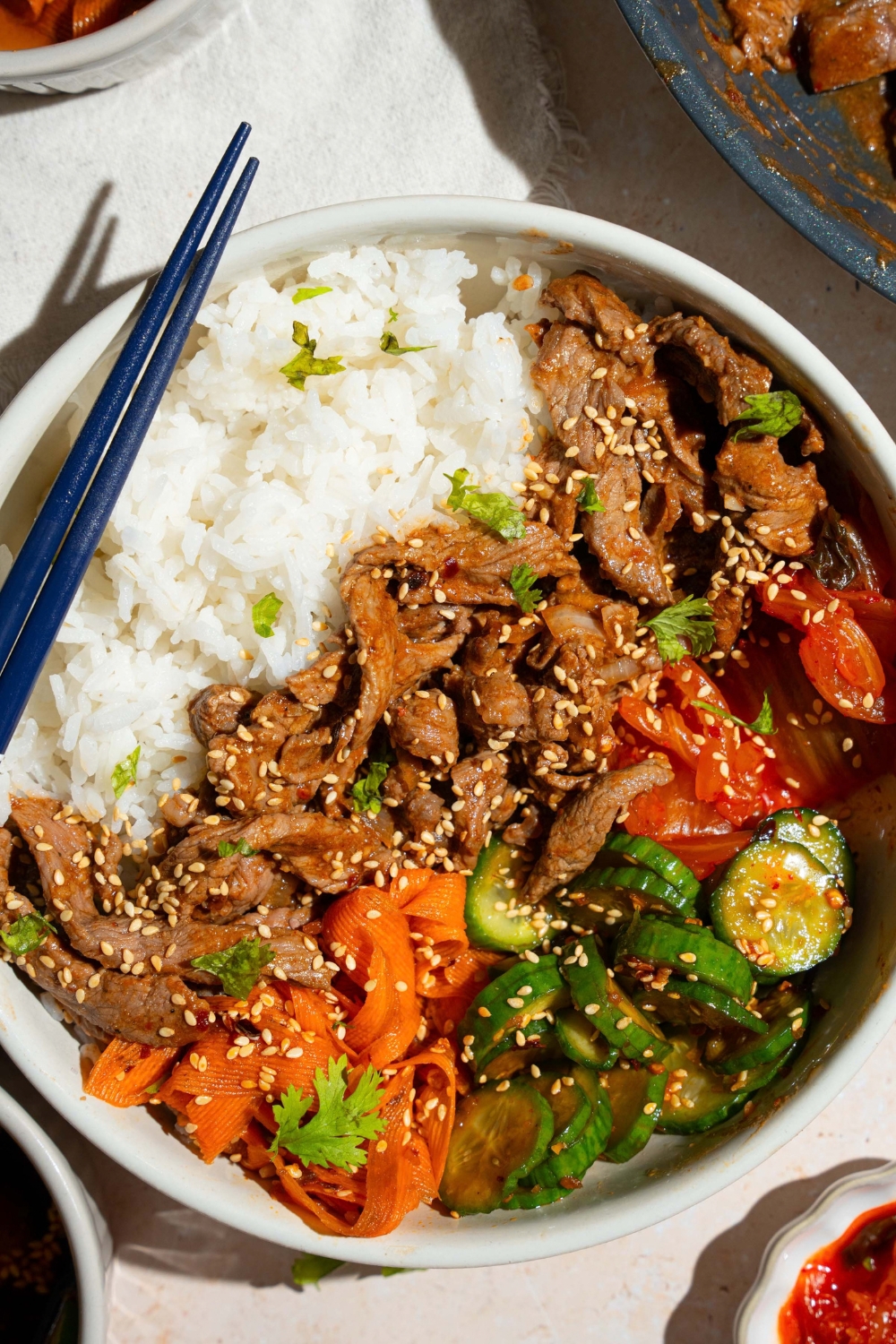
For my version, the beef gets a savory, slightly sweet, spicy marinade with soy sauce, gochujang, garlic, and a little brown sugar. I serve it over jasmine rice with kimchi plus separate cucumber and carrot salads, which add a cool, tangy crunch against the warm beef. There’s a lot going on in the bowl, but every topping has a purpose, and you get a little sweet, spicy, savory, and fresh flavor in every bite.
Ingredients You'll Need
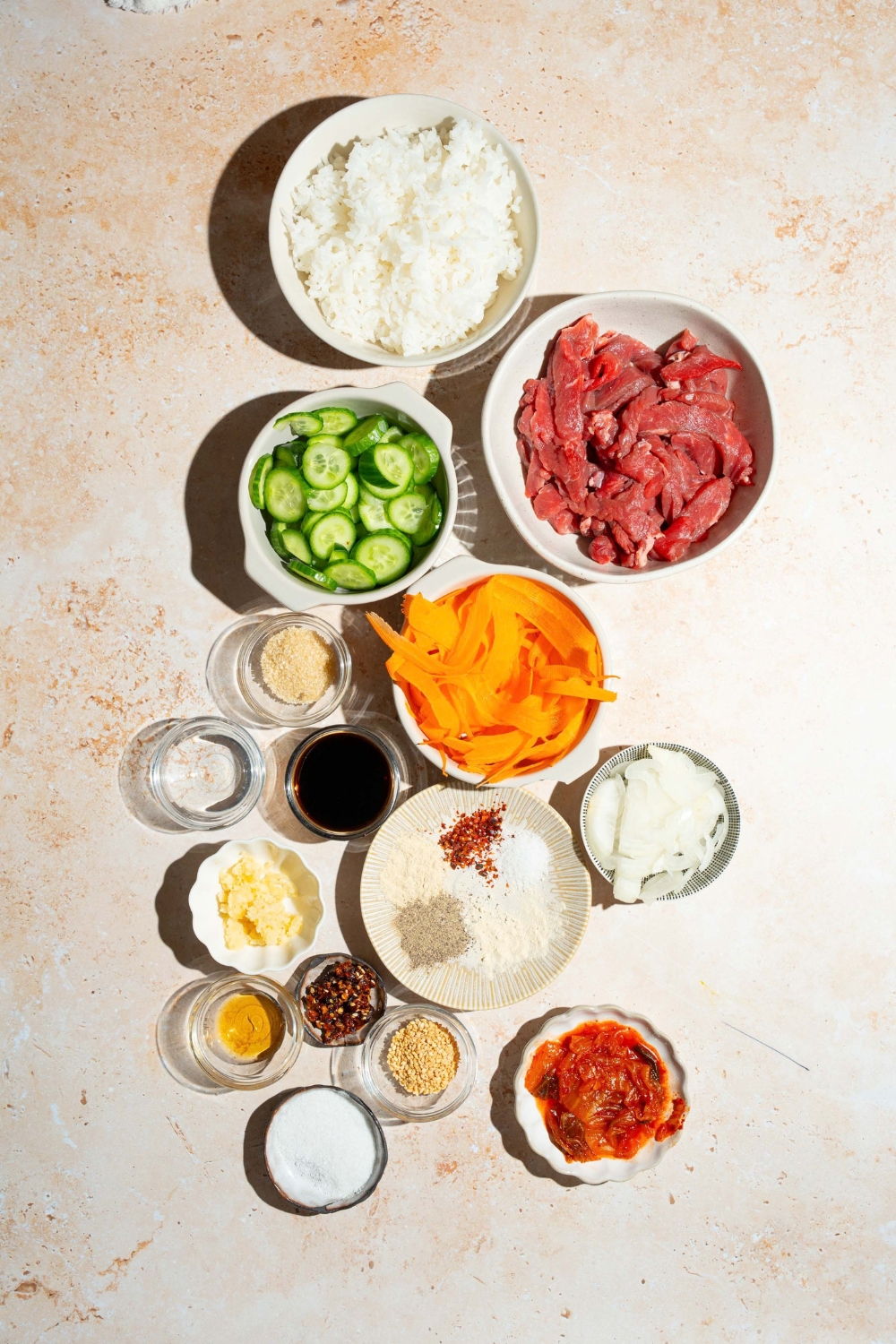
For the beef:
- 2 ½ pounds beef, thinly sliced
- ¼ cup soy sauce
- ¼ cup rice vinegar
- ¼ teaspoon salt
- 1 teaspoon black pepper
- 1 teaspoon garlic powder
- 1 teaspoon onion powder
- 2 tablespoons gochujang
- 1 tablespoon brown sugar
- 1 tablespoon garlic, minced
- 1 teaspoon chili flakes
- 1 tablespoon fish sauce
- 2 onions, thinly sliced
- 1 tablespoon olive oil
For the bowls:
- 4 cups Jasmine rice, cooked
- Kimchi
For the cucumber and carrot salad:
- 1 cucumber, thinly sliced
- 1 carrot, shredded
- 2 tablespoons soy sauce
- 1 tablespoon rice vinegar or white vinegar
- 1 teaspoon sesame oil
- 1 teaspoon chili oil, or more to taste
- 1 teaspoon granulated sugar
- ¼ teaspoon salt
- 1 teaspoon sesame seeds
Ingredient Notes That Make This Viral Korean Beef Bowl Better
- Beef: Ribeye, sirloin, flank steak, skirt steak, or thinly shaved beef can all work here. The most important thing is slicing it very thin so it cooks quickly and takes on plenty of the marinade. If you’re slicing the beef yourself, chilling it in the freezer for about 20–30 minutes first makes thin slices much easier to cut.
- Gochujang: This Korean fermented chili paste gives the beef a savory, slightly sweet heat and a deeper flavor than regular hot sauce. Start with the listed amount, then add extra chili oil at the table if you want the finished bowls spicier.
- Soy sauce: This provides most of the salty, savory base for the marinade. Since the recipe also includes fish sauce, I only use ¼ teaspoon additional salt so the beef doesn’t become overly salty.
- Rice vinegar: I use rice vinegar in the beef marinade because its mild acidity balances the soy sauce, brown sugar, and Gochujang without overpowering the other flavors.
- Fish sauce: A tablespoon adds another layer of savory flavor to the marinade. It can smell strong straight from the bottle, but once cooked with the beef, it blends into the sauce rather than making the finished bowl taste fishy.
- Jasmine rice: I like jasmine rice because it’s soft and slightly fragrant, which works well with the bold beef and tangy toppings. Short-grain white rice or another rice you already like would work too.
- Kimchi: Kimchi adds tang, spice, and fermented flavor that cuts through the richness of the beef. Use your favorite store-bought kimchi and add as much or as little as you like.
- Cucumber and carrot: I dress these separately so each topping keeps its own texture. The cucumber stays cool and crisp, while the shredded carrot adds a slightly sweeter crunch to the bowl.
- Chili oil: The amount here keeps the vegetable salads mildly spicy. If you like more heat, add extra to the finished bowl rather than making the entire salad hotter.
How to Make a Beef Bulgogi Bowl
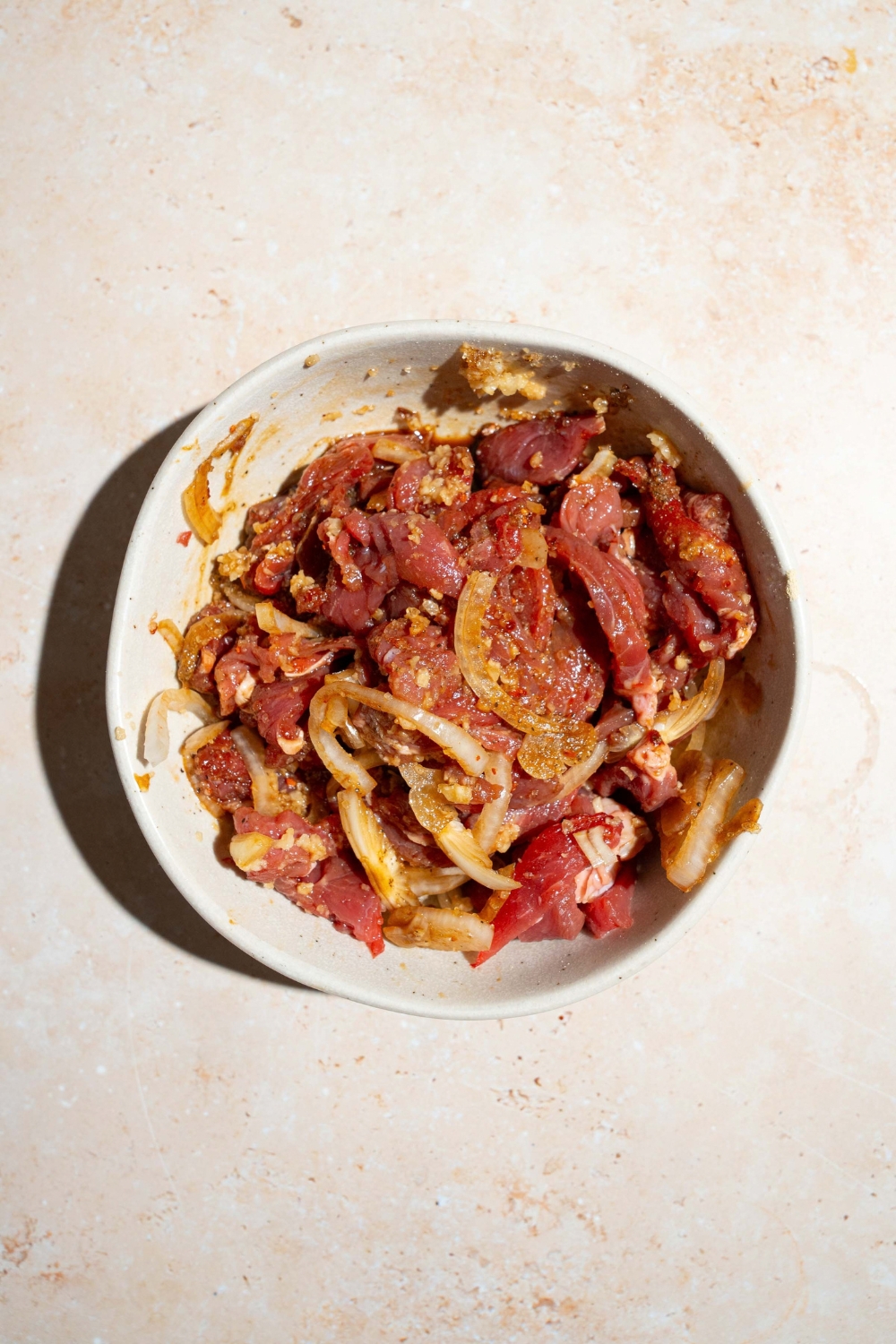
Step 1: Marinate the Beef
Add the thinly sliced beef and onions to a large bowl. Add the soy sauce, rice vinegar, ¼ teaspoon salt, black pepper, garlic powder, onion powder, gochujang, brown sugar, minced garlic, chili flakes, and fish sauce. Toss until the beef and onions are evenly coated. Cover and marinate for at least 30 minutes, or refrigerate overnight for even more flavor.
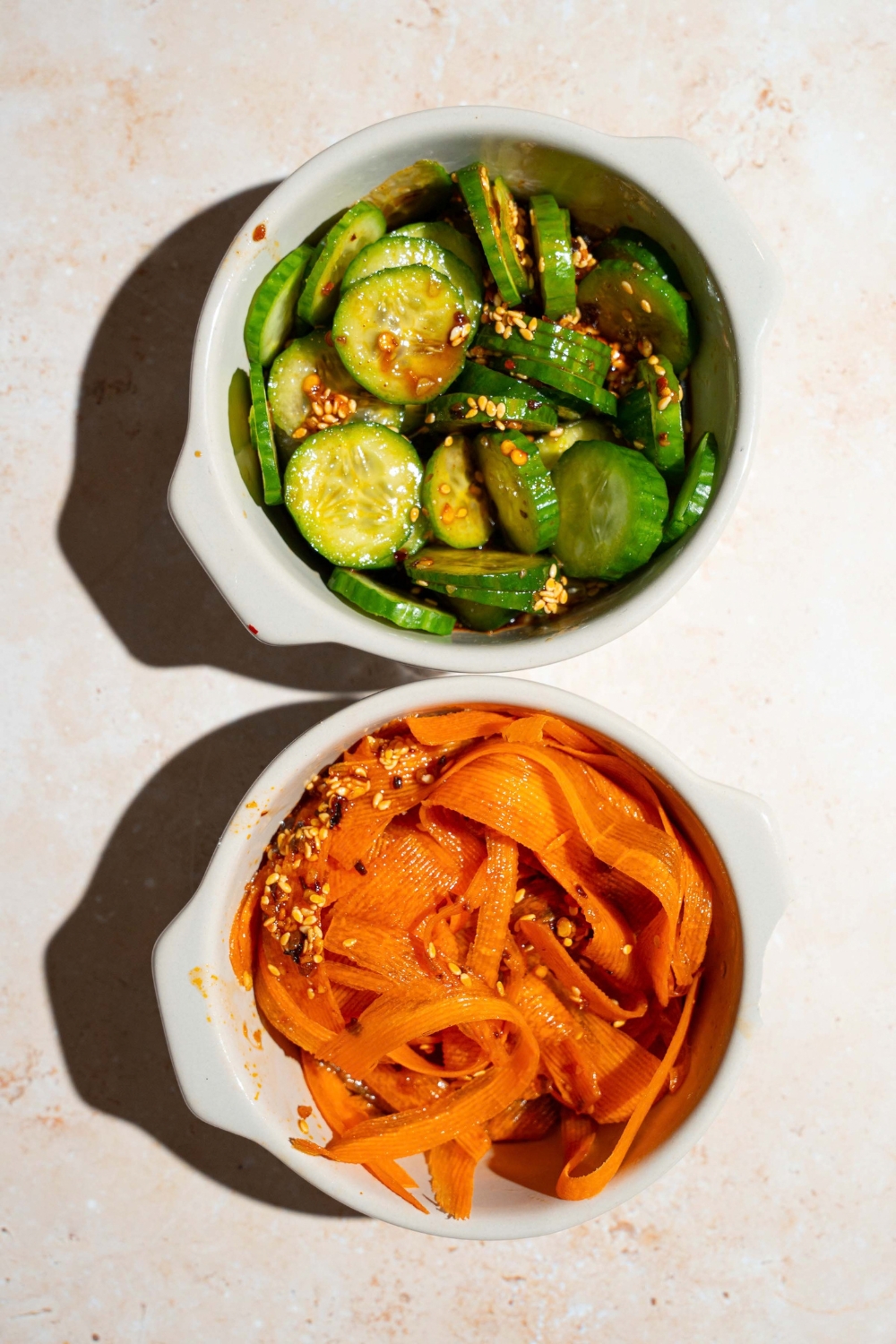
Step 2: Make the Cucumber and Carrot Salads
In a small bowl, whisk together the soy sauce, rice vinegar, sesame oil, chili oil, sugar, salt, and sesame seeds.

Divide the dressing evenly between two separate bowls. Add the sliced cucumber to one and the shredded carrot to the other. Toss each until evenly coated, then refrigerate while you cook the beef.
Step 3: Cook the Bulgogi Beef
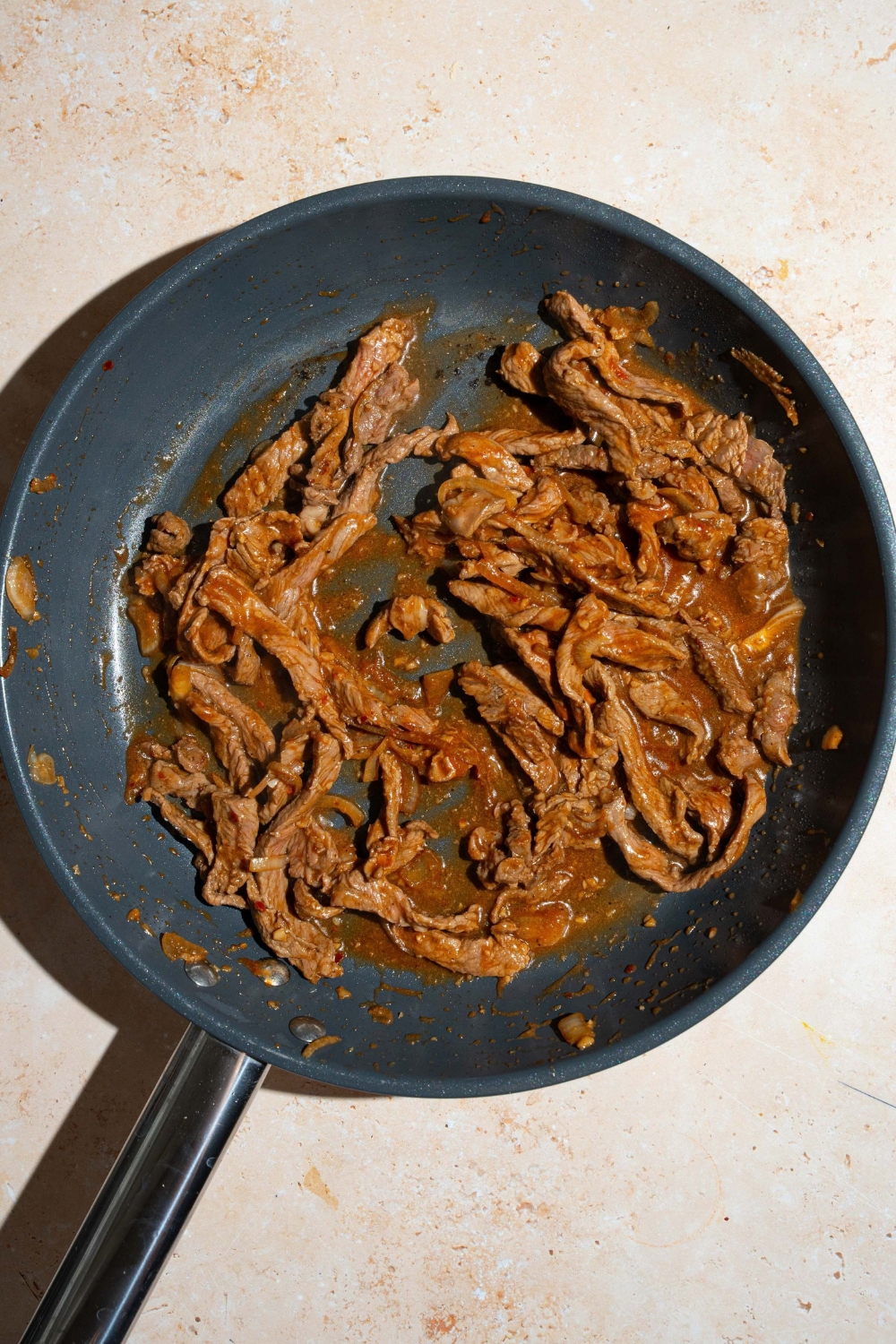
Heat the olive oil in a large skillet over medium-high heat. Add the marinated beef and onions, spreading them out as much as possible. Cook, stirring occasionally, until the beef is browned and cooked through and the onions are tender. If the pan is crowded, cook the beef in batches so it browns instead of steaming.
Step 4: Build the Korean Beef Bowls
Divide the cooked jasmine rice between four serving bowls. Spoon the hot bulgogi beef and onions over the rice. Add kimchi, cucumber salad, and carrot salad to each bowl.
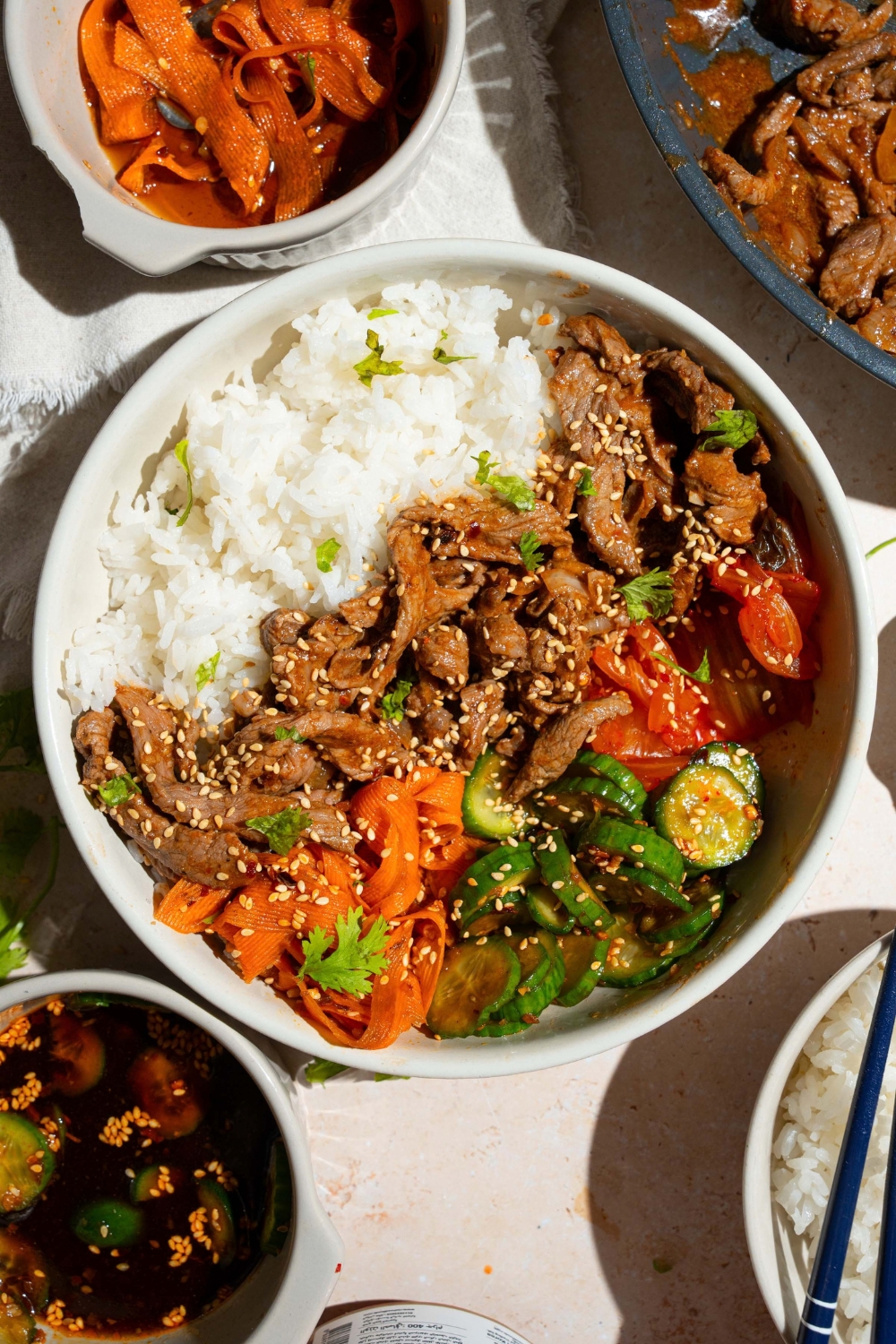
Step 5: Finish and Serve
Sprinkle with additional sesame seeds and drizzle with chili oil if you want extra heat. Serve the beef bulgogi bowls warm, with the cold cucumber and carrot salads alongside the beef for a mix of savory, spicy, tangy, and fresh flavors in every bite.
My Expert Tips for the Best Beef Bulgogi Bowl
- Slice the beef against the grain. Even when the pieces are thin, cutting across the muscle fibers makes the cooked beef noticeably more tender and easier to eat with the rice.
- Get the skillet fully hot before adding the beef. The beef should start sizzling as soon as it hits the pan. A properly heated skillet helps the marinade caramelize around the edges instead of immediately turning into a simmering liquid.
- Let the beef sear before stirring. Once it goes into the skillet, leave it alone briefly so the first side can brown. Stirring constantly from the start makes it harder to develop those darker, caramelized edges.
- Don’t overcook the thin slices. Bulgogi-style beef cooks quickly. Once the pieces are browned and cooked through, get them off the heat so they stay tender instead of becoming chewy.
- Drain a little dressing from the vegetables before building the bowls. You want the cucumber and carrot salads flavorful, but too much dressing can soak into the rice and make the bottom of the bowl watery.
- Fluff the rice before serving. Loosening the grains before dividing it between the bowls gives the sauce from the beef somewhere to settle instead of sitting on top of a dense mound of rice.
How to Store Beef Bulgogi Bowls
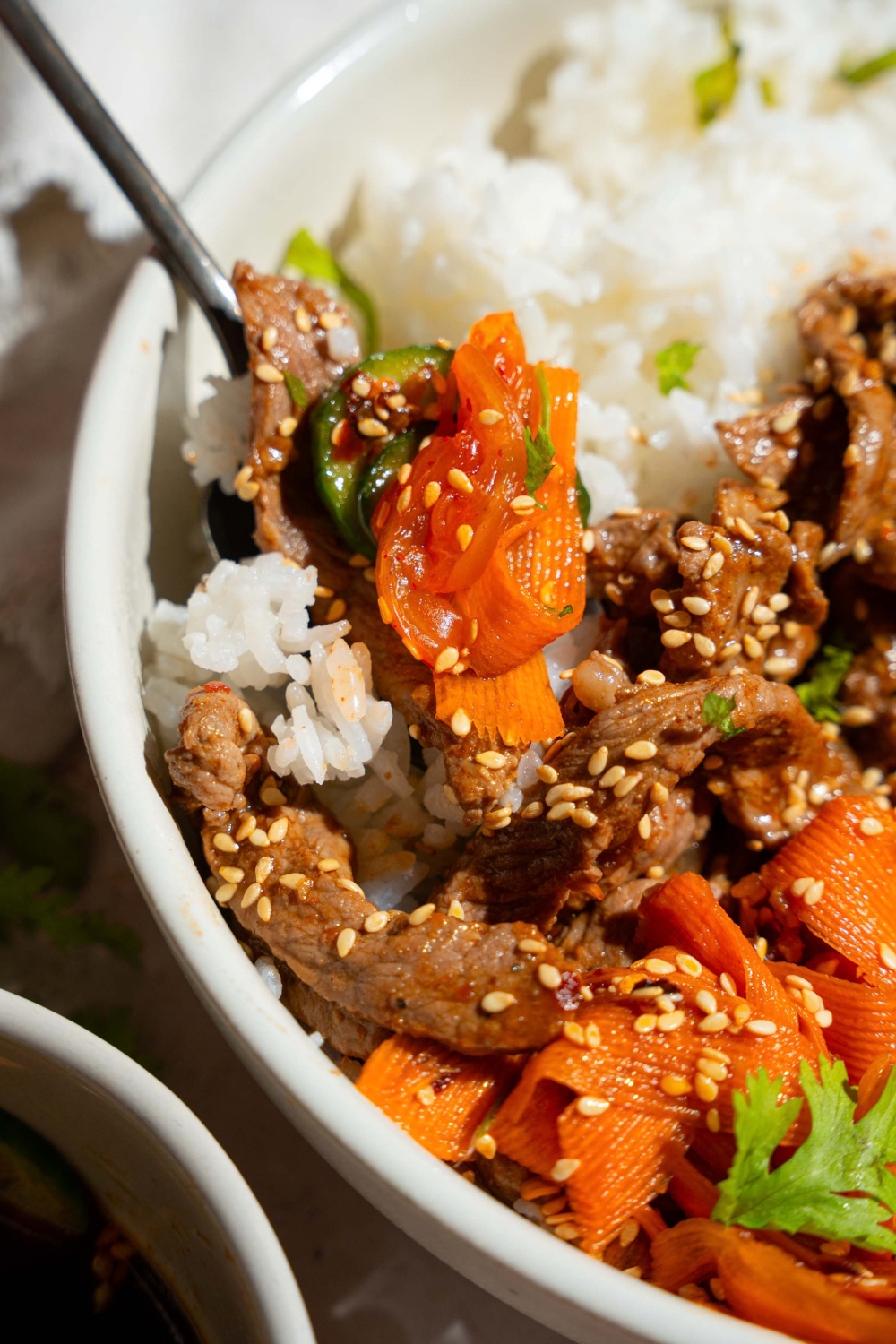
- In the refrigerator: Store the cooked bulgogi beef, rice, kimchi, cucumber salad, and carrot salad in separate airtight containers for up to 4 days. Keeping the hot and cold components separate helps everything hold onto its best texture.
- To reheat: Reheat the beef and rice together in the microwave or in a skillet until hot. Add the kimchi, cucumber salad, and carrot salad afterward so they stay cool and crisp.
- For meal prep: Portion the rice and beef into individual containers ahead of time, then keep the kimchi and vegetable salads in separate small containers. When you’re ready to eat, heat the beef and rice and add the cold toppings right before serving.
- Best texture tip: If the cucumber or carrot salad releases extra liquid while it sits, drain off a little before adding it to the bowl. That keeps the rice from getting soggy and helps the meal-prep bowls taste fresher throughout the week.
Beef Bulgogi Bowl FAQs
What is a beef bulgogi bowl?
A beef bulgogi bowl is a Korean-inspired rice bowl topped with thinly sliced marinated beef and vegetables or other toppings. This version combines spicy-sweet bulgogi beef with jasmine rice, kimchi, and separate cucumber and carrot salads for a mix of hot, cold, savory, tangy, and crunchy ingredients.
What does beef bulgogi taste like?
Bulgogi is known for its sweet and savory flavor. This version also has some heat from gochujang and chili flakes, plus garlic, soy sauce, brown sugar, and fish sauce for a deeper savory flavor.
Is beef bulgogi spicy?
Traditional bulgogi is generally more sweet and savory than spicy, but this recipe has a noticeable kick from gochujang and chili flakes. You can reduce the chili flakes for a milder bowl or add extra chili oil when serving if you want more heat.
What rice is best for a beef bulgogi bowl?
I use jasmine rice because its soft texture works really well with the saucy beef and crisp toppings. Short-grain white rice is another great choice, and brown rice works if that’s what you prefer.
Can I make a bulgogi bowl with ground beef?
Yes. Ground beef can be used for a quicker Korean beef bowl, although the texture will be different from this thinly sliced beef bulgogi. Brown the ground beef first, then add the marinade ingredients and cook until the sauce coats the meat.
What can I use instead of gochujang?
If possible, I recommend using gochujang because its fermented, sweet-spicy flavor is difficult to duplicate exactly. If you don’t have it, you can still make the bowl without it, but the beef will taste different. I wouldn’t substitute an equal amount of regular hot sauce since it has a much thinner consistency and different flavor.
Is a beef bulgogi bowl gluten-free?
It can be made gluten-free, but you’ll need to check the packaged ingredients carefully. Regular soy sauce usually contains wheat, so use certified gluten-free tamari or gluten-free soy sauce. Check the gochujang, fish sauce, kimchi, and chili oil labels as well.
What toppings go well with a bulgogi rice bowl?
Kimchi, cucumber salad, shredded carrots, green onions, sesame seeds, fried eggs, and extra chili oil all work well with bulgogi. I like combining something tangy and crunchy, like the cucumber carrot salad, with the warm beef and rice to keep the bowl light.
More Bowl Recipes to Try
- Bang bang chicken bowl
- Sweet potato burger bowl
- Sloppy Joe bowls
- Beef broth bowls
- Mediterranean lamb bowl
Viral Beef Bulgogi Bowl

This beef bulgogi bowl is loaded with thinly sliced marinated beef, jasmine rice, kimchi, and crisp cucumber and carrot salads. The beef is savory, slightly sweet, and a little spicy from the gochujang, with fresh toppings to keep every bite balanced. These filling high-protein Korean beef bowls are great for an easy dinner or meal prep.
Ingredients
For the Beef:
- 2½ lb beef, thinly sliced
- ¼ cup soy sauce
- ¼ cup vinegar
- ¼ teaspoon salt
- 1 teaspoon black pepper
- 1 teaspoon garlic powder
- 1 teaspoon onion powder
- 2 tablespoon gochujang
- 1 tablespoon brown sugar
- 1 tablespoon garlic, minced
- 1 teaspoon chili flakes
- 1 tablespoon fish sauce
- 2 onions, thinly sliced
- 1 tablespoon olive oil
For the Bowls
- 4 cups Jasmine rice, cooked
- Kimchi
Cucumber & Carrot Salad:
- 1 cucumber, thinly sliced
- 1 carrot, shredded
- 2 tablespoon soy sauce
- 1 tablespoon rice vinegar or white vinegar
- 1 teaspoon sesame oil
- 1 teaspoon chili oil, or more to taste
- 1 teaspoon granulated sugar
- ¼ teaspoon salt
- 1 teaspoon sesame seeds
Instructions
1. In a large bowl, combine the sliced beef and onions with the soy sauce, vinegar, salt, black pepper, garlic powder, onion powder, gochujang, brown sugar, minced garlic, chili flakes, and fish sauce. Toss until everything is evenly coated.
2. Cover and marinate for at least 30 minutes, or refrigerate overnight for more flavor.
3. Meanwhile, prepare the dressing by whisking together the soy sauce, rice vinegar, sesame oil, chili oil, sugar, salt, and sesame seeds.
4. Divide the dressing evenly between 2 separate bowls. Add the sliced cucumber to one bowl and toss until evenly coated. Add the shredded carrot to the second bowl and toss until evenly coated. Refrigerate both salads until ready to serve.
5. Heat the olive oil in a large skillet over medium-high heat. Add the marinated beef and onions and cook, stirring occasionally, until the beef is browned and fully cooked and the onions are tender.
6. Divide the cooked jasmine rice between serving bowls. Top with the Korean beef and onions, kimchi, cucumber salad, and carrot salad.
7. Serve warm with additional sesame seeds or chili oil, if desired.
Nutrition Information:
Yield:
4Serving Size:
1Amount Per Serving: Calories: 995Total Fat: 64gSaturated Fat: 23gUnsaturated Fat: 40gCholesterol: 249mgSodium: 2578mgCarbohydrates: 22gFiber: 3gSugar: 11gProtein: 80g
Leave a Reply